Brutalist Interior Design: How to Make It Work at Home

Concrete walls and blocky furniture can look stark in photos. Walk into the room, though, and the mood often shifts: sunlight on a textured wall, a wool rug underfoot, warm wood against cool stone.
That balance is the whole point of brutalist interior design: honest materials, strong forms, and just enough softness so the room feels lived-in rather than austere.
This article covers the materials, colors, and room-by-room ideas that make a brutalist interior work in a real home, not just a photo shoot.
What Is Brutalist Interior Design?
Brutalist interior design brings raw materials, bold geometric shapes, and honest structure indoors, inspired by the brutalist architecture movement of the mid-20th century. The name comes from the French phrase béton brut, meaning “raw concrete,” though the style goes beyond concrete alone.
It also uses stone, metal, wood, and textured finishes to create spaces that feel strong and deliberate. Modern interpretations pair those raw surfaces with warm lighting, natural textures, and comfortable furniture, so the result feels balanced rather than harsh.
The Key Elements That Define a Brutalist Interior
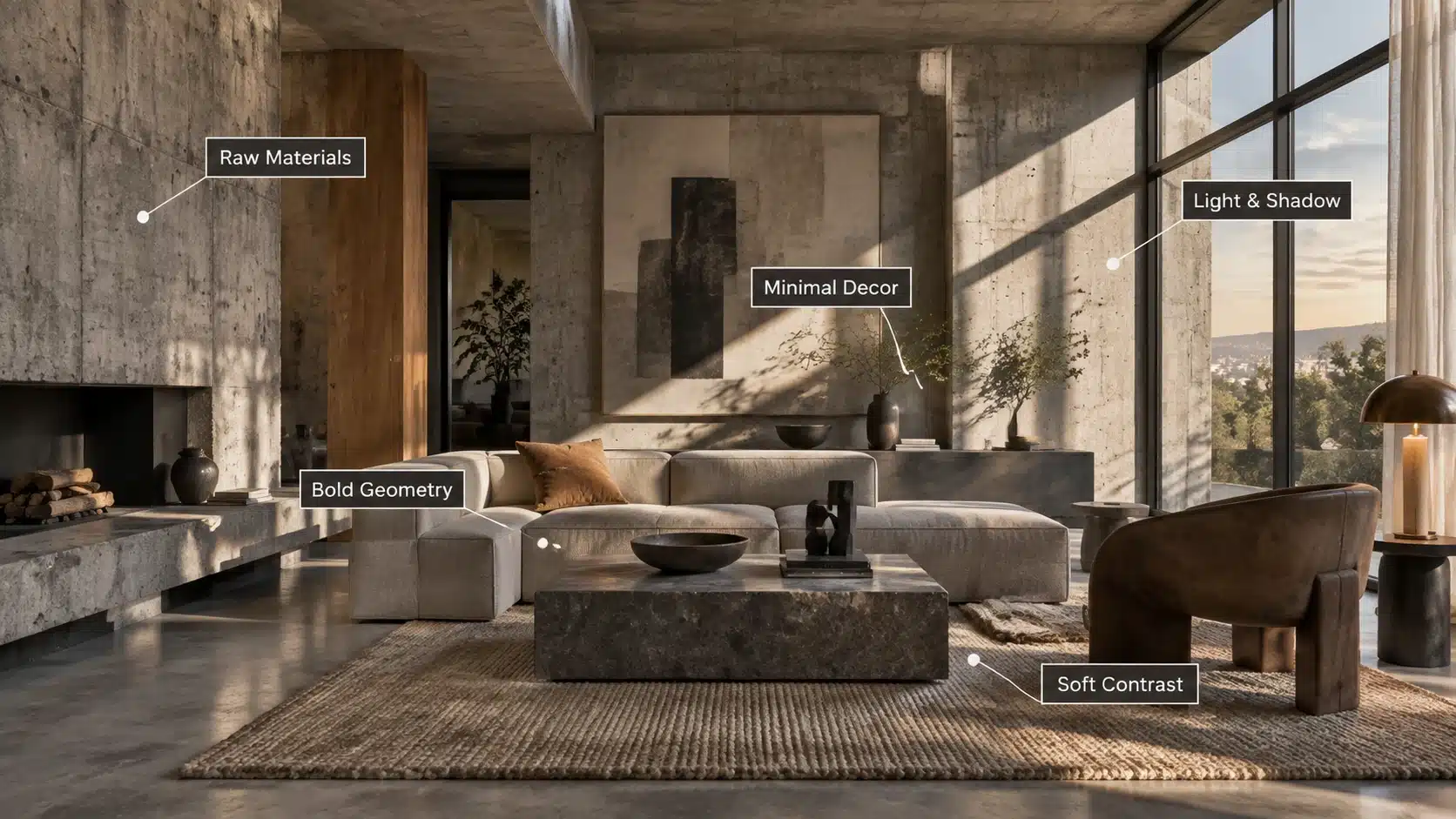
A brutalist interior stands out through its focus on texture, proportion, and carefully chosen materials rather than excessive decoration. Each element works together to create a space that feels structured, artistic, and intentional.
1. Raw and Honest Materials
Materials carry this style. Concrete, stone, exposed brick, metal, and unfinished wood bring natural texture and honesty to a room.
2. Strong Geometric Forms
Brutalist furniture favors bold, simple shapes over ornate details. Low sofas, block-style tables, sculptural chairs, and oversized lighting pieces help create the solid, grounded feeling associated with brutalist interiors.
3. Minimal but Purposeful Decor
Brutalist spaces avoid clutter and focus on a few meaningful pieces. Large artwork, handcrafted ceramics, or a statement sculpture often work better than many small decorative items.
4. Balance Between Hard and Soft Elements
Raw surfaces can feel heavy, so modern brutalist interiors often introduce warmth through wool rugs, linen curtains, leather furniture, wooden finishes, and soft lighting.
5. Natural Light and Shadows
Lighting matters because it highlights texture and creates depth. Large windows, warm lamps, and directional lighting help reveal the character of concrete, stone, and textured walls.
Best Colors for a Brutalist Interior Without Making It Feel Cold
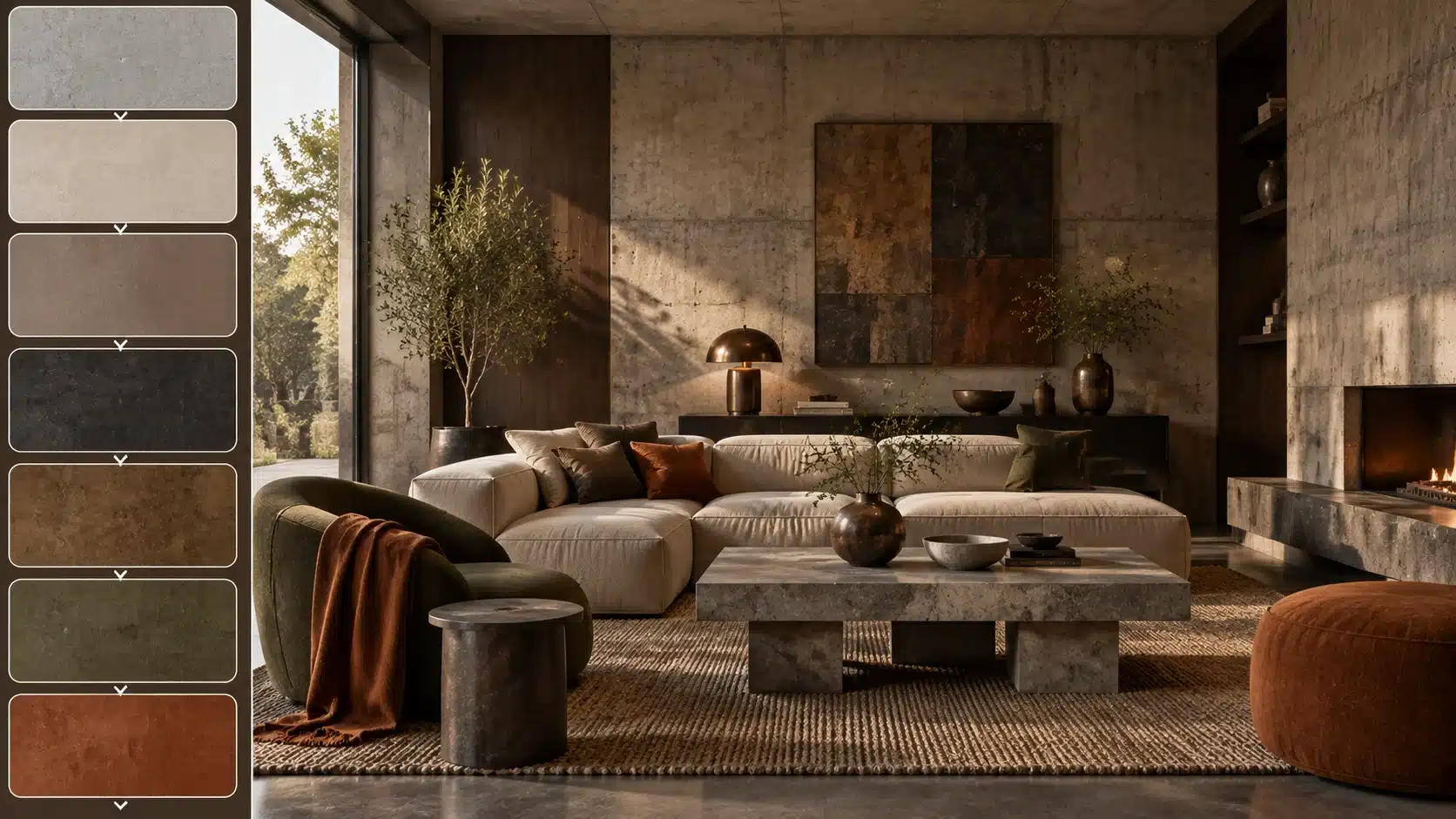
A working brutalist palette starts with mineral neutrals. Warm browns, charcoals, muted greens, or oxide accents then give concrete real visual depth instead of flat, chalky gray.
The old formula was gray on gray on gray. Homes have moved on from th
The Brutalist Color Trendline
Concrete gray → warm greige → taupe → charcoal → bronze-brown → muted olive → rust and oxide accents
Read that as a path, not a rule. Rooms are drifting steadily toward the warm end of it. Plain cool gray now looks dated in homes. Taupe, bronze, and olive keep the same weight without the chill.
Paint Colors That Suit the Style
|
Color role |
Sherwin-Williams |
Benjamin Moore |
Best use |
|---|---|---|---|
|
Concrete gray |
Cement Gray 2112-60 (LRV 60) |
Main walls |
|
|
Warm light neutral |
Pale Oak OC-20 (LRV 69) |
Rooms short on daylight |
|
|
Deep charcoal |
Iron Ore SW 7069 (LRV 6) |
Kendall Charcoal HC-166 (LRV 15) |
Feature wall, cabinetry |
|
Bronze brown |
Urbane Bronze SW 7048 (LRV 8) |
Dragon’s Breath 1547 (LRV 9) |
Warm brutalist accent |
|
Soft black |
Wrought Iron 2124-10 (LRV 8) |
Metalwork and details |
Brutalist interiors often use neutral and earthy colors to balance raw materials like concrete, stone, and metal. The right palette keeps the space bold while adding warmth and depth.
Main Goal: Gray on every surface isn’t the aim. A successful brutalist interior uses contrast between raw materials and warmer tones to create a space that feels architectural yet comfortable.
How to Use Brutalism in Different Rooms of the Home
Brutalism looks different in each room, depending on function, moisture, daylight, and available space. Comfort needs and renovation budgets shape how far you can take it.
1. Brutalist Living Room
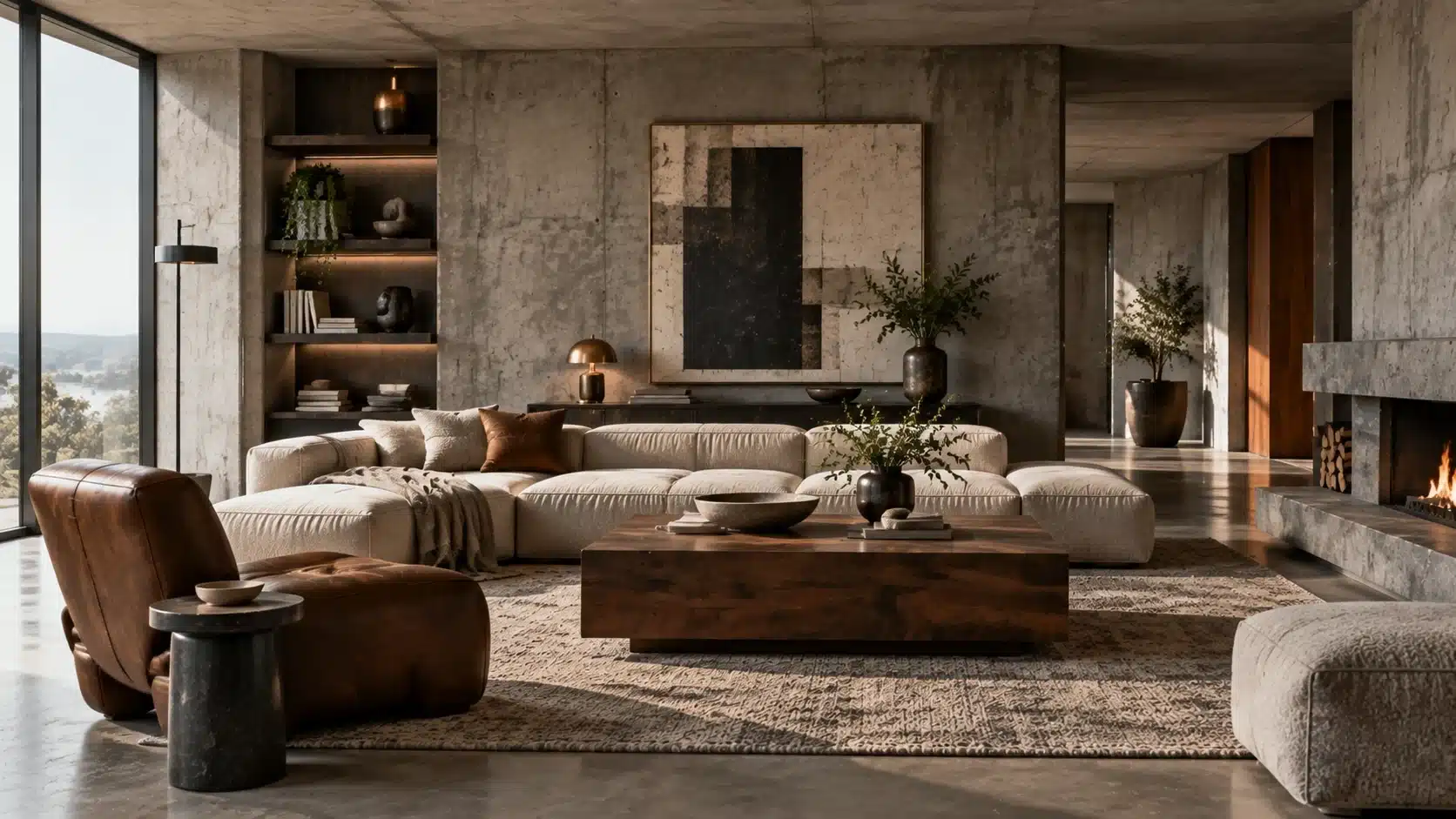
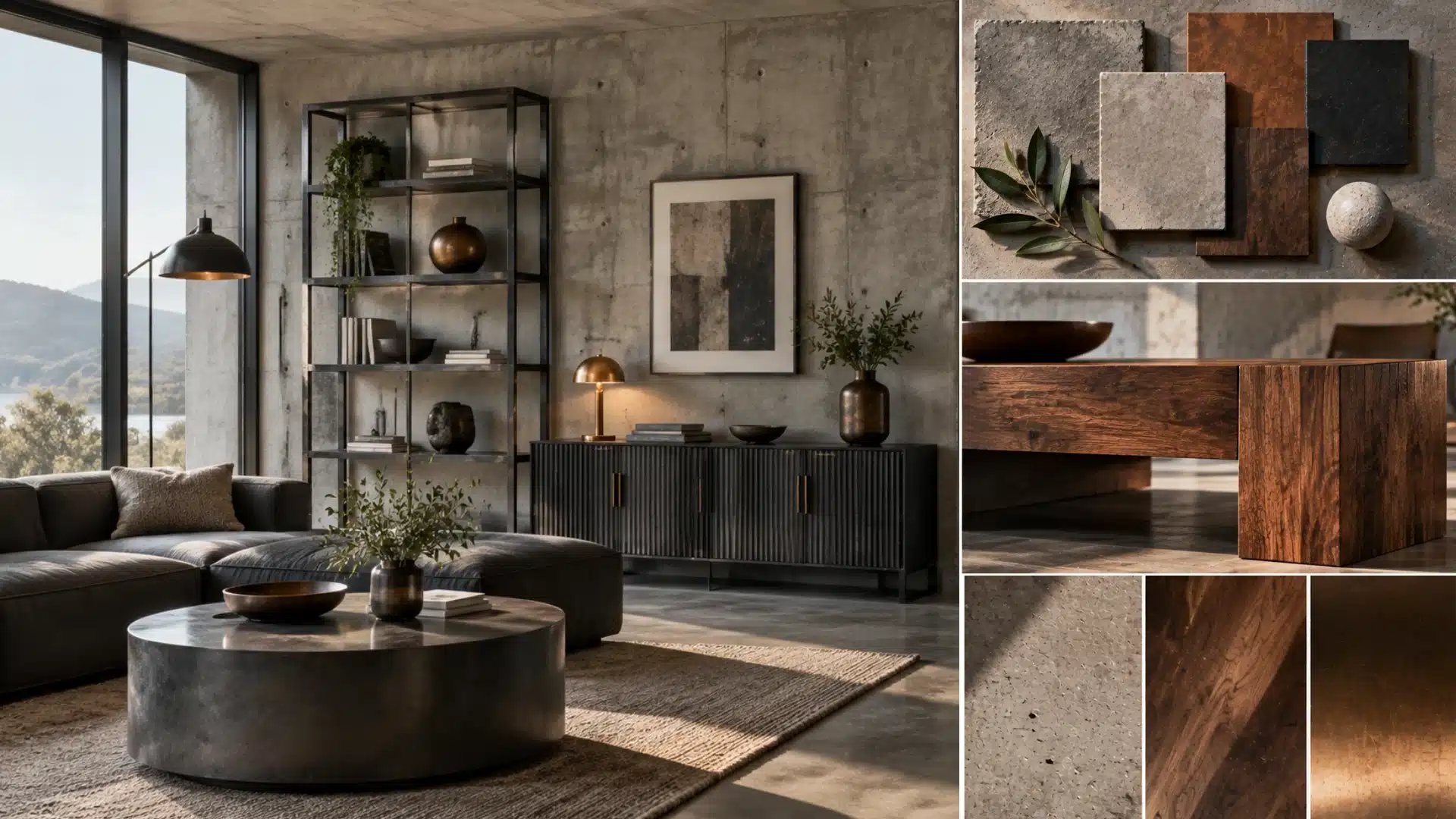
A brutalist living room works best when heavy materials are balanced with softer elements. A concrete wall, textured plaster finish, or stone surface can be the room’s main feature, while warm wood furniture, comfortable seating, and layered lighting make the space more inviting.
A low-profile sofa, sculptural lounge chair, solid wood coffee table, and large artwork can create the bold character associated with the style. Wool rugs, linen curtains, and leather upholstery help soften the harder surfaces.
2. Brutalist Kitchen
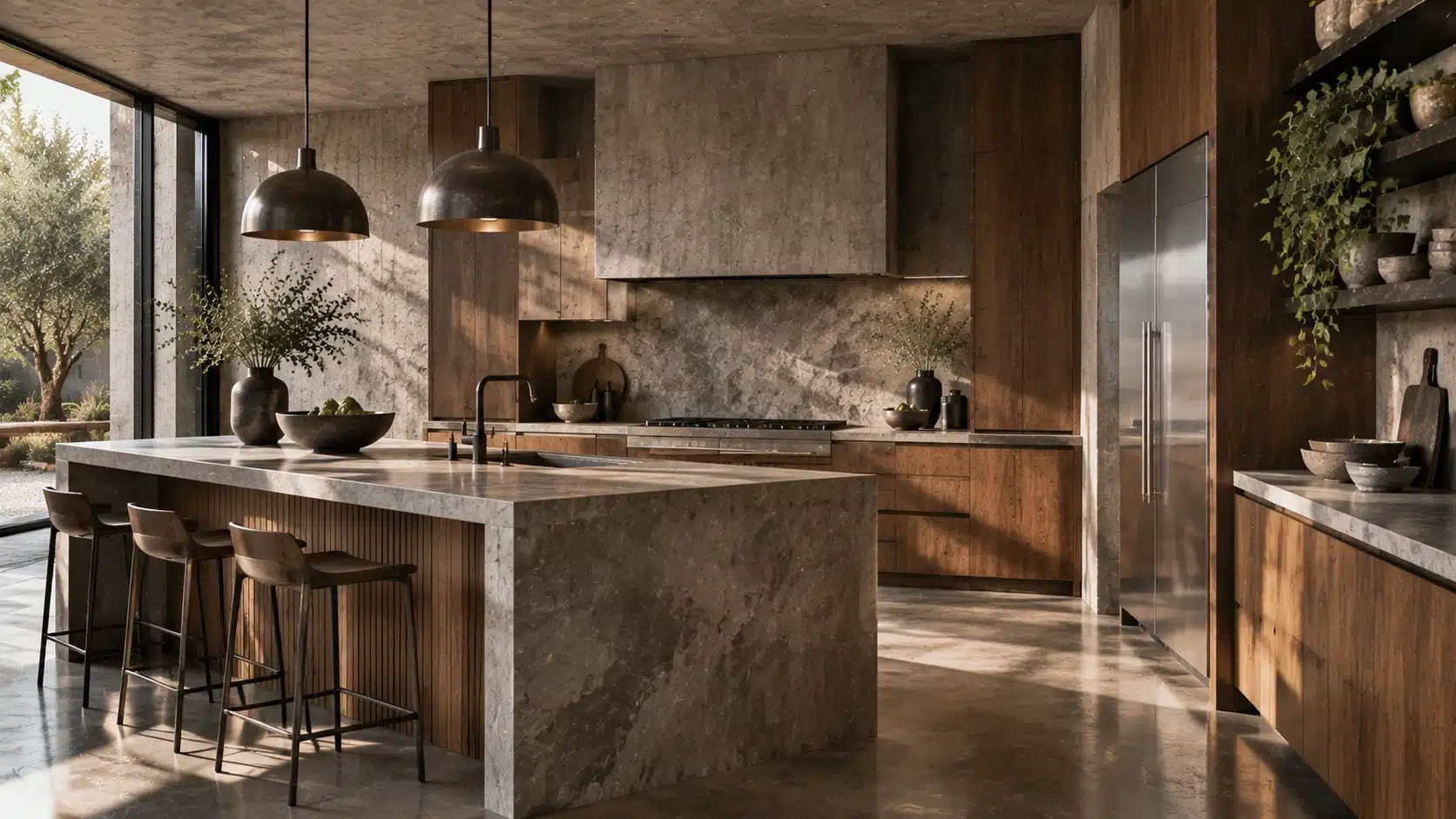
The kitchen naturally suits brutalist design because it already relies on functional materials and clean structures. Concrete countertops, stone surfaces, wood cabinetry, and metal accents can create a strong architectural appearance.
Flat-panel cabinets, black fixtures, stainless steel appliances, and natural stone backsplashes work well in this style. Pairing cooler materials like concrete or steel with walnut or oak keeps the kitchen from feeling too harsh.
3. Brutalist Bedroom
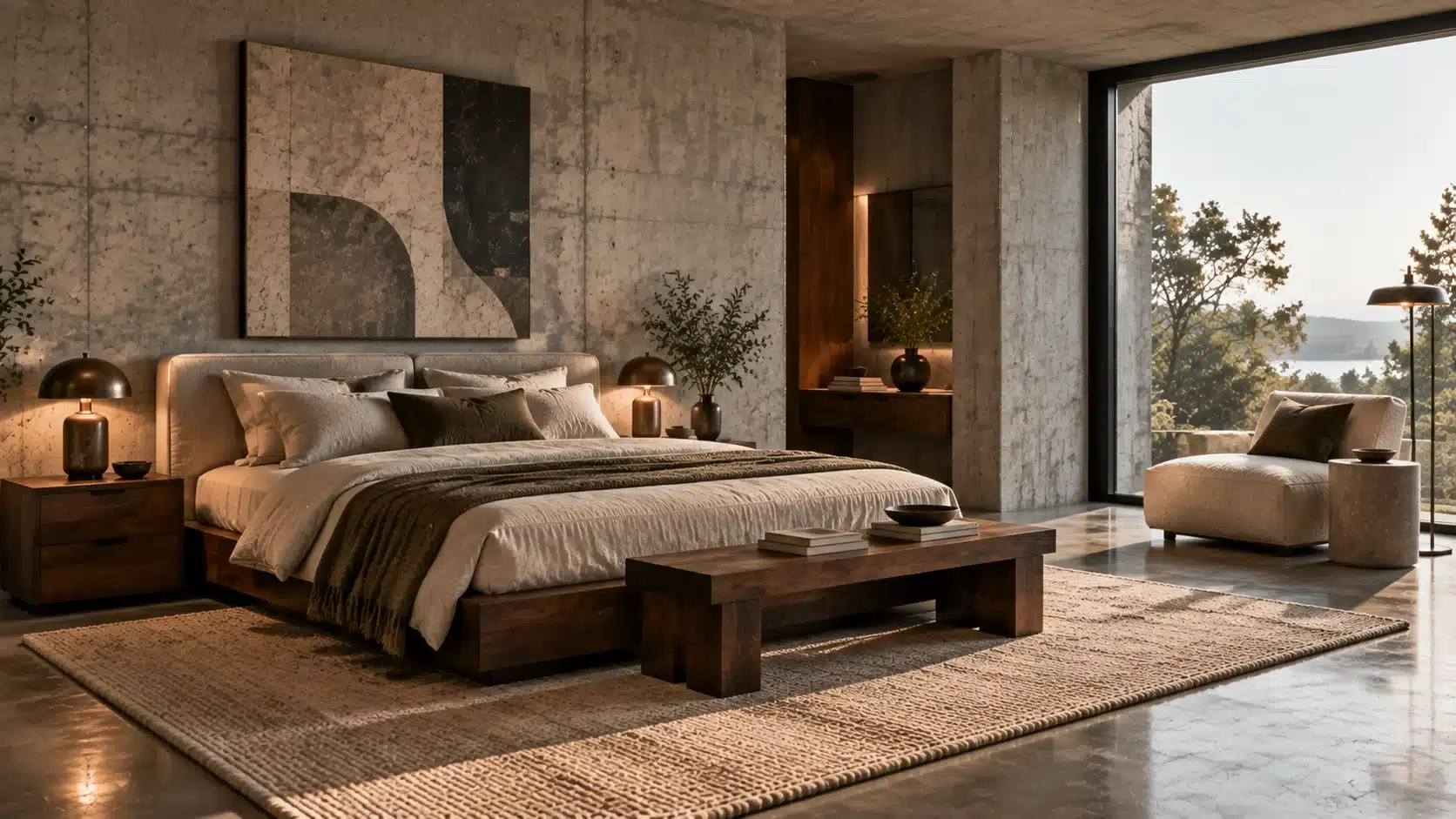
A brutalist bedroom should feel calm and comfortable, not overly dramatic. Since bedrooms are meant for relaxation, balance hard surfaces with soft textures and warm lighting.
An upholstered bed, linen bedding, wooden nightstands, textured rugs, and simple lighting can create a softer interpretation of the style. A plaster wall or stone accent can add character without making the room feel heavy.
4. Brutalist Bathroom
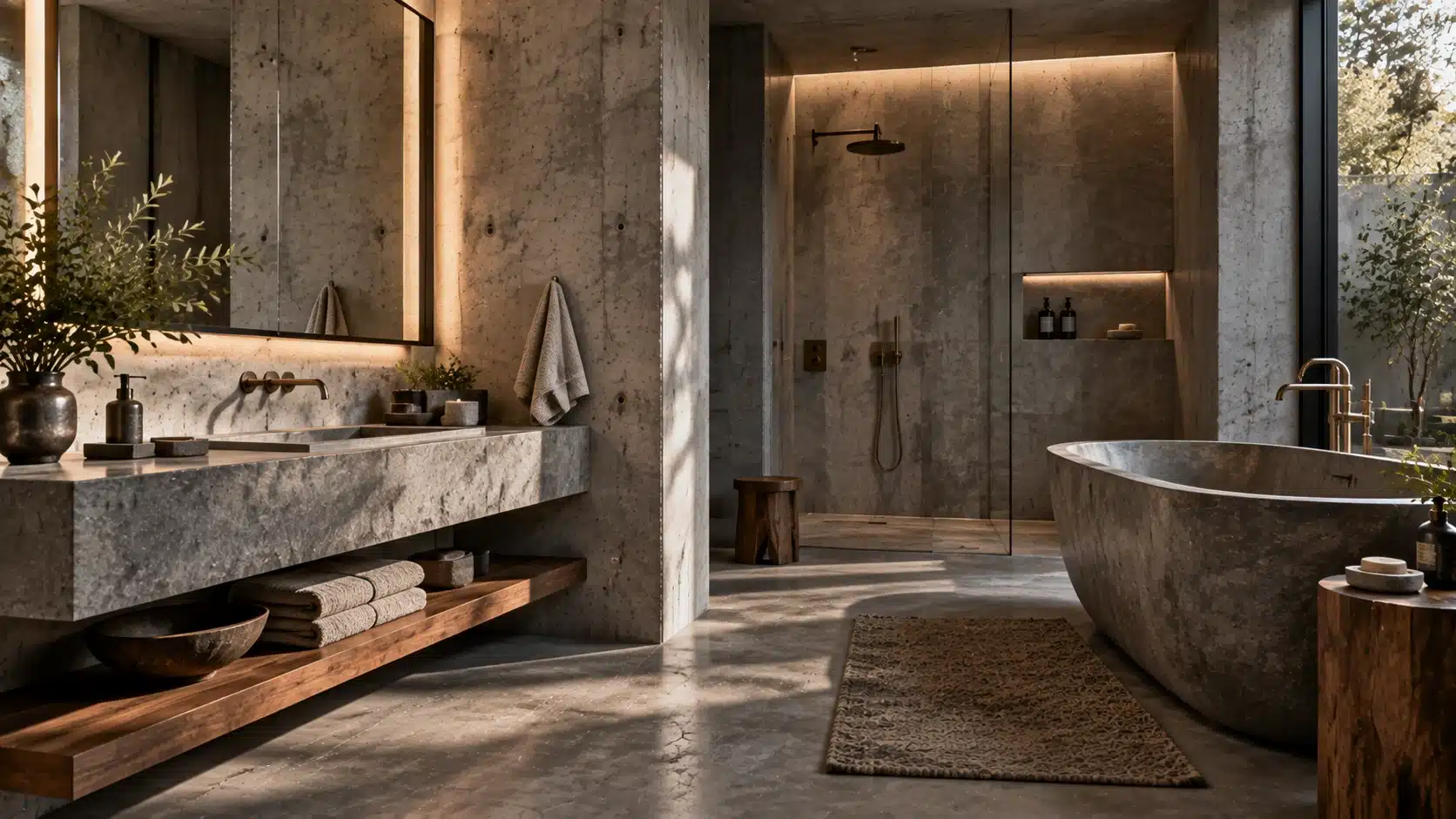
Bathrooms are a natural fit for brutalist interiors because materials like stone, concrete, and metal create a clean architectural look. Microcement walls, concrete-look tiles, stone sinks, brushed metal fixtures, and floating vanities can help achieve the style. Warm lighting and natural textures keep the space from feeling too sterile.
5. Brutalist Entryway
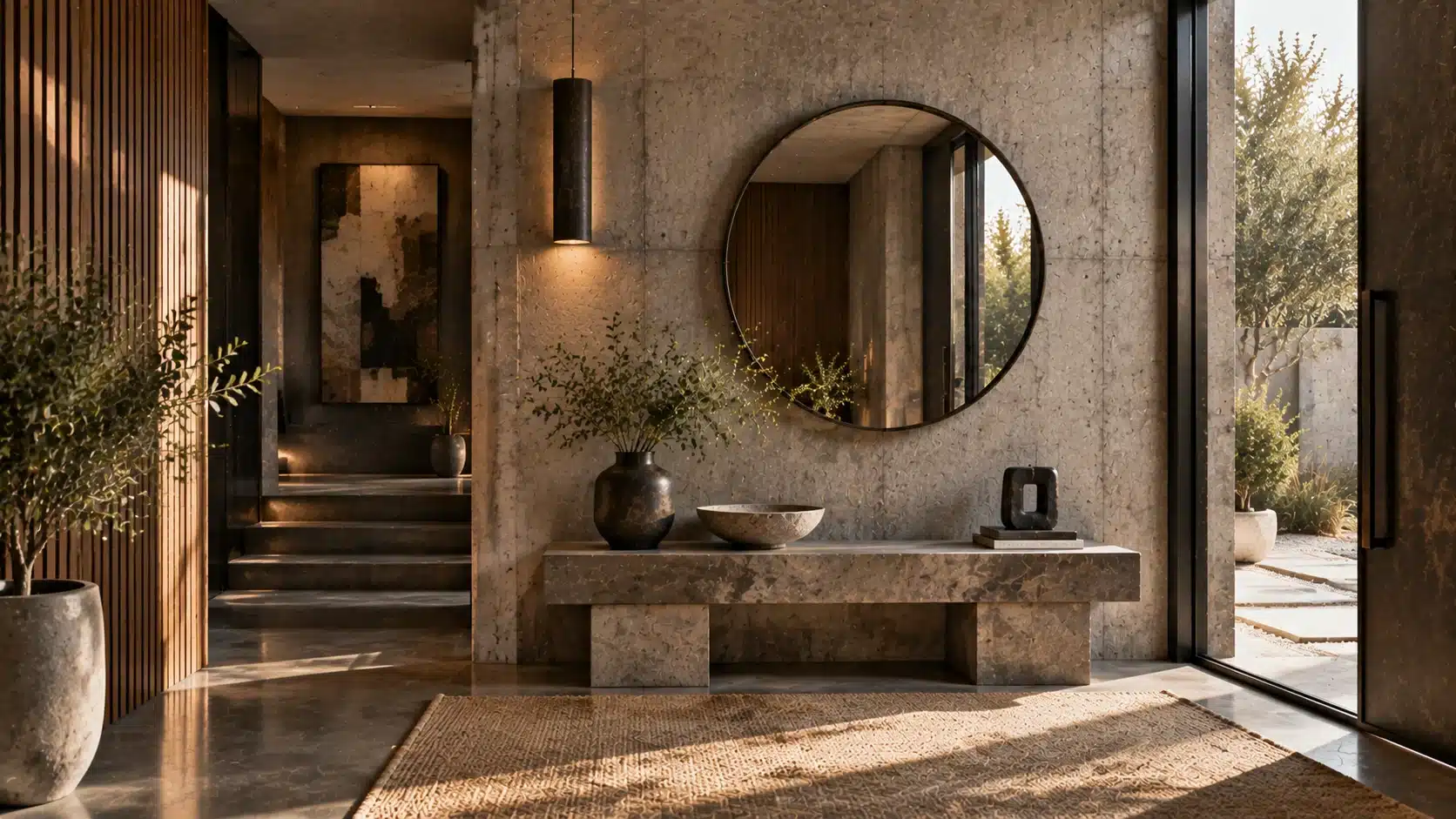
A brutalist entryway should create impact without feeling crowded. A textured wall, sculptural bench, statement light fixture, or metal-framed mirror can establish the style immediately.
The strongest brutalist rooms focus on a few meaningful elements rather than filling the space with decoration. By combining raw materials with warmth and comfort, each room can feel bold, functional, and welcoming.
6. Brutalism in Small Apartments
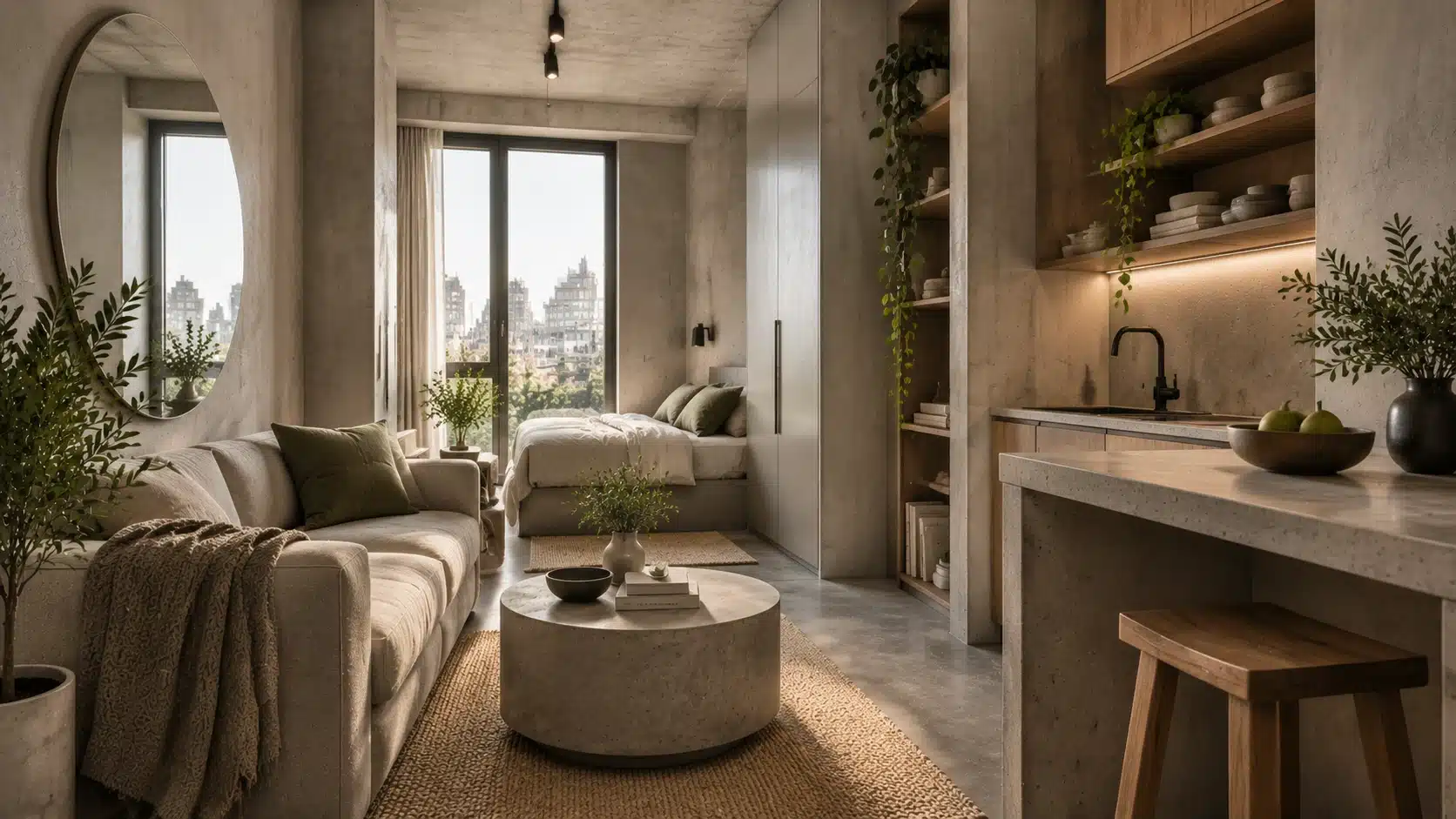
Lighter concrete tones, one hero piece, vertical storage, and fewer heavy objects help keep compact spaces balanced.
Use a mirror to bounce daylight, but keep it plain and frameless. Natural light is what stops a small dark room from feeling like a bunker while keeping the brutalist interior open and comfortable.
Materials and Finishes That Work Best in a Brutalist Interior
Materials carry the weight in a brutalist interior, literally and visually. Each surface adds its own texture and character. The best finishes feel natural, durable, and honest rather than polished to a shine.
1. Concrete and Concrete-Look Finishes
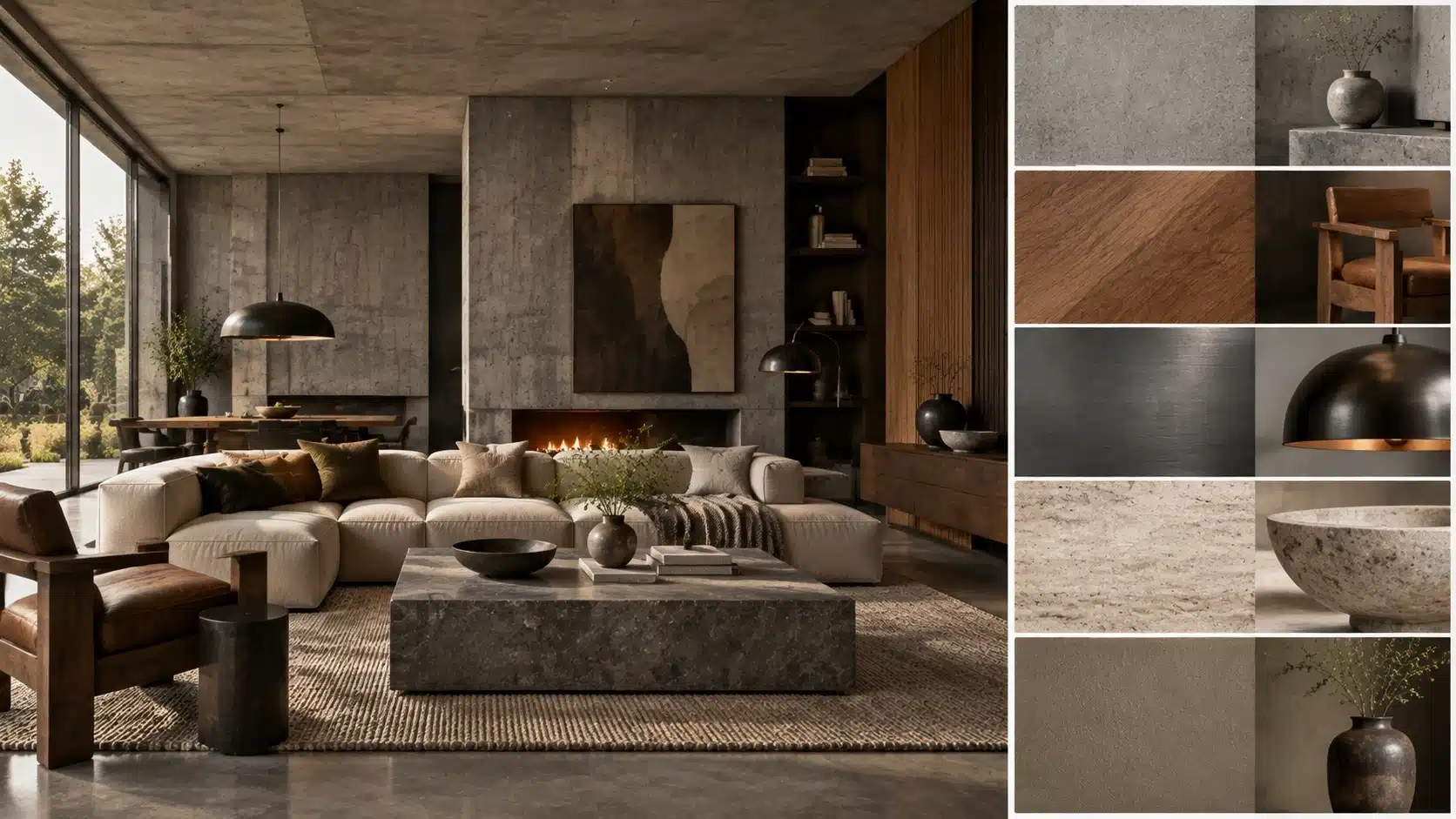
Concrete is the signature material of brutalist design, adding a raw architectural feel to walls, floors, ceilings, and Concrete is the signature material of brutalist design, giving walls, floors, ceilings, and furniture a raw, architectural feel. You don’t always need structural concrete, though. Microcement, concrete-look tiles, and mineral plaster create a similar look with a much easier install.
|
Material |
Best Use |
Benefits |
Things to Consider |
|---|---|---|---|
|
Exposed Concrete |
Walls, floors, ceilings |
Authentic brutalist appearance with natural texture |
Can feel cold without warm elements |
|
Microcement |
Walls, bathrooms, countertops |
Smooth concrete look with fewer visible joints |
Requires skilled installation |
|
Concrete-Look Tile |
Floors, backsplashes, bathrooms |
Affordable alternative with easy maintenance |
Choose realistic textures |
|
Mineral Plaster |
Feature walls |
Adds depth and handmade texture |
Finish quality affects the final look |
|
Stone |
Floors, tables, fireplaces |
Adds natural weight and durability |
Some stones need regular sealing |
2. Wood for Warmth
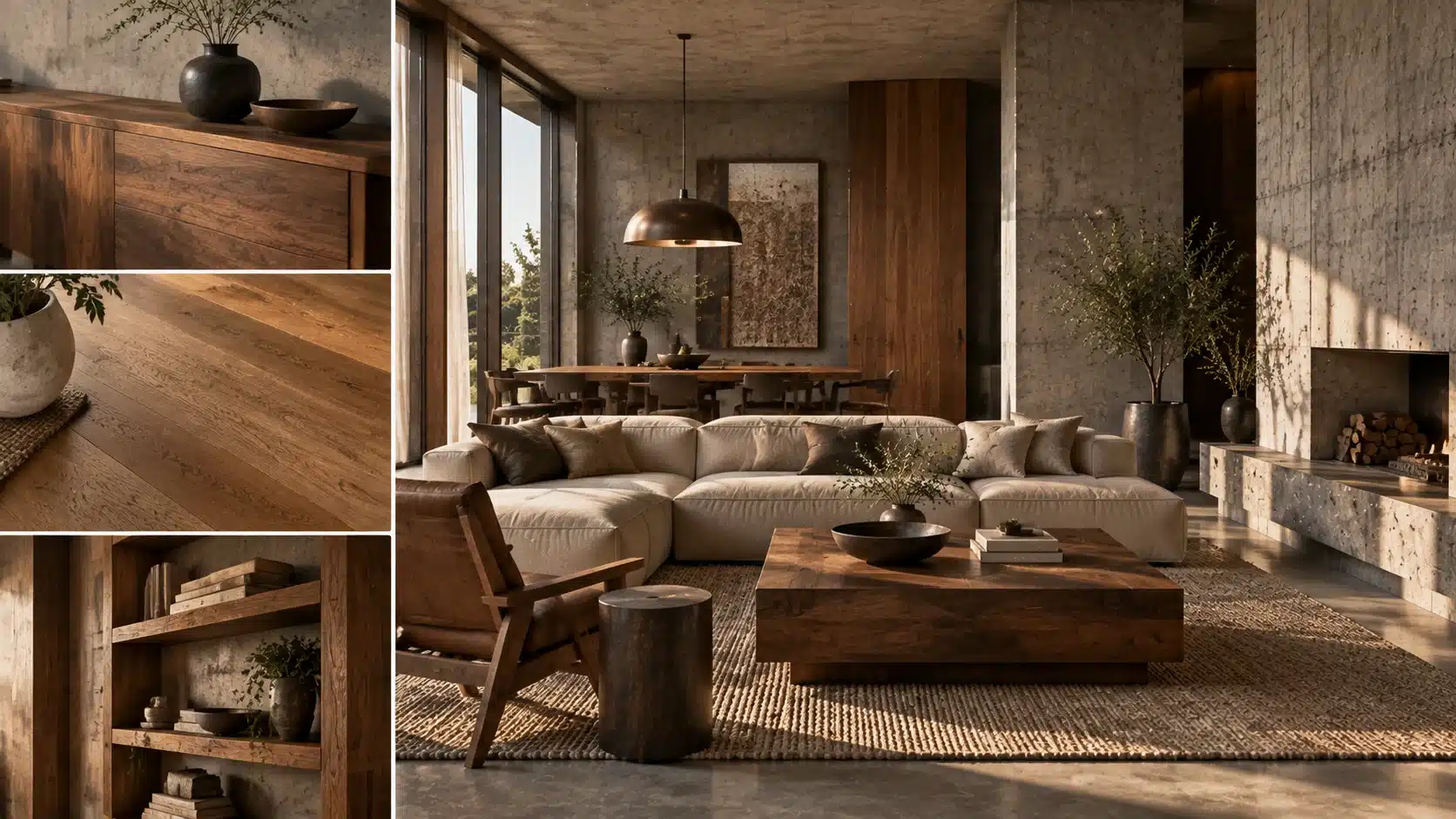
The natural grain and warmth of materials like walnut and oak create a softer contrast against concrete, stone, and metal. Walnut furniture adds depth and drama, while oak flooring brings a lighter, more relaxed atmosphere.
Timber shelving and wooden cabinetry also help balance the heavier elements of a brutalist interior by adding texture and comfort.
3. Metal Details
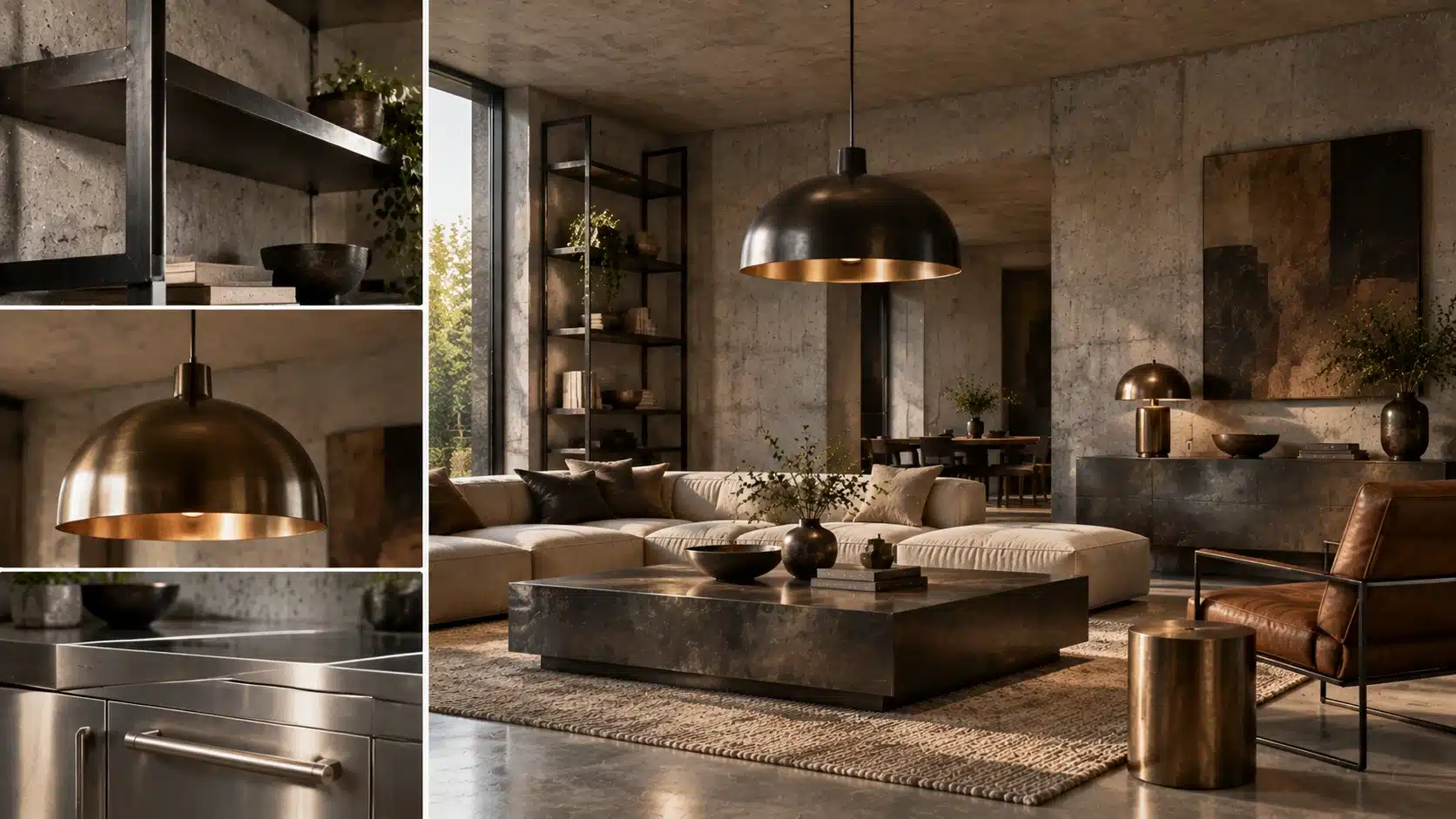
Blackened steel works well for frames, shelves, and lighting fixtures, while brushed brass and aged bronze add subtle warmth. Stainless steel can bring a cleaner modern touch, especially in kitchens and furniture details.
These finishes work best as accents rather than covering large surfaces. Used this way, metal reads as a refined detail rather than the main event.
4. Stone and Natural Textures
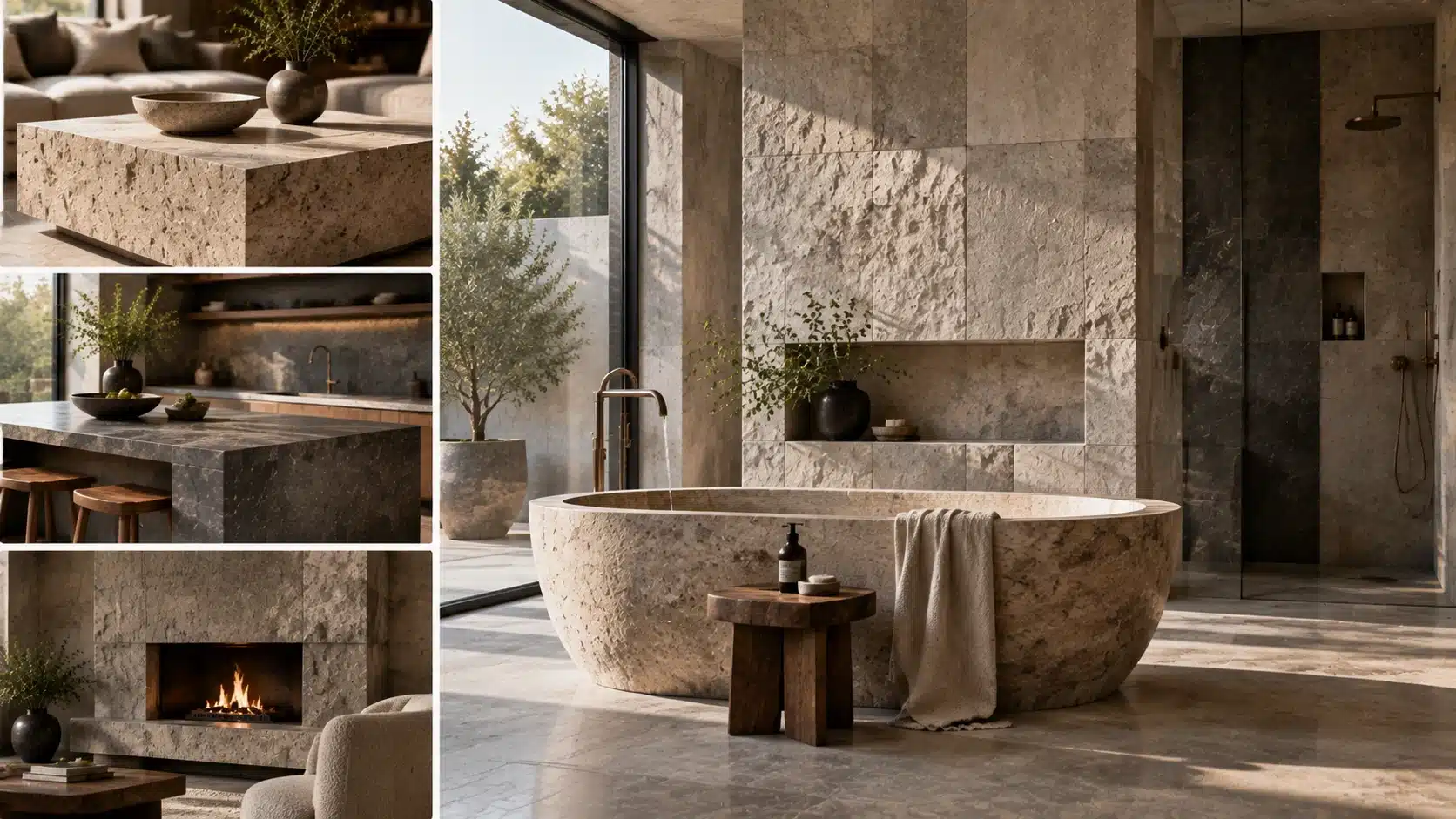
Stone adds natural variation and prevents brutalist spaces from feeling flat or overly industrial. Materials such as travertine, slate, and limestone bring depth through their patterns and earthy textures.
They work especially well for coffee tables, kitchen islands, fireplace surrounds, and bathroom surfaces where their raw beauty can become a focal point.
5. Matte Finishes Over Glossy Surfaces
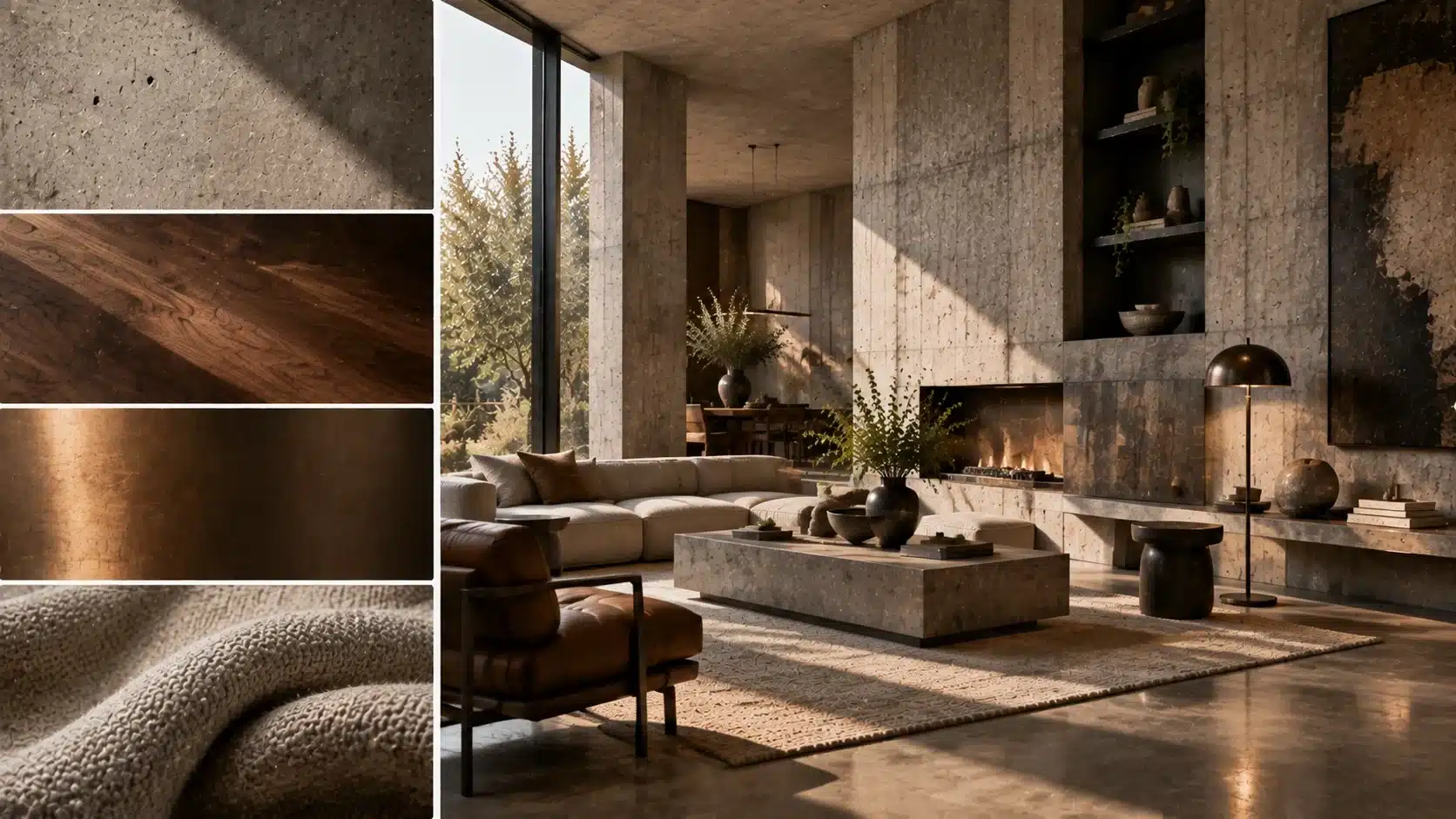
Brutalist interiors usually rely on matte and textured finishes because they highlight the natural character of materials. Matte paint, honed stone, brushed metals, and natural wood finishes create a more authentic look, while high-gloss cabinets, shiny tiles, and reflective surfaces can make the space feel disconnected.
How to Create Brutalist Interior Design at Home Step by Step
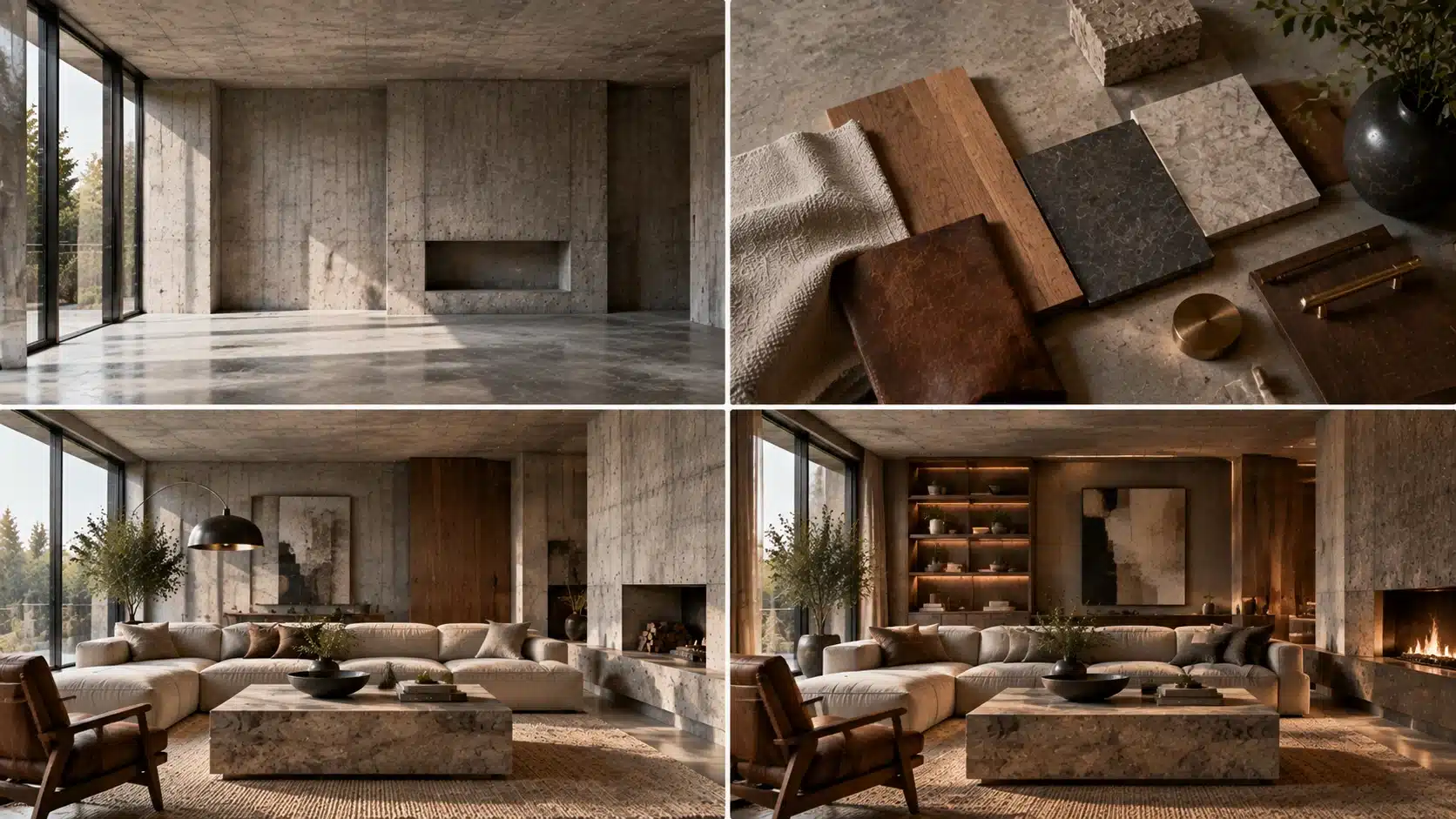
Brutalist interior design comes together in layers, never all at once. Start with one architectural anchor, then balance the surfaces, furniture, light, textiles, art, and daily storage.
-
Pick one brutalist anchor. A concrete fireplace, a microcement feature wall, a stone coffee table, an exposed ceiling, or one oversized sculptural sofa. Just one.
-
Build a restrained base palette. Three or four related tones, not fifteen shades of gray.
-
Mix your hard materials. Pair concrete with stone, metal, and timber instead of repeating concrete on every plane.
-
Add one or two heavy forms. A room full of statement pieces has no statement left.
-
Plan lighting before accessories. Rough plaster, concrete, stone, and textured brick all need directional light to look like anything.
-
Bring in warmth. Wool, leather, linen, oak, walnut, rugs, and upholstery.
-
Solve storage. Recessed shelving, flush cabinetry, built-ins, and low closed units. Visible clutter looks messy against clean concrete.
How to Choose Furniture for a Brutalist Interior
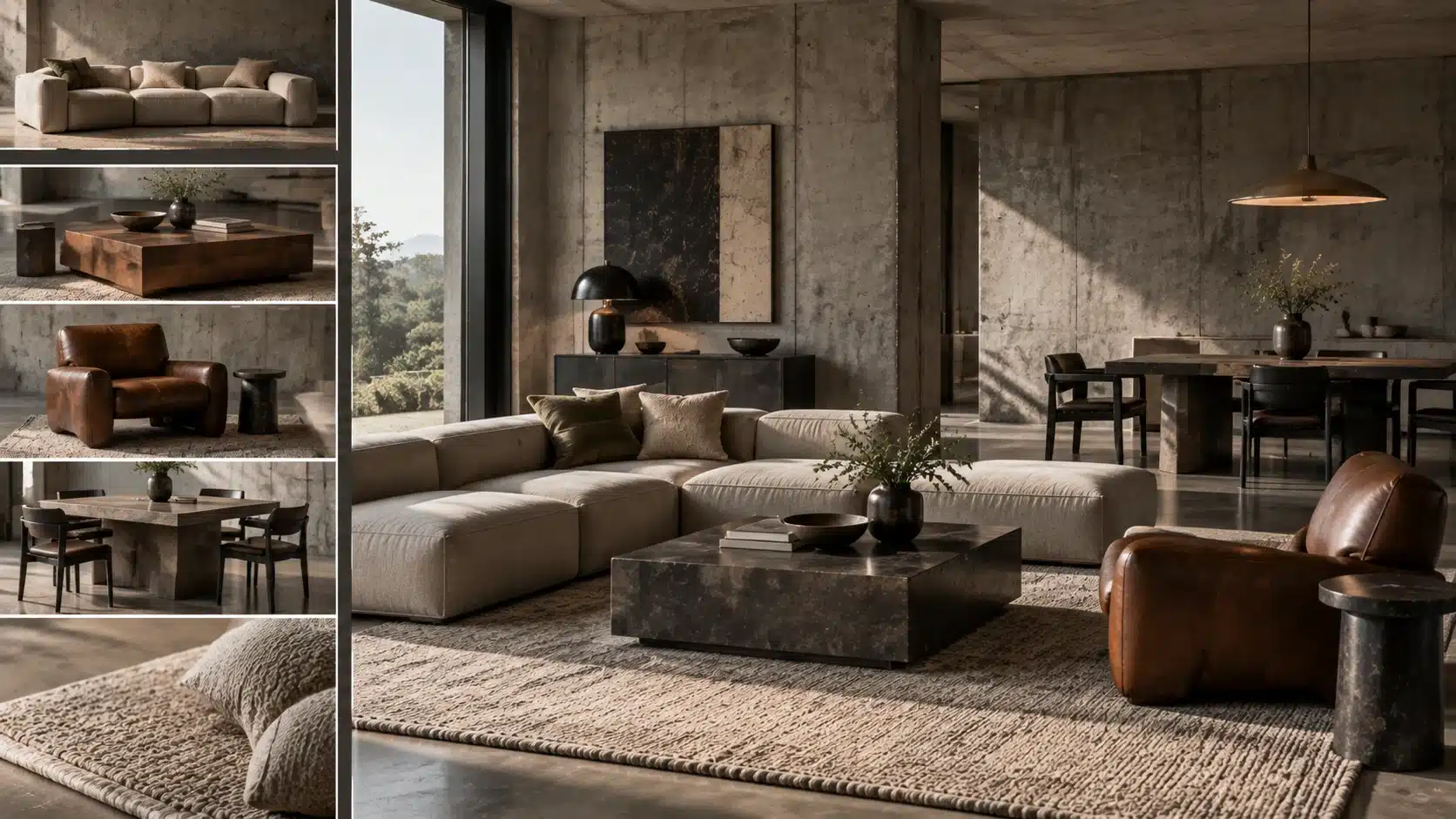
Furniture plays an important role in a brutalist interior because each piece needs to support the room’s strong architectural character.
-
Choose Strong, Sculptural Forms: Brutalist furniture often features simple but powerful silhouettes. Look for low-profile sofas, oversized lounge chairs, block-style coffee tables, and solid dining tables that feel grounded.
-
Prioritize Natural Materials: Materials like leather, wood, stone, and textured fabrics work well because they soften the heavier look of concrete and metal. Walnut, oak, linen, wool, and aged leather can add warmth.
-
Focus on Scale and Proportion: Large architectural spaces can handle oversized furniture, but smaller rooms need careful selection. A single statement chair or sculptural table often works better than adding multiple heavy pieces.
-
Keep Shapes Simple: Avoid fussy furniture with busy patterns or extra flourishes. Brutalist interiors work best with clean lines, geometric forms, and pieces that highlight craftsmanship.
-
Add Comfort Through Textures: Because brutalist spaces lean on hard surfaces, soft elements matter. Wool rugs, linen cushions, upholstered seating, and woven fabrics help make the room feel more welcoming.
Empty or severe isn’t the goal here. The right furniture balances strong architectural forms with everyday comfort.
How to Make Brutalist Interiors Feel Warm Instead of Harsh
Raw surfaces turn livable once you balance them properly. Warm light, timber, leather, wool, linen, plants, rugs, and soft acoustics do most of that work for you.
-
Use Timber Against Concrete: Walnut adds depth in bright rooms. Oak keeps darker rooms from closing in. Matte finishes hold up better than glossy stains next to a mineral surface.
-
Add Tactile Textiles: Wool rugs, linen curtains, heavy throws, and leather upholstery. Boucle works in small doses on one chair. It’s an easy step to skip, and skipping it is often why a concrete room feels unfriendly.
-
Fix the Acoustics: Rugs help most. Full-height curtains help next. Upholstered seating, a stuffed bookshelf, and fabric panels behind art take care of the rest.
-
Add Plants Carefully: Go big and go sparse. One large architectural plant against a raw wall works. A cluster of small pots on a concrete ledge looks like a garden center display.
Small Pro Tip: Watch how natural light changes concrete and textured surfaces throughout the day before adding decor.
Design coverage backs this up. Vogue Singapore’s guide to brutalist interior design and Dezeen’s lookbook of welcoming brutalist interiors both point to the same fix: timber, textiles, and greenery keep concrete-heavy rooms from turning severe.
How Much Does a Brutalist Interior Cost?
Costs swing widely here. A paint and furniture refresh costs far less than structural concrete work. Set your visual priorities before you spend any real money on materials.
|
Upgrade |
Typical U.S. cost |
|---|---|
|
Polished concrete flooring |
$2 to $16 per sq. ft. |
|
Concrete resurfacing |
$3 to $5 per sq. ft. |
|
Standard wall and ceiling plastering |
$2 to $10 per sq. ft. |
|
Venetian or lime plaster, applied |
$10 to $25 per sq. ft. |
|
Microcement, professionally installed |
$10 to $18 per sq. ft. (decorative, multi-layer work runs higher) |
Where to Spend
Floor first. You walk on it daily, and you can’t style around a bad concrete floor. Lighting second — weak lighting wastes a good surface.
Then one sculptural piece, bought properly. A single stone or timber table anchors the room. Last, skilled hands on plaster or microcement. With those finishes, the labor is the product.
Where to Save
Wet rooms are the easy win. Concrete-look porcelain tile beats a poured slab on both moisture and price. Paint carries the secondary walls.
Go secondhand for the rest. Vintage metal shelving and solid wood sand back to a raw finish. Then buy fewer accessories; that one costs nothing and usually improves the room.
Modern Interiors vs. Brutalist Interior Design
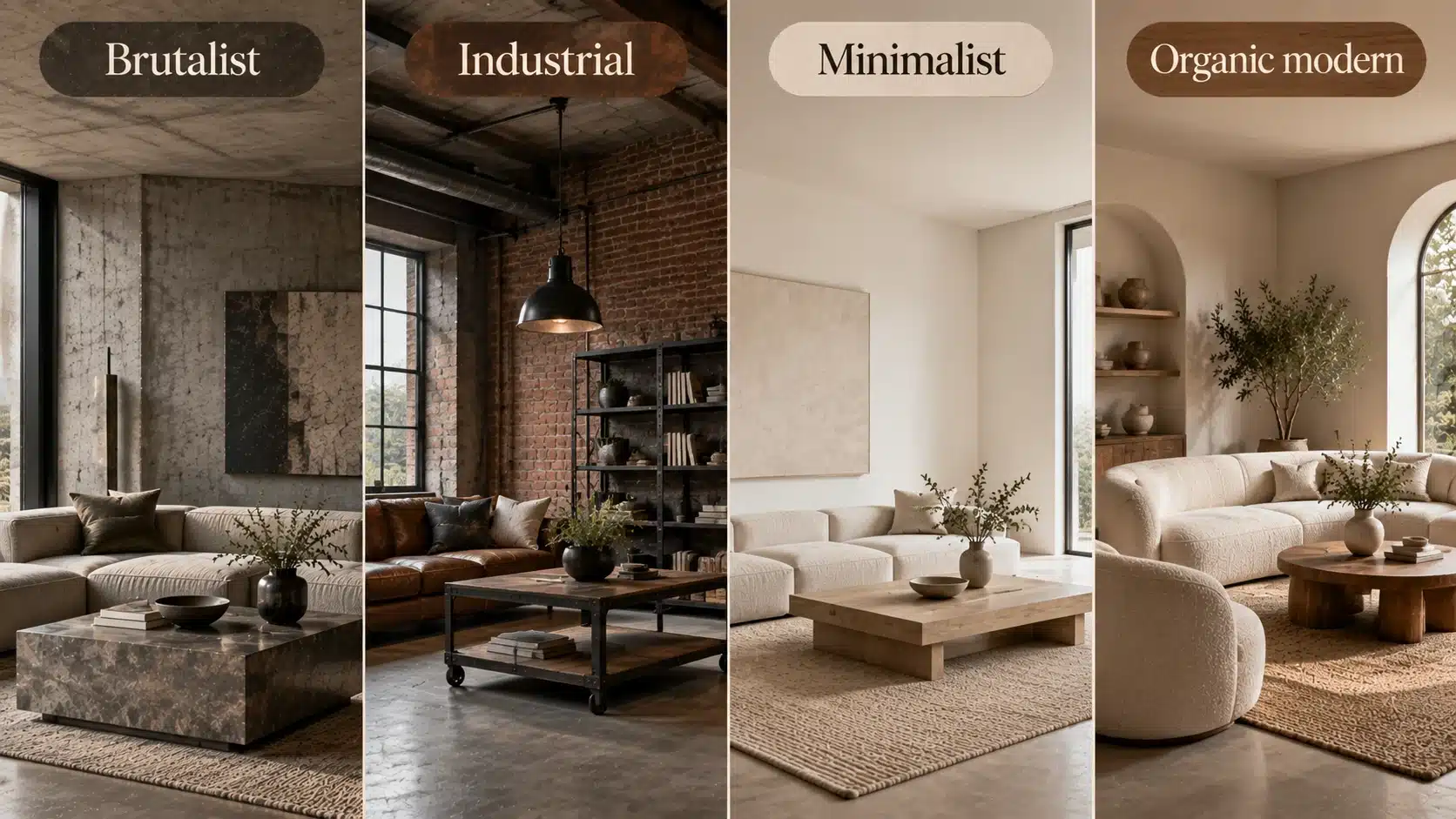
These four styles share neutral palettes and exposed materials. Their proportions, surface treatments, decoration levels, and emotional character still pull in clearly different directions when you compare them.
|
Style |
Focus |
Shapes |
Feeling |
|---|---|---|---|
|
Brutalist Design |
Mass and raw material |
Monolithic |
Architectural |
|
Factory parts |
Utilitarian |
Urban |
|
|
Minimalist Design |
Reduction |
Light and straight |
Calm |
|
Organic modern |
Nature and softness |
Rounded |
Relaxed |
Industrial borrows from factories, minimalism removes, organic modern softens, and brutalism builds weight.
Brutalist Interior Design Mistakes That Make a Home Feel Unfinished
Failed brutalist rooms usually come from excess, not restraint. Too much gray, too many hard surfaces, weak lighting, small furniture, and fake finishes usually cause the damage.
-
Gray everywhere: Without a warm tone somewhere, the room reads as an office corridor.
-
Cheap concrete-effect finishes on every wall: One panel can pass. Four cannot.
-
Cool white lighting: It drains the warmth out of stone and timber.
-
Furniture that is too small: Underscaled pieces look temporary against heavy surfaces.
-
No softness anywhere: No rug, no curtain, no upholstery; that room echoes, and nobody sits in it.
One more trap sits behind all five. People confuse unfinished with badly finished.
Brutalist surfaces look raw on purpose. The detailing behind them is still careful. Formwork lines are planned, edges are considered, and joints line up. Sloppy work doesn’t become a style just because the material is rough.
Frequently Asked Questions
Does brutalist interior design only use concrete?
No, brutalist interiors also use wood, stone, metal, plaster, and textured fabrics to create a balanced and comfortable look.
How do you make a brutalist interior feel warmer?
Adding wood, soft textiles, warm lighting, rugs, plants, and natural textures helps soften the heavier materials used in brutalist spaces.
Can brutalist interior design work in a small home?
Yes, small homes can use brutalist elements through textured walls, sculptural furniture, neutral colors, and carefully selected statement pieces.
Is brutalist interior design expensive?
Brutalist interiors can range from affordable updates with paint and furniture to expensive renovations using concrete, stone, and custom finishes.
Is brutalist interior design still popular?
Yes, modern brutalist interiors remain popular because they combine timeless materials, functional design, and a strong visual identity.
Can renters create a brutalist interior?
Yes, renters can use brutalist-inspired furniture, lighting, rugs, artwork, removable finishes, and textured decor without major renovations.
Raw Where It Counts
The best brutalist homes feel deliberate, not severe. They keep architectural honesty while adding enough warmth, texture, function, and personality for comfortable, everyday life.
No house needs to become a concrete bunker; mine started with one plaster wall and a heavy stone table. Start there, with one material, one sculptural piece, and a tight color palette.
Then balance it with a rug for the floor and the echo, lamps that graze the surfaces, and empty space around the heavy pieces so they read as choices, not clutter.