A Housebuilder’s Guide to Introducing Natural Materials Into New Homes

New-build homes offer efficiency, convenience and a fresh start, but creating character from day one can be more challenging. Without the worn floorboards, exposed stonework and architectural quirks found in older properties, a newly completed home can sometimes feel a little too perfect.
Natural materials offer housebuilders an opportunity to change that. Stone, timber, wool, clay and other naturally varied surfaces can introduce warmth and individuality without sacrificing the clean appearance expected from a modern development.
Make the Flooring Part of the Architecture
Flooring occupies a significant proportion of the visible space within a home, making it one of the most effective places to introduce natural materials.
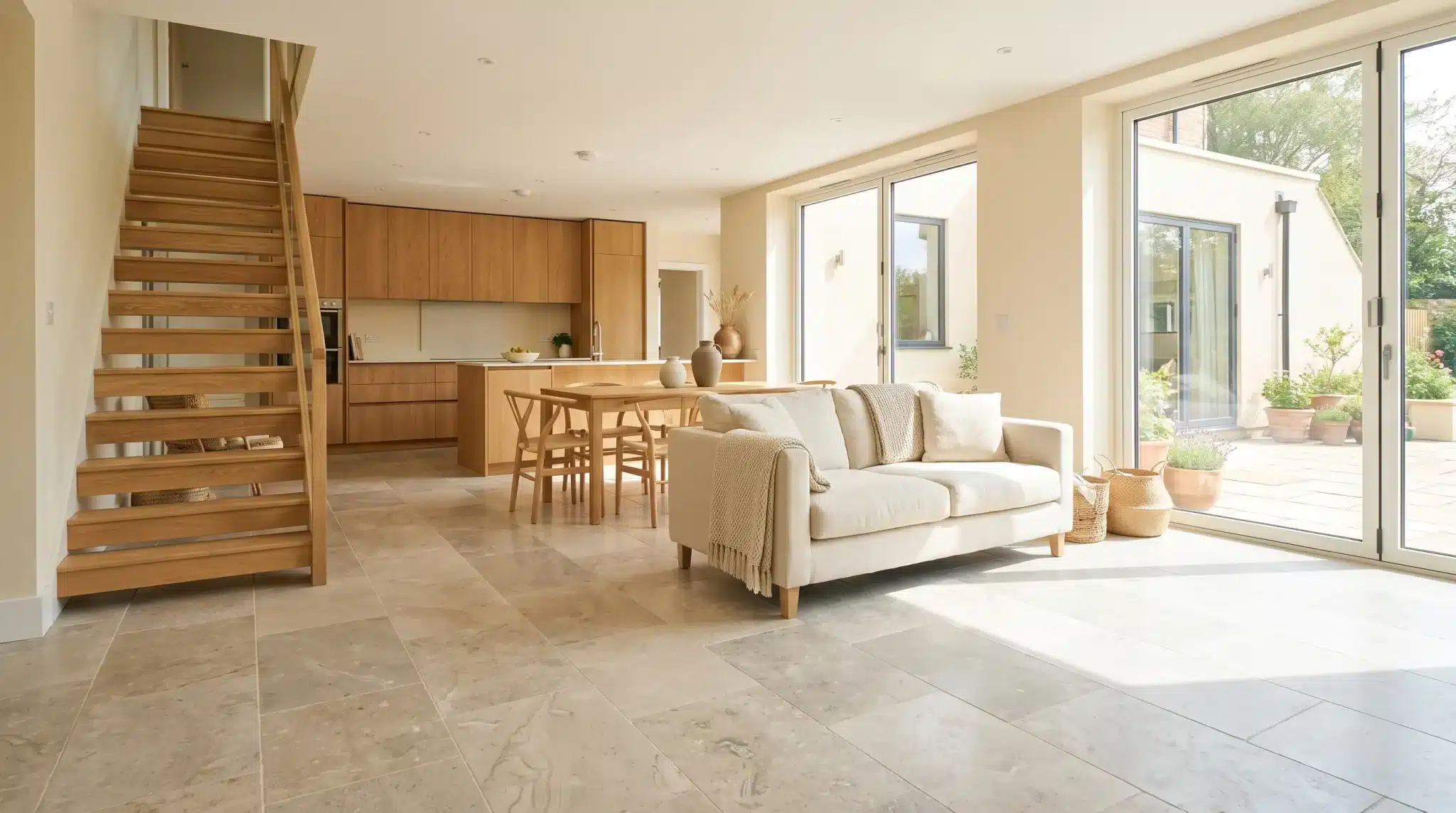
Stone can work particularly well across kitchens, hallways and open-plan ground floors. Rather than being treated simply as a decorative finish, it can help establish the character of the entire property.
For example, Dijon limestone from Quorn Stone combines soft beige and neutral grey tones and is available in different formats and finishes, allowing it to work across both contemporary and more traditional schemes.
A relatively neutral floor also gives future homeowners flexibility. Furniture, paint colours and accessories can change over time without requiring the main architectural finishes to be replaced.
Balance Stone With Timber
Natural materials tend to become more effective when they are layered rather than used in isolation.
Stone flooring can be balanced with timber cabinetry, staircases, shelving or internal doors. The cooler mineral character of stone contrasts with the warmth and visible grain of wood, creating an interior that feels established without needing excessive decoration.
For contemporary developments, the detailing can remain clean. Flat-fronted timber kitchens, simple staircases and large-format stone flooring can provide natural texture while retaining a modern architectural style.
Use Variation Rather Than Trying to Eliminate It
Mass housebuilding naturally relies on consistency, but interiors do not need to look completely identical.
One of the advantages of natural materials is their variation. Stone can contain differences in tone, fossils and veining, while every piece of timber has its own grain. Dijon limestone, for instance, naturally varies between soft beige and light grey and can include minerals, fossils and calcite veining.
Rather than treating these differences as imperfections, they can become part of the design. Even homes with the same floor plan can develop slightly different visual identities.
Create a Connection With Outdoor Spaces
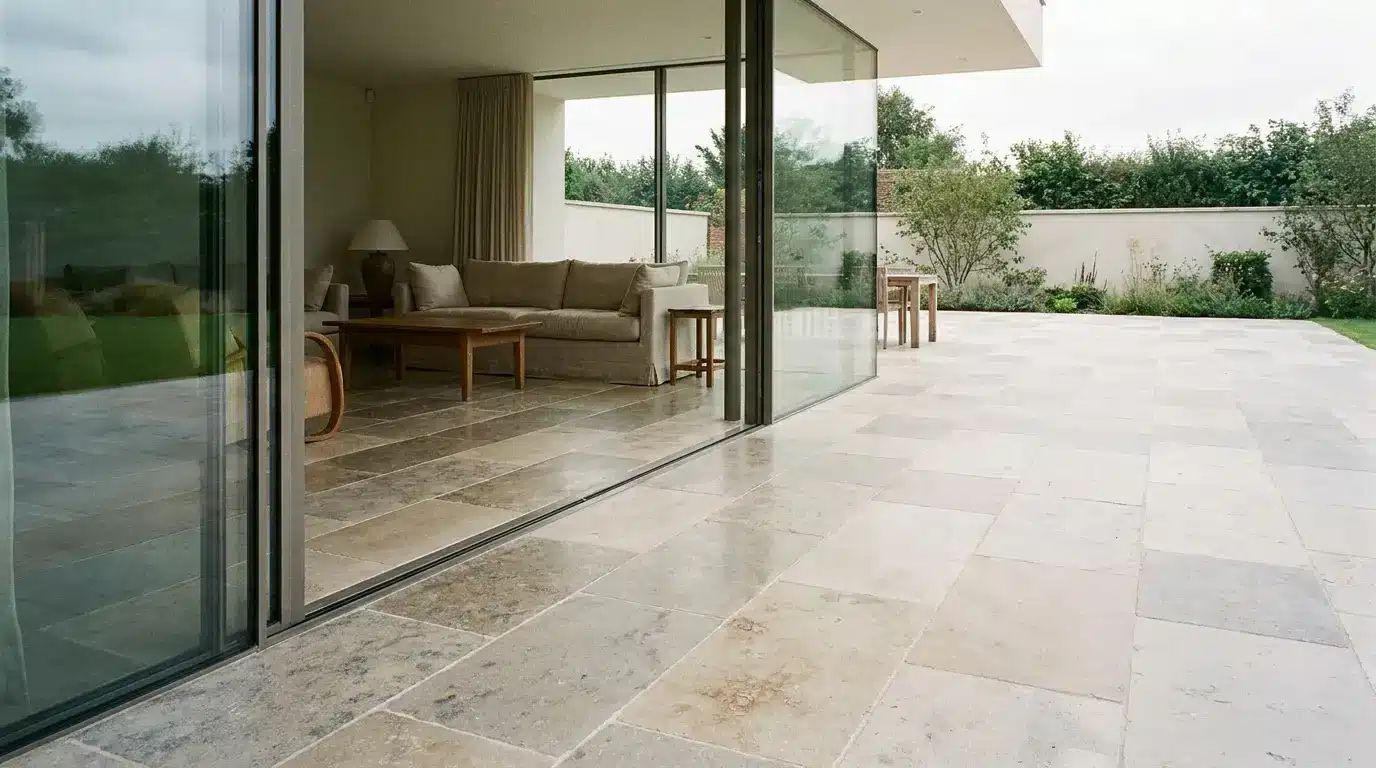
Natural materials can also help new developments feel better connected to their surroundings.
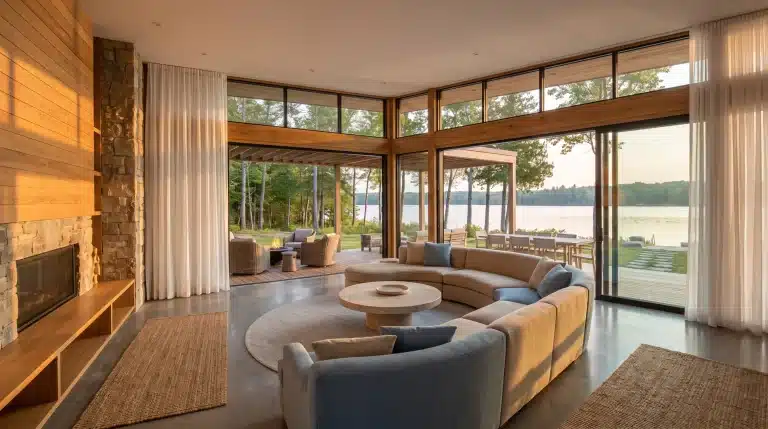
This is particularly useful where homes feature large glazed doors opening onto patios or gardens. Using visually related materials inside and outside can make the transition feel less abrupt and give ground-floor living spaces a greater sense of scale.
Some Dijon limestone products are offered in both interior tile and exterior paving formats, making this type of coordinated approach possible where the relevant specification is appropriate.
The principle can extend beyond flooring. Timber, planting and natural colours can all strengthen the relationship between the architecture and landscape.
Think About How the Home Will Age
Housebuilders understandably focus heavily on how a development will look when buyers first walk through the door. It is equally valuable to consider how those interiors might look ten or twenty years later.
Natural materials can develop character as they are lived with. This can help a home feel established rather than dependent on whatever decorative trend happened to be popular when it was built.
Practical requirements still matter. Natural stone needs appropriate installation and care, for example, while timber specifications should reflect where and how the material will be used. Thinking about maintenance from the beginning helps homeowners understand what their finishes will require over the longer term.
Build Character Into the Home, Not Around It
Creating character in a new home does not require artificial ageing or attempts to recreate a period property.
Instead, character can come directly from the materials used to construct and finish the space. Stone flooring, timber joinery and other naturally varied surfaces provide depth that can be difficult to achieve through decoration alone.
For housebuilders, this offers an opportunity to create homes that feel contemporary when completed but are not entirely dependent on contemporary trends. By making natural materials part of the architecture itself, a new property can begin developing its own identity from the moment someone moves in.