What Makes Window Treatments Work in DC Homes and How to Get Them Right

Washington DC homes span a remarkable range of architectural styles and periods, from Federal-era rowhouses in Georgetown and Capitol Hill through Craftsman bungalows in Petworth, mid-century ranches in Silver Spring, and contemporary condominiums in Navy Yard and NoMa. Each architectural context creates different window treatment challenges and opportunities, and the treatments that work beautifully in one type of home can look entirely wrong in another. Understanding what your specific home and windows actually need is the foundation of a window treatment decision that holds up over years of daily life.
DC’s Climate Creates Specific Treatment Requirements
Washington DC has one of the more demanding climates on the East Coast for window treatments. Summers are hot and humid, with intense sun on south and west-facing exposures that creates significant heat gain and glare in the hours when rooms are most actively used. Winters are cold enough that windows are a meaningful source of heat loss, and the thermal performance of window treatments contributes to both comfort and energy costs during the heating season.
This combination of summer heat management and winter insulation is not something every window treatment addresses equally well. Cellular shades with honeycomb construction provide better insulation against both heat gain in summer and heat loss in winter than flat roller shades or horizontal blinds, making them worth serious consideration for DC homes where energy performance is a meaningful criterion alongside aesthetics. Heavier drapery panels that can be closed in winter to reduce heat loss through glass add a layer of thermal performance that lighter treatments do not provide.
UV intensity in DC is also higher than many homeowners account for when selecting treatments. Direct afternoon sun through west-facing windows fades flooring, furniture, and artwork over time in ways that accumulate slowly but are difficult to reverse. Solar shades and UV-filtering fabrics address this proactively, and the investment in UV protection pays dividends over the life of the furnishings they protect.
Architectural Context Shapes What Works
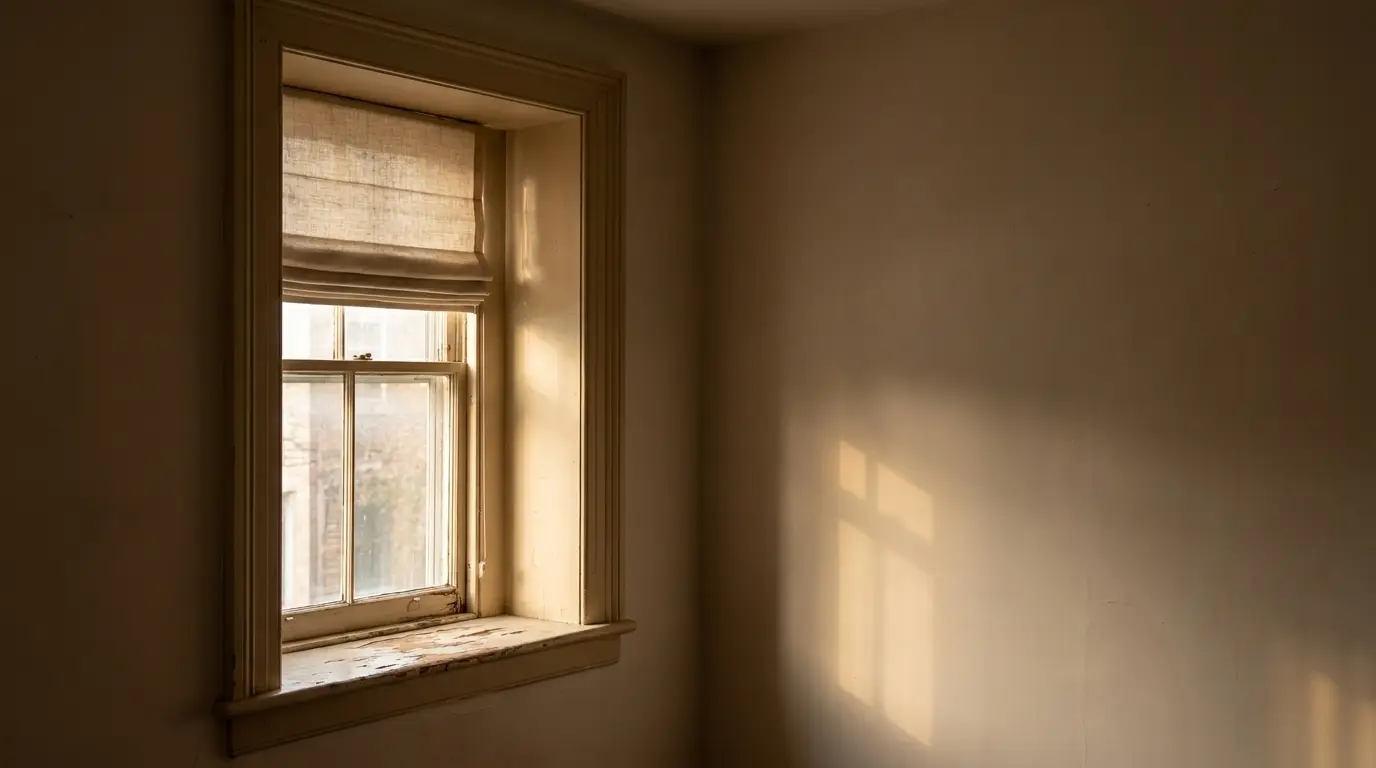
The architectural character of a DC home creates both constraints and opportunities for window treatments that are worth understanding before any product decision is made.
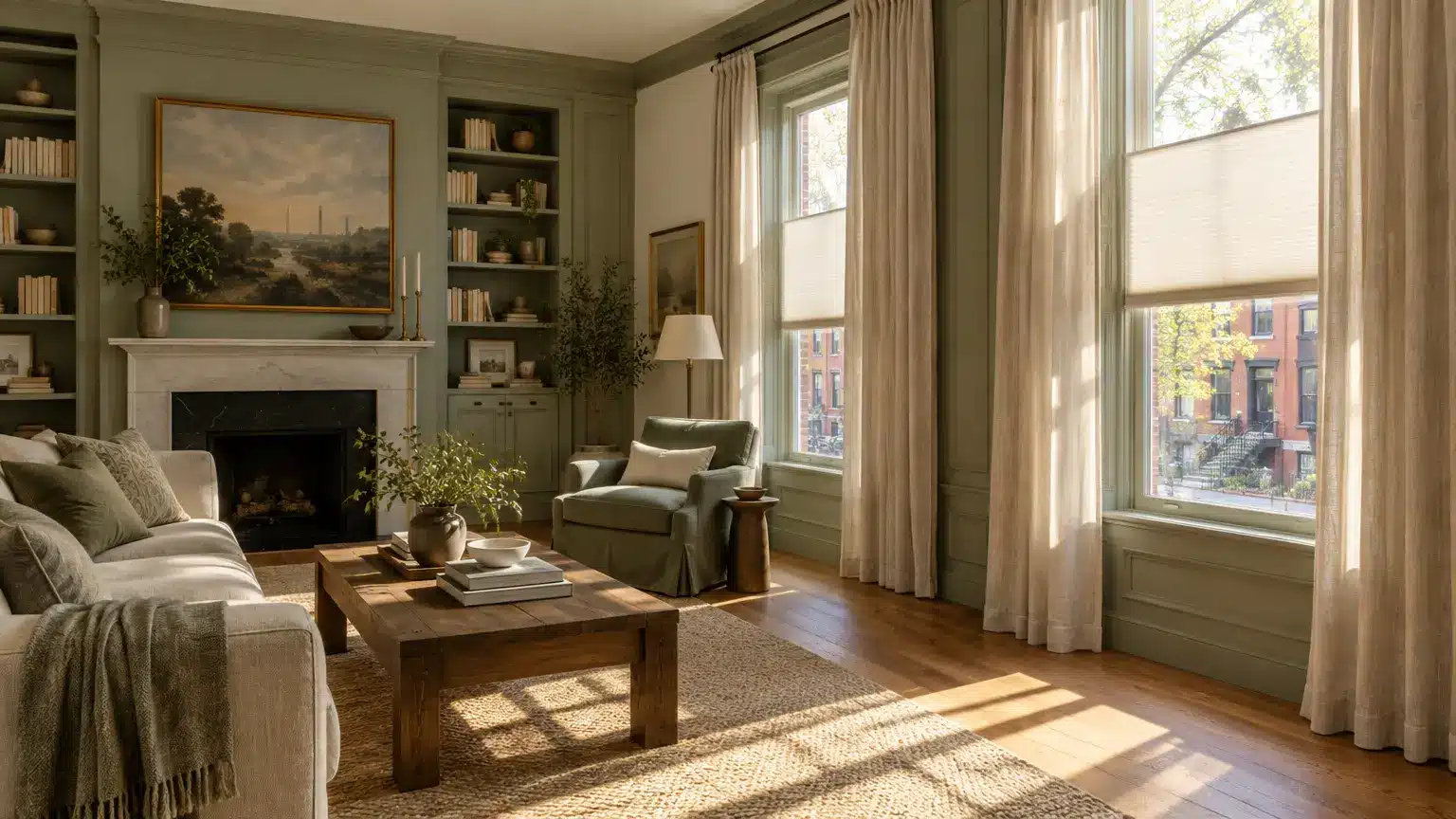
Georgetown and Capitol Hill rowhouses typically have tall, narrow windows with deep wood frames and substantial trim that defines the character of each room. These windows suit inside-mount treatments that sit within the frame and emphasize the architectural detail, or outside-mount treatments that are precisely proportioned to the trim and cornice work. Drapery in these spaces benefits from full ceiling height installation that emphasizes the vertical proportions of the rooms rather than cutting across them at a standard height.
Mid-century modern homes in Bethesda, Chevy Chase, and Silver Spring often have horizontal window bands, floor-to-ceiling glass, and minimalist detailing that calls for clean-lined treatments without fussy hardware or ornate fabric. Solar shades, simple roller shades, and sleek horizontal blinds work in these spaces in ways that heavily decorative treatments do not.
Colonial and traditional homes across Northern Virginia and the Maryland suburbs have a formal proportion that suits classic treatments including wood blinds, tailored Roman shades, and drapery with traditional heading styles. The challenge is avoiding the trap of selecting treatments that feel generic in a traditional space rather than feeling considered and specific to the home.
Contemporary condominiums and new construction in DC proper often have oversized minimalist window openings that require treatments capable of covering significant glass area without looking heavy or closing in the space. Motorized roller shades and solar shades work effectively at scale in these environments, and motorization is often practical rather than optional for windows that are too large or too high for comfortable manual operation.
What the Design Consultation Delivers
Stoneside’s window treatments dc service brings design consultants to DC area homes for in-home consultations that address the specific architectural context, light conditions, and functional requirements of each space. The value of this consultation is in the translation of what a homeowner wants to achieve into a specific product recommendation that will actually achieve it, with accurate measurement and professional installation that ensures the finished result matches the intended design.
The in-home consultation is where questions about mount type, treatment scale, fabric or material performance, and hardware selection are resolved with the actual windows and room in view rather than in the abstract. A consultant who has seen thousands of DC area windows understands which solutions work for which architectural conditions and can steer away from approaches that seem appealing in concept but create problems in practice.
Privacy and Light Control Together
Privacy is a particular consideration in DC’s denser neighborhoods, where rowhouse proximity, busy streets, and urban density create sight lines that require treatment without sacrificing the light that makes rooms feel alive. The challenge is that treatments which provide privacy often reduce light, and treatments that allow light often compromise privacy, particularly in the evenings when interior lighting makes interiors visible from outside.
Layered treatments that combine a light-filtering sheer or solar shade with a heavier privacy layer address this by allowing the configuration to change throughout the day. During the day, the sheer provides light and outward visibility while filtering glare and providing daytime privacy from street level. In the evenings, the heavier panel closes to provide complete privacy. This flexibility is what makes layered treatments particularly effective in urban DC homes where both daytime openness and evening privacy matter.
The Professional Installation Difference
The final quality determinant for any window treatment project is the installation. Custom fabrication and quality materials produce results that professional installation brings to life and that poor installation undermines. Brackets at the correct height and precisely level, hardware that is appropriately sized for the weight of the treatment, motorized systems configured and tested before the installer leaves, and drapery hung at the height and fullness that the fabric and the room require are all outcomes that professional installation delivers consistently and that self-installation produces inconsistently.
For DC homeowners investing in custom treatments for architecturally significant rooms, the installation is the final step that determines whether the investment is fully realized.