What’s the Best Floor Cleaning Equipment for a Small Retail Store or Office? A Comparison Guide

Cleaning a small retail store or office is a different problem than cleaning a warehouse. The square footage is modest, storage space is tight, and there is rarely a dedicated janitorial crew. The floor is usually a mix of surfaces, with tile near the entrance, vinyl or LVP through the sales area, and sealed concrete in the back. The question is less about which machine is most powerful and more about which cleaning approach fits a space that measures in the low thousands of square feet.
The stakes are practical. Labor is the dominant cost in floor care. According to cleaning industry data compiled from ISSA and Bureau of Labor Statistics sources, labor typically accounts for 50 to 70 percent of a cleaning operation’s total expenses, which is why the time a floor takes to clean matters as much as the sticker price of any equipment. Poorly maintained floors carry a second cost as well. The CDC has estimated that slip-and-fall injuries run to roughly $100 million per day in the United States, and wet or dirty floors are a common trigger.
This guide, updated July 2026, compares four ways a small retail store or office keeps its floors clean. The options run from a large national distributor to an outsourced janitorial service, a dedicated floor-equipment specialist, and a hospitality-focused supplier. Each is weighed on pricing, services, credentials, typical use cases, and honest pros and cons.
1. Imperial Dade
Imperial Dade is one of the largest janitorial and foodservice distributors in North America, with a catalog that spans cleaning chemicals, paper products, and floor-care equipment. For a small retail store or office, the draw is buying a floor machine from the same vendor that already supplies the mop heads, liners, and paper towels, which keeps purchasing under one account.
Pricing and Cost Tiers
Pricing is distributor-based and generally quote-driven rather than published. Machines can be bought outright, and distributors of this scale also arrange rental and lease terms, so the cost works as either a one-time purchase or a monthly payment negotiated within a broader supply relationship.
Machine Types
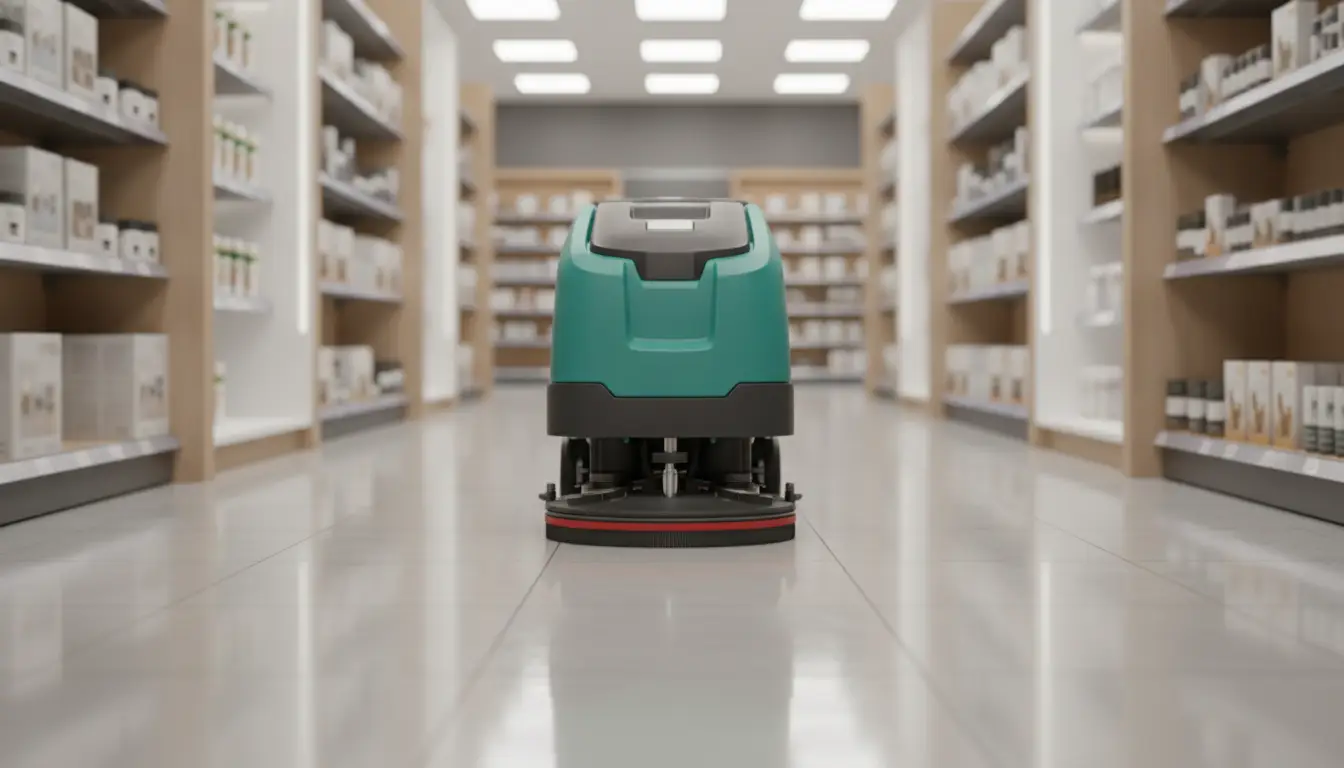
The catalog spans the full range of formats. On the compact end it carries units such as the i-Mop Lite, a battery walk-behind the company says cleans over 15,000 square feet per hour. Beyond that it stocks autonomous and robotic scrubbers, rider and stand-on machines, walk-behind scrubbers, burnishers, sweepers, wet/dry vacuums, and carpet extractors, so a buyer can compare a small scrubber against an autonomous option through one source.
Features
Features vary widely by model. Compact scrubbers favor a narrow cleaning path and light weight for tight retail aisles, while larger units add tank capacity and wider paths for open floor, and power runs from cordless battery to corded. The machines are rated across tile, vinyl and LVP, sealed concrete, and epoxy, which covers the mixed flooring in most small stores.
Use Cases
It suits stores and offices that already buy chemicals, liners, and paper from a national distributor and want to add a scrubber without onboarding a separate vendor. The single-account model reduces purchasing overhead and works well for multi-location retailers standardizing equipment across sites.
Maintenance and Support
Imperial Dade offers equipment demonstrations and a factory-trained specialist network, and it supports floor-maintenance programs covering stripping, waxing and refinishing, burnishing, and pad selection. Parts and service access are backed by the company’s national footprint, though a small single-site buyer may find support geared toward larger accounts.
Alternatives
A buyer weighing Imperial Dade against other approaches might consider a steam mop or robot vacuum-mop for very small spaces, a manual mop-and-bucket for the lowest upfront cost, a one-time equipment rental for occasional deep cleans, or hiring a professional cleaning service to remove equipment ownership entirely.
Credentials
The scale here is well documented by outside sources. According to a company analysis by CB Insights, Imperial Dade and the distributor it merged with in 2025 together employ more than 13,000 people and generate roughly $10 billion in annual revenue, and the business has completed more than 90 acquisitions to reach that footprint.
Pros
- Very broad catalog covering every machine type plus chemicals and consumables in one place
- Compact through autonomous scrubbers available with factory-trained demonstrations
- Large national footprint with established parts and service logistics
Cons
- A generalist distributor at this scale is built around large-account volume, so a small single-location buyer may get less individualized machine-matching and support than a dedicated specialist provides
2. 4M Building Solutions
4M Building Solutions is not an equipment seller but a full-service commercial cleaning company, included here because outsourcing the work entirely is a real alternative to buying a machine. For a small retail store or office, 4M sends crews that handle daily cleaning, floor care, and restroom service on a schedule, so the business never owns, stores, or maintains a scrubber at all.
Pricing and Cost Tiers
Pricing follows a recurring service-contract model rather than a one-time purchase, rental, or lease. Costs are quoted by facility size, cleaning frequency, and scope, so the expense is ongoing and scales with the level of service. There is no equipment cost tier to weigh, since the machines belong to the contractor rather than the client.
Machine Types
Because 4M supplies labor rather than equipment, the buyer never selects a machine format. Crews bring and operate their own gear, typically walk-behind and rider scrubbers, burnishers, sweepers, and extractors, so the client gets the cleaning result without choosing, storing, or standardizing on any machine.
Features
The relevant features here are service features rather than machine specifications. Programs cover daily janitorial support, floor and carpet care, disinfection, restroom service, post-construction cleaning, and specialty work such as pressure washing. Scope, scheduling, and compliance are what a buyer configures rather than tank size or cleaning-path width.
Use Cases
It fits owners who would rather pay for a result than manage equipment, particularly offices without the staff time to run and maintain a scrubber, or stores that want consistent cleaning without training anyone on a machine. It also suits multi-unit and mixed-use properties that prefer one accountable vendor across sites.
Maintenance and Support
Maintenance is entirely the contractor’s responsibility. Floor stripping, refinishing, burnishing frequency, and pad selection are handled by 4M’s teams, so the client carries no parts inventory or repair burden, at the cost of less visibility into how and when restorative floor work is scheduled.
Alternatives
A buyer considering 4M against other options might instead purchase or rent a scrubber to keep cleaning in-house, use a manual mop-and-bucket for a very small footprint, or rely on a robot vacuum-mop for light daily upkeep between deeper cleans. The core decision is whether to own the process or outsource it.
Credentials
Independent sources put the company’s scale in context. Its Glassdoor company profile describes a janitorial contractor operating since 1978 with roughly 4,000 team members cleaning more than 125 million square feet a day across 14 states. The Building Service Contractors Association International has recognized 4M with its top safety award in the large-company category in 24 of the last 25 years.
Pros
- No equipment to buy, store, maintain, or train staff on
- Cleaning handled on a set schedule by an outside crew
- Scope can expand to disinfection, restrooms, and specialty cleaning
Cons
- A recurring service contract is an open-ended cost rather than a one-time equipment investment, and outsourcing means less direct control over exactly when and how the floors get cleaned
3. Nassco Inc
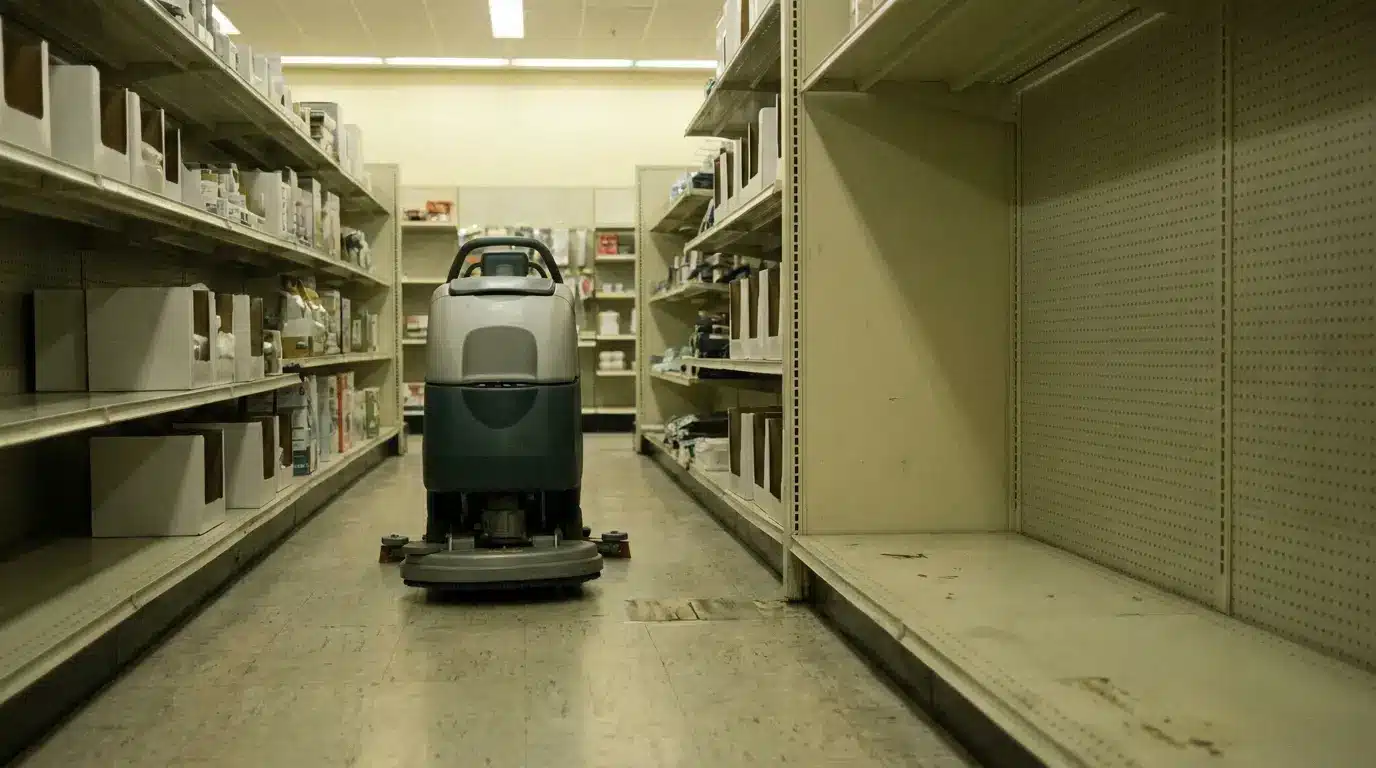
Nassco is a family-owned janitorial and packaging distributor that treats floor-equipment selection as a consultation rather than a catalog transaction. For a small store or office, that means a specialist matches a walk-behind or compact scrubber to the actual floor and layout rather than leaving the buyer to guess from a spec sheet.
Pricing and Cost Tiers
Nassco offers machines to purchase, rent, or lease, and also sells used equipment, so a small buyer can scale the commitment to the budget across all three tiers. The company points to floor equipment improving cleaning productivity by up to 64 percent over manual methods, which is the core economic case for buying rather than mopping.
Machine Types
The floor-care line carries automatic scrubbers, sweepers, burnishers, and wet/dry vacuums from manufacturers including Nilfisk, Kärcher, Tomcat, Tennant, and Cenobots, and the range includes autonomous and robotic options alongside walk-behind and rider formats. For a small footprint, the specialist typically steers a buyer toward a compact or walk-behind scrubber rather than a rider that only pays off on a large open floor.
Features
Because the range covers several manufacturers, a buyer can compare features directly, from cleaning-path width and tank capacity to battery versus corded power. Machines are rated across tile, vinyl and LVP, sealed concrete, and epoxy, and the consultative approach means those features are matched to the room rather than sold from a fixed lineup.
Use Cases
It is a fit for small retail stores and offices that want to own the right machine and keep it maintained, especially buyers who value a specialist walking through floor type, square footage, and aisle width before recommending a compact or walk-behind scrubber. It also suits facilities that need janitorial and packaging supplies from the same source.
Maintenance and Support
Beyond the sale, Nassco provides installation and operator training, planned maintenance, replacement parts, and pad selection guidance, and it services floor equipment even on machines it did not sell. That after-sale support covers stripping, refinishing, and burnishing, and is the difference between a scrubber that keeps running and one that ends up in a closet.
Alternatives
A buyer weighing Nassco might also consider a national distributor for a wider single-account catalog, an outsourced cleaning service to avoid owning equipment, a steam mop or robot vacuum-mop for very small spaces, or a manual mop-and-bucket where budget is the only priority. Nassco’s pitch is strongest for buyers who want to own and maintain the correct machine with local support.
Credentials
Nassco has been family-owned since 1955 and serves customers across Wisconsin, Illinois, Iowa, and Minnesota through three generations of the business. Its industry standing is recognized externally, since Nassco is a member of the International Sanitary Supply Association (ISSA), the trade body that publishes the cleaning industry’s benchmark production rates.
Pros
- Consultative machine-matching across several brands with in-facility demonstrations before purchase
- Purchase, rental, lease, and used cost tiers to fit a small budget
- Operator training, planned maintenance, and parts, including service on machines bought elsewhere
Cons
- Nassco is a regional distributor serving the upper Midwest, so buyers outside that footprint have less local service coverage, and its catalog leans toward janitorial and packaging rather than the hospitality-specific ranges some facilities also need
4. Guest Supply
Guest Supply is a hospitality-focused distributor owned by Sysco, and floor care is one category inside a much larger catalog aimed at hotels. The equipment sits alongside linens, amenities, and guest-room supplies rather than standing on its own, so the appeal is real mainly for a business that also needs those hospitality-adjacent products in the same order.
Pricing and Cost Tiers
Pricing is distributor and account-based, oriented toward properties placing regular, sizeable orders across many categories. Floor equipment is quoted within that account structure rather than sold as a standalone consumer purchase, which makes single-machine buying less straightforward than it is with a dedicated equipment vendor.
Machine Types
Guest Supply carries floor machines, buffers, and parts, anchored by its Pacific Floorcare range of more than 50 models of automatic scrubbers, buffers, burnishers, and orbital stripping machines. Formats include compact walk-behind, orbital, and rider units, though the selection is one slice of a broad housekeeping catalog rather than a specialist equipment lineup.
Features
On the Pacific Floorcare machines, features include orbital and disc scrub heads, corded burnishers running at high pad speeds, and compact walk-behinds built for tight spaces. Cleaning-path width, tank capacity, and power type vary by model, and the machines cover common hard-floor surfaces such as tile, stone, and sealed concrete.
Use Cases
It is best suited to hotels and hospitality properties that want to source floor machines in the same order as amenities, linens, and housekeeping supplies. A standalone retail store or office is outside its core customer profile, though a hospitality-adjacent business such as a salon or short-term rental operator may find the combined catalog useful.
Maintenance and Support
Floor care is handled within a wider housekeeping catalog rather than a dedicated equipment consultancy, leaning on manufacturer partnerships and Sysco’s network for parts and pad supply. Stripping, refinishing, burnishing, and pad selection are supported through the Pacific Floorcare line, but hands-on local service is less central than with an equipment specialist.
Alternatives
A buyer considering Guest Supply might instead use a dedicated floor-equipment distributor for closer machine-matching, a national janitorial distributor for a broader brand selection, an outsourced cleaning service to skip ownership, or a steam mop, robot vacuum-mop, or manual mop-and-bucket for the smallest spaces. Guest Supply makes the most sense when hospitality supplies are part of the same purchase.
Credentials
Guest Supply has more than 40 years in hospitality and, according to its company profile, serves roughly 25,000 customers in over 100 countries with a catalog of more than 30,000 products. As part of Sysco, it draws on a global logistics network built for the lodging industry.
Pros
- Very large catalog spanning floor care plus hospitality supplies in one account
- Carries the 50-plus-model Pacific Floorcare machine range plus floor-care parts
- Backed by Sysco’s global distribution and sourcing network
Cons
- The catalog and account model are built around hotel and hospitality volume, so a small standalone retail store or office is not the intended buyer and may find single-machine purchasing and local service harder to access than with a specialist
Comparison Overview
|
Company |
Pricing Model |
Key Feature |
Best For |
Limitation |
|
Imperial Dade |
Distributor pricing, quote-based |
Very broad janitorial and floor-machine catalog |
Buyers wanting one vendor for equipment and supplies |
Generalist scale over small-buyer guidance |
|
4M Building Solutions |
Recurring service contract |
Fully outsourced janitorial labor |
Owners who want no equipment to run |
Ongoing cost, less schedule control |
|
Nassco Inc |
Purchase, rental, or lease, plus service |
Consultative machine matching with training |
Small facilities buying and keeping a scrubber running |
Regional footprint, narrower non-floor catalog |
|
Guest Supply |
Distributor pricing, account-based |
30,000-plus SKU hospitality catalog |
Hotels sourcing floor care alongside amenities |
Built for hospitality volume, not small retail |
Frequently Asked Questions
Should a small retail store or office buy or rent floor cleaning equipment?
It depends on frequency and budget. A store scrubbing its floor daily usually recovers a purchase through labor savings, since machines can lift cleaning productivity well above mopping. For occasional deep cleans, renting or leasing avoids tying up cash and eliminates storage and maintenance. Several suppliers, Nassco among them, offer purchase, rental, and lease options so the decision can follow actual usage rather than a guess.
What size floor scrubber is right for a small retail space?
For most small stores and offices, a compact or walk-behind scrubber with a narrow cleaning path is the right call. The three numbers that decide it are square footage per clean, aisle width, and how often the floor is scrubbed. Compact battery machines are built for tight spaces with obstacles, while rider and stand-on models only pay off across large open areas.
Is an automatic scrubber worth it compared to a mop and bucket?
For a floor cleaned regularly, usually yes. A mop spreads dirty water and leaves floors wet, which is both a slip hazard and a slower process. An automatic scrubber applies solution, scrubs, and recovers water in a single pass, leaving the floor cleaner and drier. The productivity gain, often cited at well over 50 percent versus manual methods, is the main reason small facilities make the switch.
What flooring can a commercial scrubber be used on?
Most commercial scrubbers are rated for sealed concrete, epoxy, vinyl and LVP, VCT, tile, terrazzo, and polished stone, which covers the typical mix in a retail store or office. Brush or pad selection matters more than buyers expect, because the wrong pad can under-clean or damage a finish. It is worth confirming pad type by floor surface with the supplier before the first clean.
How much does floor cleaning equipment cost for a small business?
Compact and walk-behind commercial scrubbers commonly fall in the low four figures, with published ranges for small-facility machines starting around $1,399 and rising with cleaning path and tank size. Used equipment and rental or lease arrangements lower the entry cost further, which is why asking a supplier about all four options is worthwhile before buying outright.
Conclusion
There is no single best floor cleaning equipment for a small retail store or office, only the best fit for how the space is used. A national distributor wins on catalog breadth, an outsourced service removes the burden entirely, a specialist adds the most value when a buyer wants to own and maintain the right machine, and a hospitality supplier makes sense mainly for hotels sourcing across categories.
Key Takeaways
- Match the model to the space, since compact and walk-behind scrubbers suit small footprints while rider machines do not
- Training and after-sale service decide whether a purchased machine keeps earning its cost
- Purchase, rental, and lease options let a small buyer scale the commitment to actual usage
Next Steps
- Measure square footage, floor type, and aisle width before shortlisting any machine or vendor
- Ask each supplier about training, maintenance, and whether they offer a demo before you commit