What Size Rug for Queen Bed? Sizes and Tips

You finally found a rug you love. The color is right. The pattern works. But the moment it goes under your queen bed, the whole room looks off.
Sound familiar? Most people pick a rug based on how it looks in a photo and skip the one step that actually matters: sizing.
Too small, and the bed looks like it is floating. Too large, and the room feels closed in.
Knowing which rug size for a queen bed truly works takes more than a good eye. It takes knowing your room, your furniture, and how you want the rug to sit. This guide clearly walks you through everything.
What Are the Dimensions of a Queen Bed?
Before choosing a queen bed rug size, you need one key number: the size of your actual bed. Most people assume the mattress dimensions are all that matter, but the bed frame is what your rug will sit on.
| Queen Bed Type | Width | Length |
|---|---|---|
| Standard Queen | 60 in (5 ft) | 80 in (6.7 ft) |
| Olympic Queen | 66 in (5.5 ft) | 80 in (6.7 ft) |
| California Queen | 60 in (5 ft) | 84 in (7 ft) |
Always measure the outer edge of your bed frame, not just the mattress. An upholstered or thick wooden frame can add 2 to 4 extra inches of width on each side. That extra width directly affects which rug size will look proportional in your room.
What Size Rug Does a Queen Bed Need?
The right queen bed rug size is not a one-size answer. It depends on your room dimensions, your furniture layout, and where you plan to place the rug.
Here is a quick answer by room size so you can find your starting point before reading further:
- Small bedroom (under 10 x 12 ft): A 5 x 8 or 6 x 9 rug gives enough coverage without crowding the space.
- Standard bedroom (11 x 12 ft to 12 x 14 ft): An 8 x 10 rug fits most standard queen bedroom setups and is the most widely recommended size.
- Large bedroom (14 x 16 ft and above): A 9 x 12 rug frames the entire bed zone, including nightstands and foot-of-bed furniture.
- Quick rule: Your rug should extend at least 18 to 24 inches beyond the sides and foot of the bed.
All Common Rug Sizes for a Queen Bed
Not every rug size works the same way in every room. Here is a clear breakdown of each option so you can match the right size to your specific space.
5′ x 7′ or 5′ x 8′ Rug
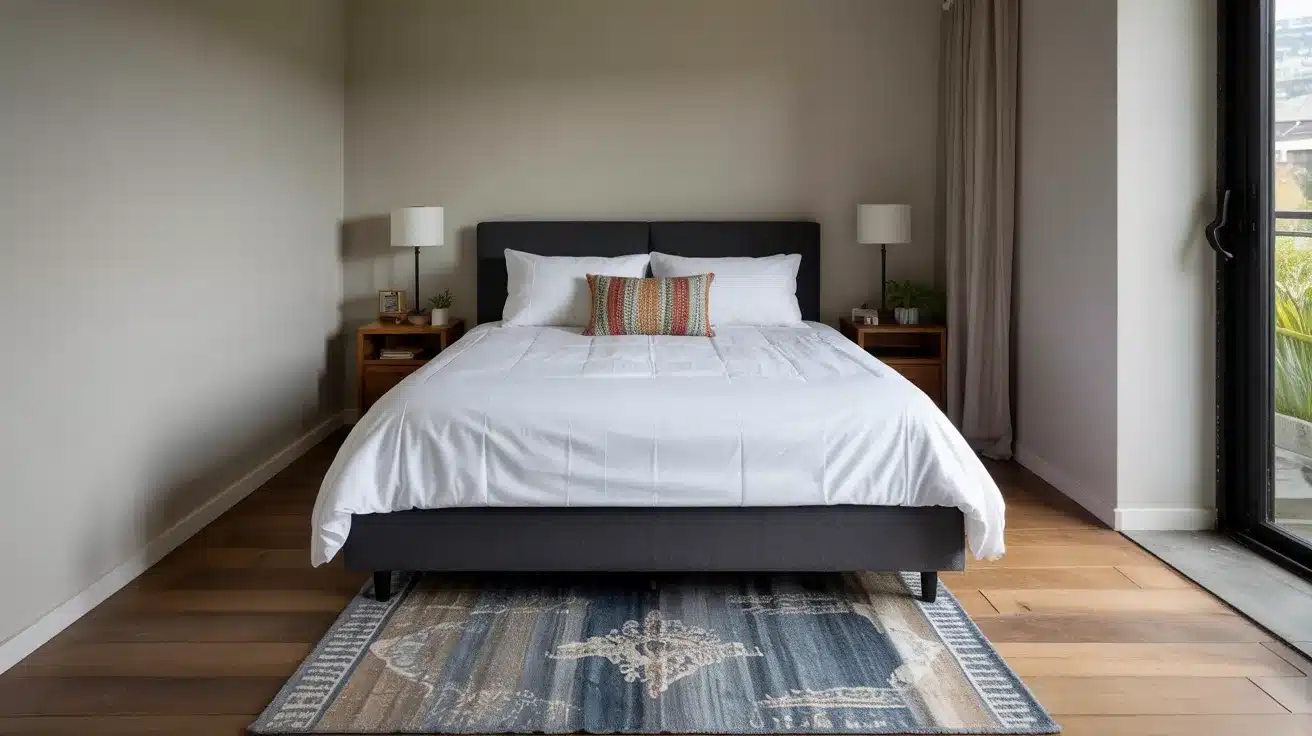
This is the smallest size that can work as a solo rug under a queen bed. It sits under the lower half of the bed and gives you a soft surface on both sides when you step out in the morning. Nightstands will sit completely off the rug at this size, and wall clearance is usually tight.
| Pros | Cons |
|---|---|
| Budget-friendly option | Does not reach nightstands |
| Easy to clean and move | Limited visual impact |
| Good for very tight spaces | Minimal side coverage |
Best use: Very small bedrooms or when the bed sits flat against one wall.
6′ x 9′ Rug
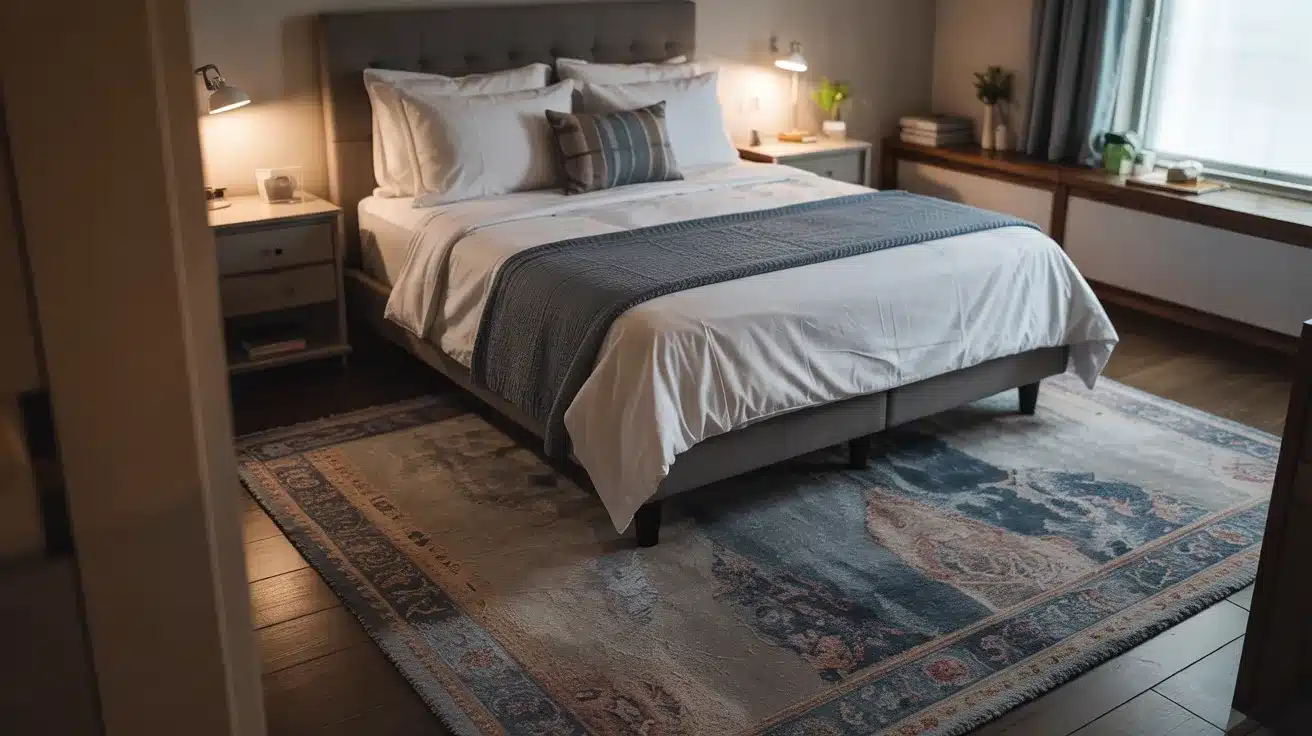
A 6 x 9 gives noticeably more coverage than a 5 x 8 without a big jump in price. It extends about 24 inches on each side of the bed, giving a solid, soft landing for your feet each morning. Nightstands still sit off the rug, but the overall look feels more intentional and complete.
| Pros | Cons |
|---|---|
| Better coverage for small to mid-sized rooms | Nightstands sit off the rug |
| More budget-friendly than an 8 x 10 | Can feel too narrow in larger bedrooms |
| Comfortable foot landing on both sides | Fewer style and pattern options compared to 8 x 10 |
Best use: Small to medium rooms where an 8 x 10 feels like too much floor coverage.
8′ x 10′ Rug (Most Popular Choice)
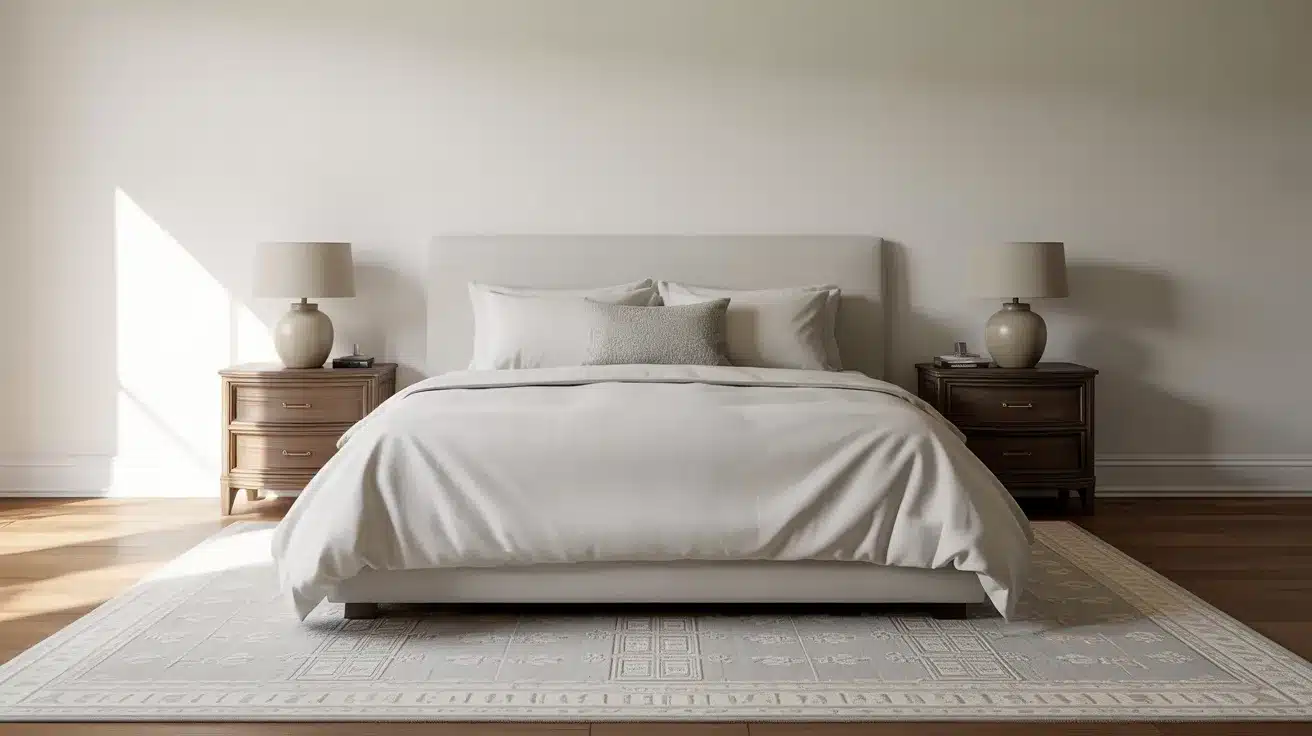
This is the go-to queen bed rug size for good reason. It leaves about 30 inches of rug on each side of the bed and works well in the average US bedroom, which measures around 11 x 12 feet. Most interior designers point to this size first when asked about queen bedroom setups.
| Pros | Cons |
|---|---|
| Works well in most standard bedrooms | Nightstands usually sit just off the rug |
| Wide range of styles and prices available | Heavier and harder to move at home |
| Frames the bed without overloading the room | Can feel small in larger bedrooms |
Best use: Standard medium bedrooms, the most common queen bed setup in the US.
9′ x 12′ Rug
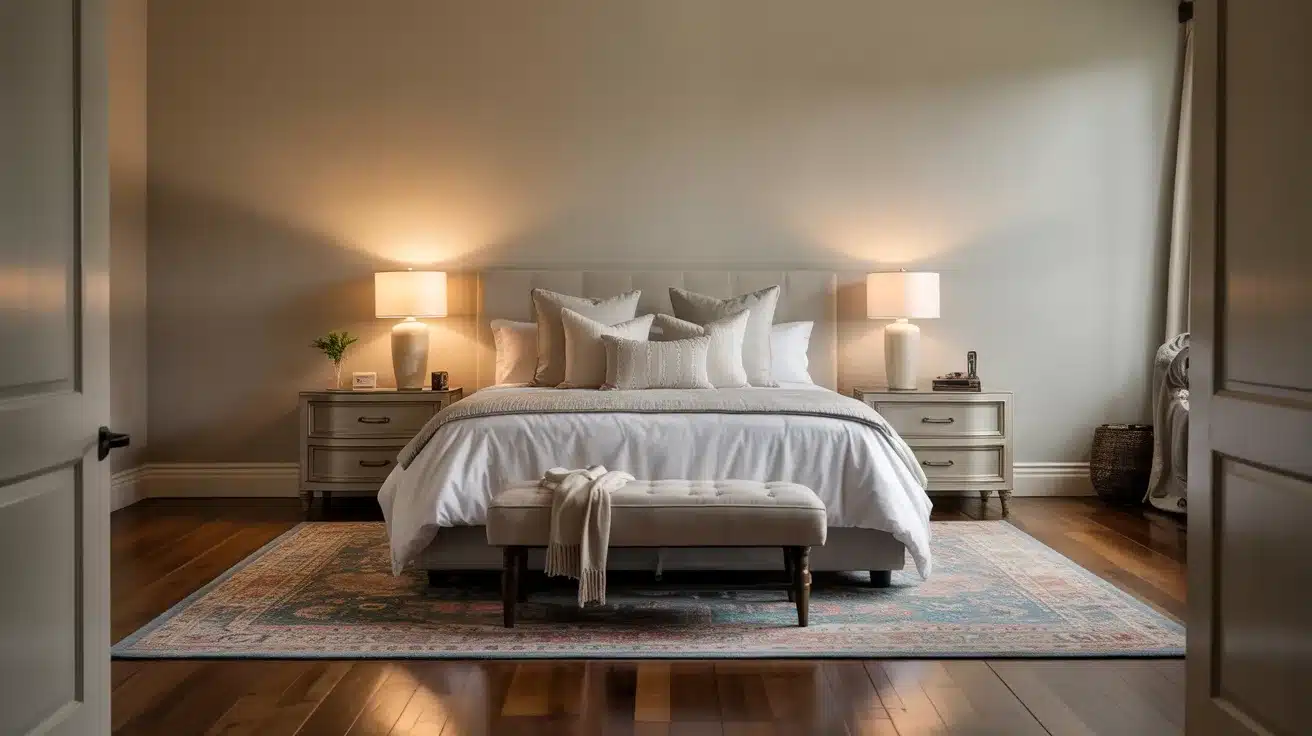
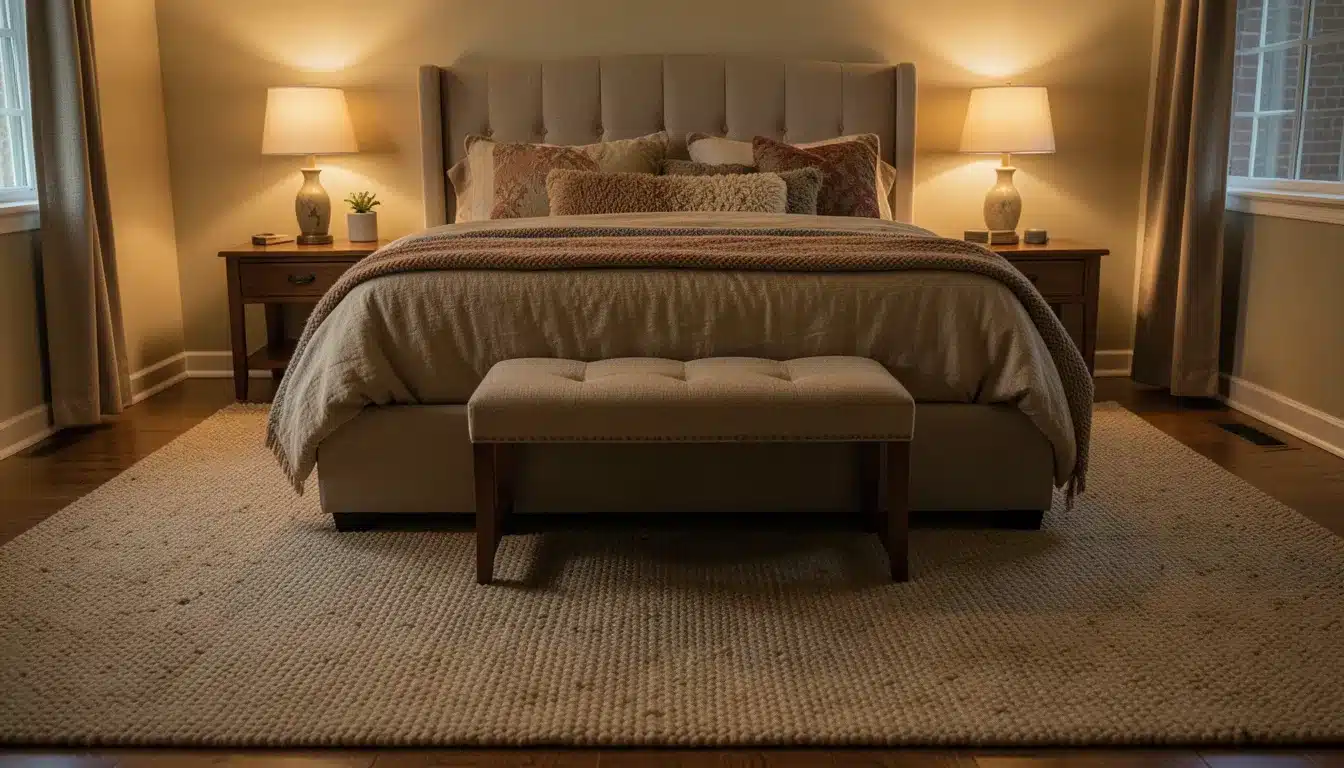
A 9 x 12 is the right step up when you want the rug to sit under the bed and your nightstands as one connected unit. It leaves about 42 inches on each side and works especially well when a bench or trunk sits at the foot of the bed.
| Pros | Cons |
|---|---|
| Anchors bed and nightstands together | More expensive than an 8 x 10 |
| Great for medium to large bedrooms | Harder to clean at home |
| Naturally covers foot-of-bed furniture | Can overwhelm smaller rooms |
Best use: Medium to large rooms, or when you want the full bed zone anchored within a single visual layout.
10’ x 13’ or Larger

This size is for bedrooms with significant floor space to fill. A 10 x 13 or larger rug covers not just the bed zone but also a seating area, a bench, or other furniture pieces in one continuous layout. Keep at least 18 inches of bare floor along each wall so the room does not feel like it has wall-to-wall carpet.
| Pros | Cons |
|---|---|
| Covers multiple furniture zones in one rug | Expensive and harder to source |
| Ideal for large or suite-style bedrooms | Very difficult to clean or move without help |
| Pulls the whole room together visually | Not practical for standard or smaller rooms |
Best use: Large bedroom suites with extra seating areas or multiple furniture zones within a single open space.
How to Place a Rug Under a Queen Bed
Choosing the right size is only half the job. How you position the rug changes how the whole bedroom reads, so it is worth getting this part right, too.
1. All Four Legs on the Rug
This placement places the entire bed frame on the rug, with all four legs sitting on top. The rug also extends under both nightstands, making the entire sleep zone feel like a single, grounded unit.
You need a rug wide enough to clear the nightstands by a few inches on each side, typically a 9 x 12 or larger.
2. Front Two-Thirds of the Bed on the Rug
This is the most common placement style in most standard bedrooms. The rug starts at roughly the midpoint of the bed and extends toward the foot.
The two back legs sit on the floor while the two front legs sit on the rug, and the nightstands sit just off it. There is still a generous soft landing at the sides and foot of the bed.
3. Rug at the Foot of the Bed Only
A smaller rug placed only at the foot of the bed works well in tight rooms or as a layered accent piece.
This setup pairs naturally with a bench or trunk at the foot and adds warmth to the area where your feet land first each morning.
It does not anchor the full bed zone, but it adds a purposeful touch in rooms with limited floor space.
Key Factors to Consider Before You Buy a Rug
There are a few room-specific details worth thinking through before you order. Each one can shift which rug size actually makes sense for your setup.
- Room size: The total floor area sets the limit on how large a rug can be without making the space feel tight.
- Bed frame type: Platform beds, upholstered frames, and beds with footboards each have a different visual weight, which affects how much rug shows on the sides.
- Nightstand size: Wide or very large nightstands may need a bigger rug to keep the overall proportions balanced.
- Foot-of-bed furniture: A bench or trunk adds visual length to the bed zone and may need extra rug length to look connected.
- Wall clearance: Always leave at least 18 inches of bare floor between the edge of the rug and each wall.
- Bed position: A bed pushed against one wall means only three sides of the rug are visible, which can allow you to go slightly smaller in width without losing the effect.
How to Measure Your Bedroom for the Right Rug Size

Guessing your rug size is the fastest way to end up with the wrong one. Taking a few quick measurements before you buy saves you time, money, and a frustrating return trip.
Step 1: Measure the full room. Write down the full length and width of your bedroom. This tells you the maximum rug size the room can support and helps you see what fits without pushing up against the walls.
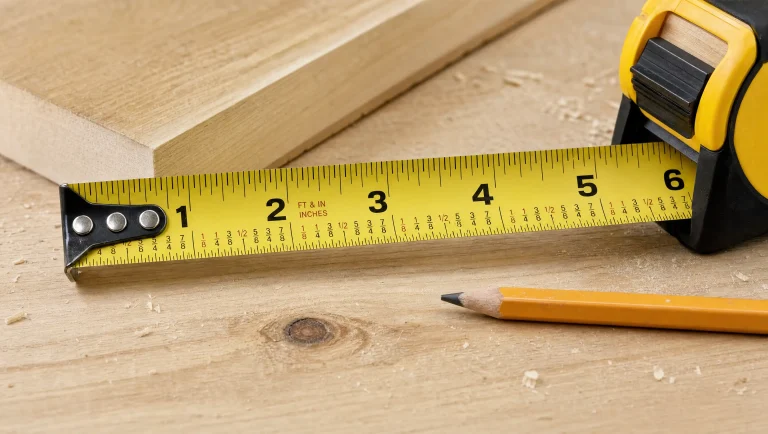
Step 2: Measure your bed frame. Run a tape measure along the outer edges of the frame, side to side and head to foot. Use this number instead of the mattress size, since the frame is what the rug will actually sit around.
Step 3: Decide on a placement style. Before measuring for the rug itself, decide how you want it placed: all four legs on the rug, front two-thirds on the rug, or just at the foot. Each style requires a different amount of rug showing on each side.
Step 4: Mark it out on the floor. Use painter’s tape to map out your chosen rug size directly on the floor with the furniture in place. Step back and check that there is at least 18 inches between the tape edge and each wall.
Step 5: Confirm and order. If the taped-out size looks and feels right with all your furniture in position, that is your size. Order with confidence.
Common Rug Sizing Mistakes to Avoid
Even with good intentions, a few sizing mistakes keep coming up. Knowing what they are before you buy will save you from a frustrating and costly return.
| Mistake | Why It Matters |
|---|---|
| Buying without measuring the room first | Leads to a rug that is too small or too large for the actual space |
| Measuring the mattress instead of the frame | The frame is often 2 to 4 inches wider, which changes the size you need |
| Going below a 5 x 7 in size | Anything smaller gets lost under the bed and loses all visual purpose |
| Skipping the painter’s tape test | You cannot judge rug size accurately from a photo or a rough estimate |
| Ignoring wall clearance | A rug that runs too close to the walls makes the room feel tight and closed off |
| Sizing only for current furniture | If you plan to add a bench or nightstands later, it is smarter to size up now |
Pro Tips for Buying a Rug for Your Queen Bed
Once you know the right size, a few extra steps will help you get the most out of your purchase. These are the details that make the difference between a rug that works and one that lasts.
- Always use a rug pad: A rug pad absorbs the daily weight and movement from a bed on top, significantly extending your rug’s life.
- Go neutral when in doubt: A neutral-toned rug works with more bedding changes over time and does not lock you into one look.
- Match pattern scale to room size: Use smaller patterns in small bedrooms and bolder patterns in larger rooms for the best visual balance.
- Check the return policy first: Always confirm the return window before ordering online, since rug sizes can look very different in your actual room.
- Consider pile height: Low-pile rugs are easier to clean under a bed; high-pile options feel better underfoot in walking areas around the bed.
- Budget tip: If a large rug in your preferred style is out of range, two matching smaller rugs on either side of the bed can give a similar layered effect at a lower cost.
Do You Need a Rug Pad Under a Queen Bed?
Yes, and it is worth the small added cost. A queen bed is heavy, and the constant weight combined with daily movement puts real strain on the rug from below.
A rug pad absorbs that pressure, which significantly extends the life of your rug. It also keeps the rug from shifting across the floor over time.
Choose a pad that is one to two inches smaller than your rug on all sides so it stays out of sight, and use a non-slip version if you have hardwood or tile floors.
The Bottom Line
Getting the right rug size for your queen bed is not as complicated as it seems once you know the numbers. For most bedrooms, an 8 x 10 rug is the right starting point. Larger rooms do better with a 9 x 12, and smaller spaces work well with a 5 x 8 or 6 x 9.
You really do not need to guess. Tape out the size on your floor tonight. You will know in under a minute if it is right before spending anything.
Have a room setup you are not sure about? Drop your room size and furniture layout in the comments below. Happy to help.