Dining Table Rug Size Chart: Find the Right Fit

You finally found the perfect dining table. The chairs look great.
But then you roll out a rug, step back, and something feels completely off. The chairs keep catching on the edges. One leg is on the rug, the other is not. Sound familiar?
Getting the rug size wrong is one of the most common mistakes in home decor. And it is not just a visual problem. A poorly sized rug makes every meal a little more awkward.
The good news? A simple dining table rug size chart takes all the guesswork out. This guide covers everything from the 24-inch rule to shape matching, measuring steps, and mistakes to skip.
How Big Should the Rug Be Under a Dining Table?
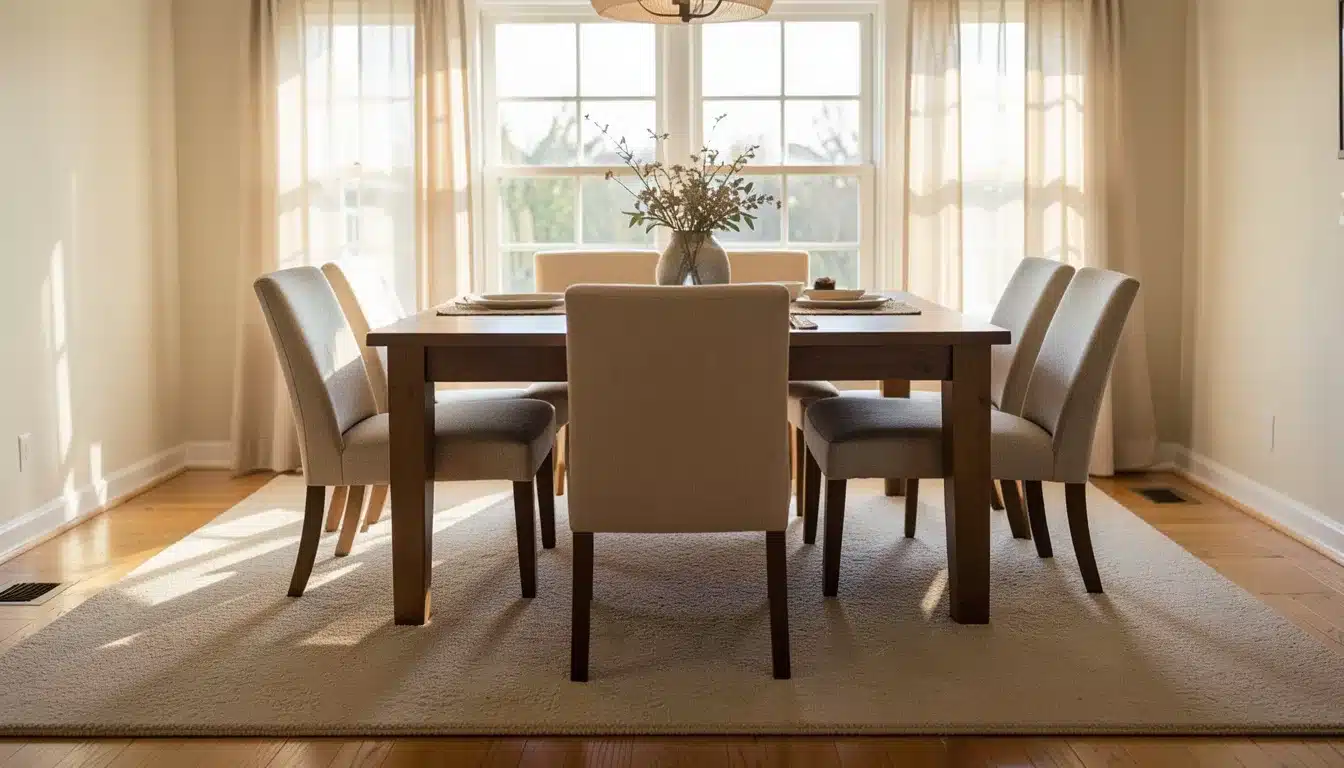
The rug under your dining table needs to be large enough to keep all chair legs on the rug, even when the chairs are pulled out. A good starting point is to add at least 24 inches to each side of your table.
So if your table is 36 inches wide and 72 inches long, your rug should be at least 84 inches wide and 120 inches long.
That works out to a 7 x 10 foot rug at minimum, though most people round up to the nearest standard size.
The One Rule You Must Know Before Buying a Rug
Before you even look at rug colors or patterns, there is one measurement rule that every buyer needs to know. Get this right, and every other decision gets much easier.
- The 24-inch rule: Your rug should extend at least 24 inches beyond all sides of the dining table.
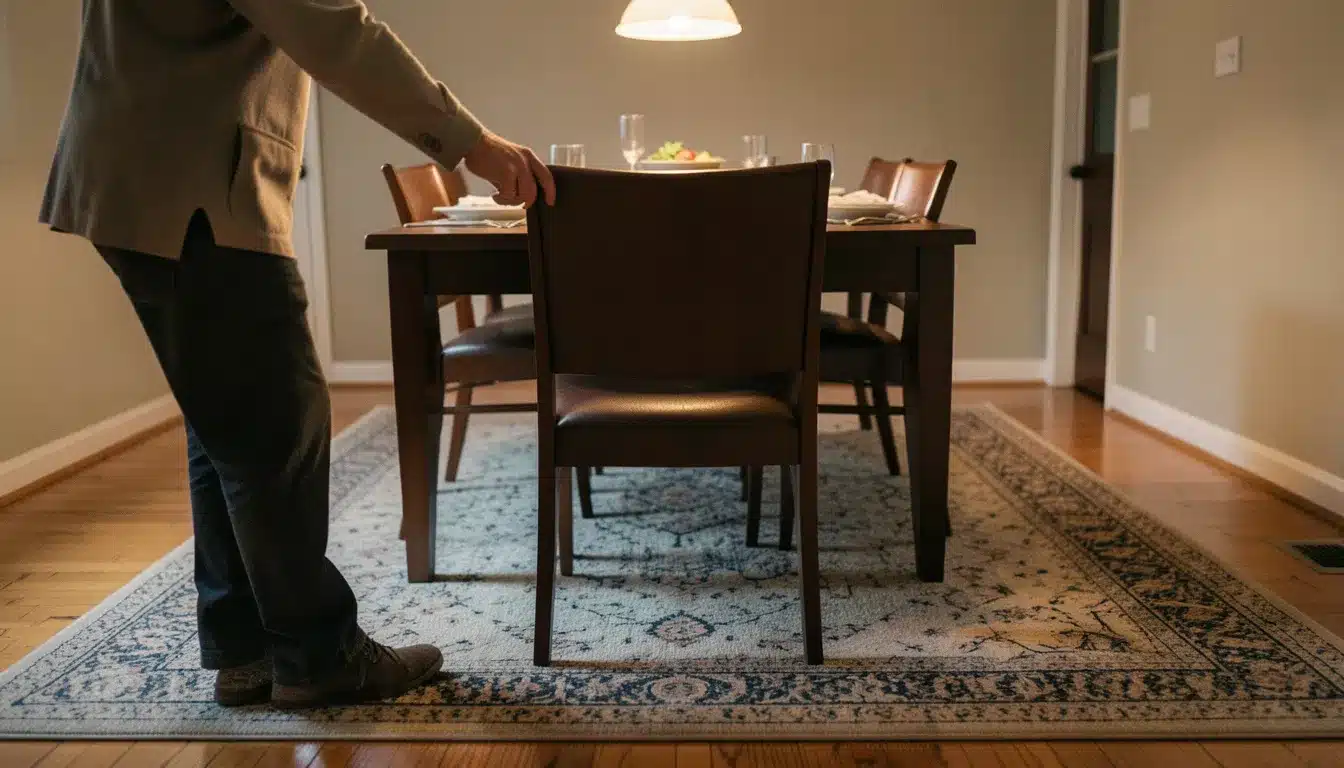
- Why 24 inches? A pulled-out chair takes up roughly 18 to 24 inches from the table edge, so the rug must cover that full space.
- What happens if the rug is smaller? The back chair legs slide off the rug onto the floor, causing the chair to rock and the rug’s edge to wear out fast.
- Can you go bigger than 24 inches? Yes. For tables with armchairs or host seats at the ends, 30 inches of clearance is preferable.
- The quick formula: Table length plus 48 inches equals the minimum rug length. Table width plus 48 inches equals the minimum rug width.
Dining Table Rug Size Chart
Now that you know the 24-inch rule, it is time to put it into practice. The chart below shows the right rug size for every common dining table setup, from a small 2-seater to a large 10-person table.
| Seating | Table Size (approx.) | Minimum Rug Size | Recommended Rug Size |
|---|---|---|---|
| 2 people | 2 ft x 3 ft | 4 ft x 6 ft | 4 ft x 6 ft |
| 4 people | 3 ft x 3 ft or 36 in round | 6 ft x 7 ft | 8 ft x 8 ft or 8 ft x 10 ft |
| 6 people | 3 ft x 5 ft | 7 ft x 9 ft | 8 ft x 10 ft or 9 ft x 12 ft |
| 8 people | 3.5 ft x 7 ft | 8 ft x 11 ft | 9 ft x 12 ft or 10 ft x 14 ft |
| 10 people | 4 ft x 8 ft and above | 9 ft x 12 ft | 10 ft x 14 ft |
| 12 or more | 4 ft x 10 ft and above | 10 ft x 14 ft | 12 ft x 15 ft or custom |
2-Seater Dining Table: A 4 x 6 rug fits well under a small table for two. It works best in breakfast nooks, studio apartments, or compact dining corners.
4-Seater Dining Table: An 8 x 10 rectangular or 8 x 8 square rug covers a standard 4-person table with enough room for all four chairs to move freely.
6-Seater Dining Table: An 8 x 10 rug works at the minimum, but a 9 x 12 gives more breathing room, especially if the table has end chairs.
8-Seater Dining Table: A 9 x 12 meets the 24-inch rule, but a 10 x 14 is the better pick if any of the seats have armchairs or wide-frame chairs.
10-Seater and Larger: At this scale, a 10 x 14 is the starting point. Very large tables in spacious dining rooms may need a custom rug to keep proportions balanced.
How to Pick the Right Rug Size Based on Table Shape
The size of your rug is only half the decision. The shape matters just as much. Picking the wrong shape can make even a correctly sized rug look out of place.
1. Rectangular Dining Tables
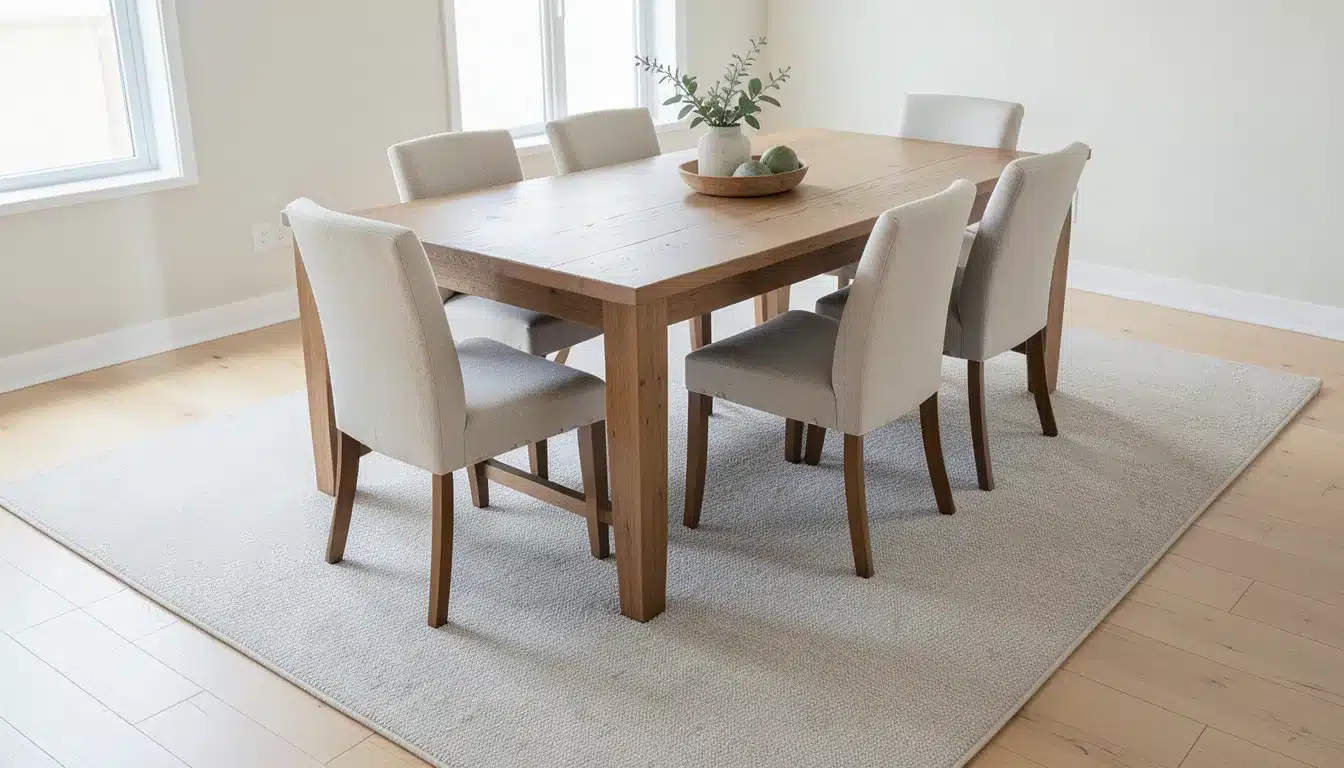
A rectangular rug is the best match for a rectangular table. It follows the table’s lines and fills the space without leaving odd gaps at the corners. Make sure it extends at least 24 inches on all four sides for proper chair clearance.
2. Round Dining Tables
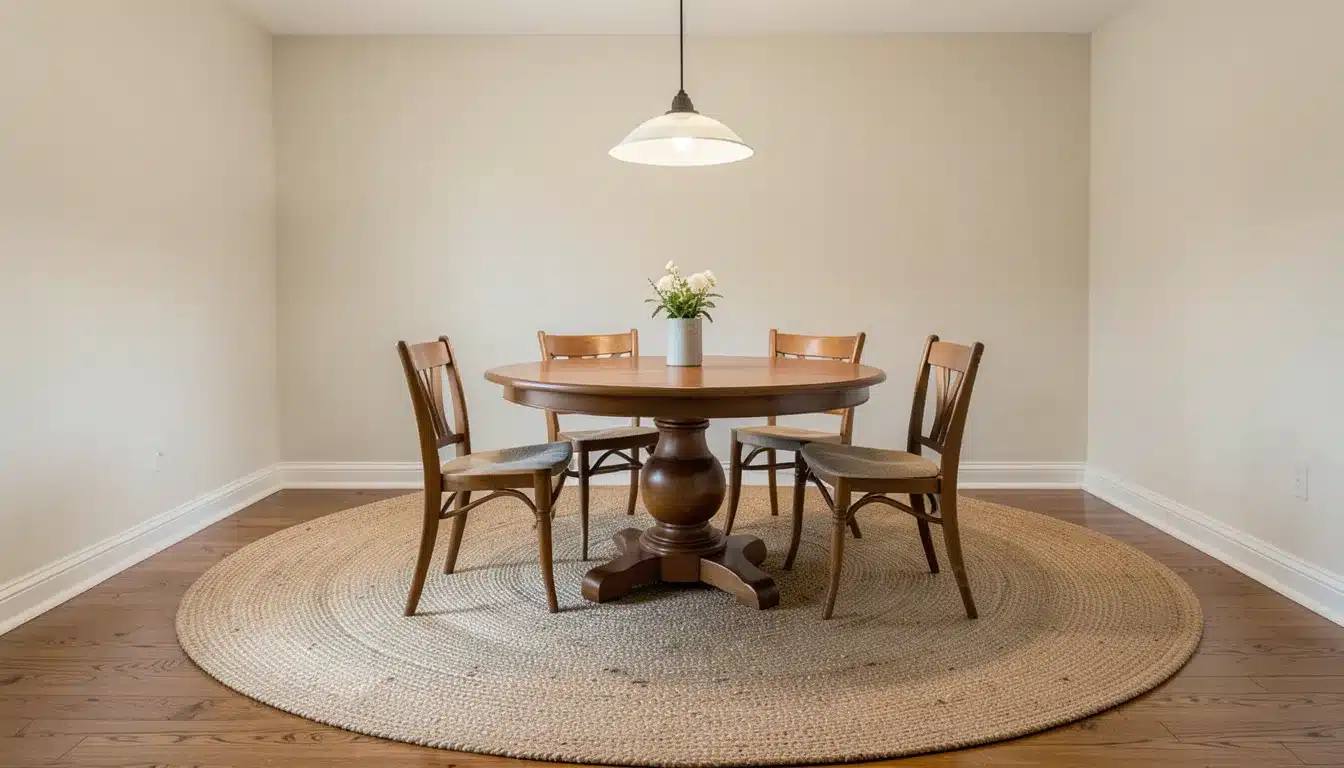
A round rug pairs naturally with a round table, keeping the look centered and balanced. To find the right size, add 4 feet to the table’s diameter. So a 4-foot round table needs at least an 8-foot round rug.
A square rug under a round table can also work well as a deliberate design choice, but it must be large enough to cover all the chairs on every side.
Round dining table rug size at a glance:
- 4-seater round table: 6 ft round rug
- 6-seater round table: 8 ft round rug
- 8-seater round table: 10 ft round rug
3. Square Dining Tables
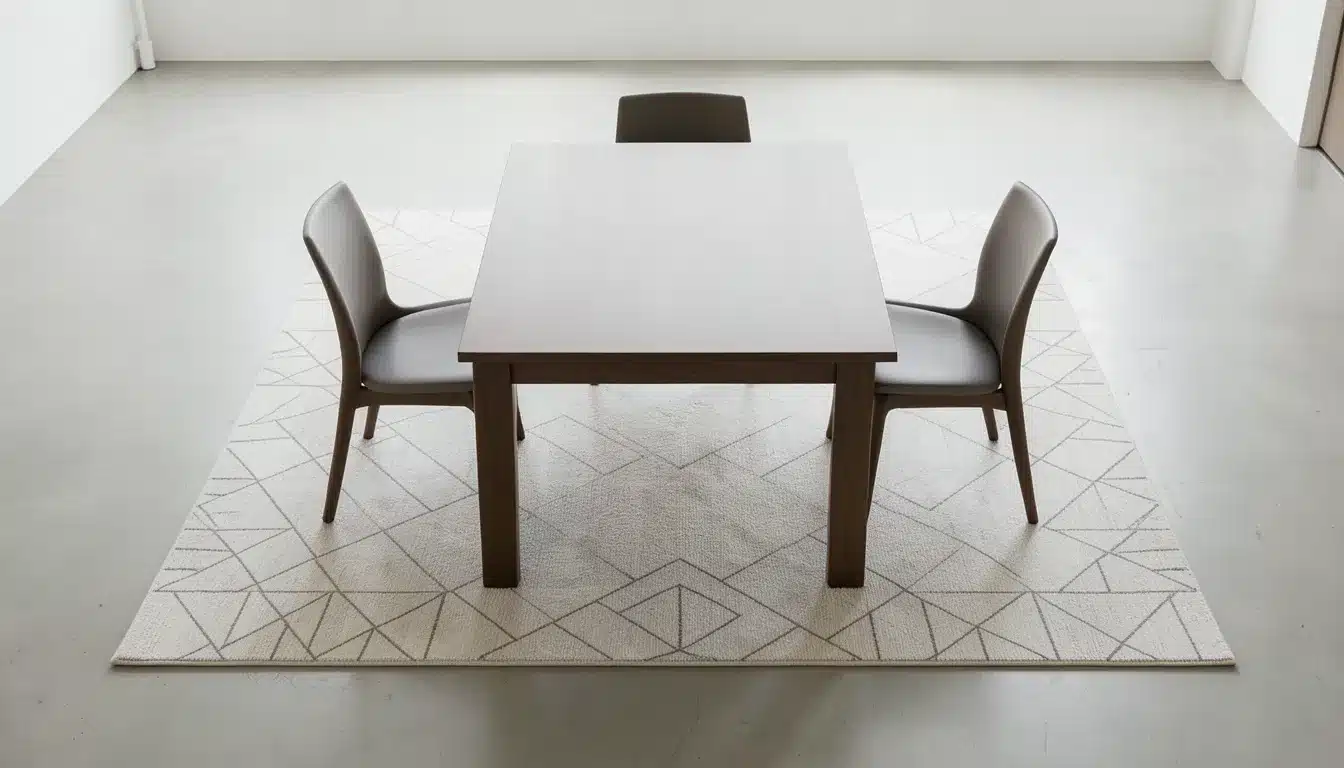
A square rug mirrors the table’s shape and keeps equal clearance on all four sides. A round rug under a square table also works well for a softer, more casual feel in the room.
4. Oval Dining Tables
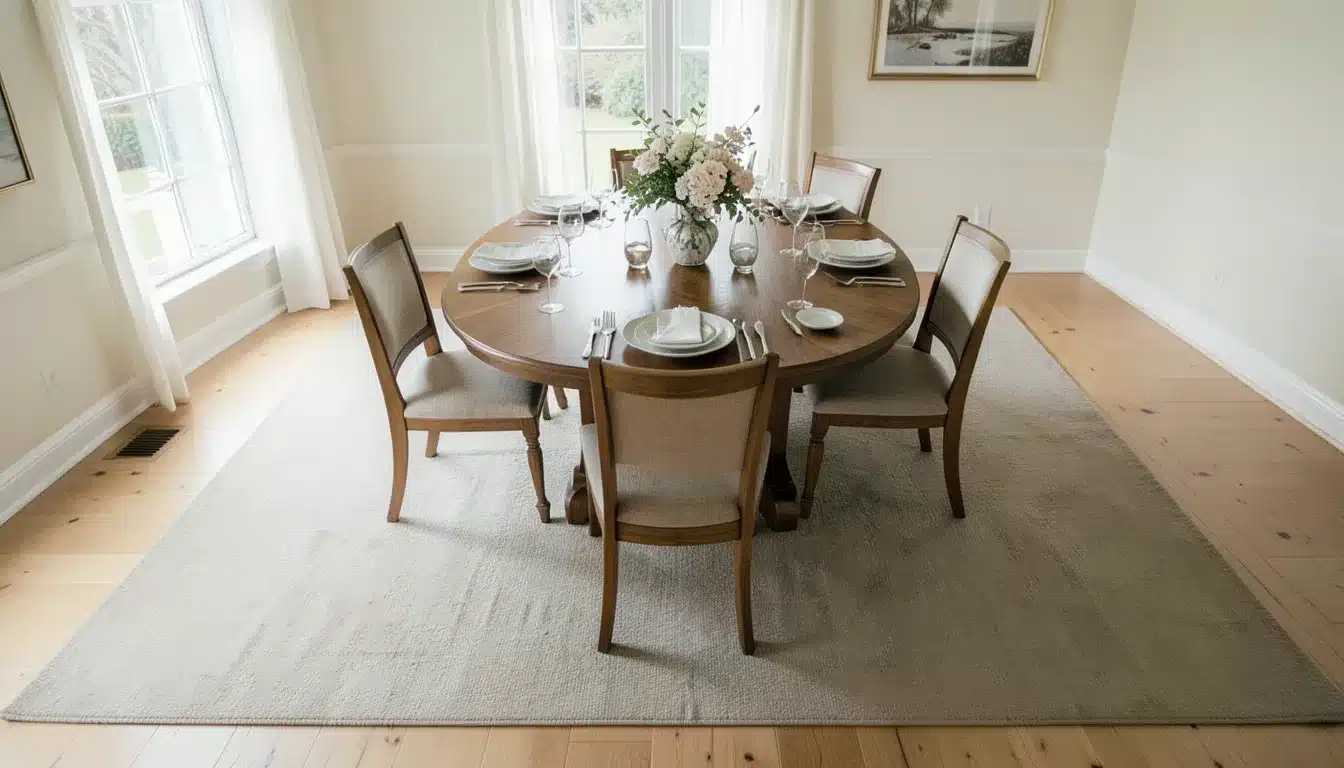
A rectangular rug is the best fit for an oval table. It supports the longer sides without leaving large empty spaces at the curved ends. Add 4 feet to both the length and width of the oval table to get your starting rug size.
How to Measure for a Rug Under Your Dining Table ?
Measuring for a rug is not complicated, but it is easy to get wrong if you skip a step. Follow this process before you buy, and you will not need to return anything.
Step 1: Measure the dining table: Use a tape measure to get the exact length and width of the table, then round each measurement up to the nearest foot.
Step 2: Add chair clearance: Add 48 inches to the table length and 48 inches to the table width (24 inches per side) to find your minimum rug dimensions.
Step 3: Measure the room: Check that the rug size you calculated still leaves at least 12 inches of bare floor between the rug edge and each wall.
Step 4: Mark it out on the floor: Use painter’s tape to outline the planned rug size on the floor, pull out a chair, and sit in it to check if the back legs stay inside the outline.
Step 5: Match to a standard size: Standard dining room rug sizes are 5 x 7, 6 x 9, 8 x 10, 9 x 12, and 10 x 14. If your calculated size falls between two options, always choose the larger one.
Common Rug Sizing Mistakes
Most rug sizing problems are not about taste. They come down to a few very common oversights. Here is a quick look at what buyers get wrong most often, and exactly how to fix each one.
| Mistake | What Goes Wrong | How to Fix It |
|---|---|---|
| Measuring only the table | The rug ends up too small once the chairs are pulled out | Measure the full zone: table plus chairs at their pulled-out position |
| Ignoring room dimensions | The rug crowds the walls and makes the room feel closed in | Keep at least 12 inches of bare floor between the rug edge and each wall |
| Choosing the wrong shape | The rug looks off-balance or leaves odd gaps around the table | Match the rug shape to the table shape as a baseline |
| Forgetting extendable tables | The rug is too small when the table is fully extended for guests | Size the rug based on the table at its maximum extended length |
| Skipping the tape test | The rug arrives and does not fit the space the way you expected | Always mark out the planned size on the floor with tape before ordering |
| Going small to save money | Chair legs slide off the edge, and the rug wears out along the border faster | A slightly larger rug protects both the rug and the floor beneath it |
Best Rug Materials for the Dining Room
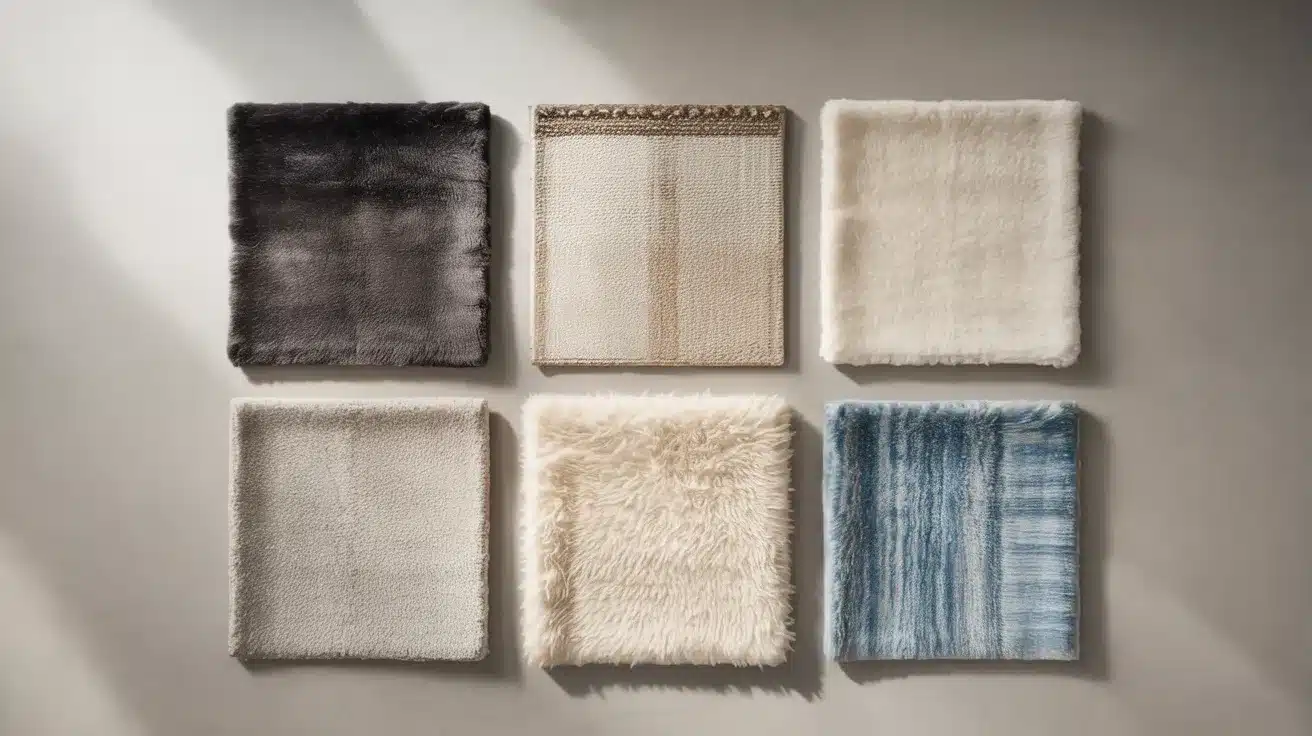
Size and shape will get your rug in the right spot. But the material decides how long it stays looking good. Dining rooms are tough on rugs, so picking the right material really does matter.
- Low-pile rugs: Low-pile rugs are easy to clean, do not trap food crumbs, and let chairs slide smoothly without catching.
- Flat-weave rugs: Flat-weave options handle heavy daily foot traffic well and are among the easiest styles to wipe down after meals.
- Wool rugs: Wool holds up well over time and handles regular wear, but it needs more attention when spills happen quickly.
- Synthetic rugs (polypropylene or nylon): These are the most practical pick for family dining rooms because they resist stains and clean up easily.
- Shag or high-pile rugs: Avoid these in dining rooms. Chair legs sink in and drag through the pile, making it harder to pull chairs in and out smoothly.
- Washable rugs: If the dining room sees daily use from kids or pets, a washable rug saves significant cleaning time over the long run.
Pro Tips: Getting the Rug Placement Just Right
Always center the rug directly under the table so the spacing is equal on all sides. Place a rug pad underneath to stop it from shifting and to protect the floor below.
If you have an extendable dining table, size the rug for the table at its full length, not the shorter everyday version.
In open-plan spaces, keep the dining rug away from the living room rug so the two areas read as separate zones. And when you are stuck between two rug sizes, go with the larger one every time.
An oversized rug always looks more thought-out than one that falls just a little short.
Conclusion
Picking the right rug under a dining table sounds simple. But most people only measure the table and completely forget about the chairs.
That one small mistake leads to wobbly seats, frayed rug edges, and a dining room that never quite feels put together.
Use the dining table rug size chart in this guide as your starting point. Add 24 inches to every side of your table. Match the rug shape to your table shape.
Check the room size too. Always test with painter’s tape on the floor before you commit to buying.
Get the size right, and everything else in the dining room just falls into place naturally.