What Is the Right Table Height for Classroom and Office Seating?

Table height affects how comfortable and focused students feel throughout the day. Get it right, and everything from posture to attention span tends to fall into place. Standard seated tables sit at 29 inches, while standing tables reach 36 to 42 inches. Pairing the wrong chair with the wrong table causes fatigue and back strain. A trusted school and office table buying resource simplifies those height decisions for facilities teams. When the height is right, students and staff just feel better and get more done.
Why Table Height Drives Comfort and Focus
Seated workers should rest forearms parallel to the floor with elbows near ninety degrees. When tables sit too high, shoulders shrug upward and tension builds across the upper back. When tables sit too low, students hunch forward and lose focus on the surface. Worthington Direct Furniture Experts publishes pairing charts that take the guesswork out of matching tables to chairs. That kind of guidance helps schools and offices avoid buying furniture that simply does not work together. It is a small detail that saves a lot of frustration down the road.
Standard Seated Heights for Classrooms and Offices
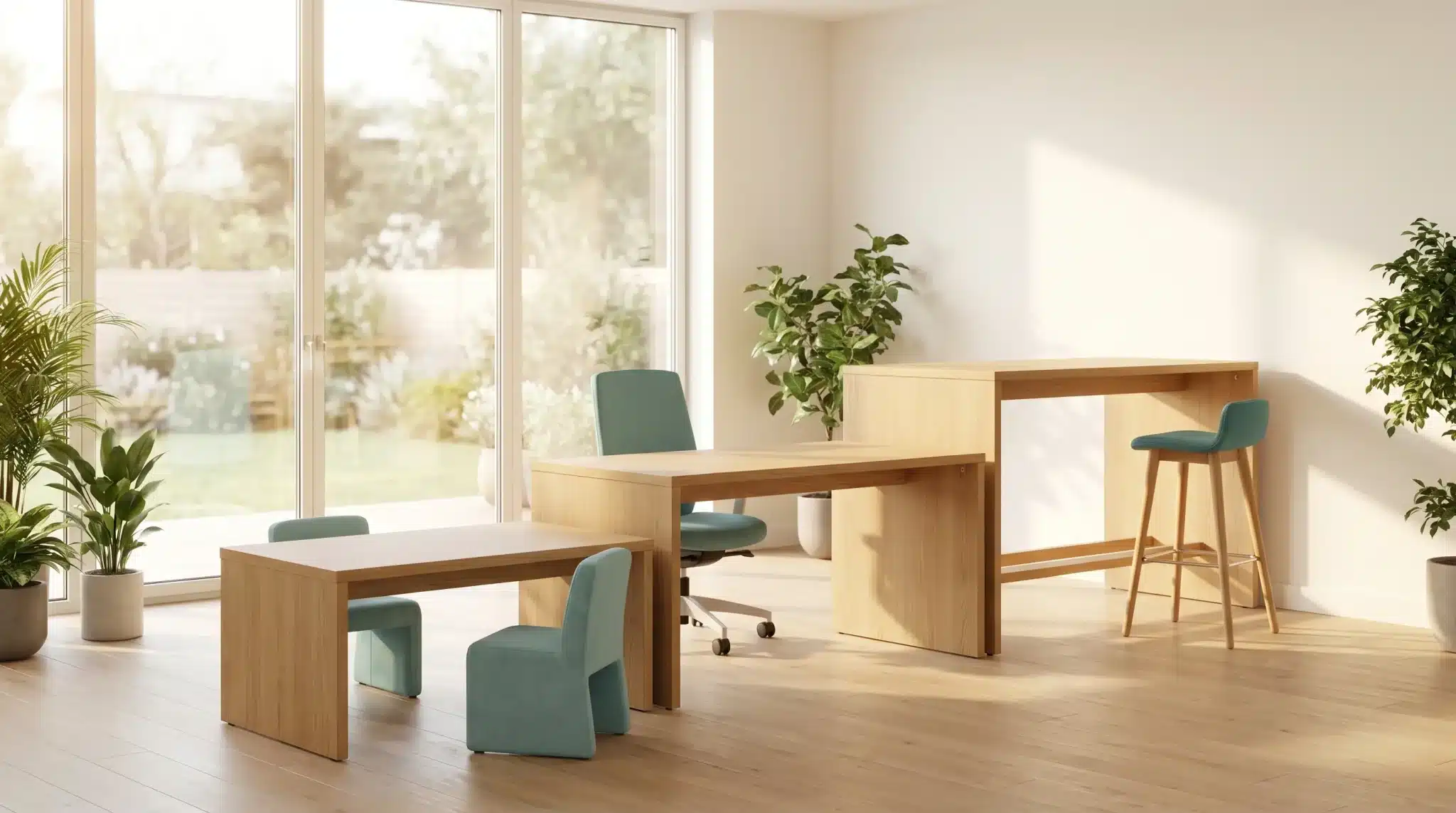
Most adult and high school work tables measure 29 inches from floor to top surface. This standard pairs with chairs that have a seat height of 17 to 19 inches. Younger students need lower tables and chairs scaled to their grade band and average size. Elementary tables often run 22 to 26 inches, paired with 12 to 14 inch chair seats. Office conference and training tables also follow the 29 inch standard for adult use. When the seat and surface match up properly, people can sit comfortably for long stretches without fidgeting or straining.
Counter and Standing Heights for Active Spaces

Counter tables range from 34 to 36 inches, perfect for short standing tasks and meetings. Bar height tables climb to 40 to 42 inches and pair with taller stools. You will find both heights in makerspaces, breakrooms, and collaborative areas across school buildings. Standing tables encourage movement and quick check ins between focused work blocks. Pair these surfaces with stools that include footrests so users can shift weight comfortably. Always check that a tall table feels sturdy before placing it in a student space.
Adjustable and Sit Stand Tables for Mixed Users
Height-adjustable tables make it easy to accommodate students of different heights in the same classroom. Pneumatic, crank, and electric bases allow quick changes between seated and standing positions. Schools tend to reach for adjustable tables in STEM rooms, art studios, and special education spaces. In offices, they work great at shared workstations, training rooms, and areas where staff rotate in and out. Just make sure the leg range can actually accommodate your shortest and tallest users once chair height is factored in. Lockable casters add flexibility for rooms that change configurations several times each week.
Matching Chairs and Stools to Every Table
The gap between seat and table top should measure 10 to 12 inches for most users. That range supports natural arm posture and leaves room for thighs and knees underneath. Pair 29 inch tables with 17 to 19 inch chairs for typical adult and teen work. Pair counter tables at 34 to 36 inches with 24 to 26 inch stools. Pair 40 to 42 inch bar tables with stools that have footrests for longer comfort. Before placing a large order, have real students or staff try out the tables first.
Start by thinking about who will actually use the table and what they will be doing there. Standard 29-inch tables cover most adult and high school work settings really well. Counter and bar heights make more sense for standing tasks, quick check-ins, and active group work. Adjustable tables are a smart call for shared rooms that need to work for younger kids, teens, and adults. Whatever you pick, make sure the chair or stool height works with it to keep your posture comfortable. Get the height right, and the furniture stops feeling like a fixed expense and starts pulling real weight.