Types of Paint: Which Formula Works for Your Project

Picking the right paint is not just about color. The formula underneath decides how long it lasts, how it looks once dry, and whether it belongs on a canvas, a wall, or a metal gate.
This guide breaks down the main paint types by what they are made of and where they work best, so you can match the right product to your project instead of guessing at the store.
Understanding a few basics, like binder, base, and finish, makes those choices much easier to sort through. It also explains why a paint that works beautifully on canvas can fail outdoors, or why two paints in the same color can behave differently once applied.
By the end, you will know which type fits your project, how to tell paint types apart from finishes, and which mistakes to avoid before you open the can.
Types of Paint for Art and Creative Projects
Artists, students, crafters, and hobby painters each reach for different paints depending on the surface, the drying time they need, and the finish they want.
1. Acrylic Paint
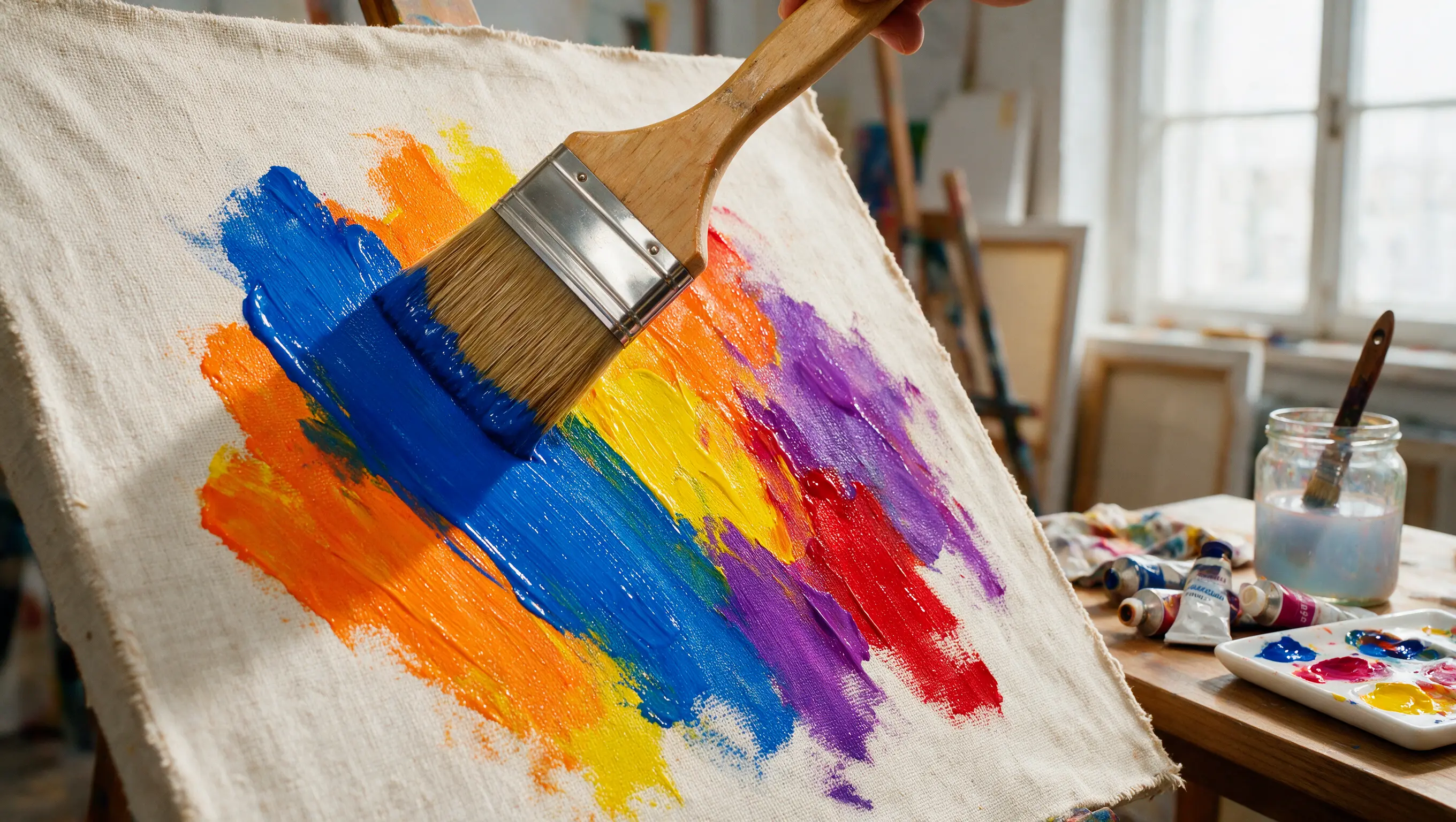
Acrylic paint is water-based and dries fast, which makes it a favorite for artists who like to layer colors without waiting long between coats.
It produces strong, true color and works on canvas, paper, wood, fabric, and most craft surfaces. Its wide surface compatibility and easy cleanup make it one of the most beginner-friendly paints available today.
It also bonds well to primed wood, which makes it a common choice for DIY wall art and craft projects that go beyond the canvas.
Key features:
- Water-based formula with fast drying time
- Strong, true color that stays consistent once dry
Best for: Beginners and quick, mixed-media projects
2. Oil Paint

Oil paint dries slowly, which gives artists more time to blend colors smoothly on the canvas. It produces rich, deep color and a glossy finish once fully cured.
This slower drying time makes it a common choice for detailed or traditional artwork where soft transitions matter more than speed.
Key features:
- Slow drying time that allows extended blending
- Rich, deep color with a glossy cured finish
Best for:
- Detailed, traditional artwork with smooth blending
3. Watercolor Paint
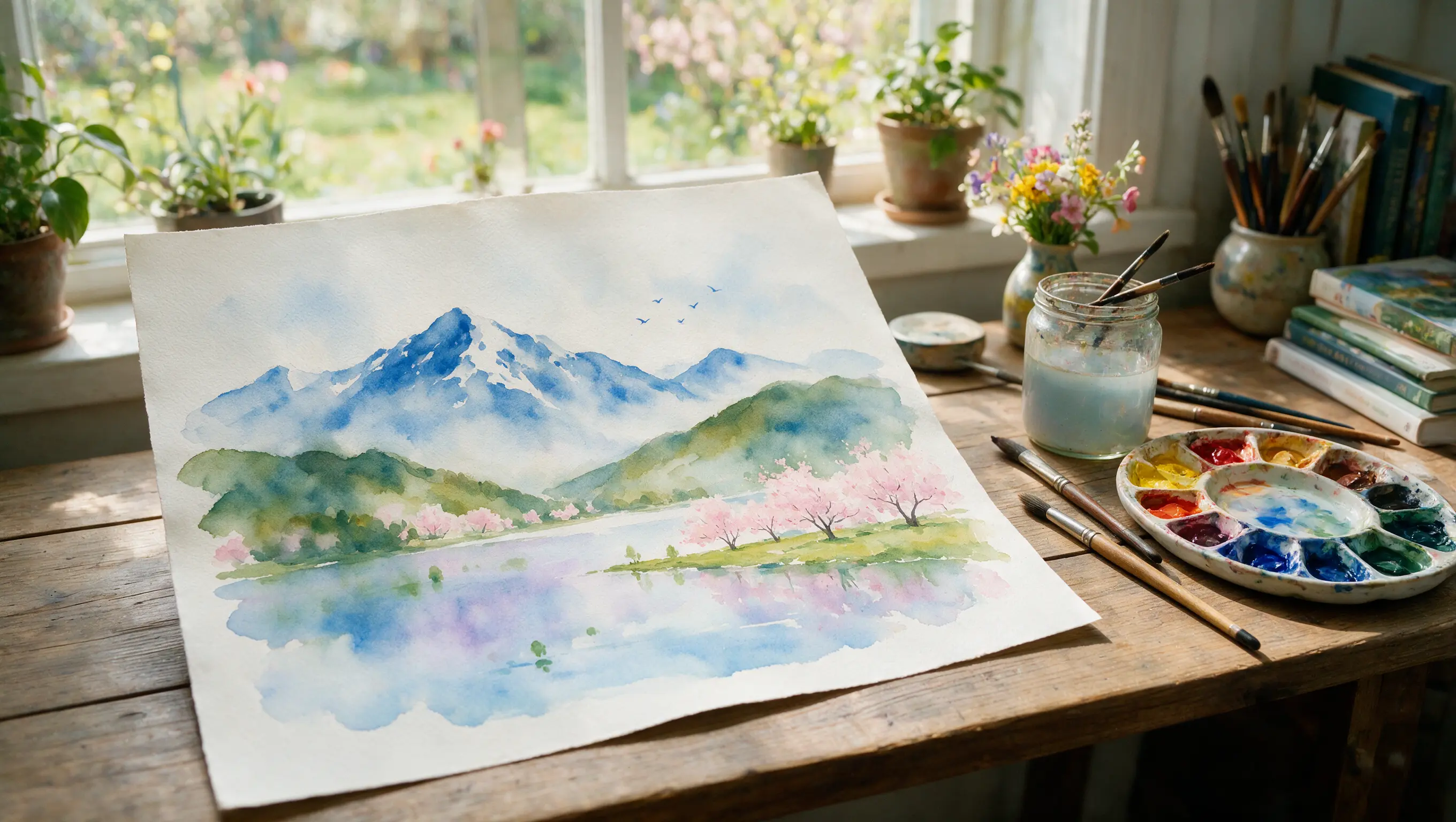
Watercolor paint has a transparent finish that lets the white of the paper show through, creating soft, layered color. It is activated with water and applied in thin washes rather than thick strokes.
It works best on heavy watercolor paper, which handles repeated wetting without buckling or warping.
The transparent finish creates soft, layered effects that no other paint type can replicate.
- Transparent finish that lets the paper show through
- Water-activated formula applied in thin washes
Best for: Soft, layered color effects and illustration work
4. Gouache Paint
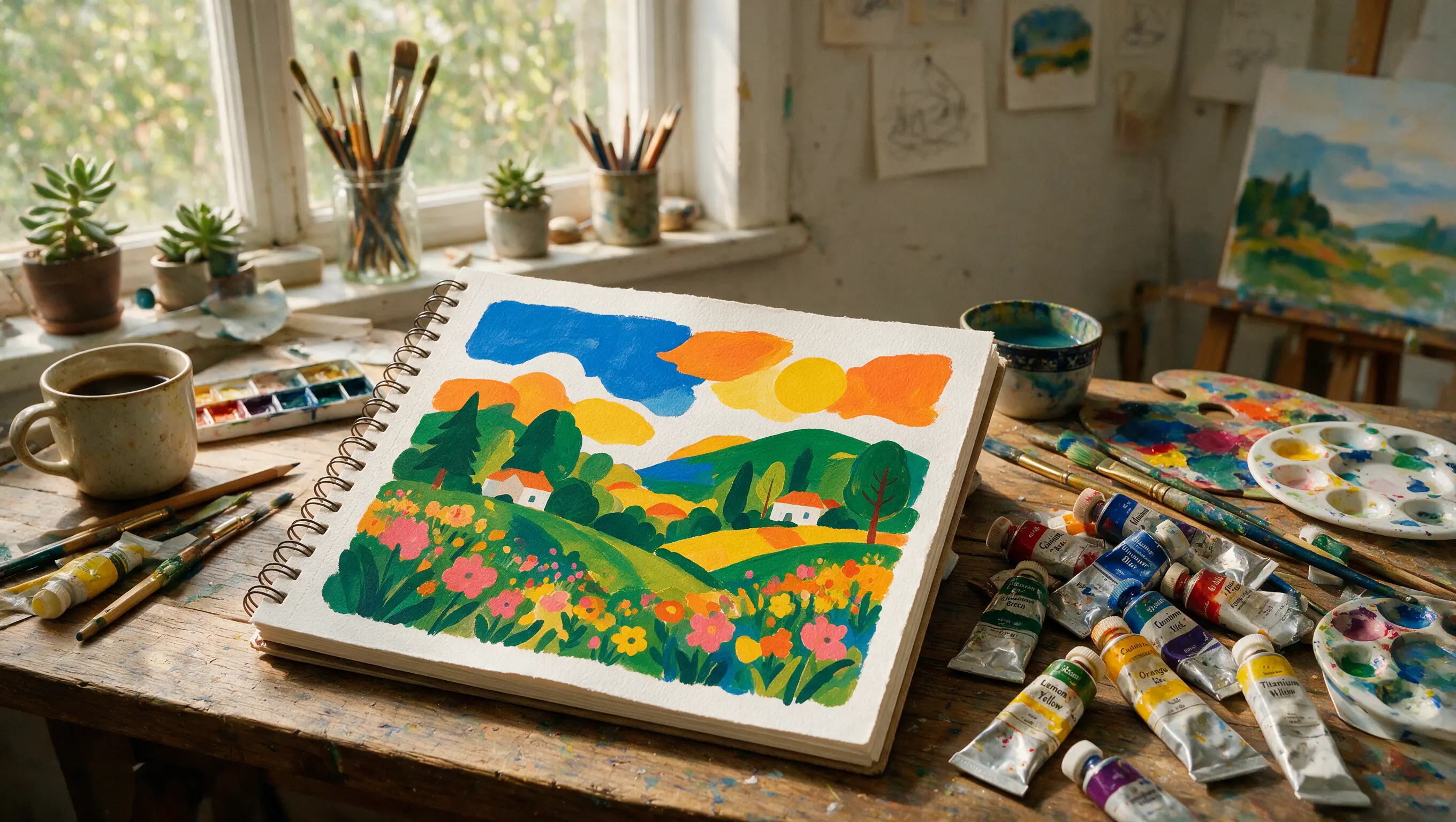
Gouache shares the easy water cleanup of watercolor but behaves very differently once dry. It creates a more opaque, matte finish that fully covers the paper rather than letting it show through.
It suits illustrators and graphic artists who want flat, bold color with the convenience of a water-based formula. Unlike watercolor, dried gouache can be reactivated with a few drops of water, which reduces waste on the palette.
Best for: Flat, bold, opaque illustration work
5. Tempera Paint

Tempera paint is affordable, dries quickly, and often comes in washable formulas, which is why it shows up so often in classrooms and children’s art projects.
It is easy to clean off skin, clothing, and most surfaces, making it a practical choice for young or beginner painters.
Key features:
- Affordable and widely available
- Quick drying time with washable formulas
Best for:
- Classrooms and children’s art projects
6. Encaustic Paint
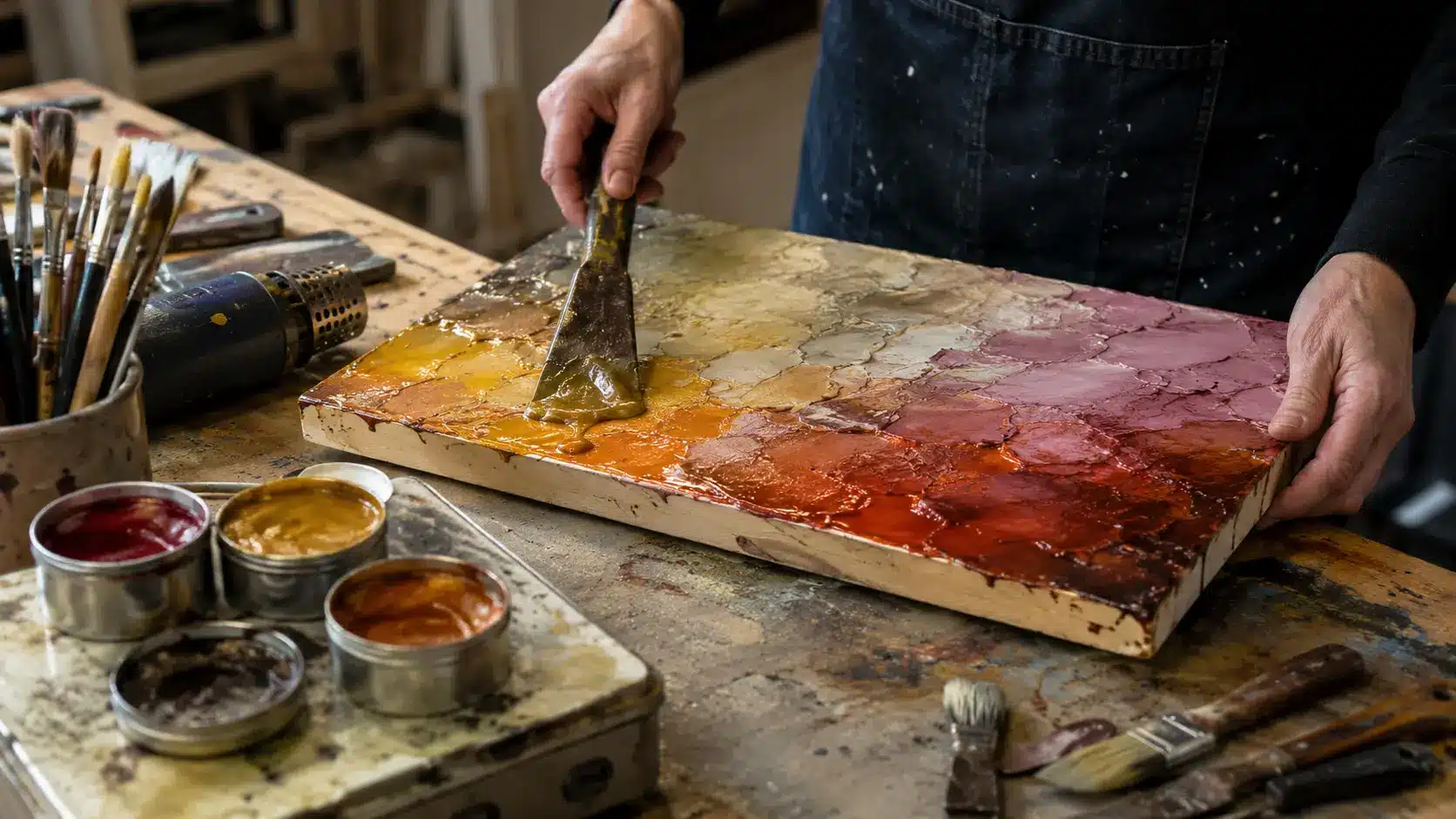
Encaustic painting uses heated wax mixed with pigment, applied while warm and shaped before it cools. The result is a textured, layered artwork unlike anything achievable with liquid paint. It requires heating tools and practice, so it tends to appeal to more experienced artists.
Key features:
- Heated wax and pigment mixture applied warm
- Textured, dimensional finish once cooled
Best for:
- Experienced artists seeking a textured finish
7. Spray Paint for Art and Crafts
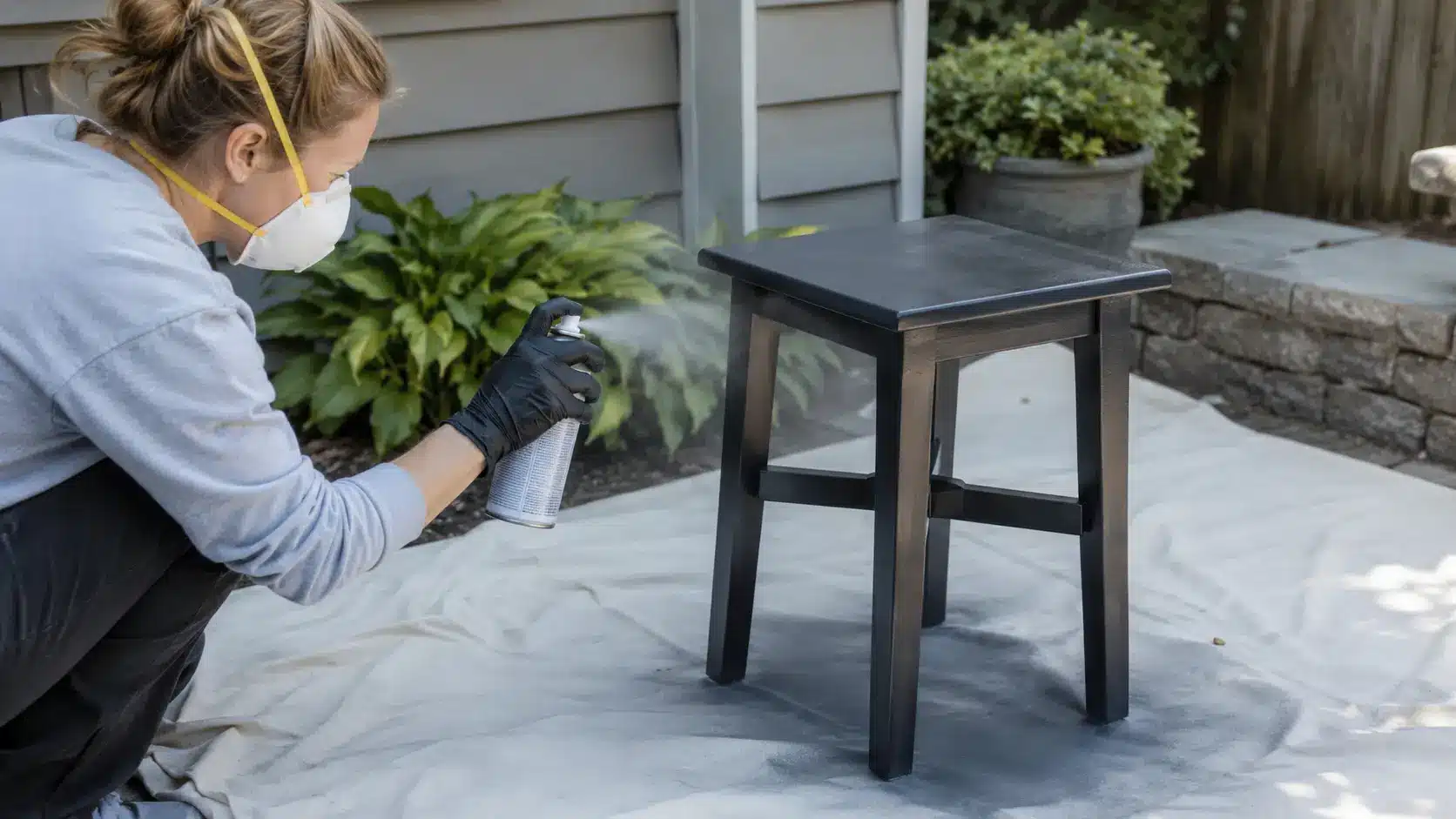
Spray paint offers smooth, even coverage with minimal effort, making it popular for murals, models, furniture, and decorative projects. It dries quickly and reaches into corners brushes can miss, though it does require good ventilation and a well-covered work area to avoid overspray.
Key features:
- Smooth, even coverage with minimal effort
- Fast drying and reaches tight corners
Best for:
Murals, models, and decorative upcycling
Oil vs Acrylic Paint: What Is the Difference?
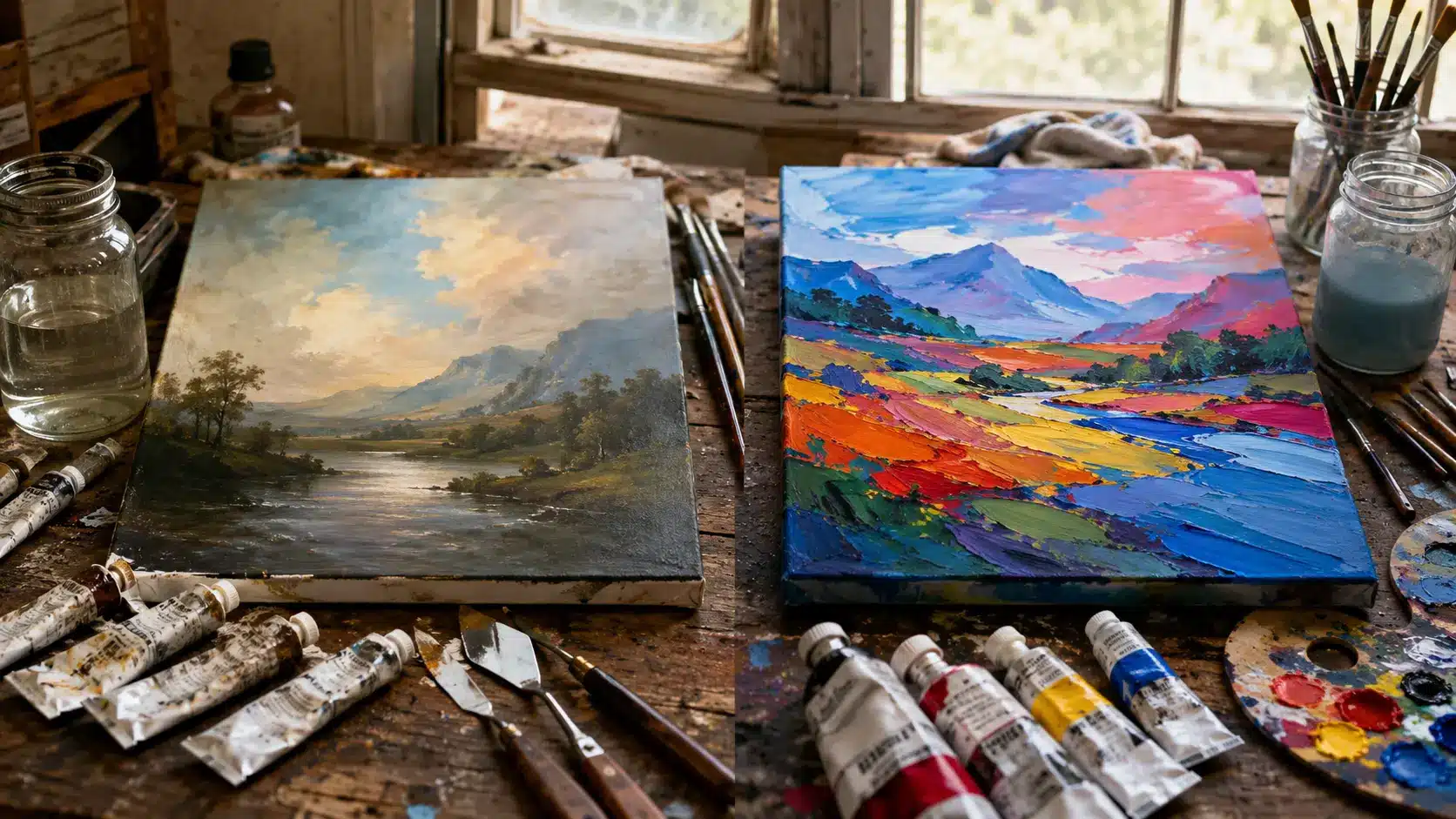
The oil vs acrylic paint debate comes down to drying time, blending ability, and how much patience a project allows. Acrylic dries fast and forgives mistakes quickly, while oil paint stays workable for hours, giving artists more control over blending.
| Factor | Oil Paint | Acrylic Paint |
|---|---|---|
| Paint base | Oil/solvent | Water |
| Drying time | Days to weeks | Minutes to hours |
| Blending time | Long | Short |
| Color appearance | Rich, deep | Bright, vibrant |
| Finish | Glossy | Matte to glossy |
| Surface compatibility | Canvas, wood panels | Canvas, paper, wood, fabric |
| Cleanup | Mineral spirits | Soap and water |
| Odor | Strong | Minimal |
| Beginner friendliness | Lower | Higher |
| Typical cost | Higher | Lower to moderate |
Choose Oil Paint When
Oil paint suits artists who want slow blending, deep color, and smooth transitions between shades.
Oil paint is the right pick when blending time matters more than speed. If you are working on a portrait with gradual skin-tone shifts, or a landscape where the sky and clouds need to fade into each other, oil gives you the time to get it right.
It also holds pigment depth that acrylic cannot match once cured. The tradeoff: cleanup requires mineral spirits, and the strong solvent odor needs a well-ventilated space.
Choose Acrylic Paint When
Acrylic is the better choice when you need to finish a project in one session or want to work across multiple surfaces, from canvas to fabric to wood.
It bonds to more materials than oil and cleans up with soap and water. If you are new to painting, acrylic is the more forgiving starting point. Mistakes dry fast, layers build quickly, and you can paint over errors without waiting days.
Types of Paint for Walls and Home Interiors
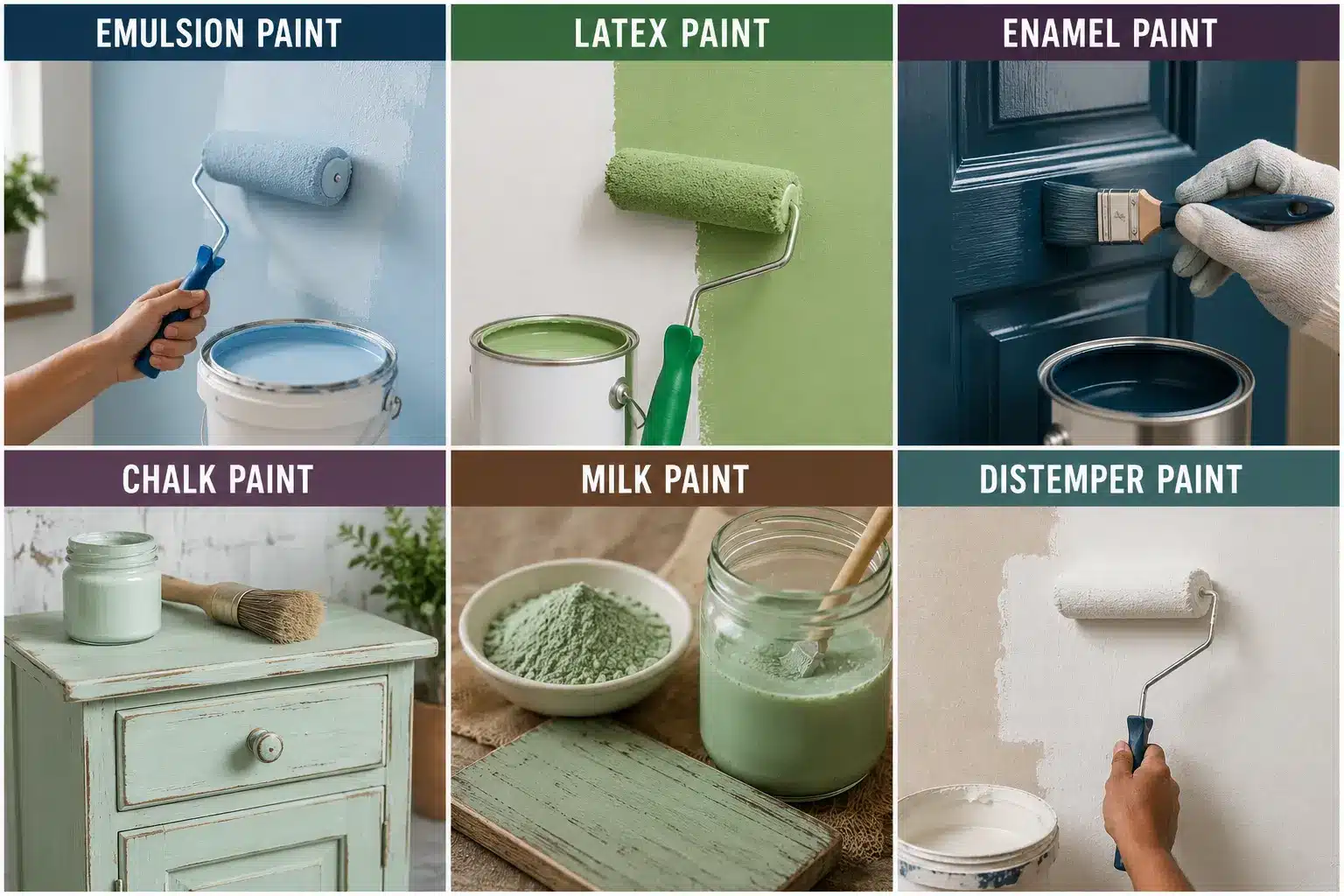
Wall paint is only one part of the bigger picture, but it is worth understanding since most homes use several of these types across different rooms.
1. Emulsion Paint
Emulsion paint is water-based, has a low odor, and dries fast, making it the standard choice for interior walls and ceilings.
Its ease of application and quick recoat time make it practical for most home painting projects.
2. Latex Paint
Latex paint offers a flexible finish that resists cracking as walls settle over time. It cleans up easily with soap and water and works well across large interior and exterior surfaces alike.
3. Enamel Paint
Enamel paint dries into a hard, washable surface, which is why it shows up so often on doors, trims, cabinets, furniture, and metal.
That durability makes it a good fit for high-touch areas that need to withstand daily wear.
4. Chalk Paint
Chalk paint has a matte, slightly textured appearance and needs very little surface preparation before use. That convenience has made it especially popular for furniture makeovers and upcycling projects.
That minimal prep has made it especially popular for wood furniture makeovers where sanding or priming would add hours of extra work.
5. Milk Paint
Milk paint comes in powder form and is mixed with water before use, producing a natural, slightly variable finish. It is a common choice for rustic or aged furniture effects where a perfectly uniform look is not the goal.
6. Distemper Paint
Distemper is an older, more economical wall coating with lower washability and durability compared to modern emulsions.
It still appears in some traditional or budget-conscious projects, though it requires more frequent touch-ups over time.
Types of Paint for Outdoor and Protective Use
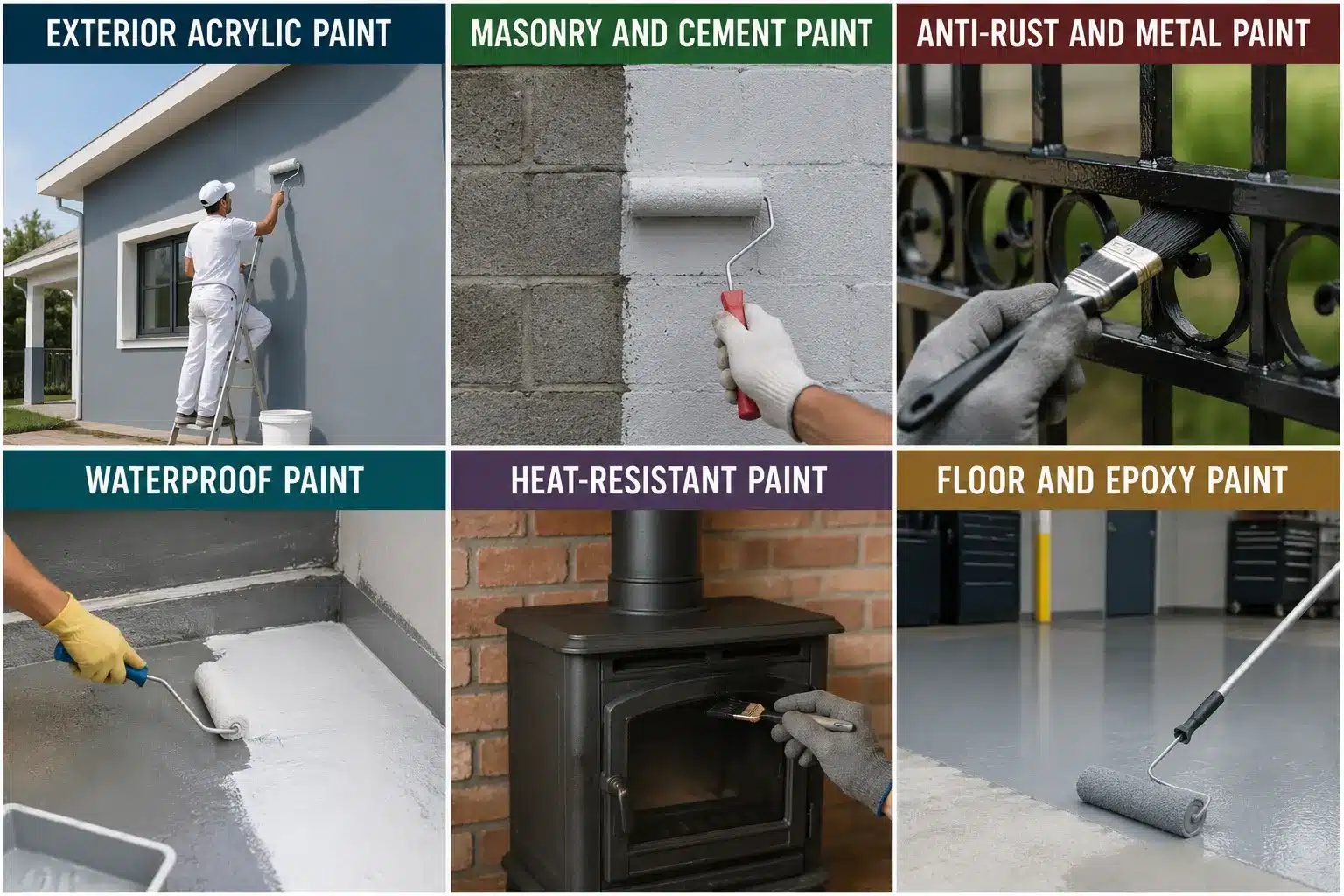
Outdoor and protective paints are built to solve specific problems, from weather exposure to rust to heat, so it helps to group them by the issue they address.
1. Exterior Acrylic Paint
Exterior acrylic paint is built to withstand weather, maintain flexibility, and withstand constant UV exposure without fading or cracking quickly. It is the standard option for painting exterior walls exposed to the sun, rain, and temperature fluctuations.
2. Masonry and Cement Paint
Masonry and cement paint are designed for brick, concrete, plaster, and other porous surfaces that absorb moisture. It helps seal these materials while still allowing some breathability so trapped moisture can escape.
3. Anti-Rust and Metal Paint
Anti-rust and metal paint protect against corrosion on railings, gates, pipes, tools, and outdoor furniture. It typically includes a rust-inhibiting formula that keeps metal surfaces protected even in damp or exposed conditions.
4. Waterproof Paint
Waterproof paint can help protect bathrooms, basements, exterior walls, and other moisture-prone surfaces from water damage. It works best as part of a broader moisture-control plan rather than a standalone fix for serious leaks.
When choosing any indoor paint for a sealed space like a basement or bathroom, check the VOC (volatile organic compound) level on the label. The EPA notes that VOCs released by standard paints can affect indoor air quality for days after application. Low-VOC or zero-VOC formulas reduce that risk significantly.
5. Heat-Resistant Paint
Heat-resistant paint is formulated for fireplaces, stoves, grills, radiators, and other surfaces that face high temperatures. Standard paint would blister or discolor in these conditions, which is why this specialized formula matters.
6. Floor and Epoxy Paint
Floor and epoxy paint create a hard, chemical-resistant coating suited to garages, workshops, concrete floors, and other busy areas. Its toughness makes it a practical choice anywhere heavy foot traffic or dropped tools are a regular concern.
Paint Base Types and How They Work
Knowing the base of a paint explains a lot about how it will behave, from drying time to cleanup to how strong it smells while you work.
1. Water-Based Paint
Water-based paint dries faster, has a lower odor, and cleans up easily with soap and water. It has become the default choice for most everyday indoor projects thanks to that convenience.
2. Oil-Based Paint
Oil-based paint dries more slowly but produces a harder finish with smooth leveling, which minimizes brush marks. It has a stronger odor and needs a solvent for cleanup, so it works best in well-ventilated spaces.
3. Solvent-Based Paint
Solvent-based paint is common in industrial coatings, specialty finishes, and applications that need exceptional durability. It is less common in typical home projects because of its odor and cleanup requirements.
4. Paint Is Not the Same as Finish
Acrylic, oil, and latex describe the paint’s formula, while matte, satin, gloss, and similar terms describe how the dried surface looks and reflects light. Two cans labeled acrylic can still have completely different finishes, so it helps to check both details before buying.
Common Paint Finishes and What They Mean
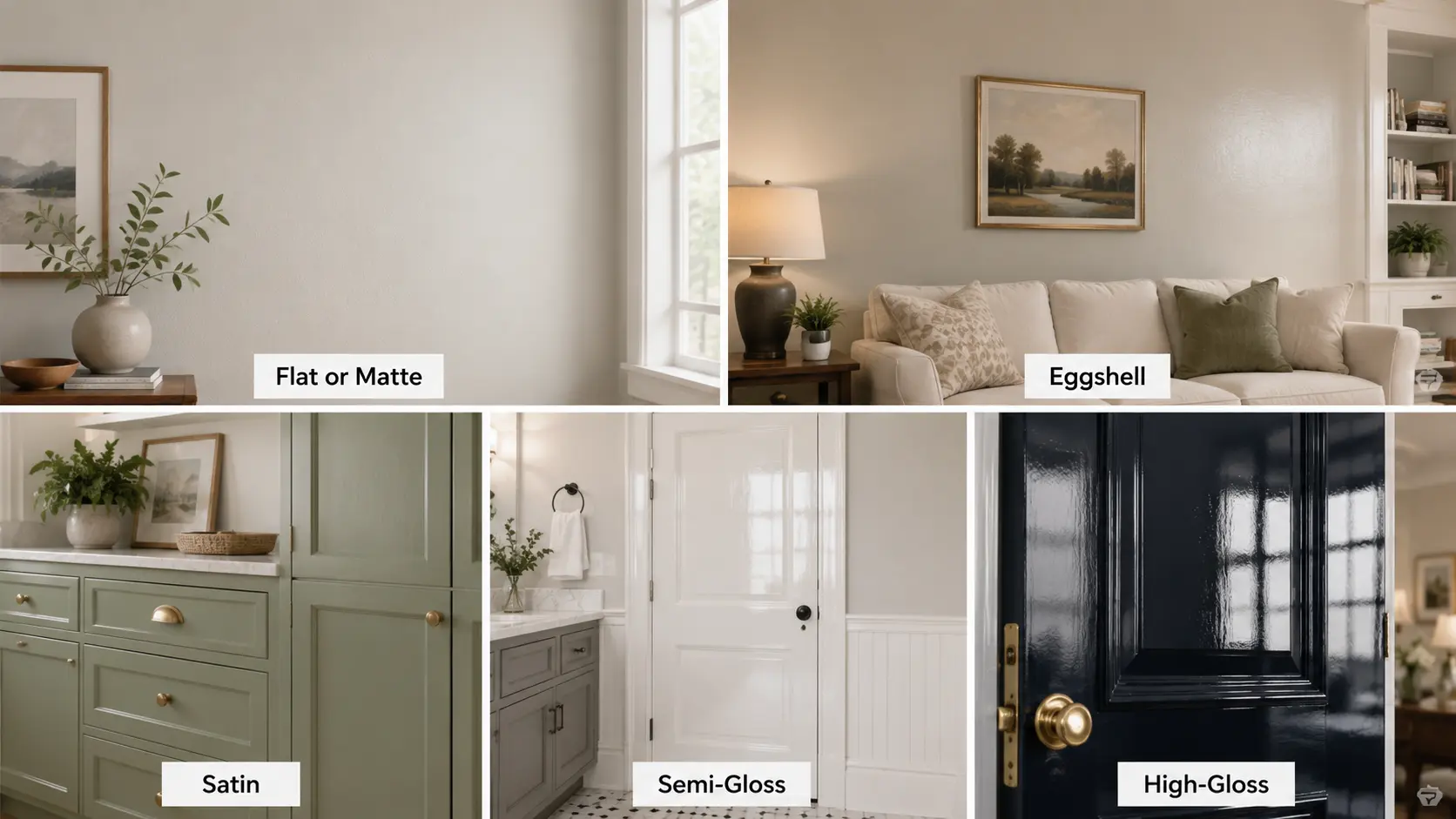
Finish affects how a painted surface looks and how easily it can be cleaned, independent of which paint formula was used.
1. Flat or Matte
Flat or matte finishes are best for hiding small wall flaws, though they are usually harder to clean than glossier options.
The lack of shine absorbs light rather than reflecting it, which helps disguise dents, patches, and uneven texture. It works well in low-traffic rooms like bedrooms or formal living spaces.
2. Eggshell
Eggshell offers a soft sheen with slightly better washability than matte, making it a common pick for living areas.
It strikes a balance between hiding minor imperfections and withstanding occasional wiping. Hallways and family rooms often use this finish for that reason.
3. Satin
Satin provides a smooth, gentle shine suitable for busy rooms and furniture that see regular use.
Its light reflection makes colors look slightly richer while still resisting scuffs better than flatter finishes. It also holds up well on trim and doors that are frequently handled.
4. Semi-Gloss
Semi-gloss creates a durable, washable finish that holds up well on trim, kitchens, bathrooms, and doors
Its higher shine sheds moisture and grease more readily, which is why it is so often found in rooms prone to splashes and steam.
It does highlight brush marks more than flatter finishes, so application matters.
5. High-Gloss
High gloss produces the highest shine and the hardest finish, though it can also make surface flaws more visible.
That reflective quality makes colors look bold and glass-like once dry. It works best on smooth, well-prepared surfaces like cabinetry or furniture rather than uneven walls.
Common Mistakes When Choosing Paint
A few recurring mistakes lead to disappointing results or wasted paint:
- Using indoor or artist paint outdoors: these formulas are not built for weather or UV exposure and will peel or fade quickly outside.
- Choosing paint only by color: picking by shade alone ignores formula and finish, which affect durability just as much as the look.
- Confusing paint type with paint finish: acrylic, oil, and latex describe the formula, while matte, satin, and gloss describe the sheen; mixing up the two leads to the wrong product.
- Skipping prep between incompatible layers: applying water-based paint over glossy oil paint or mixing incompatible formulas, without proper sanding or priming, often causes peeling.
- Skipping primer on bare surfaces: Raw drywall, uncoated wood, and previously glossy finishes all need a primer coat first. Paint alone will not bond well and will require extra coats to look right.
Conclusion
Choosing among the many types of paint comes down to the surface, finish, drying time, and the amount of wear the project needs to withstand.
Acrylic remains one of the most flexible choices for both art and home projects, while oil paint still earns its place whenever a longer blending time and a smooth, rich finish matter more than speed.
Not sure where to start? Match the paint type to the surface first, then choose the finish. That order of thinking prevents most of the common mistakes covered above.
Frequently Asked Questions
Which Is the Highest-Quality Paint?
The highest quality paint depends on the surface and purpose. Premium acrylic or emulsion paints are often best for walls, while high-quality enamel paint works well on wood and metal.
Which Is Better, Emulsion or Enamel Paint?
Emulsion paint is better for walls and ceilings because it dries quickly and has low odor. Enamel paint is more durable and suitable for doors, trim, furniture, and metal surfaces.
Which Paint Is Best for a New Home?
Acrylic emulsion paint is usually the best choice for a new home. It offers smooth coverage, good durability, easy cleaning, and a wide range of colors and finishes.