Standard Rug Sizes Guide for Every Room

I once bought a rug that looked perfect in the store and turned into a doormat once it hit my living room floor. Size, not color or pattern, is what makes or breaks a rug.
Choosing the right size doesn’t have to be complicated. A few simple measurements can help you get a balanced, comfortable look in any room.
From living rooms to bedrooms to dining spaces, the right dimensions change how your furniture connects with the floor. Get the size wrong, and even the best-looking rug will fight the room instead of pulling it together.
Why Rug Size Matters
The right rug size helps a room feel balanced and complete. It can also influence how spacious the area appears.
Larger rugs can make small rooms feel more open and connected. Poorly sized rugs may make spaces feel crowded or uneven.
A properly sized rug improves comfort and movement throughout the room. It supports better flow in living rooms, bedrooms, and dining areas.
The correct rug size defines spaces and supports furniture placement. It creates a cleaner, more organized look with better visual balance.
What Are Standard Rug Sizes?
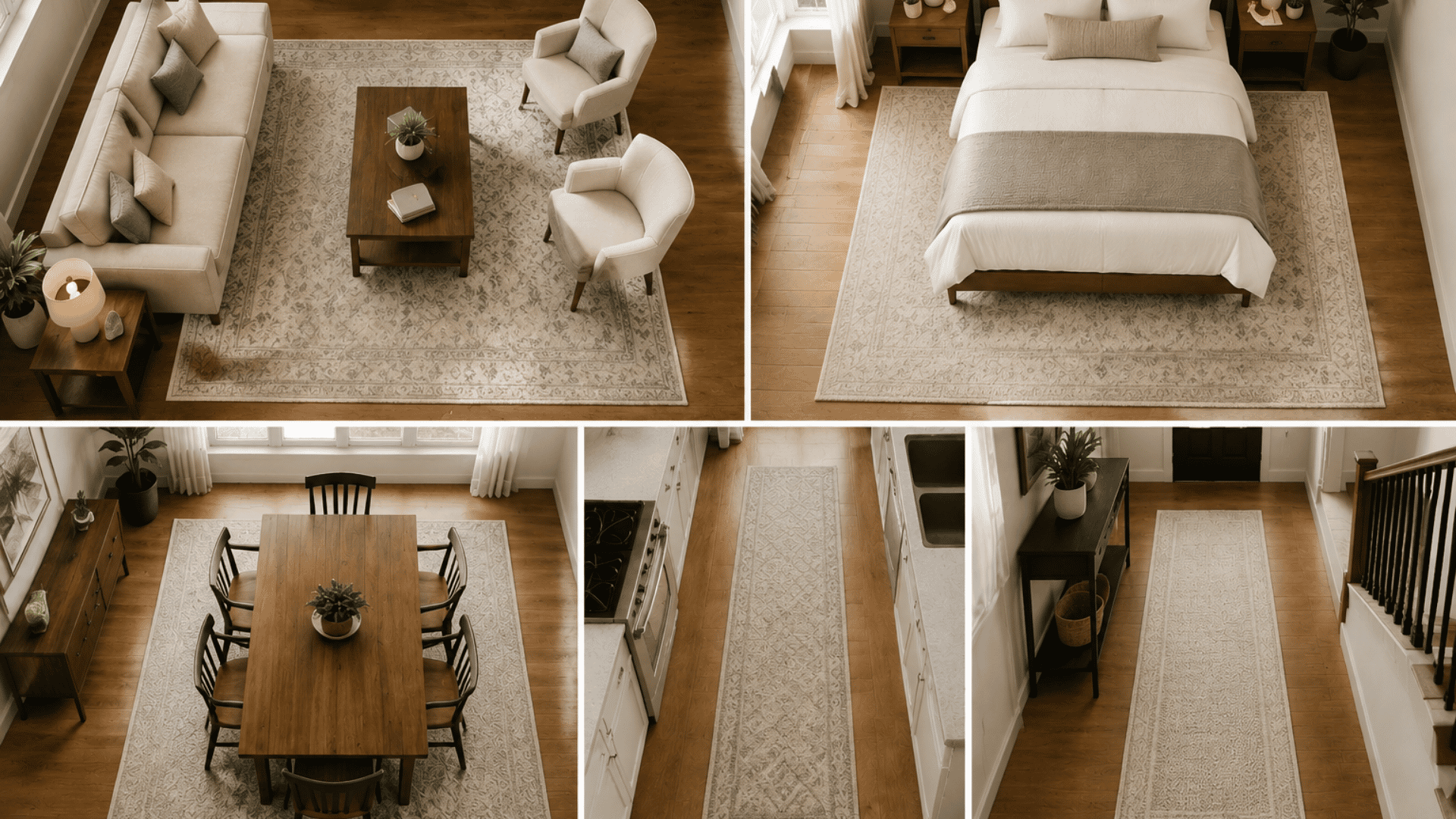
Standard rug sizes are designed to fit common room layouts and furniture arrangements with better balance and coverage. They make it easier to choose the right rug without confusion or guesswork.
|
Rug Type |
Standard Sizes |
Best For |
|---|---|---|
|
Small Rugs |
2×3 ft, 3×5 ft, 4×6 ft |
Entryways, bathrooms, small spaces |
|
Medium Rugs |
5×8 ft, 6×9 ft |
Bedrooms, compact living rooms |
|
Large Rugs |
8×10 ft, 9×12 ft, 10×14 ft |
Living rooms, dining rooms, large spaces |
|
Runner Rugs |
2.5×6 ft, 2.5×8 ft, 3×10 ft |
Hallways, kitchens, bedside areas |
|
Round Rugs |
4 ft, 6 ft, 8 ft, 10 ft |
Dining areas, seating corners, bedrooms |
Standard rug sizes help you choose the right fit for every room. They improve layout balance, furniture placement, and the overall look of the space.
Standard Living Rooms Rug Sizes
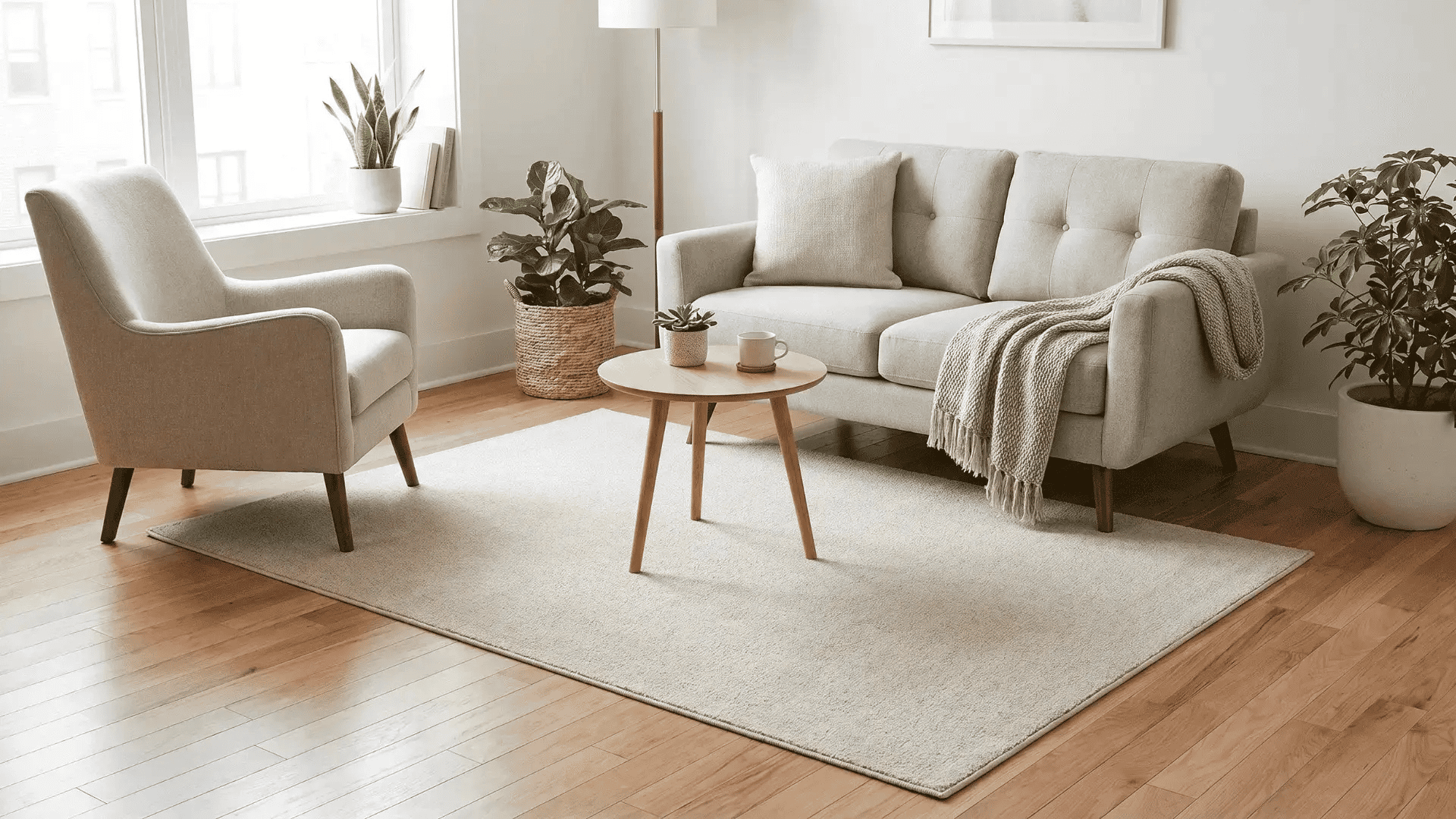
Standard living room rug sizes vary based on room dimensions and furniture placement. The right size creates a balanced seating area with proper floor coverage.
1. Small Living Room Rug Sizes
Small living rooms and apartments usually work best with 5×8 ft rugs. A 4×6 ft rug can also work in compact spaces where only the coffee table sits on the rug.
These sizes help keep the room open while still adding warmth and texture. They work well for studio apartments and small seating arrangements.
2. Medium Living Room Rug Sizes
For medium-sized living rooms, 6×9-ft and 8×10-ft rugs are the most common choices. A 6×9 ft rug works well when the front legs of sofas and chairs sit on the rug.
An 8×10-ft rug provides more coverage and creates a larger, more connected seating area. This size is often used in standard family living rooms.
3. Large Living Room Rug Sizes
Large living rooms usually need 9×12-ft or 10×14-ft rugs. These sizes allow all major furniture pieces to sit fully on the rug.
Large rugs help fill open floor areas and make the room feel complete. They are commonly used in spacious homes and open-concept layouts.
Standard Bedroom Rug Sizes
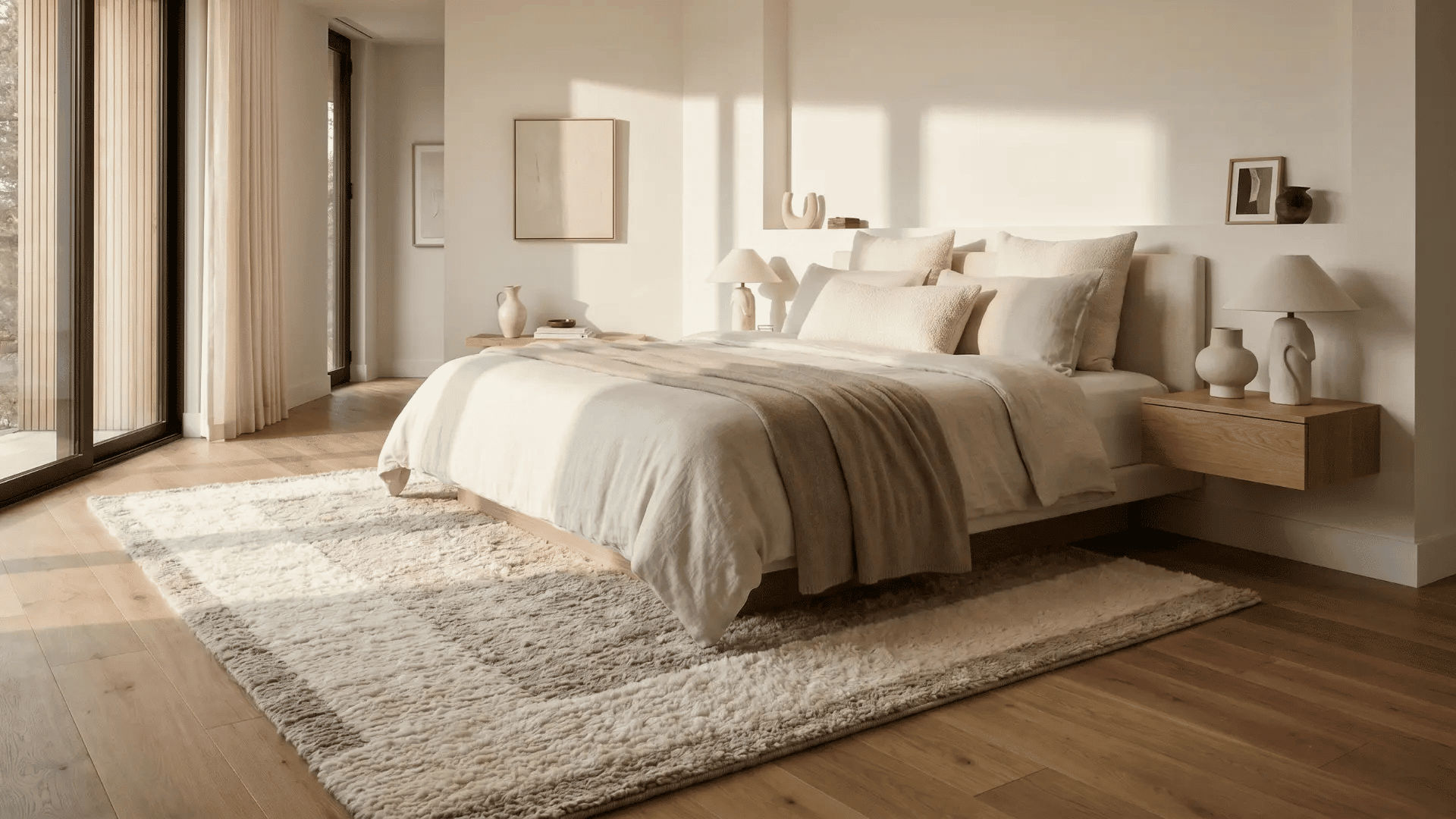
Standard bedroom rug sizes depend on bed size, room layout, and how much floor you want to cover. The right rug dimensions add comfort while keeping the bedroom balanced and functional.
4. Rug Size for Queen Bed
An 8×10 ft rug is one of the best choices for a queen bed. It provides enough space around the bed while keeping the room proportional.
A 6×9 ft rug can also work in smaller bedrooms if you place it partially under the bed. Most people place the rug under the lower two-thirds of the bed.
5. Rug Size for King Bed
King beds usually need larger rugs like 9×12 ft. This size leaves enough rug visible on both sides of the bed.
An 8×10 ft rug may work in compact rooms, but larger rooms benefit more from 9×12 ft or 10×14 ft rugs. These sizes create a more balanced, spacious look.
6. Runner Rugs for Bedrooms
Runner rugs work well in smaller bedrooms where full-size rugs may feel too large. They can be placed along one or both sides of the bed for added comfort.
A runner at the foot of the bed can also create extra floor coverage. This placement adds style while keeping the room feeling open.
When a larger rug isn’t practical, runners offer a simple, flexible solution. They provide warmth underfoot without taking over the entire space.
Dining Room Rug Sizes
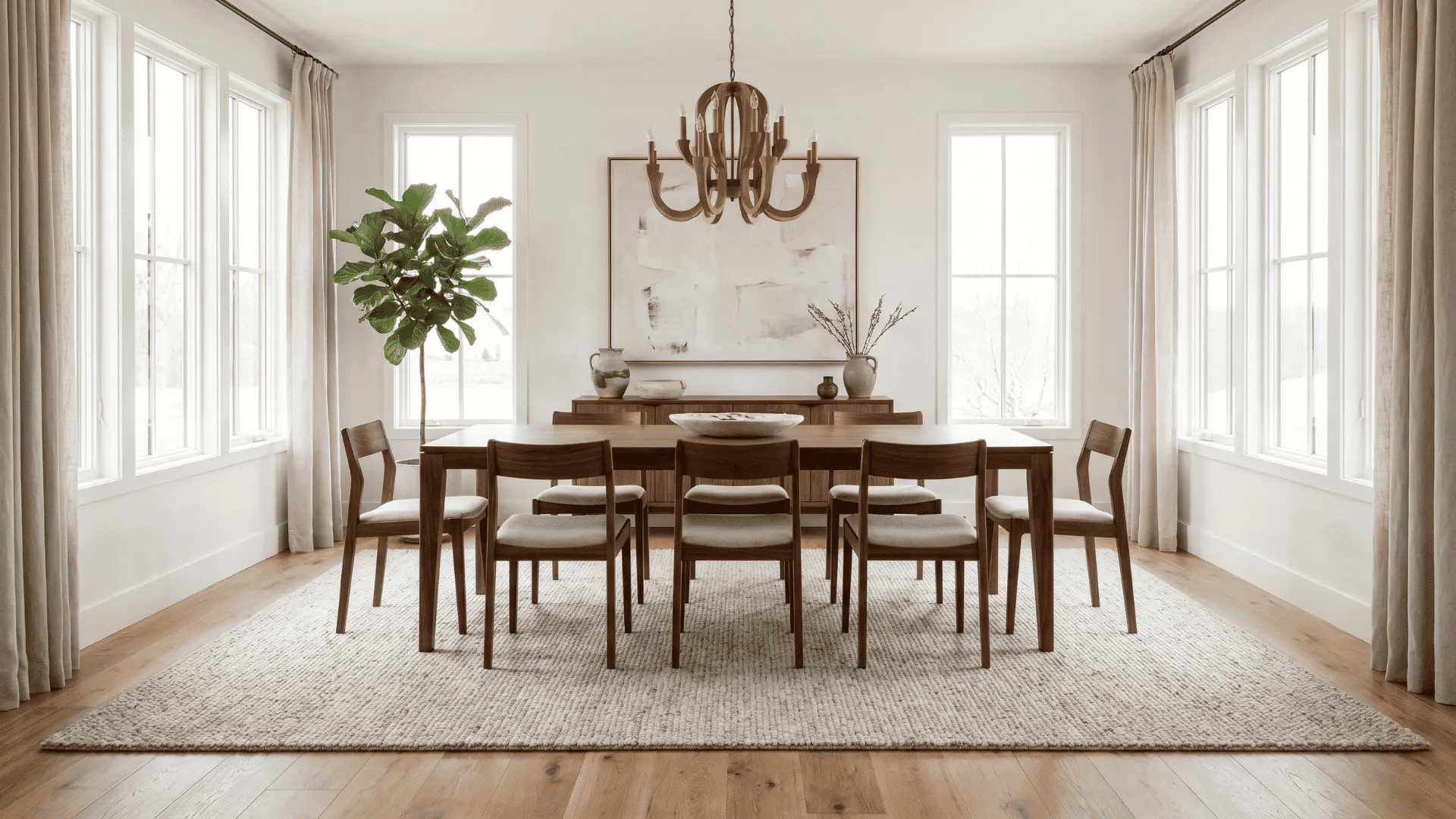
Dining room rug sizes depend on table size and seating arrangement. The right rug dimensions allow chairs to move comfortably while keeping the space balanced.
7. Rug Size for 4-Seater Dining Table
A 6×9 ft rug is usually suitable for a 4-seater dining table. It provides enough space for chairs to move comfortably.
This size also helps keep the dining area balanced without making the room feel overcrowded. It also gives enough clearance for smoother chair movement during everyday use.
8. Rug Size for 6-Seater Dining Table
An 8×10 ft rug works well for most 6-seater dining tables. It gives better coverage around the table and chairs.
It also allows chairs to slide out easily without catching on the rug edges. This helps make the dining area more comfortable for everyday use.
9. Rug Size for 8-Seater Dining Table
Large dining setups with 8 seats typically need a 9×12 ft rug. This size helps maintain proper spacing around the dining area.
It also keeps the chairs comfortably on the rug even when pulled out for seating. This creates a more practical, visually balanced dining setup.
Hallway and Entryway Rug Sizes
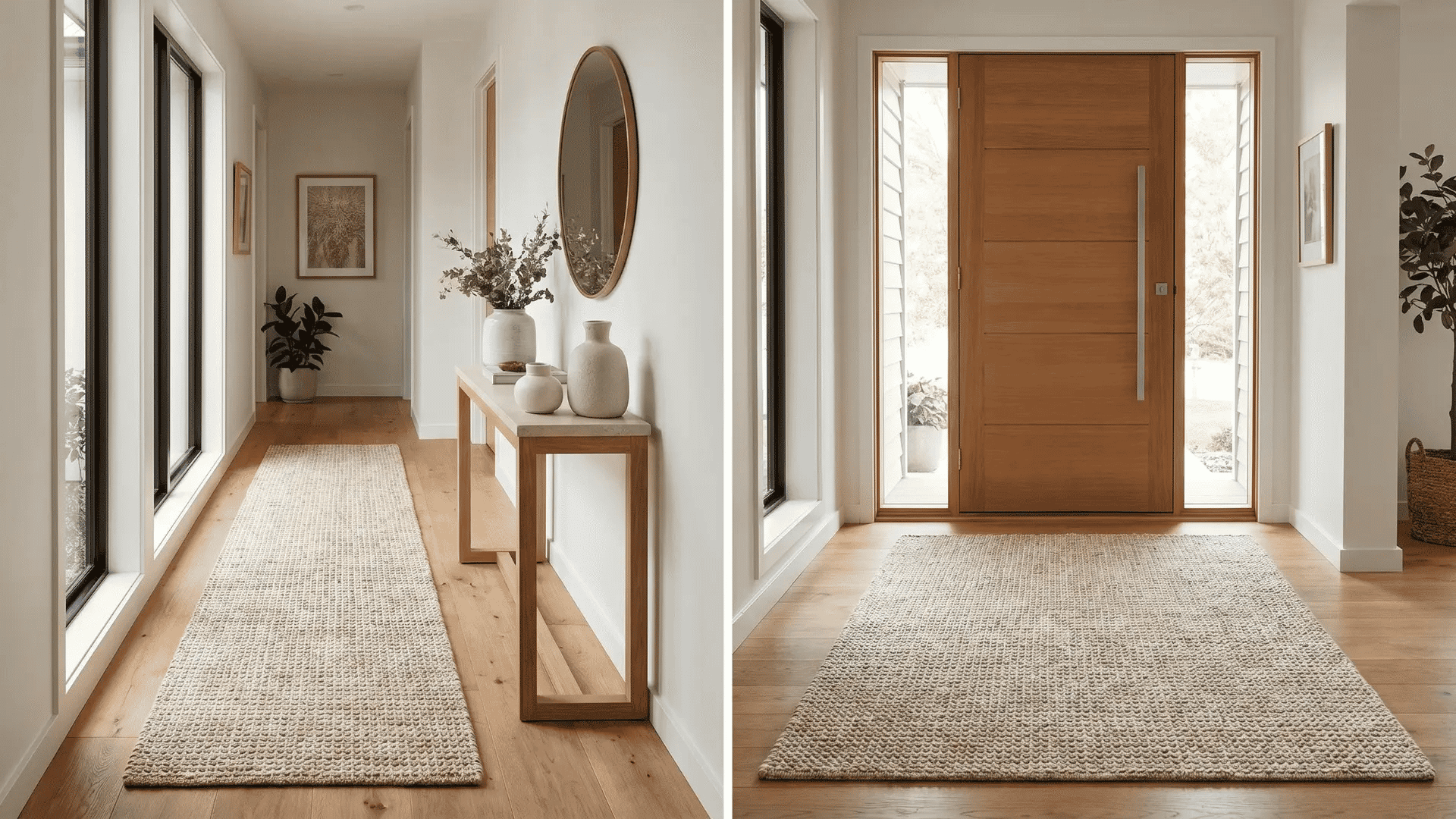
Hallway and entryway rug sizes help improve floor coverage and protect high-traffic areas. The right runner size creates a balanced and comfortable entrance space
10. Runner Sizes for Hallways
Popular hallway runner sizes include 2.5×6 ft, 2.5×8 ft, and 3×10 ft. The right size depends on the length and width of the hallway.
Long hallways usually work best with 2.5×8 ft or 3×10 ft runners. These sizes help create better floor coverage without making the space feel crowded.
11. Runner Sizes for Entryways
Entryways often use 3×5 ft or 4×6 ft rugs depending on the available space. The rug should leave some visible flooring around the edges for a cleaner look.
Larger entryways can also use round rugs or oversized runners. These options help fill empty floor space while creating a more welcoming look.
Tips for Selecting the Right Rug Sizes
Choosing the right rug size can improve room balance, comfort, and furniture placement. A properly sized rug also helps make the space look more organized and visually appealing.
- Measure the room before buying a rug to avoid sizing mistakes.
- Leave some visible flooring around the rug edges for a cleaner layout.
- Make sure the rug fits properly under key furniture pieces.
- Choose larger rugs for open spaces to better define the room.
- Keep dining chairs fully on the rug even when pulled out.
- Use runner rugs in hallways and narrow spaces for better floor coverage.
The right rug size helps create a more balanced and comfortable room setup. Proper placement also improves spacing, movement, and the overall appearance of the room.
Common Rug Size Mistakes to Avoid
Choosing the wrong rug size can make a room feel unbalanced and less functional. A few placement mistakes are usually to blame.
The most common is choosing a rug too small for the furniture arrangement, which makes the layout look disconnected instead of pulled together. Alignment matters just as much.
A rug set at an angle to the furniture, or floating off to one side, throws off the whole room even if the size is right.
Door clearance is worth checking before you buy, too, since a plush pile can catch and drag in tighter spaces where a low-pile rug would sit flush.
And bigger isn’t always the fix: an oversized rug in a compact room can swallow the space, so leaving some visible flooring around the edges actually helps the room breathe.
Get the size and placement right, and the payoff is a room that feels more comfortable, better organized, and visually balanced from every angle.
Conclusion
Choosing the right rug size helps every room feel comfortable, balanced, and visually organized. It creates a better connection between furniture, flooring, and overall layout.
Understanding standard rug sizes makes it easier to select the right fit. Proper dimensions prevent rooms from feeling crowded or incomplete.
The right rug measurements improve floor coverage, spacing, and movement throughout the area. A well-sized rug also adds comfort and better room flow.
Measure your space carefully before selecting a rug size that suits your layout. The right choice creates a balanced and polished room appearance.
Share your thoughts or rug sizing questions in the comments below.
Frequently Asked Questions
Should a Rug Touch the Walls?
No, rugs should usually leave visible flooring around the edges. This creates a balanced look, keeps the room feeling open, and helps define the rug as a separate design element.
Can I Place A Rug Over Carpet?
Yes, you can layer rugs over carpet to add texture, color, and better space definition. This works especially well in living rooms and bedrooms.
Should All Furniture Sit on The Rug?
Not always. Many layouts look balanced when only the front legs of sofas and chairs sit on the rug, creating a connected arrangement without covering the entire floor.