Outdoor Patio Table Cover Guide: How to Pick the Right One?

The table is where everything happens outside. Burgers get plated there, homework spreads across it on warm afternoons, and friends linger around it long after dessert. It also sits out in the open taking a beating from rain, tree sap, and sunshine when nobody is around. A properly fitted outdoor patio table cover is the simplest way to keep that centerpiece ready for the next get-together instead of needing a scrub-down first.
ZIPCovers is a leading premium brand in the US market, specializing in high-end, made-to-order outdoor protective covers. As an extension of an established custom-made home furnishing ecosystem, the brand delivers high-precision comfort and design products that serve over 75,000 residential and commercial spaces. Here’s a straightforward plan for picking one that does its job.
Know Your Table Before You Shop
Tables come in more varieties than most people realize, and each type changes what kind of protection works best:
- Dining tables: The largest surface on most decks, often paired with four to eight chairs.
- Coffee and side tables: Low pieces that tend to collect pine needles and grass clippings.
- Bar-height tables: Taller frames that need extra length to reach a useful drop.
- Bistro sets: Compact rounds that are easy to overlook but just as exposed.
Note the shape as well. Round, oval, square, rectangular, and hexagon tops each call for a different pattern, so a generic one-size option rarely sits right.
A Five-Minute Measuring Routine
Grab a tape measure and a notepad, then work through these steps:
- Measure the tabletop at its longest and widest points, or the diameter for a round top.
- Check the height from the floor to the top edge.
- Decide how far down the protection should hang. Floor length gives full shelter, while stopping a few inches above the ground helps airflow.
- See whether there is an opening for a parasol and note its position.
- If you want seating included, measure the full footprint with the chairs pushed in.
Jot the numbers on paper and double-check them. A mistake of an inch or two can mean a loose, flapping fit or one that won’t go on at all.
Material Makes or Breaks It
Cheap protectors from big-box aisles are often thin polyester. They look fine in the package and fall apart by next spring. Heavier options last far longer. Here is what deserves a spot on your checklist:
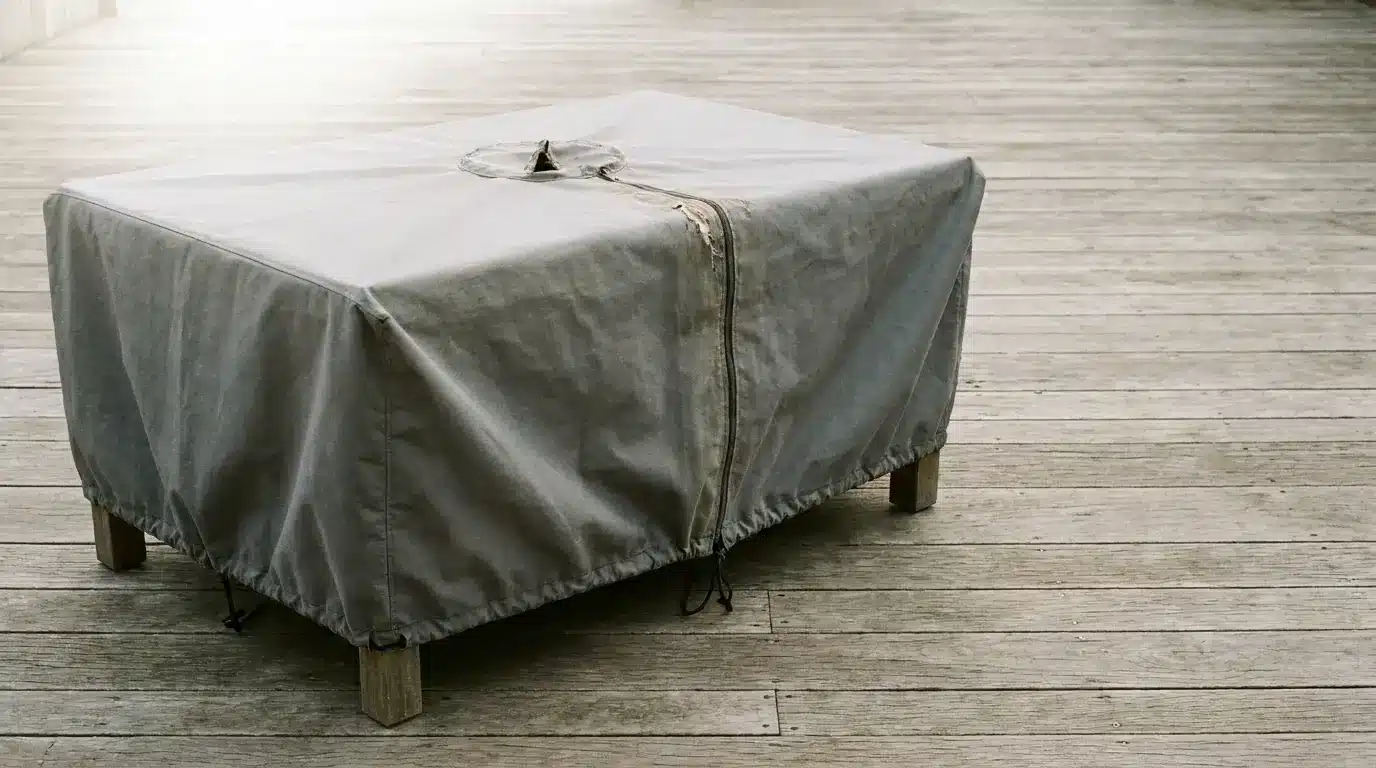
- A heavy base fabric, such as 18 oz PVC-coated 1000-denier polyester, that shrugs off rips and scuffs.
- True waterproofing, not just a light repellent finish.
- UV resistance so the color and coating don’t break down in strong sun.
- Built-in air vents that let trapped humidity escape and keep mildew from forming.
- A soft lining on the inside that won’t scratch glass or powder-coated finishes.
- A long warranty. Some makers back their work for up to ten years, which says a lot about how they expect it to hold up.
Features Worth Paying For
Small design choices separate a protector you love from one you fight with every weekend:
- A parasol cut-out with a zipper or flap, so you can leave the pole in place.
- A drawstring hem or buckle straps to keep it anchored on gusty days.
- Handles that make it easy to pull on and off without tugging the fabric.
- A combo design that wraps your whole dining set, chairs tucked in, as one piece, which saves time when a storm is on the way.
Do Covered Patio Covers Still Make Sense Under a Roof?
Plenty of homeowners skip protection because their dining set sits under a pergola or porch roof. That is a gamble. Wind drives rain sideways, winter sun reaches farther in at a low angle, and open sides let in pollen, dust, and critters. Durable covered patio covers handle those slower, sneakier threats, so even sheltered furniture stays clean and dry between uses.
The same goes for a screened porch or a sunroom with sliding panels. Humidity still creeps in overnight, and a breathable protector gives condensation a way out instead of letting it settle into wood grain or metal joints. Think of it as cheap insurance for furniture that cost real money.
Simple Care Habits
A few minutes of upkeep each month keeps any protector in top form:
- Let the table dry completely before putting the protector on.
- Sweep off fallen leaves regularly, since damp piles hold moisture against the fabric.
- Wash it down with gentle dish soap and a garden hose twice each season.
- When you remove it for a while, fold it loosely and store it somewhere dry.
The Takeaway
Your table works hard, and it deserves protection that fits as well as it performs. Measure carefully, choose heavy waterproof fabric with good ventilation, and pick features that match your local weather. Whether you’re outfitting a fully open deck or adding covered patio covers beneath a roof, the right outdoor patio table cover protects your investment for years to come.