Painted Brick Houses Before and After: 12 Real Ideas

Your brick house has been standing for years. It has seen summer heat, heavy rain, and decades of changing trends.
But if you look at the outside right now and feel like something is off, you are in good company. Many homeowners feel stuck with a dated exterior that no longer reflects who they are.
Here is the thing. You do not need to tear anything down or start over. A coat of paint can shift how your home looks and feels from the street.
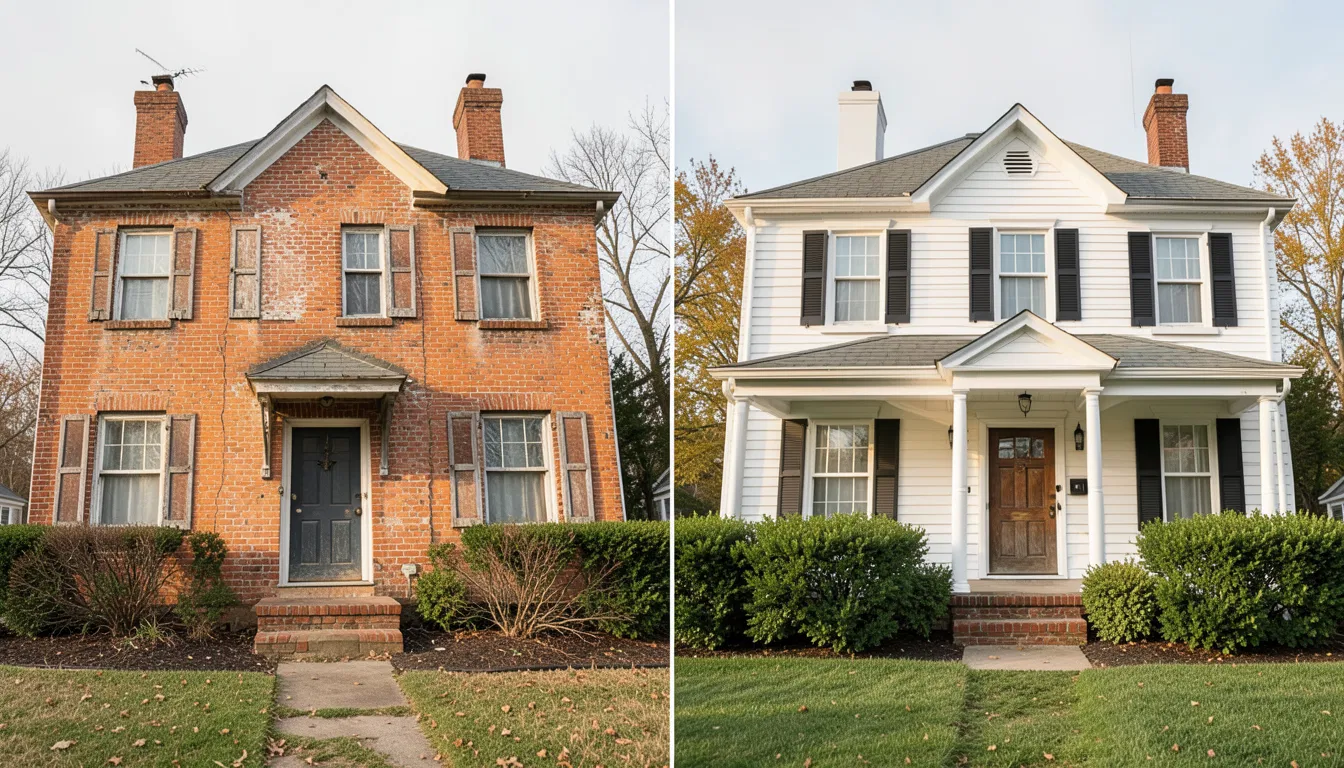
Real painted brick houses’ before-and-after photos show just how big that difference can be.
In this post, you will find real ideas, actual color names, and honest guidance to help you make the right call for your home.
What to Know Before You Paint Your Brick Home
Painting brick is not the same as painting a wall inside your home. Brick is porous, rough, and more demanding to work with. Before you settle on a color or hire a painter, there are a few key points worth knowing up front.
- Once painted, going back to bare brick is extremely difficult. Removing paint from brick is a long, costly process. Most homeowners stay the course once they commit.
- Brick needs to breathe. Some paints trap moisture inside the surface. Always choose a breathable, masonry-specific paint or primer designed for brick.
- The color will look very different in sunlight versus shade. Light reflectance value (LRV) tells you how much light a color reflects. Always test your chosen color directly on your wall before committing.
- Your neighborhood rules may limit your options. Some HOA communities and historic districts have restrictions on exterior paint colors. Check the guidelines before you buy a single can.
- Painted brick requires regular maintenance. Paint on brick can chip, fade, or peel over time. Plan for touch-ups every few years to keep it looking its best.
None of this means painting your brick home is a poor decision. It means going in with clear expectations. When done correctly, painted brick holds up well and keeps its fresh look for years.
Painted Brick Houses Before and After Ideas
These 12 painted brick house before-and-after ideas cover a wide range of styles, colors, and home types. Each one is based on real homes and real color choices used by homeowners and design professionals across the country.
Idea 1: Orange-Yellow Brick to Bright White with Black Trim
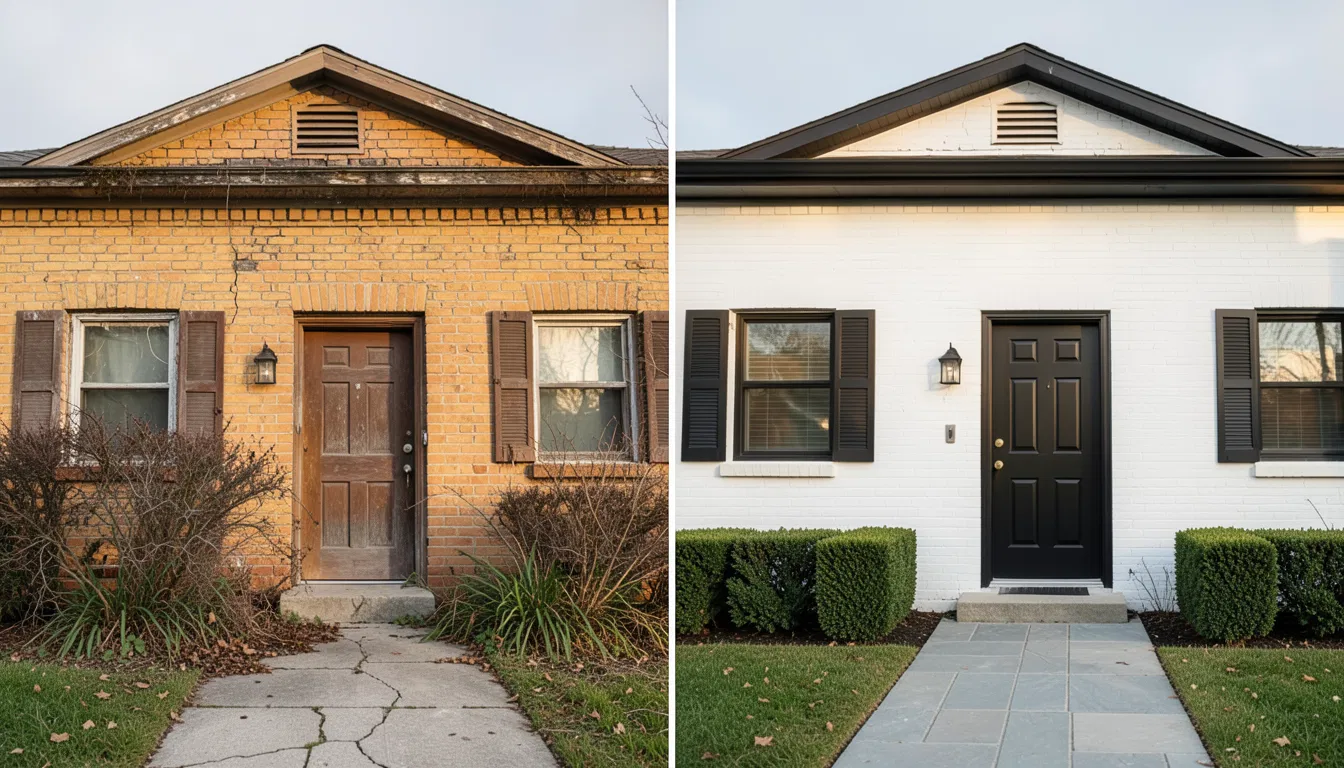
White is the most popular choice for painted brick homes in the US, and it is easy to see why. It works on nearly every home style and delivers instant curb appeal that reads well from the street.
- Before: The brick was an outdated orange-yellow shade with no visual contrast or focal point anywhere on the facade. The home blended into the background, feeling heavy and closed off from the street.
- After: A coat of Alabaster (SW 7008) by Sherwin-Williams on the brick, paired with Tricorn Black on the trim, gave the home a sharp and welcoming look. The contrast between the white field and black framing made every window and door stand out clearly.
Idea 2: Red Brick to Warm Greige
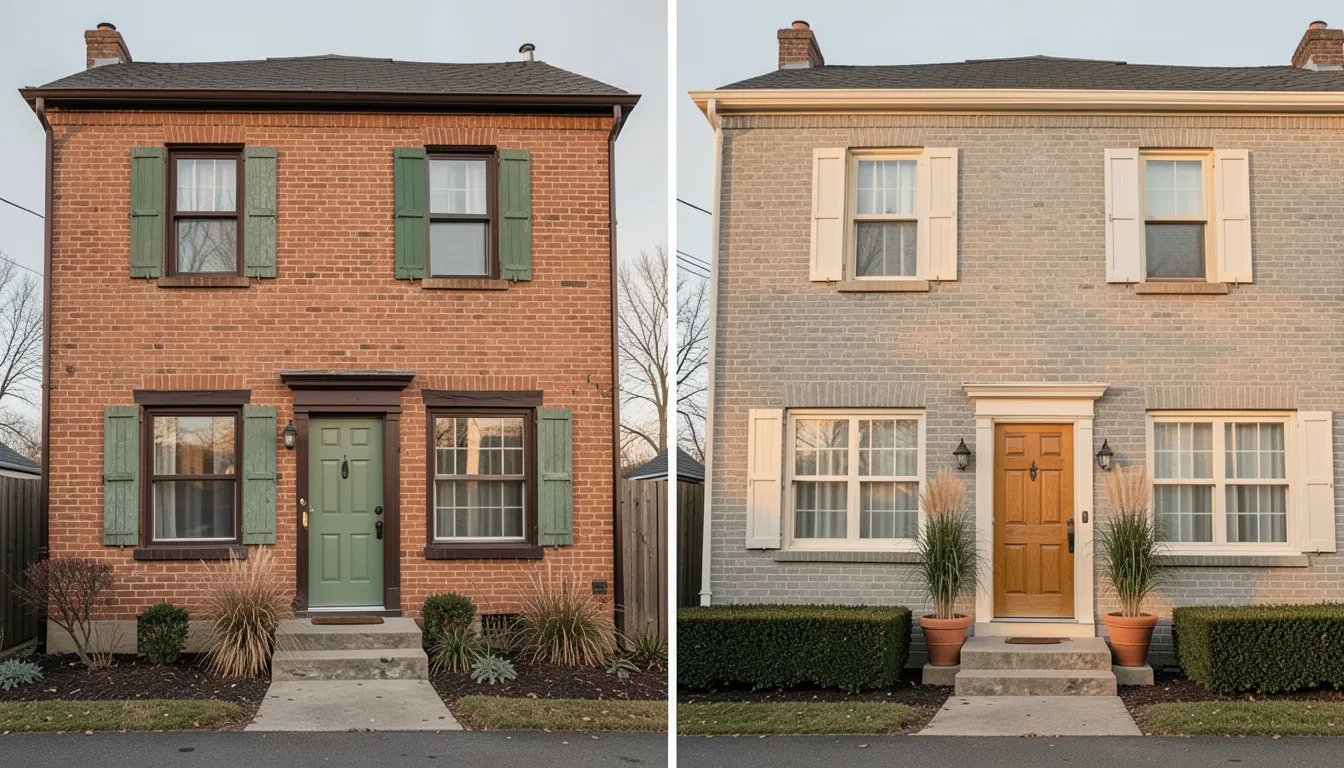
Not every homeowner wants to go full white or full dark. Greige sits right in the middle and gives brick a soft, put-together look without pushing too far in either direction.
- Before: The original red brick felt heavy and clashed with the surrounding landscaping and roof color. The home had solid bones but lacked visual harmony across the exterior.
- After: Revere Pewter by Benjamin Moore brought warmth and balance to the exterior without overpowering the rest of the design. The home looked updated and finished, like a deliberate style choice rather than a default.
Idea 3: Flat Brown Brick to Bold Charcoal Gray
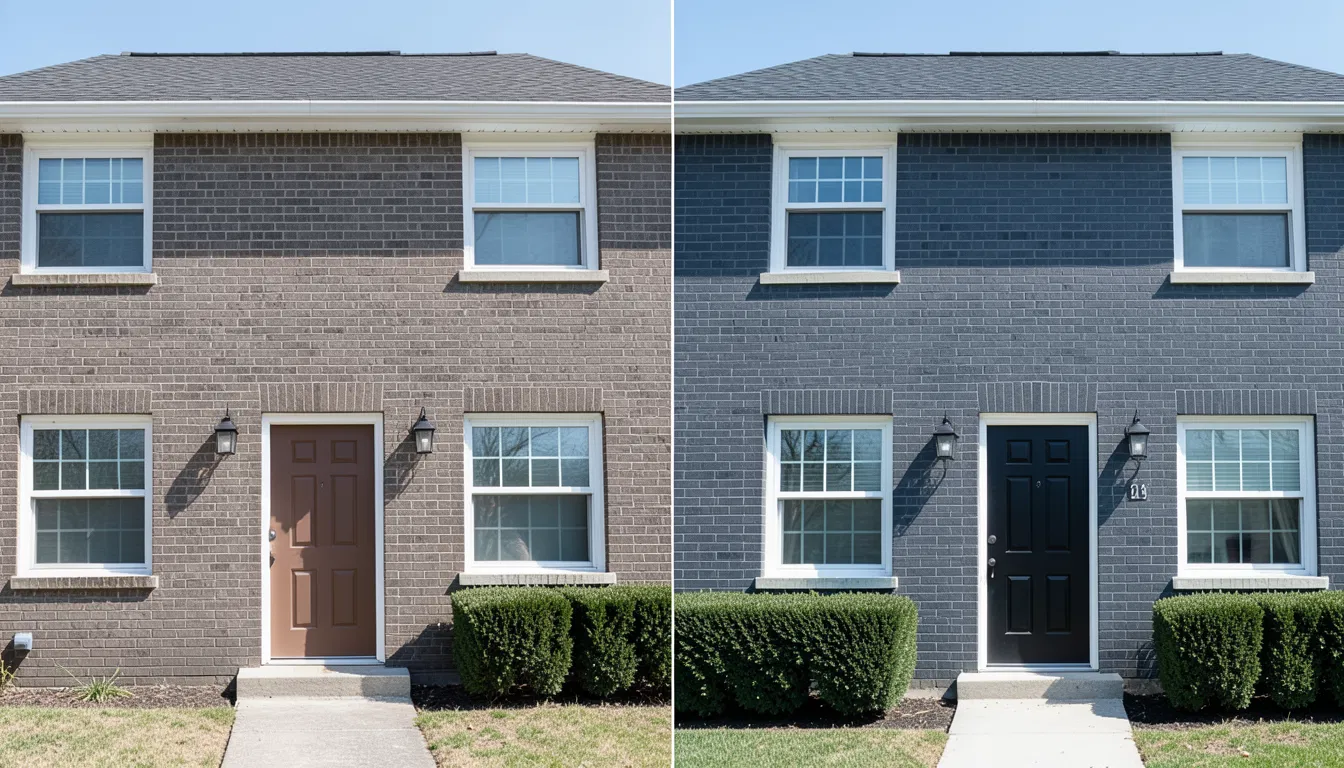
Dark gray is not the obvious choice for painted brick, but homeowners who go this route rarely regret it. When paired with the right trim and landscaping, it produces one of the most striking exterior looks you can get.
- Before: The original faded brown brick was flat and forgettable, blending with the driveway and surrounding structures. Nothing about the exterior gave the home any sense of personality or presence from the street.
- After: Iron Mountain by Benjamin Moore gave the brick depth and a modern feel, especially when set against white window frames. The blue undertones in the color added visual interest that the bare brick simply could not deliver on its own.
Idea 4: Plain Red Brick to a Natural Limewash Finish
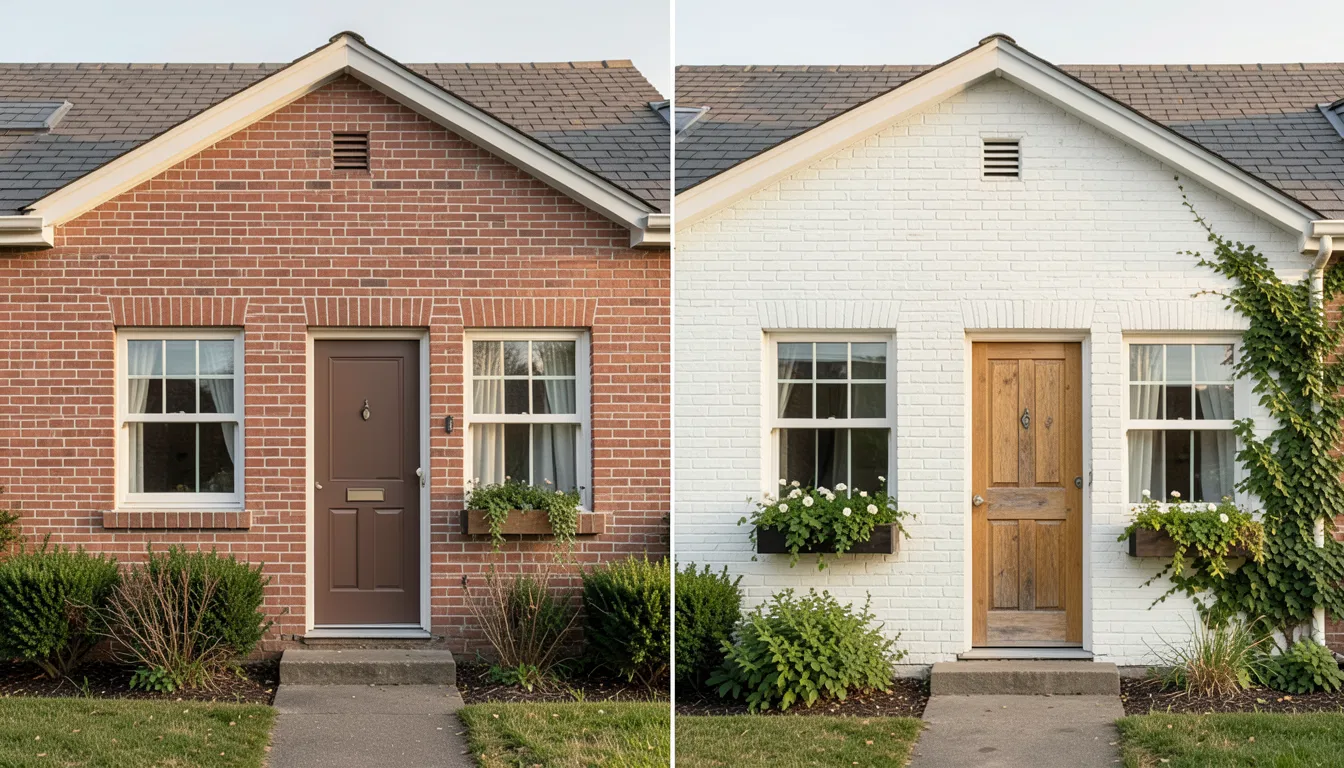
Limewash is not paint in the traditional sense. It is made from crushed limestone and gives brick a soft, layered finish that looks like it has been there for decades rather than applied last weekend.
- Before: The plain brick exterior looked one-dimensional, with nothing to break the flat, uniform surface from top to bottom. It felt more like a wall than a thoughtfully designed home facade.
- After: Romabio Avorio White limewash gave the brick a soft and textured finish with subtle tone variation across the surface. The result looked natural and lived-in rather than freshly painted, which was exactly the effect the homeowner was going for.
Idea 5: Bare Tan Brick to Off-White with Colorful Shutters
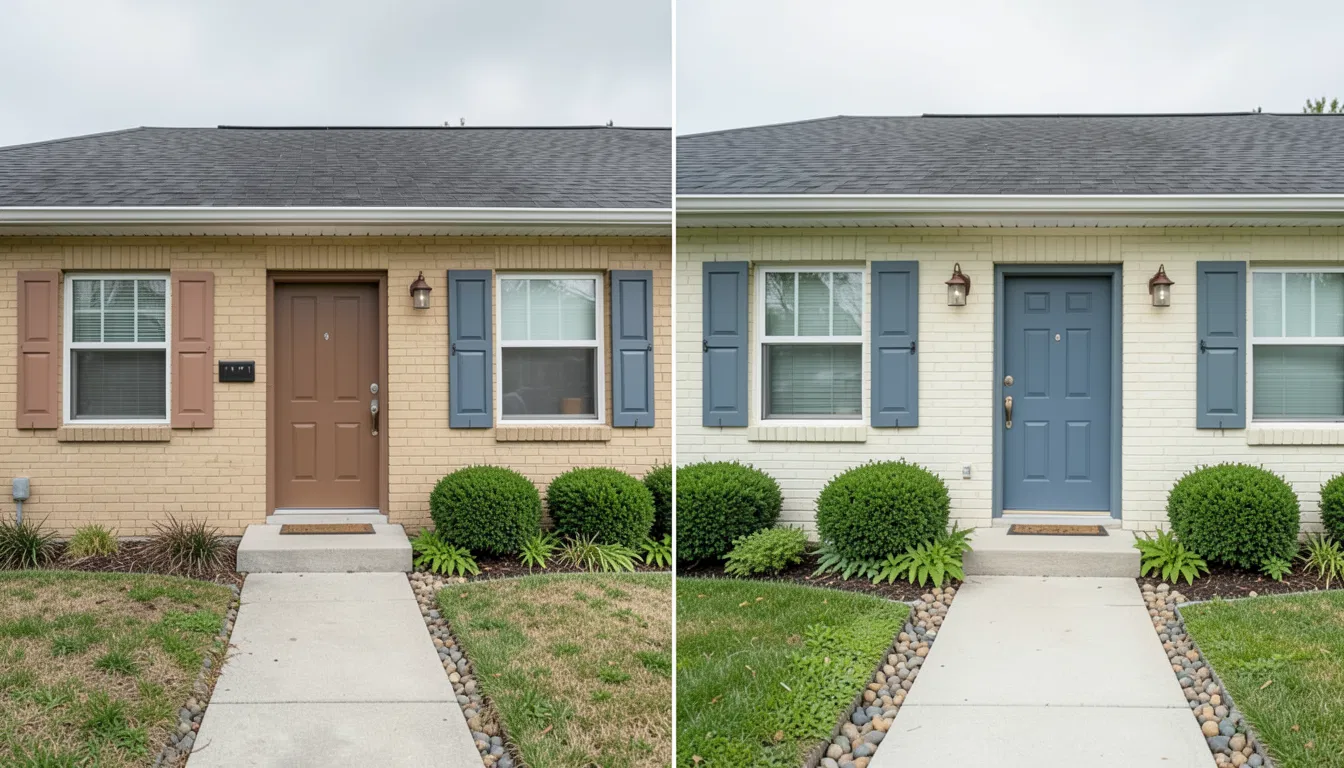
Off-white runs warmer than pure white and works especially well on homes where the goal is a classic, timeless look. Adding a shutter color brings personality without overcomplicating the overall design.
- Before: The brick was a flat, nondescript tan color with no visual accents to draw the eye toward any part of the facade. The shutters were either missing or painted the same dull shade as the surrounding brick.
- After: Shell White (SW 8917) by Sherwin-Williams on the brick, paired with Smoky Blue shutters, gave the home a fresh and coordinated look from the street. The blue shutters tied in naturally with the existing copper gutters already on the house.
Idea 6: Mismatched Brick and Siding to a Clean Two-Tone Exterior
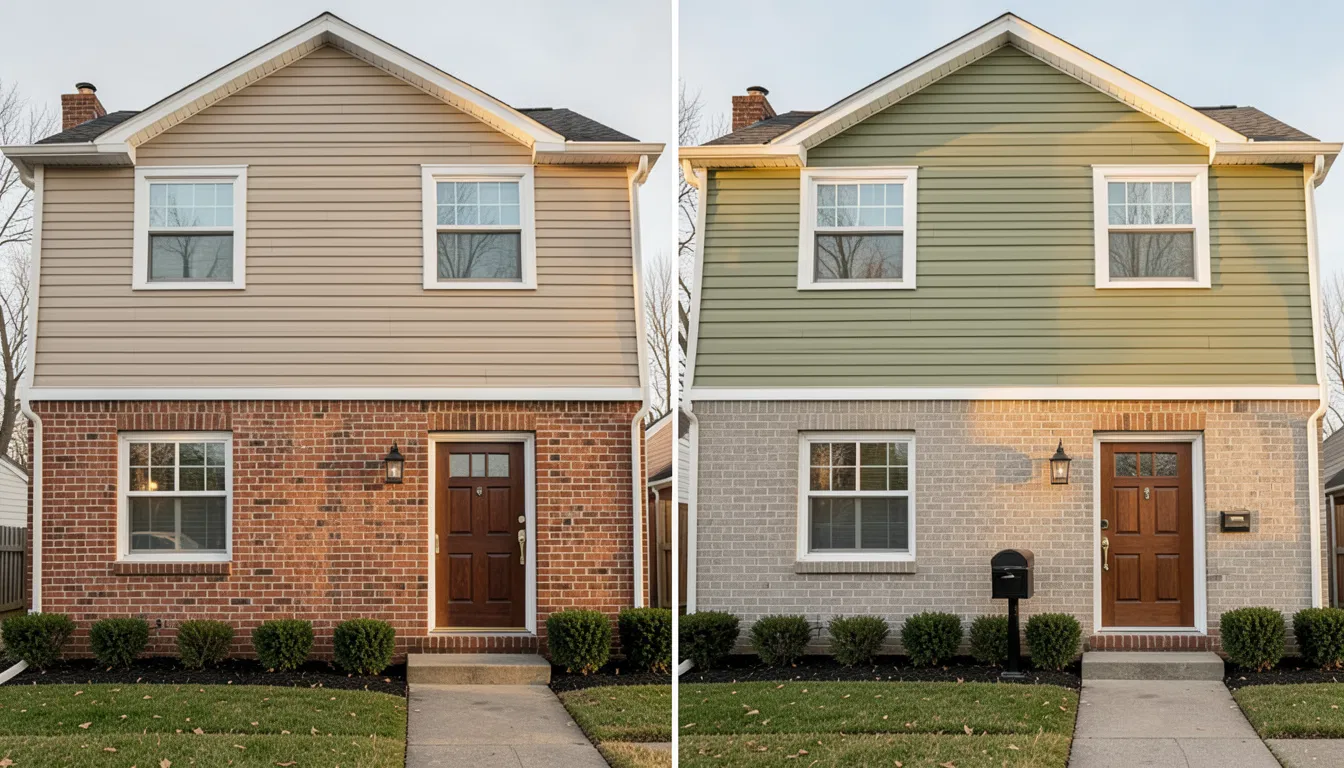
Using two different colors across the brick and siding sections of your home adds a layered, well-considered look to the exterior. It is one of the most effective ways to break up a large and flat facade.
- Before: The brick and siding were two different materials that never visually worked together as a unit. The exterior looked disconnected, as if sections of the home had been added at different times with no eye toward the overall picture.
- After: Ashwood Moss on the siding paired with Revere Pewter on the brick created a two-tone exterior that felt cohesive and intentional. The warm tones in both colors complemented each other, giving the home a distinctive, custom-designed quality.
Idea 7: Red Brick to Dramatic Matte Black
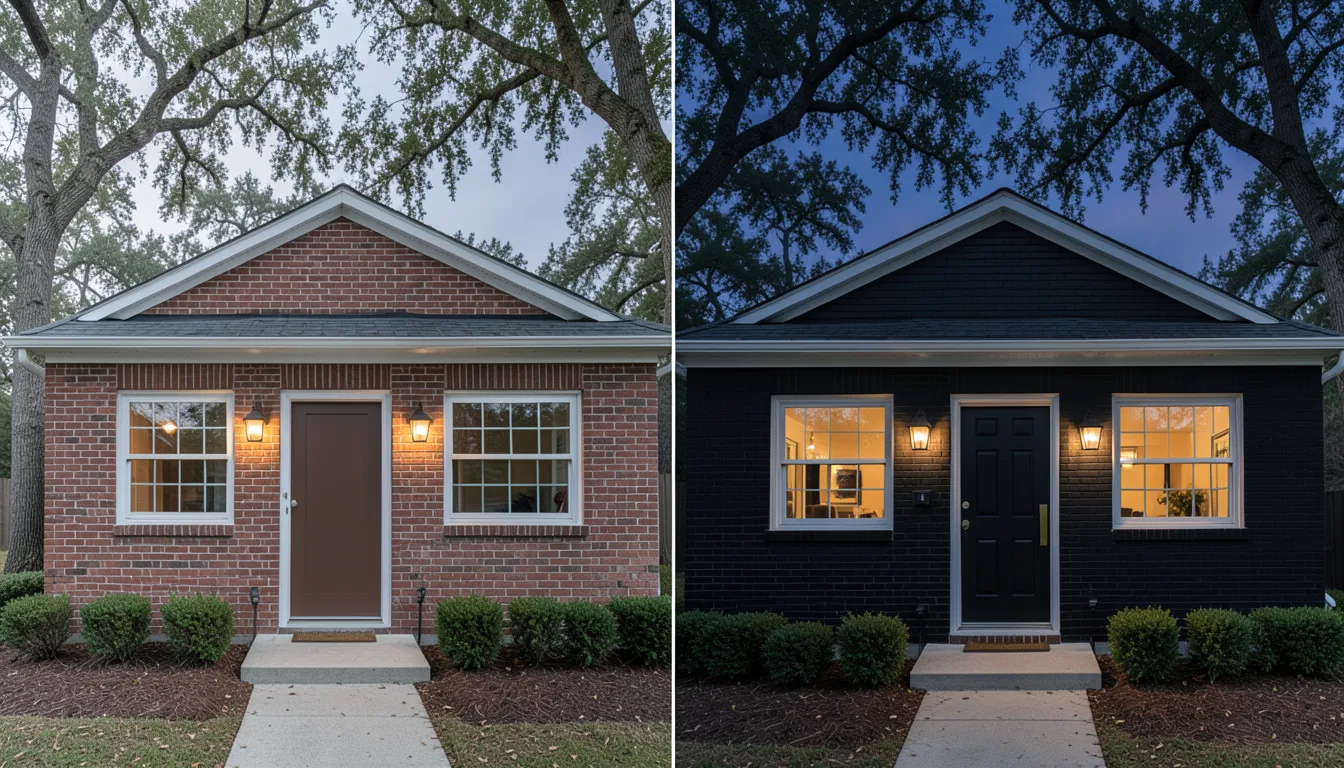
Black brick is bold and unapologetic. It is not for every home or every neighborhood, but when the setting is right, it creates an exterior that leaves a lasting impression from the street.
- Before: The standard red brick looked ordinary against the surrounding trees and landscaping, with no contrast or visual pull from the street. The home blended in when it had every opportunity to stand out.
- After: Olympic Mountains by Benjamin Moore gave the brick a rich, dark finish that felt modern and confident against the surrounding greenery. White window trim and light-colored front steps balanced the intensity without softening the overall impact.
Idea 8: Orange Brick to Soft Sage Green
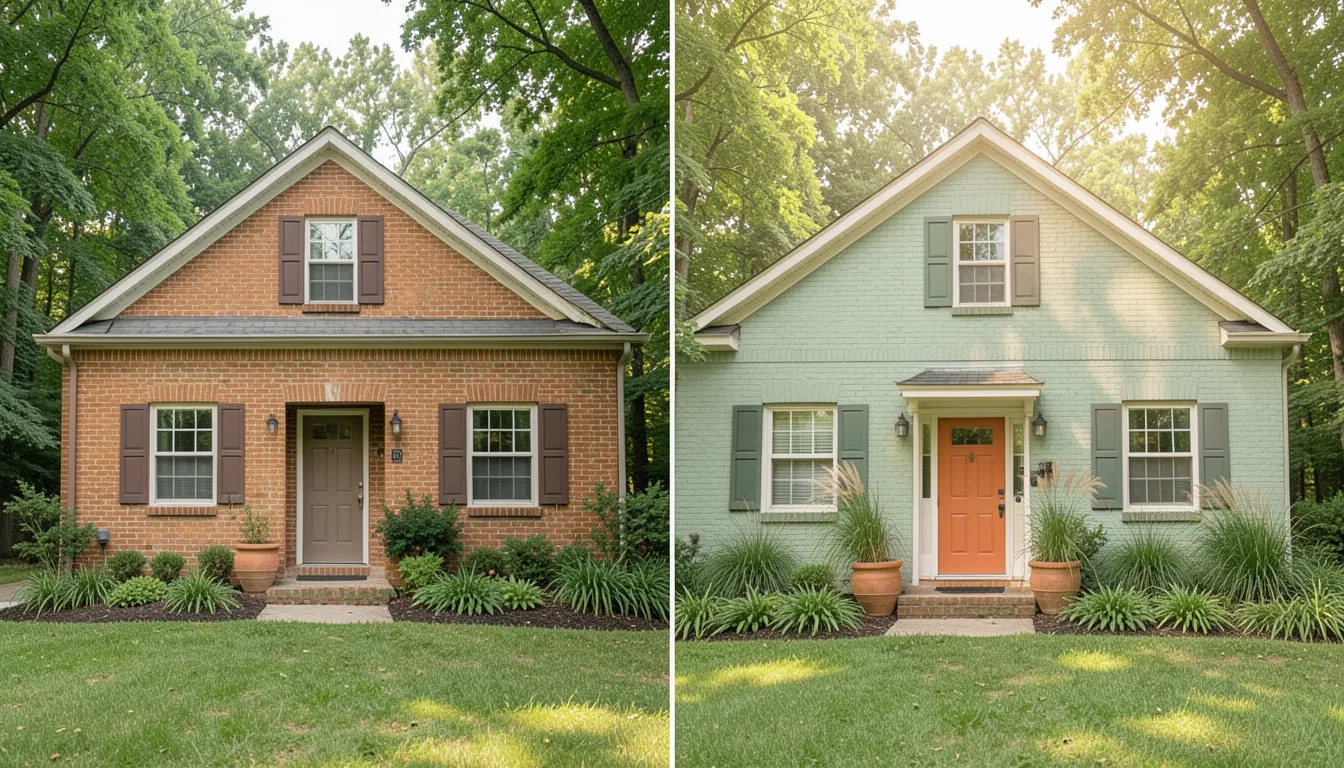
Sage and green-leaning colors are gaining ground among homeowners who want something different from the standard gray or white. These tones feel connected to the natural surroundings of a home in a way that cooler neutrals often do not.
- Before: The orange-toned brick looked out of place against the green landscaping and neutral roof, creating a color clash that was hard to overlook from the street. The brick was working against the rest of the exterior rather than with it.
- After: Ashwood Moss from Benjamin Moore brought the brick in line with the surrounding trees and grass, making the whole exterior feel grounded and well-considered. The warm green-beige tone sat comfortably next to the natural wood accents already on the porch.
Idea 9: 1960s Red Brick Ranch to a Clean White Exterior
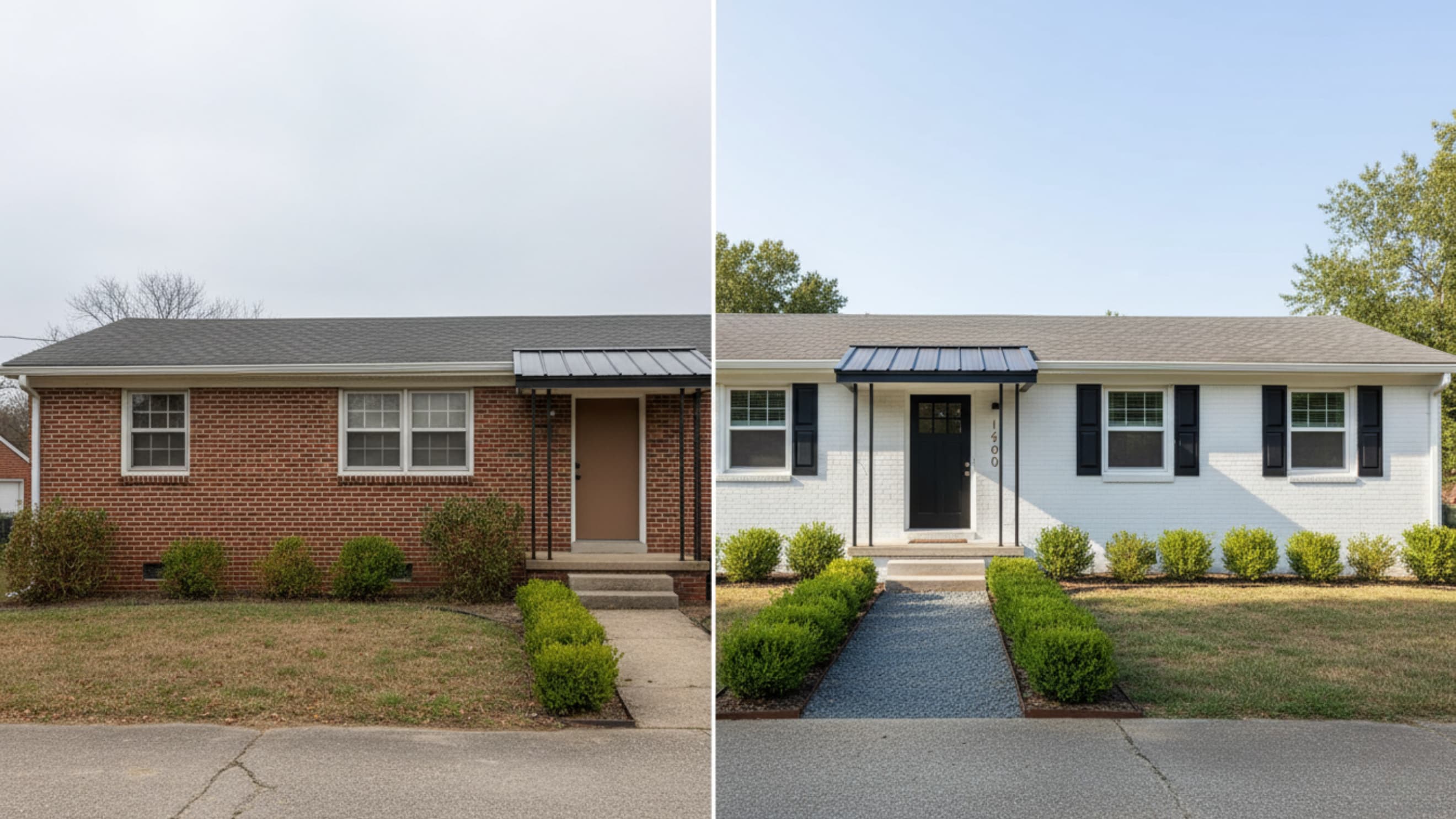
Ranch-style homes have come a long way from their 1950s and 1960s origins. Painting the brick is one of the most effective ways to give these wide, low-profile homes a more contemporary look without major structural changes.
- Before: The long, flat red brick exterior had all the hallmarks of a mid-century ranch: a dated roofline, small windows, and no focal point to draw the eye toward the front door. The home looked like it had been frozen in time and left behind.
- After: A coat of Snowbound by Sherwin-Williams on the brick, combined with a new metal overhang and black shutters, completely changed the character of the home. The low profile that once felt like a design limitation now reads as a clean and intentional feature.
Idea 10: Red Brick Ranch to a White Modern Farmhouse
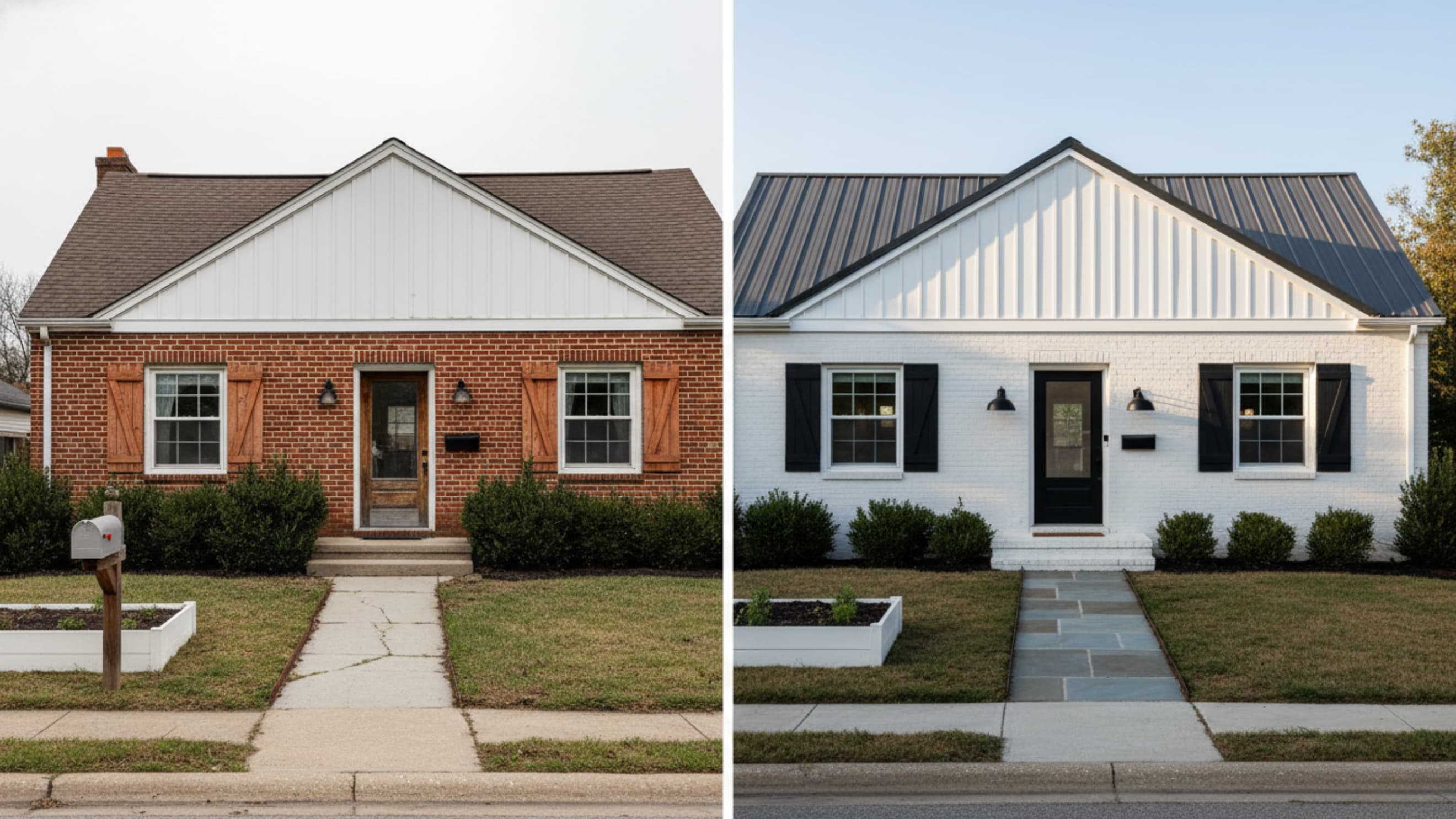
Red brick and farmhouse style do not naturally belong together. But with white paint, a metal roof, and vertical board cladding, even the most traditional red brick ranch can take on a completely different personality.
- Before: The red brick exterior with rust-colored shutters and a dated roofline made the home feel heavy and closed off from every angle. The color palette was disjointed, giving the entire facade a tired, one-note appearance.
- After: Painting the brick Snowbound white, adding black shutters, a metal roof, and a stone walkway turned the home into a clean and confident modern farmhouse. Updated landscaping added the final layer, tying the entire exterior into one unit.
Idea 11: Weathered Dark Brick to a Soft Limewash Bungalow
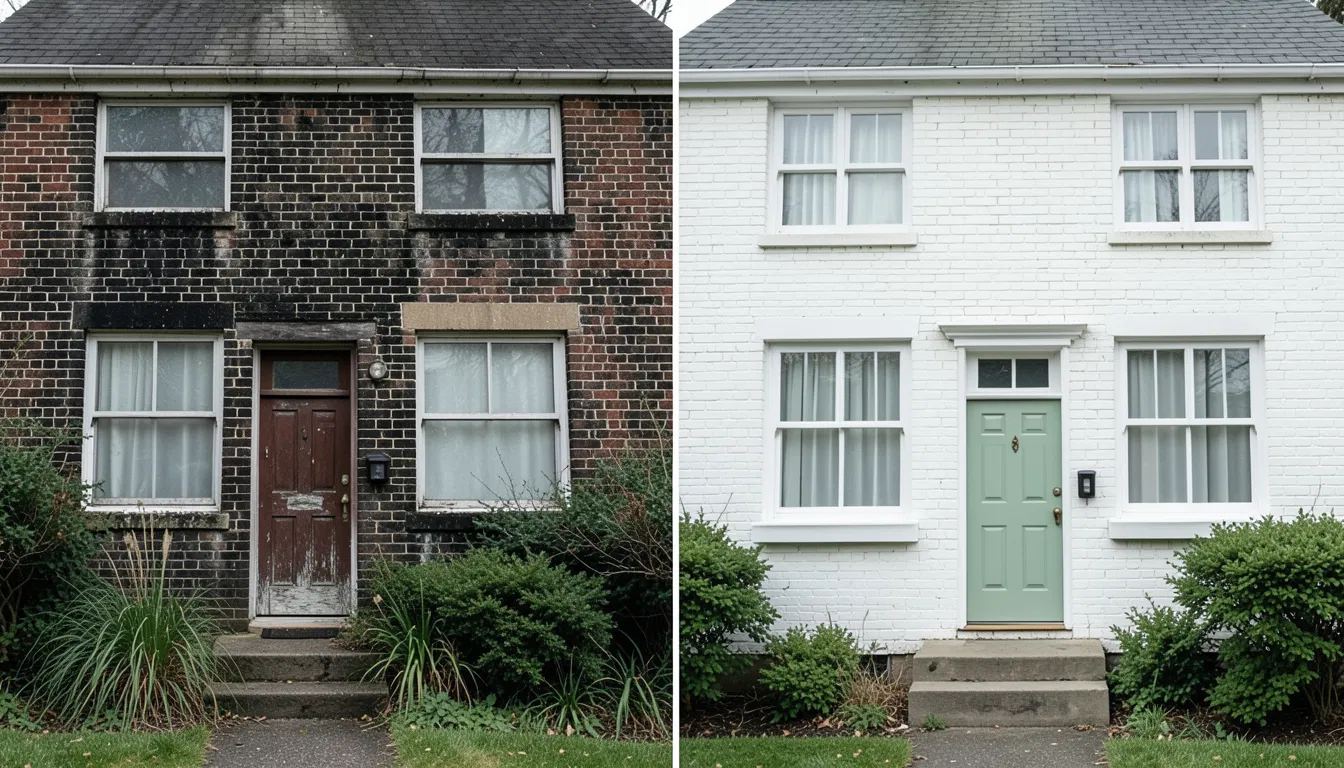
Older brick from the 1960s has absorbed decades of grime, weather, and general wear. Limewash works especially well on these homes because it brings new life to the surface while letting the brick keep its natural character underneath.
- Before: The bungalow’s original dark brick looked heavy and absorbed too much visual weight, making the small home feel even smaller from the street. The surface had visible discoloration and a flat, tired appearance with no warmth at all.
- After: Romabio limewash in a soft white tone gave the brick a layered, cottage-style finish that felt both light and textured at the same time. The bungalow looked like it belonged in a quiet, charming neighborhood rather than stuck in a dated American suburb.
Idea 12: Plain Red Brick to a Navy Blue Coastal Exterior
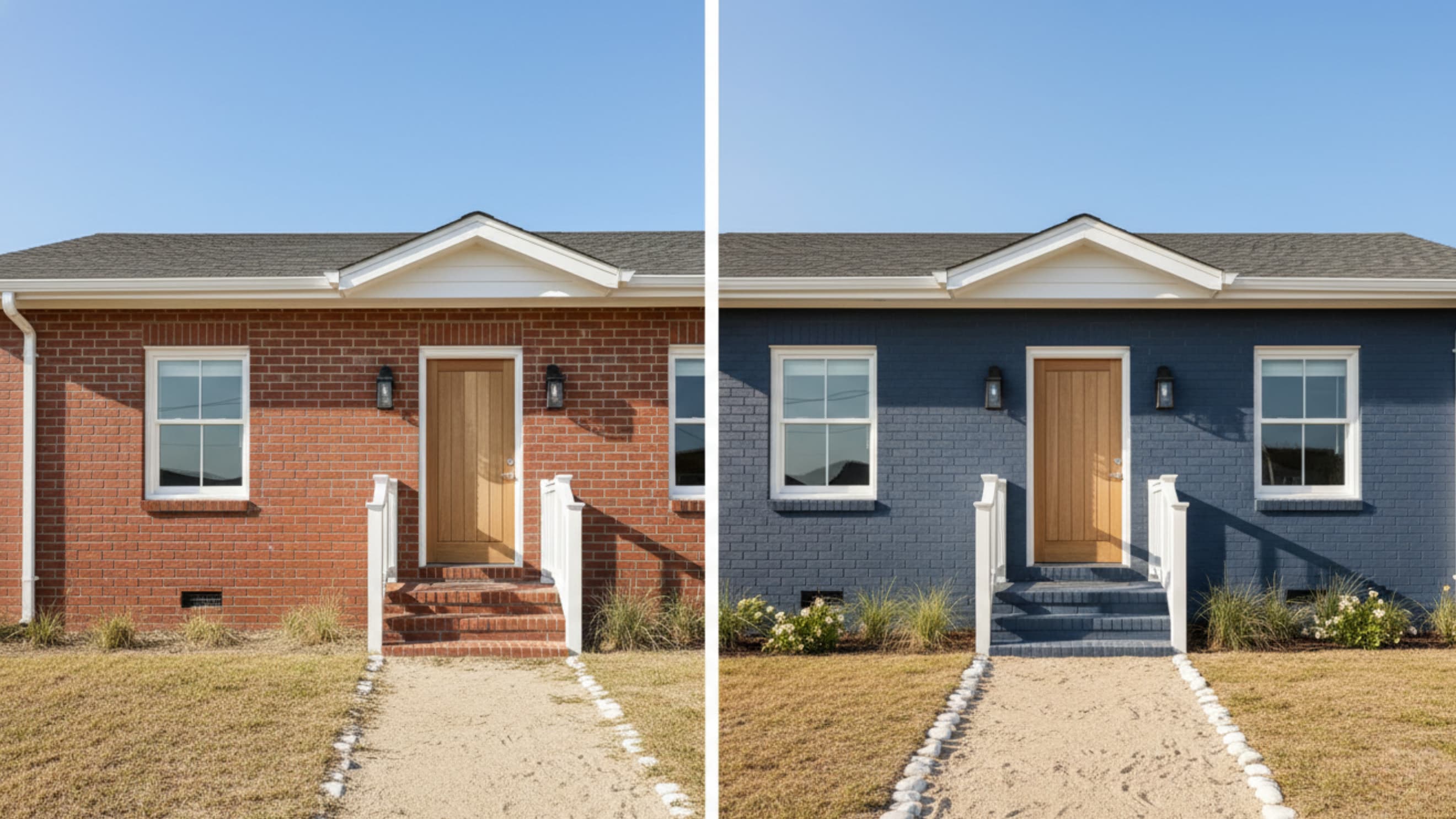
Navy blue is not the first color most homeowners think of for brick, but in the right setting, it works beautifully. It gives a home a relaxed, coastal personality without looking forced or overdone.
- Before: The plain red brick felt completely out of step with the home’s coastal surroundings and the light sandy tones of the neighborhood. The exterior did nothing to reflect the relaxed, waterside setting the homeowner had in mind.
- After: Yarmouth Blue by Benjamin Moore gave the brick a soft coastal feel that complemented the water views and surrounding landscape. White trim and a natural wood front door brought balance and warmth to the deep blue base without dulling its impact.
Pros and Cons of Painting Brick
Before you make a final call, it helps to look at the full picture side by side. Here is a clear, honest breakdown of what you gain and what you take on when you paint a brick exterior.
| Pros | Cons |
|---|---|
| Low-cost way to refresh your home’s exterior | Very difficult and expensive to remove once applied |
| Wide range of color options to suit any home style | Requires ongoing maintenance and periodic touch-ups |
| Can improve curb appeal and add resale value in some markets | Paint can chip, fade, or peel over time |
| Covers worn, stained, or visually outdated brick | Brick cannot breathe as freely with certain paint types |
| Works across ranch, colonial, bungalow, and most other styles | Errors are costly to correct after the paint has been applied |
How to Choose the Right Paint Color for Your Brick Home?
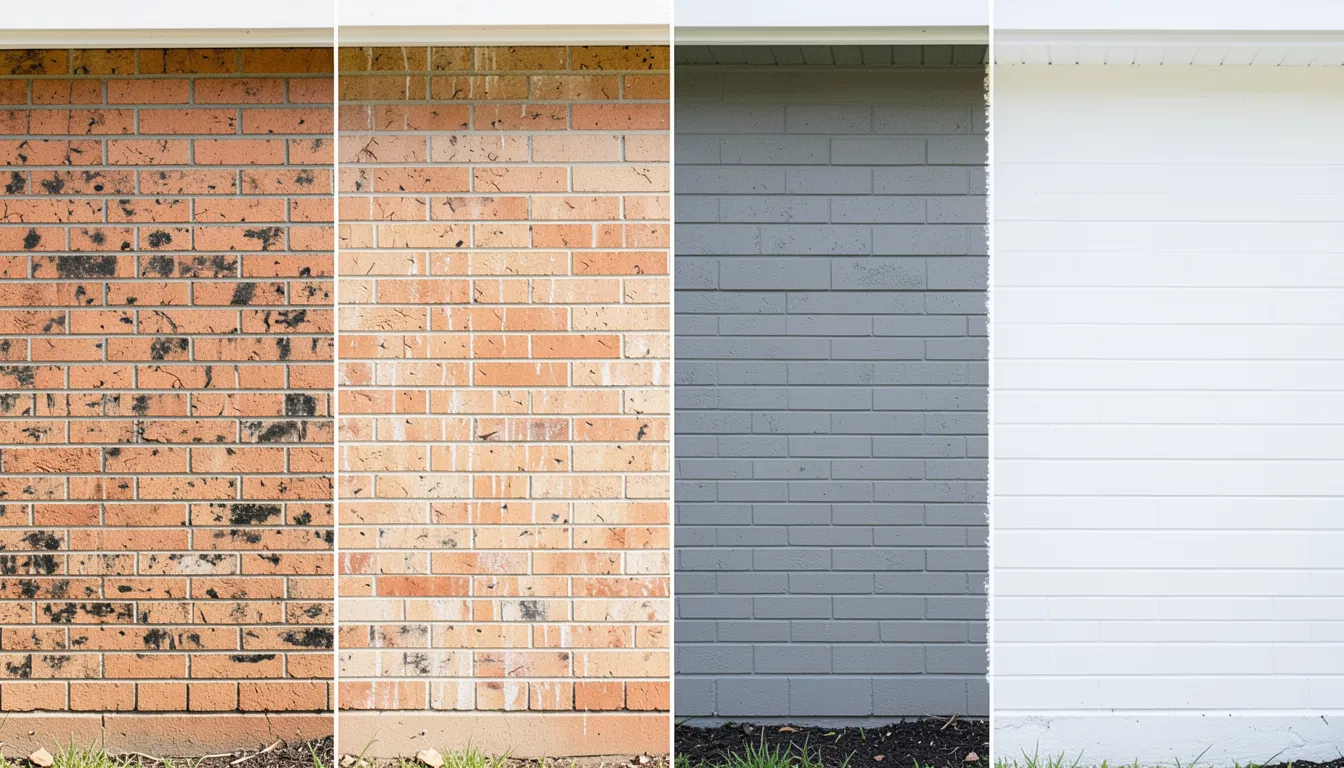
Start by looking at your roof color, existing trim, and the landscaping around your home.
Colors that look great on a screen or paint chip may read completely differently on a large, textured brick surface in direct sunlight.
Test at least two sample colors directly on your wall and observe them at different times of the day. Pay attention to the light reflectance value (LRV) of each option.
A higher LRV means more light is reflected back, which makes a color appear brighter outdoors.
Your home’s architectural style, the surrounding neighborhood, and any HOA or historic district guidelines should all factor into your final decision before you commit.
Closing Remarks
Painting your brick home is not a small step. But as these painted brick house before-and-after ideas show, it is one of the most impactful exterior updates a homeowner can make.
From bright white ranch makeovers to bold, dark, and coastal looks, every great result came down to two things. Solid preparation and the right color choice.
Your home’s outside matters more than most people realize. It shapes how visitors feel before they even step inside. It affects how buyers view the property. And it changes how you feel as you pull into the driveway at the end of a long day.
So which of these ideas felt right for your space? Drop a comment and let us know.