Luxury Interior Doors in the USA: Style, Materials, and Trends for High-End Homes

Interior doors are no longer simply functional elements used to separate rooms. In luxury American homes, they have become an important part of the architectural design, helping define the character, proportions, and atmosphere of an interior.
From oversized wood doors and frameless systems to sophisticated glass panels and custom pivot designs, today’s luxury interior doors combine craftsmanship, premium materials, and advanced hardware. In 2026, American homeowners and designers are increasingly looking for doors that feel integrated with the architecture rather than added as an afterthought.
What Makes an Interior Door Luxurious?
Luxury is not simply about choosing the most expensive door. A truly high-end interior door is defined by the quality of its materials, construction, proportions, finish, hardware, and customization.
Premium doors can be made with carefully selected wood veneers, solid wood components, high-quality laminates, glass, metal details, or combinations of different materials. Custom manufacturing also allows homeowners to specify unusual dimensions, finishes, textures, concealed hardware, and specialized opening systems.
For custom homes, consistency is particularly important. High-end manufacturers can produce complete door packages with matching profiles, reveals, finishes, and hardware throughout a property, creating a cohesive architectural language.
Popular Luxury Interior Door Styles in the USA
1. Oversized and Tall Doors
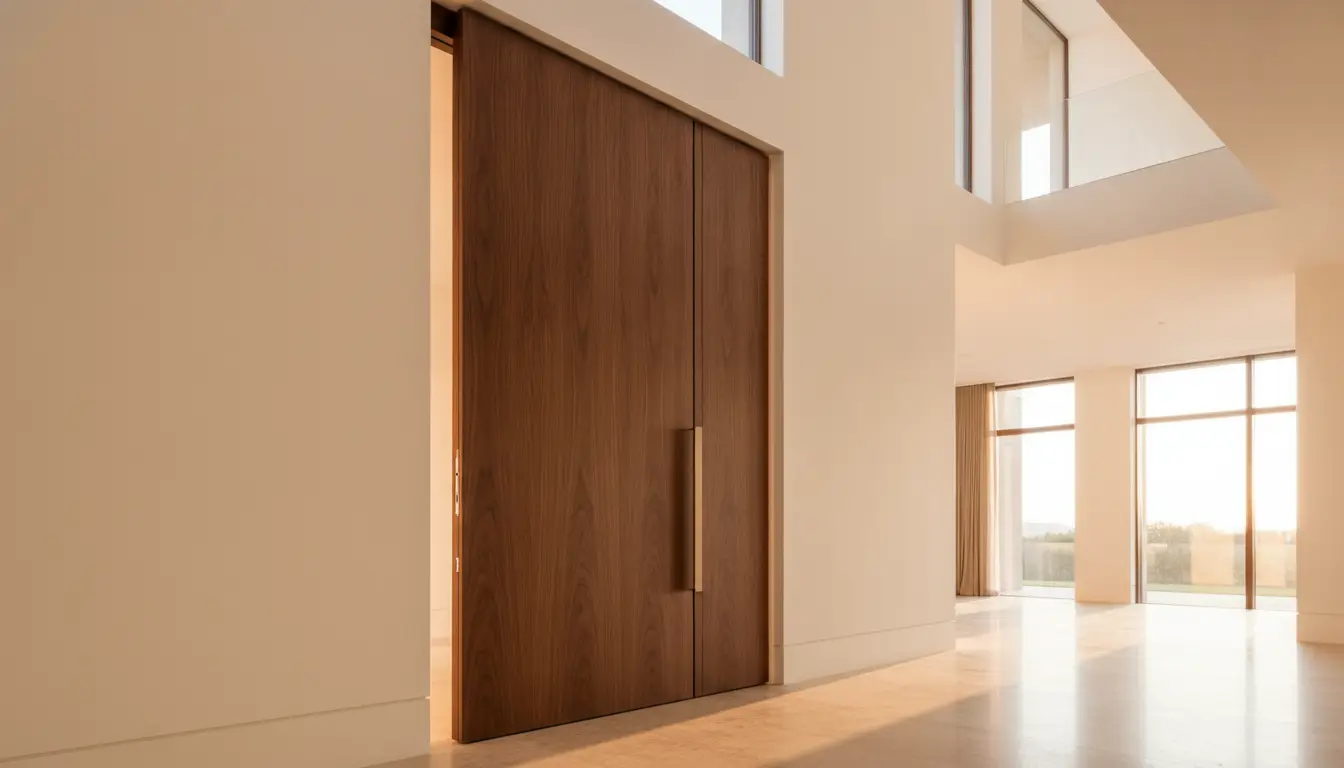
Tall interior doors are one of the easiest ways to create a sense of architectural luxury. Extended door heights emphasize ceiling height and can make rooms feel larger and more elegant.
Oversized doors work particularly well in contemporary residences, luxury condominiums, open-plan interiors, and homes with ceilings higher than standard residential dimensions. Current U.S. design trends show continued interest in tall panels and minimalist proportions.
2. Frameless and Invisible Doors
For homeowners who prefer minimalist architecture, invisible doors offer an especially sophisticated solution.
These systems are installed flush with the surrounding wall and can use concealed frames and hinges. When the door is painted or finished to match the wall, it can visually disappear into the architecture.
Invisible doors are ideal for:
- Walk-in closets
- Private offices
- Primary bedrooms
- Libraries
- Bathrooms
- Utility and service areas
- Contemporary feature walls
The result is a clean, uninterrupted surface that emphasizes the architecture rather than the door itself.
3. Natural Wood Doors
Wood remains one of the most timeless choices for luxury interiors. Oak, walnut, and other carefully selected wood species bring warmth, texture, and natural variation to contemporary and traditional spaces.
Natural wood is particularly effective when paired with minimalist architecture. Rather than relying on elaborate ornamentation, the grain, color, and craftsmanship become the visual focus.
This approach also reflects a broader movement in American interiors toward natural materials, authenticity, and carefully considered craftsmanship.
4. Glass Interior Doors
Glass doors can transform the way light moves through a home. Clear glass creates openness, while frosted, reeded, smoked, or textured glass provides additional privacy and visual interest.
Luxury glass doors are especially useful for home offices, dining rooms, living spaces, wine rooms, and transitional areas where homeowners want separation without sacrificing natural light.
Fluted and reeded glass are particularly attractive when texture and privacy are important design considerations.
5. Custom Pivot Interior Doors
Pivot systems provide a more architectural alternative to conventional hinged doors. Instead of rotating from hinges mounted along the edge, a pivot door rotates around a vertical axis.
Large pivot doors can create a dramatic focal point and are particularly suitable for contemporary luxury residences. Custom manufacturers can adapt dimensions, materials, finishes, and hardware to the individual project.
6. Classic and Transitional Doors
Luxury does not always mean ultra-modern. Traditional panel doors, French doors, decorative profiles, and refined molding details remain popular in American homes with transitional, classical, or European-inspired architecture.
The most successful contemporary interpretations simplify traditional detailing while maintaining proportion and craftsmanship. This allows classic doors to complement modern furniture, lighting, and finishes.
Materials and Finishes That Define High-End Doors
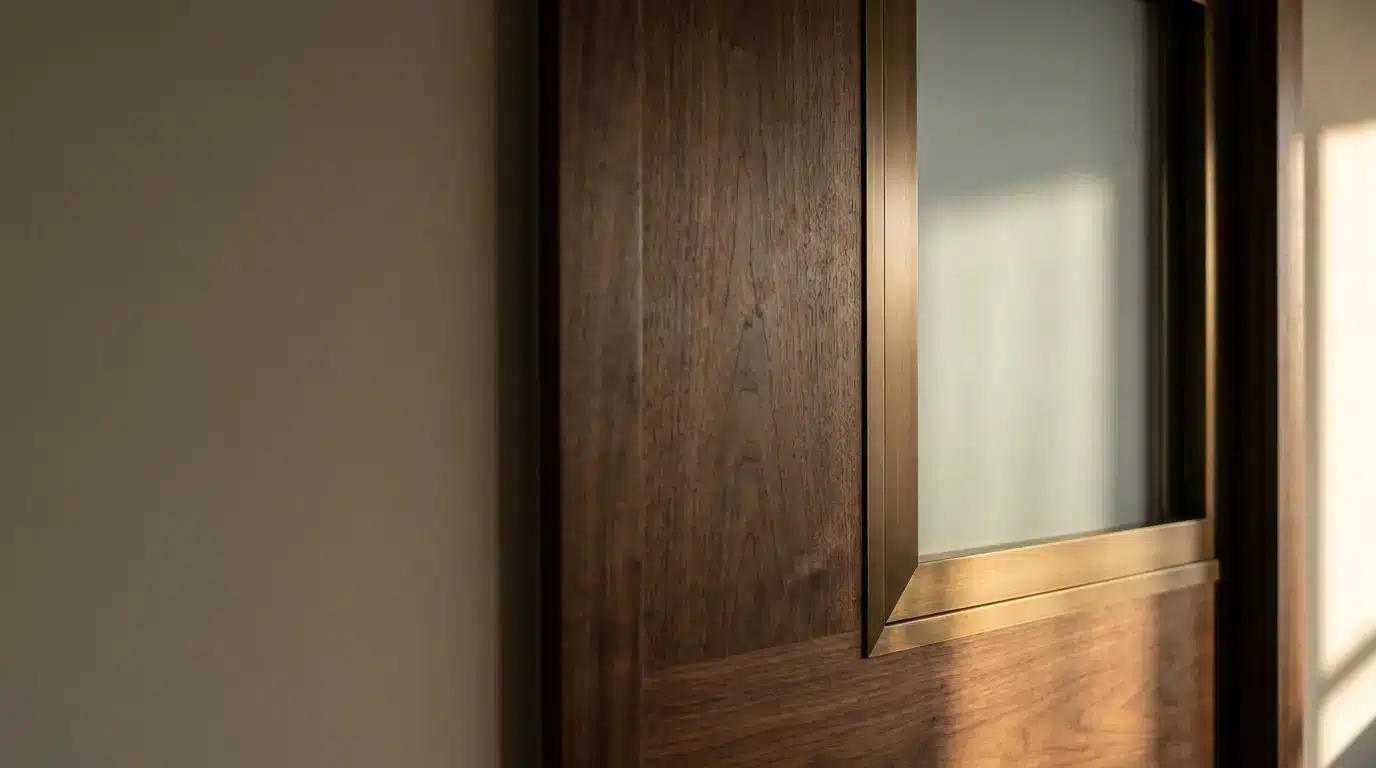
The material and finish can have as much visual impact as the door design itself.
Wood Veneer and Solid Wood
Wood creates warmth and depth and can be stained to coordinate with flooring, cabinetry, wall paneling, or furniture.
Matte Finishes
Matte surfaces work especially well in minimalist interiors. They create a sophisticated appearance without excessive reflection.
High-Gloss and Lacquer
For homeowners looking for a more expressive aesthetic, lacquer can introduce color, depth, and a subtle sense of glamour. Designers are currently revisiting lacquer finishes as part of a broader movement toward richer, more personality-driven interiors.
Glass and Metal
Combining glass with black, bronze, brass, or other metal details can give interior doors a contemporary architectural character.
Hardware Is Part of the Design
In luxury interiors, hardware should not be treated as an afterthought.
Handles, hinges, locks, closers, and concealed systems should complement the architecture and the door itself. Minimalist interiors often benefit from concealed hinges and discreet handles, while traditional interiors may call for more decorative hardware.
High-end manufacturers can also prepare doors precisely for the selected hardware, helping achieve cleaner installation and consistent detailing across an entire home.
Sliding and Space-Saving Door Systems
Luxury design is increasingly concerned with both appearance and functionality. Pocket doors, bypass systems, bi-fold doors, and other sliding configurations can help homeowners use space more efficiently.
A beautifully designed pocket door, for example, can provide the visual quality of a premium hinged door while disappearing into the wall when open.
This is especially valuable in apartments, modern urban residences, dressing rooms, bathrooms, and spaces where conventional swing clearance is limited.
Choosing the Right Luxury Interior Doors
Before selecting a door, homeowners should consider more than color and style.
Start with architecture. The door should complement the home’s overall architectural language.
Consider proportions. Door height and width should relate to ceiling height, room dimensions, and nearby windows or openings.
Choose materials carefully. Natural wood, painted finishes, glass, and composite materials create very different atmospheres.
Think about privacy. Bedrooms and bathrooms may require solid construction or privacy glass, while offices and living areas may benefit from transparent or textured glass.
Plan the hardware early. Concealed hinges, specialty locks, and sliding mechanisms can influence the door’s construction.
Consider the entire home. Using coordinated profiles and finishes throughout a property usually produces a more sophisticated result than selecting every door independently.
The Future of Luxury Interior Doors in America
The direction of luxury interior doors in the United States is clear: homeowners want products that combine aesthetics, functionality, personalization, and craftsmanship.
Minimalist flush doors, invisible systems, natural wood, tall proportions, glass, and custom configurations are all becoming increasingly important. At the same time, luxury interiors are moving beyond rigid minimalism toward more individual and expressive design, with greater appreciation for texture, craftsmanship, and meaningful materials.
The best luxury interior door is therefore not necessarily the most decorative one. It is the door that feels intentional, properly proportioned, beautifully finished, precisely engineered, and perfectly integrated into its surroundings.
For homeowners, architects, and interior designers in the USA, investing in premium interior doors can be one of the most effective ways to turn an ordinary interior detail into a defining architectural feature.