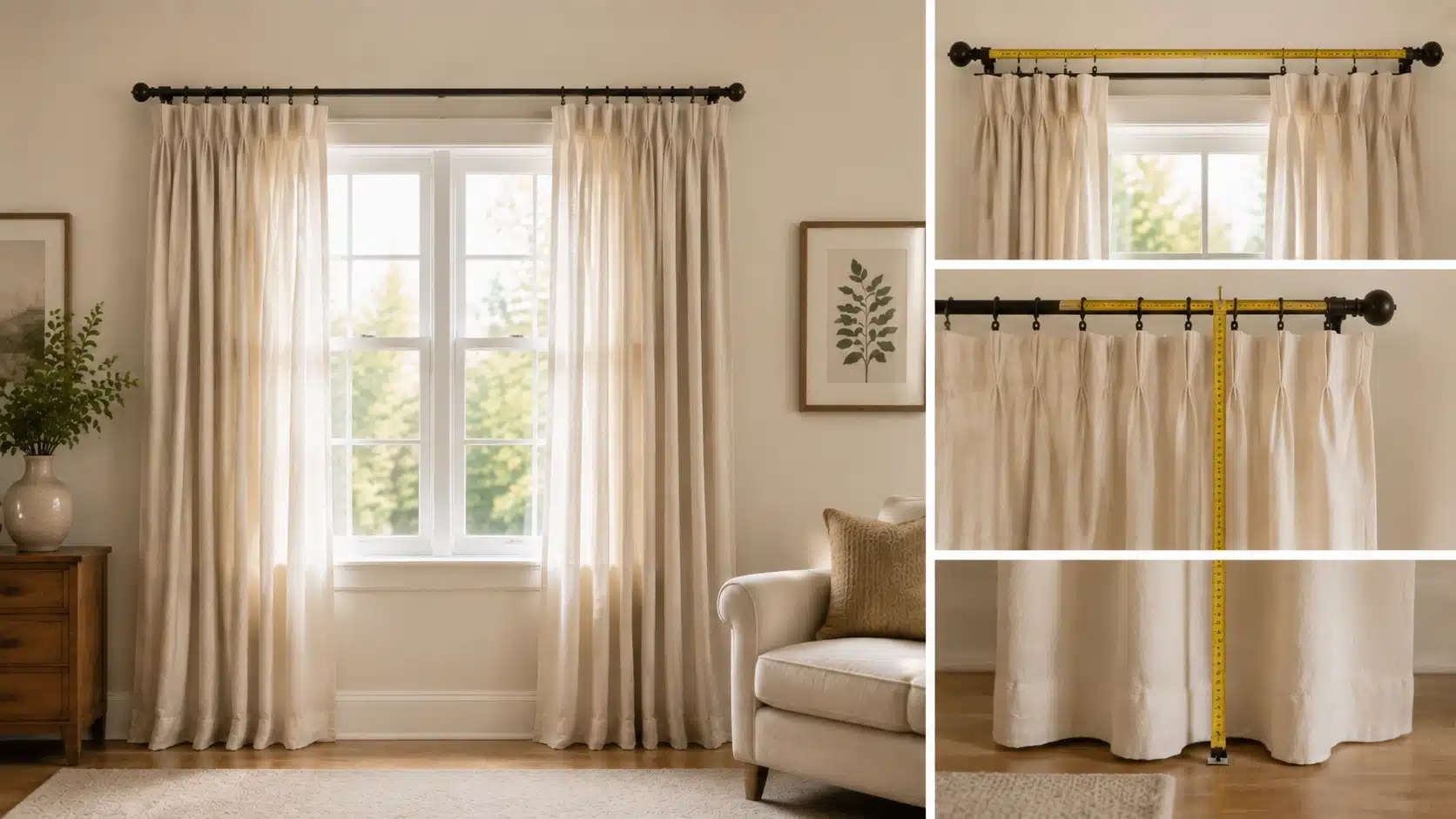
How to Measure for Curtains the Right Way Before Buying

Buying curtains without measuring properly is one of the fastest ways to waste money. Curtains that hang too short look awkward. Curtains that are too narrow leave light gaps on both sides.
The good news is that learning how to measure for curtains takes only a few minutes once you know the steps.
This post walks you through rod placement, width, length, and how to adjust for tricky window types like bay windows and sliding doors.
What You Need Before Measuring Curtains
A few basic tools make the whole process faster and more accurate. Most of them are already in a kitchen drawer or toolbox at home.
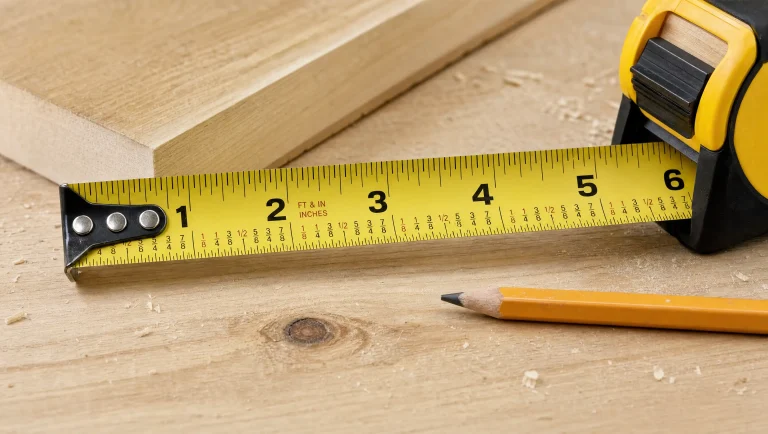
- Metal tape measure, which gives a straight, accurate line. A fabric tape can sag and give wrong readings.
- Step ladder, needed to reach rod height safely on taller windows.
- Pencil, useful for marking rod position on the wall before drilling.
- Notebook or phone, so you can write measurements down right away.
- Level, which helps keep the rod straight when marking mounting points.
Measure every window on its own, even if two rooms look identical. Older homes often have small differences between window frames, and even a few centimeters can throw off your order.
Decide Where Your Curtain Rod Will Go First
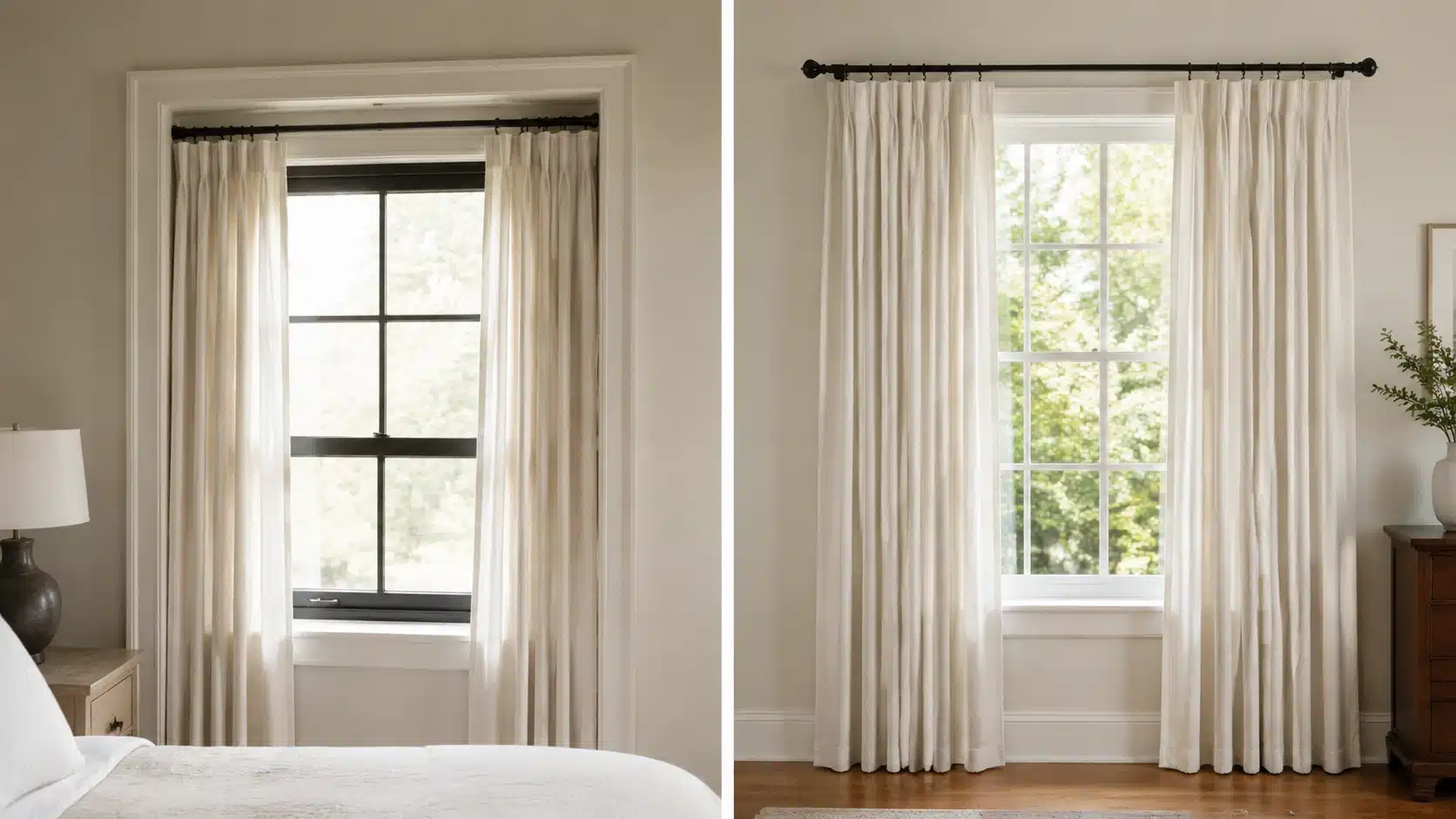
Most guides jump straight to window measurements. The smarter move is to settle on rod placement first. Your final curtain size depends more on the rod position than on the window itself.
Inside Mount vs Outside Mount
The mount type changes where you start measuring. Here is a quick comparison.
| Mount Type | Best For | Where You Start Measuring |
|---|---|---|
| Inside mount | A clean, built-in look | Inside the window frame |
| Outside mount | Making a window look bigger, better light control | Your planned rod width on the wall |
An outside mount rod usually extends past the window frame on both sides. This lets curtains stack fully open during the day without blocking any glass.
Check for nearby furniture, wall trim, light switches, and radiators before fixing the final rod position.
How High Should You Hang a Curtain Rod?
Hanging the rod higher than the window frame makes the window look taller and the ceiling look higher. A common rule is to mount the rod 4 to 6 inches above the frame. In a room with high ceilings, you can mount it closer to the ceiling line.
Extend the rod past the window edges, too. This lets curtains stack to the side during the day instead of sitting over the glass.
Rule of thumb: Extend the rod 8 to 12 inches past each side of the window frame when wall space allows it.
How to Measure Curtain Width
Getting the width right takes two steps: measure your rod or track, then add fullness so the fabric hangs in soft folds instead of a flat, stretched look.
Step 1: Measure the Rod or Window Width
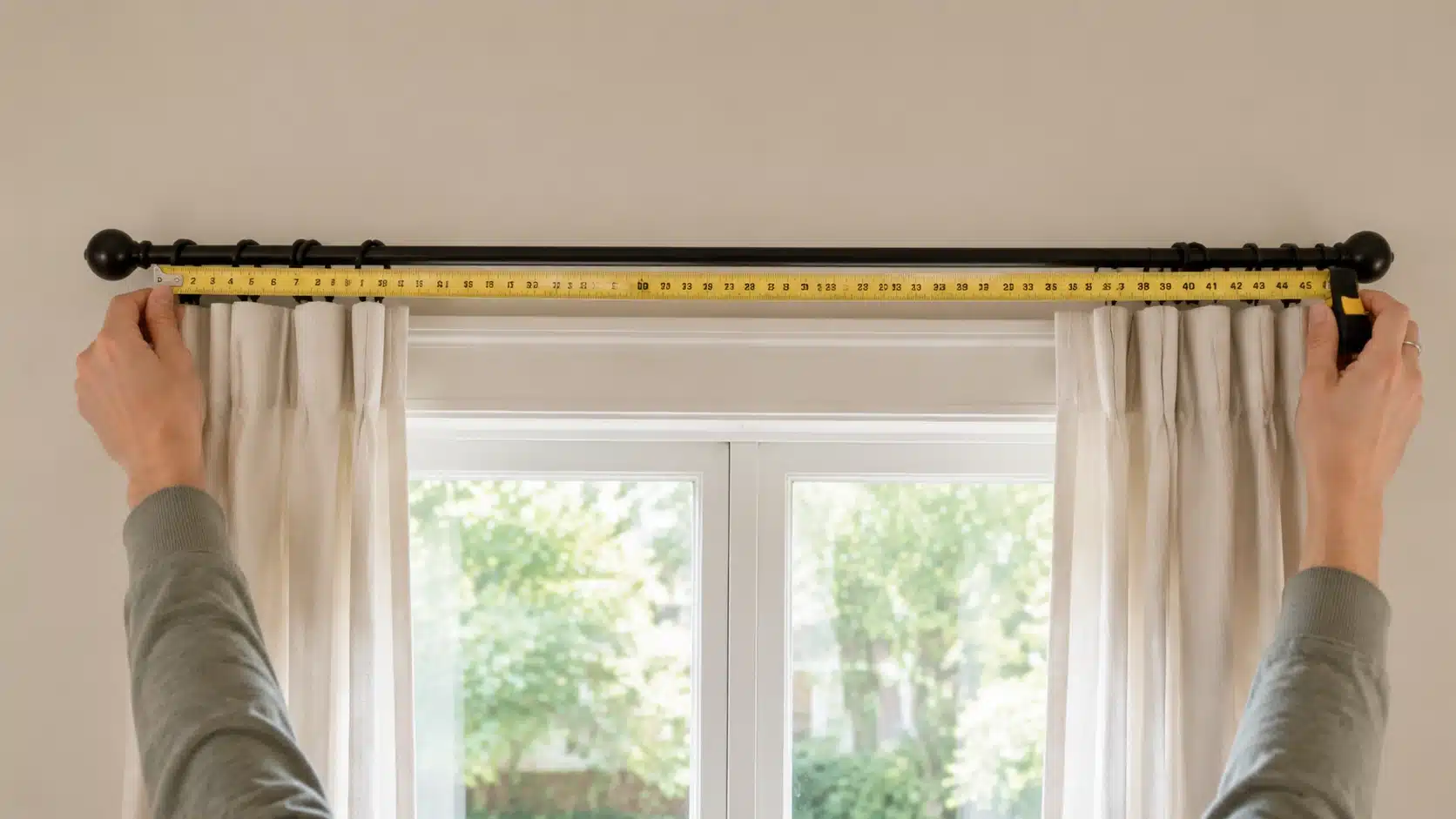
If your rod is already installed, measure the usable length between the two finials. Finials are the decorative end caps on each side. Do not count the finials themselves in this measurement.
If you are using a track instead of a rod, measure the entire track from end to end.
Step 2: Add Curtain Fullness
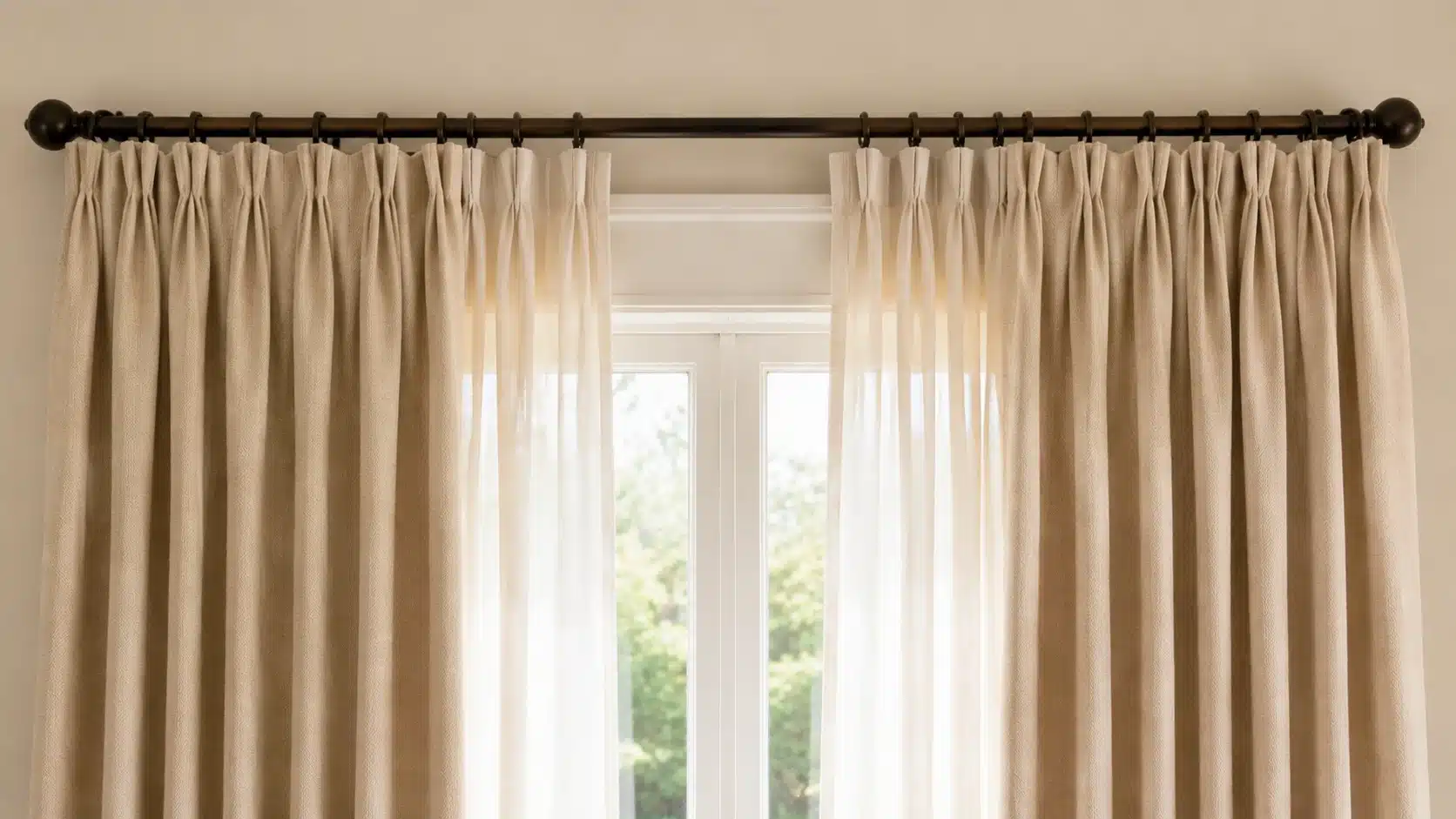
Fullness is the amount of extra fabric that creates soft folds when the curtains are closed. Flat panels with no extra fabric look stiff and cheap, so most curtains need at least some fullness.
Use this simple formula:
Curtain width = rod width x fullness factor
| Curtain style | Recommended fullness |
|---|---|
| Minimal, flat look | 1.5x |
| Standard fullness | 2x |
| Fuller, luxury look | 2.5x to 3x |
Sheer fabrics usually need more fullness than heavy fabrics like velvet. A thin sheer panel at 1.5x fullness can look flat and see-through. That same fullness in a heavier fabric holds its shape well.
How to Measure Curtain Length
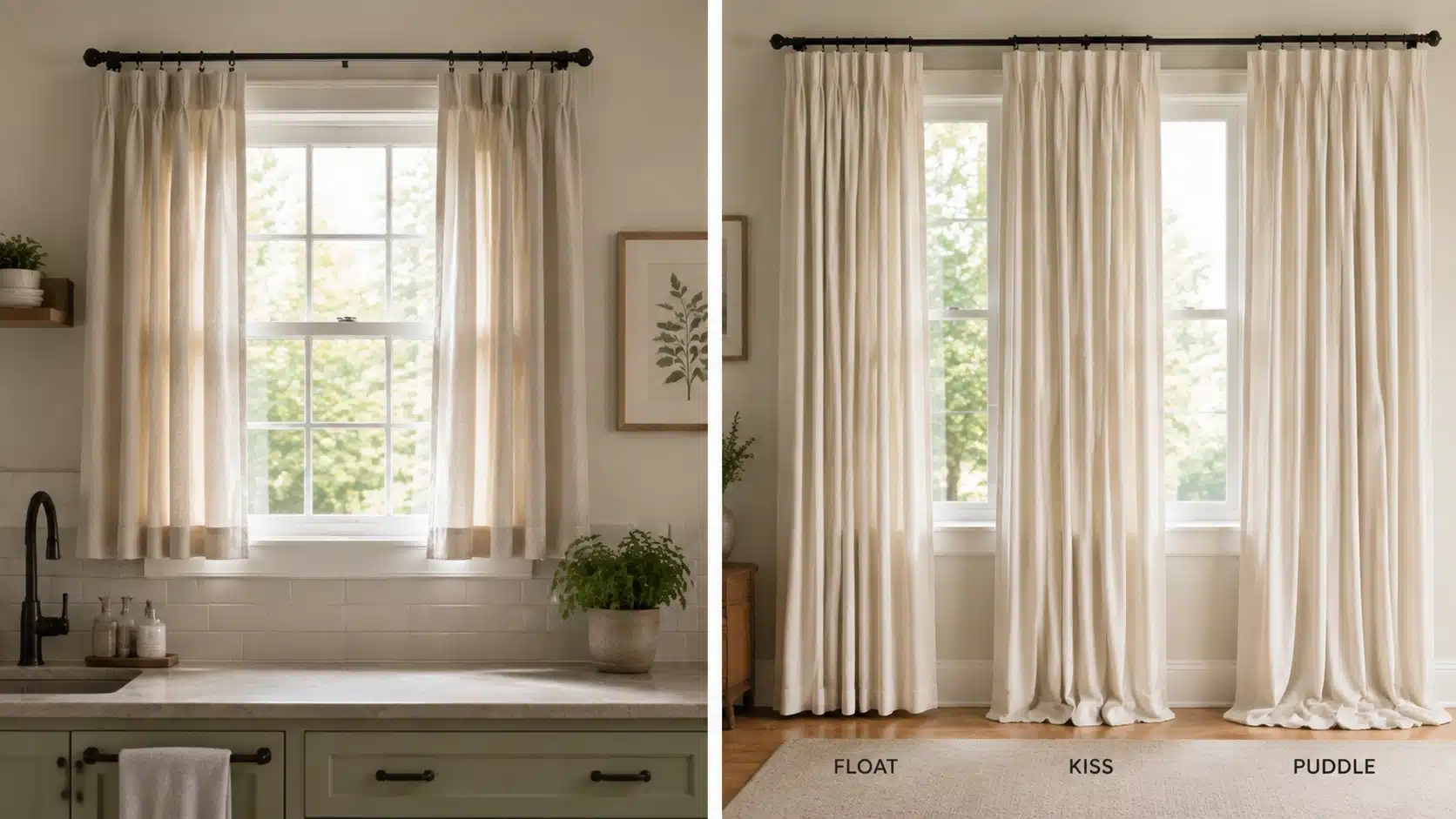
Curtain length depends on where you want the hem to land. There are three common finishing points.
Sill-Length Curtains
These work well in kitchens, bathrooms, and smaller windows. Measure from the rod or track straight down to just below the windowsill. This keeps the fabric away from taps or countertops that could get it wet.
Floor-Length Curtains
These suit bedrooms and living rooms best. Measure from the rod height straight down to the floor, then choose one of these three finishes.
| Finish Style | How the Curtain Ends | Best For |
|---|---|---|
| Float | Sits slightly above the floor (about 0.5 inch) | Easy to clean, tidy everyday look |
| Kiss | Just brushes the floor | Clean, polished finish for most rooms |
| Puddle | Extra fabric pools on the floor | Formal rooms, dramatic effect |
A kiss length gives a clean, everyday look. A puddle adds a softer, more formal feel but needs regular shaking out to stay clean.
For styling ideas once your curtains are in place, the right fabric and color choice matters just as much as fit. Curtain inspiration for grey walls is a useful starting point if your room has a neutral base.
How to Measure Curtains for Different Window Types
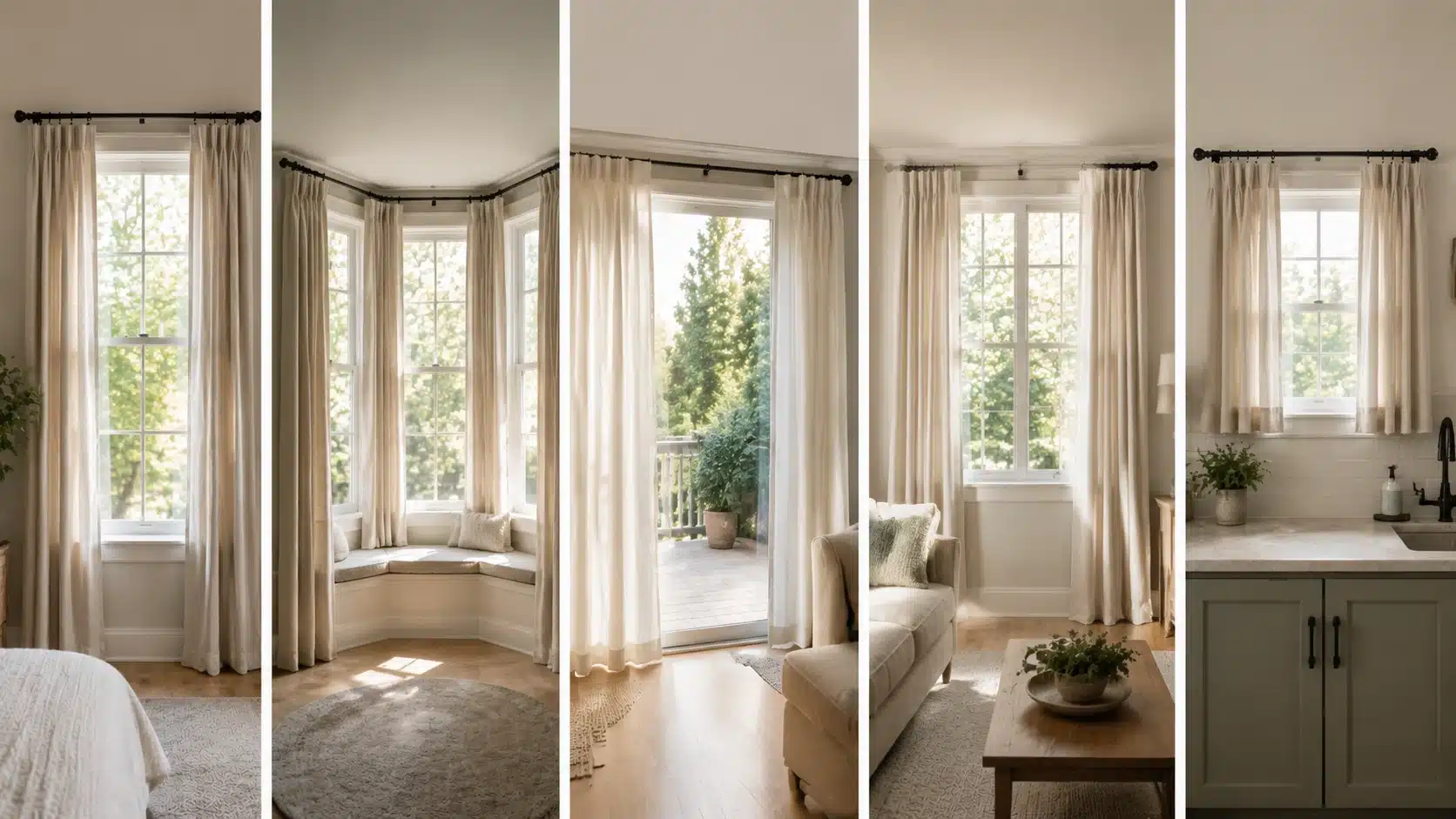
Standard measuring advice does not always fit every window shape. Here is how to adjust for the most common layouts.
1. Standard Windows
Measure the rod width, then measure straight down from the rod to your chosen curtain length. This is the baseline method that applies to most rooms.
2. Bay Windows
Measure each section of the bay window separately, since the angles can differ slightly between panels. Curved tracks or separate rods per section often work better than one long straight rod.
3. Sliding Glass Doors
Measure the full width of the door opening, then add extra width so the curtain covers the door completely when closed. Leave enough room on one side for the fabric to stack clear of the opening when the door is in use.
4. Extra-Wide Windows
Split the width across two or more panels instead of ordering one oversized panel. Add a center support bracket for heavier fabrics so the rod does not sag in the middle.
5. Small Kitchen or Bathroom Windows
Sill-length curtains work best here. Keep the hem clear of countertops, taps, or anything that could quickly get the fabric wet or dirty.
How to Measure Different Curtain Hanging Styles
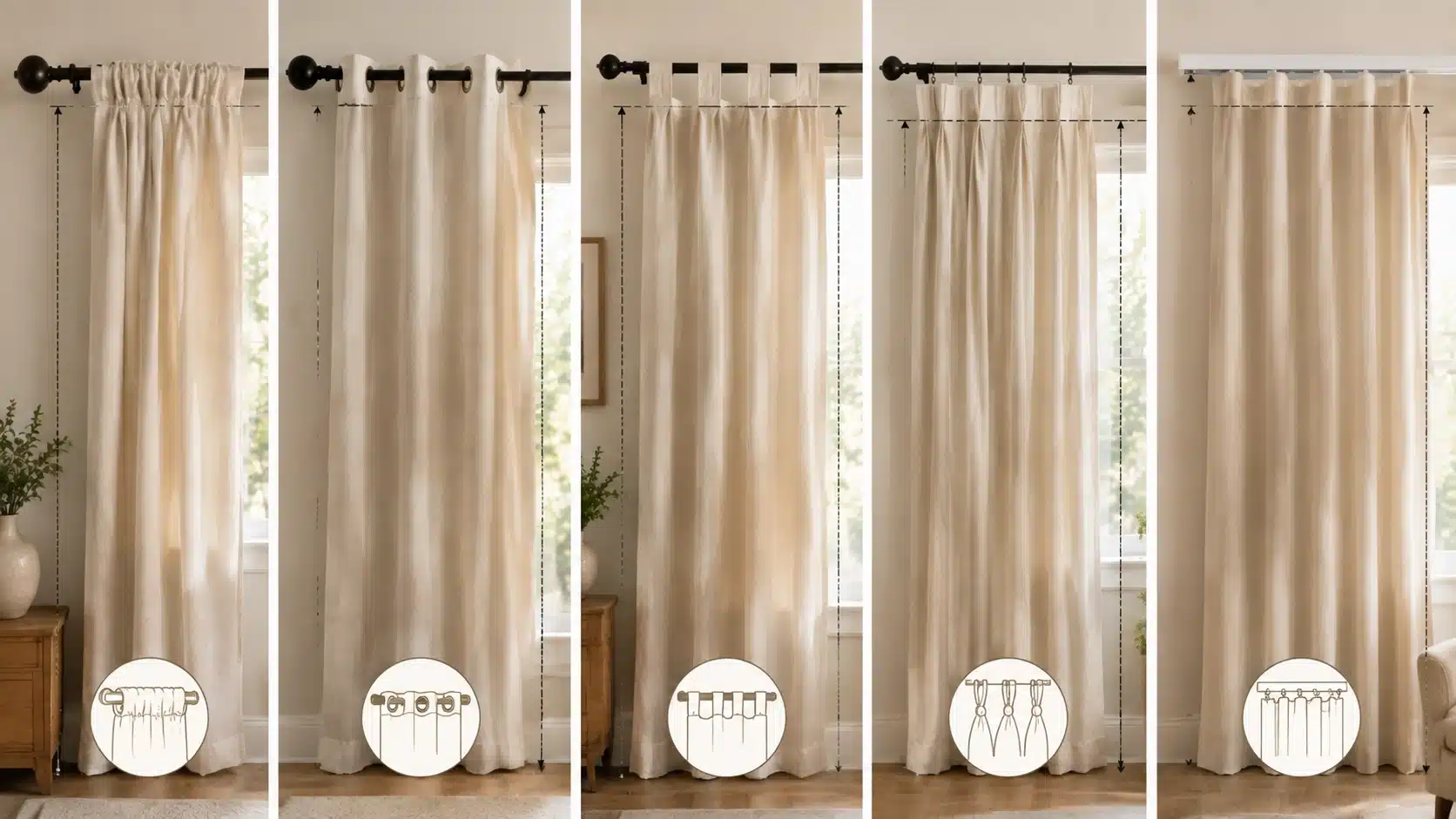
The header style of your curtain changes exactly where you should start and stop measuring.
The fabric may sit above, below, or level with the rod based on the header. Always check the header type before you finalize your length.
- Rod pocket curtains slide directly onto the rod through a sewn channel. The rod sits inside the top of the fabric.
- Grommet curtains hang from metal rings sewn into the top, which sit slightly below the rod.
- Back tab curtains use small loops sewn to the back of the panel, hiding the rod almost completely.
- Pinch pleat curtains hang from hooks below a pleated header. This drops the fabric a bit lower than the rod.
- Ripple fold curtains run along a track using carriers, giving a smooth, wave-like fold across the top.
Where Curtain Orders Go Wrong
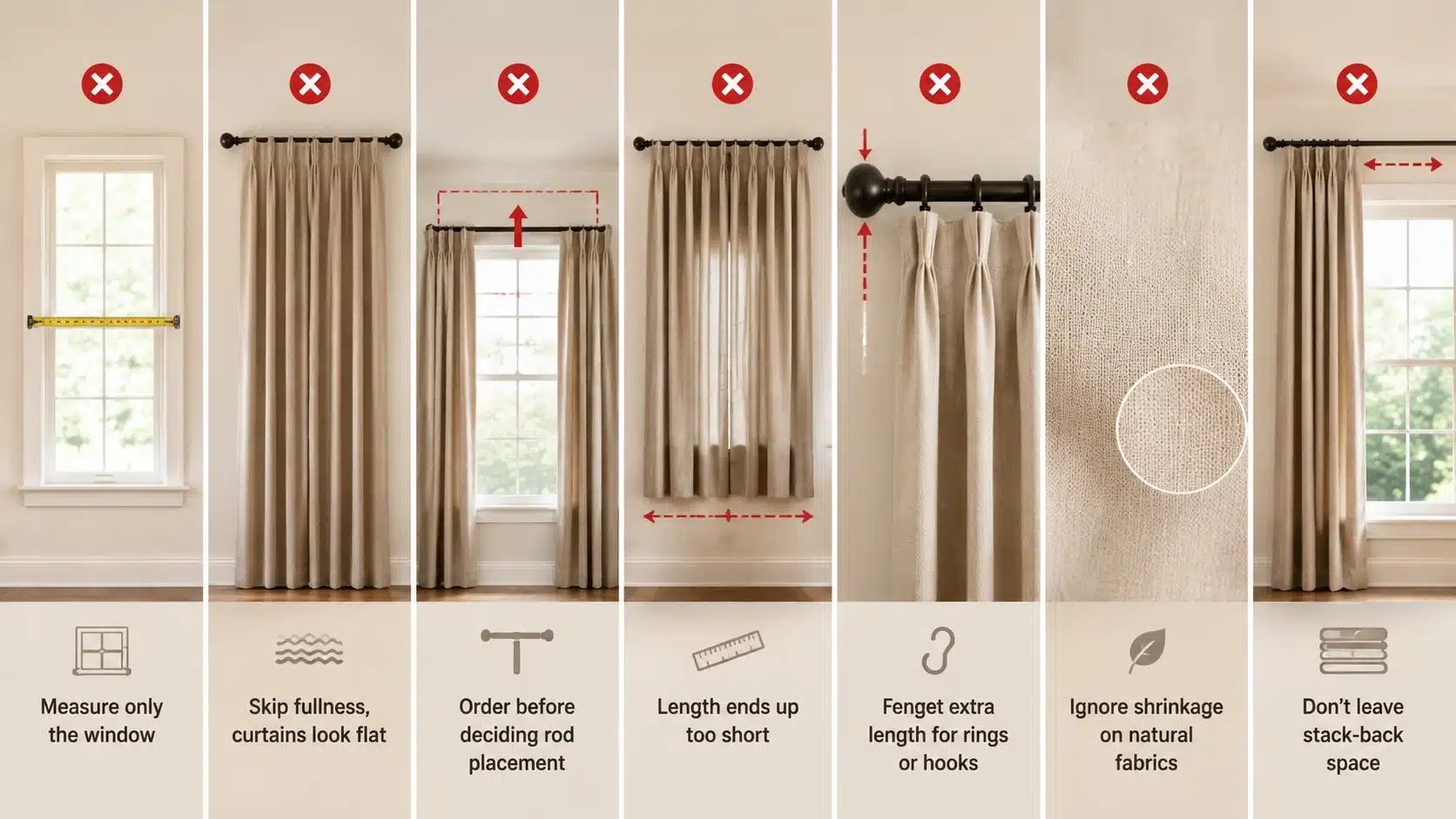
Even careful shoppers repeat the same handful of errors. Knowing these ahead of time saves you a return, a reorder, or a curtain that never quite fits.
- Measuring only the window frame instead of the rod or track
- Skipping fullness and ordering flat, narrow panels
- Ordering curtains before deciding on rod placement
- Choosing a length that ends up too short once the rod is hung higher than expected
- Forgetting the extra drop that rings, grommets, or hooks add above the fabric
- Not accounting for shrinkage on natural fabrics like linen or cotton after washing
- Leaving no stack-back space for curtains to sit fully open without covering the glass
Curtain Measurement Formula at a Glance
Keep this quick reference handy when you are ready to order. It pulls together both the width and length formulas into one table.
| Measurement | Formula | Example |
|---|---|---|
| Width | Rod width × fullness factor = total fabric width needed | 60 inches × 2 = 120 inches total |
| Length | Rod height down to your chosen hem point | Rod at 84 inches, floor hem = 84-inch length |
Once you have both numbers written down, you’ll have everything you need to order ready-made curtains or cut custom fabric with confidence.
Final Curtain Measuring Checklist Before Ordering
Run through this list one last time before you place your order. It catches the small details that are easy to miss.
- Measured the rod or track width, not just the window
- Chose a fullness factor for your fabric type
- Decided between sill length, floor length, or a custom drop
- Checked any special requirements for your window type
- Accounted for rings, hooks, or the header style you plan to use
- Measured each window separately, even if they look the same
Once every box is checked, you can order with confidence and avoid a costly resize or return later.
Frequently Asked Questions
How wide should curtains be for a window?
Most curtains need between 1.5x and 2.5x the width of your rod or window. The right amount depends on the fullness you want. Sheer fabrics usually look better with more fullness than heavier fabrics like velvet or wool blends.
How far should a curtain rod extend past the window?
A rod usually extends 8 to 12 inches past each side of the window frame when wall space allows it. This lets the curtains stack fully open during the day without blocking any window light.
Should curtains touch the floor?
Curtains can float slightly above the floor, lightly kiss it, or puddle with extra fabric resting on the ground. The right choice depends on the room and how formal you want the finished look to be.
How do I measure curtains without a rod installed?
Decide where the rod will sit first, then mark the planned width and height on the wall with a pencil. Measure from those marked points instead of guessing based on the window frame alone.
What is the standard curtain length?
Ready-made curtains commonly come in 63, 84, 95 or 96, 108, and 120 inch lengths. The right length still depends on your rod height and how far down you want the hem to land.
Getting It Right the First Time
Knowing how to measure for curtains comes down to a few decisions made in the right order. Fix the rod position first, then measure width with fullness in mind, then choose a length that suits the room.
Bay windows, sliding doors, and wide windows each need small adjustments, but the same basic formula applies to all of them.
Write every measurement down as you go, and measure each window on its own rather than assuming two rooms match.