How to Remove a Granite Countertop Stain Step by Step Easily

Granite looks great until a stain shows up and refuses to leave. The real problem is not the stain itself.
It is using the wrong cleaner, making things worse without realizing it. Vinegar feels safe. Bleach feels powerful. Both damage your countertop over time.
This post walks you through the exact steps to clean everyday messes, pull out deep stains, disinfect safely, and seal your granite so stains stop happening in the first place.
Every step here comes from real, tested methods that work on natural stone. Read this once, and you will know exactly what to do the next time a spill hits your granite countertop.
Granite Stain vs. Etching: Which Problem Do You Have?
Before you treat anything, check whether you have a stain or an etch. They look similar but need completely different fixes.
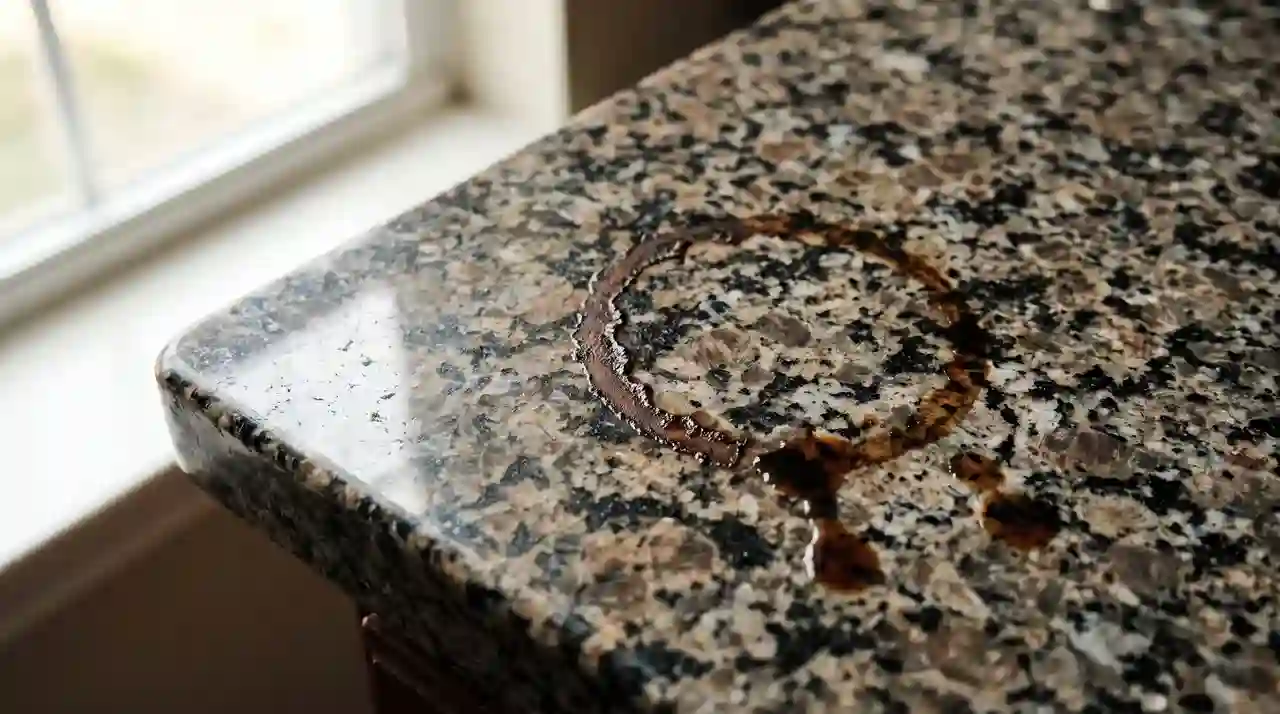
A stain forms when a liquid soaks into the pores of granite. It appears darker than the surrounding stone. Coffee rings, oil spots, and wine spills cause most stains. A poultice draws these out of the stone.
Etching is surface damage. It happens when an acid or chemical cleaners react with the stone and wear away the top layer. The area looks lighter or duller than the rest of the counter. This is not a stain inside the pores. A poultice will not fix it.
| Sign | Stain | Etching |
|---|---|---|
| Appearance | Darker than the surface | Lighter or dull patch |
| Common cause | Oil, coffee, wine, water | Vinegar, lemon juice, and harsh cleaners |
| Fix | Baking soda poultice | Stone polishing powder or professional restoration |
The steps in this post fix stains. Etching needs a separate approach. Check the color change before you reach for anything.
What Causes Granite Countertop Stains?
Granite looks solid and tough, but it has tiny pores that absorb spills fast. Unlike quartz, which has a non-porous surface, granite soaks up liquids before you notice them. Coffee, oil, wine, and even water can work their way in before you notice.
Knowing why stains happen helps you stop them before they set.
Granite Is Porous, and That Is the Problem
Granite has a naturally open surface that soaks up liquids quickly.
- Oils and grease soak in faster than water-based liquids.
- Coffee and red wine stain because of their pigment and acidity.
- Unsealed granite absorbs spills almost instantly.
- Sealed granite gives you more time to wipe up before damage sets in.
What Makes Granite Stains Worse
The stain is one problem. What you do next is often a bigger one.
- Using vinegar on granite strips the sealer and etches the stone surface slowly.
- Bleach breaks down the protective layer that granite needs to resist stains.
- Letting a spill air dry instead of wiping it right away locks it in deeper.
- Leaving dish soap on the surface without rinsing attracts more dirt over time.
How to Remove Different Types of Granite Countertop Stains
The right removal method depends on what caused the mark. Here is how to handle the three most common types.
1. Oil and Grease Stains
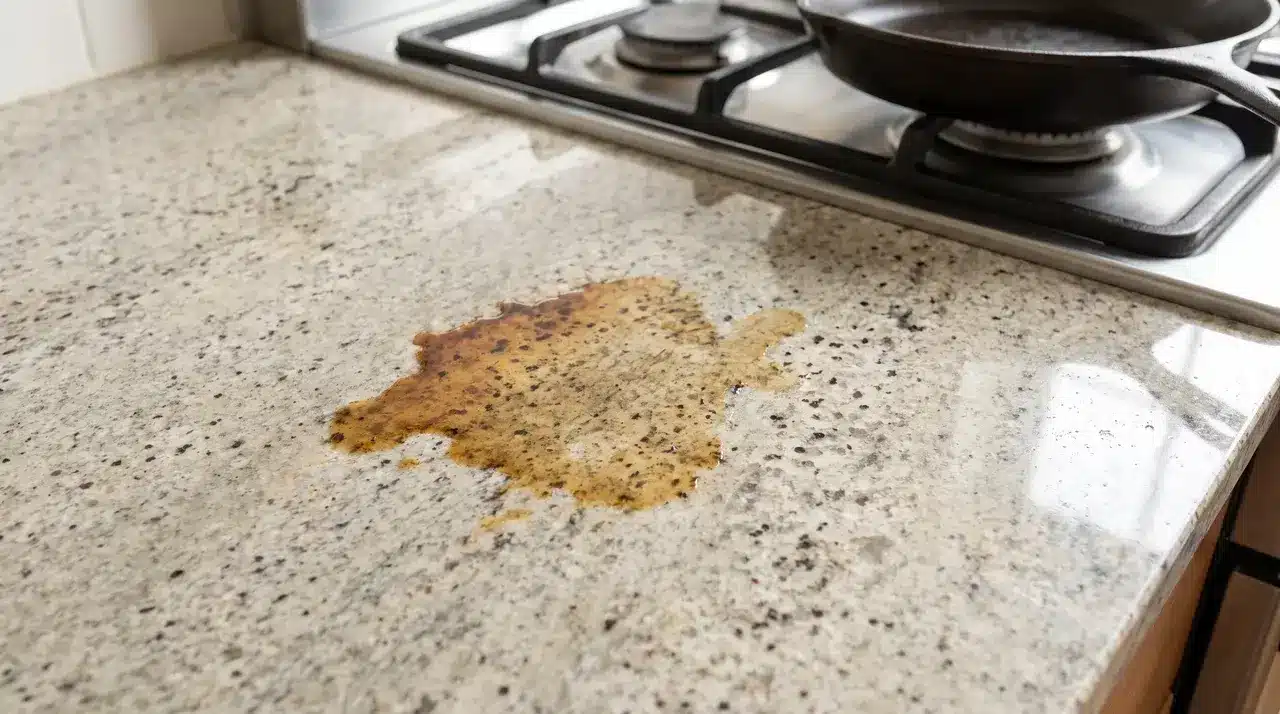
Oil stains from cooking, butter, or cosmetics show up as dark patches near the stove or sink. Start with the dish soap and water mix and scrub firmly with a microfiber cloth.
For stains that do not lift, mix baking soda with a few drops of dish soap into a thick paste. Apply it over the stain. Cover with plastic wrap and leave for several hours. The baking soda draws out the oil while the soap breaks down the grease.
2. Coffee, Tea, and Wine Stains
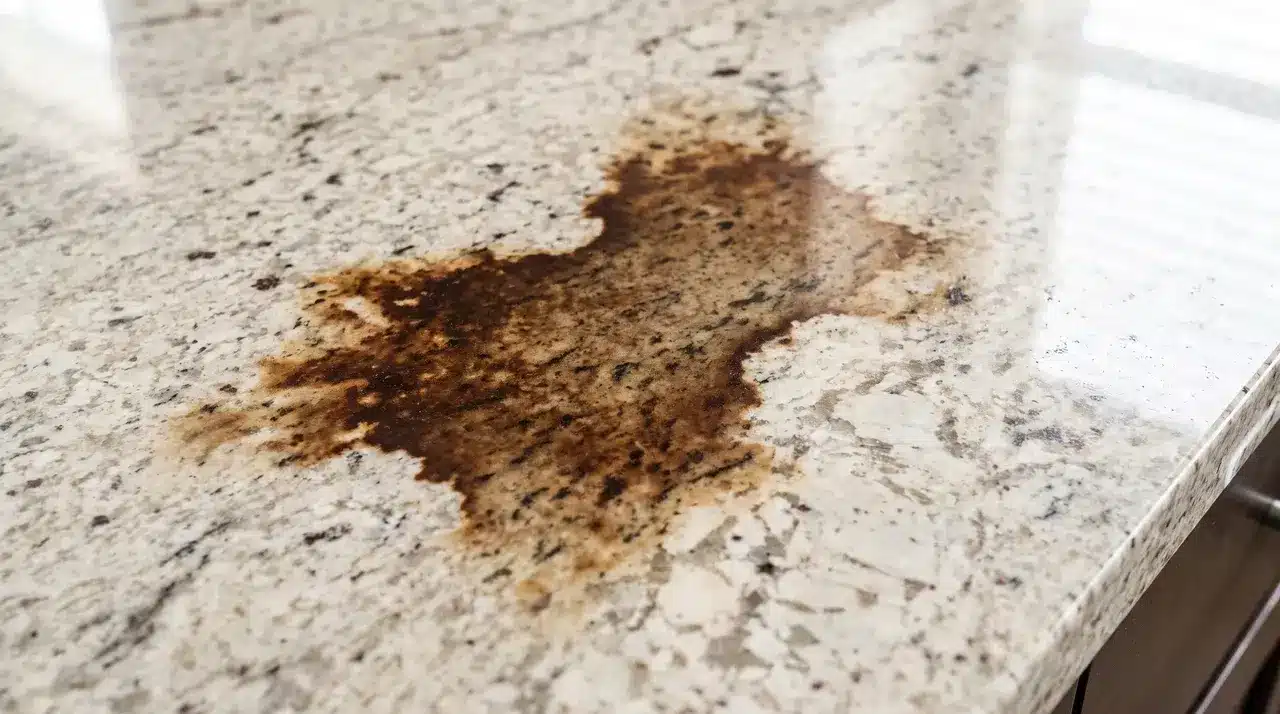
These organic stains set fast, especially on unsealed granite. A baking soda and water poultice handles them when left in place for a full 24 hours. Repeat the process if the stain lightens but does not clear.
The pigment in dark drinks can take two or three rounds to lift from the stone fully.
3. Water Marks and Mineral Buildup
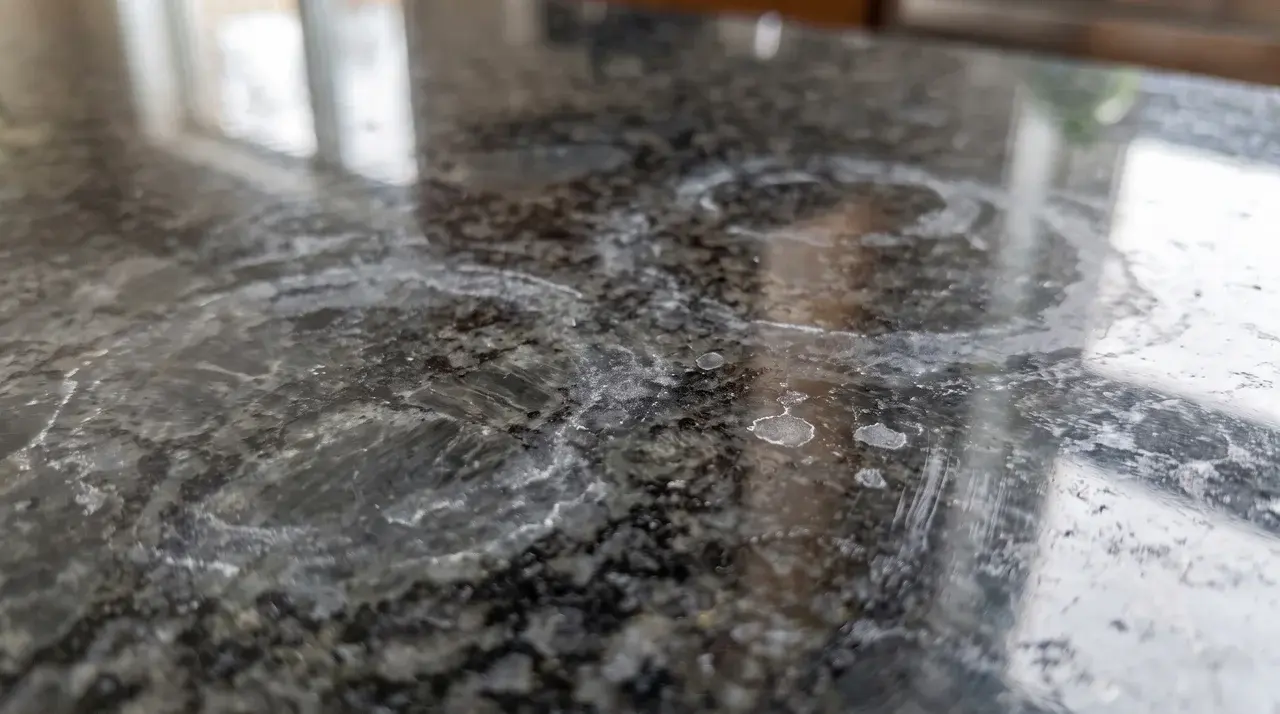
A white ring or haze on granite is usually mineral residue from hard water, not a stain inside the stone. Buff it out with a dry microfiber cloth in firm circular motions.
For marks that do not respond to buffing, apply the dish soap and water mix and wipe clean. Dry the area right away, then buff with a fresh cloth.
Dark granite shows these marks most clearly because of the color contrast.
How to Remove a Granite Countertop Stain Step by Step
Removing a granite countertop stain does not require specialty products. A few simple tools and the right method handle everything from daily grime to deep-set stains.
Follow these steps for the best result.
Step 1: Make Your Everyday Cleaning Mix
The simplest cleaner for granite is one you can make in seconds. It is gentle, effective, and safe for regular use without any risk of damage to the surface.
- Add a few drops of dish soap to a spray bottle filled with water.
- Dawn dish soap works well because it cuts through grease without being harsh.
- Spray the surface, then wipe with a damp cloth in firm, even strokes.
- Pay extra attention to high-use areas like the stove edge, sink rim, and island seating.
- These spots collect grease and grime faster than the rest of the counter.
Step 2: Handle Stuck-On Gunk the Right Way
Dried food and sticky residue need a little more than a wipe. The key is to lift it without scratching the granite surface underneath.
- Use a plastic scraper, never a metal one.
- Hold it flat against the surface and push forward in one smooth motion.
- Plastic scrapers are firm enough to lift debris without leaving marks.
- Follow up with the dish soap and water mix to clean the area fully.
Step 3: Dry and Buff With a Microfiber Cloth
Skipping this step is the reason granite looks streaky after cleaning. A dry microfiber cloth is what gives granite that clear, polished finish after every clean.
- Use a clean, dry microfiber cloth after wiping down with the damp cloth.
- Buff in circular motions across the full surface.
- This removes streaks, water spots, and any leftover soap film.
- Dark granite, in particular, shows water marks if this step is skipped.
Step 4: Make a Poultice for Deep Granite Countertop Stains
When regular cleaning does not lift a stain, a poultice pulls it out from inside the stone. This method works on coffee stains, oil rings, and any stain that has dried and settled into the stone.
- Mix equal parts baking soda and water in a small bowl.
- Stir until you get a thick paste close to the texture of toothpaste.
- Spread the paste evenly over the entire stained area.
- Cover it with plastic wrap and secure the edges with painter’s tape only.
- Poke a few small holes in the plastic wrap to let it breathe.
- Leave it in place for 24 hours without disturbing it.
- The baking soda draws the stain up and out of the stone’s pores.
- Remove the wrap, wipe away the dried paste, and check the result.
- For older or deeper stains, repeat the process two or three times.
Step 5: Disinfect without Damaging the Surface
Bleach is off the table for granite. But that does not mean you have to leave bacteria behind. One product handles disinfecting safely every time.
- Use 70% isopropyl alcohol to disinfect granite countertops.
- Pour it into a spray bottle for easy, even application.
- Spray the surface and let it sit for 3 to 5 minutes.
- This contact time is needed to kill bacteria properly.
- After 3 to 5 minutes, wipe the surface clean with a damp cloth.
- Use this method after handling raw meat, fish, or poultry on the counter.
- For everyday use, the dish soap and water mix is enough.
Video Tutorial
Special thanks to Clean That Up for providing valuable insights in their video, which I referenced while creating this guide.
What Not to Use on Granite
Some common kitchen cleaning products are the worst things you can put on granite. They may feel like they are cleaning, but each use strips the sealer and slowly wears down the stone surface.
| Product | Why It Is Harmful |
|---|---|
| Vinegar | Etches the surface, strips sealer, dulls the finish |
| Bleach | Damages stone, causes discoloration |
| Magic Eraser | Micro-abrasive surface dulls granite over time |
These rules apply to marble and quartzite countertops too. Acids and bleach damage any natural stone the same way. Always check which granite cleaning products are safe before you use something new on the stone.
How Often Should You Clean and Disinfect Granite?
There is no single schedule that works for every kitchen. How often you clean depends on how much cooking you do and who uses the space. A simple routine covers the basics without overdoing it.
| Task | Frequency |
|---|---|
| Dish soap and water wipe-down | Daily |
| Isopropyl alcohol disinfecting | After raw meat or as needed |
| Full reseal | Every 12 to 24 months |
- Wipe down the surface with the soap-and-water mixture after every cooking session.
- Disinfect with isopropyl alcohol only when the situation calls for it, not daily.
- Run the water bead test a few times a year to check if the seal is still holding.
A consistent granite care routine keeps stains from forming and the surface looking sharp.
Wrapping Up
A granite countertop stain does not have to be permanent. The right cleaner, the right process, and a proper seal keep your countertops in great shape for years to come.
Use dish soap and water for daily cleaning, a baking soda poultice for deep stains, and 70% isopropyl alcohol for disinfecting. For rust stains, use 3% hydrogen peroxide on light stone only. For ink, blot with hydrogen peroxide on light granite or lacquer thinner on dark stone.
Seal the surface once or twice a year and run the water bead test to stay ahead of wear. Skip the vinegar, bleach, and rough scrubbers. Those products do more damage than they repair.
Check the color shift before you treat anything. A darker mark is a granite countertop stain inside the stone. A lighter or dull patch is an etch on the surface. Each one needs a different fix, and starting with the right one saves time and protects the stone.
Your granite is built to last. Treat it right, and it will look clean and polished for years to come.
Frequently Asked Questions
What Is a Granite Poultice and How Does It Work?
A poultice is a paste, usually made of baking soda and water, placed over a stain and covered to allow it to dry slowly. As it dries, it draws the stain out from inside the stone’s pores.
How Do I Know if My Granite Needs Resealing?
Pour a small amount of water on the surface. If it beads up, the seal is holding. If it spreads out or soaks in, it is time to apply a fresh coat of sealer.
Is Isopropyl Alcohol Safe for Granite Countertops?
Yes. Use 70% isopropyl alcohol to disinfect granite safely. Let it sit on the surface for 3 to 5 minutes before wiping it away. Never use bleach as a substitute.
Can Rust Stains Be Removed from Granite?
Surface-level rust often responds to 3% hydrogen peroxide. Apply it, leave for 24 hours, then wipe clean. Deep rust stains can be permanent and may need a stone restoration professional.
Does Hydrogen Peroxide Damage Granite Countertops?
Used sparingly, 3% hydrogen peroxide is safe on light-colored granite. Avoid it on dark granite. Repeated use on dark stone can cause bleaching or uneven discoloration over time.