Why Vinegar on Granite Can Ruin Your Countertops Over Time

Granite countertops are known for their natural beauty, strength, and timeless appeal, but they need the right care to stay in good condition.
Vinegar is often used as a natural cleaning solution, but using vinegar on granite can slowly damage the protective seal and reduce the stone’s shine over time.
What may seem like a harmless habit can actually lead to dull spots, etching, and long-term surface wear. Granite remains in its best condition when cleaned using methods that protect its surface.
In this blog, you will learn why vinegar is harmful, how it affects granite, and the safest ways to clean and maintain countertops for long-lasting durability and shine.
Is Vinegar Safe for Granite Countertops?
No, Vinegar is not safe for granite countertops because it is highly acidic and can slowly break down the protective sealant that protects the stone.
Over time, this damage can lead to dull spots, etching, and a loss of natural shine, especially with repeated use.
While a single accidental wipe may not cause immediate visible harm, regular exposure increases the risk of long-term surface damage and makes the granite more prone to staining and moisture absorption.
Since granite is a porous natural stone that relies on its sealant for protection, acidic cleaners like vinegar should always be avoided in favor of pH-neutral, stone-safe alternatives that preserve both durability and appearance.
Why Vinegar on Granite Is a Bad Idea
Vinegar may look like a harmless natural cleaner, but it is too acidic for granite and can slowly damage the surface and protective seal.
Acidic reaction damages the sealant:
- Vinegar breaks down the protective seal over time
- Once the seal weakens, granite becomes more vulnerable to stains and moisture
- Even small repeated use accelerates wear
Causes a dull and cloudy appearance:
- Acid reacts with minerals in the stone surface
- Leads to loss of natural shine
- Can create permanent etching marks
Increases long-term staining risk:
- A damaged seal allows liquids to absorb into the granite
- Oils, coffee, and spills stain more easily
- Surface becomes harder to maintain
Damage builds up silently:
- No immediate visible change after one use
- Effects appear gradually with repeated cleaning
- Often noticed only after dull patches develop
How Fast Does Vinegar Damage Granite?
Damage depends on frequency of use, exposure time, and whether the granite is sealed or unsealed.
| Exposure Level | Time Frame | What Happens |
|---|---|---|
| One-time use | No immediate damage | Usually no visible change, but microscopic seal impact may begin |
| Occasional use (1–3 times/month) | Weeks to months | Gradual weakening of the sealant, early dulling may start |
| Frequent use (weekly or more) | 1–3 months | Noticeable loss of shine, early etching, and seal breakdown |
| Daily use | A few weeks | Visible dull patches, surface damage, increased staining risk |
Signs of Vinegar Damage on Granite Countertops

Vinegar damage on granite does not appear instantly, but repeated exposure gradually affects the sealant and surface finish.
1. Dull or cloudy appearance: Over time, the natural shine of granite starts fading in patches. This happens because vinegar slowly breaks down the sealant, altering the surface’s reflection and making certain areas look uneven or dull.
2. Visible etch marks: Light, faded spots may appear on the countertop, especially under bright lighting. These marks are caused by acid reacting with minerals in the stone and are often difficult to reverse without professional polishing.
3. Rough or uneven surface texture: The once-smooth surface may start feeling slightly rough in areas where vinegar was frequently used. This indicates the protective layer has weakened, and the stone is beginning to lose its sealed protection.
4. Water no longer beads on the surface: Instead of sitting on top, water begins to spread or soak into the granite. This is a clear sign that the sealant has weakened, leaving the stone more vulnerable to stains and moisture damage.
5. Faded or patchy coloration: Some areas may look lighter or uneven compared to the rest of the countertop. This occurs due to repeated acid exposure, which gradually wears down both the sealant and the surface polish.
Why Granite Needs pH-Neutral Cleaners
Granite needs pH-neutral cleaners because acidic or highly alkaline products can slowly damage its protective sealant and affect the natural stone surface.
Unlike vinegar or bleach-based cleaners, pH-neutral solutions clean dirt, grease, and spills without reacting with the minerals in granite, helping to preserve its shine and structural integrity.
Since granite is a porous material that relies on its sealant to resist stains and moisture, using balanced cleaners ensures long-term protection, prevents dull spots or etching, and keeps the countertop looking polished and well-maintained over time.
Safe Alternatives to Clean Granite Countertops
Granite needs gentle care, so using the right cleaning methods helps protect its shine and seal for years.
Here are safe alternatives that clean effectively without causing damage.
1. Mild Dish Soap and Warm Water
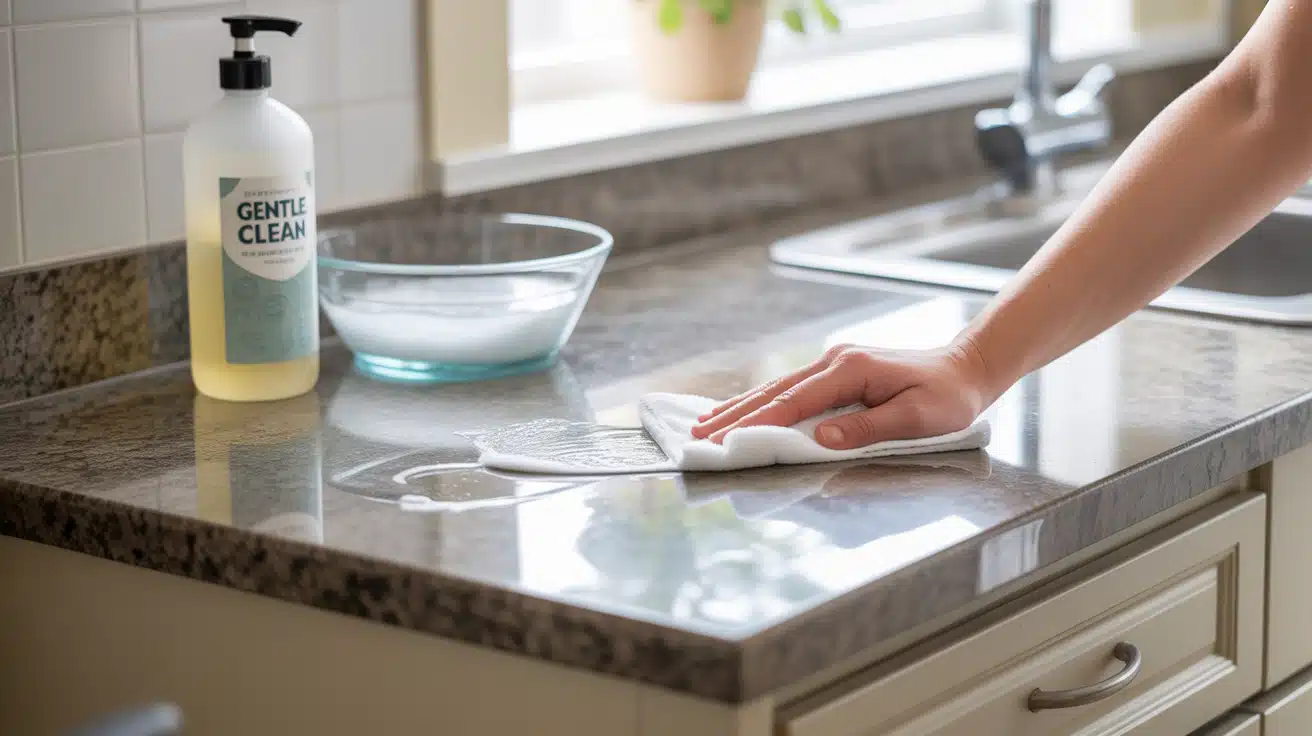
This is the most recommended everyday cleaning method because it is gentle, widely available, and completely safe for sealed granite. It removes grease, food residue, and light stains without affecting the stone’s surface or sealant.
Steps:
- Fill a bowl or spray bottle with warm water
- Add 2–3 drops of mild, non-abrasive dish soap
- Dip a soft microfiber cloth or sponge into the solution
- Wipe the countertop gently in circular motions
- Focus on high-use areas like cooking zones and sink edges
- Rinse the cloth with clean water and wipe again to remove soap residue
- Dry immediately with a clean microfiber cloth to prevent streaks or water spots
This method is ideal for daily or after-cooking cleanup and helps maintain the natural shine of granite.
Pro Tip: Use only a tiny amount of dish soap; too much will leave a film on your granite that attracts dirt and makes your counters look cloudy.
2. P H-Neutral Granite Cleaner
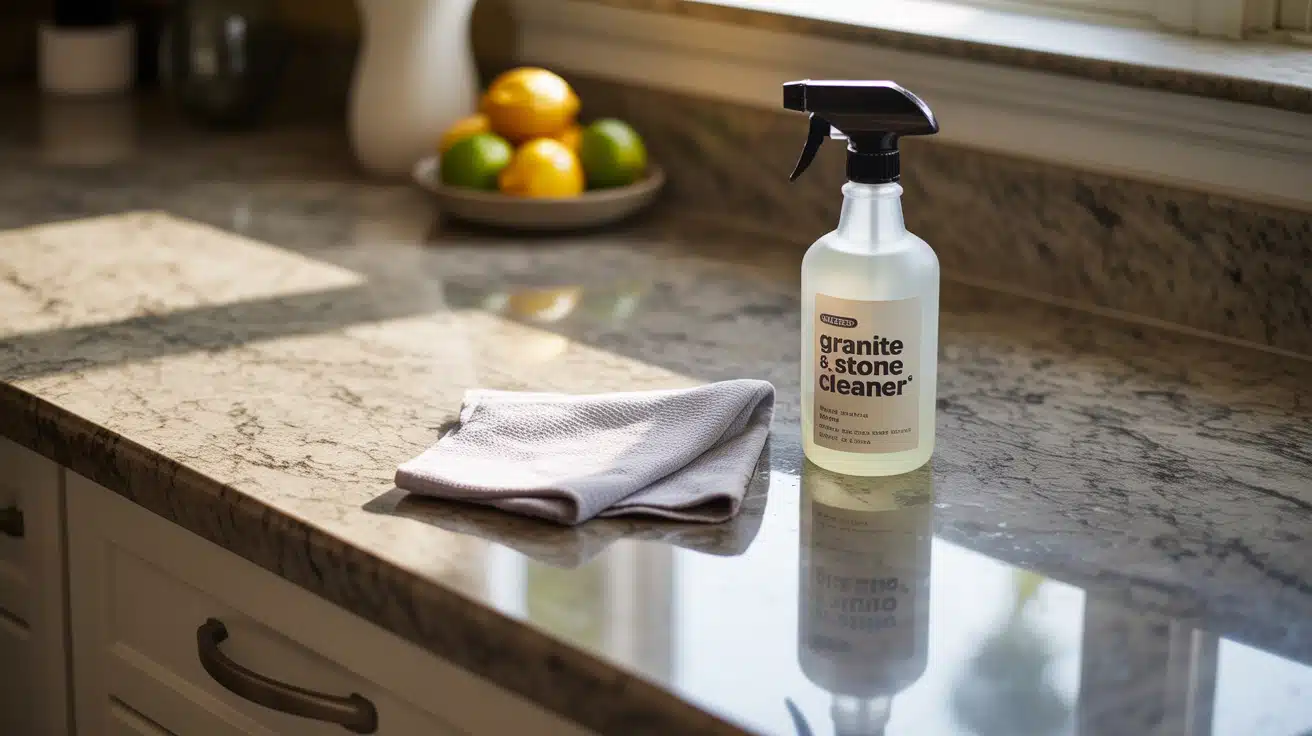
pH-neutral cleaners are specially designed for natural stone surfaces. They clean effectively without breaking down the sealant or leaving behind acidic or alkaline residues that can damage granite over time.
Steps:
- Shake the bottle well before use
- Spray evenly across the granite surface
- Allow it to sit for 30–60 seconds for light grime breakdown
- Wipe using a clean microfiber cloth in overlapping strokes
- Buff the surface dry for a streak-free finish
- Repeat weekly for deeper cleaning if needed
These cleaners are ideal for maintaining long-term protection, especially in kitchens with heavy cooking use or frequent spills.
Pro Tip: Avoid any granite cleaner containing citric acid, lemon, or other acidic ingredients, as they can cause the same damage.
3. Homemade Granite Cleaner Recipe

A DIY cleaner can work well for light cleaning if mixed correctly. It combines mild disinfecting power with safe cleaning agents that do not harm granite when properly diluted.
Steps:
- Mix 1 1/2 cups of distilled or clean water
- Add 1/4 cup isopropyl alcohol (70% or higher)
- Add 2–3 drops of mild dish soap
- Optional: add a few drops of essential oil for fragrance
- Pour into a spray bottle and shake gently before each use
How to use:
- Lightly spray onto the surface without oversaturating
- Wipe immediately with a microfiber cloth
- Avoid letting the liquid sit for long periods
- Dry thoroughly to prevent streaks or buildup
This option is useful for quick cleaning and light disinfection without risking acid damage.
Pro Tip: Always test any new cleaner on a small, hidden area of your granite first. Even safe cleaners can react differently depending on your specific stone type and sealant.
What to Do If You’ve Already Used Vinegar on Granite
If you have already cleaned granite with vinegar, taking quick action can help reduce further surface damage.
Here’s what you should do next to protect the countertop and remove any remaining acidic residue.
- Rinse the surface immediately: Wash the area thoroughly with plenty of clean water to remove any remaining vinegar.
- Dry the countertop completely: Use a soft microfiber cloth to prevent water spots and streaks.
- Check for visible damage: Look for dull spots, rough patches, or faded areas on the surface.
- Clean with mild soap and water: Gently wipe the granite using warm water and a few drops of dish soap.
- Contact a professional if needed: Deep etching or heavy dullness may require stone restoration services.
Acting quickly after using vinegar can help limit surface damage and protect the granite from further weakening or discoloration.
Harmful Cleaners to Avoid on Granite Countertops
Just like vinegar on granite causes damage, several other common household products can harm your countertops:
| Product | Why is it Harmful to Granite? |
|---|---|
| Lemon or citrus juices | Acid can etch the surface and damage the sealant |
| Ammonia or bleach | Too harsh; can erode or weaken the protective sealant |
| Abrasive cleaners/pads | Can scratch, dull, or wear down the granite’s finish |
Stick with gentle, granite-safe solutions, and your countertop will last longer and stay looking beautiful. Avoiding these harsh products will help protect your investment.
Repairing Granite Countertops After Acid Damage

Acid damage from vinegar or similar cleaners can dull granite and weaken its protective seal over time. While light damage can often be improved, deeper etching may need professional restoration.
Light surface dullness restoration: Light surface dullness can often be addressed without professional help if the vinegar damage is minimal.
In this case, the granite may show only slight haze or loss of shine, which can usually be improved by using stone-safe polishing products or gentle buffing.
This process helps bring back some of the natural gloss without changing the structure of the stone and is generally quick and low effort.
Resealing the granite surface: Resealing the granite surface is an important step after light restoration or cleaning. Once the surface is improved, a quality stone sealer is applied to rebuild protection against moisture, stains, and future acid exposure.
The process is simple but requires even application and proper drying time, which helps restore the protective barrier that vinegar may have weakened.
Deep etching and professional repair: Deep etching or severe vinegar damage usually requires professional restoration. In such cases, the surface may have permanent dull spots, rough texture, or visible marks that cannot be fixed with basic cleaning or polishing.
Professionals may use grinding, honing, or resurfacing techniques to restore the countertop, which takes more time but delivers the best results for heavily damaged granite.
Granite Maintenance Routine
Regular maintenance keeps granite countertops clean, shiny, and protected from stains and long-term damage. A consistent routine also helps prevent issues caused by spills, moisture, and acidic cleaners.
| Routine Type | Frequency | What You Should Do |
|---|---|---|
| Daily Cleaning | Every day | Wipe spills immediately, clean with mild dish soap and water, dry with a microfiber cloth |
| Weekly Cleaning | 1–2 times per week | Deep clean with pH-neutral granite cleaner, remove grease buildup, and polish lightly |
| Monthly Care | Once a month | Check for dull spots, test water beading, and inspect surface seal condition |
| Yearly Maintenance | Every 12–24 months | Reseal granite to maintain protection against stains and moisture |
Extra Tips to Keep Granite Looking New
Keeping granite looking new comes down to simple daily habits that protect both its shine and seal. Always wipe up spills immediately to prevent staining, especially from oils, coffee, wine, or acidic foods, which can slowly damage the surface.
Use cutting boards and trivets to avoid scratches, heat marks, and direct contact with hot cookware. Clean regularly with a pH-neutral or mild dish soap solution instead of harsh or acidic cleaners, such as vinegar, which can weaken the seal over time.
Dry the surface after cleaning to prevent water spots and dull patches. With consistent care and gentle cleaning practices, granite can maintain its natural gloss and durability for many years.
Conclusion
Taking care of granite countertops is simple when you understand what keeps them safe and what causes damage. Although vinegar is a popular natural cleaner, it is too acidic for granite and can weaken its sealant, leading to dullness and surface etching over time.
By switching to pH-neutral cleaners, mild dish soap, and proper maintenance habits, you can preserve the stone’s natural beauty and strength for years.
Regular cleaning, immediate spill management, and occasional resealing will keep your countertops looking polished and new.
With the right approach, granite can remain one of the most durable and elegant surfaces in your home for a very long time.
Frequently Asked Questions
Can Hot Water Damage Granite Countertops?
Hot water is usually safe for granite, but constant heat exposure can weaken the sealant over time. Using trivets or heat pads helps protect the surface from damage.
Is It Safe to Use Disinfecting Wipes on Granite?
Some disinfecting wipes contain harsh chemicals that can dull granite surfaces. Always use wipes labeled safe for natural stone or granite.
How Long Does Granite Sealant Typically Last?
Granite sealant usually lasts between one and three years. Its lifespan depends on cleaning habits and daily countertop use.