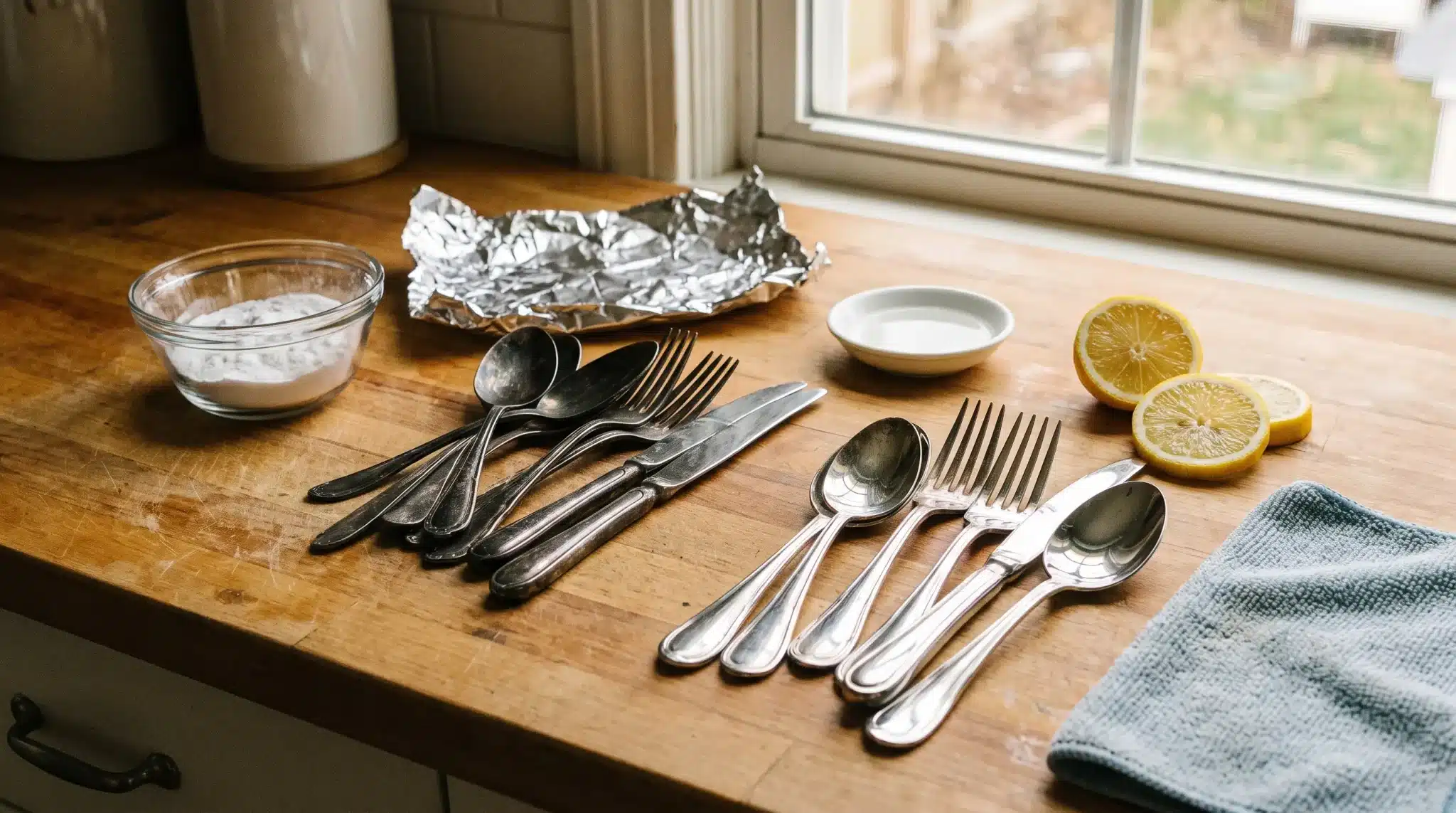
How to Clean Silverware Tarnish (Safe, Simple Methods)

You open a drawer and your silverware looks dark and dull. That coating is tarnish. Silver reacts with sulfur compounds in the air and forms a layer called silver sulfide over time.
You can remove it at home with a few simple supplies. The right method depends on the type of silver. Sterling silver, silver-plated items, and antique pieces each need different care.
This article walks through safe, effective ways to clean silverware tarnish and keep it from coming back.
Why Does Silverware Tarnish?
Silver reacts with sulfur compounds in the air. That reaction forms a layer called silver sulfide on the metal surface.
The layer builds up over time. It causes the yellow, gray, or black color you notice on older pieces.
Several things speed up this process:
- Humidity. Moist air accelerates the chemical reaction.
- Open storage. Leaving silver out exposes it to more sulfur.
- Certain foods. Eggs, onions, and mustard contain sulfur compounds.
- Bad storage materials. Cardboard and rubber release sulfur gases over time.
Lightly tarnished silver often shows a yellow tint first. Heavier tarnish turns gray or black. Checking the color helps you judge how much cleaning each piece needs.
Check Your Silver Type Before You Clean
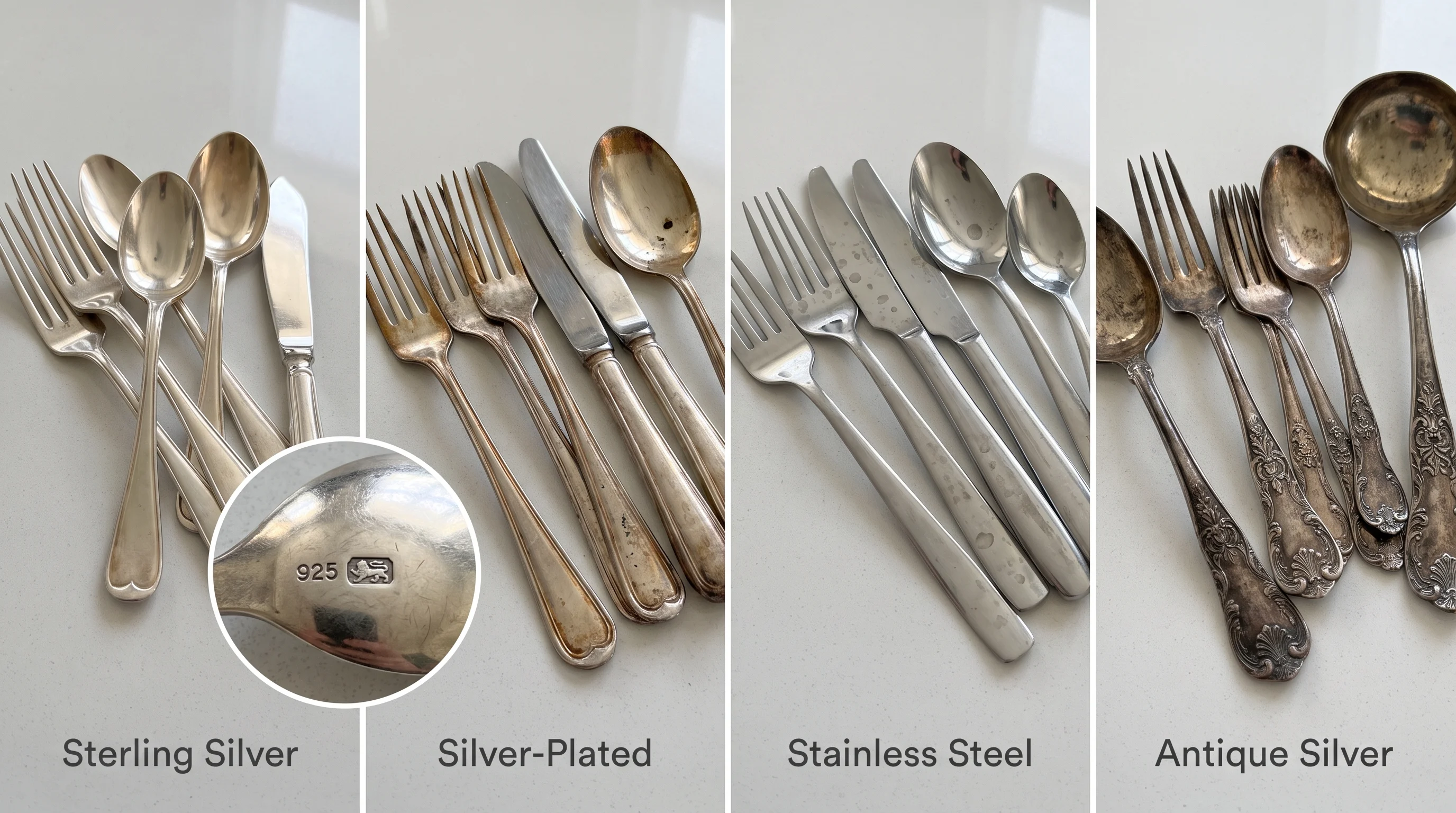
Not all silverware reacts the same way to cleaning products. Knowing what you have helps you avoid damage.
1. Sterling Silver
Sterling silver is usually marked “925” or “Sterling.” This means the piece contains 92.5% pure silver. Sterling handles most gentle polishing methods well. It tends to show visible tarnish faster than other metals.
2. Silver-Plated Silverware
Silver-plated pieces have a thin silver layer over a base metal. That layer wears down with harsh scrubbing. Use soft cloths and mild solutions to protect the coating.
3. Stainless Steel Silverware
Stainless steel is a popular kitchen finish choice that resists corrosion but needs its own type of care. It does not develop silver tarnish. It may show water spots or food stains instead. These marks need different cleaning steps than tarnish removal.
4. Antique or Heirloom Silver
Antique pieces often carry decorative engravings or aged finishes. Over-polishing can wear away those details. Treat older pieces with extra care during cleaning.
How to Clean Silverware Tarnish at Home
Household items can remove light to moderate tarnish. These methods work well for regular upkeep. Baking soda and vinegar work across many household cleaning tasks, including regular bathroom upkeep and silverware care.
1. Baking Soda and Aluminum Foil
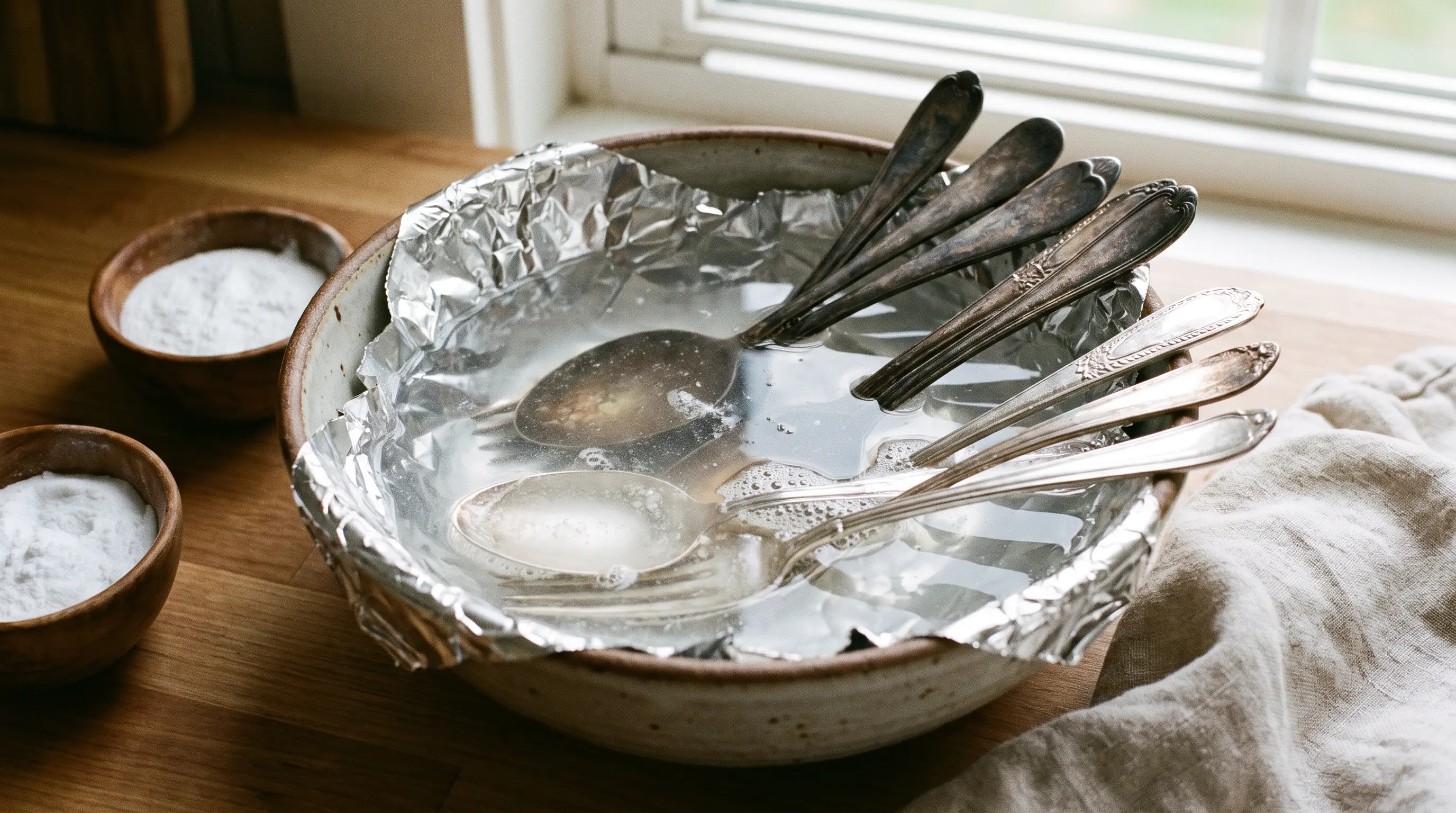
Best for: Moderate to heavy tarnish
This method uses a chemical reaction to lift tarnish off the surface without scrubbing.
- Line a bowl or pan with aluminum foil, shiny side up.
- Add hot water and a few tablespoons of baking soda.
- Place your silverware in the bowl, touching the foil.
- Let it soak for 5 to 10 minutes.
- Rinse with clean water.
- Dry right away with a soft cloth.
Do not use this method often on silver-plated items. Frequent use can wear down the thin silver layer.
2. Dish Soap and Warm Water
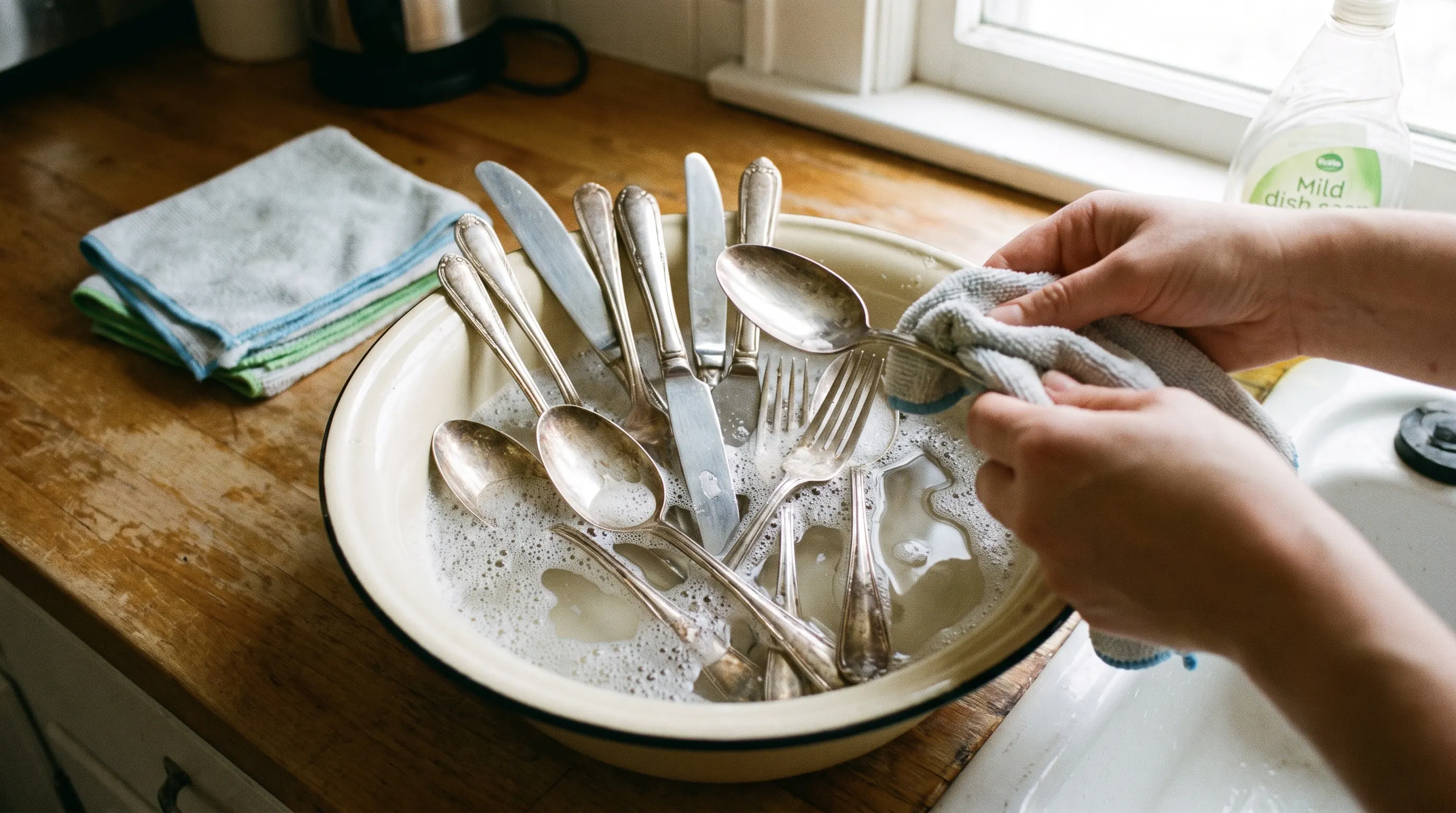
Best for: Light tarnish and regular cleaning
Mild dish soap, such as Dawn, removes oils and everyday grime. Gently wash your silverware with a soft cloth and warm water. Rinse well and dry right away. This method works for maintenance but may not remove deeper tarnish on its own.
3. White Vinegar and Baking Soda Solution
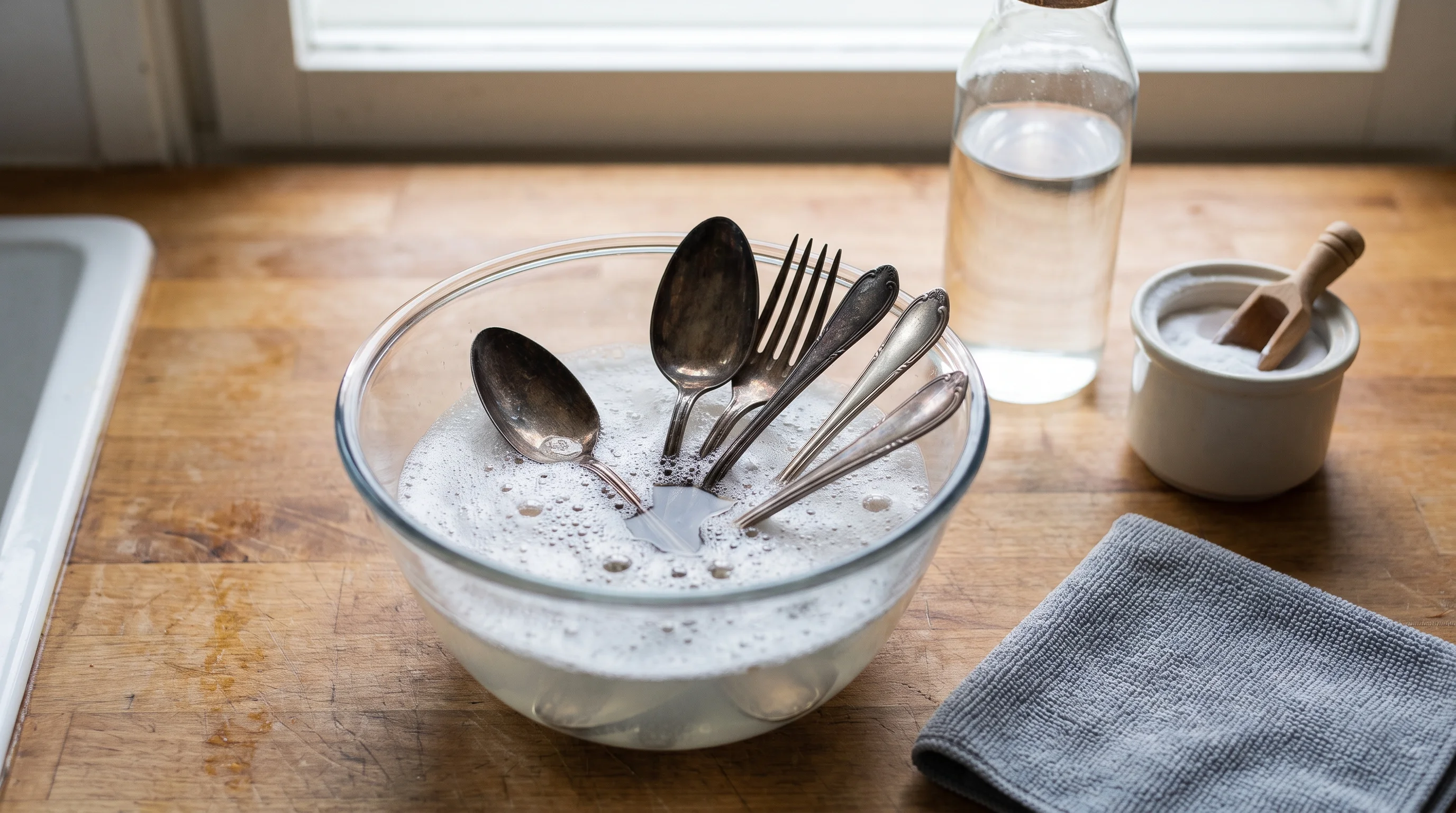
Best for: Light to medium tarnish
Mix white vinegar with baking soda to make a bubbling solution. Soak your silverware for about 2 to 3 hours. Longer soaking does not always give better results. Extended soaking can affect finishes on some pieces. Rinse and dry well after soaking.
4. Lemon Juice and Baking Soda Paste
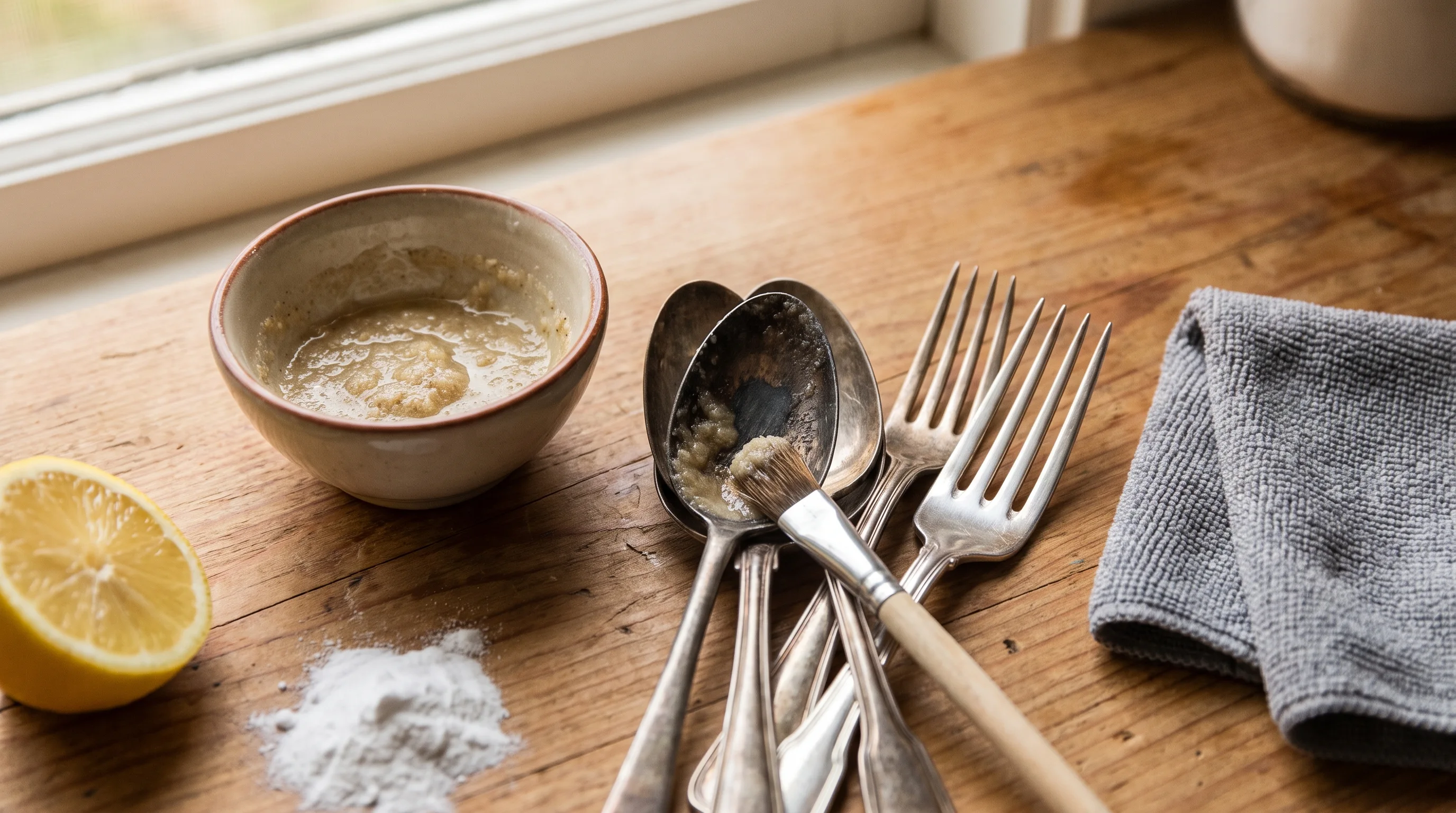
Best for: Small tarnished spots
Mix lemon juice with baking soda until it forms a thick paste. Apply it gently with a microfiber cloth. Rub in small, soft circles. Rinse and dry the piece right after. Avoid heavy pressure since hard rubbing can leave light scratches.
5. Glycerin Solution
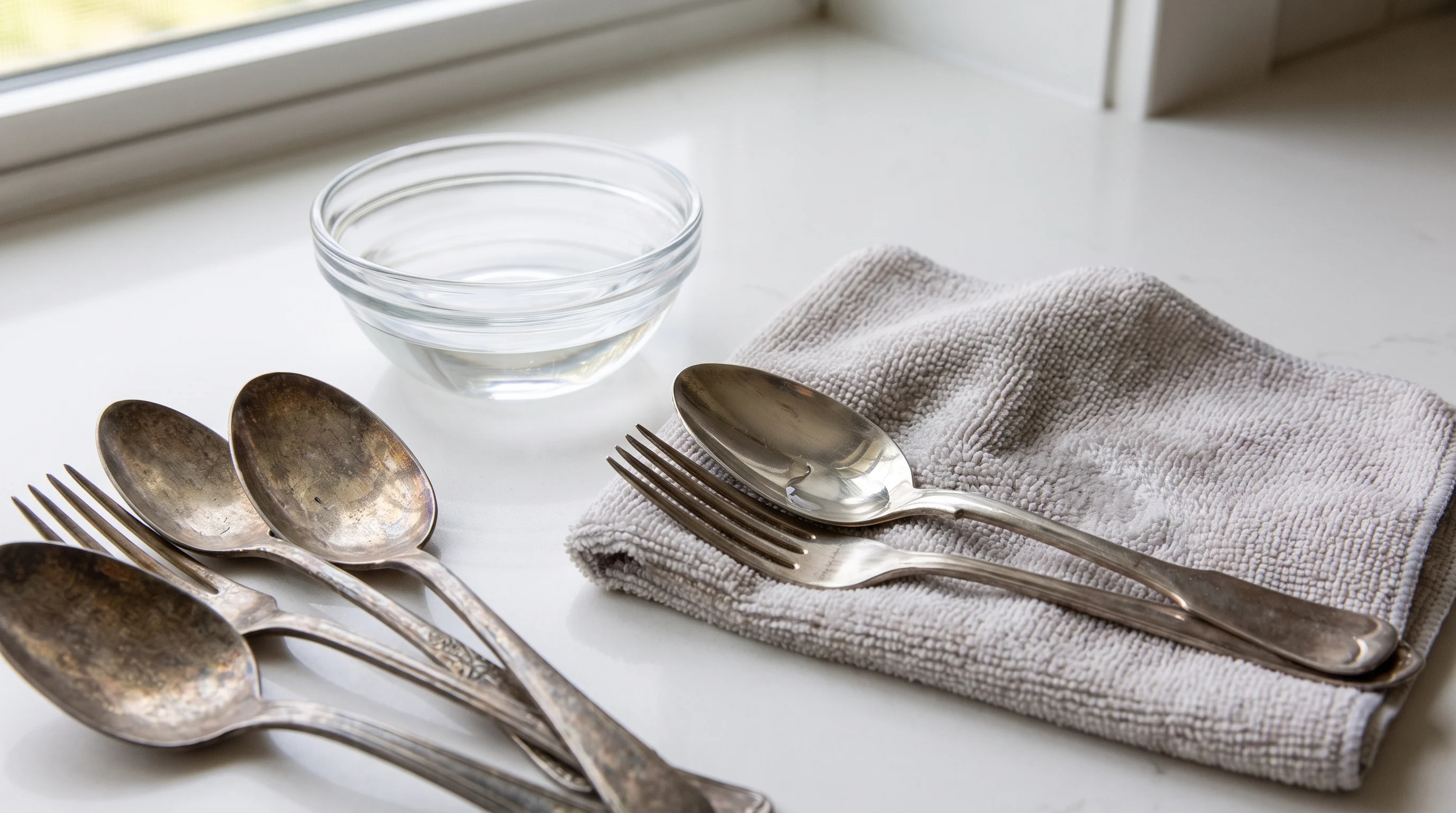
Best for: Light tarnish and ongoing maintenance
Glycerin is a clear liquid found in most pharmacies. It loosens fingerprints and surface residue without scratching. It also leaves a light layer that slows future tarnish.
Mix one part glycerin with two parts water. Rub the solution onto the silverware with a soft microfiber cloth. Rinse with warm water and dry well. This method is safe for regular use between deeper cleanings.
Commercial Products That Remove Silverware Tarnish
Store-bought products work better for heavier tarnish or larger collections.
6. Silver Polish
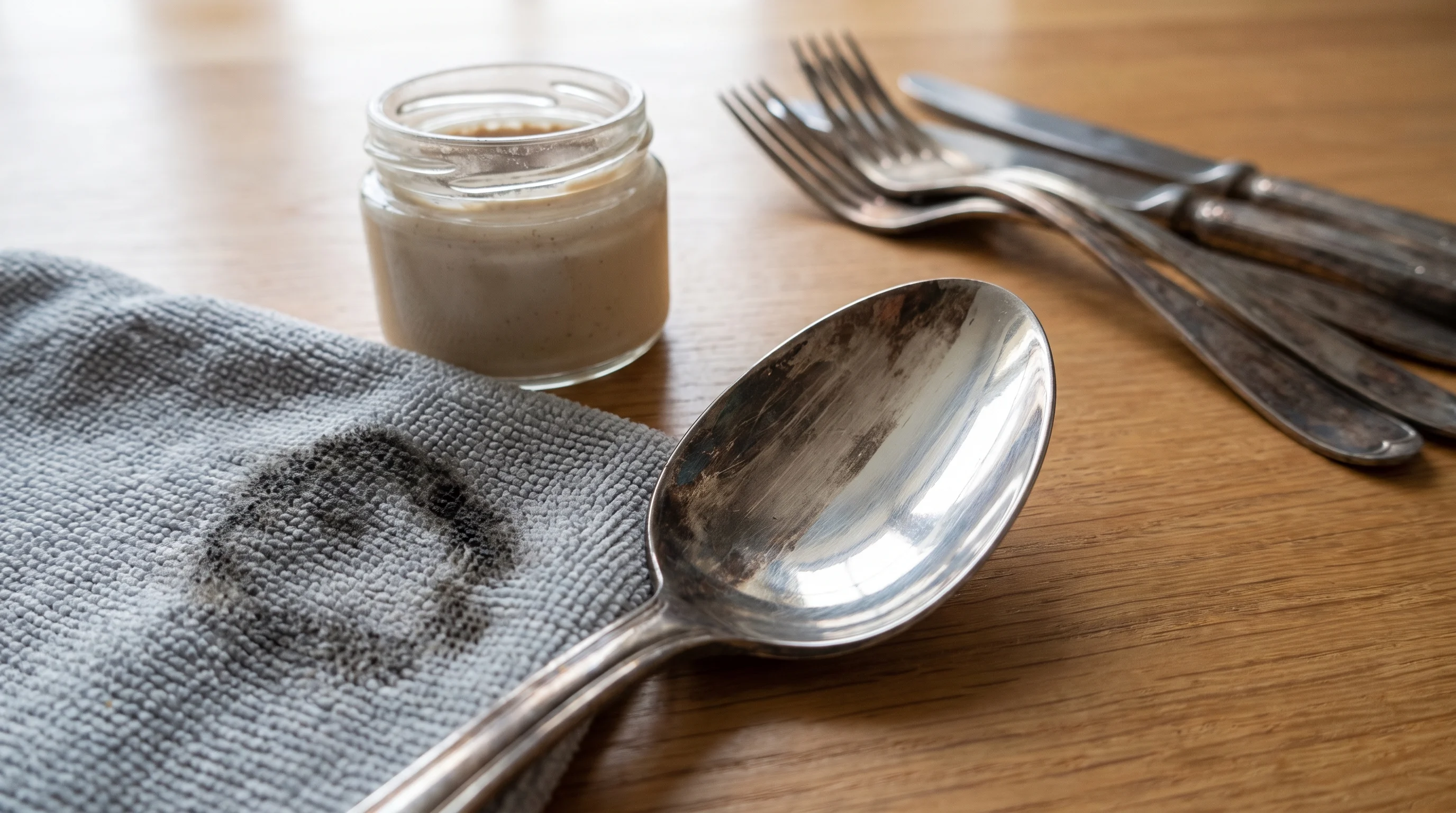
When tarnish does not come off with mild cleaning, a silver polish can restore the shine. These products contain ingredients that react with and lift tarnish from the surface.
Apply a small amount to a soft microfiber cloth. Rub the silverware in small sections. Buff away the residue with a clean cloth. Always follow the product directions, especially for silver-plated pieces.
7. Silver Cleaning Cloths
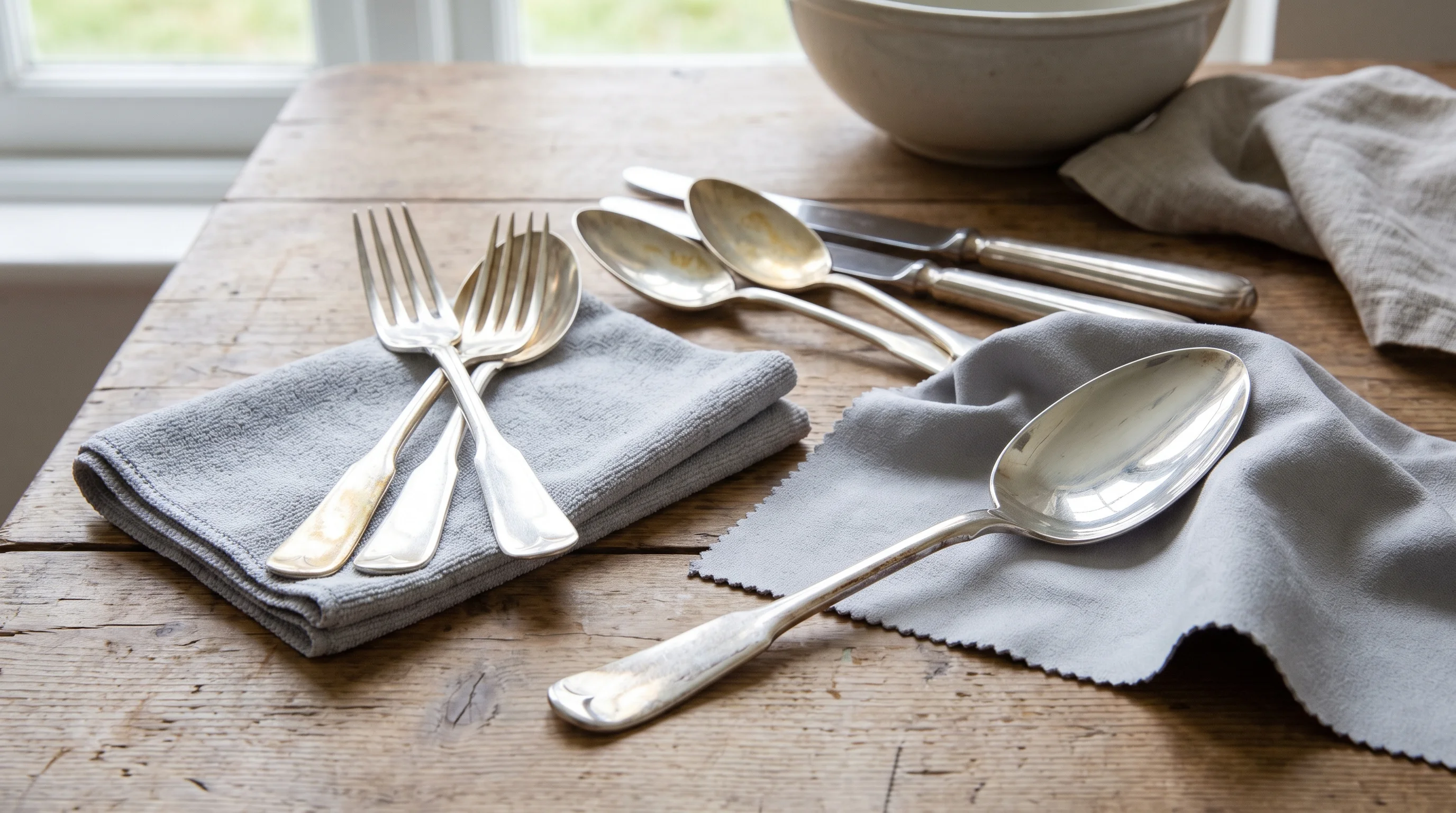
A silver cleaning cloth is a simple option for maintaining silverware between deeper cleanings. The fabric contains a mild polishing compound that removes light tarnish as you wipe.
Rub the cloth over the silverware until the dark marks fade. These cloths work best when tarnish is just starting to appear, not on heavily blackened pieces.
8. Silver Dips
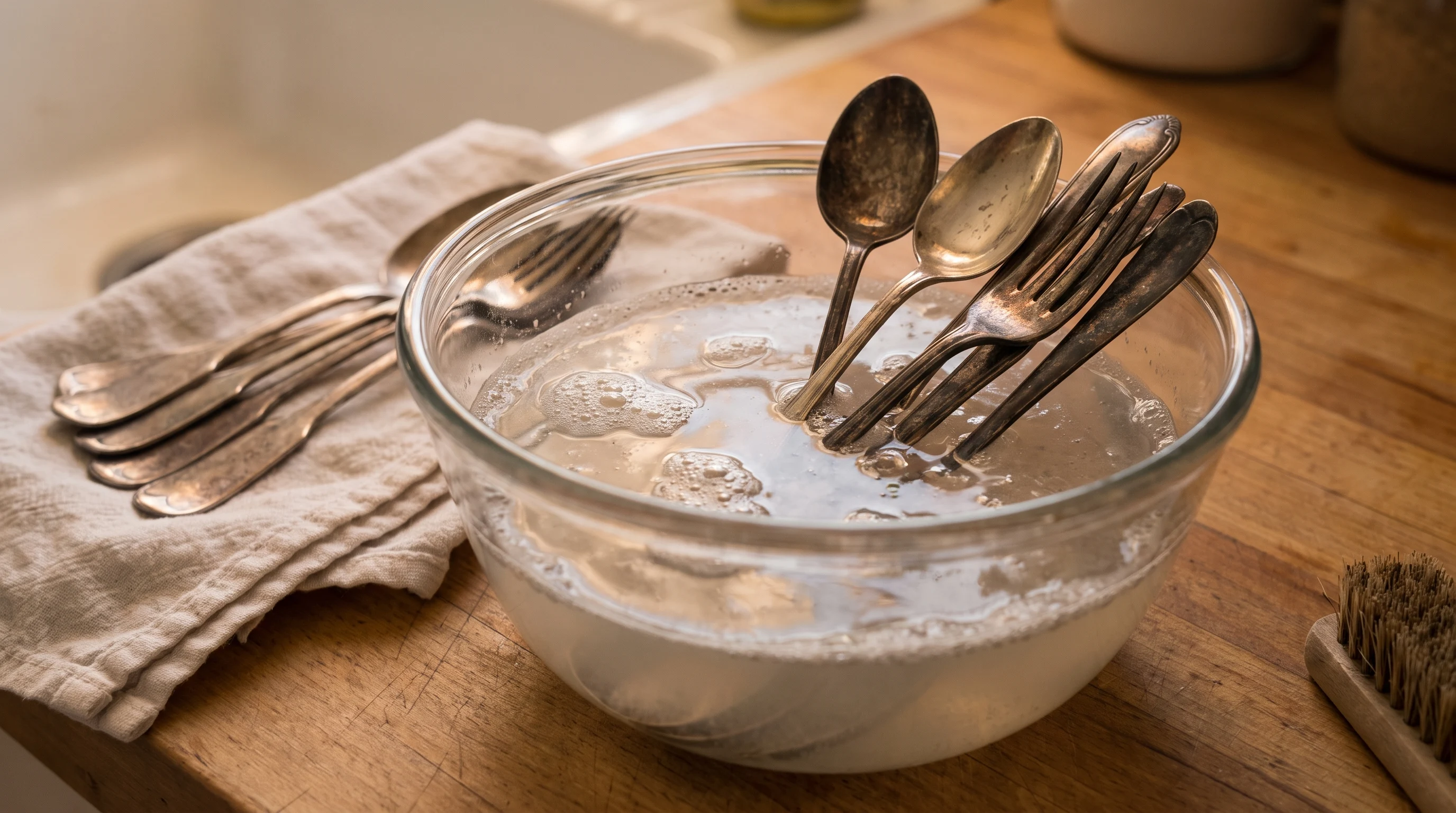
Silver dips use a liquid chemical solution to dissolve tarnish fast. Place the silverware in the solution for the time listed on the label. Remove it, rinse thoroughly, and dry completely. Use silver dips carefully on antique, engraved, or silver-plated items. Frequent use can affect fine surface details or finishes.
| Method | Best For | Tarnish Level |
|---|---|---|
| Silver polish | Deep tarnish | Heavy |
| Silver cloth | Maintenance | Light |
| Silver dip | Fast removal | Heavy |
What Not to Use on Silver
Some products damage silverware rather than clean it. Avoid these items:
- Chlorine bleach. It can cause permanent discoloration and surface damage.
- Harsh chemical cleaners. Strong formulas can affect the silver finish.
- Steel wool. The rough fibers leave scratches and strip away the smooth shine.
- Rough powders. Abrasive powders create tiny marks that make silver look dull.
- Toothpaste used regularly. Many toothpaste formulas contain abrasive particles that wear down silver surfaces over time.
How to Remove Heavy Tarnish From Silverware
Heavy tarnish responds better to patience than to force. Aggressive scrubbing causes more damage than the tarnish itself.
For thick buildup, start with the baking soda and aluminum foil method. Follow that with a silver polish on stubborn spots. Use a soft microfiber cloth throughout the process. Buff gently in small circles and rinse well. Dry the piece completely before storing.
Most dull silver responds well to these steps. Keep in mind that deep scratches or worn plating may not fully disappear. Cleaning restores shine, but it cannot reverse permanent wear.
How to Prevent Silverware From Tarnishing Again
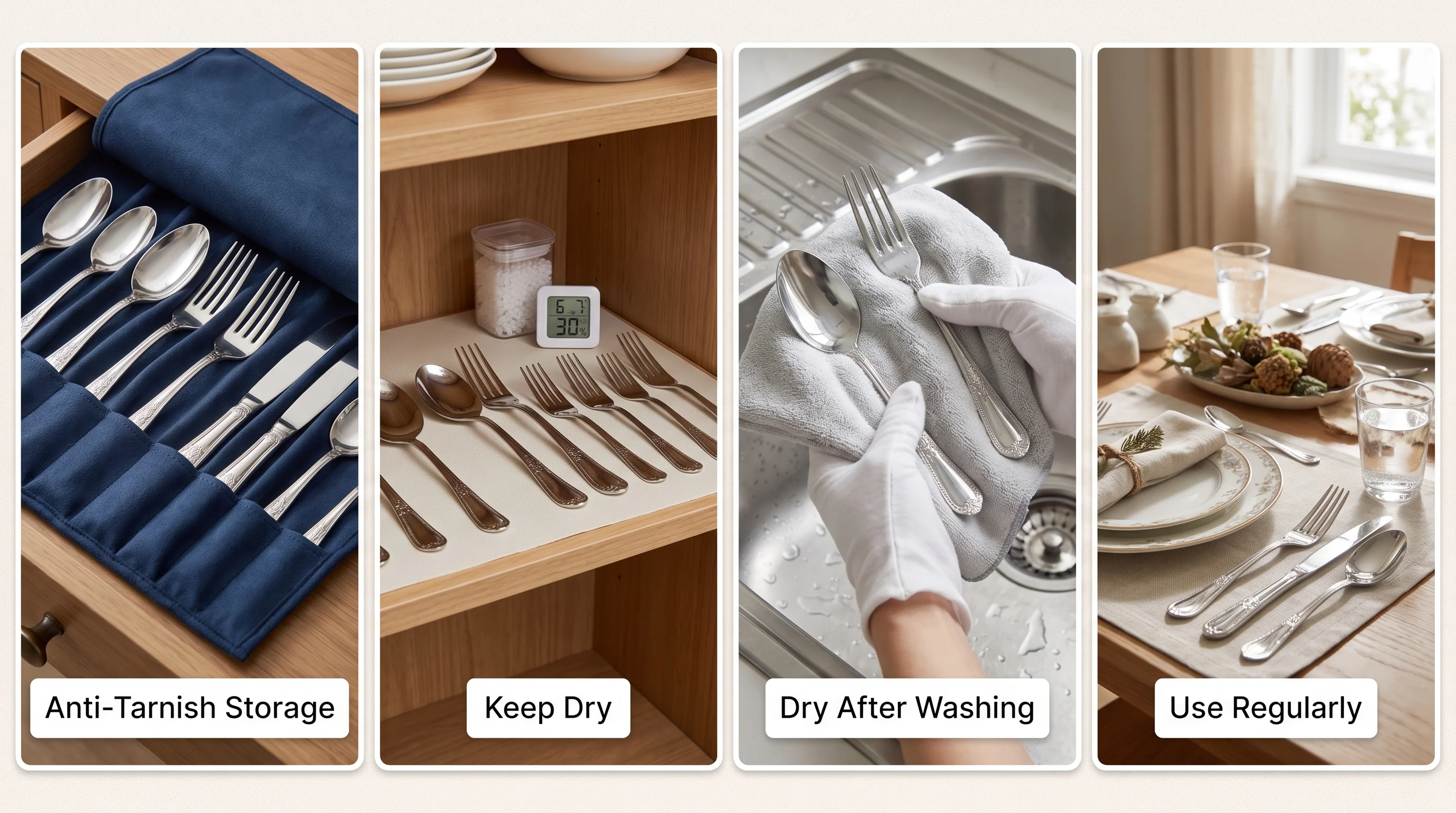
Good storage habits slow down tarnish and keep silverware looking brighter for longer.
- Store silver pieces in anti-tarnish bags or soft cloth pouches.
- Keep silver away from damp areas.
- Avoid rubber, cardboard, and certain fabrics that release tarnish-causing compounds.
- Wash silverware after use and dry each piece completely.
- Use silverware regularly rather than leaving it untouched for months.
| Maintenance Task | Frequency |
|---|---|
| Wipe with silver cloth | As needed |
| Deep cleaning | When tarnish appears |
| Check storage | Every few months |
What Should You Not Use to Clean Silver?
Some cleaning products can damage silver instead of removing tarnish. Avoid harsh or abrasive options that may scratch the surface, weaken delicate finishes, or cause discoloration over time.
Avoid using:
- Chlorine bleach: It can react with silver and cause permanent discoloration or surface damage.
- Harsh chemical cleaners: Strong formulas may affect the silver finish and are not designed for delicate metals.
- Steel wool: The rough fibers can leave scratches and remove the smooth shine of silverware.
- Rough powders: Abrasive powders may create tiny marks that make silver look dull.
- Excessive toothpaste use: Some toothpaste formulas contain abrasive particles that can wear down silver surfaces with repeated cleaning.
Common Mistakes While Cleaning Silverware Tarnish
Some cleaning habits cause more harm than the tarnish itself.
| Mistake | Why It Causes Problems |
|---|---|
| Using abrasive cleaners | Can scratch the silver surface |
| Scrubbing too hard | Removes the surface finish |
| Soaking silver too long | May affect finishes on some pieces |
| Cleaning without checking material | Wrong method can damage plating |
| Using random household chemicals | May cause discoloration |
Frequently Asked Questions
Will Dawn dish soap remove tarnish from silver?
Dawn removes dirt, oils, and everyday residue well. It may not remove heavy tarnish on its own. Use it for regular maintenance or light cleaning.
What should you not use to clean silver?
Avoid bleach, harsh chemical cleaners, steel wool, rough powders, and abrasive scrubbers. These can scratch the surface or cause discoloration.
What is the best way to clean heavily tarnished silverware?
Start with the baking soda and aluminum foil method. For spots that remain, apply silver polish with a soft cloth. Buff gently and rinse well.
Can baking soda damage silver?
Occasional use works well for lifting tarnish. Repeated abrasive scrubbing with baking soda may wear down finishes on silver-plated items over time.
How often should silverware be polished?
This depends on how you store and use the pieces. Silver stored in open air or used near sulfur-containing foods needs more frequent care.
Is the aluminum foil and baking soda method safe for all silver?
It is safe for sterling silver. Use it less often on silver-plated pieces, as repeated the can thin the plating.
Final Thoughts
Tarnish is a surface reaction, and you can remove it with the right approach. Start with gentle methods that match your silver type. Save stronger commercial products for heavier buildup.
Avoid harsh tools and rough scrubbing to protect the finish. Good storage also slows down how fast tarnish returns.
With regular care, learning how to clean silverware tarnish becomes a quick, simple habit. Your pieces can keep their shine for years.