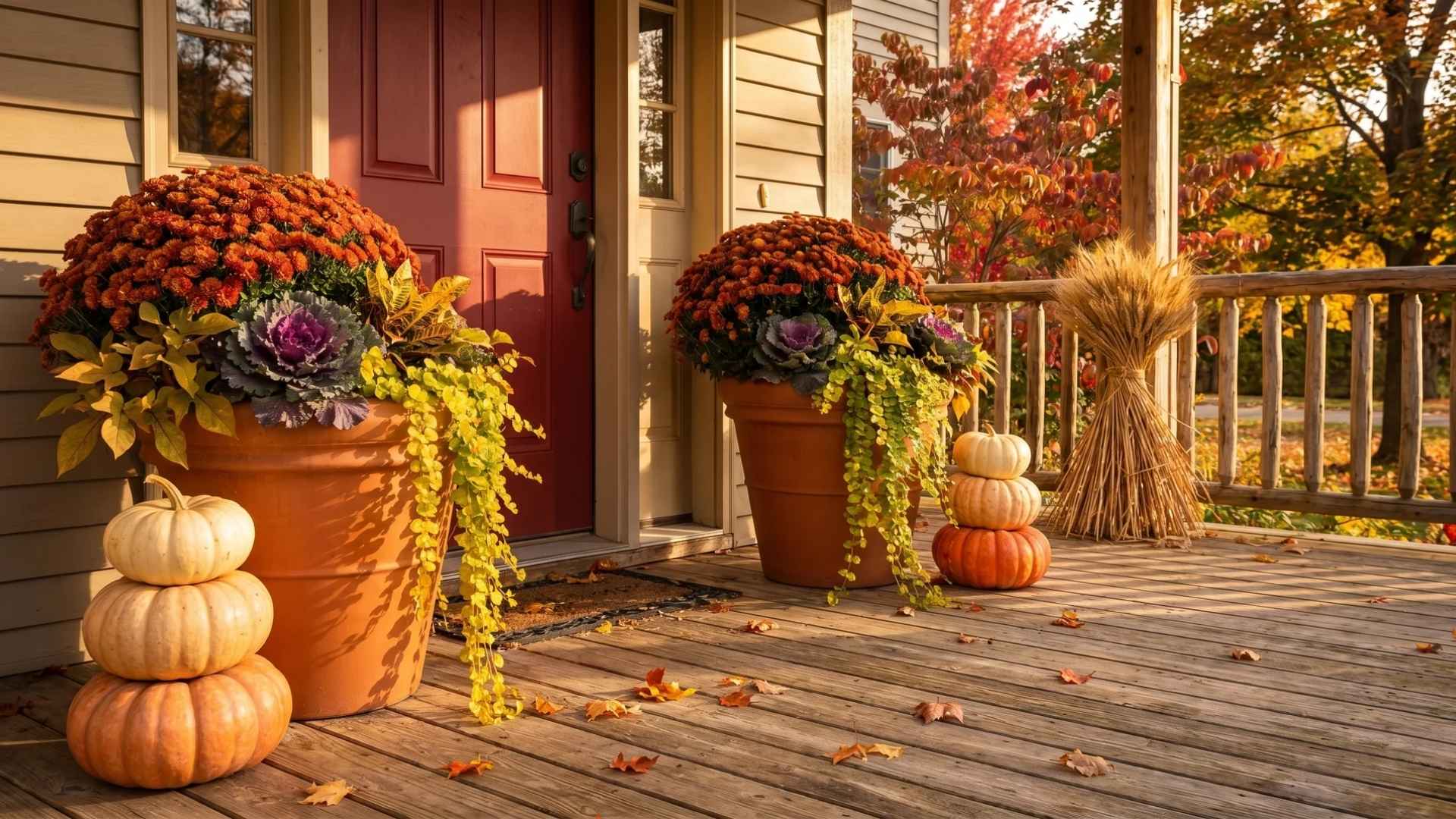
Transform Your Porch With 19 Fall Planter Ideas

When the air turns crisp and the first leaves drop, the front porch becomes the most telling corner of your home.
A well-designed fall planter does more than signal the season. It sets the entire mood of your entryway, frames your front door beautifully, and gives neighbors something to pause over genuinely.
After years of designing outdoor spaces, one thing I know for certain is that most people stop at mums and pumpkins, not because those are the best options, but because nobody shows them what else is possible.
This guide changes that. Here are some fall planter ideas for your front porch that go well beyond the ordinary.
The Thriller-Filler-Spiller Formula Every Fall Planter Needs
Every stunning fall planter follows the same structural logic.
A thriller is a tall, bold centerpiece plant that draws the eye upward. A filler is a mid-height plant that adds fullness and body. A spiller is a trailing plant that cascades over the container edge, softening the whole look.
According to garden designer Laura Janney of The Inspired Garden, using this three-part approach is what separates planters that look intentional from those that look thrown together.
Keep this formula in mind as you work through the ideas below.
Fall Planter Ideas for Your Front Porch
From classic mum arrangements to creative DIY builds, these ideas cover every porch style, budget, and sun condition so you can find the right fit without guesswork.
1. Layered Mum Planter

Rather than dropping one large mum into a pot and calling it done, buy two or three small ones at different bloom stages.
This extends your color window by two to three weeks. Use coleus as a filler for rich autumn tones, and add a trailing sweet potato vine as your spiller.
Total cost runs about $15 to $20, and the result looks far more intentional than a single-variety pot.
2. Pumpkin Topiary in Urns

Stacking pumpkins of descending size inside a tall urn creates a stately, symmetrical look that works especially well for covered or north-facing porches where flowers struggle.
The key trick is placing an inverted nursery pot at the base of the urn first, so the bottom pumpkin sits elevated and away from moisture.
This prevents early rot and adds instant height without a single plant.
3. Ornamental Kale and Cabbage in Bushel Baskets
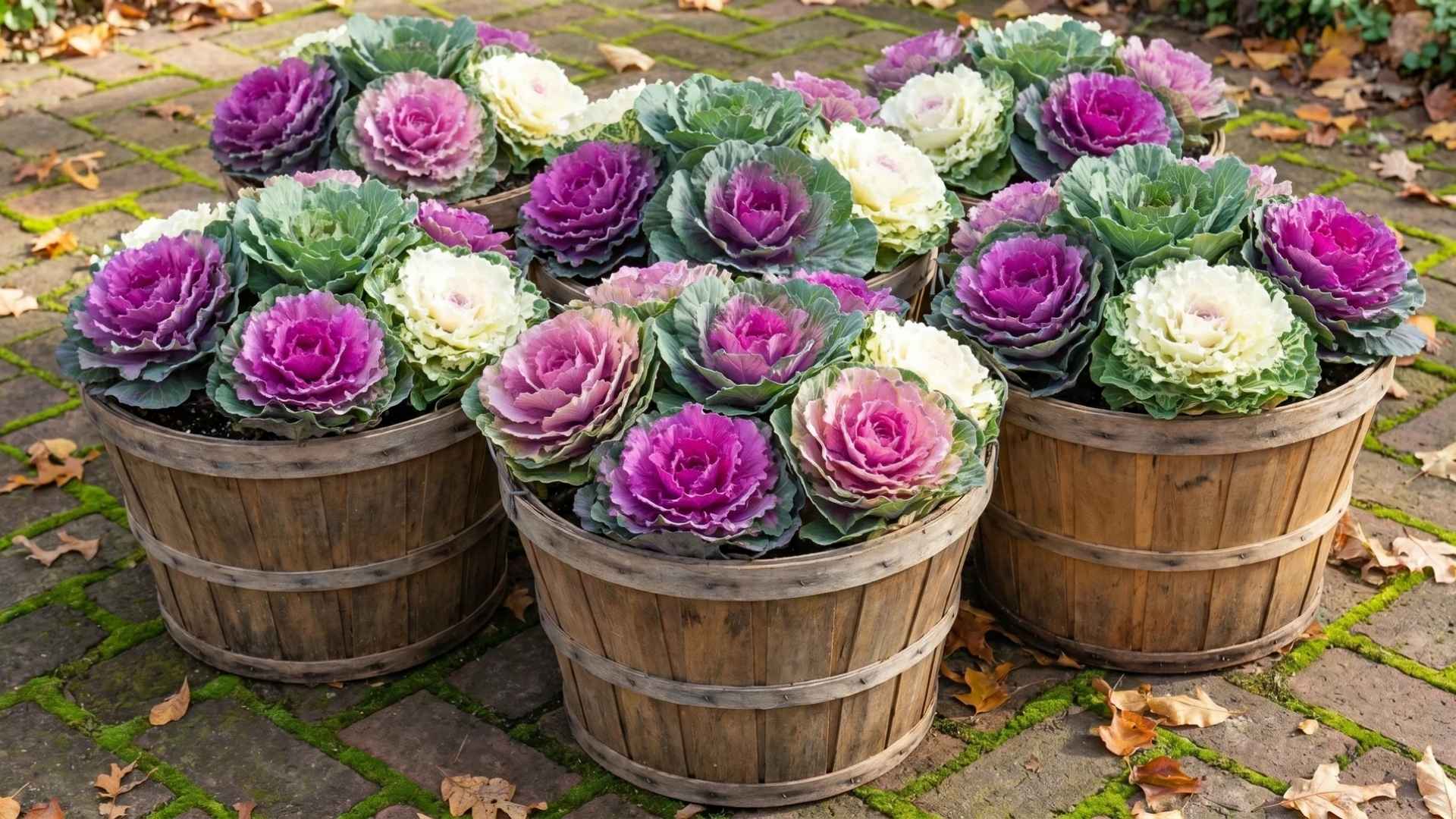
If orange isn’t your color, ornamental kale is your answer. It looks like a sculptural flower, thrives in cool temperatures, and holds its color well into November across USDA zones 7-10.
Pair deep purple kale with white pansies and soft pink heather in a wooden bushel basket for a farmhouse look that reads as fall without a single pumpkin in sight.
4. Galvanized Bucket Planter
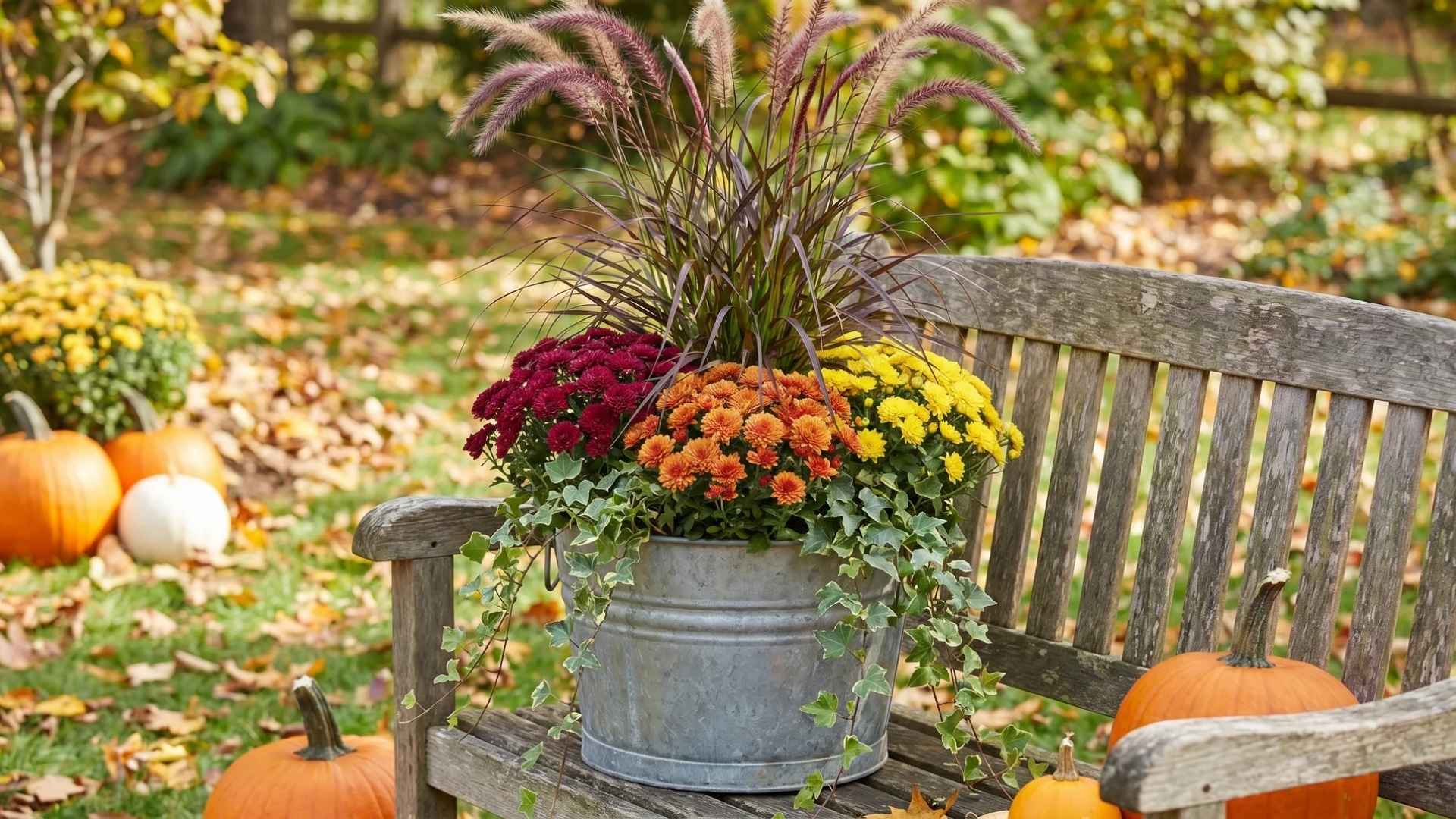
Drill three to four drainage holes into the base of a galvanized metal bucket before planting. Use purple fountain grass as your thriller, compact mums as your filler, and trailing ivy as your spiller.
Buy the fountain grass in spring when it is small and inexpensive, grow it through summer, then transfer it directly into your fall planter. You essentially get a free thriller every year.
5. Rudbeckia as a Mum Alternative

Black-eyed Susans are underused in fall container gardens, and that is a genuine shame.
They bloom in rich gold, tolerate part shade, and keep flowering well into November. Pair them with creeping jenny and ornamental pepper for a planter that stays vibrant long after neighboring mum pots have faded.
Look for them at garden centers in early September before the stock runs out.
6. Faux and Real Hybrid Planter

For those who travel or want a lower-maintenance setup, combining live thriller plants with faux berries, thistle stems, and artificial pumpkins works beautifully.
Water only the living components, doing so from the base of the pot rather than overhead to keep faux elements looking fresh.
The trick to making this look real rather than cheap is choosing faux pieces in muted, natural tones rather than overly bright finishes.
7. Succulent Fall Planter
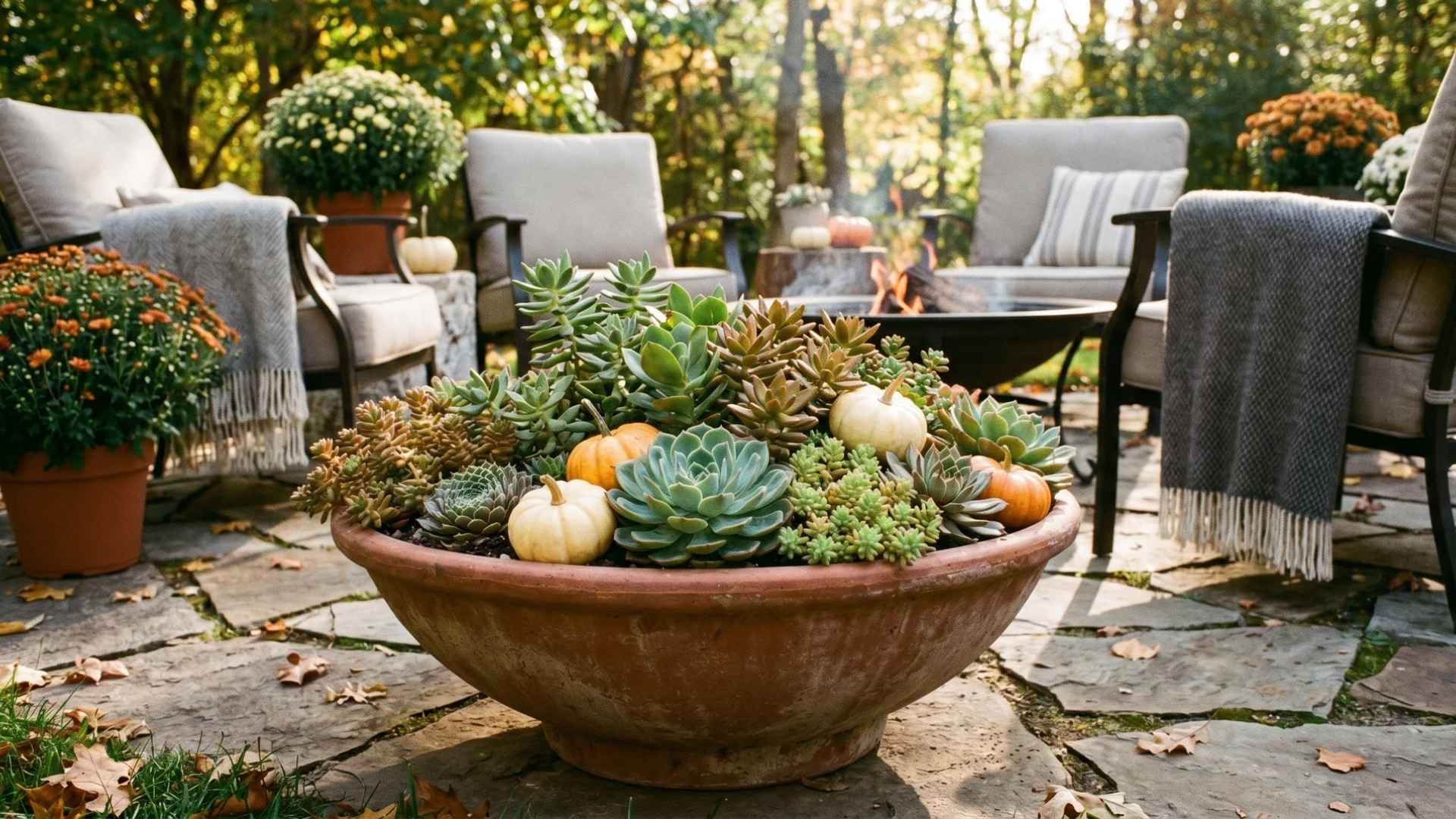
Cover the entire soil surface of a wide, shallow pot with drought-tolerant succulents in green and bronze tones, then nestle cream and orange mini pumpkins among them.
This works best in zones 8 and above, where frost is light. For colder zones, bring succulents indoors at the first frost warning and replace them with decorative stones to maintain the look.
8. Transition Your Summer Planter
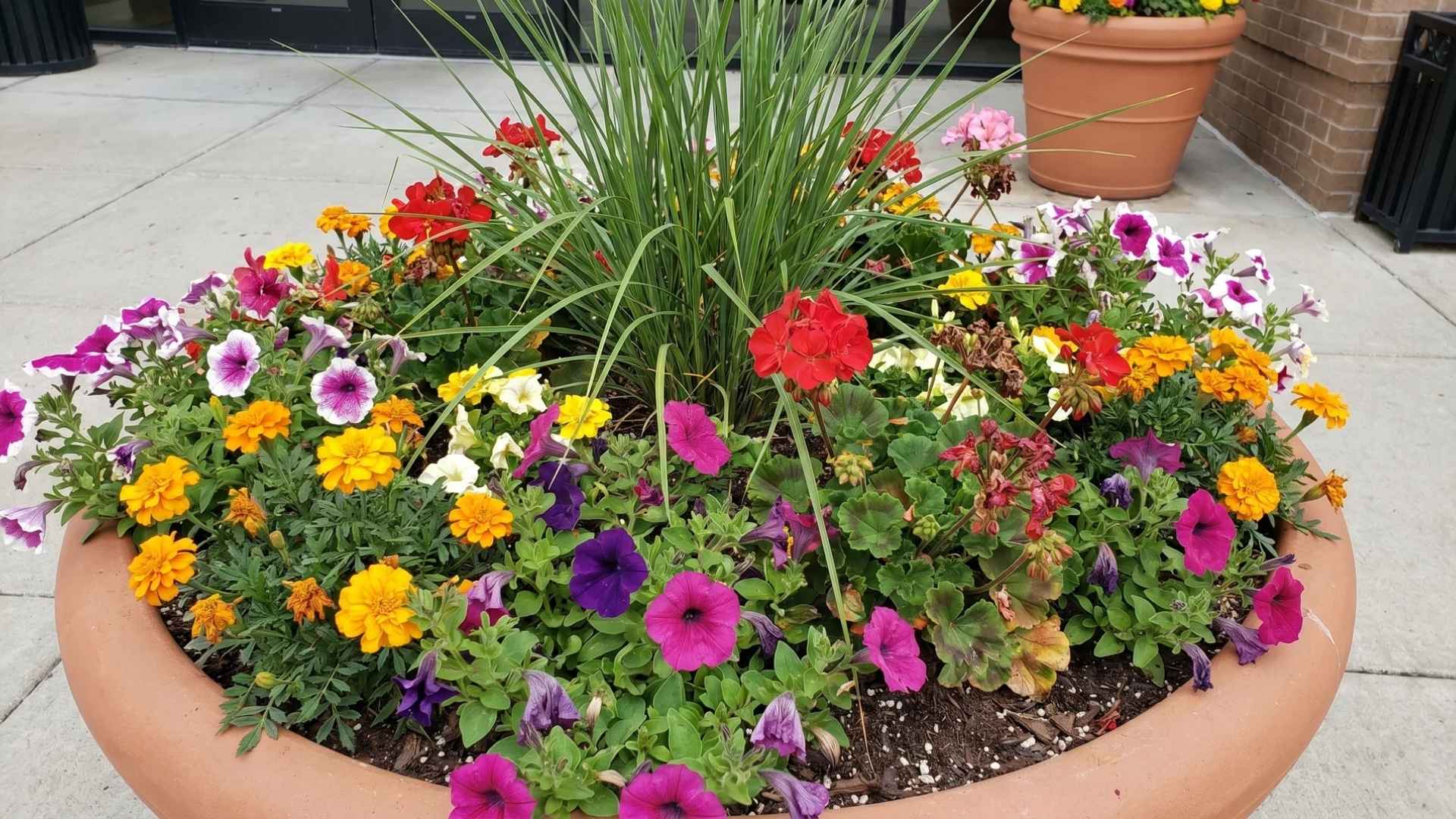
The most budget-conscious fall planter idea is one you already own. Remove tired summer annuals, loosen the top few inches of soil, and refresh with a fresh mix, and keep any healthy grasses or upright thrillers in place.
Add two small mums and a pumpkin on a riser, and you have a complete fall planter for under $15.
Starting fresh costs $40 to $60. Transitioning costs $10 to $20.
9. Non-Orange Palette Planter
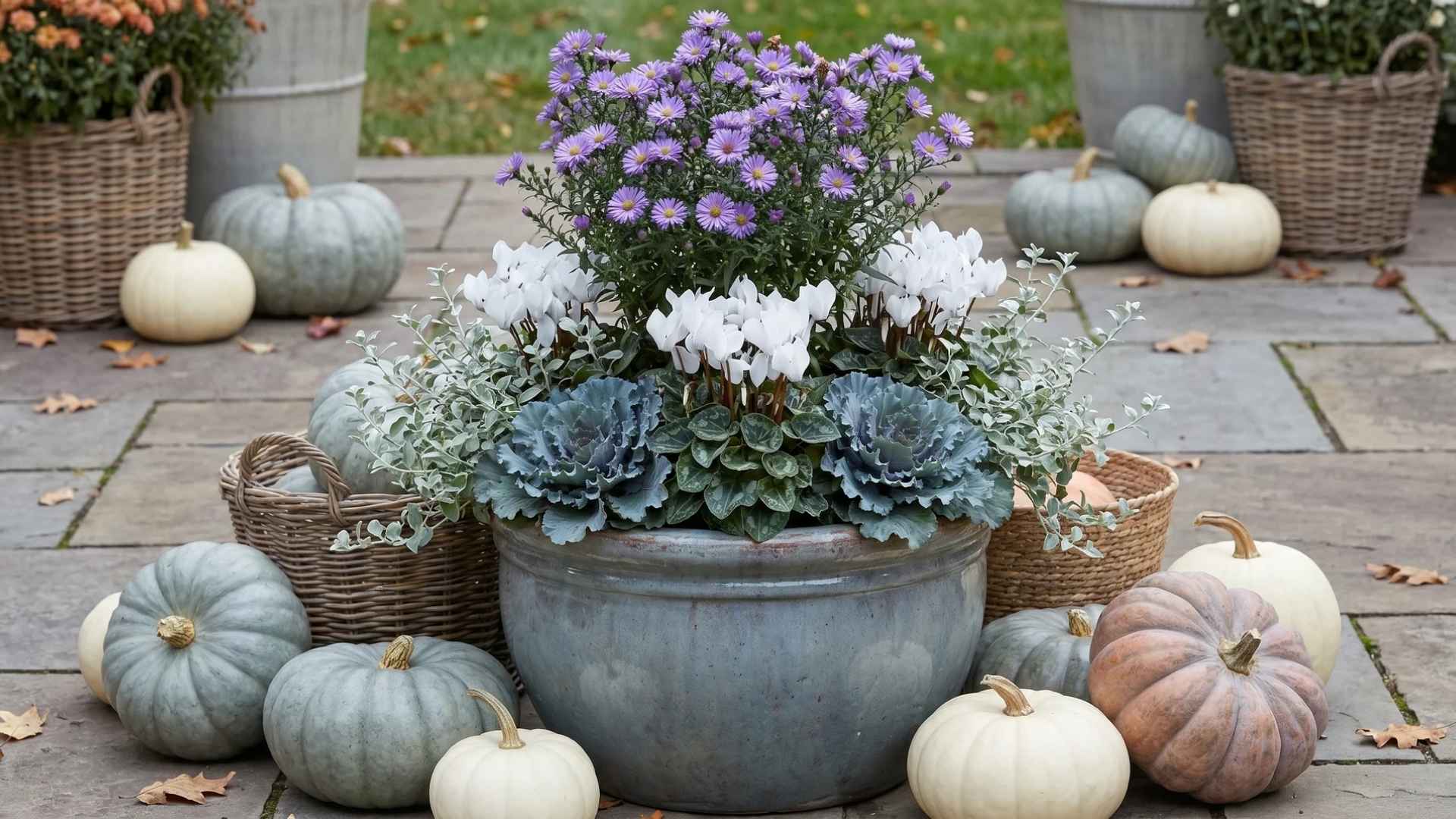
Build a sophisticated fall display in purple, white, and blue. Use purple asters as your thriller, white cyclamen and licorice plant as fillers, and blue-toned ornamental kale at the base.
Surround with blue, white, and muted orange pumpkins, and place everything in a grey-blue container.
Echo one color from the pumpkins in your pot choice for a cohesive, intentional look that photographs beautifully.
10. Lantern Inside the Planter

Place a battery-operated lantern as a focal point inside your arrangement, then build around it with wheat stems and mums. This adds evening curb appeal that most fall planters completely lack.
If you use real wheat outdoors, spray it with clear acrylic sealer before placing it, especially in humid climates, to prevent mold from forming within the first two weeks.
11. Hollowed Pumpkin as the Planter

Choose a large heirloom pumpkin, hollow it out, line the interior with a thin plastic bag, fill with potting mix, and plant small mums or sedum directly inside.
Coat the cut edges with petroleum jelly to slow decomposition. This typically lasts two to three weeks and works as a beautiful Halloween-to-early-November piece.
The visual payoff for the effort involved is genuinely high.
12. Upcycled Container Planter

Vintage olive buckets, wooden wine crates, and old rubber boots all make exceptional fall containers.
Drill drainage holes in the base, line the base with burlap to hold soil, and plant pansies or compact mums in the pans. The initial cost is near zero if you source from estate sales or thrift stores.
Avoid unsealed wood containers if your porch is fully exposed to rain, as they deteriorate quickly.
13. Foraged Naturals Planter
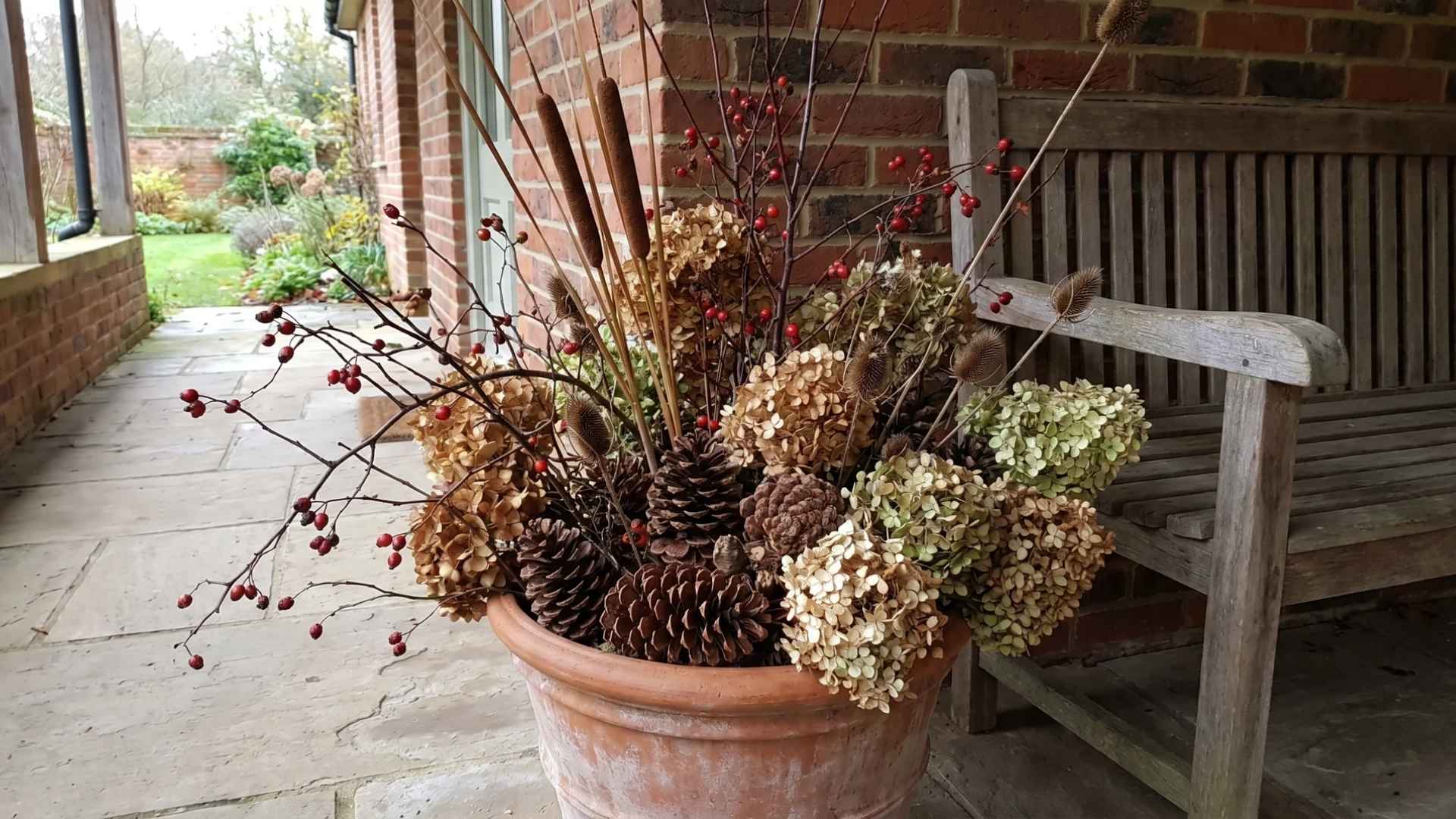
Fill a large pot with foraged materials: pinecones, dried seed heads, cattails, branches with natural berries, and clusters of dried hydrangea from your garden.
This is a zero-cost approach that produces completely one-of-a-kind results. One important note: dried hydrangeas brown quickly when repeatedly wet, so this works best on a covered porch or in a sheltered corner.
14. Shade Porch Specialist Planter

If your porch faces north or sits under deep cover, most fall flowers will underperform. The solution is coleus, which thrives in shade and comes in burgundy, copper, and lime tones that read as authentically autumnal.
Add ferns for texture, a trailing caladium as your spiller, and a few faux pumpkins for seasonal color.
This combination holds up from September through the first hard frost.
15. Cornstalk Column with Planter Base

Bundle three to five cornstalks, available at farm stands for around five dollars, and secure them to a porch post or fence column using natural twine.
Surround the base with a planter holding mums and gourds. This creates vertical drama, enhancing the visual appeal of any porch entry.
It is particularly effective for farmhouse or cottage-style homes with porch posts already in place.
16. Indian Corn-Wrapped Planter DIY

Secure dried Indian corn cobs vertically around a basic plastic nursery pot using thick rubber bands. Cover the bands with a wrapped length of raffia or burlap ribbon tied at the top. Place a potted mum inside.
The total materials cost is roughly eight dollars, and the result looks like something from a high-end seasonal boutique.
This is one of those projects that takes twenty minutes and draws comments all season.
17. Grapevine Topiary in a Planter
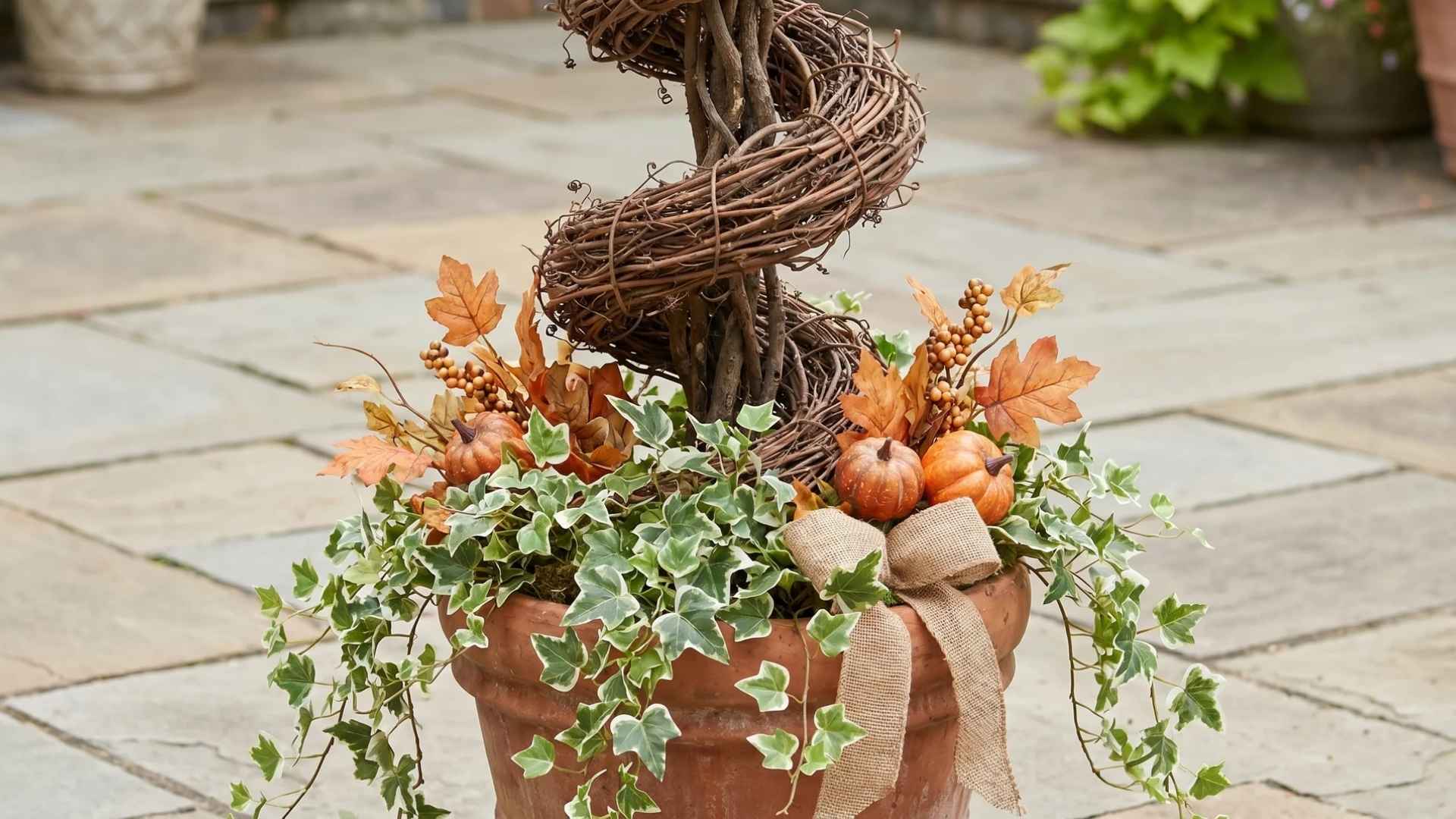
A pre-formed grapevine spiral or tree, placed in the center of a pot and surrounded by trailing ivy and faux fall stems at the base, creates an elegant, reusable anchor piece.
Craft stores and farm stands stock them in August and September.
After the season, store the grapevine piece indoors in a dry location and reuse it for at least three to four years, making the per-season cost minimal.
18. Stair-Step Planter Display
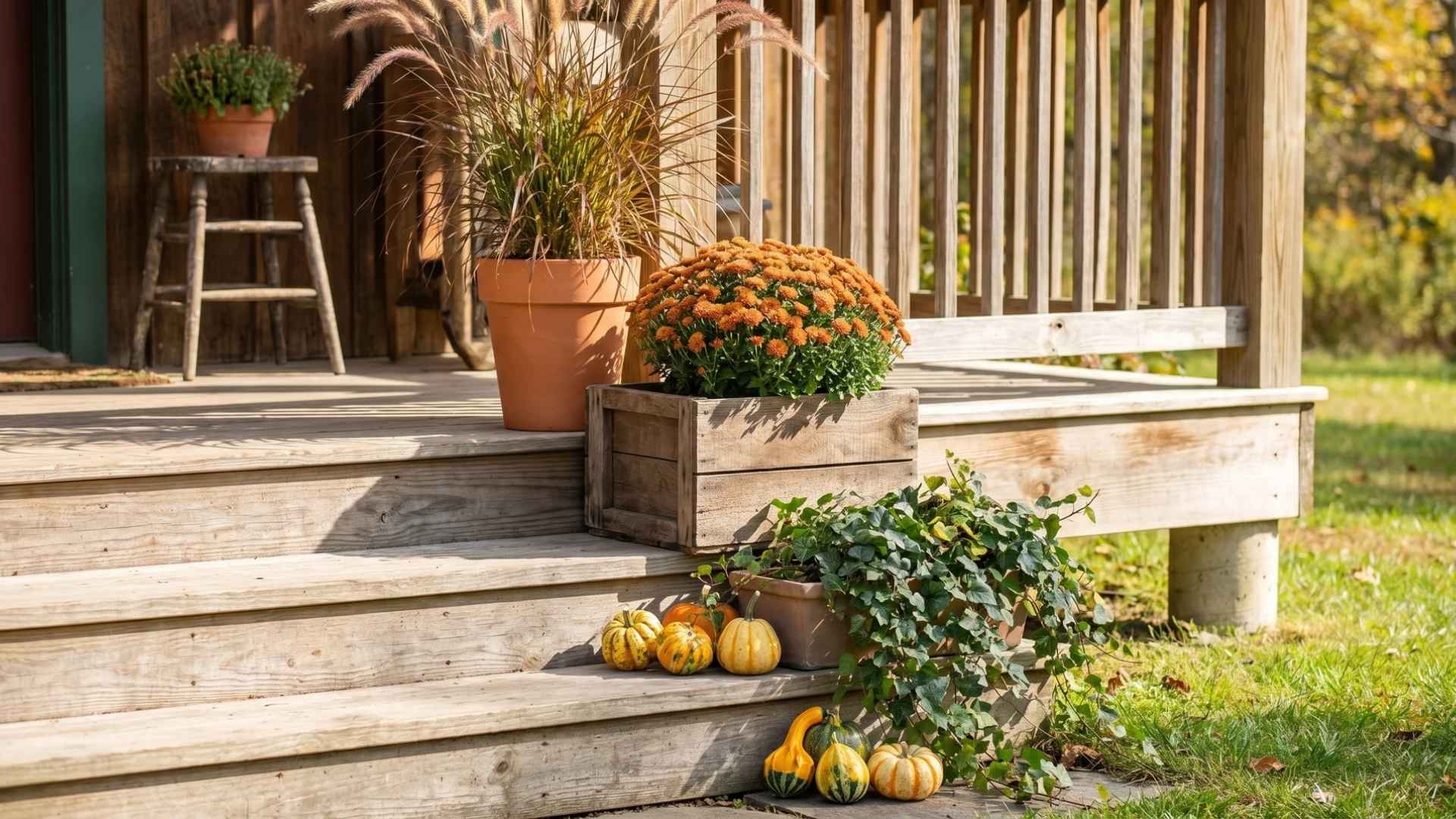
Use your porch steps as natural tiers: a tall ornamental grass planter at the top, a mid-size mum pot on the middle step, and small gourds with a trailing plant at the base.
For homes with a flat porch and no steps, use a vintage stool or wooden crate as a riser to create the same layered height effect.
This approach works even on the narrowest stoops and makes the whole entry feel curated.
19. Frost-Hardy Evergreen Planter
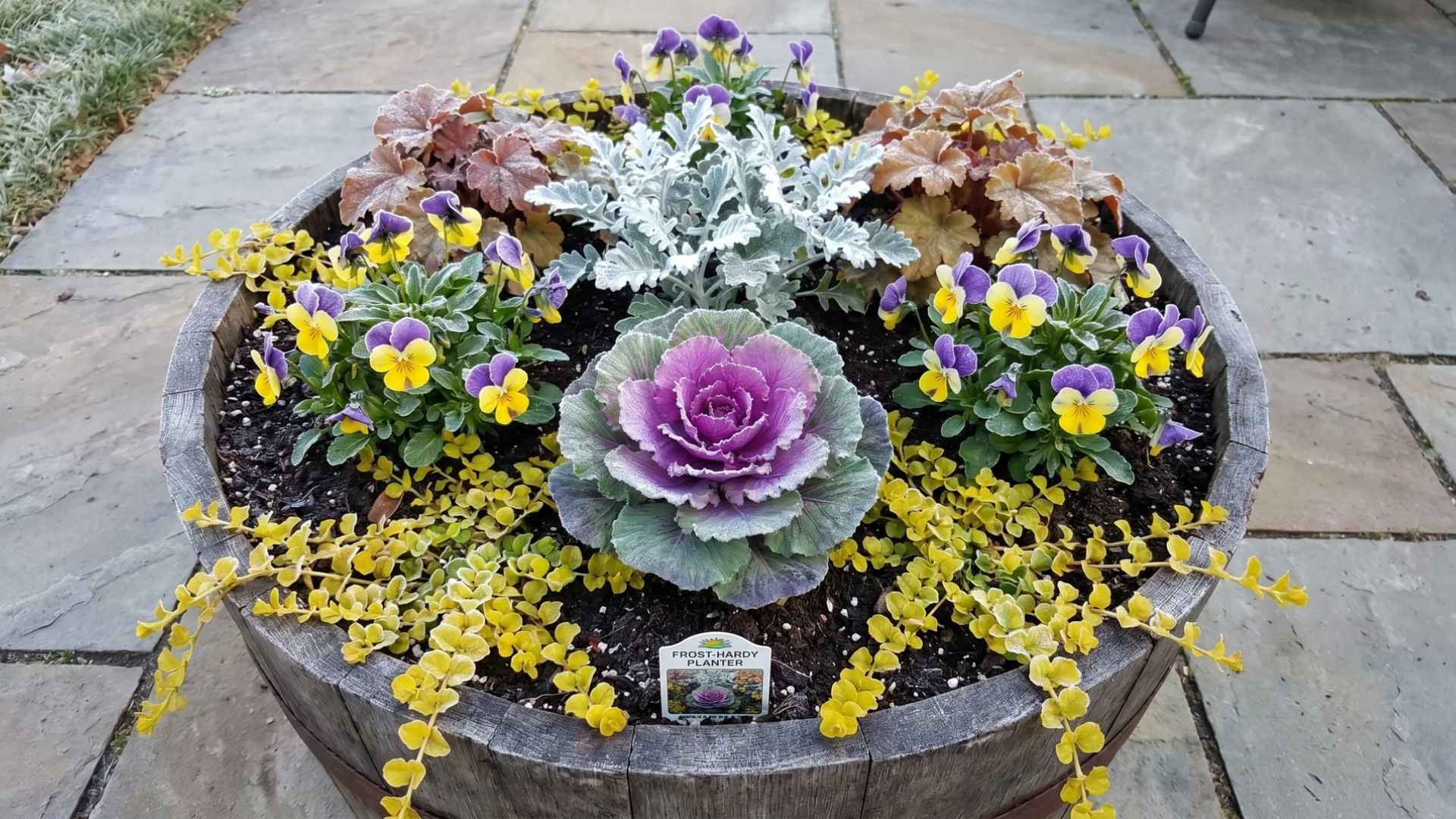
Build a planter designed to outlast your first frost. Creeping jenny, ornamental kale, pansies, dusty miller, and heuchera all tolerate light freezes.
When frost is forecast, pull the creeping jenny stems over the soil surface around neighboring plants to act as a natural mulch layer.
This insulates the roots and can extend the life of your planter by 2 to 3 weeks beyond what a mum-only pot would survive.
Plant Reference Quick Cheat Sheet
Not sure which plant goes where? Use this at-a-glance table to match the right variety to your porch conditions and budget before you head to the nursery.
| Plant | Sun Needs | Frost Tolerance | Role | Approx. Cost |
|---|---|---|---|---|
| Chrysanthemum (Mum) | Full sun | Light frost | Filler/Thriller | $4-8 |
| Rudbeckia | Part sun/shade | Moderate frost | Thriller | $5-9 |
| Ornamental Kale | Full/Part sun | Hard frost | Thriller/Filler | $4-7 |
| Sweet Potato Vine | Full/Part sun | Frost sensitive | Spiller | $3-5 |
| Creeping Jenny | Part/Full shade | Hard frost | Spiller | $3-5 |
| Coleus | Shade/Part shade | Frost sensitive | Filler | $3-6 |
| Pansies | Full/Part sun | Hard frost | Filler | $3-5 |
| Asters | Full sun | Moderate frost | Thriller | $5-8 |
| Fountain Grass | Full sun | Light frost | Thriller | $8-14 |
Conclusion
The beauty of fall planter ideas is that there is genuinely no wrong approach, only opportunities you have not yet tried.
Whether you build a dramatic cornstalk column, hollow out a heirloom pumpkin, or transition what you already have on the porch, the goal is the same: an entry that feels warm, considered, and inviting from the street.
Start with one idea from this list, trust the thriller-filler-spiller formula, and let the season guide the rest.
Sustainable choices, such as reusing summer plants and foraging for natural materials, make the process even more rewarding.
Your front porch has far more potential than a single pot of orange mums can ever show.
Frequently Asked Questions
What Can I Plant in Pots in October?
For a splash of seasonal color, plant winter bedding plants like pansies, violas, cyclamen, and primroses.
Which Plants Last the Longest in The Fall?
Annual salvias are among the longest-lasting annuals in our lineup, flowering from planting through frost in large containers and landscapes.
What Is the Best Plant for Autumn Containers?
Sedums are versatile, hardy plants that come in a range of sizes and colors, making them ideal for autumn containers