What Does a Dead Lavender Plant Look Like? Signs to Check

You walk out to your garden in spring. Your lavender looks gray, brittle, and completely still. It’s easy to assume it’s finished.
But a gray, bare lavender plant is not always dead.
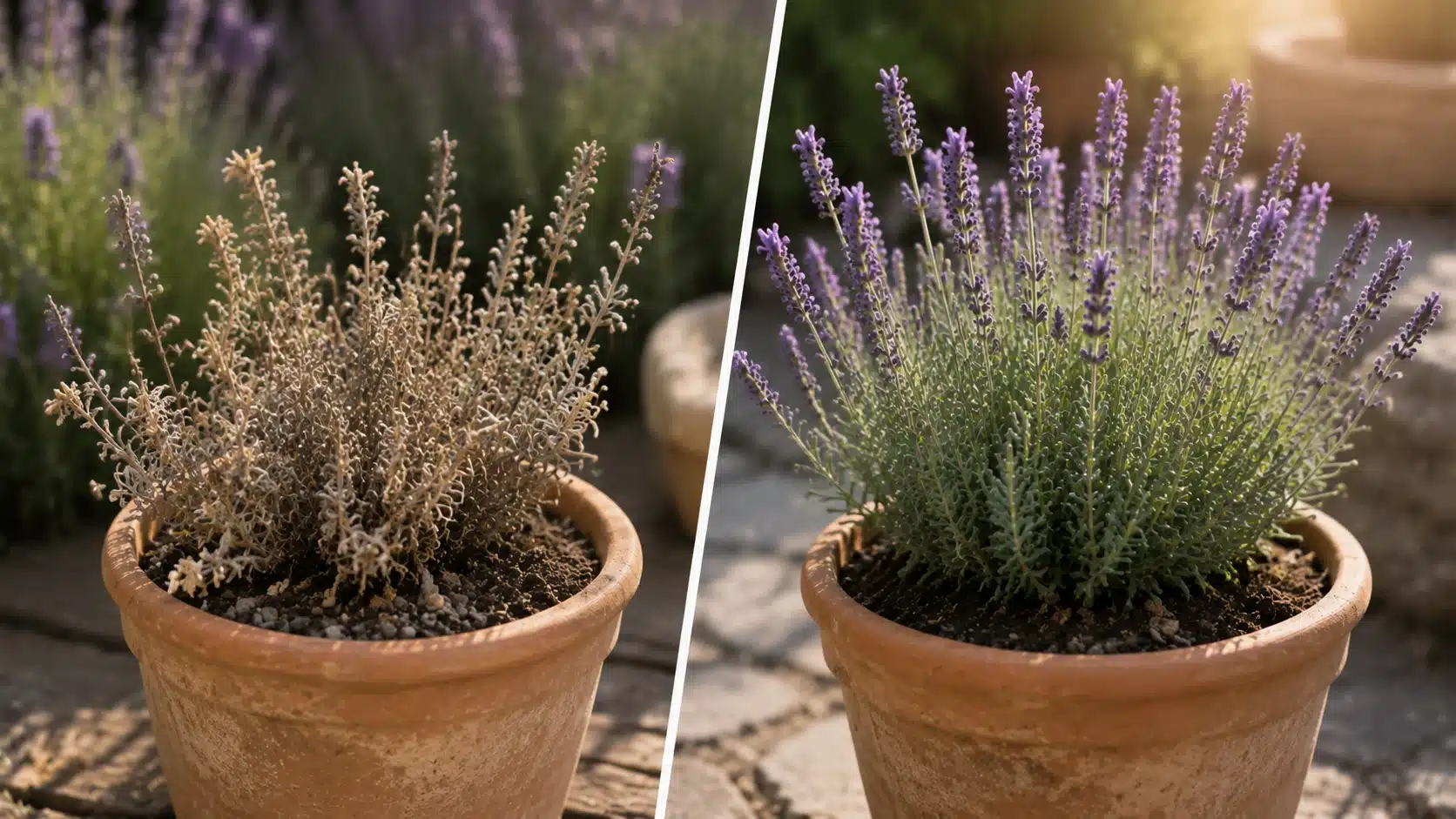
A dead lavender plant has brittle brown stems and no green tissue under the bark. The roots are either dried out or rotten. A dormant plant can look just as bad but still recover once the weather warms up.
This post shows you the exact signs of a dead lavender plant and the tests to check for life. It also covers when it makes sense to pull it out.
Why Does Lavender Look Dead When It Isn’t?
Lavender behaves differently from most garden plants. It holds onto some foliage through winter but still looks rough by the time spring arrives. Cold, wind, and frost turn the leaves gray and sparse, even when the roots below are completely fine.
Lavender is a semi-evergreen plant. It keeps some leaves through the colder months but may look damaged or bare by late winter.
Different varieties respond to cold differently.
English lavender (Lavandula angustifolia) is more cold-tolerant. It can survive winters in USDA hardiness zones 5 through 8. French and Spanish lavender are more frost-sensitive. These varieties often look far worse after a cold spell, even when parts of the plant are still alive.
Like other Mediterranean flowers, lavender is built for dry, warm conditions and goes dormant under stress rather than dying outright.
Lavender is also slow to wake up. It can take several weeks after temperatures warm up before new shoots appear. Judging a lavender plant as dead too early is one of the most common garden mistakes.
What Does a Dead Lavender Plant Look Like?
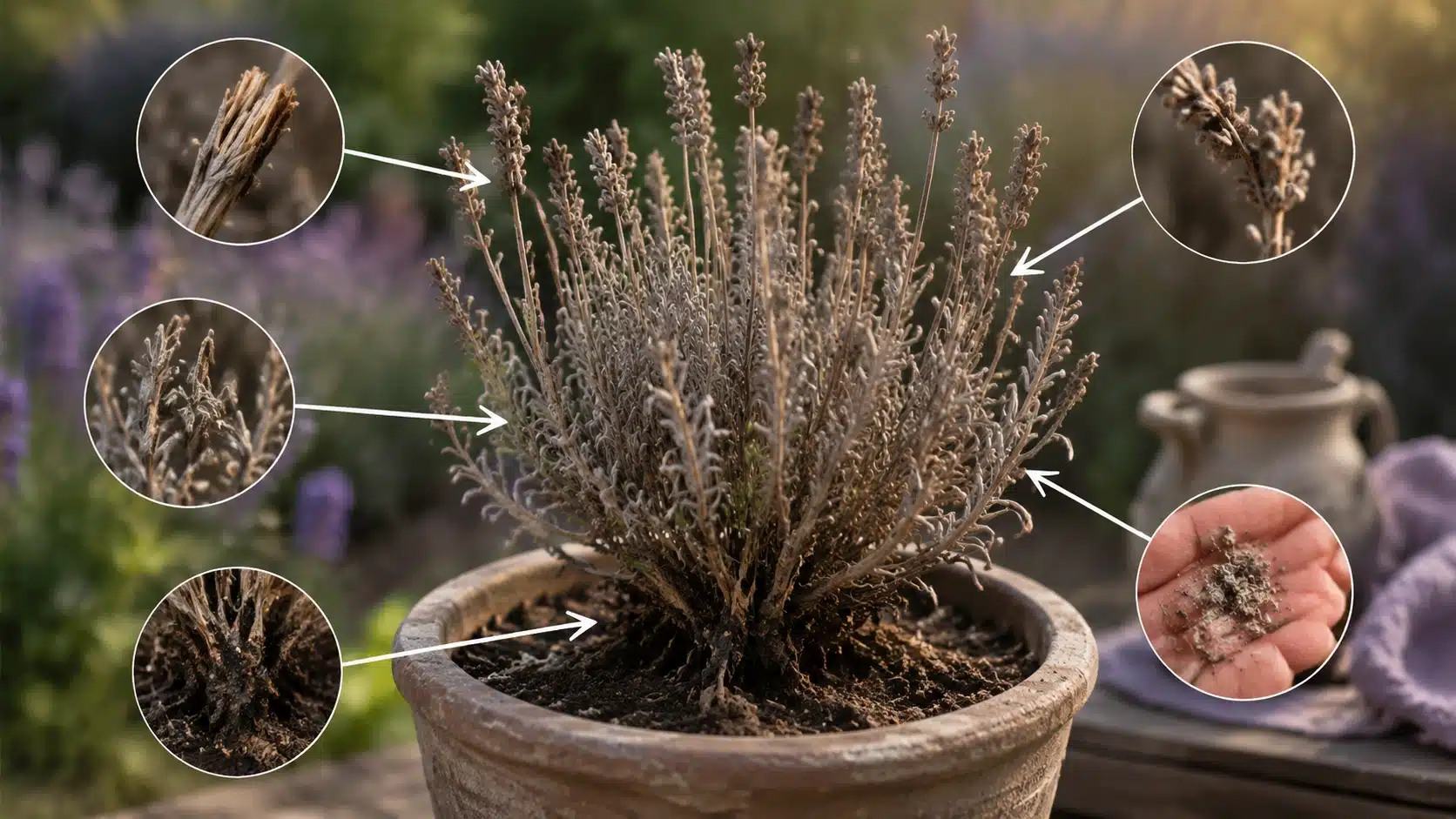
Dead stems break the moment you bend them. There is no give at all, just a dry, hollow snap.
A living woody stem still has a small amount of flex before it breaks. It also feels slightly heavier than a dead stem of the same size. Test a few stems from different spots around the plant, not just one.
1. No New Growth During the Growing Season
A living lavender plant produces fresh shoots somewhere on the stems once temperatures warm up. If spring arrives with no new leaves anywhere on the plant, that is a warning sign.
Lavender breaks dormancy more slowly than most perennials. Don’t judge it in the first few weeks of spring.
2. Dry, Crumbling Leaves
Dead lavender leaves turn brown or gray and crumble with the lightest touch. They fall off with almost no pressure and lose their color completely.
A living plant may have some dry leaves on its inner or older stems. The difference is that living lavender still shows green growth somewhere, often near the stem tips.
3. A Black or Rotten Crown
The crown is where the stems meet the soil. A damaged crown may appear black, soft, or wet, and often has an unpleasant odor.
This usually points to root rot caused by excess moisture. Once the crown is severely damaged, recovery becomes unlikely. New growth depends on the crown being intact.
4. No Scent and No New Buds
Crush a leaf between your fingers. A living lavender plant releases its familiar scent almost immediately, even from leaves that look dry or dull. No scent at all, with no new buds anywhere on the plant, is a strong sign it may be gone.
Is Your Lavender Dead or Just Dormant?
Dormant lavender and dead lavender can look almost identical in late winter and early spring. This is where most removal mistakes happen.
The table below shows the key differences to check before making a final decision.
| Feature | Dormant Lavender | Dead Lavender |
|---|---|---|
| Stem condition | Firm with some flexibility | Dry and brittle |
| Under the bark |
Green tissue visible when scratched |
Brown and dry all the way through |
| Leaves | Gray-green or sparse | Brown, crumbling, falling apart |
| Roots | Firm and pale | Soft, dark, or rotten |
| New growth | Appears later in the season | No new shoots at any point |
|
Recovery chance |
Yes, with time and correct care |
no |
If your plant looks rough right after winter, hold off. Wait until temperatures warm up consistently before making a final call.
How to Check If a Lavender Plant Is Still Alive
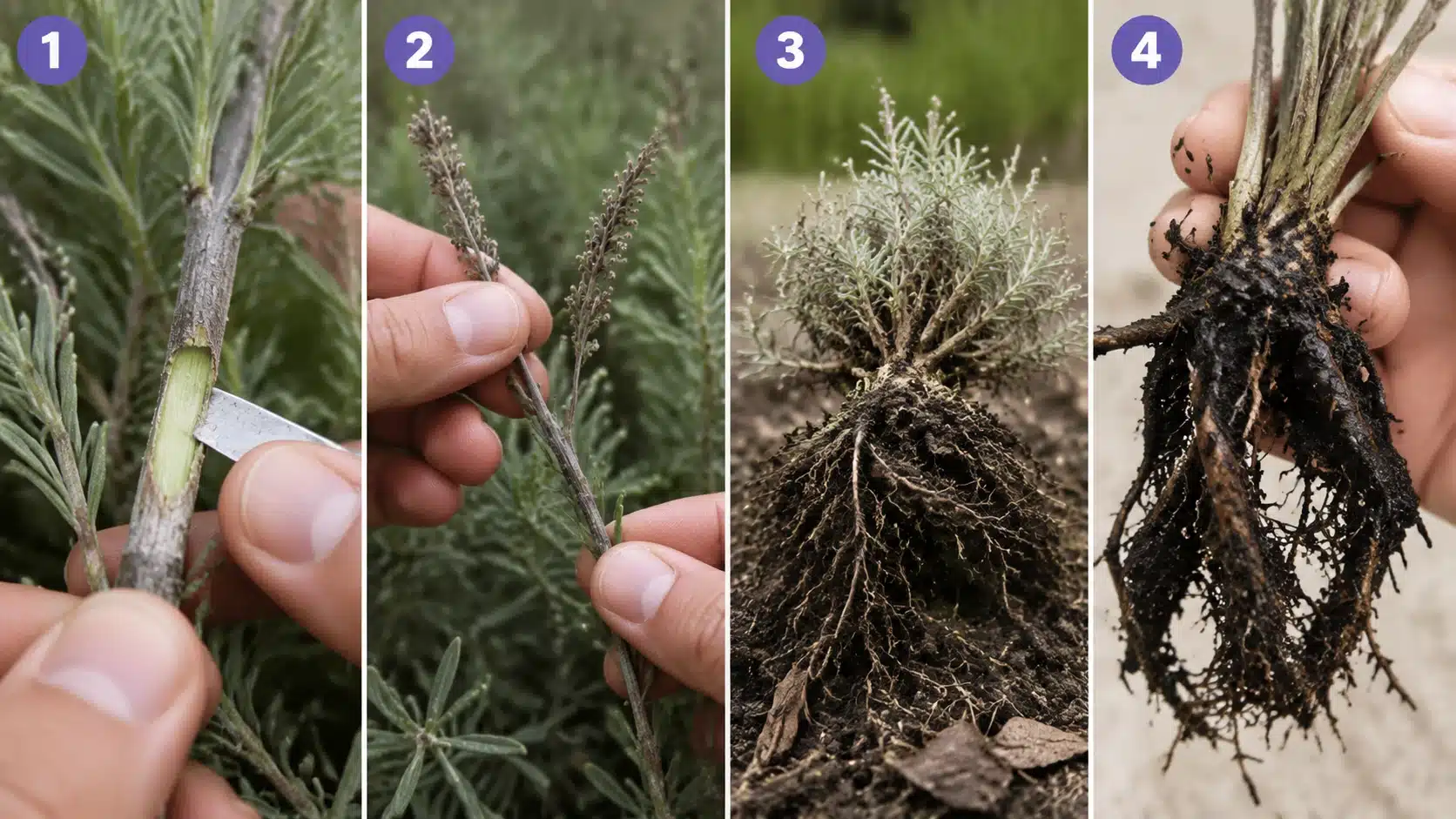
Don’t go by appearance alone. These four tests take only a few minutes. They give you a far clearer answer than the plant’s appearance alone.
1. The Scratch Test
The scratch test is the most reliable way to check lavender for signs of life.
Pick a lower stem near the base. Use a fingernail or a small knife to scratch away a small section of the outer bark. Look at the tissue underneath.
- Green underneath = the stem is alive.
- Brown and dry underneath = that section is dead.
Test several different stems. One dead branch does not mean the entire plant is gone.
2. Test Stem Flexibility
Gently bend a few smaller branches. A living stem has low resistance and bends slightly before breaking. A dead stem snaps immediately with almost no pressure. Work through several branches from different spots near the base.
3. Check the Roots
Dig gently around the base and inspect the roots. Healthy roots are firm, pale, and smell like clean earth. Dead roots are brown or black, feel soft and mushy, and often carry an unpleasant smell. Root problems are most common when lavender sits in heavy soil or receives too much water.
4. Look for New Shoots at the Base
Small green shoots growing from the base of the plant are one of the strongest signs of a living lavender. Even when the upper branches look completely damaged, fresh growth near the soil line means the plant can recover. Check carefully. New shoots can be very small and easy to miss.
What Is Deadwood on a Lavender Plant?
Deadwood refers to one section of the plant that has died while the rest is still alive. It is common in older lavender plants and does not mean the whole plant has failed.
Brittle, snapping stems in one area, while other parts stay flexible and green, is most likely deadwood. Remove the dead section with clean pruning shears. Test stems from several spots before deciding the plant is fully gone. One dead zone is not the whole picture.
When Is It Too Late to Save a Lavender Plant?
In most US growing regions, a living lavender plant shows new green growth by mid to late May. If no green appears by then, and your other garden perennials are fully back, recovery is unlikely.
Lavender breaks dormancy later than many other perennials, so the timing window matters. In cooler climates or higher hardiness zones, give it a few extra weeks before making a final call.
Don’t make a final decision after one check. Come back every few days to look for new shoots at the base before pulling the plant out.
What Are the Signs Your Lavender Is Dying but Not Dead Yet?
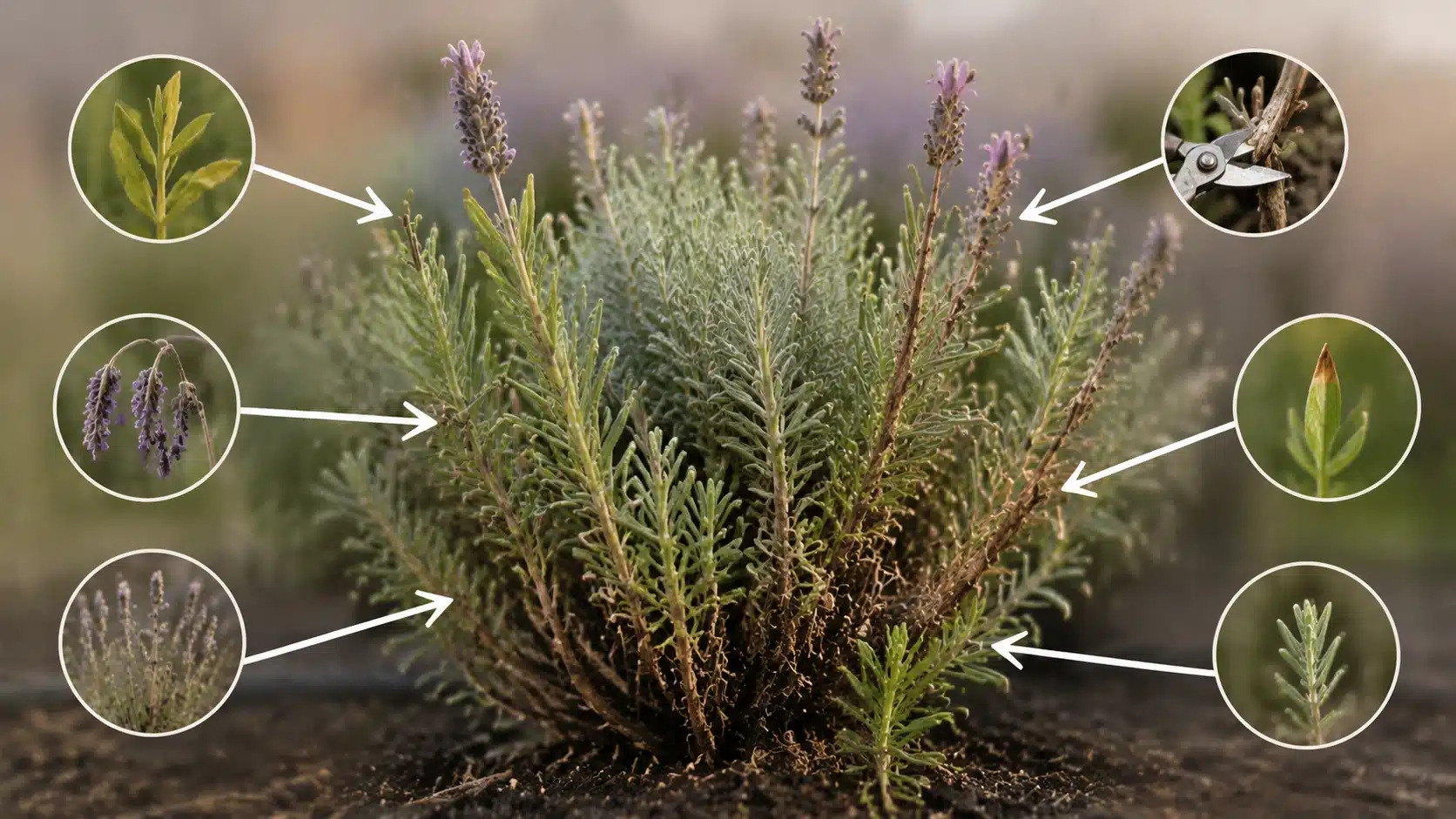
Not every struggling lavender is beyond saving. These warning signs point to a care issue, not a dead plant. Catching them early gives you a real chance to act.
- Yellowing leaves (often caused by too much water or poor drainage)
- Drooping stems
- Fewer flowers than in past seasons
- Excessive woody growth with little green growth remaining
- Brown tips on leaves only, not the whole leaf
- Slower growth compared to previous years
These symptoms are often fixable with changes to watering habits, drainage, or sun exposure.
What Causes Lavender Plants to Die?
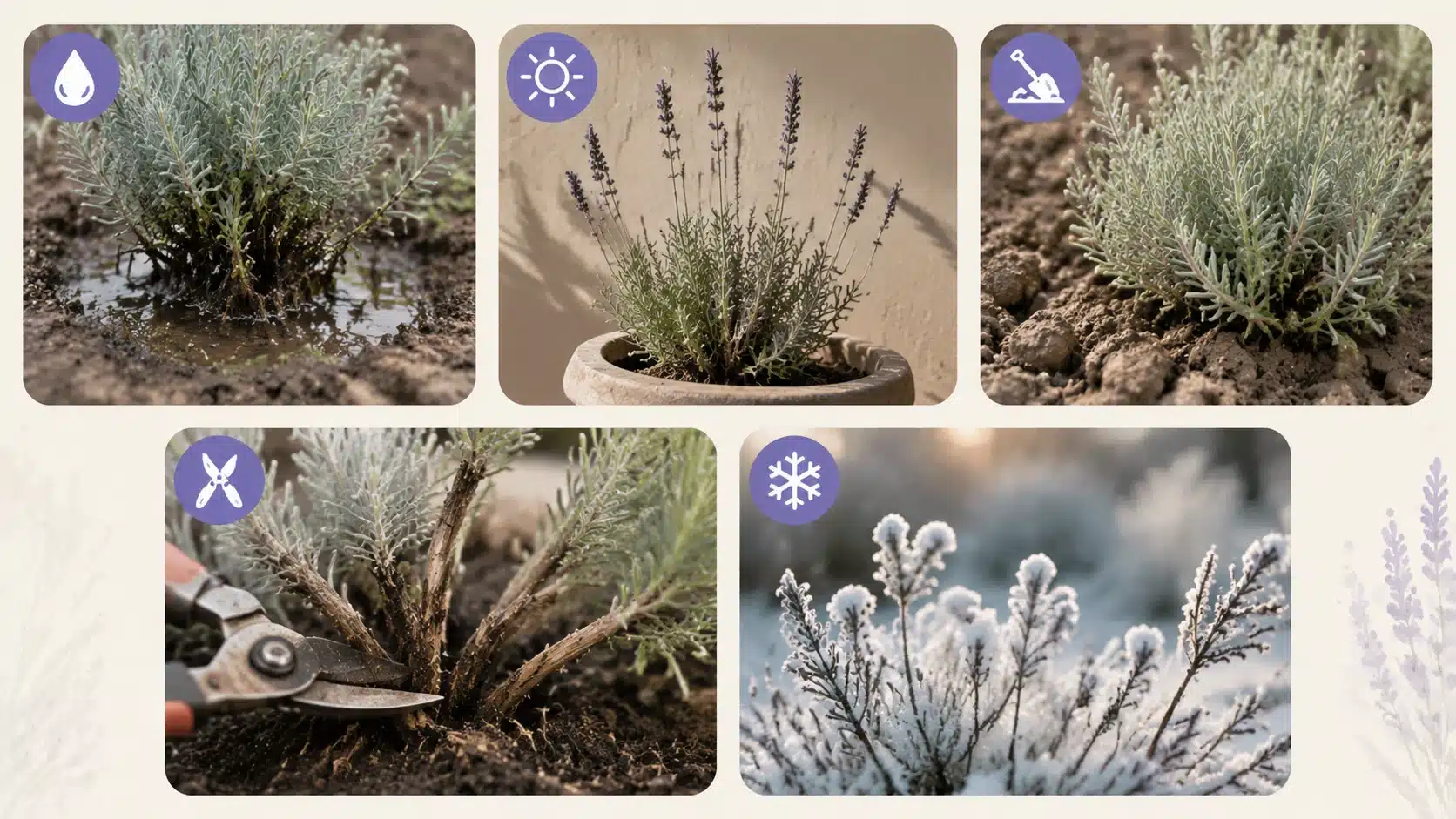
Knowing the cause helps you prevent it from happening again.
- Overwatering and Poor Drainage: Lavender prefers dry, well-draining soil. Root and crown rot, caused by soil-borne fungi that thrive in overly wet conditions, is one of the most common causes of lavender death.
- Too Little Sunlight: Lavender needs several hours of direct sun every day. Without enough light, growth turns weak and leggy.
- Heavy or Poor Soil: Clay-heavy soil holds onto moisture longer than lavender can tolerate. Lighter, sandy soil drains faster and suits the plant much better.
- Excessive Pruning Into Old Wood: Cutting too deep into the old, woody stems can stop the plant from regrowing in that area altogether, since lavender doesn’t sprout new growth from old, lignified wood.
- Severe Cold Damage: A harsh winter can make an otherwise healthy plant look completely dead by spring. Give it time before making a final call.
Can a Dead Lavender Plant Come Back?
A plant that’s genuinely dead won’t regenerate, but one that’s dormant or stressed often will.
This is the most important thing to check before you make a final decision, since pulling out a plant too early is one of the most common mistakes gardeners make.
Before you write it off, run the scratch test and check the roots.
If either shows signs of life, give the plant time through the next growing season before deciding to remove it.
How Do You Revive a Lavender Plant That Still Shows Signs of Life?
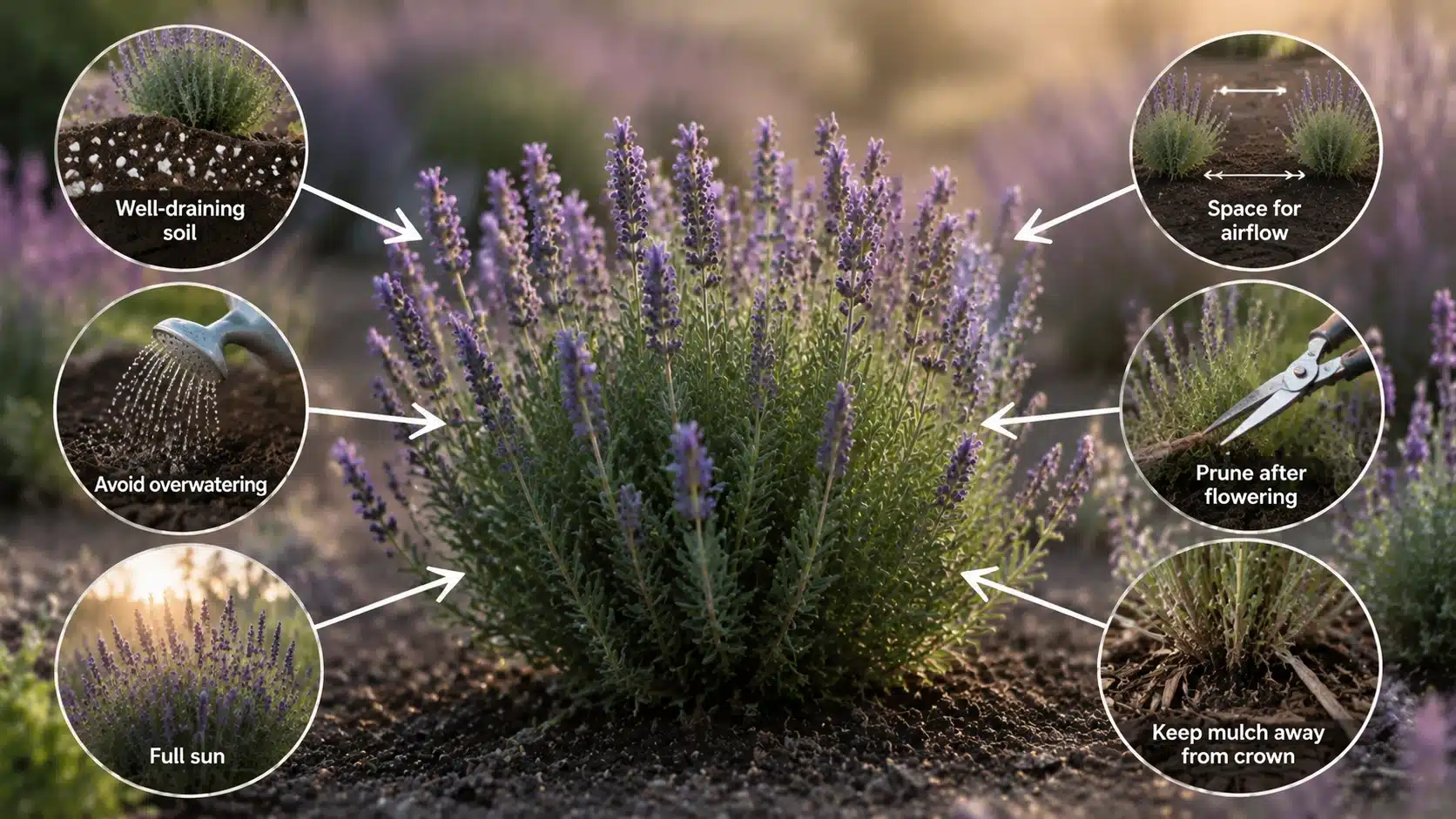
If the scratch test or root check shows any green, the plant may still recover. These steps give it the best possible chance without causing more damage.
- Cut away only the stems that are completely dry and brittle
- Leave all green stems untouched
- Reduce watering and let the soil dry out fully between sessions
- Move container plants to a pot with proper drainage holes and faster-drying soil
- Put the plant in full sun if it isn’t already there
- Avoid heavy fertilizer on a stressed plant
- As a last resort, cut the plant back to 6 to 9 inches above the base and wait for new shoots to appear
Be patient. Recovery can take several months or an entire growing season.
When Should You Replace a Dead Lavender Plant?
Replace your lavender only after you have tested it thoroughly. A plant that looks dead often isn’t. These are the signs that confirm it’s time to start fresh.
- All stems snap immediately with no flexibility
- No green tissue appears anywhere under the bark
- Roots are brown, black, soft, or mushy
- No growth appears after an entire growing season
- The crown is black and soft, with no firm tissue remaining
Before removing anything, run the scratch test on multiple stems and check the roots. If even one area shows green under the bark, give the plant a few more weeks.
Final Check
A lavender plant that looks dead is not always beyond saving. Gray leaves, dry stems, and a bare shape after winter often point to dormancy, not the end of the plant.
Before you pull it out, check the stems with a scratch test, inspect the roots, and look for new growth near the base. Those simple checks take only a few minutes and tell you far more than the plant’s appearance alone.
If every stem snaps, the roots are rotten, and no growth appears after a full growing season, it’s time to replace the plant and start fresh with better drainage and full sun from day one.
If you spot even a little green under the bark, your dead-looking lavender plant likely has more life left in it than it appears.
Have you had a lavender plant surprise you by coming back to life? Share your experience in the comments below.
Frequently Asked Questions
Can Lavender Come Back After Being Cut Right Down to The Base?
Yes, but only if green growth is visible at the base. Lavender does not regrow from bare old wood. Cut just above the lowest visible green shoot, not below it.
Does Lavender Come Back Every Year After Winter?
Yes. English lavender is a perennial and returns each year in USDA zones 5 through 8. French and Spanish lavender are less cold-hardy and may not survive harsh winters.
What Animals Does Lavender Keep Away?
Lavender’s scent repels mosquitoes, fleas, ticks, moths, mice, rats, voles, rabbits, and even deer.
What Happens If You Don’t Prune Lavender In Winter?
Skipping pruning weakens the plant over time. Cut back a third of the stems in fall, just above young shoots.