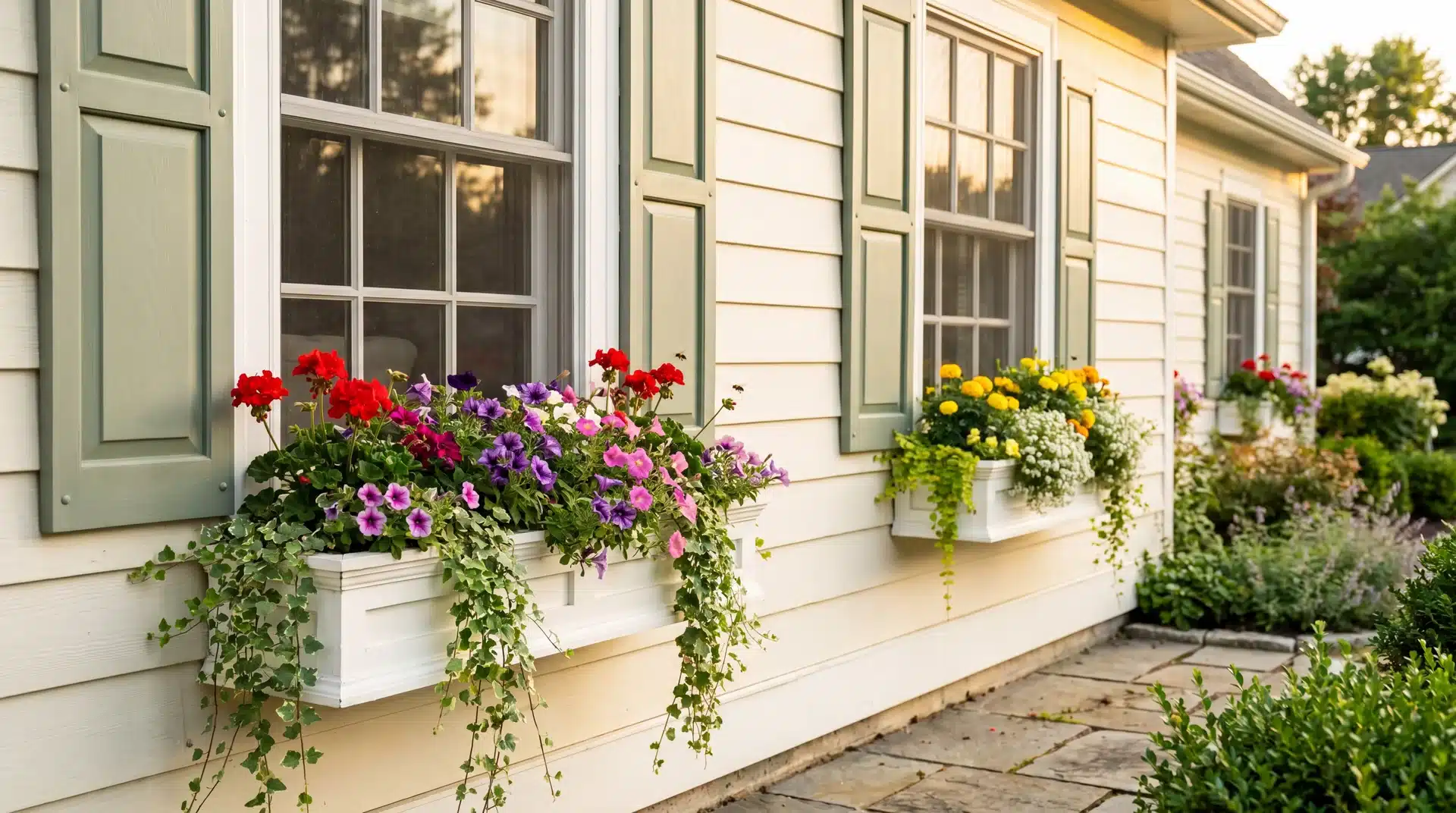
13 Flower Box Ideas to Brighten Your Home

Bare windowsills. Plain fences. Empty balcony railings. They all share one thing: missed potential.
A well-planted flower box changes that fast. It pulls color up off the ground and puts it exactly where people look first. Whether your home is modern, rustic, or somewhere in between, there is a format that fits.
This guide walks you through a few interesting setups. You will find structured designs for classic windows, space-saving tiered systems, wildlife-supporting plantings, kitchen-ready herb setups, and low-fuss succulent arrangements.
There are also fence displays, porch hangings, compact balcony solutions, upcycled builds, and wheelchair-friendly options.
Each section gives you specific plant names, placement advice, and material guidance, nothing vague. Scroll through, spot what catches your eye, and build something worth looking at.
What Is a Flower Box?
Before you spend money on the wrong thing, it helps to know what you’re actually buying.
A flower box is a long, narrow container designed to hold flowers or plants. It sits on windowsills, mounts on fences, or hangs from railings. It’s built for display, and usually positioned at eye level or above.
Here’s how flower boxes differ from other containers:
- Flower box vs. window box: These terms are often used interchangeably. A window box is simply a flower box mounted directly below a window.
- Flower box vs. planter: Planters are wider and deeper, which is better for shrubs or large plants. Flower boxes are long and shallow, built for trailing or compact plants.
- Flower box vs. raised bed: Raised beds sit on the ground and hold much more soil. Flower boxes are mounted or elevated and smaller in volume.
13 Flower Box Ideas
Not every spot needs the same solution. These 13 ideas cover four clear categories: style-based designs, theme-driven plantings, DIY builds, and placement-specific setups. Each one comes with plant picks and practical guidance so you can move straight from reading to planting.
Flower Box Styles
The style you choose should match your home’s exterior. Here are four options that work well across different house types.
1. Classic Window Box Ideas
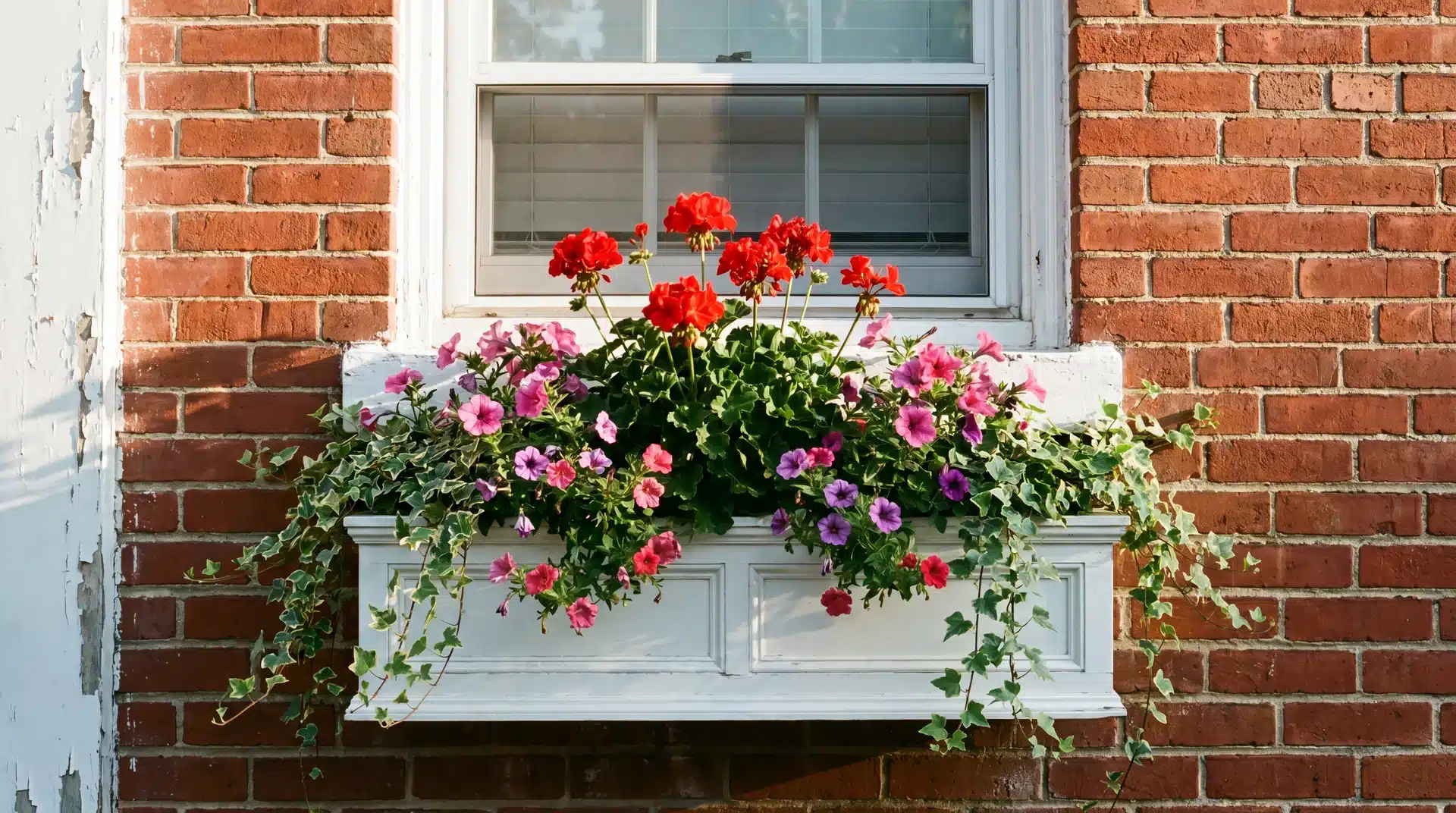
Window boxes are the most popular flower box style, and for good reason. They work on almost every home exterior, from brick townhouses to painted wood siding.
What makes them work:
- Position them just below the window frame, flush with the sill
- Use a box that’s as wide as the window, or slightly wider
- Combine upright plants (like petunias or snapdragons) with trailing ones (like ivy or bacopa)
Best plants for classic window boxes:
- Petunias (long-blooming, full sun)
- Pansies (cool-season, great for spring and fall)
- Ivy or sweet potato vine (trailing, fills gaps beautifully)
- Geraniums (heat-tolerant, bold color)
Pro Tip: Use a liner inside the box to protect wood from moisture and make seasonal swaps easier.
2. Rustic Wooden Flower Boxes
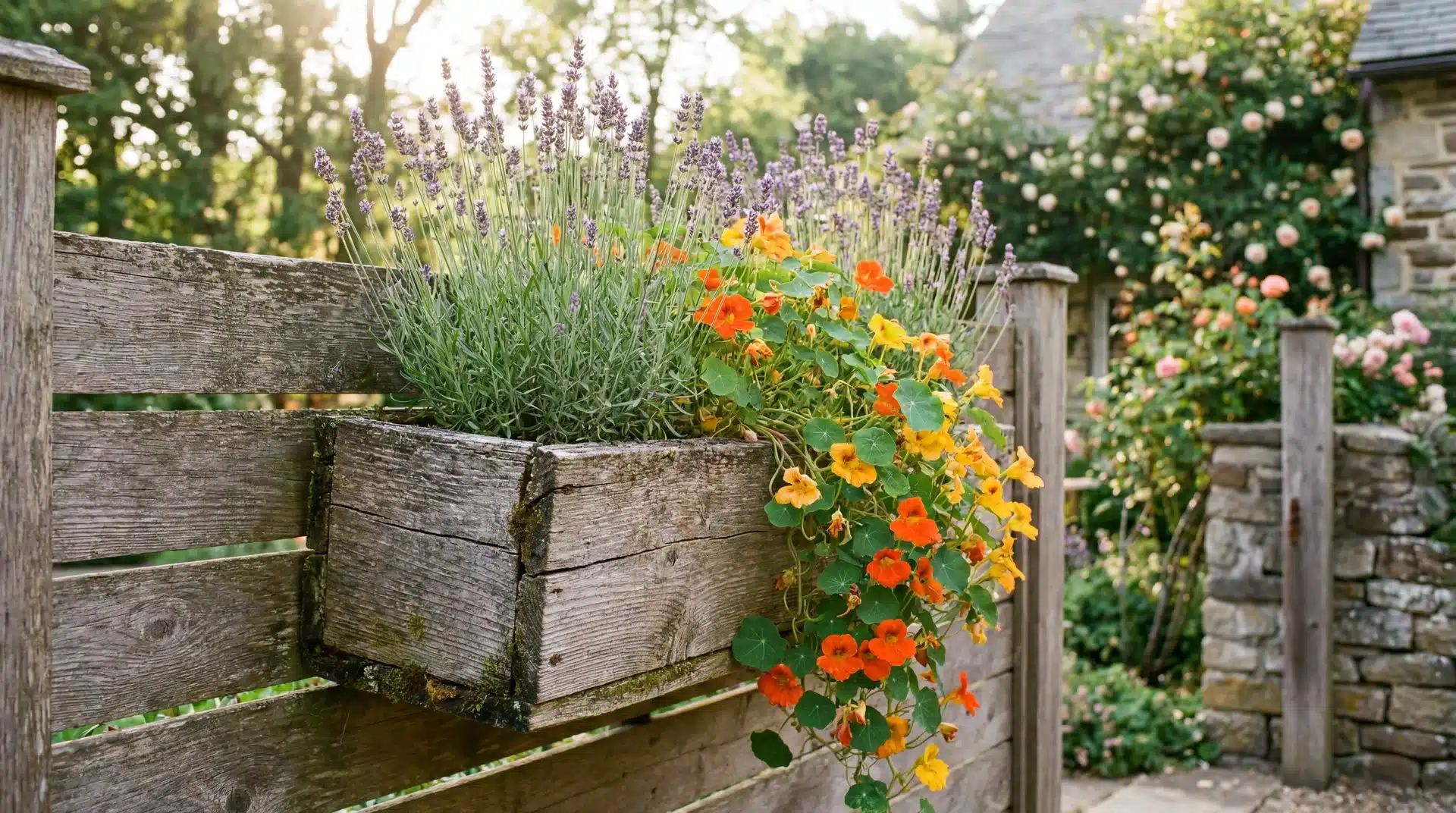
If your home has a farmhouse feel or you want something warm and natural, wooden flower boxes are the right choice.
Materials that work best:
- Cedar: Naturally rot-resistant. Weathers to a grey tone or takes stain well.
- Reclaimed wood: Gives instant character. Sand smooth and seal before planting.
- Pine with exterior stain: Budget-friendly. Needs sealing or it rots within 2–3 seasons.
What to plant:
- Trailing nasturtiums (edible, fast-growing)
- Lavender (drought-tolerant, fragrant)
- Herbs like rosemary or thyme (doubles as a kitchen use)
Rustic boxes look especially good on wooden fences, barn-style sheds, or cottage-style homes. The weathered wood’s texture contrasts well with bright blooms.
3. Modern Metal Flower Boxes
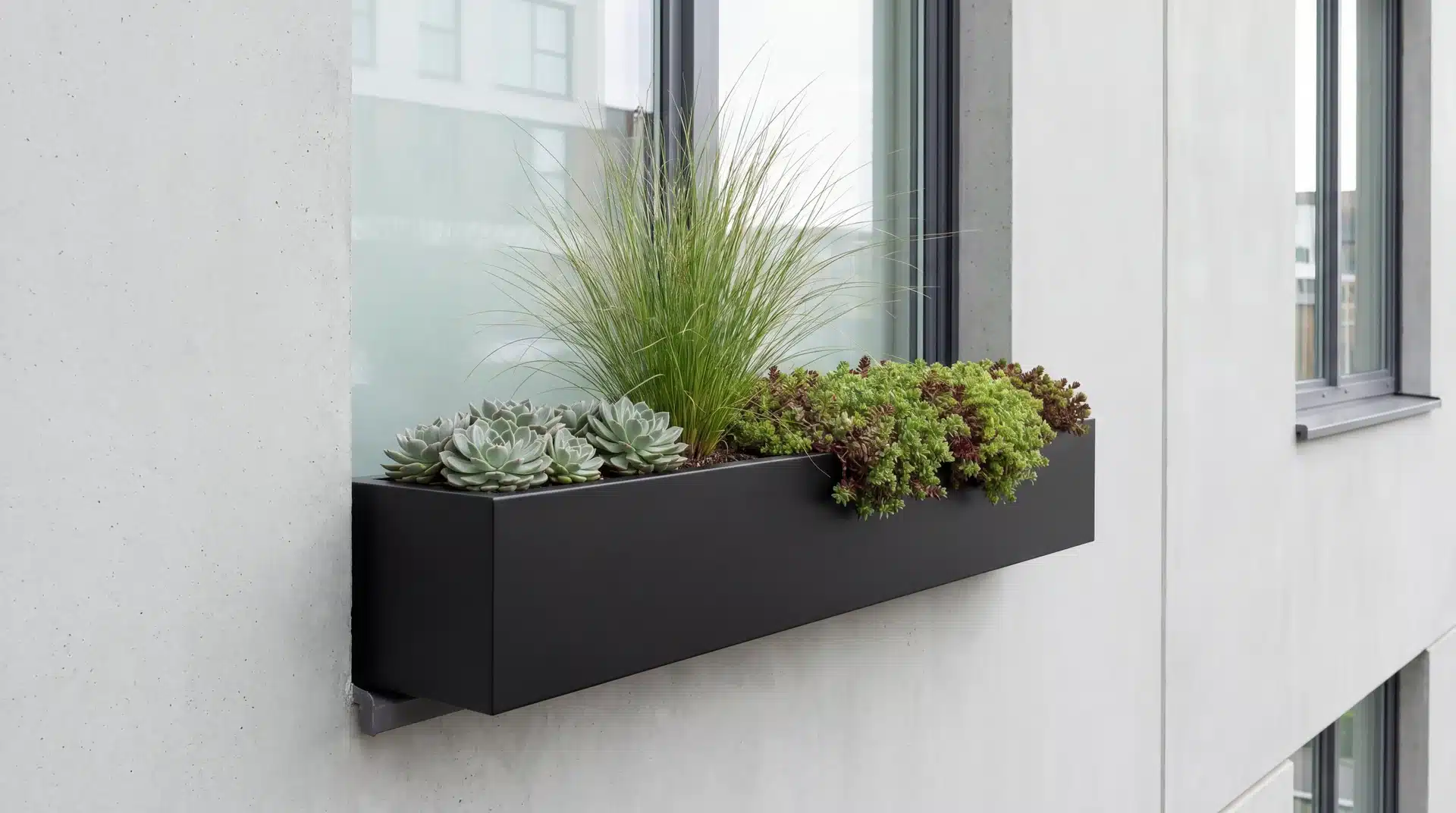
Metal boxes suit homes with clean lines, modern builds, industrial-style exteriors, or painted concrete.
Best metal options:
- Galvanized steel: Durable, inexpensive, takes paint well
- Corten (weathering steel): Develops a rust-tone patina over time, looks intentional, and is styled
- Powder-coated aluminum: Lightweight and long-lasting
Best plants for modern metal boxes:
- Succulents (echeveria, sedum)
- Ornamental grasses
- Agave or aloe for a bold, structural look
- Black-eyed Susans for contrast against dark metal
One thing to note: Metal heats up fast in direct sun. This can stress plant roots. Line the inside with coir or burlap to insulate, or choose heat-tolerant plants.
4. Vertical Flower Boxes (Tiered Garden Style)
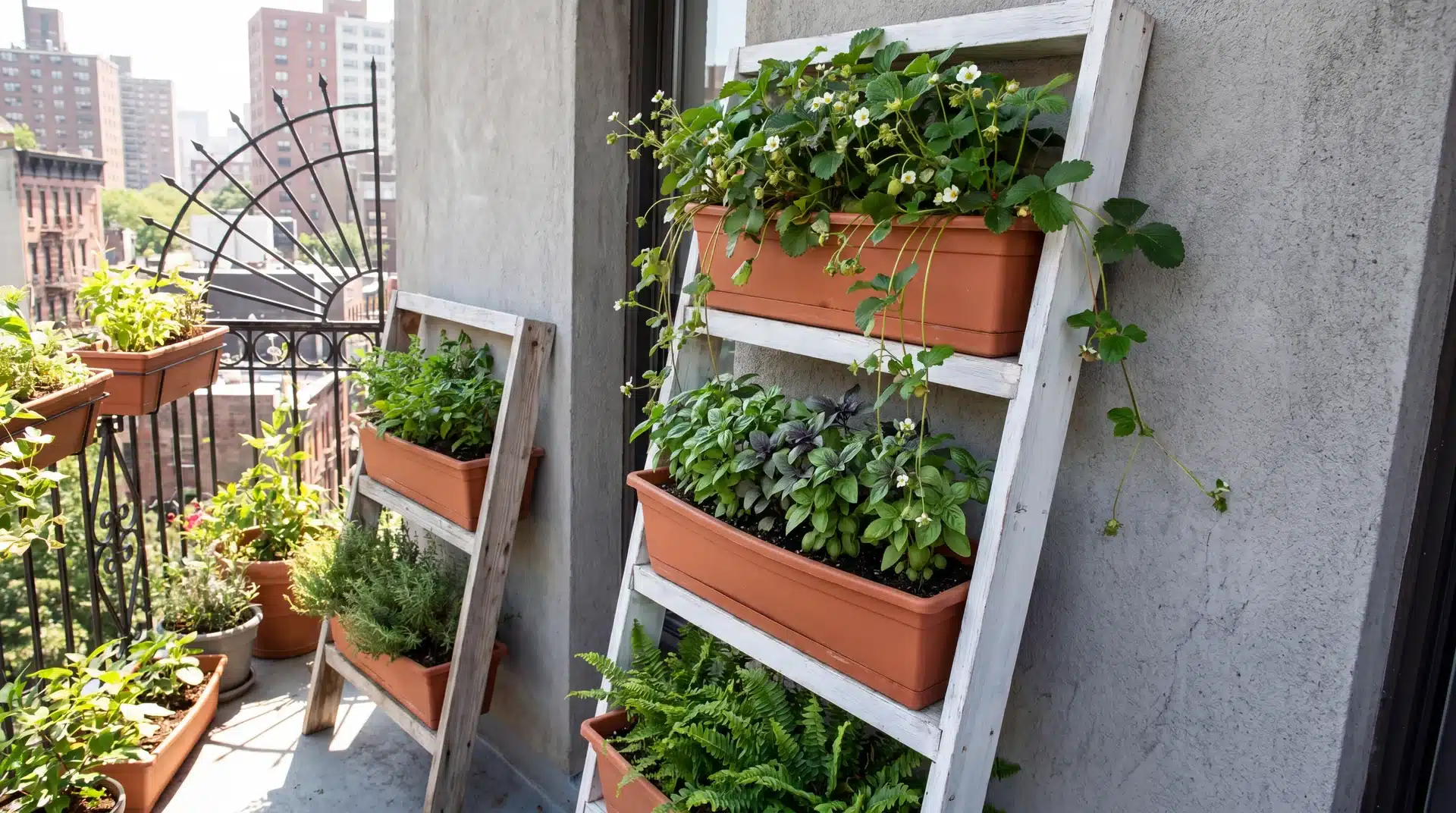
When ground space is tight, go vertical. Tiered flower box systems stack multiple planting levels on a single frame, giving you more growing space without using more floor area.
Where they work best:
- Apartment balconies
- Small patios or courtyard gardens
- Side walls or narrow garden strips
Good plants for vertical setups:
- Strawberries (trail and fruit)
- Ferns (shade-tolerant, lush)
- Herbs (thyme, basil, mint, one per pocket)
- Lobelia or alyssum (compact, free-flowering
Flower Box Themes
Beyond style, your theme shapes what goes inside the box. Here are five theme-based flower box ideas that serve a real purpose.
5. Pollinator-Friendly Flower Boxes
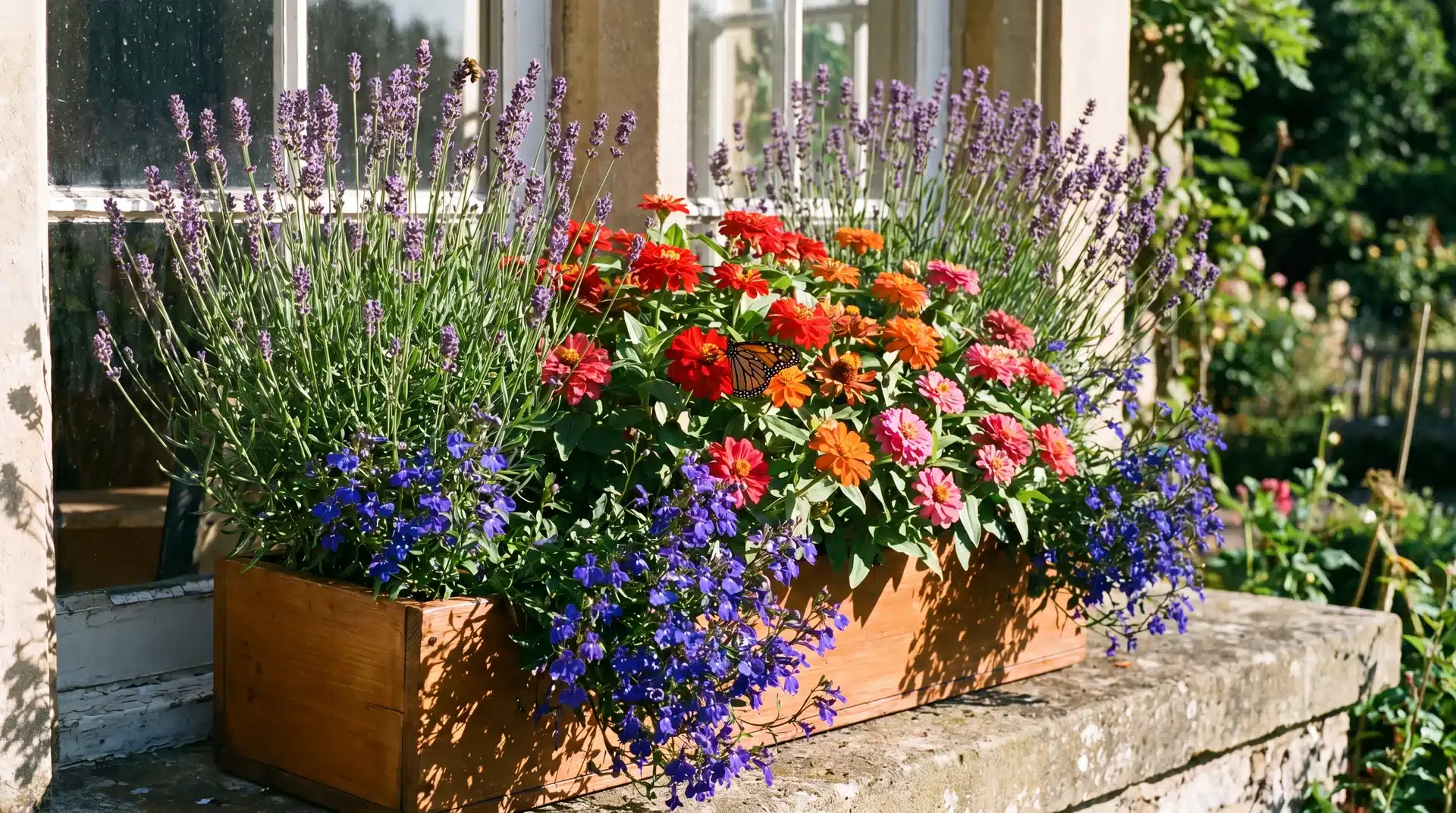
A pollinator-focused flower box does double duty: it looks beautiful and supports bees, butterflies, and hummingbirds.
Best plants to attract pollinators:
- Lavender: Draws bees from a distance. Long-blooming and fragrant.
- Zinnias: Butterfly magnets. Easy to grow from seed.
- Sunflowers (dwarf varieties): Work in deeper boxes. Bees love them.
- Salvia: Hummingbirds target the tubular flowers.
- Echinacea (coneflower): Long-lasting blooms, excellent for late-season insects.
Design tip: Mix plants with different bloom times so the box stays active from spring through fall. Stagger early, mid, and late-season bloomers.
6. Edible Herb Flower Boxes
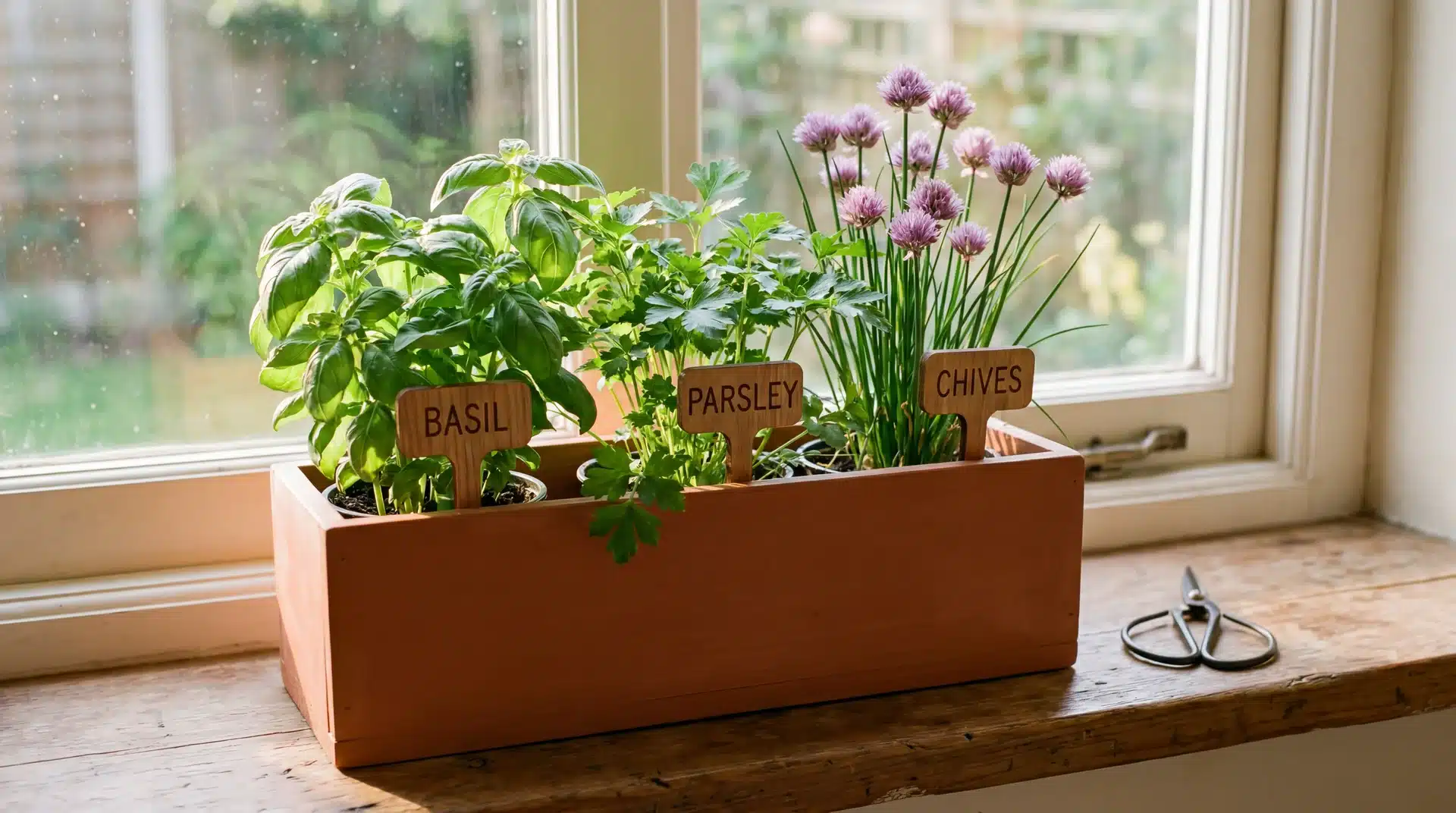
Herb boxes are one of the most practical flower box ideas. You get a good-looking container AND a supply of fresh herbs for cooking.
Best herb combinations for a flower box:
- Basil + parsley + chives: All prefer similar watering and full sun
- Rosemary + thyme + oregano: Drought-tolerant Mediterranean herbs, perfect together
- Mint + lemon balm: Keep mint in its own section; it spreads fast-
Setup tips:
- Use a deeper box (at least 8 inches) for herbs with larger root systems, like rosemary
- Harvest regularly, this keeps plants compact and producing
- Place near a kitchen window or door for easy access
Warning from my garden: Never plant mint directly with other herbs without a barrier. It will take over within one season.
7. Succulent Flower Boxes
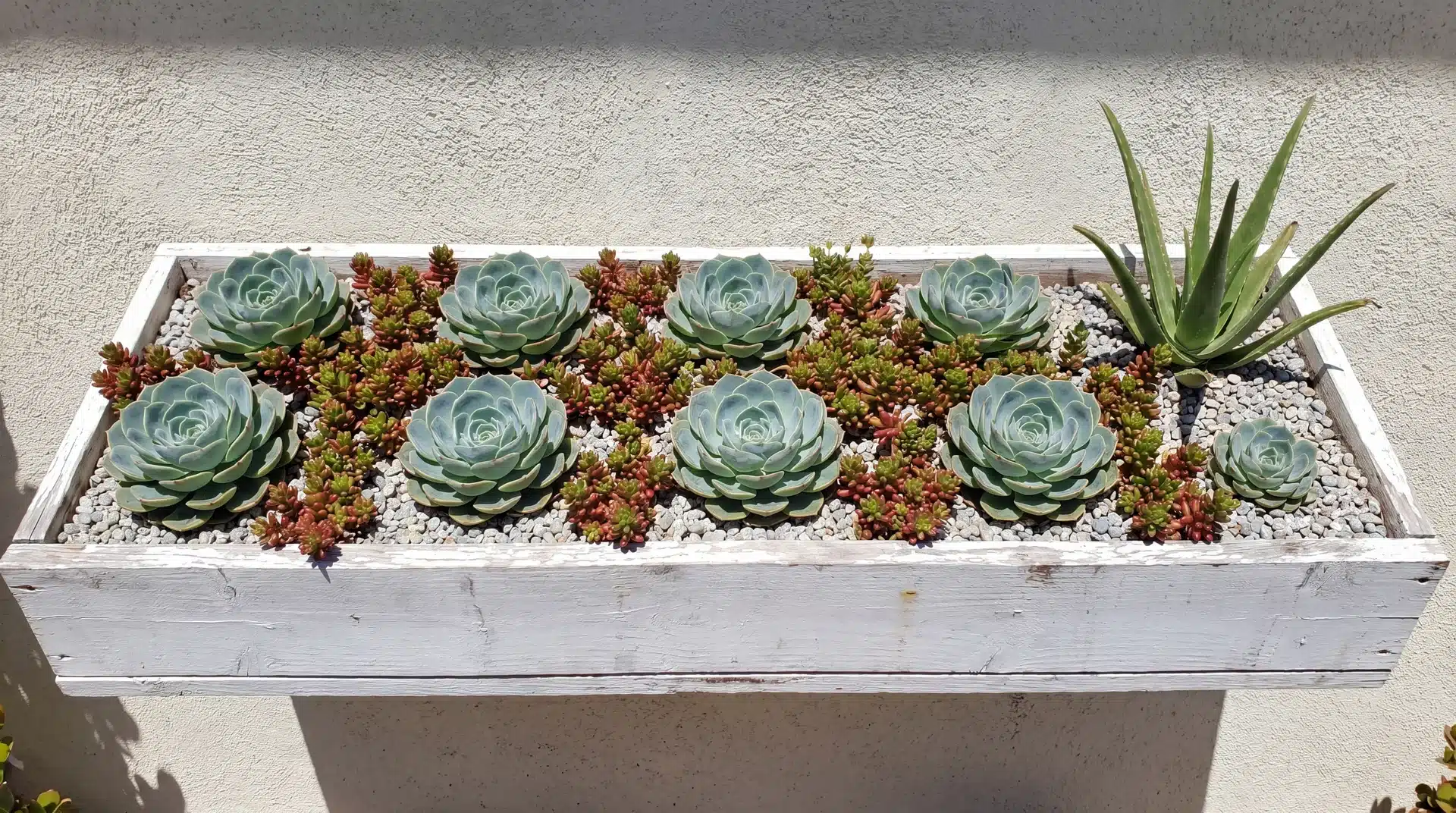
Succulents are the right choice when you want something that looks curated but doesn’t need constant attention.
Best succulents for flower boxes:
- Echeveria: Rosette shapes, wide color range
- Sedum: Low-growing, spreads to fill gaps
- Aloe vera: Bold structure, useful medicinally
- Sempervivum (Hens & Chicks): Hardy, multiplies on its own
Soil and drainage requirements:
- Use a cactus or succulent-specific potting mix
- Make sure the box has drainage holes; succulents rot in standing water
- Add a layer of pea gravel at the top for a cleaner look and to keep moisture away from the crowns
Succulent boxes are especially low-maintenance in summer. They only need watering every 10–14 days in warm weather.
8. Seasonal Flower Boxes
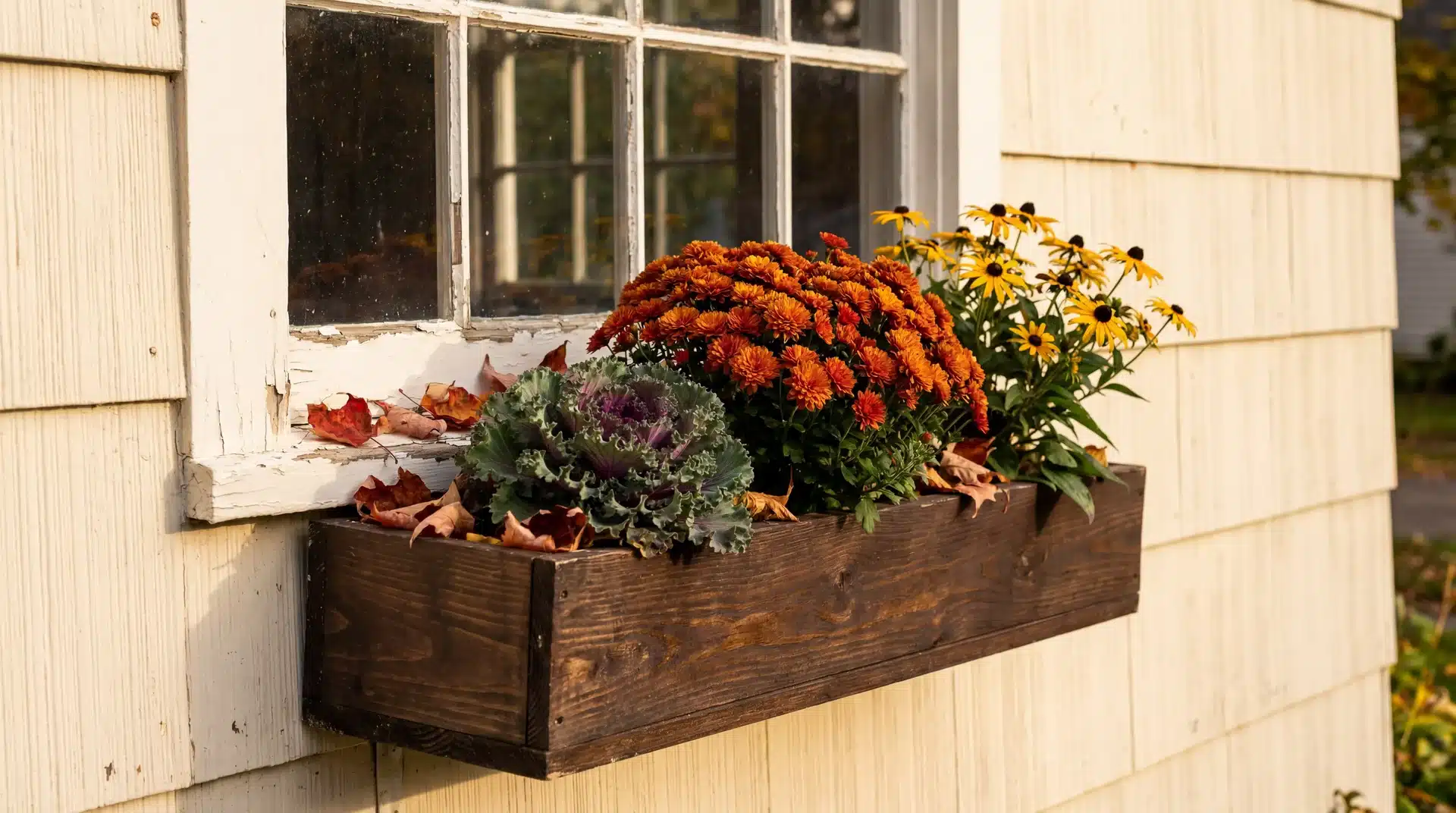
A seasonal approach means your flower box stays fresh and relevant year-round, not just for a single burst of color in summer.
Spring brings pansies, violas, tulip bulbs, and daffodils. Plant once frost risk drops, and pair cool blues with yellows for a fresh seasonal look.
Summer calls for petunias, marigolds, verbena, and impatiens in shadier spots. Water daily and deadhead regularly to keep the blooms coming through the heat.
Fall suits chrysanthemums, ornamental kale, and black-eyed Susans. Burnt orange, deep red, and mustard yellow tones look best in autumn light. Mums are the easiest and most affordable pick.
Winter works in mild climates with cyclamen, ornamental cabbage, and hellebore. In colder areas, replace plants with evergreen cuttings and pinecones to keep the box looking purposeful through the colder months.
Practical tip: Label your seasonal plants with the expected bloom time before you buy. It saves money and prevents gaps in color.
DIY and Upcycled Flower Box Ideas
Making your own flower box costs less and lets you control the exact size and style. Here are two approaches that work.
9. DIY Upcycled Flower Boxes
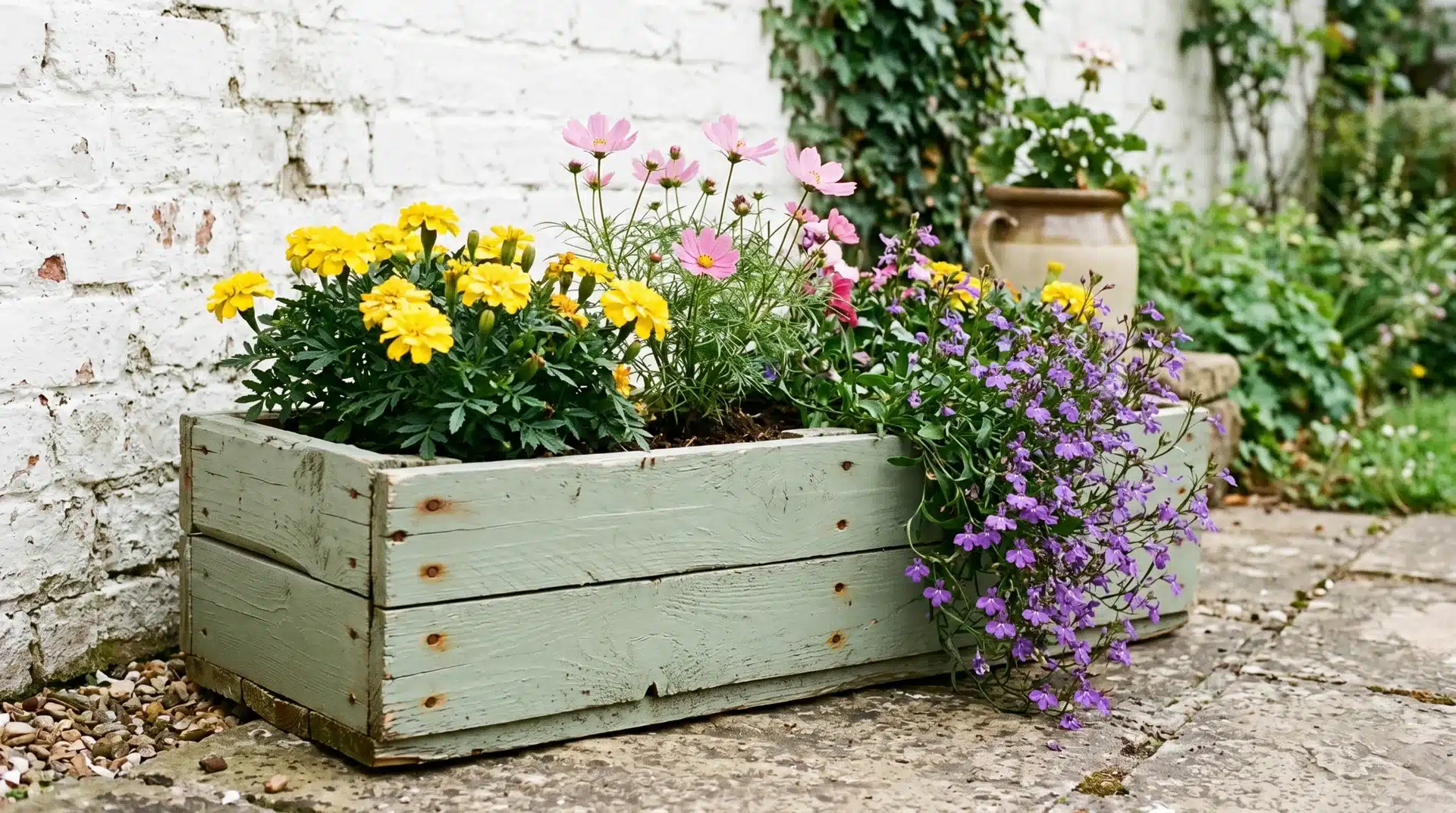
Repurposed materials make some of the most interesting flower boxes. The key is choosing weatherproof materials or treating them before planting.
Best materials to upcycle:
- Old wooden crates: Line with landscape fabric, drill drainage holes, fill, and plant
- Tin cans (large): Great for herbs on a windowsill. Paint for a uniform look or leave raw for a rustic feel.
- Wooden pallets: Break into individual slats and build a simple box frame. Treat with exterior sealant.
- Colanders: Already have drainage built in. Line with coir and plant directly.
- Old rain boots or rubber shoes: Quirky but functional for a garden entrance or porch step
Basic steps for a pallet wood flower box:
- Select dry, undamaged pallet wood
- Cut to your desired length (60–90cm works well for a standard windowsill)
- Sand all surfaces smooth
- Apply two coats of exterior wood sealant or paint
- Drill 3–4 drainage holes in the base
- Line with landscape fabric
- Fill with quality potting mix and plant
10. Raised Flower Boxes for Easy Access
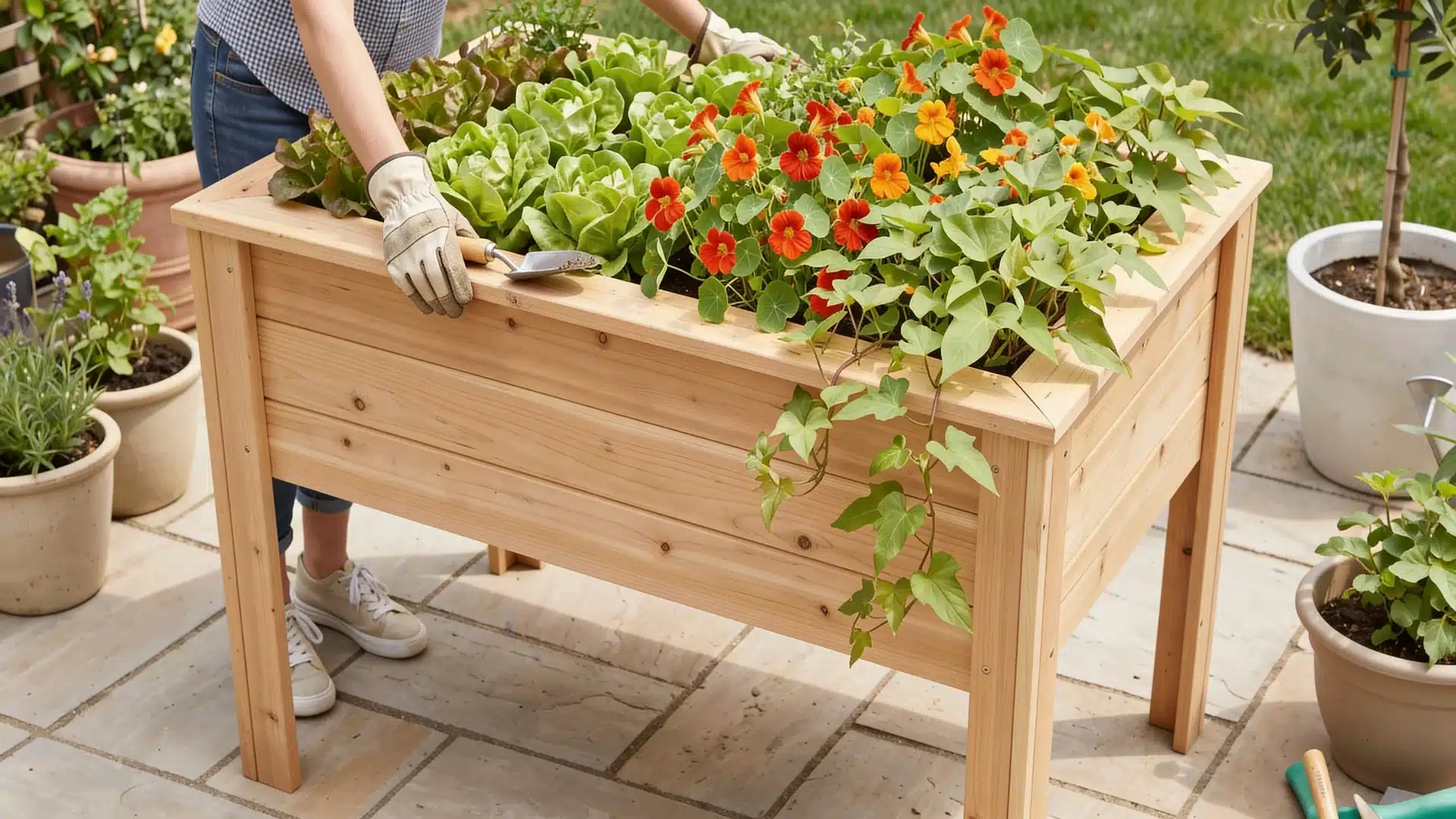
Raised flower boxes are set at a height that removes the need to bend down, making gardening accessible for people with limited mobility, back issues, or those who prefer to garden standing up. Raised flower boxes drain better, stay cleaner, and keep soil-borne pests well away from your plants.
Key design features:
- Standard comfortable height: 70–90 cm (roughly waist height)
- Width: no more than 60 c so that you can reach the center from either side
- Strong legs or a sturdy frame, the box will be heavy when filled
Best materials for raised flower boxes:
- Treated cedar or redwood (lightweight and rot-resistant)
- Powder-coated steel frames (strong, long-lasting)
Practical Flower Box Ideas by Placement
Where you put the box matters as much as what goes in it. Here are three placement-based flower box ideas.
11. Fence-Mounted Flower Boxes
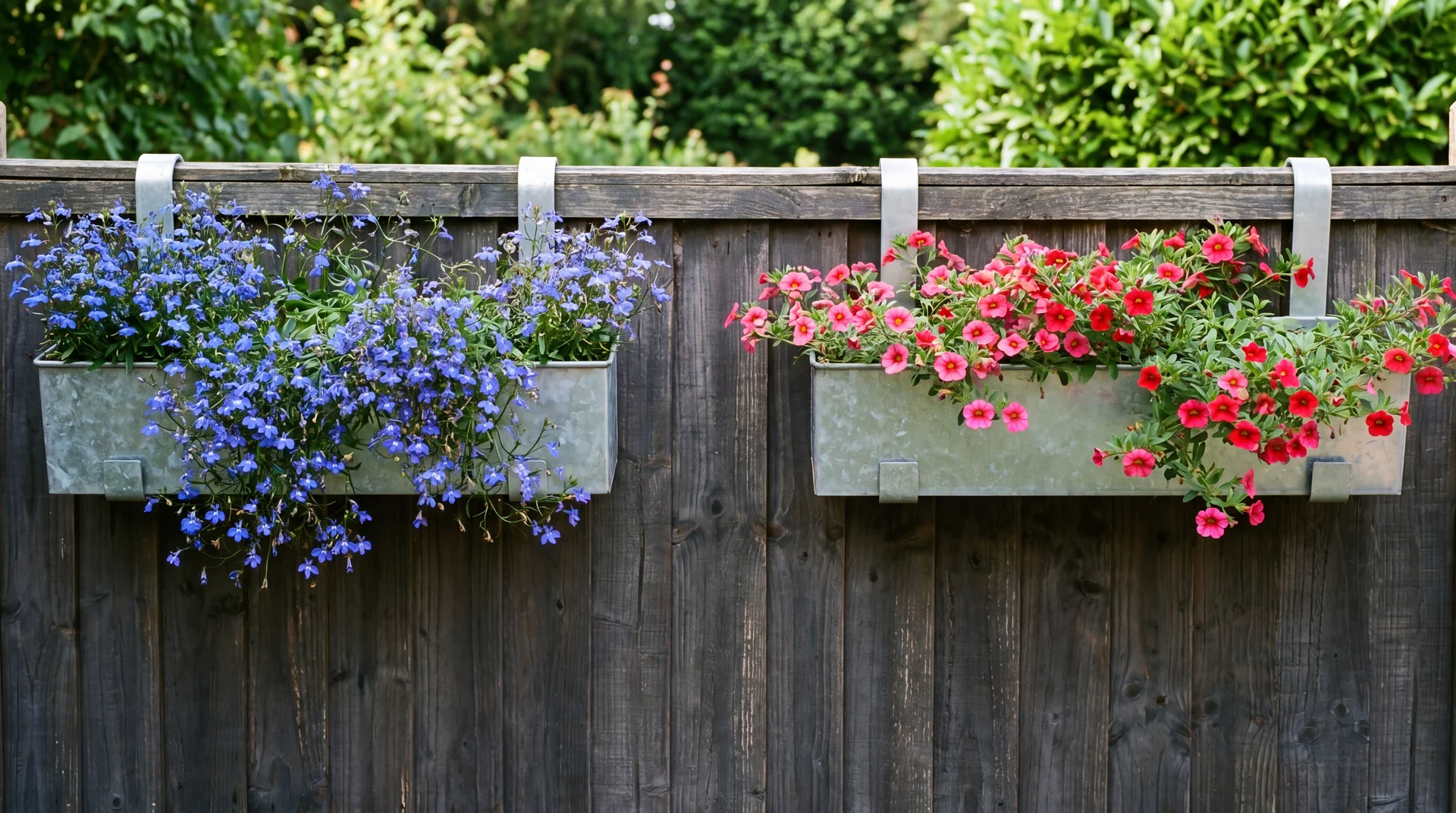
A fence-mounted flower box turns a plain garden fence into a living feature wall.
How to mount them correctly:
- Use galvanized brackets rated for the box weight plus soil and water
- Space brackets every 40–50 cm to prevent sagging
- Keep boxes at the top of the fence for the best visual impact
Best plants for fence-mounted boxes:
- Cascading lobelia (spills over the edge)
- Calibrachoa (mini petunia-like flowers, very free-blooming)
- Climbing sweet peas (use the fence itself as support)
- Trailing verbena
Weight warning: A filled wooden box can weigh 15–25 kg. Confirm your fence posts are stable before mounting.
12. Hanging Flower Boxes
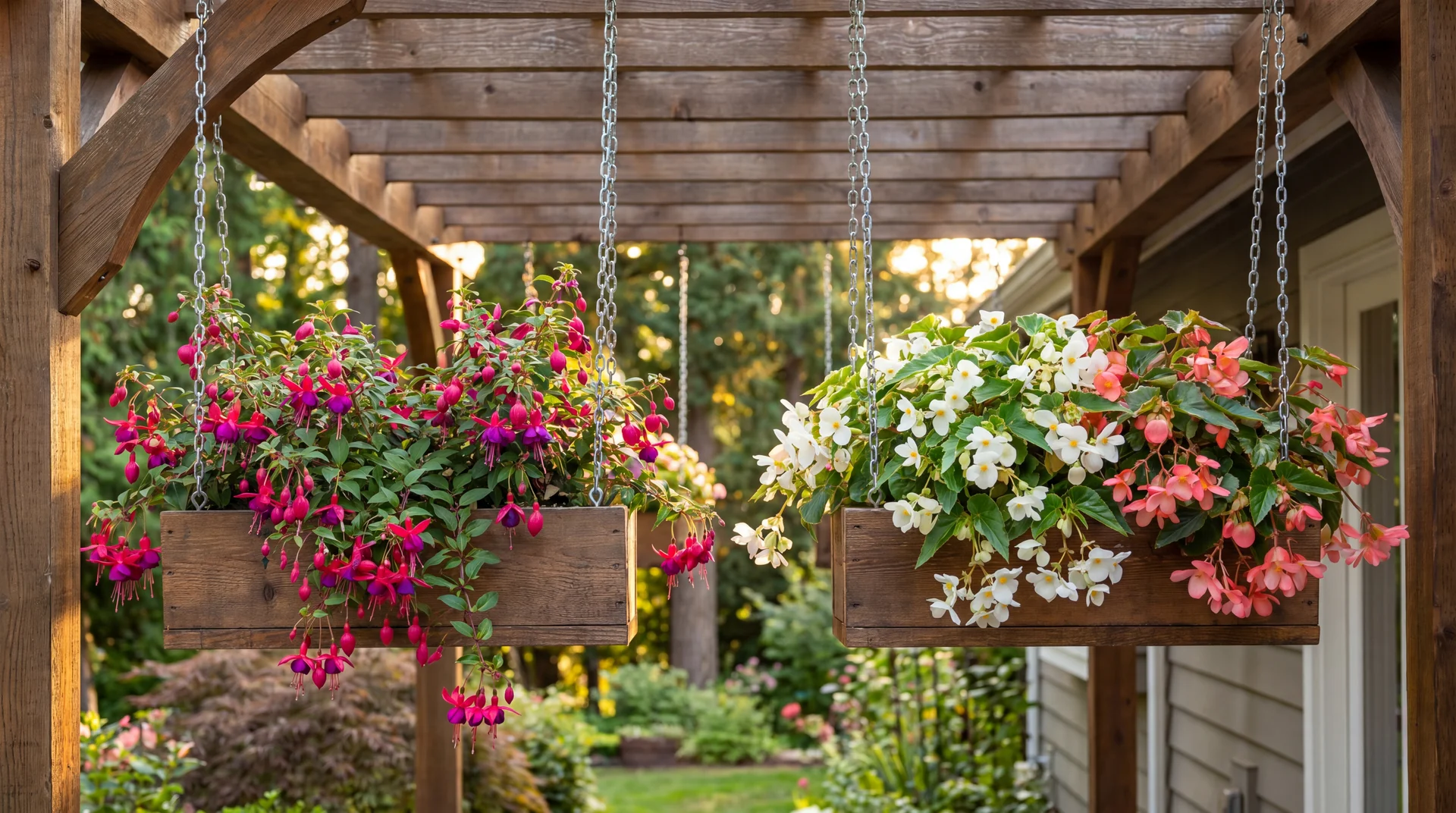
Hanging flower boxes work well on porches, pergolas, and deep balconies with overhead structures.
Installation tips:
- Use stainless steel or galvanized hanging chains; they won’t rust through
- Hang at eye level for best visual impact (not above head height)
- Use self-watering inserts for hanging boxes; they dry out faster than floor-mounted ones
Best plants for hanging flower boxes:
- Fuchsia (shade-tolerant, spectacular trailing blooms)
- Begonias (shade or part shade, long-blooming)
- Million bells (full sun, extremely free-flowering)
- Trailing petunia
13. Flower Boxes for Small Spaces
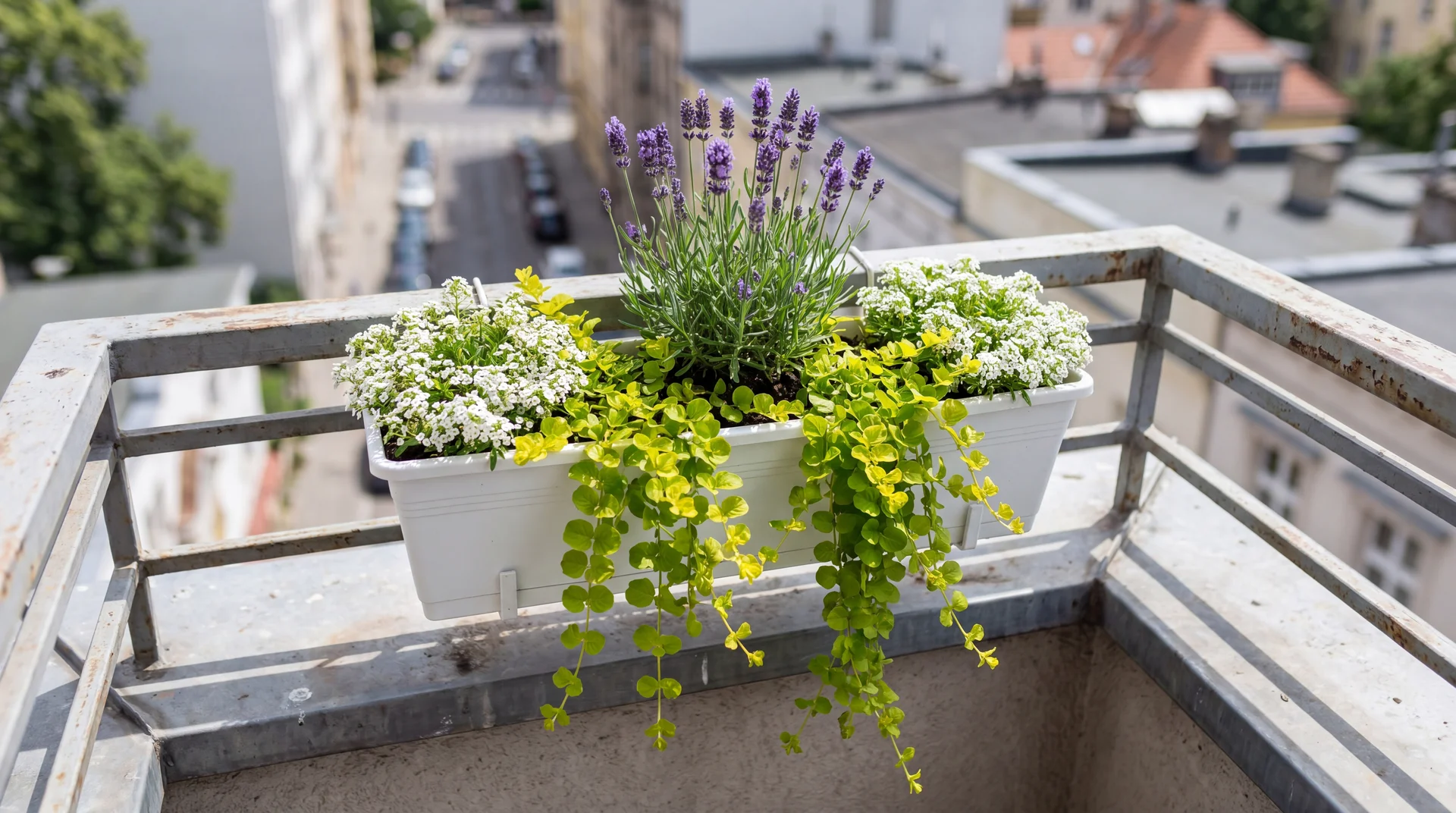
Small spaces need compact plants and smart layouts. The goal is maximum color with minimum footprint.
Plant choices for small-space flower boxes:
- Dwarf marigolds: Compact but bold. Full sun.
- Compact lavender (Hidcote variety): Stays small, highly fragrant.
- Lobularia (sweet alyssum): Spreads to fill gaps, honey-scented.
- Trailing vines (creeping Jenny or bacopa): Add length without height.
Layout tip: Use the “thriller, filler, spiller” method:
- Thriller: One tall or bold plant in the center or back
- Filler: Mid-height plants to fill the body of the box
- Spiller: Trailing plants at the front to hang over the edge
This gives every small box a structured, full look.
How to Choose the Right Flower Box?
The wrong box choice causes problems before you even plant anything. Here’s how to get it right.
Size and Shape
- Deep boxes (25 cm+): Needed for roses, lavender, rosemary, and most perennials
- Shallow boxes (15–20 cm): Fine for annuals like petunias, lobelia, and pansies
- Length: Match to your windowsill or fence section. Wider is generally better — more soil means less frequent watering.
1. Material Comparison
| Material | Durability | Weight | Best For |
|---|---|---|---|
| Cedar wood | 5–10 years | Medium | Classic and rustic styles |
| Pine (sealed) | 2–4 years | Medium | Budget builds |
| Galvanized steel | 10+ years | Heavy | Modern exteriors |
| PVC/plastic | 5–8 years | Light | Balconies, weight-sensitive mounts |
| Fiberglass | 10+ years | Light | Premium look, any style |
2. Placement: Sun vs Shade
Before buying plants, check how much direct sun your box location gets:
- Full sun (6+ hours): Petunias, marigolds, zinnias, lavender, geraniums
- Part shade (3–6 hours): Fuchsia, impatiens, begonias, coleus
- Full shade (under 3 hours): Ferns, hostas, astilbe, ivy
Buying sun-loving plants for a shady spot, or vice versa, is the most common mistake I see. Get the light assessment right first.
3. Drainage and Soil
- Every flower box needs drainage holes, no exceptions
- Use quality potting mix, not garden soil (garden soil compacts in containers)
- Add slow-release fertilizer granules at planting time
- For heavy clay soils in your area, this matters less; the potting mix in the box acts independently
Flower Box Care and Maintenance
A flower box that looks good in June but dies by August is a waste. Here’s how to keep yours going.
1. Watering Routines
Flower boxes dry out faster than garden beds, especially in summer and in full sun.
General watering guidelines:
- Spring/fall: Every 2–3 days (check soil moisture first)
- Summer/hot weather: Daily and sometimes twice daily for small boxes in full sun
- Succulents: Every 10–14 days year-round
- Herbs: Let the top inch of soil dry before watering again
Test before watering: Push your finger an inch into the soil. If it’s dry, water. If it’s still moist, wait.
2. Fertilizing and Pruning
- Apply a balanced liquid fertilizer every 2 weeks during the growing season
- Use a high-potassium feed (tomato fertilizer works) once plants are flowering, to encourage more blooms
- Deadhead (remove spent flowers) regularly; this is the single most effective way to extend flowering
- Cut back leggy growth by one-third to encourage bushy, compact plants
3. Pest and Disease Prevention
Common flower box problems and fixes:
- Aphids: Spray with diluted dish soap solution, or introduce ladybirds
- Fungal issues (grey mould, powdery mildew): Improve air circulation between plants; avoid wetting foliage when watering
- Vine weevil (in soil): Check for C-shaped white grubs if plants suddenly wilt; treat with nematodes
- Overwatering rot: Always check that drainage holes are clear
4. Soil Refresh and Winter Storage
- At season’s end: Remove spent plants and top up with fresh potting mix
- Wooden boxes: Bring indoors over winter if possible, or wrap with bubble wrap to prevent frost cracking
- Metal boxes: Leave in place, but drain and remove tender plants before the first hard frost
- Annual soil refresh: Replace the top 5 cm of compost each spring to restore nutrients
Conclusion
Your home deserves better than bare windowsills and empty railings.
Every idea covered here, from pallet wood builds to pollinator plantings, hanging porch displays to compact balcony setups, starts with one simple decision. Pick a spot. Match it to a style. Plant something that suits your light.
You do not need a large garden or a big budget. A single well-planted box at the right location makes a visible difference within one weekend.
Start with whichever section felt most familiar to you. Get one box going. Once you see it filled and flowering, adding a second becomes second nature.