The Green Supply Chain: Transitioning Your Commercial Food Packaging to 100% Compliance

Managing global supply chains and high volume hospitality inventories requires a forward-thinking approach to risk management and legislative compliance. For procurement officers, stadium catering directors, and corporate sustainability executives, the regulatory landscape has shifted dramatically over the past few years. Governments worldwide are introducing strict prohibitions on single-use plastics, leaving traditional polystyrene containers, plastic-lined coffee cups, and synthetic wraps obsolete. Relying on outdated packaging materials no longer just risks consumer backlash; it exposes large-scale operations to severe financial penalties, supply chain disruptions, and regulatory shutdowns. Transitioning your entire inventory toward certified, sustainable commercial food packaging supplies gives high-volume buyers a positive, highly reliable pathway to de-risk their procurement lines while meeting strict corporate social responsibility targets. By replacing petroleum-based packaging with responsibly sourced paper and home-compostable alternatives, corporate food providers can ensure continuous compliance with changing environmental laws while building a resilient, future-proof supply network.
The secret to executing a seamless transition across a multi-venue or enterprise-level network relies on moving past superficial greenwashing to establish a genuinely circular procurement strategy. Upgrading an inventory that spans millions of units annually is a complex logistical challenge that requires absolute clarity on raw material origins, manufacturing processes, and end-of-life disposal streams. When you systematically replace traditional plastics with high-performance paper alternatives, you do not just protect your business from legal liabilities, you actively align your brand with the core values of the modern, eco-conscious consumer base.
Navigating the Legislative Maze of Single-Use Plastic Bans
To successfully insulate an enterprise from regulatory friction, supply chain managers must understand the exact mechanisms driving contemporary environmental laws. Modern single-use plastic restrictions are no longer limited to basic supermarket shopping bags; they have expanded to target the hidden plastic components embedded within standard food service inventory. This includes polyfluoroalkyl substances used for greaseproofing, traditional polyethylene coatings on paperboard boxes, and conventional plastic window cutouts on sandwich boxes.
When local or federal authorities update their environmental compliance frameworks, non-compliant inventory can become illegal to distribute virtually overnight. For a stadium caterer or a national restaurant franchise, being caught with hundreds of thousands of units of banned stock can result in massive write-downs and sudden logistical shortages. Procurement teams must stay ahead of the legislative curve by proactively identifying and phasing out any packaging material that relies on fossil-fuel polymers or non-recyclable composites, replacing them with pure, plant-based alternatives that carry universal compliance metrics.
The Pillars of Compliant Materials: FSC Paper, Kraft, and Compostable Wraps
Rebuilding a high-volume packaging inventory requires a deep dive into the physical and environmental properties of alternative wood fibers and plant-based polymers. Enterprise operations cannot simply substitute plastic for low-grade paper; the new materials must deliver identical structural integrity, heat retention, and grease resistance to ensure a premium customer experience.
The first major pillar of a compliant inventory is the widespread adoption of Forest Stewardship Council certified paper bags and wrappers. The FSC certification provides absolute verification that the wood pulp used to manufacture the paper was harvested from responsibly managed, renewable forests that preserve biodiversity, protect indigenous land rights, and prevent deforestation. Utilizing FSC-certified materials guarantees that your high-volume paper consumption does not contribute to global forest degradation, giving your corporate sustainability report a rock-solid, audited foundation.
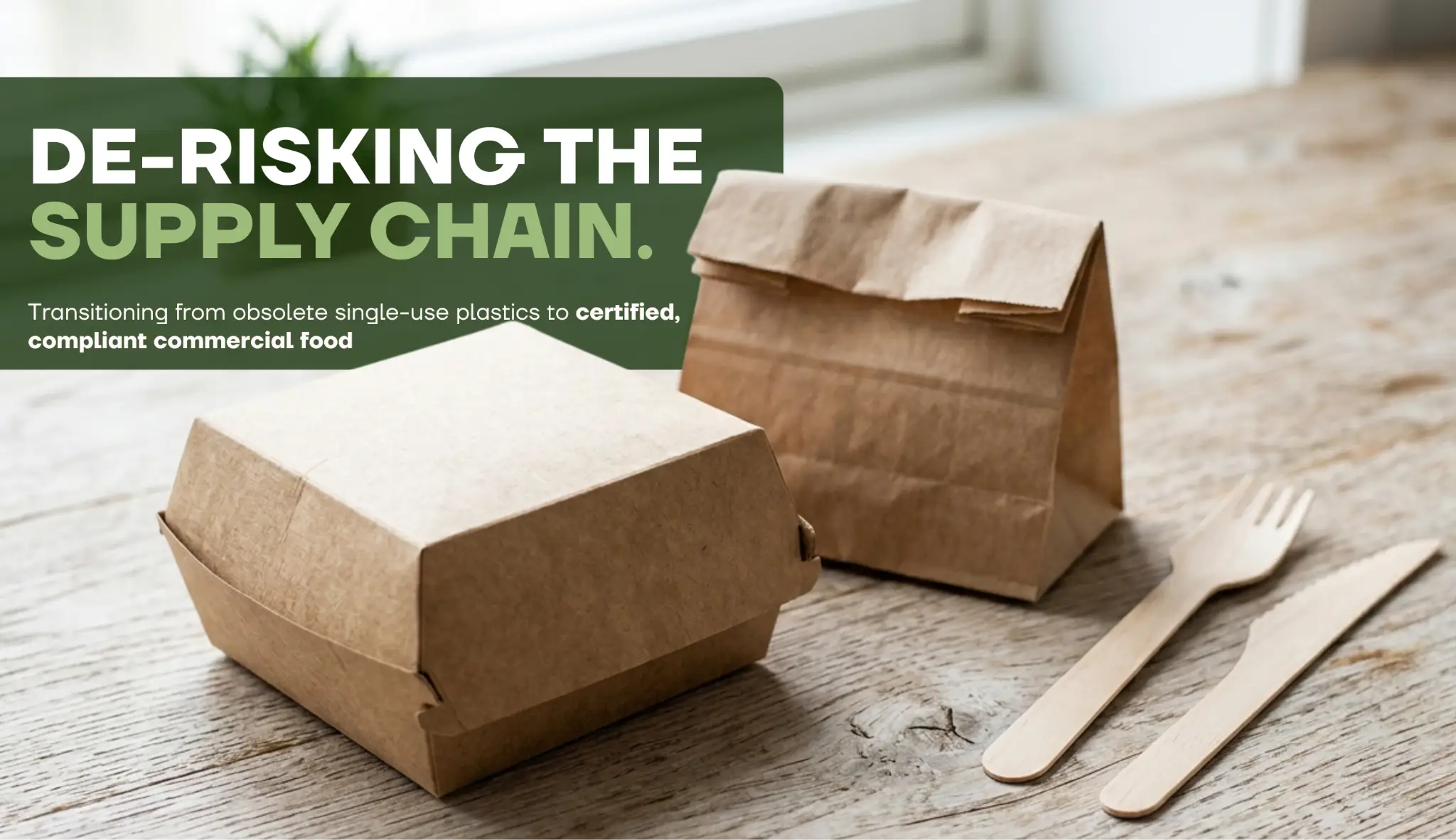
The second pillar is the integration of unbleached kraft paperboard boxes for hot food presentation. Traditional white paperboard requires extensive chemical bleaching processes, often utilizing chlorine compounds that create harmful industrial chemical waste. Unbleached kraft paper retains the natural brown color of wood fibers, completely bypassing the bleaching stage while delivering superior tensile strength and structural rigidity. These boxes are exceptionally resilient, handling heavy, moisture-rich meals without collapsing or absorbing oils, making them the ideal compliant alternative for high-volume takeaway and catering operations.
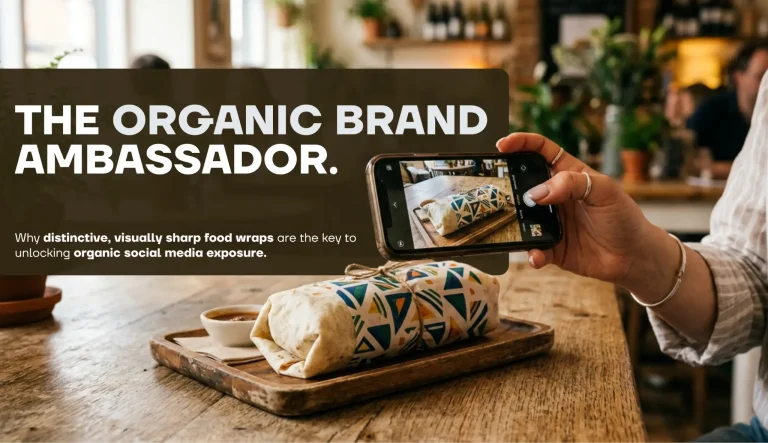
Finally, for direct food contact applications like wrapping burgers, artisanal deli sandwiches, or baked goods, procurement officers are turning to home-compostable food wraps. These advanced materials utilize natural plant waxes and biopolymers instead of plastic linings to achieve total grease protection. Because they are completely free from synthetic chemicals, these wraps can break down naturally in a standard backyard compost bin or commercial organic waste facility, leaving behind zero microplastics or toxic residues.

Image from Pexels
Identifying Authentic Eco-Certifications to Prevent Greenwashing
As the commercial demand for sustainable packaging continues to spike, the marketplace has become flooded with vague, unverified claims of environmental friendliness. Terms like biodegradable, eco-friendly, and green are frequently used by low-cost manufacturers to hide the presence of synthetic additives or unsustainable harvesting methods. Corporate procurement executives must cut through this marketing noise by demanding authentic, independent third-party certifications for every single product line they onboard.
- Australasian Bioplastics Association Certifications: Look for the distinct Seedling logo or the Home Compostable verification mark, which prove the material complies with rigorous AS4736 or AS5810 standards for non-toxic organic degradation.
- PEFC and FSC Fiber Tracking: Ensure all paperboard items carry clear chain-of-custody tracking numbers, allowing your compliance team to trace the raw wood pulp straight back to its specific, sustainably managed forest origin.
- BPI Certification: For North American operations, the Biodegradable Products Institute certification guarantees that the food packaging item will completely break down in commercial composting facilities without leaving synthetic residues.
- FDA and European Food-Grade Compliance: Verify that all sustainable barrier coatings are thoroughly certified for direct contact with high-temperature, fatty foods, ensuring complete consumer health protection.
By establishing a strict verification checklist based on these independent standards, corporate buying teams can easily eliminate greenwashing risks, ensuring that every dollar spent on sustainable procurement actively supports genuine environmental compliance.
The Corporate Reputation Dividend Among Modern Consumers
Beyond the clear legal benefits of de-risking your supply chain against environmental fines, transitioning to 100% compliant packaging delivers a powerful, measurable boost to your corporate brand equity. The modern consumer base is highly informed, socially aware, and increasingly critical of corporate waste footprints. Studies show that a significant majority of contemporary diners will actively choose a food brand that uses visibly sustainable packaging over a competitor that continues to rely on single-use plastics.
When a large-scale stadium, corporate cafeteria network, or hotel group serves food in unbleached kraft boxes and certified compostable wraps, the packaging acts as a silent communicator of the brand’s core values. It tells your customers that your organization is actively investing in the protection of the local ecosystem, transforming a simple piece of waste into a powerful symbol of corporate citizenship. This visual transparency builds deep emotional connection and consumer trust, driving long-term brand loyalty and allowing hospitality networks to capture premium market segments that prioritize environmental ethics.
Conclusion: Securing a Sustainable Commercial Future
Deciding on the procurement strategy for your commercial food packaging is a critical enterprise decision that will directly influence your operational compliance, your brand reputation, and your financial resilience for years to come. Continuing to buy cheap, non-compliant plastic or unverified composite packaging leaves your supply chain dangerously exposed to shifting government bans, sudden inventory seizures, and severe public relations damage.
By executing a comprehensive transition to FSC-certified paper, unbleached kraft, and home-compostable packaging solutions, you secure an absolute compliance baseline for your entire commercial food operation. Third-party environmental certifications remove the guesswork from your supply chain, while premium, plant-based materials protect the structural quality of your menu items and enhance your brand status in the eyes of the public. Take complete control of your procurement timeline today, audit your packaging inventory methodically, and invest in compliant, sustainable packaging infrastructure that protects both your business and the planet.
Steven Lagrimas is a freelance writer specializing in STEM, business, health, politics, and the social sciences. His work explores the intersection of society, governance, innovation, and emerging global trends shaping communities and industries today.