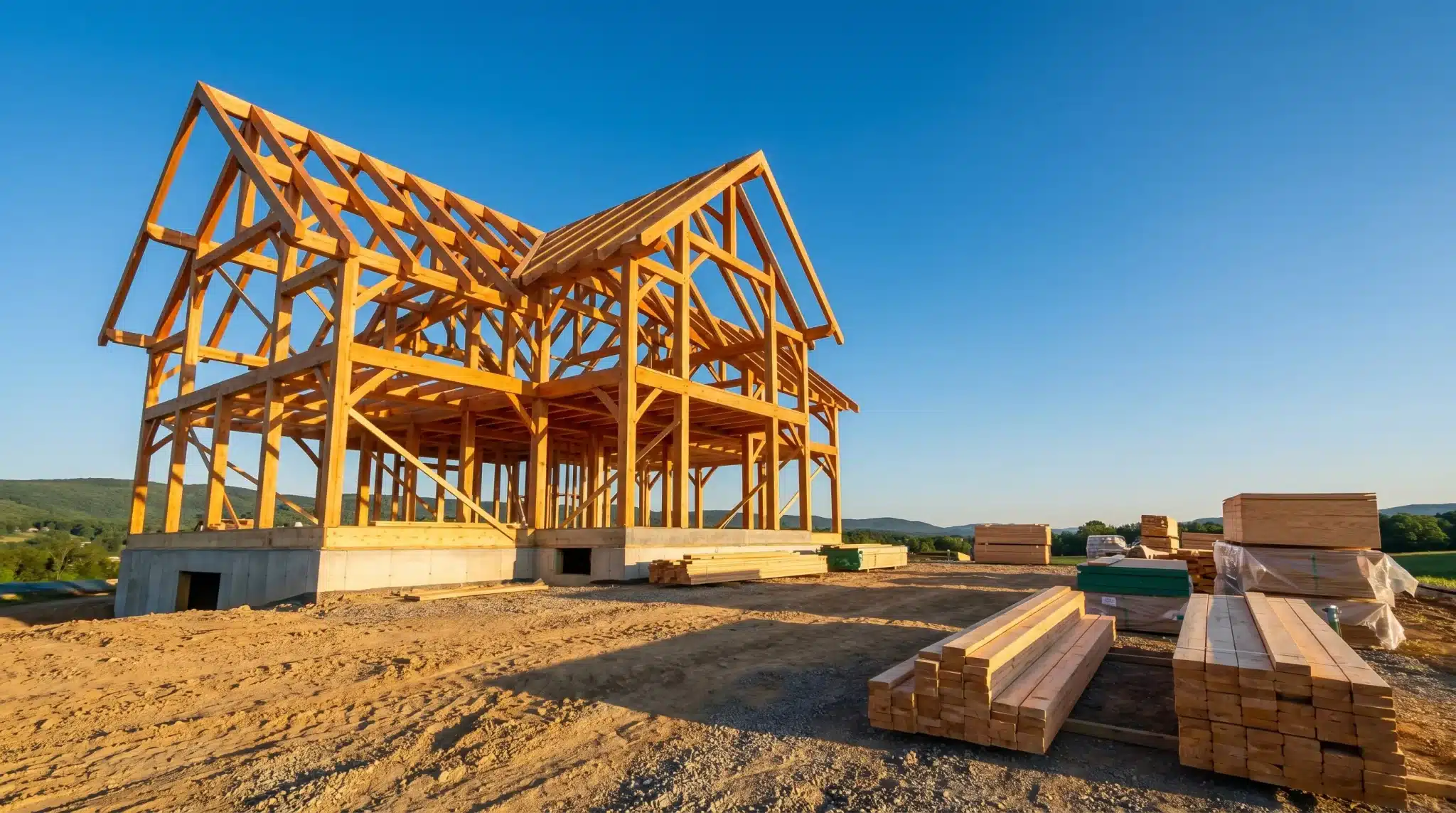
7 Steps to Forecasting Your Home Building Expenses with Precision

A custom home construction is probably the biggest financial commitment that you will ever have. It is a thousand-decision journey that is marked with its own cost. That dream of a sun-drenched kitchen or wrap-around porch would soon become a financial nightmare should you be in the process without a roadmap. Budget overruns in residential construction are typical and are typically due to scope creep or unexpected site conditions. But it is not only a luxury but a prerequisite for an inconvenience-free construction.
A way to maneuver through this tangled terrain is to get beyond guesswork. A systematic practice will produce a rough estimate into a solid financial budget, and you will find your dream and your bank account on the same page, all the way to the first shovel in the ground and all the way to the last coat of paint.
1. Establishing Radical Clarity of Your Project Scope
You should identify what you are building before you see a single invoice. Accuracy starts with an elaborate project scope. Do you seek a modern home with minimalism or a classic farmhouse? Each square foot of additions and each upgrade finish counts on your budget.
- Identify your Must-Haves vs. Nice-to-Haves: This will enable you to reduce them in case the initial quotes are higher than anticipated.
- Calculate Total Square Footage: It is common to base costs in terms of per square foot, so even 200 square feet can shift your budget tens of thousands of dollars.
In order to get a proper baseline in this stage, a large number of homeowners employ a professional construction cost estimator. This is a tool or service that will assist you in bridging the gap between a floor plan and a realistic dollar amount by taking into consideration the current market rates of labor and materials in your local area.
2. Evaluating Your Building Site and Infrastructure Needs
The land on which you construct yourself has a huge influence on your bottom line. A price difference of $50,000 or higher can exist between two houses of the same type constructed on different parcels of land. You need to bear in mind costs that are not prominent that deal with the earth itself.
- Soil Quality and Topography: Steep slopes necessitate retaining walls and intricate foundations.
- Utility Connections: When you have a lot that is not improved, it is very, very expensive to have water, electricity, and sewage connections.
- Clearing and Grading: The clearing of trees, boulders, or old houses is an immediate direct expense that does not reflect on the blueprints of the house.
3. Developing Detailed Architectural and Construction Plans
To work on a pinch sketch is a prescription for bankruptcy. You must have blueprints that are construction-ready to make an accurate forecast. These are plans with the structural requirements, the precise dimensions, and the mechanical systems (HVAC, plumbing, electrical).
Specification plans enable the subcontractors to provide you with hard bids instead of ballpark estimates. The fixed price of a particular task is a hard bid, and this offers the confidence that you require in order to solidify your prediction.
4. Finalizing Your Material Specifications and Spec List
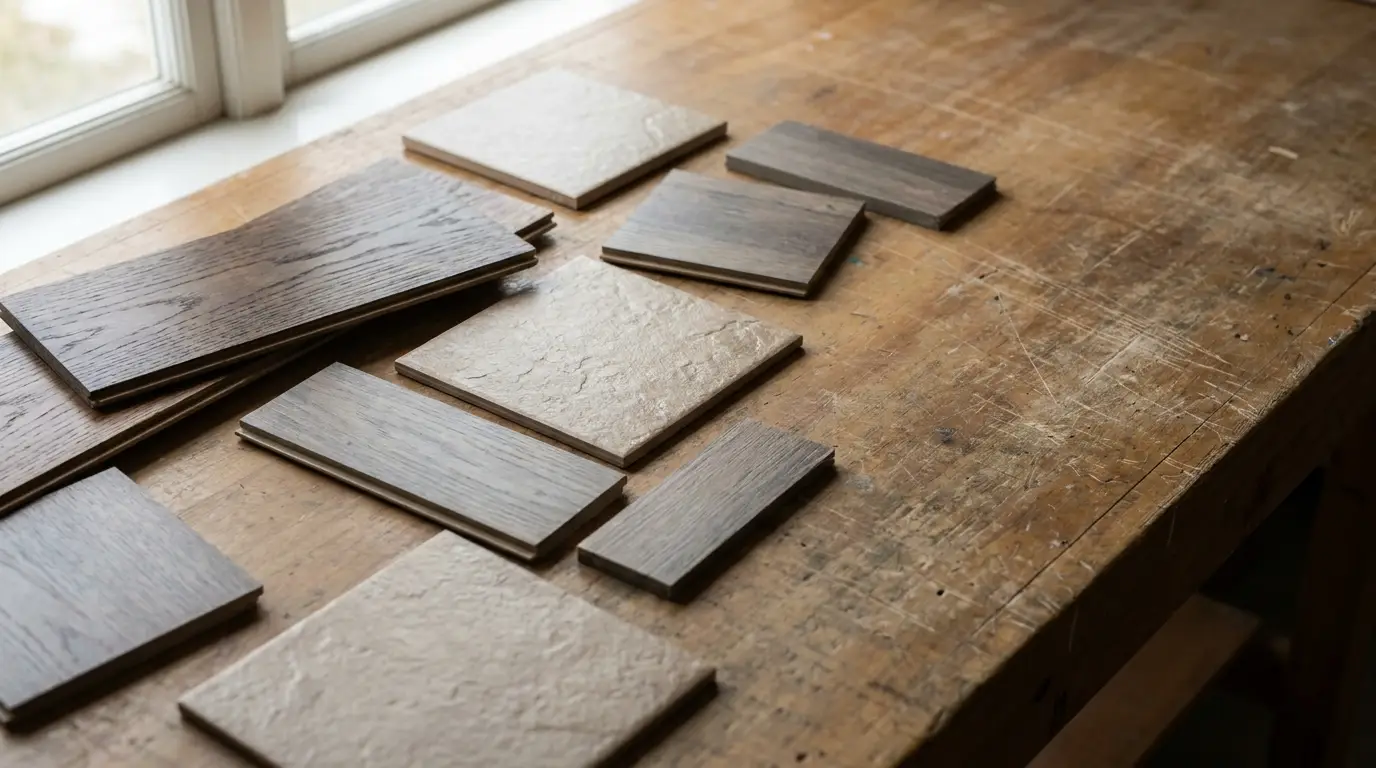
The distinction between a 10-light and a 500 chandelier is self-evident; however, when you add up those decisions in a whole house, the difference is breathtaking. You should make up a detailed list of specifications that contains:
- Flooring: hardwood, tile, laminate, or carpet?
- Cabinetry: Built-in or standard cabinets?
- Appliances: Standard or chef-grade appliances?
- Windows and Doors: Frame materials and energy efficiency ratings drastically vary in cost.
Don’t leave these as “allowances.” An allowance is an empty amount (e.g., flooring, $5,000). Assuming you actually tasted something that costs you 8,000, you have now put yourself in a hole of 3000. Select materials early to maintain a good forecast.
5. Determining Labor Costs and Professional Fee Structures
The costs of materials are not the battle; labor can be 40 to 60 percent of the overall cost of the build. Moreover, you need to consider the professionals who are making the project a reality.
| Category | Description |
|---|---|
| General Contractor | Typically pays a percentage (10-20%) of the overall cost of the building. |
| Subcontractors | Electricians, plumbers, and HVAC technicians. |
| Design Fees | Architects and interior designers. |
| Permits | Local government fees on building rights and the use of infrastructure. |
6. Accounting for Inflation and Supply Chain Volatility
The cost of lumber, steel, and copper may vary on a weekly basis in the current economic climate. The prediction that was made in January may be outdated by June.
To be more accurate, add a market volatility buffer to your prediction. Historical research on trends in the materials market, or call local suppliers to determine which materials are experiencing the greatest price volatility. When you notice a trend of increasing costs, consider buying materials and storing them in case you can do so according to your contract.
7. Creating a Contingency Fund for Unforeseen Expenses
Whatever the accuracy of your forecasting, the unforeseen will occur. During excavation, you can strike a ledge of rock, or a certain material may run out of stock, necessitating a more costly replacement.
Pro Tip: An average contingency fund would be between 10 and 15 percent of the total estimated project cost. It is not additional funds to upgrade the project, but a safety net so that the project will be completed in case of any hurdles.
Summary: Achieving Financial Precision in Home Construction
In the end, the value of precision can be determined. Home building cost is not a marathon race but a long one. It takes a serious attitude to data gathering, a profound appreciation of what you need in your own lifestyle, and a healthy appreciation of the uncertainty around the construction business. Defining your scope, analyzing your site, and making early decisions on the type of material you want to use get you out of the position of not knowing what to do and into the position of having a well-organized project.
Spreadsheets and manual research are crucial, but the best approach to ensure that your numbers are an accurate representation of the current market reality is by using a high-quality construction cost estimator. These seven steps will not help you dream about a home any longer: you are designing yourself a successful reality.