Smart Renovation Choices for Homeowners Living with Pets or Children

Many manuals for parents and pet parents will tell you what not to do. No light colours. Nothing delicate. The homes this creates feel like they’re on the back foot, rather than being beautifully designed castles in which to eat, drink and lounge. The better strategy is to name materials that are good enough, technically, meaning you’ll never have to compromise between a beautiful home and one that actually stands up to life.
Flooring Is Where the Decisions Matter Most
Floors are exposed to everything in a household. Wet shoes, dog nails, cups being dropped, toys being pushed around. The common mistake made by most homeowners is that they see this as more of an aesthetic choice that comes first. It’s more of a structural one giving the flak at it.
Dimensional stability should be your first checkpoint. Solid timber reacts to humidity by expanding and contracting – this is good for an isolated environment, not so much when a child floods the bathroom or the dog keeps coming in soaking wet. A material that warps or cups after a few exposures to moisture does so creating gaps, that gather dirt and eventually you will be needing to replace them altogether.
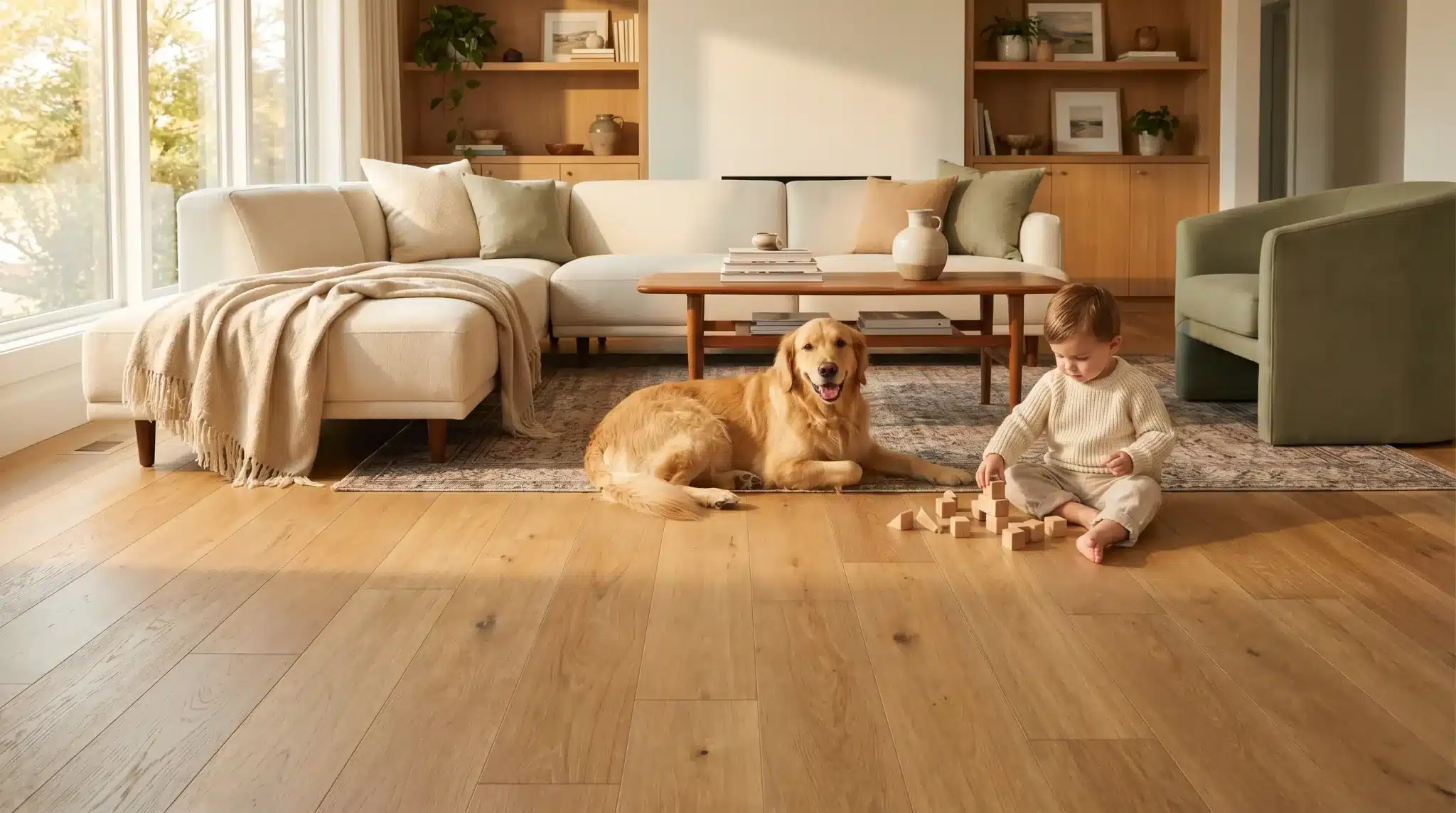
Engineered wood flooring on the other hand is designed differently. Its stress is distributed along the plank, given its cross-layered structure instead of concentrating it, is how it stands its ground where solid timber gives in. It fits very well over subfloors made of concrete and has no issues being used with radiant floor heating – two things solid timber flooring cannot guarantee – making it your top choice for rooms where kids frequently play on the floor.
When comparing products, the wear layer thickness should be on your radar. If it’s below 3mm, your chances of refinishing will be limited at the very best. A 4mm wear layer gives you two to three refinishing cycles, effectively meaning you just doubled up or tripled your flooring’s lifespan.
Finish and Texture Do More Work Than People Realize
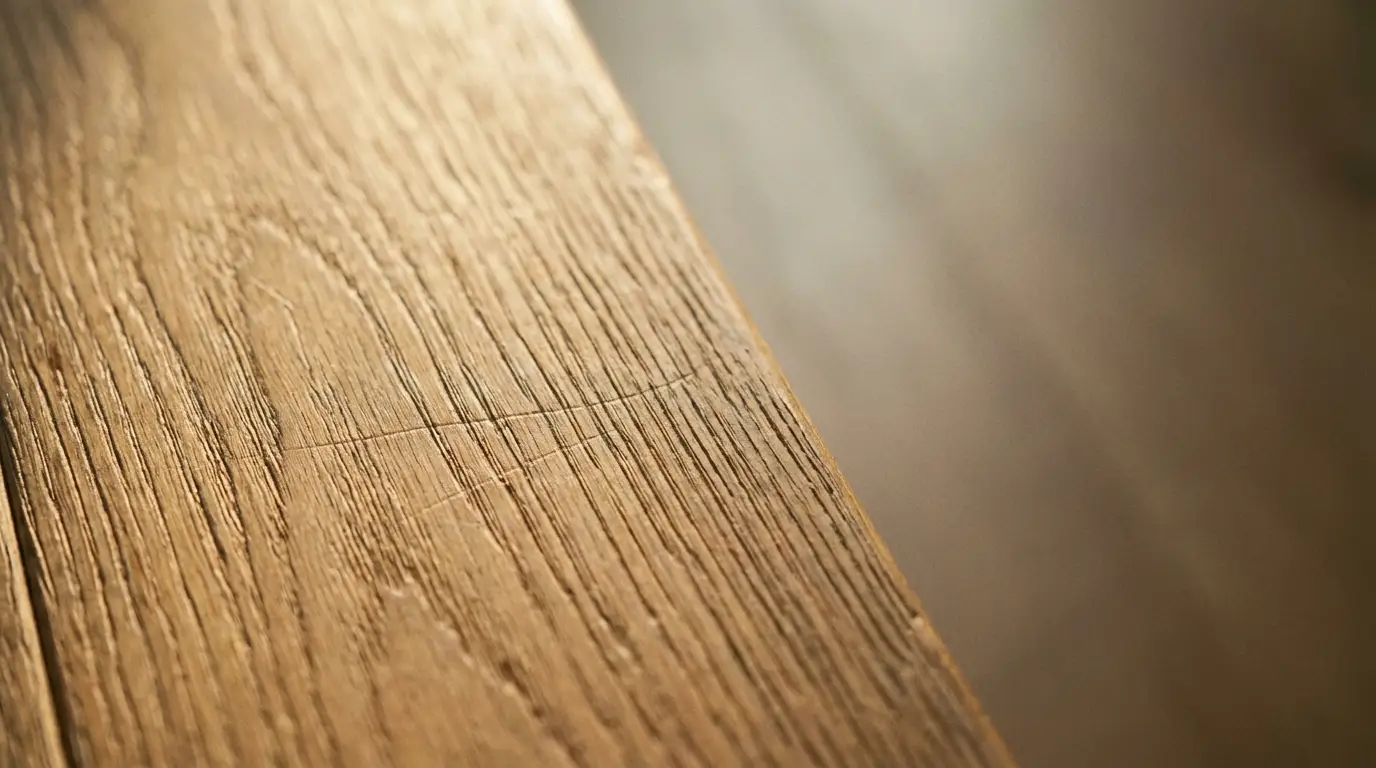
The Janka Hardness Scale helps you determine which floors can take the most indentations. The higher the number, the better the wood floor is at taking dents caused by little feet and pet claws. For example, European oak rates at around 1,290 lbf (a measure of force on an object). So, if you have little ones or pets, and you know the foyer in your home will be seeing a lot of action, this is the number you want to talk about with a wood flooring contractor.
The second important factor is the finish on the wood. While high-gloss wood floors look fantastic and are ultra-warm, they show every single scratch and make it look like your pets are having a blanket party in the middle of the living room. Wire-brushed or distressed wood floors are kinder in this sense because they reflect light differently. This phenomenon renders small surface scratches from claws and toys virtually unseen in regular light; and matte finishes do the same and wear even better in high traffic areas. Semi-gloss might look good in a brochure; but when you come home after a long day and notice all the scratches and tiny claw markings, it’s a different story.
Indoor Air Quality Is A Specification, Not An Afterthought
Children often play and crawl on the floor. If something is emitting from the floor, they will be the first ones to inhale it. Some adhesives used in flooring installation and products used to finish floors, such as stains, contain volatile organic compounds (VOCs) that can be emitted into the air for months, and sometimes years, after their application.
Not everyone thinks about these issues, but they are important considerations. Look for products that have a FloorScore label, which means that independent testing has found they meet the indoor air quality emission standards of the Collaborative for High Performance Schools program. Also, if sustainability is important to you, look for products that include materials that are Forest Stewardship Council-certified. Neither of these things adds anything to the product’s cost at the time of install, but they will add a lot to the air quality of your home once everything’s shut up tight.
Designing By Zone, Not By Room
A more palatable adjustment in how people consider making changes to their internal living environment is to shift from room-based thinking to zone-based thinking. It’s not “what floor for the living room” but “where does the traffic actually land, and what behavior happens there”.
Entry points, hallways, kitchen areas are the biggest victims of the lot. Hard surfaces with high moisture resistance should be installed here. The slip resistance rating – often expressed as an R-rating – matters in these zones too, especially with young children or large dogs that don’t slow down on turns.
Softer, higher, pile textiles and carpeting should be in a bedroom and adult sitting area where traffic is lower and controlled. Use them everywhere and you create maintenance problems. Put them in the right zones and they hold up and actually feel luxurious, not worn.
The 84% of homeowners who report increased enjoyment of their home after a renovation project (National Association of Realtors, 2022) aren’t talking about rooms that are a compromise – they’re talking about life zones that work. Hardwood flooring specifically rates high on both satisfaction and cost recovery (118% of project cost on resale).
The Aesthetic Doesn’t Have To Be A Casualty
The idea that a home occupied by pets and children has to look like a waiting room is outdated. The materials exist now to deliver a genuinely high-end finish that also performs under real conditions. The difference is knowing which specifications to ask about before purchase – wear layer depth, Janka rating, finish type, VOC certification – rather than after the floors are already down and showing wear.
Specify to your actual life. The aesthetic follows from there.