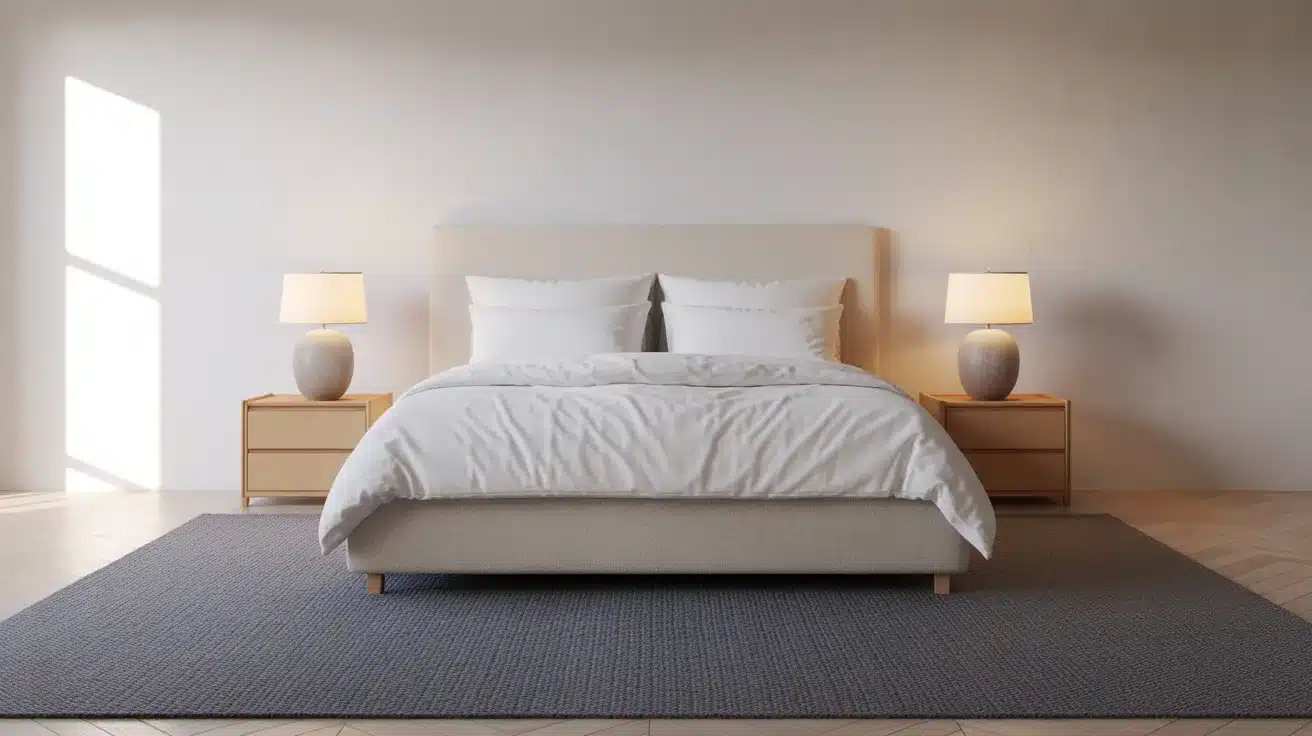
Rug Under Bed Rules: Size, Placement and Style

You bought the perfect rug. Now it sits in the corner, still rolled up, because you have no idea where it should go.
Does it slide all the way under the bed? Halfway? Should the nightstands sit on it or stay off it?
These are fair questions. And getting them wrong makes even a well-styled bedroom look slightly off.
The good part is that the rug under the bed rules are not that complicated. Once you know the basics of sizing and placement, the whole thing clicks into place pretty quickly.
This guide covers all of it. The right rug size for your bed, the best placement style for your room, and the mistakes worth skipping before you buy.
Why a Rug Under the Bed Actually Matters
A rug does more than look good. It anchors the bed to the room and gives the space a sense of order. Without one, the bed can look like it is floating, disconnected from the rest of the room.
A rug also softens hard floors, absorbs sound, and gives you a warm surface to step onto first thing in the morning. These are small things, but they add up fast.
The Golden Rules of Rug Under Bed Placement
Getting the size right matters, but knowing the rules behind it matters even more. Before you measure anything, these are the core guidelines that every good bedroom rug setup follows.
| Rule | What It Means |
|---|---|
| Extend at least 18 to 24 inches | The rug must stick out this far on both sides and at the foot of the bed |
| Always go bigger when unsure | A small rug looks like a mistake. A large one looks like a choice. |
| Leave 8 to 18 inches from the wall | The visible floor border frames the rug and keeps the room looking open |
| Center the rug with the bed | Uneven placement on either side throws off the whole room |
| Always use a rug pad | It prevents slipping and adds comfort, especially on hard floors |
| Keep nightstands consistent | Both on the rug or both off. Never one of each. |
| Test with painter’s tape first | Mark the rug size on the floor before buying. It saves costly returns. |
How Much Rug Should Show Around the Bed?
This is the question most buyers get wrong. The numbers are simple, but they change everything about how the room looks and feels once the bed is in place.
- Minimum on the sides: At least 18 inches of rug should show on each open side of the bed.
- Ideal on the sides: 24 inches gives a more balanced, finished look in standard and larger rooms.
- At the foot of the bed: Leave at least 18 inches, and more if you plan to add a bench.
- At the head/wall side: The rug tucks under here, so wall clearance matters more than rug exposure.
- In a small room, 8 to 12 inches of visible rug per side is acceptable and still looks clean.
- General rule: The rug must always cover the full area where your feet land when you get out of bed.
Rug Placement Styles: Which One Works Best for You?

There is no single way to place a rug under a bed. The right option depends on your room size, your rug size, and how much of your floor you want to show.
1. Full Under-Bed Placement
The entire rug goes under the bed frame, including all four legs. Nightstands can also rest on it comfortably. This works best in larger bedrooms with a 9×12 or 10×14 rug. It creates a grounded, pulled-together look, but it requires a bigger upfront investment.
2. Two-Thirds Placement (The Most Popular Option)
The rug starts two-thirds of the way under the bed from the foot end. The head of the bed and the nightstands stay on the bare floor. This is the most used setup among interior designers because it works in most standard-sized bedrooms without needing a large or costly rug.
3. Foot-of-Bed Only Placement
The rug sits just at the bottom of the bed and stays mostly visible in the room. This works well when the bed sits close to the wall, or when you already have carpet and simply want to add a layer of color or texture. A smaller accent rug works well for this placement.
4. Runner Rugs as a Budget-Friendly Option
Two runners, one on each side of the bed, can replace a single large area rug. This is a practical choice for long, narrow rooms or tight budgets. Keep both runners the same size, space them 3 to 6 inches from the bed frame on each side, and add a third runner at the foot if you want a more complete look.
What Size Rug Under King Bed: A Complete Breakdown
A king bed measures 76 inches wide and 80 inches long. That extra width compared to a queen changes how much rug coverage the space actually needs to look right.
| Rug Size | Best For | Room Size Needed | Nightstands On Rug? |
|---|---|---|---|
| 8×10 | Minimum option for small king bedrooms | Under 11×14 ft | No, stay off the rug |
| 9×12 | Most recommended, fits most standard rooms | 11×14 ft | Partially or fully |
| 10×14 | Full placement with bed and nightstands | 12×16 ft or more | Yes |
| 12×15 | Large master bedrooms, grander coverage | 14×18 ft or more | Yes |
Rug Sizes for Every Bed Type: A Quick Reference Guide
Every bed size calls for a different rug. Using queen-size logic for a king bed, or twin logic for a full, will almost always make the room look a little off.
- Twin (38” x 75 “): A 5×8 rug is the right starting point and works in most twin bedroom layouts.
- Full / Double (54” x 75” ): Go with a 6×9 or an 8×10, depending on how much clearance the room allows.
- Queen (60” x 80” ): An 8×10 is the standard choice and provides a balanced look on all three open sides.
- King (76” x 80” ): A 9×12 is the most recommended size, with 8×10 as the smallest acceptable option.
- California King (72” x 84 “): Choose a 10×14 or 12×15 to account for the added length of the frame.
How to Actually Place a Rug Under a Heavy Bed

Knowing the right size is one thing. Getting the rug physically under a heavy bed without wrecking your back is another. These steps make the whole process much easier.
Step 1: Clear the Area First
Remove nightstands, lamps, and anything else near the bed before you start. You need room to move around freely on all sides. Trying to do this with furniture in the way makes the job harder and the result uneven.
Step 2: Use Furniture Sliders
Place a furniture slider or glider under each bed leg. This lets you shift the frame slightly without dragging it across the floor. On hardwood, this step alone protects the surface from scratches while you reposition.
Step 3: Roll the Rug Tightly
A tightly rolled rug is far easier to feed under the bed frame. Start from the foot of the bed and push the roll slowly toward the head. If a second person is available, have them hold the other end to keep it straight.
Step 4: Unroll and Adjust
Once the rug is roughly in place, unroll it slowly and check that both sides show an equal amount of rug. Use a broom handle or a long ruler to nudge the rug from underneath without crawling under the frame.
Step 5: Lay Down the Rug Pad
Slide the rug pad under the rug once it is positioned correctly. If the rug sits on carpet, use a pad designed for carpet-on-carpet use. A standard hard-floor rug pad on carpet will bunch up and shift within days.
Common Rug Placement Mistakes and How to Fix Them
Even a well-chosen rug can make a bedroom look off if the placement is not right. These are the most common mistakes people make, along with exactly how to correct them.
| Mistake | Why It Happens | How to Fix It |
|---|---|---|
| The rug is too small | Buyers choose based on price, not room size | Always go one size up when you are between two options |
| The rug pushed all the way to the headboard wall | Trying to cover more floor, but it pulls too much rug under the bed | Start at the foot and slide the rug no more than two-thirds under |
| One nightstand on the rug, one off | The rug is slightly undersized or off-center | Keep both nightstands in the same position, either both on or both off |
| No wall clearance | The rug runs nearly edge-to-edge and looks like basic carpet | Leave at least 8 to 12 inches of bare floor between the rug and the wall |
| Sized to the bed only, not the room | The rug fits the bed, but looks out of place in the full layout | Measure the room first, then size the rug to work with both the bed and the space |
| Skipping the rug pad | Left out to save money | Always use a rug pad. It keeps the rug flat, prevents slipping, and adds life to the rug itself. |
How to Layer Rugs Under the Bed
Start with a large, flat base rug such as a jute or natural fiber option, then add a smaller, softer rug on top for contrast and texture.
Let at least 2 to 3 inches of the base rug show around all sides of the top rug so the layers read as intentional. Place the top rug at the foot of the bed or slightly off-center for a relaxed, lived-in look.
Stick to two layers maximum. More than that tends to look cluttered rather than considered.
Final Verdict
Getting the rug right does not take a designer or a big budget. It takes the right size, the right placement, and a little patience while testing things out.
Start with the two-thirds method if you are unsure. It works for almost every bed size and every room layout. Then follow the 18 to 24-inch rule on all open sides, and use painter’s tape before you spend a single dollar.
The rug under the bed rules covered in this guide give you everything you need to set up your bedroom properly. No guessing, no costly returns, and no rooms that look slightly off.
Tried any of these placement methods? Drop your experience in the comments below.