How to Choose a Sheepskin Rug That Suits Your Space and Lifestyle

Sheepskin rugs come in a much wider range of types, sizes, and finishes than most buyers realize. When walking into a showroom or browsing for rugs online, the choices can quickly become overwhelming. Single pelts, multi-pelt layouts, long-wool varieties, short-wool varieties, dyed options, natural tones, and a half-dozen size categories all serve different purposes.
To make the right choice, you need to think about how the rug will actually be used, where it will sit in the home, and what kind of maintenance it will need. A rug that looks perfect in a showroom is not ideal for a high-traffic hallway, and a beautiful long-wool option will be impractical in a household with young children or pets. Understanding the differences between the various types of sheepskin rugs will help you narrow down the options.
Match the Size to the Function
Sheepskin rugs typically come in single, double, quad, and larger configurations. Single pelts measure roughly two by three feet and work well as accent pieces, draped over chairs, layered on top of larger rugs, or placed beside a bed as a soft landing for bare feet.
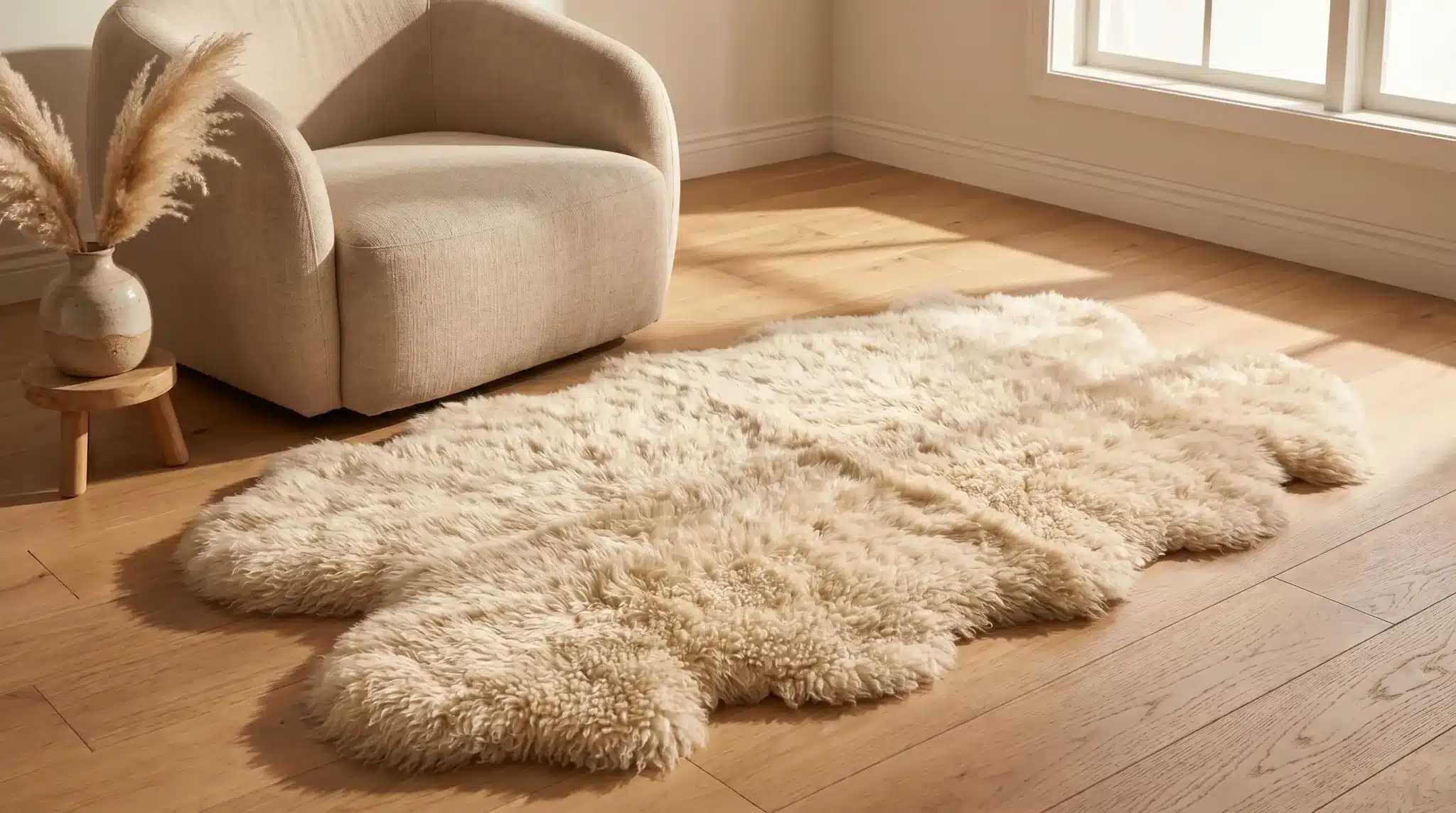
Double and quad pelts cover more area and suit applications like living room rugs, oversized bedside coverings, or seating area accents. Larger multi-pelt rugs, sometimes joining six or more individual skins, function as primary floor coverings in bedrooms, lounge areas, or nurseries.
The size should match how the rug will be used, not simply the available floor space. A rug that is too small disappears in a room, while one that is too large dominates the space and becomes harder to clean and rotate.
Consider Wool Length and Density
Long-wool sheepskins, with fibers measuring three inches or more, offer maximum softness and a luxurious appearance. They work beautifully as accent pieces in low-traffic areas where their texture can be appreciated without constant compression.
Short-wool varieties, with denser, shorter fibers, hold up better in high-traffic areas. They show foot traffic less visibly, are easier to clean, and tolerate more handling without matting. For households with active routines, short-wool options often prove more practical, even if they lack the dramatic visual impact of longer wool.
Think About the Room Environment
The rug’s performance and lifespan depend on its environment. Direct sunlight gradually fades both natural and dyed wool, so rugs placed near large windows may need rotation to age evenly.
Humidity is also an important factor. Damp basements or bathrooms are poor environments for sheepskin, since the leather backing can stiffen, mildew, or develop odors when exposed to consistent moisture. Living rooms, bedrooms, and dressing areas with stable temperature and humidity provide ideal conditions.
The natural thermal properties of wool are worth considering as well. Sheep’s wool functions effectively as a thermal insulation material, which translates to rugs that feel warm underfoot during cold months and help retain room heat near floor level.
Considerations for Pets and Children
Households with pets or young children should approach sheepskin selection with realistic expectations. Dogs and cats often gravitate toward sheepskin because of its softness and warmth, which means the rug will see daily contact, shed fur, and the occasional accident.
Short-wool varieties handle these conditions better than long-wool options. Natural undyed sheepskin is easier to spot clean than darker dyed versions, where cleaning marks can be more visible. Smaller, more affordable single pelts may also make more sense than expensive multi-pelt rugs in households where damage or staining is likely.
Choose Between Natural or Dyed Wisely
Sheepskin is available in its natural colors, ranging from cream to brown to gray, as well as in dyed options spanning nearly any color.
Natural tones tend to age more gracefully and hide minor staining or wear better than vibrant dyes. Dyed sheepskins can anchor a color scheme or provide a bold visual element, but they require more careful maintenance. Sun exposure fades dyed wool faster than natural wool, and aggressive cleaning can pull color from the fibers.
For statement pieces in low-traffic areas, dyed options work well. For everyday use, natural colors often prove more practical.
Confirm the Quality of the Hide
The leather backing matters as much as the wool itself. Quality sheepskins have smooth, supple backings that flex without cracking, even after years of use. Stiff, brittle backings are a sign of poor tanning or improper finishing, and these rugs tend to deteriorate quickly.
Edges should be even and reinforced, without fraying or loose stitching on multi-pelt versions. The wool should feel dense at the base rather than sparse, which indicates a healthy hide and proper preparation. Cheap sheepskins often look acceptable when new but reveal their quality issues within a few months of normal use.
A Rug That Fits the Life Around It
The best sheepskin rug is the one that suits both the space and the daily reality of the household. Thinking carefully about size, wool type, room conditions, and household activity produces a choice that will look and feel right for many years.