Retaining Wall Ideas to Transform a Sloped Backyard

If your backyard slopes, you already know the frustration. You can’t really mow it. You can’t set up a table without one leg dangling in the air. The kids slide down it once and lose interest, and the rest of the time it just sits there looking like the part of the yard you gave up on.
Here’s the shift worth making: that slope isn’t the problem. It’s the raw material. Build the right retaining walls into it and that awkward hillside turns into a stack of usable, good-looking spaces that often beat anything a flat lot could give you.
Retaining walls pull double duty. They hold the soil back and steer water where it should go, and at the same time they carve the land into something you can actually live on. Here are the ways I’d put them to work on a sloped yard.
Terrace It Into Levels You Can Use
Start with the big one. A retaining wall takes a single steep grade and breaks it into a few flat levels, so instead of one hill you avoid, you get a set of outdoor rooms stepping down the slope. Picture a lawn for the kids on one level, a dining spot on the next, a quiet garden on the one below.
Terracing also just looks calmer. Your eye travels down the yard in steps instead of staring at one long drop, and every level gets a job to do. On a steep yard, a few shorter walls usually beat one tall one, both for the look and for keeping everything stable.
Carve Out a Patio or Hangout Spot
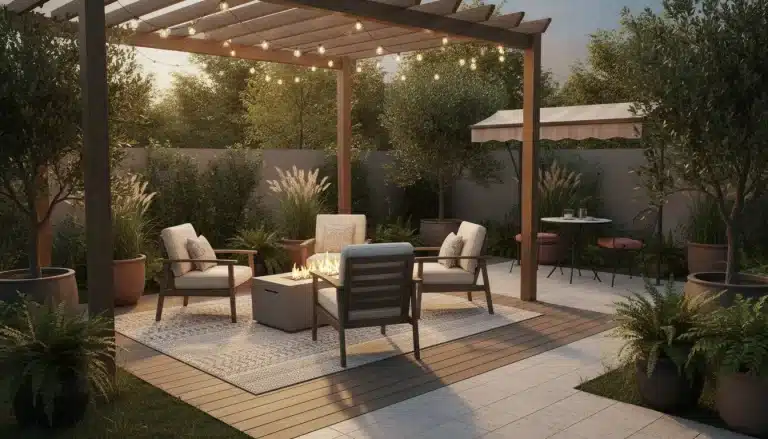
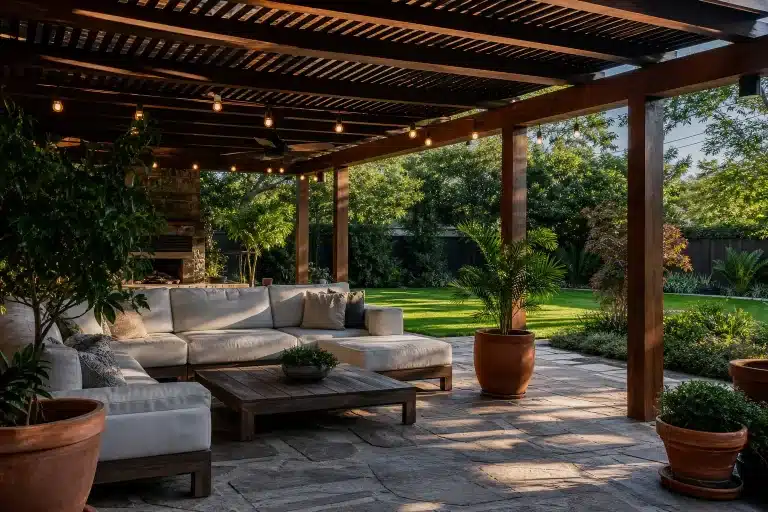
Once you’ve got a flat terrace, you’ve got the start of a real outdoor living area. Cut a level pad into the slope and it becomes the perfect home for a patio, a fire pit, or a dining set, with the wall behind it acting like a built-in backdrop that makes the space feel tucked away and private.
Honestly, this is where most sloped yards win. The grade you used to ignore turns into the spot everybody gathers, and the wall hands the area a finished feel you rarely get from an open flat yard.
Turn a Low Wall Into Seating
Here’s an easy one to miss: a low wall can double as your seating. Build it to about bench height around a patio or fire pit, cap it with a smooth stone or concrete top, and you’ve got permanent seats that never tip over and never get hauled into the garage for winter.
You’re building the wall anyway, so you might as well get extra mileage out of it. Seat walls shine around gathering spaces, where they keep things open and connected instead of cramming the area full of chairs.
Work in Garden Beds and Planting Pockets
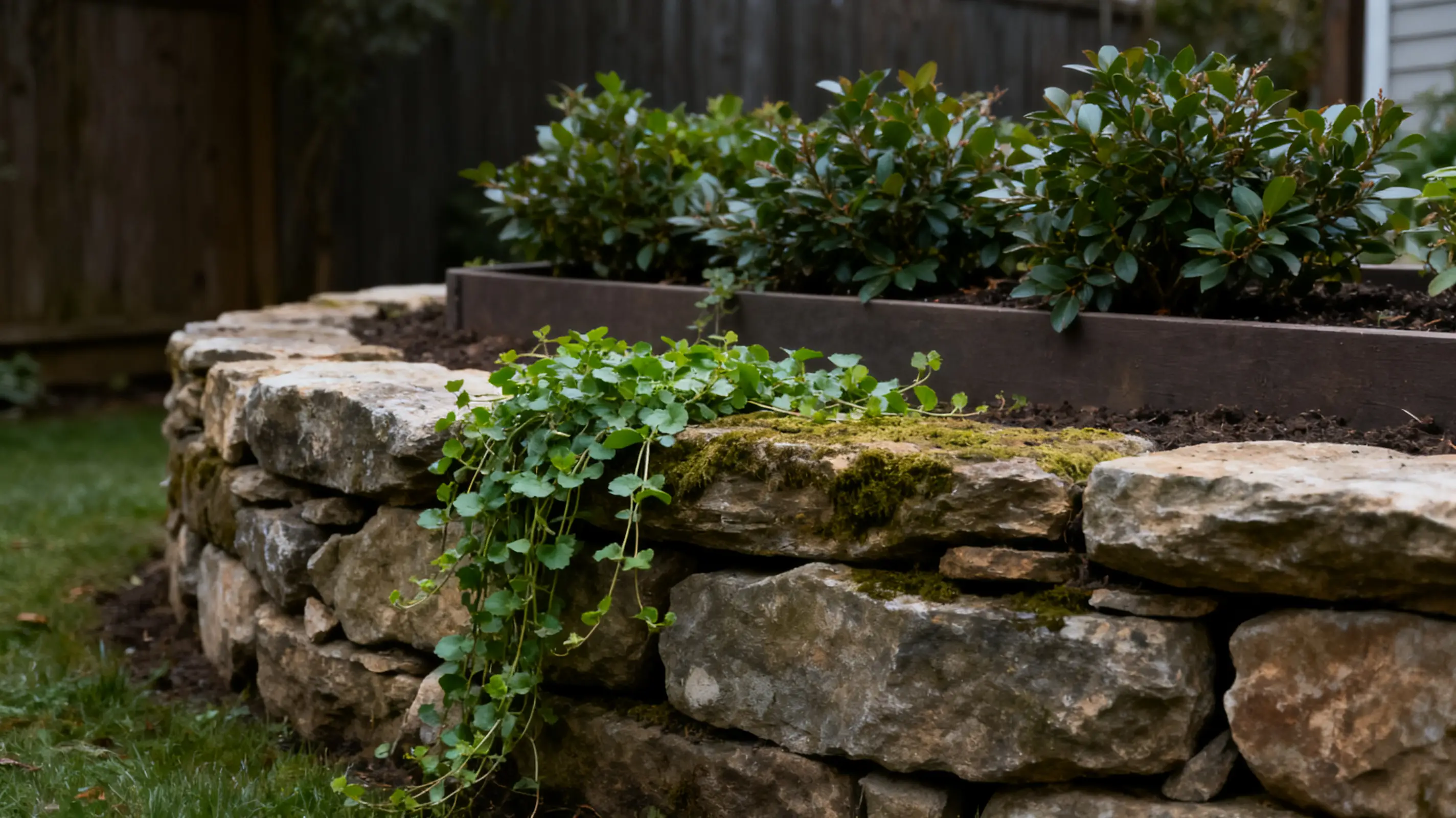
Walls and gardens are natural partners. The flat ground behind a wall makes a great raised bed, drains better than a slope, and saves your back since you’re not bending all the way to the ground. Grow vegetables, plant a cutting garden, or just fill it with shrubs you don’t have to fuss over.
You can dress up the walls themselves too. Leave a few planting pockets, or pick trailing plants that spill over the edge, and you break up all that hard stone so the structure settles into the landscape instead of shouting for attention.
Tie the Levels Together With Steps and Paths
A terraced yard needs a way to get around, and that’s your chance to add some character. Steps and pathways that flow from one level to the next turn a handful of separate terraces into one space that feels like it belongs together.
Match the steps to the wall material and the whole thing looks intentional. Go wide and gentle with the stairs and the yard feels relaxed and welcoming. Wind a path through it and even a small sloped lot suddenly feels like there’s more to explore.
Treat the Wall Like a Design Choice
A retaining wall is one of the biggest surfaces back there, so whatever material you pick sets the mood for everything around it. Natural stone reads timeless and organic. Segmental concrete block gives you clean lines and a ton of colors and textures to play with. Poured concrete keeps things modern and simple.
Tie the wall back to your house and the rest of your hardscaping. When the colors and textures talk to your home, your patio, and your walkways, the wall looks like part of a plan instead of a slab of infrastructure that wandered into the yard.
Light It So You Can Use It at Night
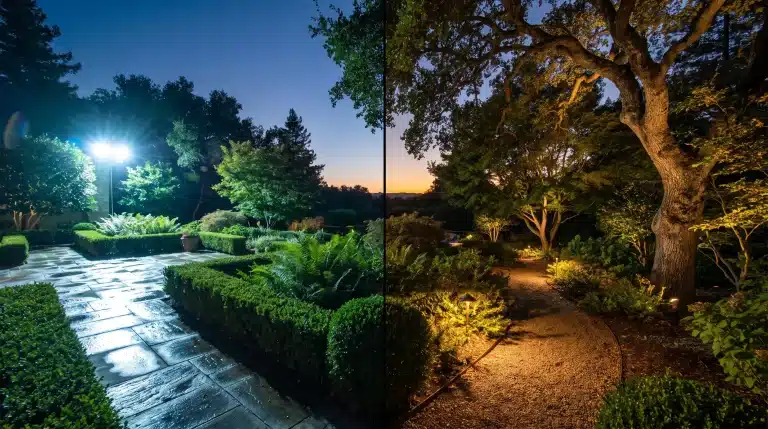
Lighting is the finishing touch that keeps a terraced yard alive after sunset. Tuck low-voltage lights into the wall face, under the cap, or along the steps, and you get safety and mood in one move. They wash across the texture of the stone and stretch your evenings outside well past dark.
Build It to Actually Last
Everything above is what makes a sloped yard beautiful. What makes it last is the part you never see. A wall holding back soil has to handle water pressure, drain properly, and sit on a base that’s prepped right, and in a lot of areas, anything over a certain height needs a permit and an engineered design.
A short decorative border? Sure, that’s often a fair weekend project. Anything taller or structural is a different animal, and a wall that gives out costs far more to fix than it would have to build right the first time. For those, lean on an experienced retaining wall contractorwho handles the drainage, the base, and the structural side, so the space you love stays standing for years.
The Bottom Line
A sloped backyard isn’t a flaw you’re stuck with. It’s the start of something a flat yard can’t touch. Add thoughtful retaining walls, terrace it into levels, work in seating, gardens, and a little lighting, and the corner you used to write off becomes the place you spend the most time.