Is Heat Treatment the Best Solution for Bed Bugs?

Bed bugs have a knack for turning a small problem into a long, expensive saga. They hide in seams, survive on tiny blood meals, and spread quietly through luggage, second-hand furniture, and even neighbouring flats. So when someone hears, “Heat kills them in a day,” it’s tempting to treat heat treatment as the silver bullet.
But is it the best solution? Often, yes—yet not always. The smarter question is: when is heat the best tool, and what needs to happen around it to keep bed bugs from coming back?
Why Bed Bugs Are So Difficult to Eliminate
Bed bugs aren’t particularly “tough” as insects, but they’re exceptionally good at staying out of reach. The typical infestation spans more than just the mattress. It may include:
- bed frames and headboards (especially screw holes and joints)
- skirting boards, carpet edges, and floor cracks
- bedside furniture, drawers, and curtain hems
- sofas and upholstered chairs in living areas
Add in the fact that eggs are well-protected and that many populations show resistance to common insecticides, and you can see why DIY efforts often drag on. A few survivors can restart the cycle in weeks.
That’s what makes heat treatment compelling: it targets the entire room environment, not just the spots you can see.
How Heat Treatment Works (and Why It’s Effective)
The Basic Science: Temperature Beats the Lifecycle
Heat treatment raises the temperature of an infested area to levels lethal to bed bugs across all life stages. While exact thresholds vary by exposure time, professionals typically aim to maintain temperatures in the 50–60°C range long enough to penetrate hiding places and kill adults, nymphs, and eggs.
That “all life stages” point matters. Many conventional treatments struggle with eggs and rely on repeat visits timed to the hatch cycle. Heat, when executed properly, compresses what might be weeks of stop-start progress into a single, intensive intervention.
What Professional Heat Treatment Looks Like in Practice
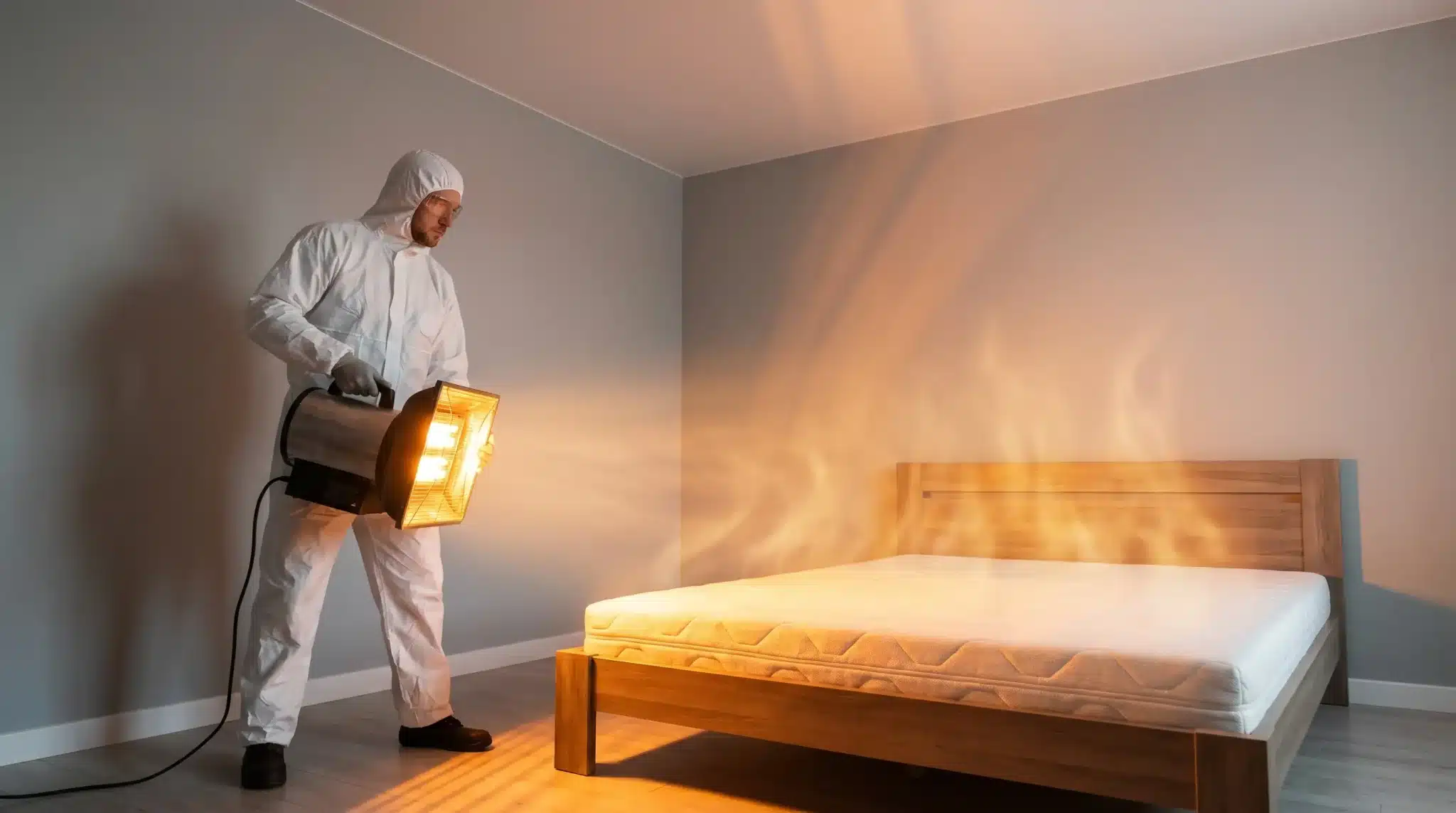
In real buildings, heat isn’t as simple as turning up the thermostat. Heat needs to reach behind furniture, into wall-floor junctions, and through clutter—without damaging belongings or creating unsafe conditions. That’s why reputable providers use specialised heaters, high-powered fans, remote temperature sensors, and careful room mapping.
If you want an example of what a thorough approach entails, this guide to professional heat-based solutions for eliminating infestations lays out the process and considerations clearly. The key takeaway: effectiveness depends less on the idea of heat and more on the delivery—coverage, airflow, monitoring, and dwell time.
When Heat Treatment Is the Best Option

Heat tends to shine in a few common scenarios, especially when speed and completeness matter.
Time-Sensitive Situations
If you manage short-term lets, hotels, care homes, or student housing, downtime is costly. Heat can often achieve rapid knockdown compared with multi-visit chemical programmes. Even in a private home, many people value getting their space back quickly—particularly if anxiety and sleep loss are escalating.
Complex or Widespread Infestations
When bed bugs have moved beyond one bed or room, targeted spot treatments become harder to manage. Whole-room (or whole-unit) heat can reset the environment more comprehensively—assuming the infestation hasn’t spread extensively into neighbouring units, which requires a broader plan.
Insecticide Resistance Concerns
Resistance doesn’t mean chemicals never work, but it does mean results can be inconsistent. Heat bypasses resistance entirely because it’s a physical kill mechanism, not a chemical one.
Here’s a practical way to think about it. Heat treatment is often a strong candidate if you’re dealing with:
- repeated reappearance after careful cleaning and laundering
- bites or sightings across multiple rooms
- a situation where repeat visits are difficult to schedule
- concerns about chemical exposure (e.g., sensitive occupants), balanced against the practical realities of heat
(That’s the only checklist you need—everything else comes down to assessment and execution.)
The Limitations (and the Fine Print People Overlook)
Heat Has No Residual Protection
This is the biggest misconception. Heat can wipe out what’s present that day, but it doesn’t leave a lasting barrier. If bed bugs are reintroduced—through travel, visitors, used furniture, or an untreated adjacent unit—heat won’t prevent a new infestation.
For that reason, heat is often strongest when paired with monitoring and prevention measures afterward, and sometimes with targeted residual products applied strategically by a professional (where appropriate).
Clutter and Contents Can Undermine Results
Clutter isn’t just a housekeeping issue; it’s a physics issue. Dense piles of clothing, stacked boxes, and tightly packed drawers can create cool spots where bed bugs survive. Heat treatment usually comes with preparation requirements: laundering, bagging, reducing clutter, and moving items to allow airflow.
Not Every Space Is Heat-Friendly
Certain buildings and room setups are challenging: poor insulation, unusual layouts, sensitive materials, or strict building management rules. There are also practical risks—heat-sensitive items (candles, aerosols, some electronics, vinyl records) must be removed or handled carefully. A good provider will give clear guidance and won’t gloss over these constraints.
Cost Can Be Higher Upfront
Heat is often more expensive than a basic chemical visit. The real comparison, though, is total cost to resolution. A cheaper approach that requires multiple treatments, repeated laundry cycles, and ongoing disruption can end up costing more—in money, time, and stress.
Making
Making Any Treatment “Stick”: What to Do Before and After
e best heat job can be undone by weak follow-through. The goal after treatment is simple: detect early, reduce hiding places, and prevent reintroduction.
Before Treatment: Set the Stage for Success
- Follow prep instructions exactly (especially laundering and reducing clutter).
- Avoid moving infested items into clean rooms; it spreads the problem.
- Don’t assume the mattress is the whole story—bed frames and surrounding furniture matter.
After Treatment: Keep Pressure On
Use mattress encasements, install interceptor traps on bed legs, and keep beds slightly pulled from walls to reduce access routes. If you live in a multi-unit building, notify management—bed bugs don’t respect property lines, and coordinated action is often what separates a one-time fix from a recurring cycle.
Also, keep expectations realistic: seeing a stray bug shortly after treatment doesn’t always mean failure (bugs can be dislodged during the process), but ongoing activity should trigger prompt follow-up.
So—Is Heat Treatment the Best Solution?
Heat treatment is one of the most effective single interventions available because it can eliminate bed bugs across life stages quickly and without relying on chemical susceptibility. When done professionally, it can dramatically shorten the path to resolution.
Still, “best” depends on context. Heat is ideal when speed matters, when infestations are hard to pinpoint, or when resistance is suspected. It’s less ideal when reintroduction risk is high and no monitoring or prevention is planned, or when the environment can’t be prepared properly.
If you approach heat as part of a broader strategy—assessment, preparation, treatment, and post-treatment vigilance—it’s often not just a good option. It’s the option that finally makes the problem end.