How to Get Rid of Stink Bugs Fast (Indoors and Out)

Stink bugs have a way of showing up all at once. One afternoon you spot one on a sunny window. By evening, there are a few more near the ceiling. Try to crush one, and you will regret it fast.
The good news is that removing them is straightforward once you know the right method. This post covers how to get rid of stink bugs inside your home. It also covers natural repellents and how to stop them from returning.
What Are Stink Bugs?
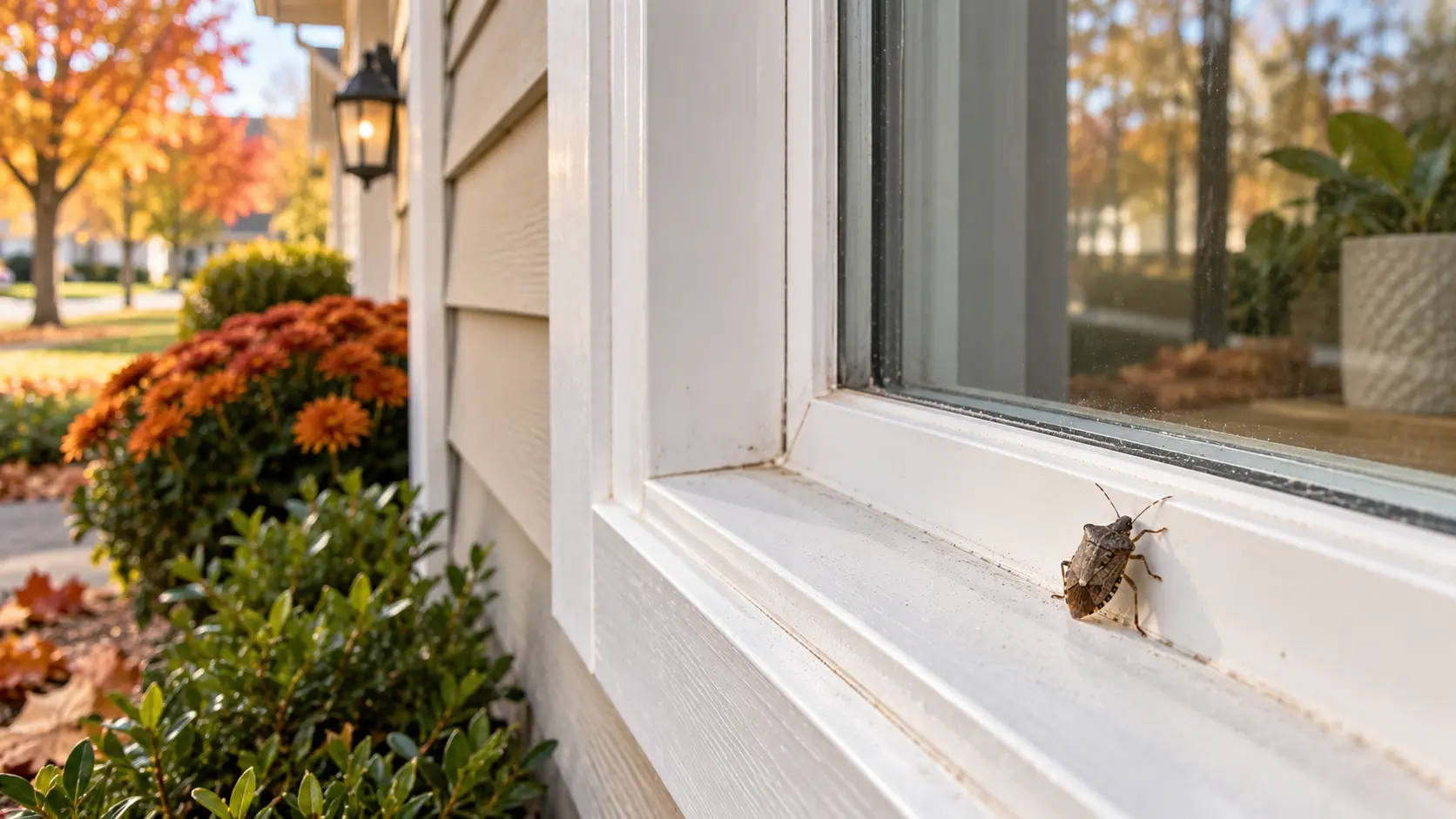
Stink bugs are shield-shaped insects that release a strong odor when threatened or crushed. The brown marmorated stink bug is the most common type found in U.S. homes. It arrived from East Asia as an invasive species in the 1990s.
- Size: Adults are roughly half to three-quarters of an inch long.
- Color: Brown or gray with mottled markings and light bands on their antennae.
- Body shape: Broad and flat, described as shield-shaped.
- Young (nymphs): Rounder, wingless, and may appear greenish or black.
They do not bite, sting, or spread disease to people. Their main problem is entering homes in large numbers as temperatures drop each fall.
Why Are Stink Bugs in Your House?
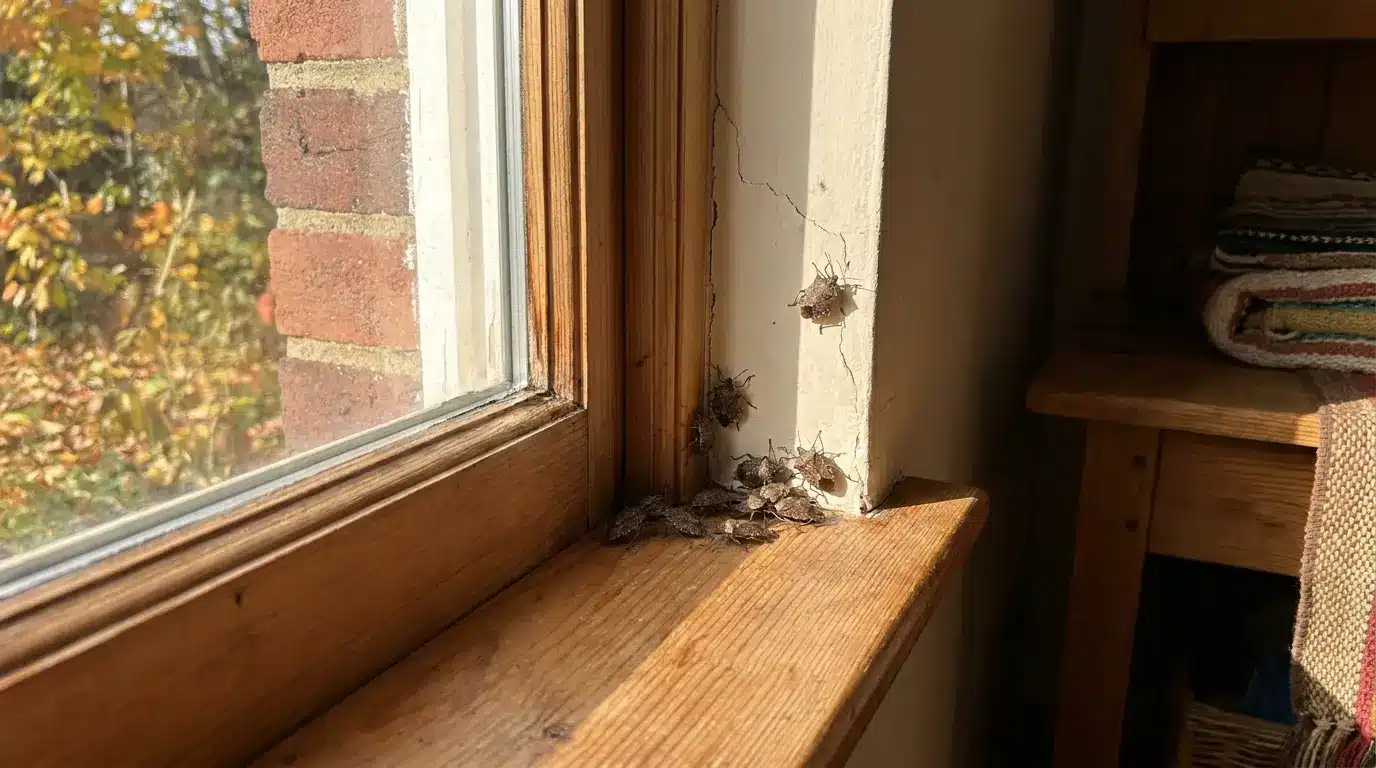
They are not inside looking for food. They are looking for warmth. Here is why they show up indoors:
- They need shelter from the cold. As outdoor temperatures fall, they seek protected spots to survive winter through a state called diapause.
- Walls and attics suit them well. Spaces inside walls, attics, and around window frames give them the dark, still conditions they need.
- One bug attracts more. After finding shelter, they release aggregation pheromones that draw others to the same spot.
- Sunny walls bring them closer. South-facing walls stay warmer in fall. Large groups collect there before finding a way inside.
- They return to familiar places. Known entry points attract them to the same parts of a home year after year.
How to Get Rid of Stink Bugs From Your Home
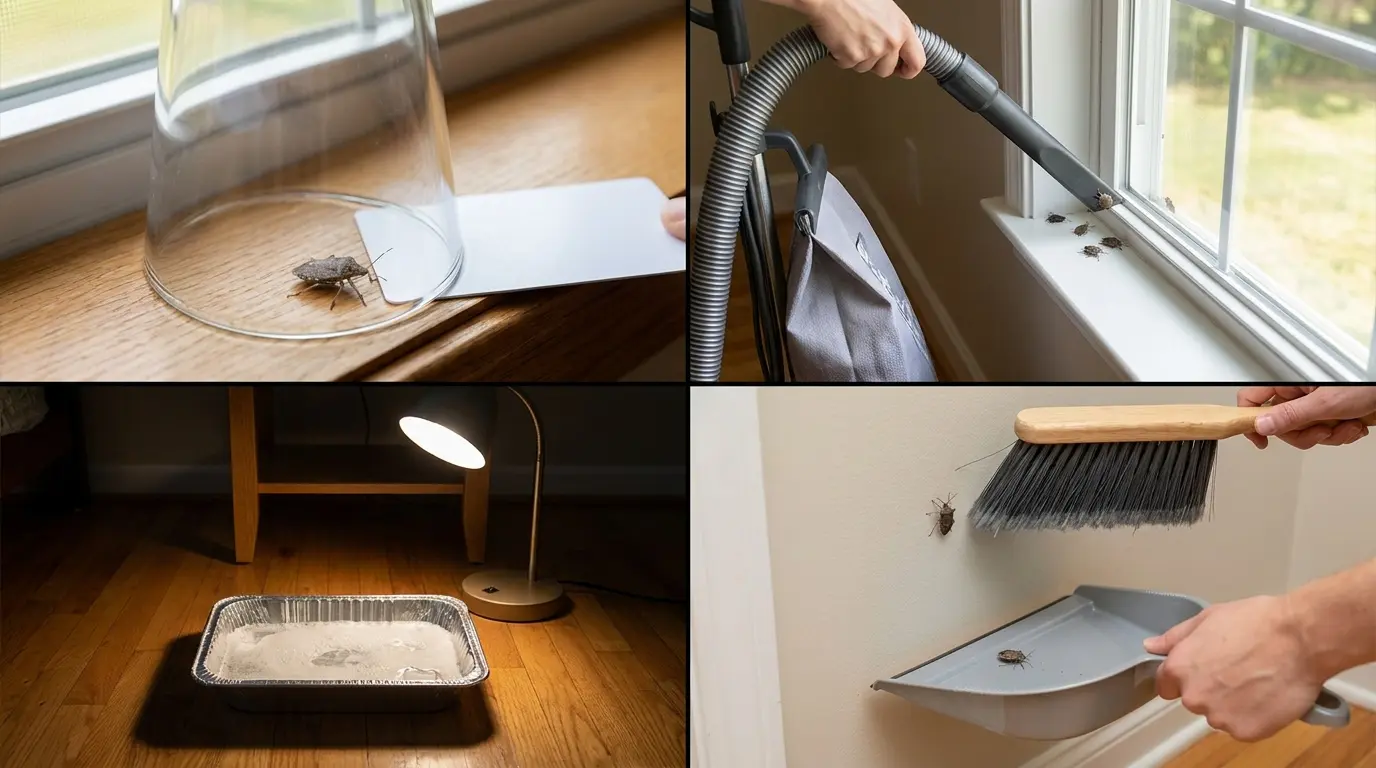
If you already have them indoors, the first rule is simple: do not squash them. Crushing releases the odor they are named for. That smell clings to fabric, walls, and carpet for hours. Try one of these methods instead.
Method 1: Cup and Paper
Gently trap the bug under a cup. Slide a piece of paper underneath and carry it outside.
Move slowly. Sudden movement is what triggers the smell. This works well for a single bug on a wall or window.
Time needed: About 30 seconds.
Method 2: Vacuum With a Bag
Use a vacuum when several bugs are present. Use the hose attachment to reach corners, curtain rods, and ceiling fixtures.
Seal and remove the bag right away. Odor builds inside fast. With a bagless model, empty it outdoors and rinse the bin with soapy water before bringing it back inside.
Time needed: 3 to 5 minutes.
Method 3: DIY Light Trap
Fill a shallow foil pan with two inches of water and a few drops of dish soap. Shine a lamp at the surface and leave it in a dark room overnight.
The bugs are drawn to the light. They land in the water and drown without releasing their smell. Check and empty the pan each morning.
Time needed: 5 minutes to set up, then 6 to 8 hours overnight.
Method 4: Broom Handle Trick
These insects drop straight down when startled. Nudge one with a broom handle along the wall or ceiling. Have a dustpan or container ready to collect it as it falls.
Prepare the container before nudging. Any delay gives the bug time to fly off or land somewhere harder to reach.
Time needed: About 20 seconds.
Natural Ways to Repel Stink Bugs
These options help keep bugs away from common entry points without store-bought pesticides.
1. Essential Oil Spray
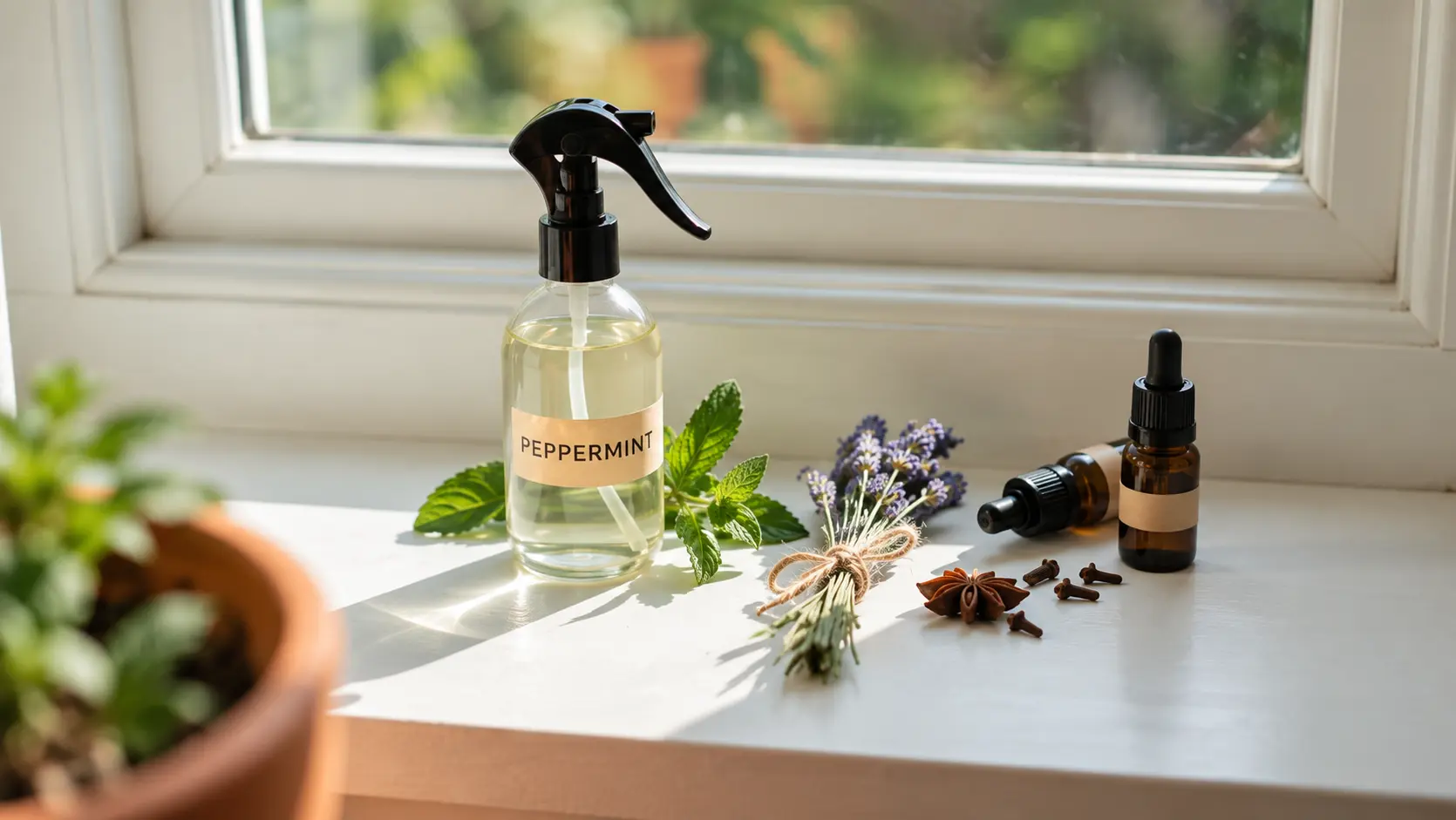
Peppermint, lavender, and clove oils repel these insects when sprayed at entry points. The strong scent interferes with their senses without harming people or pets.
Reapply every few days. The scent fades quickly and loses its effect.
- Mix: 10 drops of essential oil + 16 ounces of water in a spray bottle.
- Apply to: Window frames, door gaps, and baseboards.
2. Vinegar and Dish Soap Solution
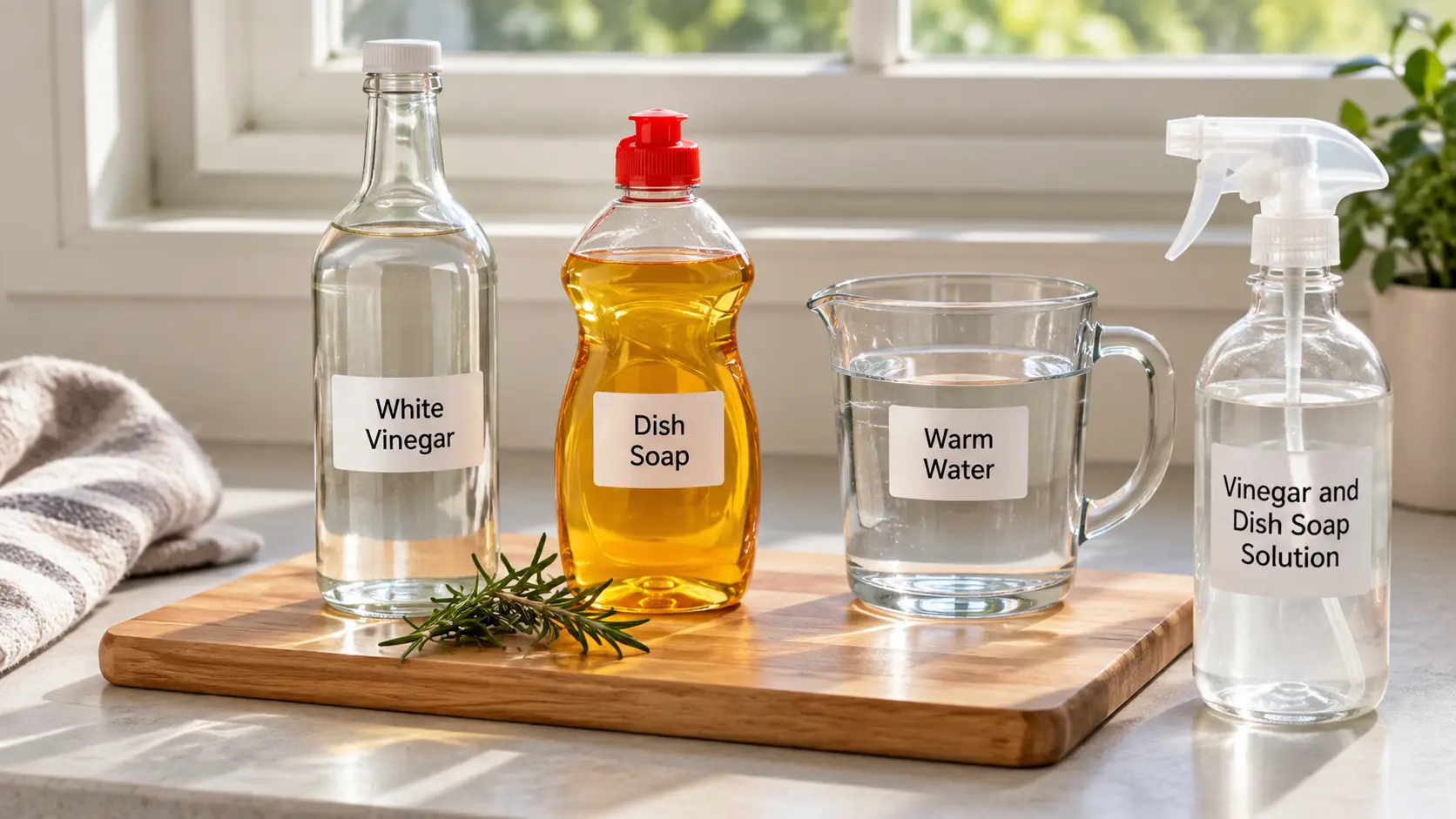
This is a stronger option for bugs inside or clustering near windows. Shake the bottle well before each use. The soap and vinegar separate when left sitting.
- Mix: 1 cup white vinegar + half a cup dish soap + 2 cups hot water.
3. Whole Cloves and Garlic
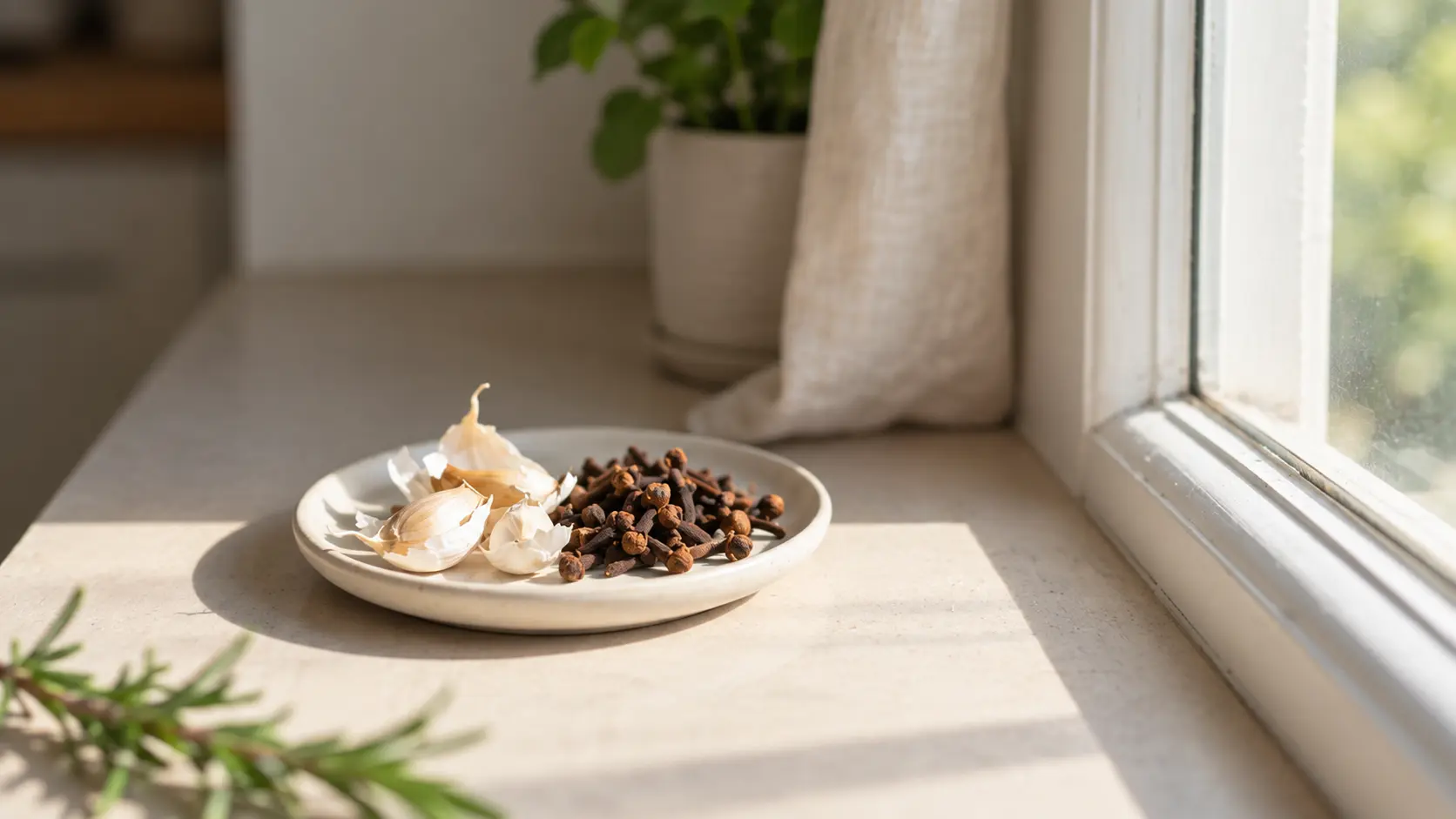
Place whole cloves or crushed garlic in a small tray near windowsills and doormats. Both scents mask the trail insects use to return to the same spot.
Replace them every one to two weeks. The smell weakens as they dry out.
4. Diatomaceous Earth and Neem Oil
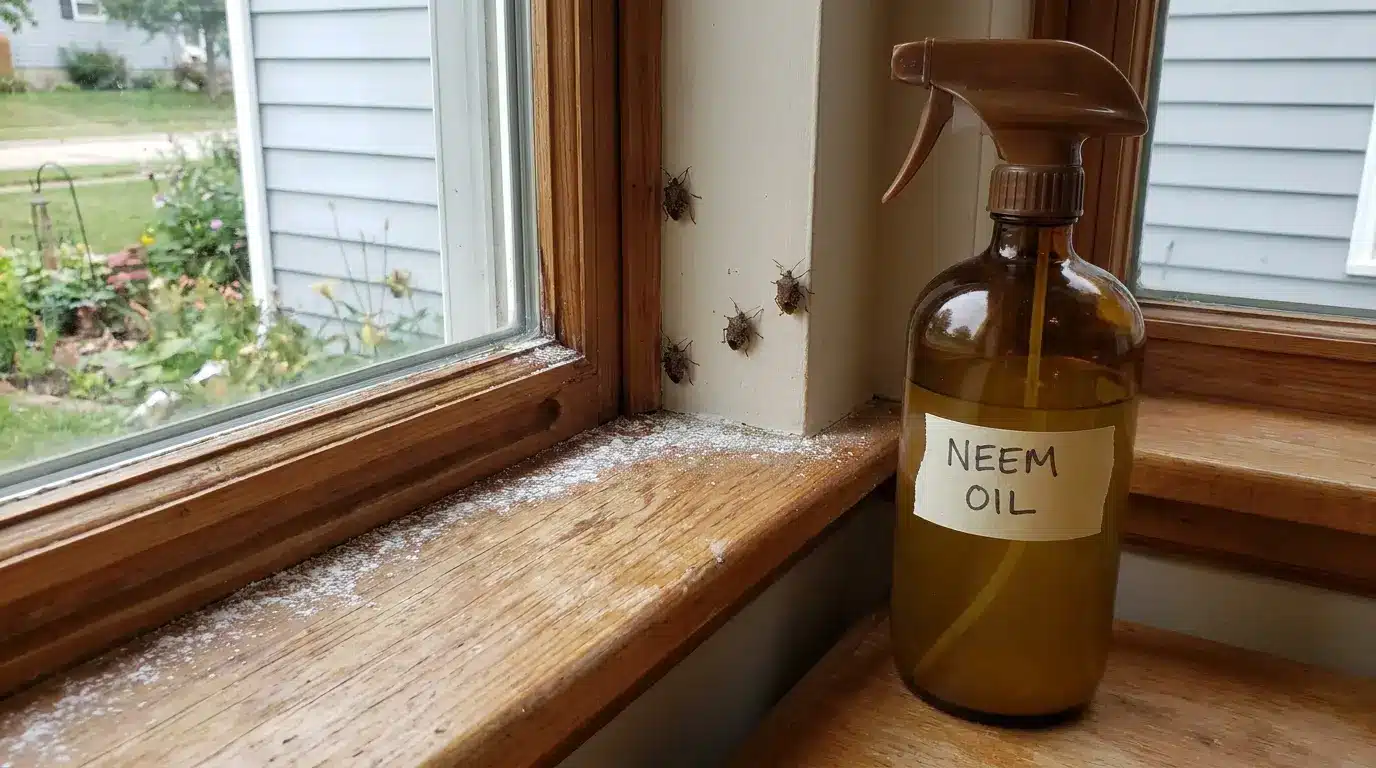
Food-grade diatomaceous earth is a powder that damages the outer shell of insects on contact. Apply it along baseboards and window frames where bugs enter.
Reapply after rain. Wet diatomaceous earth loses its effect quickly.
Seal Them Out: How to Keep Stink Bugs Outside
Removal fixes the problem today. Sealing entry points is what stops them from coming back each fall.
- Seal exterior cracks. Check siding, utility pipe openings, chimney seams, and window and door frames. Fill gaps with silicone or silicone-latex caulk.
- Check the sunny side of your home. The south-facing wall draws them first because it stays warmer. Check nearby gaps closely.
- Fix screens and door gaps. Repair torn window screens and install door sweeps under exterior doors.
- Adjust outdoor lights. Keep porch lights off at night when possible, or switch to yellow-toned bulbs. These insects are drawn to bright white light.
- Keep damp areas ventilated. Keep attics, basements, and crawl spaces dry. Damp, dark spots make ideal hiding spots for overwintering insects.
When to Call a Pest Control Professional
You can handle most cases at home. Call a professional if you see any of these signs:
- New bugs appear every day despite sealing cracks.
- Large numbers are hiding inside walls or the attic.
- You cannot find where they are entering.
- The problem comes back worse each fall.
A licensed professional can locate hard-to-find entry points. They may also apply an exterior perimeter treatment in late summer, before bugs start moving indoors for winter.
Frequently Asked Questions
What is the natural enemy of a stink bug?
Parasitic wasps, spiders, birds, and some predatory insects eat stink bug eggs and nymphs. The Trissolcus japonicus wasp, also called the samurai wasp, is a well-known natural predator in the United States.
Do stink bugs lay eggs inside houses?
No. They enter homes only to find warmth for winter. They lay eggs outdoors on plant leaves in spring and early summer.
What is the lifespan of a stink bug?
A stink bug typically lives six to eight months. Lifespan can vary by species and local conditions.
Should I kill stink bugs I find indoors?
You can, but avoid crushing them. Crushing releases a strong odor that clings to fabric and walls. Vacuuming or dropping them into soapy water is far cleaner.
Why do stink bugs return to the same spots each fall?
They release aggregation pheromones that signal safe shelter to other bugs. This draws them back to the same walls, windows, and entry points season after season.
Keeping Stink Bugs Out for Good
A few consistent habits make a real difference. Walk your home’s exterior once each season to catch new gaps early. Pair that with a natural repellent at windows and door frames.
Getting rid of stink bugs comes down to removing the ones inside and closing the ways they enter. Do both, and you will spend far less time dealing with them when the cold weather hits. Have a tip that worked for you? Share it in the comments below.