How to Create a Pet-Friendly Home Without Sacrificing Style

You may have a pet and a home that you love. The good news is that you don’t have to choose between the two.
In the past, the idea of a pet-friendly home meant using materials that were easy to clean for pets. Vinyl flooring, for example, was a common choice for homes with pets. These materials often wore easily at the paws of pets that were exploring their homes. However, modern homes have changed to accommodate pets. Many modern homes use materials and layouts that are safe for pets and still allow for a beautiful home to be designed.
1. Choose Fabrics That Can Take a Life Well Lived
Upholstery is where most pet owners feel the compromise the hardest.
However, thanks to innovations in fabric performance, there are a few upholstery fabrics that will do you and your pet justice.
- Microfibre fabrics are tightly woven so that pet hair sits on top of the fabric rather than embedding itself into the upholstery. These fabrics also tend to be very easy to clean and come in every colour imaginable.
- Crypton fabric is one of the designer’s favourite upholstery fabrics as it’s stain, moisture, and antimicrobial resistant.
- Sunbrella and other outdoor fabric manufacturers make some of the best indoor upholstery fabrics that are UV, stain, and moisture resistant.
- Leather and faux-leather upholstery tends to be the most hair-resistant as it wipes clean instead of sticky fabrics that take a little more effort to clean up after your pets have enjoyed themselves on the sofa. However, avoid faux-leather if your pet has particularly sharp claws as they could damage the upholstery over time.
When it comes to choosing upholstery fabrics for your home, avoid stark white or very dark navy colours that will highlight every speck of pet hair and dust. Stick to the more forgiving mid-tones and warm neutrals like oatmeal, caramel, slate and terracotta colours.
2. Think Hard About Your Flooring
Flooring bears the brunt of pet life: muddy paws, skittering nails, the occasional accident.
Engineered hardwood is one of the best choices — it has the warmth and look of timber but is more dimensionally stable and typically has a harder surface coating. Avoid solid hardwood in high-traffic areas, as it scratches more easily and is sensitive to moisture.
Porcelain tile is the most durable option and nearly impervious to anything a pet can throw at it. Choose a matte or textured finish rather than high-gloss, which shows every footprint.
Luxury vinyl plank (LVP) has become a serious design choice, not a budget fallback. Modern LVP looks remarkably like timber, is fully waterproof, comfortable underfoot, and scratch-resistant. Ideal if you have pets and children.
One thing to avoid: highly polished floorboards with no rugs. Small dogs in particular — miniature dachshunds included — can struggle with traction on slippery floors, and it can cause joint strain over time. Add rugs with non-slip pads for comfort and grip.
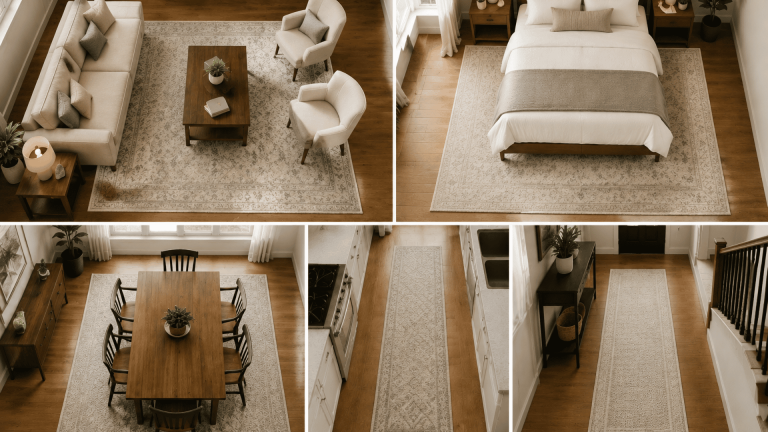
Rugs: Opt for flat-weave, low-pile rugs over shag or high-pile options. They’re easier to vacuum, dry faster if wet, and don’t trap hair the way thick pile does. Natural fibres like sisal and jute look beautiful but can be rough on paws and hard to clean — use them in lower-traffic areas.
3. Design a Dedicated Pet Space That Blends In
One of the biggest design mistakes pet owners make is treating their dog’s bed, crate, or feeding station as an afterthought — something shoved in a corner and hidden behind a door. Instead, lean into it. Integrate it.
Built-in pet nooks under stairs, in alcoves, or within cabinetry have become a genuine interior design trend. A small cushioned recess with a name plaque and a hook for the lead above it looks intentional and charming.
Dog beds no longer have to be an eyesore. Brands like Miacara, Omlet, and Cloud7 make beds that genuinely look like design objects — curved wooden frames, linen cushions, considered proportions. Choose one in a colour that complements your palette.
Crates as furniture: If you crate-train your dog, there are now beautiful wooden crate covers and fully enclosed designer crates that double as side tables or console units. No one needs to know it’s a crate.
Feeding stations: Elevated feeders in powder-coated steel or timber look far better than plastic bowls on the floor, and they’re better for your dog’s posture too. Recess them into a kitchen island base or laundry room cupboard for a truly seamless finish.
4. Choose Paint and Wall Finishes Wisely
Walls at dog-height take punishment – from scuffs and nose prints to the enthusiastic greeting of a dog who doesn’t know its own strength.
Eggshell and satin finishes are your friends. They’re slightly more washable than the flat or matte finishes typically used on walls. A damp cloth will remove marks from satin and eggshell finishes without lifting the paint, but can leave marks on flat matte finishes. Avoid flat matte finishes on the walls beneath chair-rail height if you have pets at home.
Look for scrubbable paints – Dulux Wash & Wear and Taubmans EasyClean are two brands that are actively marketed as being scrubbable (both available in Australia).
A dado rail or panelling up to about 90cm is not only visually pleasing and currently in fashion in interior design but can also protect the wall behind it from your dogs.
5. Manage the Entry Point
The front door, back door, or any point of entry from the garden is ground zero for mess. Designing this space well saves your whole home.
A well-thought-out mudroom or entry area might include:
- A utility mat or tray just inside the door for wiping paws — microfibre mats are the most effective
- A hook for the lead at the right height, alongside hooks for bags and coats so it doesn’t look like a pet corner
- A small bench that doubles as a place to sit while you dry paws — storage underneath for pet towels
- Easy-clean flooring right through the entry — tile, stone, or LVP, transitioning to your main flooring a little further in
This zone doesn’t need to be large to be effective. Even a 1-metre strip of intentional design at your back door will save the rest of your home.
6. Keep Storage Clever and Odour Under Control
Pet gear accumulates quickly. Without finding a place for all the gear you have for your four-legged friend, it is likely that your gear will end up in places you do not want it.
Find a place for pet supplies in your home. Perhaps a beautiful wicker basket near the door can hold all your pet toys.
Odour is one of the less-discussed features of making your home pet-friendly. Consider finding upholstery options for your home that can be cushion-washed. Dog beds will need to be washed regularly. An air purifier may help to combat the odours that your pet adds to your home. Modern air purifiers from brands like Dyson and Blueair come in designs that may compliment your home décor. A beeswax candle or a reed diffuser also offers the same benefits to the air in your home – although only in well-ventilated areas.
7. Match Your Dog to Your Home — and Vice Versa
Another often-overlooked thought is that some dog breeds do better in certain environments than others. If you’re in the process of choosing a dog breed, one of the factors to consider is the environment in which you live. Those who live in apartments or smaller homes may want to consider dog breeds with lower requirements for energy and cleanliness.
Here are some breeds that tend to suit home life particularly well:
Miniature Dachshund — one of the most home-friendly breeds going. Their small frame means they take up little space in the home. These rabbits are very social with their owners and will follow them around the house rather than career around. Lastly, they shed very little compared to other breeds and are also beautiful-looking animals that you’ll happily have in your home.
Cavalier King Charles Spaniel — gentle, adaptable, and easily-going Cavaliers enjoy the company of their owners and can live in smaller spaces as long as they get daily walks. They are unlikely to redecorate your home without being asked to. However, they do shed moderately.
French Bulldog — compact, low-energy indoors, and minimal shedders. These dogs do well in apartments and tend to be relatively quiet. Their short coat means less hair on furniture (though they will find a spot on the sofa!).
Bichon Frise — another of the hypoallergenic dog breeds is the Bichon. Bichons are a breed that has curly coats that tend to shed a lot of hair, which can end up on almost every surface in the home. These dogs are very friendly, social dogs that can live in most living situations. However, they do require regular grooming to keep their coat in good condition.
Greyhound — a perhaps surprising inclusion, but one of the best-kept secrets in the dog world for home living. Despite their athletic appearance, greyhounds are profoundly lazy indoors. They sleep up to 18 hours a day, shed very little, and are gentle and quiet. Their elegant proportions also mean they suit stylish interiors rather than clashing with them.
Shih Tzu — bred specifically as a companion dog, and it shows. These breeds are known for being calm, low-energy indoor dogs who require little exercise. Like the Bichon, their low-shedding coat will require regular grooming. These breeds are good for families and owners of any age.
Ultimately, it comes down to your lifestyle and how much time you can invest into grooming your dog. However, any of the above breeds will suit your home interior without too much drama.
The Bottom Line
A pet-friendly home doesn’t mean compromising on style. It means thinking more carefully about the choices you make – for example, about choosing materials that are visually appealing but also strong enough to stand up to your pet’s antics.
Some of the best examples of pet-friendly homes feature the pet sleeping in a beautiful corner with a ceramic pet bowl and a rug that has no visible hairs – a sign of the pet owner who has really thought carefully about every aspect of the house.
You can achieve this yourself, too.