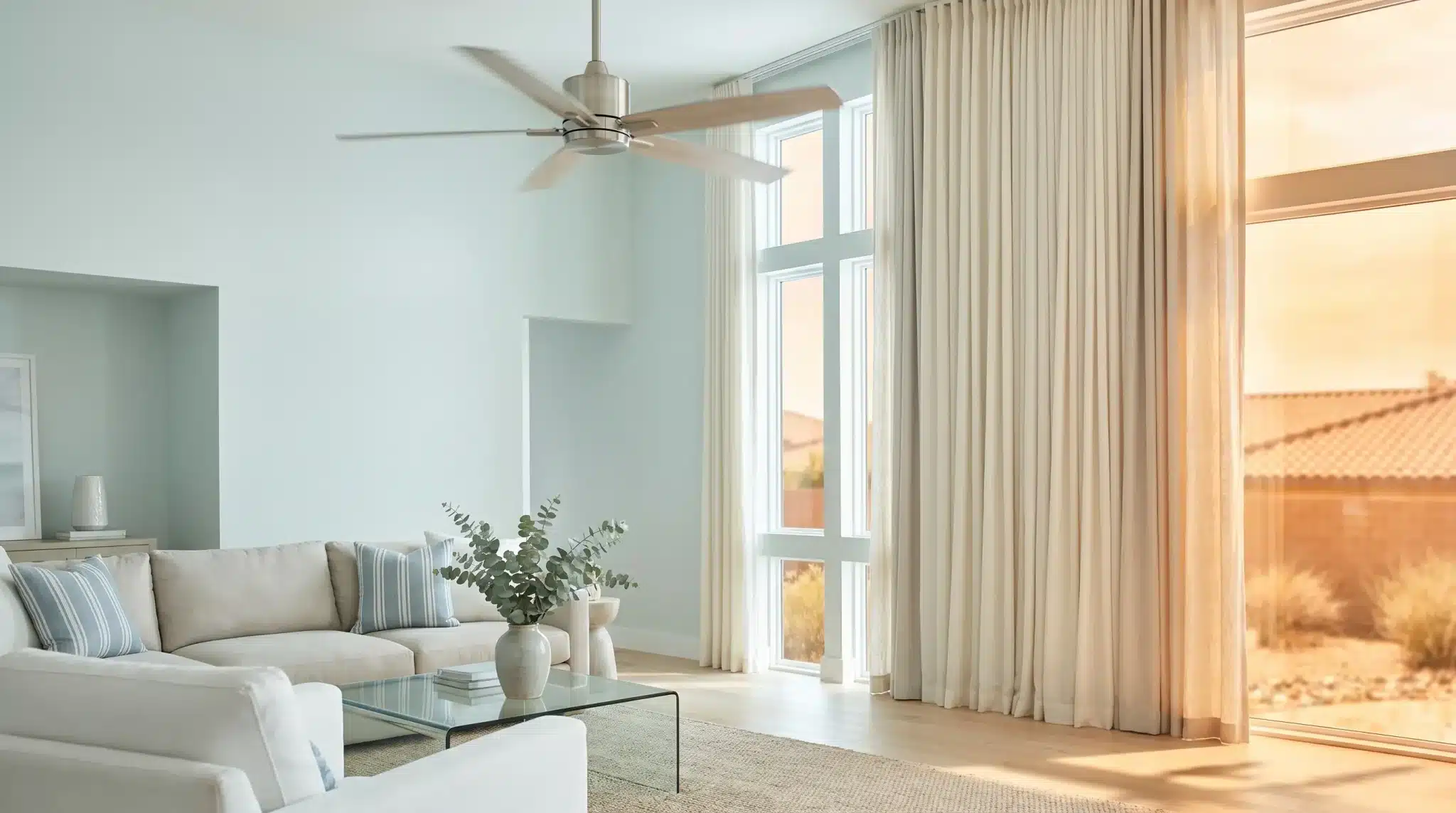
How to Cool Your Home Efficiently in Summer

Summer heat can be serious business. Once the temperature outside reaches the high 90s, your home can heat up quickly. Luckily, you don’t have to leave your air conditioner on all day long and pay an arm and leg in energy bills.
By making smart habits and simple improvements to your home, you can beat the heat without spending too much money.
Air Conditioning Do’s and Don’ts
Your air conditioner workshard all summer bringing you cool air, but you can do things to help it do its job better. First things first: change your air filter. A clean filter will keep your system running efficiently, and you should change it every few months or so. During periods of heavy use, you’ll need to change it more frequently.
Next, make sure your AC system is serviced if it has been a while. A professional can check refrigerant levels, clean the coils, and ensure your system is running efficiently. This saves energy and gets your home cooler faster.
Make sure your thermostat is set to 78 degrees when you are home. I know, 78 sounds hot. Trust me, you’ll get used to it. Raise the temperature to 85 when you’re away from home. You shouldn’t have your air conditioner working hard to cool an empty house. Pick up a programmable or smart thermostat so you can set a schedule and never think about it again.
Shut Out the Sun
Did you know that sunshine streaming through your windows is one of the leading causes of heat inside your home? Preventing it from entering can make a big difference. Keep your blinds and curtains shut during the hottest part of the day (typically between 10AM-4PM).
Invest in some blackout curtains. These heavy-duty window coverings block out nearly all sunlight and can decrease the temperature in a room by several degrees. They’re affordable and available at most home improvement stores.
You can take it one step further by installing window film on your windows. Film goes directly on the glass and reflects UV rays while still allowing light into the room. It’s not something you have to think about after installation.
Use Fans Strategically
Fans don’t actually make the air cooler, but they will make you feel cooler. This is thanks to the wind chill. When air moves across your skin it makes you feel cooler than the actual room temperature.
Ceiling fans are your friend. Set them to spin counterclockwise so that they push cooler air down. Boom, instant breeze!
Box fans and tower fans can also be used strategically in bedrooms at night. Set a box fan facing out in a window on one side of your house and open a window on the opposite side of the room. This creates a cross breeze that sucks hot air out of your house and pulls cooler outdoor air in. The reverse cycle will push cool air back outdoors. This is most effective when outdoor temperatures are cooler, like at night.
Always remember to turn off fans when you leave the room. They don’t actually make your space cooler, just the people in it.
Eliminate Sources of Heat Indoors
Contrary to popular belief, most of the heat that enters your home doesn’t come from outside. Heat is generated inside your home every time you cook, turn on your computer, or light up a bulb. Avoid using your oven on hot days if possible. Cook out on the grill instead or use a microwave and a slow cooker. Both of these appliances give off very little heat when in use.
Do laundry using cold water and run your dishwasher and dryer at night when it’s cooler outside. Just like with your oven, these appliances give off heat as they run.
If you still have incandescent light bulbs in your home, now is the time to make the switch. LED light bulbs don’t produce as much heat as incandescent bulbs. In fact, incandescent bulbs release about 90 percent of their energy as heat!
Seal Cracks and Add Insulation
Heat escapes through cracks and openings all around your home. Walk around and check the weather strip on your doors. If it looks cracked or worn down, replace it. You can also pick up a door draft stopper to keep your door from releasing cold air.
Grab some caulk and fill in any cracks you find around window frames, where pipes or wires enter your home, and even where the wall meets the floor. Your house has holes you didn’t know about. Seal them up!
If you find your attic is really hot, consider adding insulation. Heat loves to build up in your attic and seep through your ceilings. Insulation will help keep that hot air out of your rooms below.
Harness Your Outdoor Space
Landscaping and vegetation are nature’s air conditioners. Plant shade trees on the south and west sides of your home. The mature leaves will block sunlight from hitting your home at its hottest points in the day. A single shade tree can decrease temps around your home by several degrees.
If you’ve got a patio or deck, buy a shade sail or pergola. Not only will this make your outdoor living space usable during the summer, but it also blocks the sun from hitting windows and walls, reducing interior heat.
Place some plants near windows. Even small plants in pots can help block sunlight while adding moisture to the air as they release water through their leaves.
Embrace Cooler Temperatures at Night
Temperatures usually drop at night, even if it’s hot during the day. If you live in a dry climate, take advantage of this and open up your windows at night when it’s cooler outside. Use fans to pull cool air through the house.
Close up windows and blinds once morning rolls around. Keep that cooler air trapped in your home as long as possible. This trick is great if you live in dry climates but will work to an extent anywhere. Time it right and you’ll be set.
Little Things Throughout the Day
There are some little habits you can incorporate into your day that will help you stay cool. Take cool showers, not hot. Don’t do heat-producing activities during the hottest parts of the day. Keep your interior doors open to promote airflow through your home.
Drink plenty of water. The more hydrated you are, the cooler you will feel.
Perfecting your home’s cooling system doesn’t have to be expensive or take all summer. By making a few minor changes to your daily habits and doing some routine maintenance, you can keep cool all season long. Try out a few of these tips and let us know how it goes!
Saving Money and Energy Cooling a Family Home in Summer Case Study
The Problem:
Summer brought higher energy bills to this family in their two-story home. The AC ran all day but some rooms were still hot and cooling costs continued to climb.
Our Recommendations:
Here are the energy-efficient cooling tips we recommended: Programmed their thermostat to 78° F when they were home and higher when away Cleaned HVAC filters and had AC maintenance performed Added blackout curtains to windows on the south side of their home Creates better airflow by using ceiling fans throughout the house Checked weatherstripping and seals around windows and doors to reduce air leaks Opened windows at night to let in cooler air (fans can help distribute it)
The Outcome:
After just three months, the family noticed:
- Decreased monthly cooling bills
- More even temperatures in their home
- Reduced wear and tear on their air conditioner
- Better comfort on the hottest summer days
- Less hot and stuffy rooms upstairs
Tip
Adjust your thermostat, take advantage of ceiling fans, boost your insulation, and limit sunlight to keep your home comfortable and save money cooling your home this summer.
FAQs
What Temperature Should My Thermostat Be Set at in Summer?
The U. S. The Department of Energy recommends setting your thermostat to about 78° F (26° C) when you’re home and increasing it when you are away from home for greater energy savings.
Do Fans Cool Rooms?
No. Fans don’t actually make the air colder, they create airflow that will make you feel cooler by boosting evaporation of sweat from your skin. That means you can be comfortable at higher temperatures while relying less on air conditioning.
How Do I Keep Heat Out of My House?
Sunlight shining through your windows generates heat inside your home. Keep blinds and curtains drawn during the hottest parts of the day, invest in blackout curtains, window film, or plant shade trees outdoors.
Should I Leave My Air Conditioner on All Day?
It’s typically better to have your thermostat set higher when you’re away from home or sleeping and only cool your home while you’re there. Consider investing in a programmable or smart thermostat.
What’s the Most Effective Way to Cool a Home?
Use a combination of AC maintenance, ceiling fans, added insulation, sealing air leaks, and limiting heat from appliances and sunlight for the best (and most affordable) results.