How to Get Red Wine Out of Clothes Fast As Possible

Quick Answer: Blot the stain right away. Never rub. Rinse cold water through the back of the fabric. Treat with dish soap, club soda, or hydrogen peroxide based on fabric type. Check the stain is fully gone before the item goes in the dryer.
Red wine goes from glass to shirt in one unlucky second. The good news: most red wine stains come out with the right steps. What matters most is speed and the order you do things.
This post covers how to remove red wine from clothes. That includes fresh spills, dried spots, delicate fabrics, and white shirts.
You will also find out one thing most guides skip entirely: the type of red wine you spilled changes how hard the stain is to remove.
Why Red Wine Stains Are Hard to Remove
Red wine bonds to fabric fast. It contains natural pigments called anthocyanins and tannins from grape skins. These compounds grip fabric fibers on contact. Cotton and linen soak up liquid the fastest.
Heat speeds up that bond. Hot water or a dryer run after a spill pushes pigment deeper into the fiber. A stain that seemed manageable becomes permanent.
Does the Type of Wine Change How Hard It Is to Remove?
Yes, Sweeter red wines contain more residual sugar. Sugar makes the stain stickier and harder to lift from fabric. A cheap sweet red, like those used in sangria, will leave a tougher stain than a dry cabernet or merlot.
If you spilled a sweet blend or a port-style wine, treat it immediately. Do not wait even a few minutes.
What to Do the Moment You Spill Red Wine on Clothes
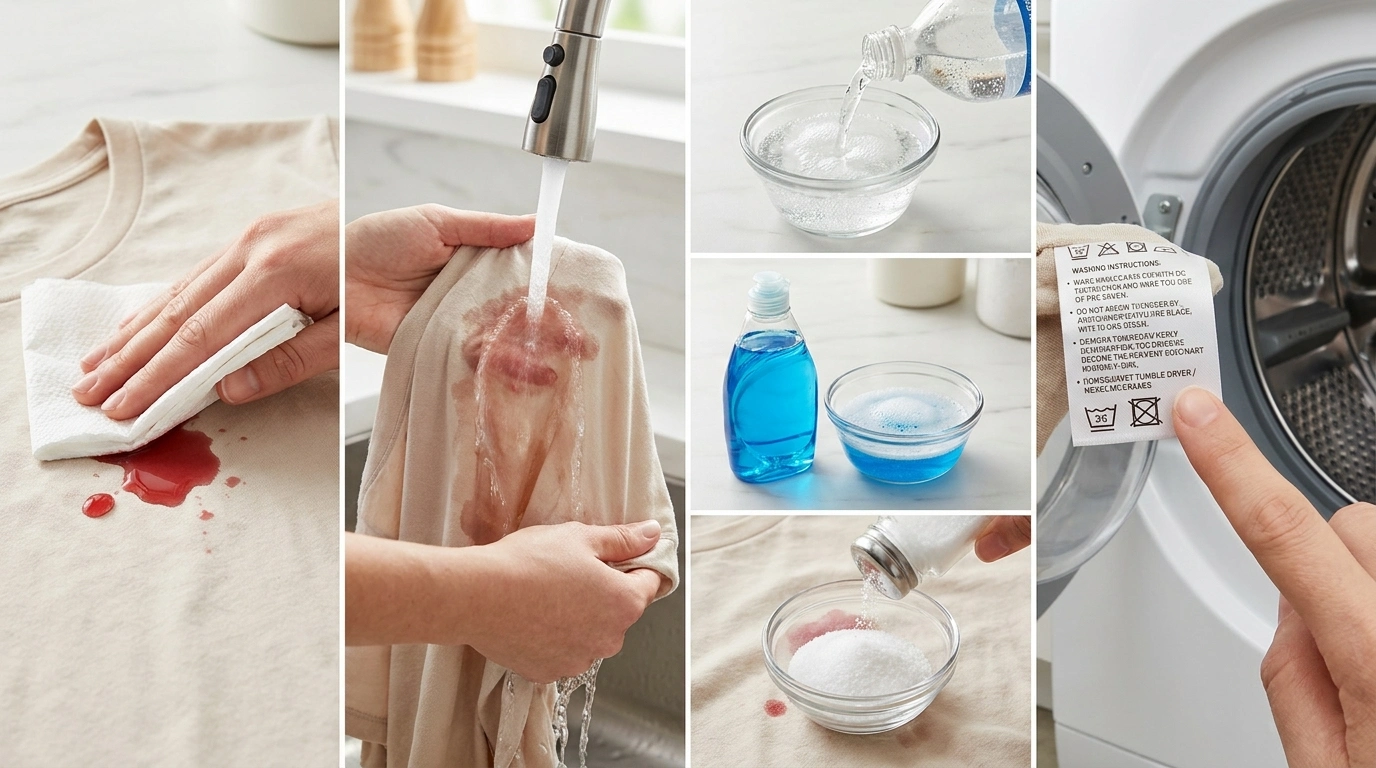
The first five minutes decide a lot. Wine that sits bonds more deeply with fabric fibers. Here is what to do in order.
Step 1: Blot, Do Not Rub
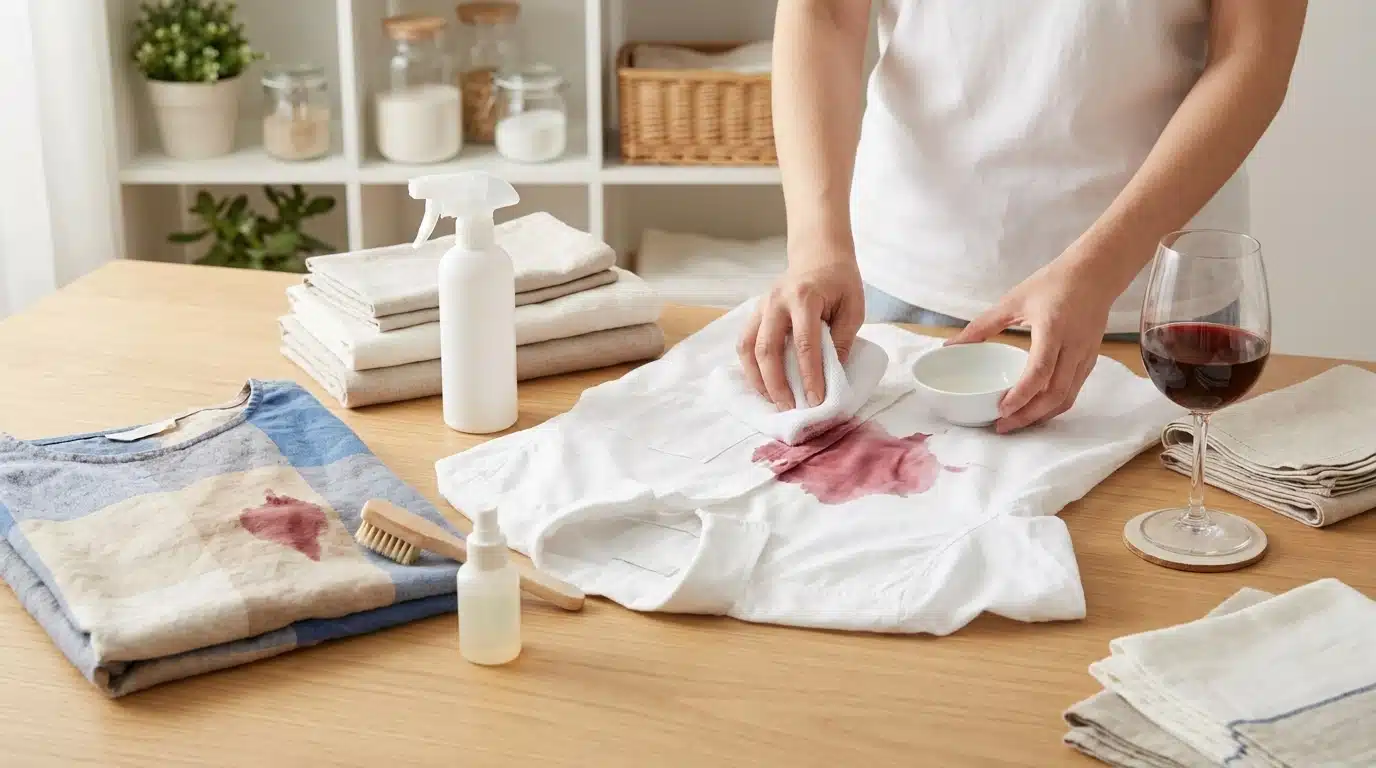
Grab a clean white cloth or paper towel. Press it gently onto the stain and lift. Do not rub. Rubbing spreads the pigment and pushes it further into the fabric.
Use a white cloth only. A colored cloth can transfer its dye onto wet fabric. That creates a second problem you did not start with.
Work from the outer edge of the stain toward the center. Keep switching to a clean section of the cloth as it picks up color.
Step 2: Rinse With Cold Water From Behind
Turn the garment inside out. Run cold water through the back of the stain. This pushes wine out of the fibers. Rinsing from the front pushes it deeper in.
Never use warm or hot water at this stage. Heat sets the pigment into the fabric permanently.
Step 3: Apply a Treatment Right Away
If you cannot wash the item immediately, apply one of these to hold the stain:
- Club soda poured directly on the spot
- Dish soap dabbed on and left briefly
- Salt sprinkled on a fresh spill when nothing else is available
Important: Do not let the stain dry between treatment rounds. Keeping it slightly damp makes every treatment more effective. A dry stain is a harder stain.
Step 4: Wash, But Check Before Drying
Check the garment’s care label before washing. After washing, look at the stain area in good light before you put anything in the dryer. Heat bakes in whatever pigment remains. Once a stain goes through the dryer, it is often permanent.
How to Remove Fresh Red Wine Stains From Clothes
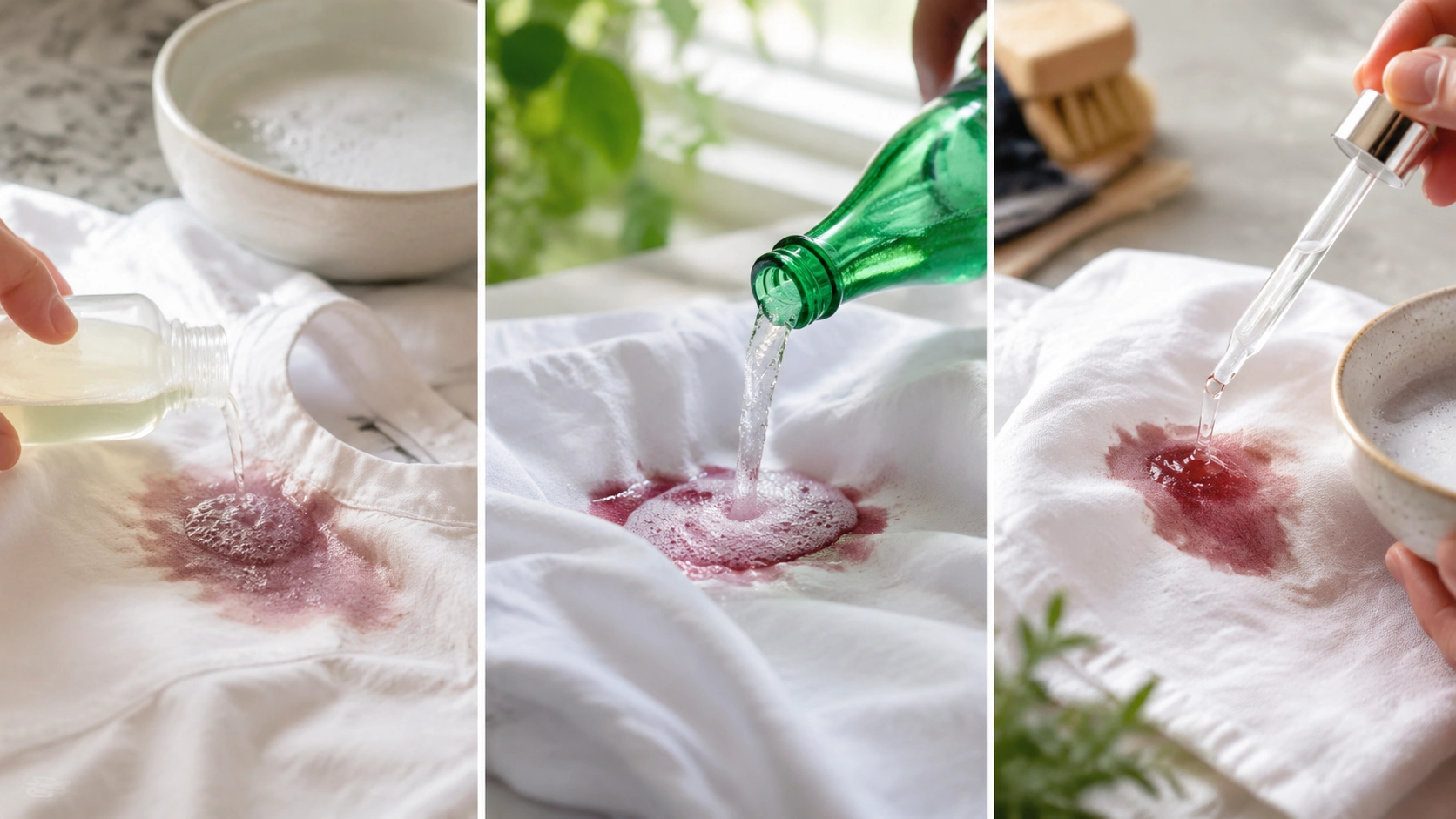
Fresh stains respond best to quick action. These three methods work for wine that just happened, using things you likely already have at home.
Method 1: Dish Soap and Cold Water
Best for: Cotton, linen, polyester, and everyday fabrics.
Mix one tablespoon of dish soap with two cups of cold water. Apply directly to the stain and let it sit for five minutes. Blot, then rinse with cold water. Repeat if any color remains before washing as usual.
Method 2: Club Soda
Best for: First response at a dinner table or restaurant.
Carbonation in club soda helps loosen wine pigment from fabric before it settles in. Pour it over the stain, let it fizz for one minute, then blot with a clean cloth. This works best on stains that are only minutes old.
Method 3: Hydrogen Peroxide and Dish Soap
Best for: White and very light-colored fabrics only.
Mix equal parts hydrogen peroxide and dish soap. Apply directly to the stain and let it sit for 10 to 15 minutes. Rinse with cold water.
Always test on a hidden seam first. Hydrogen peroxide can lighten fabric dyes. Never use this on dark or bright-colored clothes.
The Enzyme Detergent Advantage
When it comes to washing after pre-treatment, use a heavy-duty laundry detergent that contains enzymes.
Enzyme-based detergents break down the organic compounds in wine, including tannins and pigment proteins. They work far better than standard detergent. Look for words like “enzyme formula” or “stain-fighting enzymes” on the label.
This one swap can make the difference between a stain that lifts and one that lingers.
How to Remove Red Wine From Different Fabric Types
Fabric type changes both the method and the risk. What works on sturdy cotton can damage silk. Use this table as your starting point before reaching for any product.
| Fabric | Recommended Method | What to Avoid |
|---|---|---|
| Cotton | Cold water, dish soap, enzyme detergent | Heat drying before stain is gone |
| Linen | Blot quickly, use gentle cleaner, cold rinse | Harsh bleach products |
| Polyester | Dish soap or commercial stain remover | Scrubbing aggressively |
| Silk | Blot only. Take to a professional cleaner | Hydrogen peroxide, hot water, scrubbing |
| Wool | Mild detergent and cold water | Hot water, wringing, strong solvents |
When unsure, treat the item as delicate. Start with the gentlest option and work up only if needed.
Can You Remove Red Wine From White Clothes?
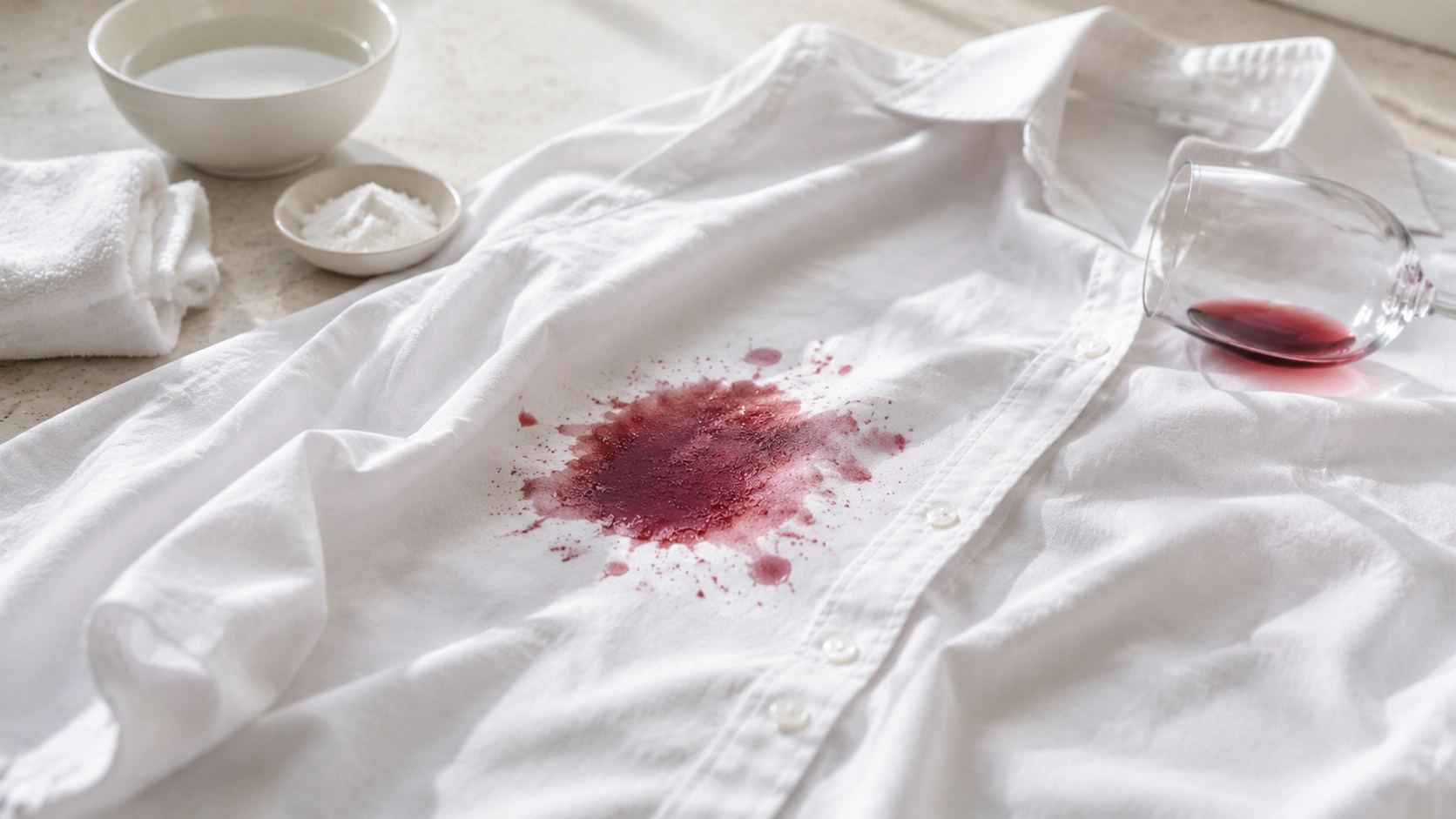
Yes. White fabrics give you the most options. Hydrogen peroxide works well on white cotton because you do not need to worry about dye damage.
Oxygen bleach (such as OxiClean) is another strong choice. It is gentler on fibers than chlorine bleach but still lifts deep stains effectively.
Even on white fabric, test any product on a hidden hem or inner seam first. There is a real difference between removing a stain and accidentally bleaching the surrounding fabric a different shade.
How to Remove Red Wine From Colored Clothes Without Fading
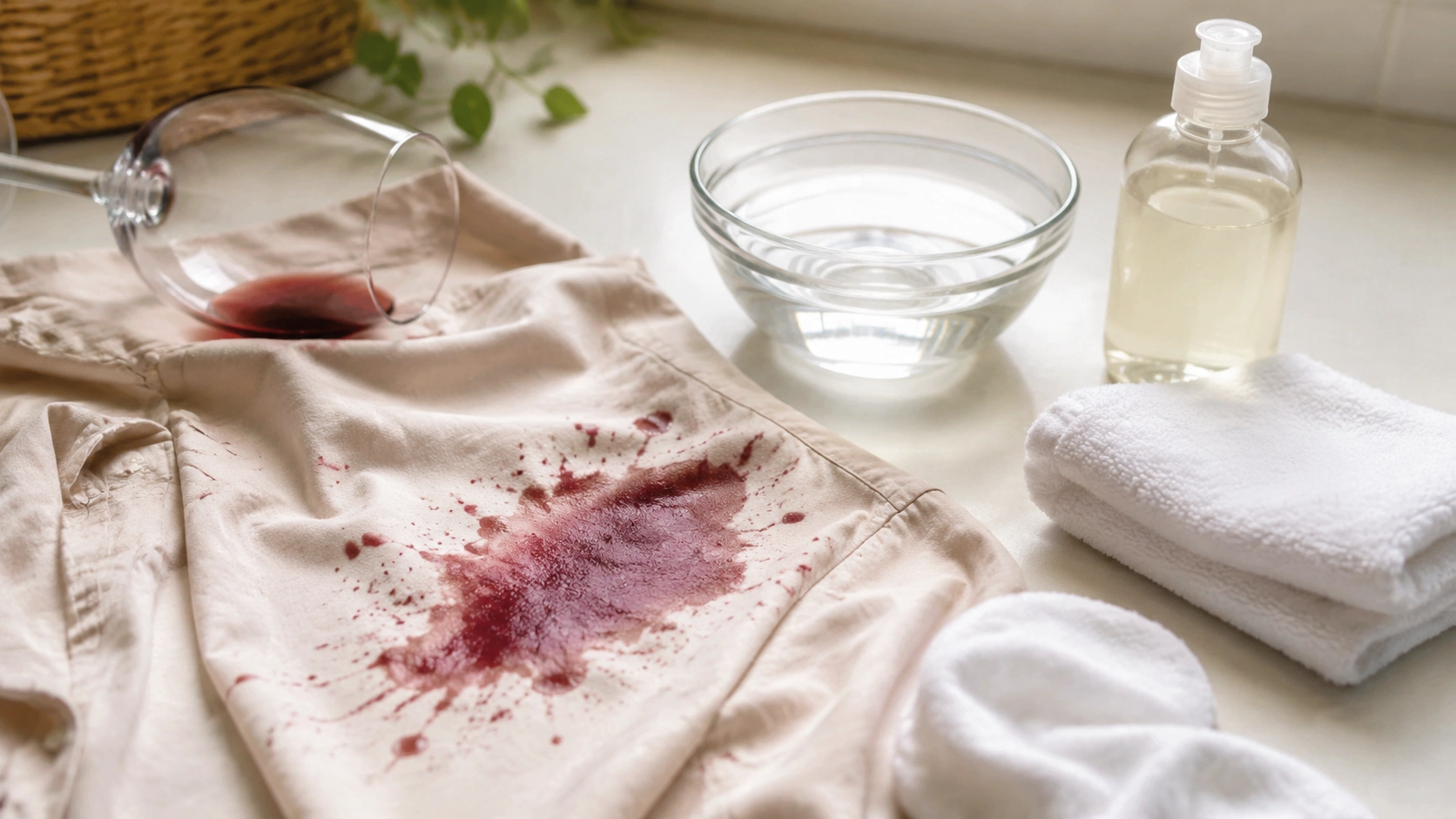
Colored fabrics need a gentler approach. Avoid bleach-based products. They can strip color along with the stain.
Use cold water and a mild detergent. Always test any stain remover on a hidden area before applying it where the stain shows.
One thing to know: dark fabrics can hide a remaining wine trace until the cloth dries. A spot that looks gone while damp may reappear faintly once dry. Check the area again in good light before putting the garment away.
How to Remove Dried Red Wine Stains From Clothes
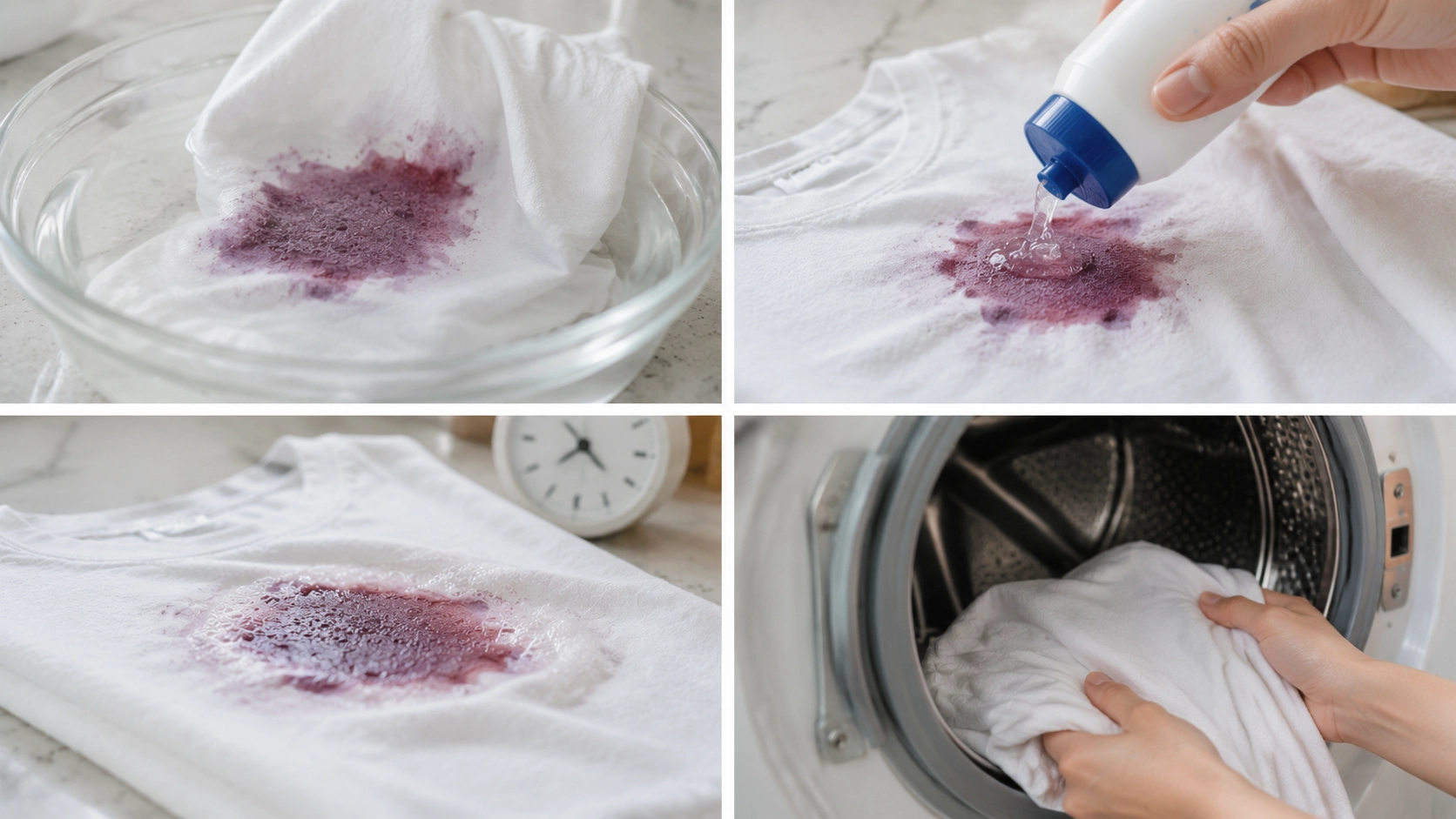
Dried stains are harder to treat but not impossible. The fabric needs to be rehydrated first so the treatment can reach the pigment underneath.
- Soak the stained area in cold water for several minutes.
- Apply liquid detergent or a dedicated stain remover directly to the spot.
- Let it sit for 15 to 30 minutes.
- Wash according to the care label.
- Repeat if any discoloration remains. Do not dry between rounds.
One wash rarely removes an older stain completely. Dried stains have had time to oxidize and set. A second or third treatment cycle is normal, not a sign something went wrong.
The Boiling Water Method for Set Stains
This method works surprisingly well on stubborn dried stains in sturdy fabrics like cotton. Boil water in a kettle. Stretch the stained section of fabric taut over a large bowl and secure it with a rubber band.
Pour the boiling water through the stain from about 12 inches above. The force and heat together help push old pigment back out of the fibers.
Do not use this on silk, wool, or synthetic fabrics. Check the care label first. This method uses heat intentionally after the stain is already set, which is different from applying heat to a fresh stain.
Frequent Mistakes That Make Red Wine Stains Worse
The wrong first move often does more damage than the wine itself. Here are the most common errors and why they cause problems.
| Mistake | Why It Causes Problems |
|---|---|
| Rubbing the stain | Pushes wine deeper into the fibers |
| Using hot water | Sets pigments permanently into the fabric |
| Drying before checking | Heat can lock in any stain that remains |
| Using bleach on colored clothes | Can strip fabric dye along with the stain |
| Applying too many products together | Can damage or weaken fibers |
Pro tip: When in doubt, slow down. Blotting gently and sticking to cold water buys you time to figure out the right treatment, while rushing into a random product or high heat can turn a manageable stain into a permanent one.
When to Take Red Wine Stained Clothes to a Dry Cleaner
Some garments are better left to a professional. Silk, velvet, and wool can be damaged by home treatments that work fine on cotton.
Expensive or sentimental pieces, like formal wear or bridal clothing, are worth professional cleaning rather than a risky DIY fix.
If the stain is large, or if it remains after careful at-home treatment, a dry cleaner has solvents and methods that are not practical at home.
Let the cleaner know the stain is wine and how old it is. That information helps them choose the right treatment. Trying several home remedies first can sometimes make a professional’s job harder, so if a garment is valuable or fragile, go straight to a cleaner.
Keeping a few stain-fighting basics on hand in your laundry area saves a lot of scrambling when spills happen. A well-organized shelf near your washer and dryer keeps club soda, dish soap, and white cloths within reach so you can act in seconds.
Frequently Asked Questions
Can Salt Remove Red Wine Stains From Clothes?
Salt can absorb some of the liquid from a fresh spill by drawing moisture away from the fibers, but it is not a complete stain remover on its own and should be followed by a proper wash.
Does White Wine Remove Red Wine Stains?
This is a common myth. White wine does not reliably remove red wine stains and often just adds more liquid to the spot, which can make the area larger without actually lifting any of the pigment.
Can Baking Soda Remove Red Wine Stains?
Baking soda can help absorb moisture from a stain and mildly lift some pigment, but it works best combined with another treatment like dish soap rather than used alone on a fresh or dried spill.
Does Red Wine Come Out After Washing?
Fresh stains often improve significantly with a normal wash cycle. Drying the item before the stain is fully gone can make any remaining trace permanent.
How Long Does a Red Wine Stain Take to Remove?
It depends on the fabric, how long the stain has set, and which treatment method you use. Fresh stains can lift in one wash, while dried stains may need several rounds of treatment.
The Bottom Line on Red Wine Stains
Red wine stains do not have to be permanent. Knowing how to remove red wine from clothes the right way comes down to three things: acting fast, using cold water, and matching your method to the fabric. Skip the dryer until you are certain the stain is gone.
Your fabric type decides everything. What lifts a stain from cotton can ruin silk, so treat each garment on its own terms. Most stains are very treatable in the first few minutes.
Next time a glass tips over, stay calm. Blot, rinse, and treat, in that order. Have you tried any of these methods on a tough stain? Share which one worked for you!