How to Clean Copper Pans Without Damage?

Copper pans can look ruined after years of tarnish, but the biggest mistake is often trying to restore their shine too quickly. Gentle care based on the pan’s condition helps avoid unnecessary surface damage.
How to clean copper pans depends on the finish, lining, and level of buildup rather than one universal solution. Different materials require different cleaning approaches for better results.
Harsh scrubbing and strong cleaners can leave scratches or damage delicate surfaces in everyday kitchens. Simple washing or careful polishing may be needed depending on the pan type.
The techniques below protect copper cookware and keep it performing well, from exterior cleaning and interior lining care to scratch prevention, storage, and mistakes to avoid.
What to Check Before Cleaning a Pan?
Before learninghow to clean copper pans, check the pan’s finish and lining first. The right method depends on these factors, not just the tarnish level.
A lacquered copper pan needs mild soap and water, while unlacquered copper may require polishing methods for exposed surfaces.
The pan’s interior lining affects cleaning methods. Tin and silver linings need gentle care, while stainless steel interiors can handle tougher cleaning.
Vintage or unmarked copper pans need extra care. Check the finish and lining first to identify the right cleaning method and avoid possible surface damage.
How to Clean the Copper Pans Exterior (Tarnish & Stains)
Copper exteriors develop tarnish over time. How to clean copper pans depends on methods that remove buildup and restore shine without damaging the surface.
Method 1: The Salt & Vinegar Method

Sprinkle salt over the tarnished copper surface and pour white vinegar on top. Gently scrub with a soft sponge to loosen stains without scratching the pan.
Let the mixture sit for 10–15 seconds, then rinse with clean water. Dry the pan immediately with a soft cloth to prevent water spots.
This vinegar method removes light tarnish and helps restore the copper’s natural shine.
Method 2: The Lemon & Baking Soda Method (Natural Option)

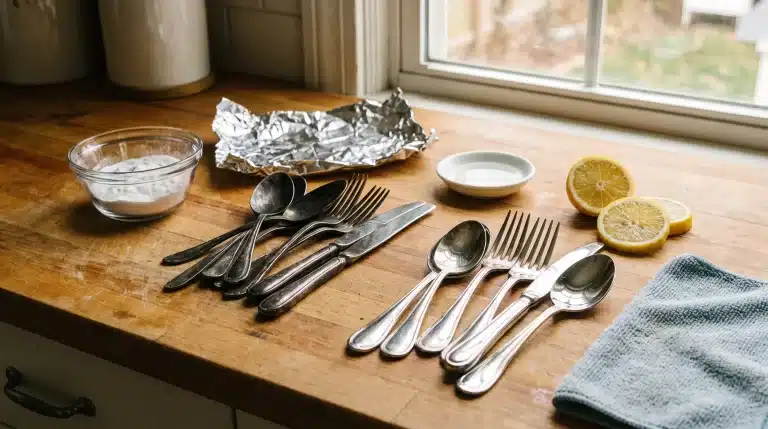
Cut a lemon in half and sprinkle baking soda with a pinch of salt over the copper surface. Use the lemon half to gently scrub tarnished areas and loosen buildup.
The lemon’s acidity helps break down residue, while baking soda provides mild cleaning power. Rinse the pan thoroughly with water and dry it with a soft cloth.
Method 3: The Soaking Method for Badly Tarnished/Stubborn Grime

For heavy tarnish or stubborn grime on copper bottoms, use a vinegar-and-salt soak. Boil the mixture and place the affected area in the solution.
Let the pan soak for about 10 minutes to loosen tough buildup. Wipe the surface clean, rinse thoroughly, and dry completely. This method helps remove deeper stains from badly tarnished copper and copper bottom pans.
How to Clean the Interior (Based on Lining Type)
Copper pan interiors need lining-specific cleaning methods. How to clean copper pans depends on using the right approach to protect the surface and prevent damage.
1. Tin-Lined Pans

Tin-lined copper pans need gentle cleaning because tin is soft and can scratch easily. Avoid steel wool, abrasive pads, and harsh detergents.
Use warm water with mild dish soap to remove food residue, then wipe gently. Heat darkening is normal and not a sign of dirt.
2. Stainless Steel-Lined Pans

Stainless steel-lined copper pans are durable and handle stronger cleaning methods for food stains. They are less delicate than tin-lined pans and can tolerate more cleaning pressure.
Use Bar Keeper’s Friend or a non-damaging scouring pad when needed for cleaning. Scrub carefully and rinse thoroughly afterward to remove residue and keep surfaces clean.
How to Clean Copper Pans Without Scratching?
Cleaning copper pans requires the right approach to remove stains and tarnish while keeping the surface smooth. Knowing how to clean copper pans helps protect the finish and maintain cookware’s appearance.
- Use soft tools: Clean copper pans with a soft sponge, microfiber cloth, or gentle cleaning pad.
- Avoid steel wool: Skip harsh scrubbers that can scratch polished or tin-lined copper surfaces.
- Test cleaners first: Apply them to a small, hidden area to check for potential damage.
- Clean with care: Use gentle circular motions and light pressure to remove dirt and tarnish.
- Limit acidic contact: Avoid leaving acidic mixtures on copper pans for too long.
- Rinse properly: Wash away cleaning solutions to maintain the pan’s shine and finish.
Drying and Storing Copper Pans
Proper drying and storage help prevent tarnish, scratches, and finish damage on copper pans. A few simple care steps can keep them looking polished and extend their lifespan.
| Care Measure | What to Do |
|---|---|
| Hand-wash only | Avoid the dishwasher, as heat and harsh detergents can dull the copper finish and damage the pan over time. |
| Dry immediately | Use a soft towel after washing to prevent water spots and reduce tarnish buildup. |
| Store carefully | Hang copper pans or place padding between stacked pans to prevent scratches and surface marks. |
| Add extra protection |
Apply a thin coat of oil or wax before long-term storage to help slow tarnishing and maintain shine. |
Tips to Keep Copper Pans Clean and Shiny
Small maintenance habits can make cleaning copper pans easier and reduce the need for heavy polishing. Follow these tips to protect the surface, prevent tarnish, and maintain the pan’s condition.
- Clean after each use to remove food residue and prevent buildup or stains.
- Use soft sponges, microfiber cloths, or non-abrasive pads to protect copper surfaces.
- Polish only when needed to avoid wearing down the finish from excessive cleaning.
- Dry the pan completely after washing to help prevent water spots and tarnish.
- Store copper pans properly by separating them or hanging them to avoid scratches.
- Match cleaning methods to the pan’s lining, whether it has tin, silver, or stainless steel interiors.
These small care habits make copper pan maintenance easier and help prevent common cleaning issues before they affect the cookware.
Common Mistakes to Avoid
Avoid these copper pan cleaning mistakes to protect the finish, prevent scratches, and maintain the pan’s quality.
- Using the dishwasher: Heat and strong detergents can dull copper and damage tin linings.
- Using abrasive scrubbers: Steel wool and harsh pads can leave permanent scratches.
- Leaving acidic cleaners too long: Vinegar or lemon mixtures may discolor copper.
- Air-drying pans: Towel-dry after washing to prevent water spots and tarnishing.
- Ignoring lining type: Choose cleaning methods based on the pan’s interior material.
- Using unsafe polish inside: Exterior copper polish may not be food-safe for cooking areas.
- Stacking pans without protection: Add padding between pans to avoid scratches.
- Skipping regular cleaning: Built-up tarnish becomes harder to remove over time.
Conclusion
Copper cookware is valued for its performance, appearance, and long-lasting quality, but maintaining it requires the right balance of care and caution.
Knowing how to clean copper pans properly means choosing methods based on the pan’s condition, which helps preserve its character while keeping it ready for regular use.
Cleaning copper pans the right way helps avoid unnecessary damage and maintains the cookware’s original appeal over time.
With consistent attention and suitable techniques, copper pans can continue to perform well in the kitchen for many years. Small care habits make a lasting difference in protecting their finish and function.
Start using these practices today, and share your own copper pan care tips in the comments.
Frequently Asked Questions
Can Copper Pans Change Color Naturally Over Time?
Yes, copper pans naturally change color over time due to air, moisture, and oxidation. This patina is a normal process and does not always require heavy cleaning unless tarnish affects the pan’s appearance.
Can Copper Pans Be Used on Induction Cooktops?
Traditional copper pans usually do not work on induction cooktops because copper is not magnetic. Some newer models with a magnetic stainless steel base are designed for induction use.
Can Copper Pans Be Re-Tinned?
Yes, tin-lined copper pans can be re-tinned when the interior coating wears down. This process restores the cooking surface, improves usability, and helps extend the pan’s lifespan with proper care.