DIY Succulent Planter Ideas: 9 Creative Ways to Build Your Own

An old bowl, a simple pot, or a forgotten tin can become your favorite little garden.
A DIY succulent planter is one of the easiest ways to add fresh greenery to your home without buying expensive decorations. These small plants are beautiful, low-maintenance, and perfect for beginners who want to try gardening.
From choosing the right container to planting and caring for your succulents, you will find simple steps and creative ideas to make a beautiful planter. It can sit on your desk, windowsill, or patio.
Either way, this project takes less than 20 minutes and costs very little.
What a DIY Succulent Planter Actually Is
A DIY succulent planter is simply a container filled with soil and small plants that store water in their leaves. You don’t need fancy tools or years of gardening experience to make one.
Buying a ready-made succulent planter can also cost more than expected. You can make a similar planter at home using a bowl, box, old container, or something you already have.
Making your own planter also helps you avoid common problems. Succulents do not like sitting in wet soil.
When you build it yourself, you can choose the right soil, add proper drainage, and place each plant where you want. A little extra care at the start can help your planter stay healthy for a long time.
How to Build Your Own Succulent Planter
Making a succulent planter is a quick project. Once your supplies are ready, you can finish it in about 20 minutes.
| Supply | Why You Need It | Budget Option |
|---|---|---|
| Container with a drainage hole | Let’s water escape so roots don’t rot | Old pot, tin can, colander |
| Cactus or succulent soil | Dries faster than regular garden soil | Any garden center bag (~$5) |
| Small rocks or pebbles | Creates a drainage layer in sealed containers | Free from the garden or driveway |
| 2–5 small succulents | Main plants for your display | Grocery store or nursery packs (~$3 each) |
| Small spoon or chopstick | Helps tuck roots into soil | Already in your kitchen |
Step 1: Pick the Right Container
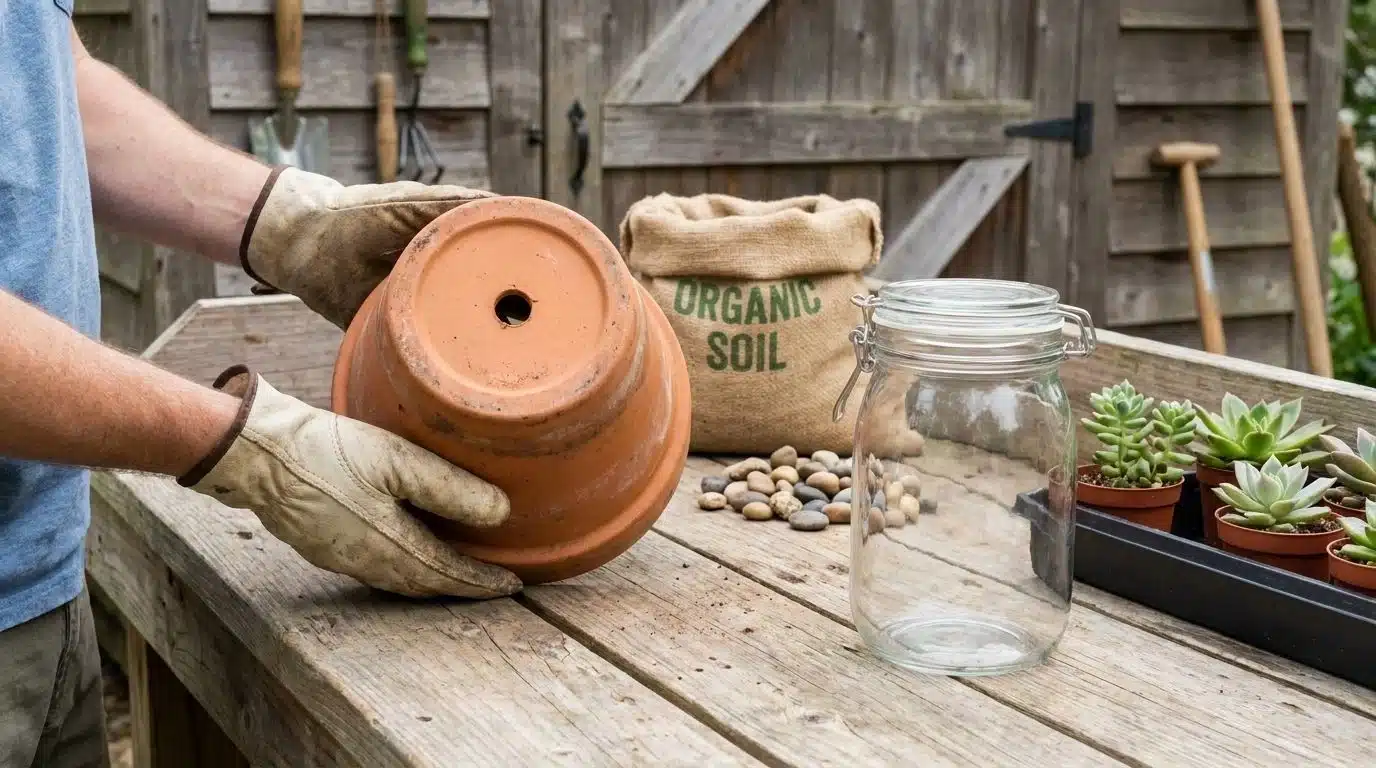
Choose your container first. A pot with a hole at the bottom is the easiest option because excess water can drain out.
If your container does not have a hole, add a layer of small rocks at the bottom. This gives extra water a place to collect away from the roots.
Avoid sealed glass jars or containers with no opening. They may look nice, but trapped water can make your succulent rot.
Step 2: Add Soil the Right Way
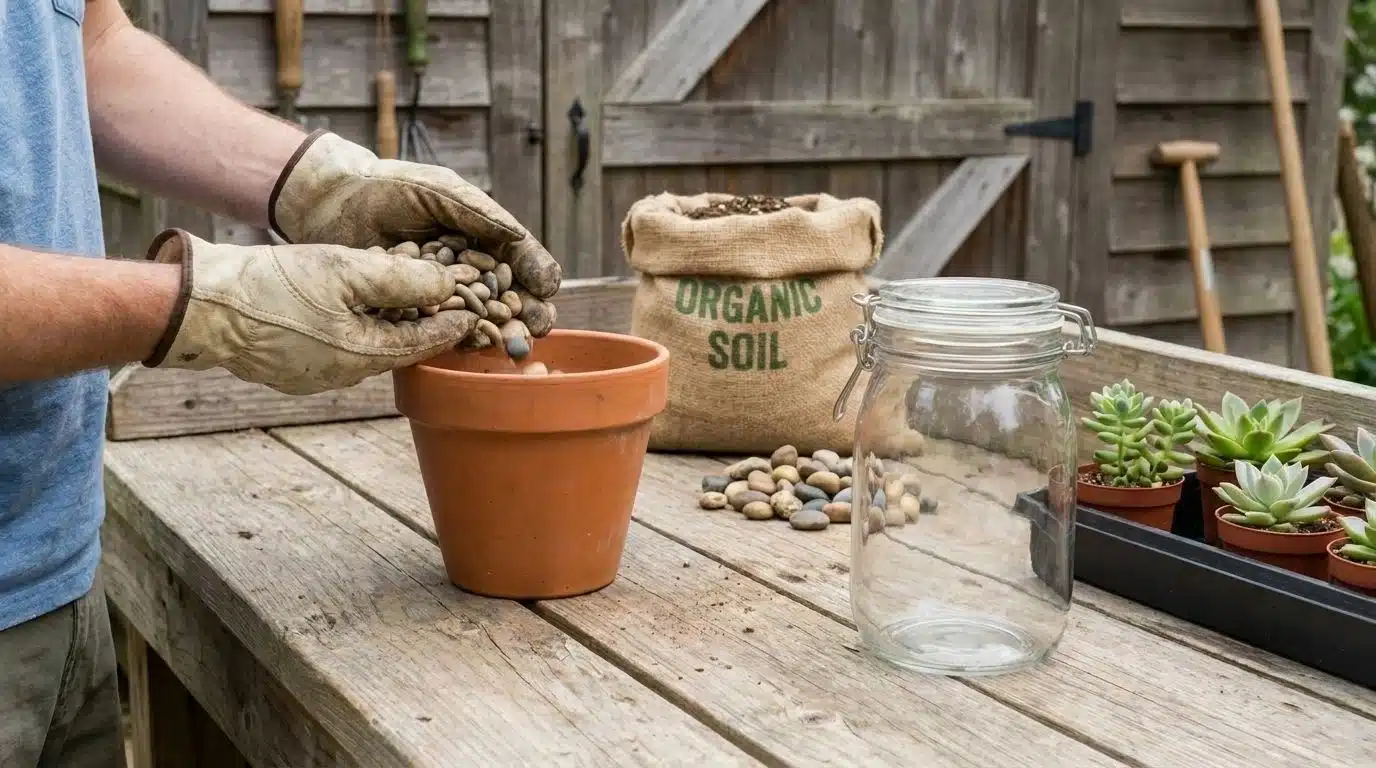
If your container has no drainage hole, add rocks first. Then add your succulent soil on top.
Do not press the soil down too tightly. Succulent roots need loose soil with small air pockets.
Leave a little room at the top of the container. This makes planting easier and keeps soil from falling out when you water.
Step 3: Plant Your Succulents Carefully
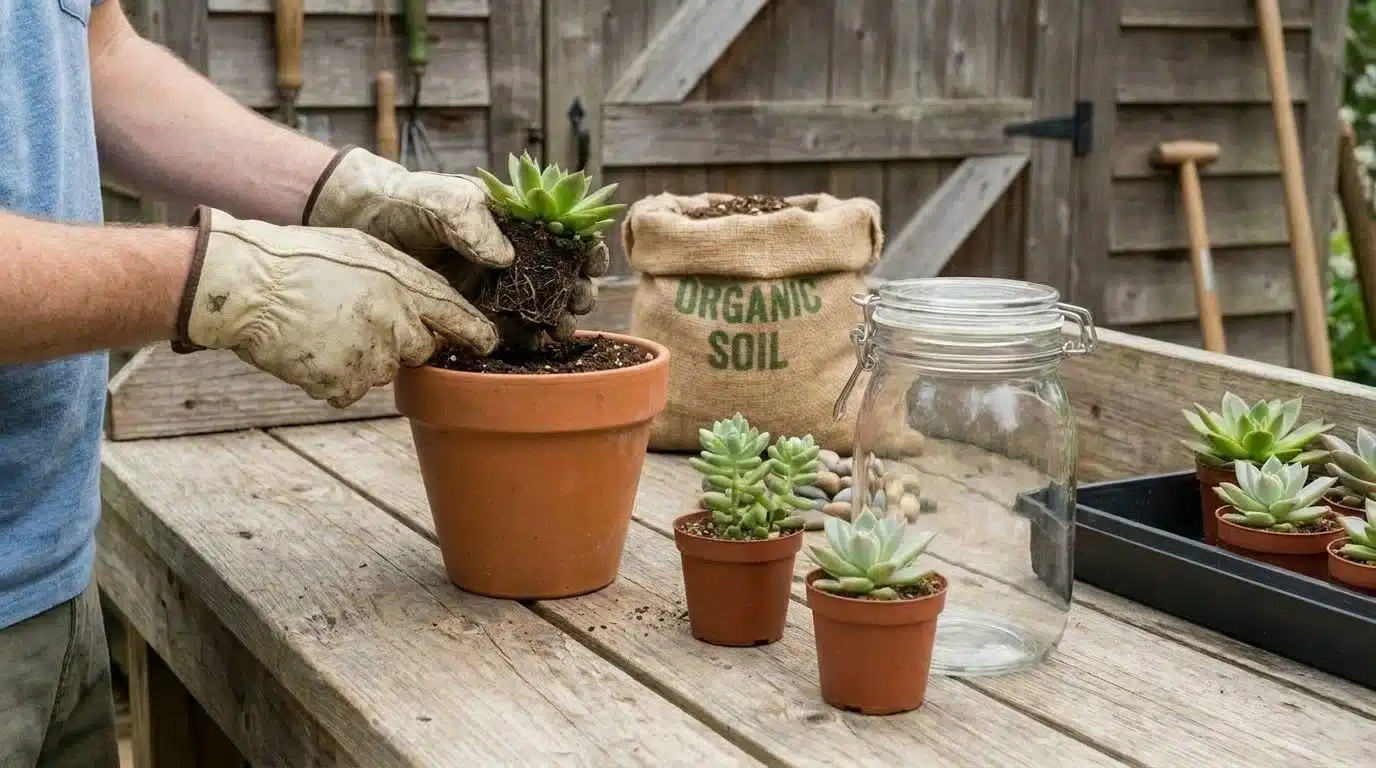
Slowly remove each succulent from its small plastic pot. Squeeze the sides of the pot if the plant feels stuck.
Remove some loose dirt, but avoid pulling on the roots. Make a small hole in the soil and place the plant inside.
Cover the roots with soil and gently press around the plant so it stays in place. Leave some space between plants so they have room to grow.
Step 4: Add Finishing Touches
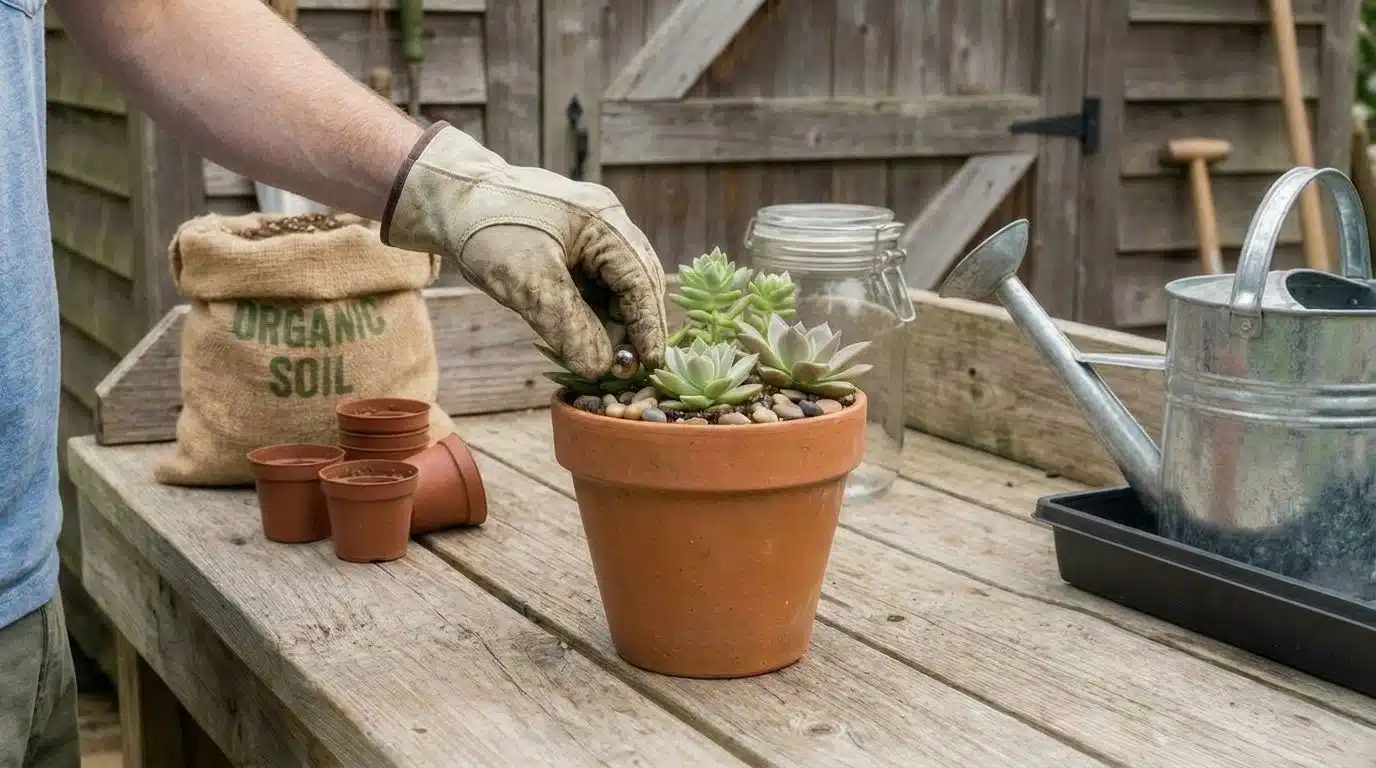
After planting, add a thin layer of small rocks or moss on top of the soil. This covers bare dirt and gives the planter a cleaner look.
Wait about a week before watering. Freshly moved succulents need time to adjust.
After that, place your planter somewhere with a few hours of sunlight each day.
Best Succulents to Use in a DIY Planter
Not every succulent works well in every container. Here are the most reliable types for DIY planters at home.
- Echeveria: Rosette-shaped, compact, and slow-growing. Great for small bowls and desk planters.
- Haworthia: Handles low light better than most succulents. Good for office desks away from windows.
- Sedum (Stonecrop): Trails nicely over edges. Use these as the “spiller” in a mixed arrangement.
- Aloe vera grows larger over time. Best for deep containers with good drainage.
- Sempervivum: Produces small offsets around the base. Easy to propagate and fill gaps.
For the best-looking planter, mix one tall center plant, a few medium rosette types around it, and a trailing variety near the edge. This is the “Thriller, Filler, Spiller” method — it adds height, volume, and a finished look without any design experience.
9 Succulent Planter Ideas You Can Make at Home
Ready for the creative part? These ideas use simple items to create unique homes for your succulents.
1. Wine Cork Mini Planters
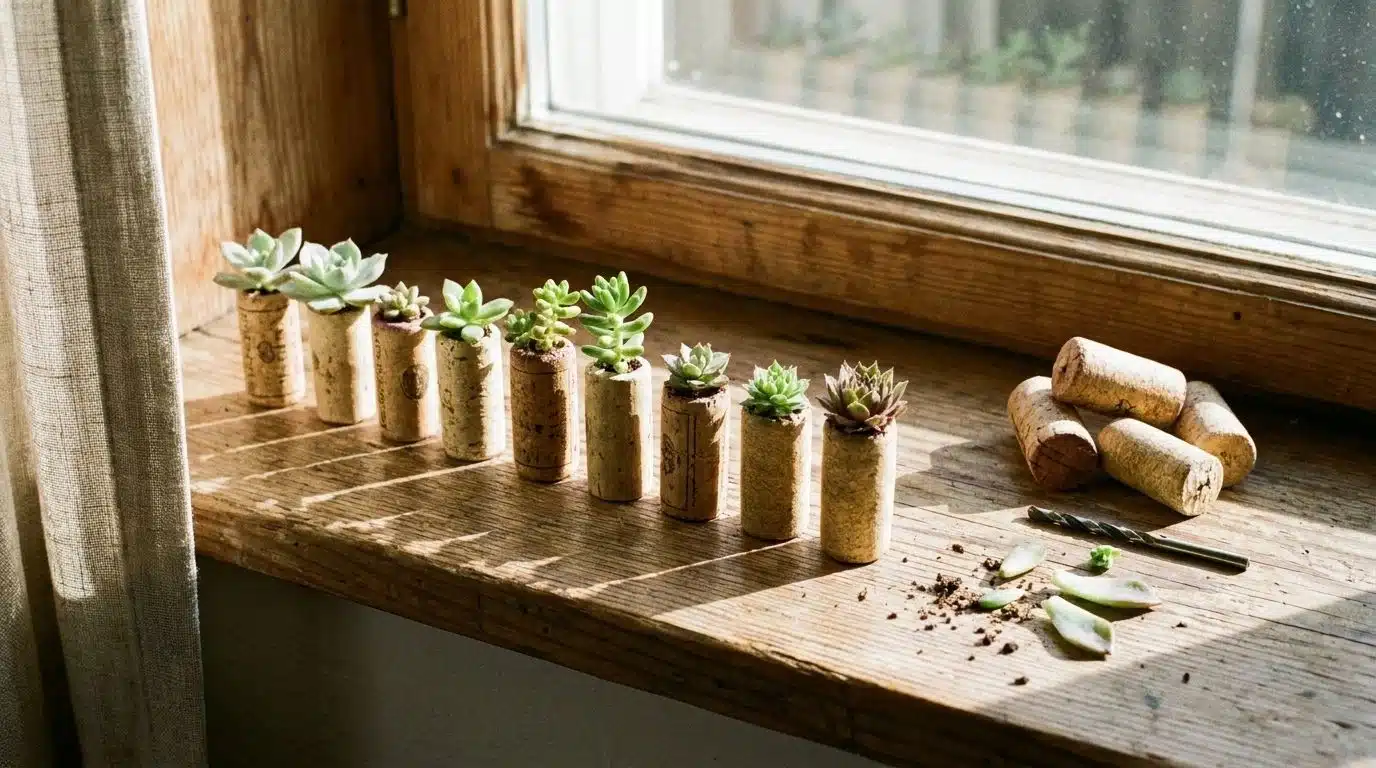
Save old wine corks and make a small hole in the middle of each one. Add a little soil and a tiny succulent cutting.
These tiny planters are perfect for windowsills or small shelves. Put several together on a tray to create a cute mini garden. They also make simple handmade gifts.
2. Vintage Drawer Garden
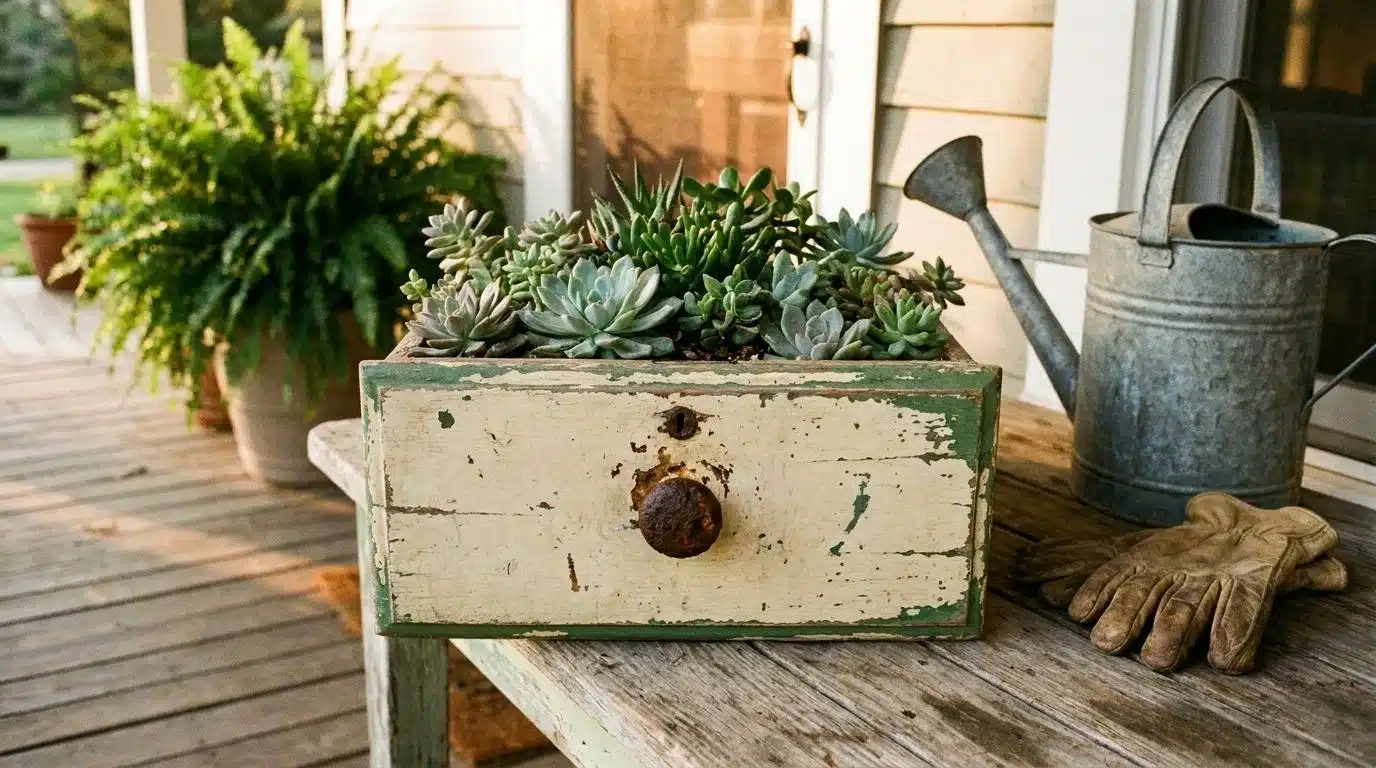
Instead of throwing away an old drawer, turn it into a planter. Cover the inside with plastic to protect the wood, then add soil and several succulents.
A drawer gives you ample space to mix different plants. Add small stones or decorations between the plants for extra style. Keep it somewhere covered so rain does not damage the wood.
3. Copper Pipe Fitting Planters
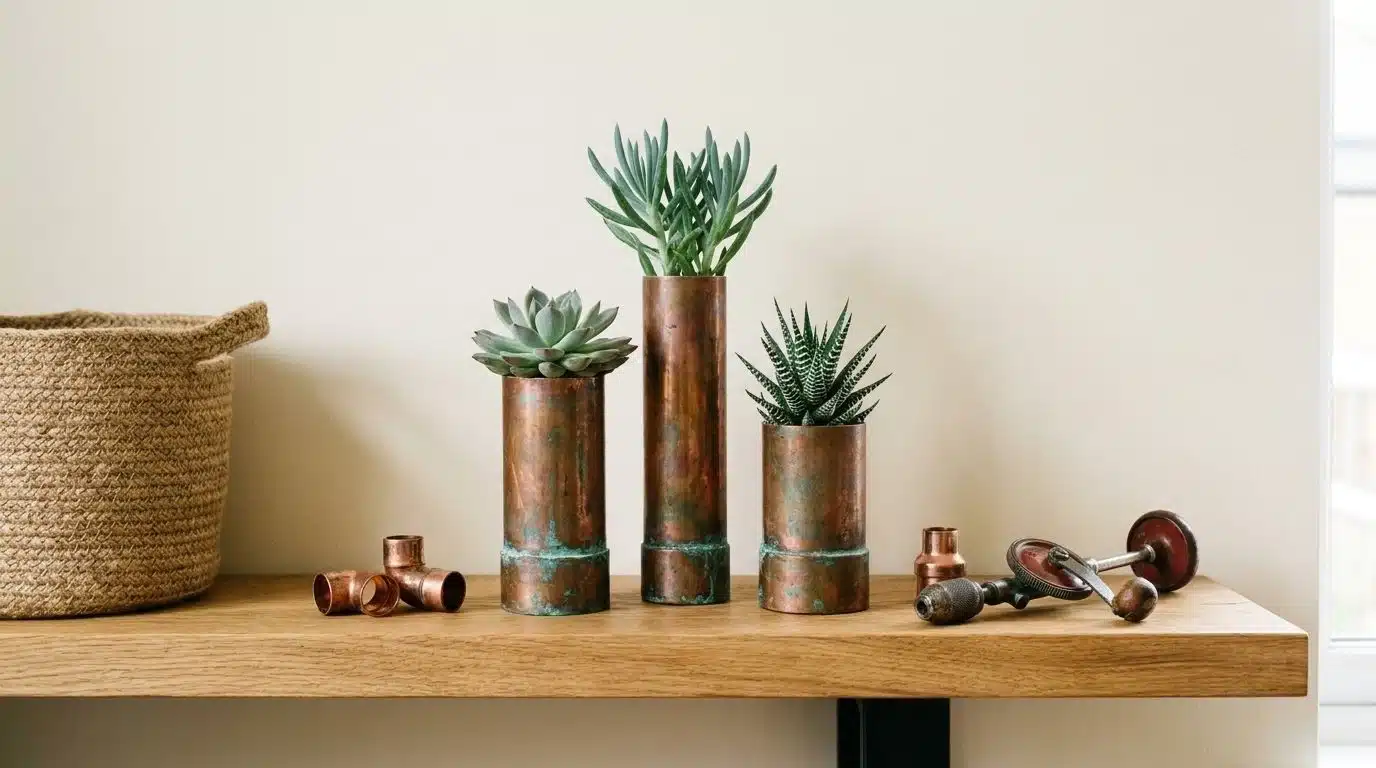
Old copper pipe pieces can become small plant holders. Close one end, add a drainage hole, and fill it with soil and a small succulent.
These planters have a simple, modern look. They work well on desks, shelves, or balconies. You can place several together for a matching display.
4. Painted Rock Gap Planter
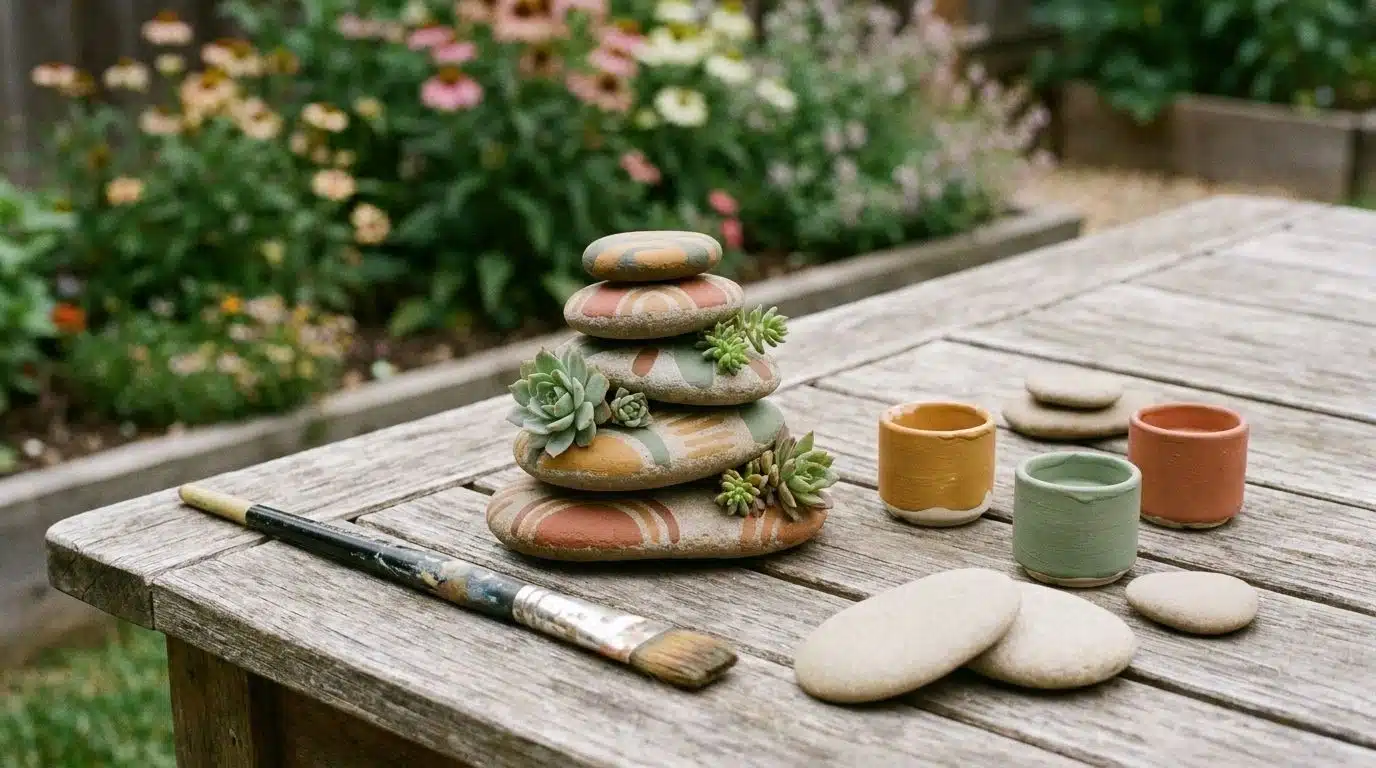
Stack flat rocks, paint them in your favorite colors, and leave small spaces between them. Add soil and place tiny succulents inside the gaps.
This creates a small rock garden that looks handmade. Use outdoor paint if you want to keep it outside.
You can also paint old plant pots to match your garden style. Smaller rocks are easier to stack and hold together.
5. Bundt Pan Ring Planter
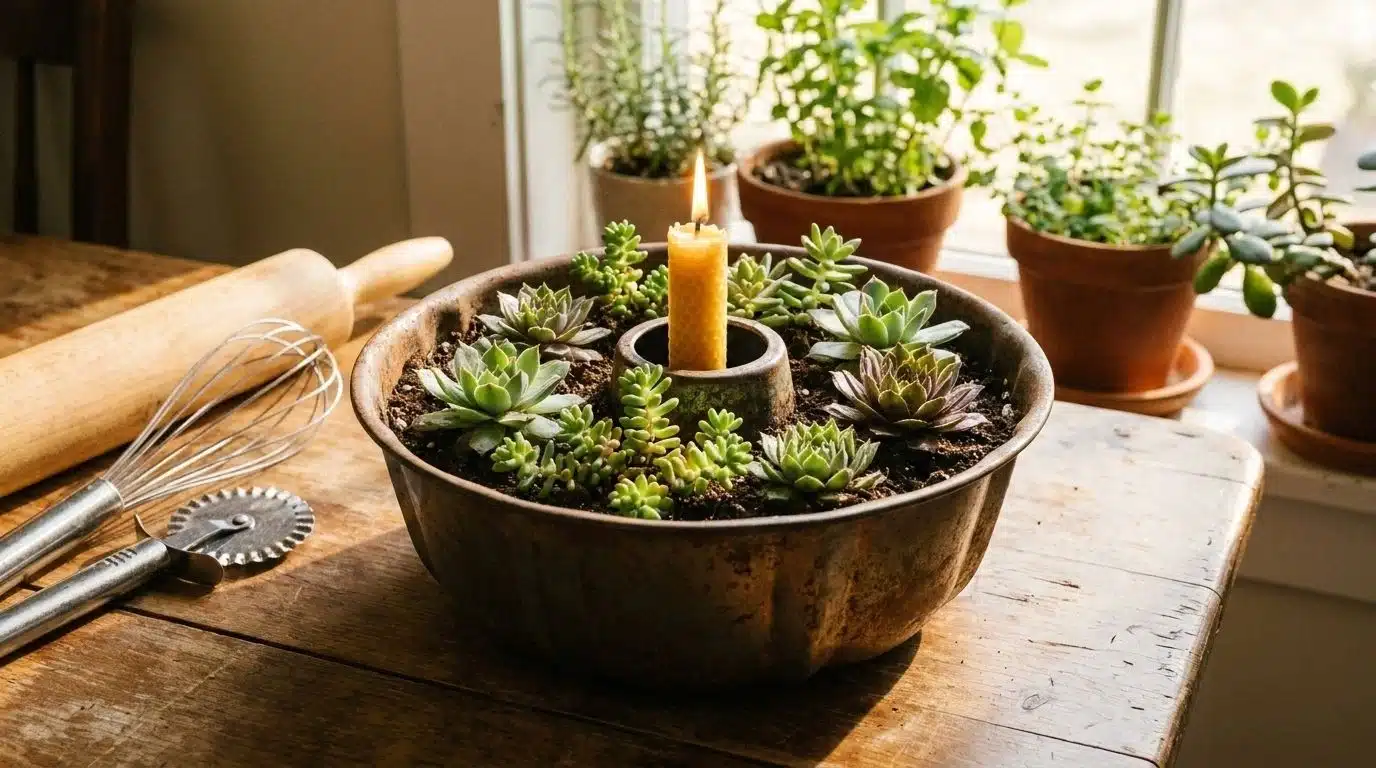
An old bundt pan can become a round succulent planter. Fill the ring area with soil and add your plants around the center hole.
The unusual shape makes it different from regular pots. You can paint the pan first to match your outdoor space. Place it on a table where the full shape can be seen.
6. Wine Barrel Ring Planter
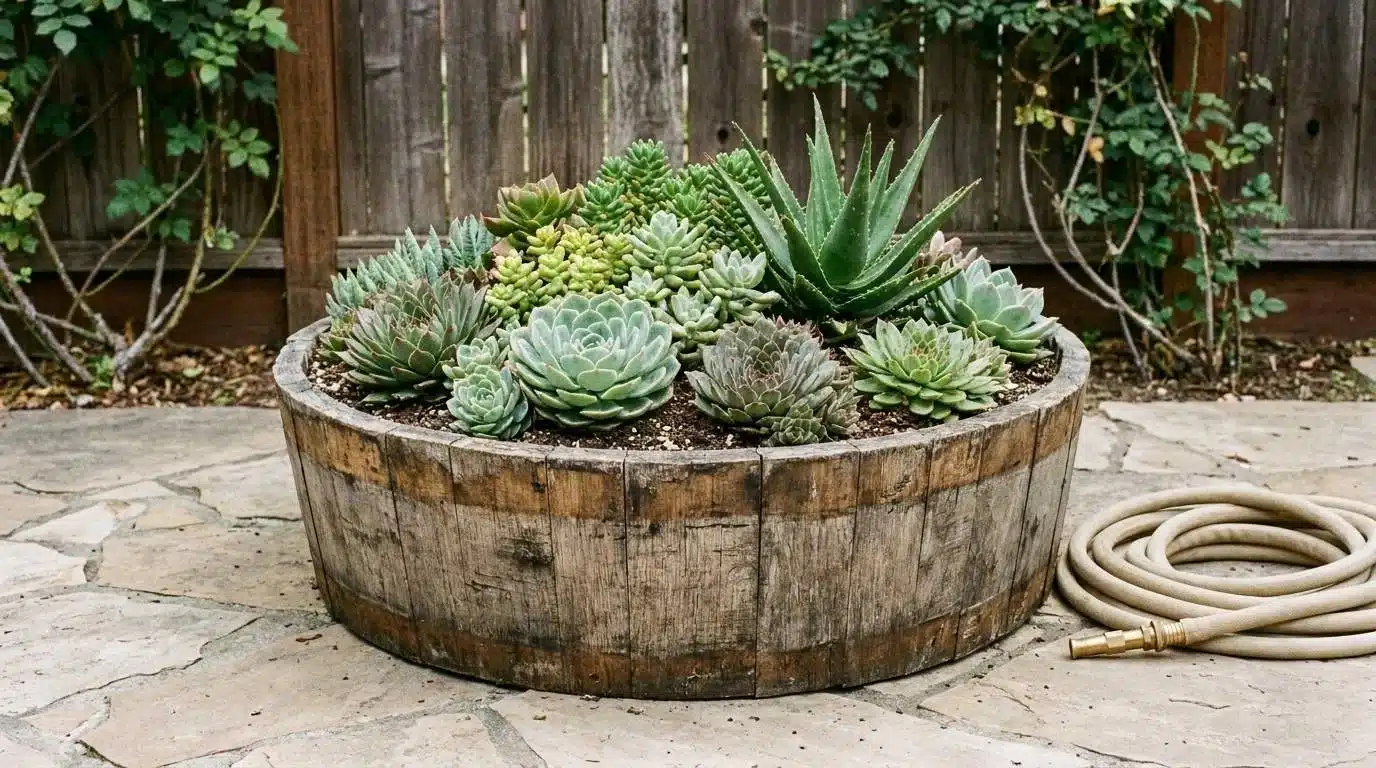
Use an old metal barrel ring as a large garden border. Place it flat on the ground and fill the inside with soil and succulents.
This works well for patios and porch areas. The larger space lets you mix different succulent types. Add small rocks around the edges for a finished look.
7. Colander Hanging Garden
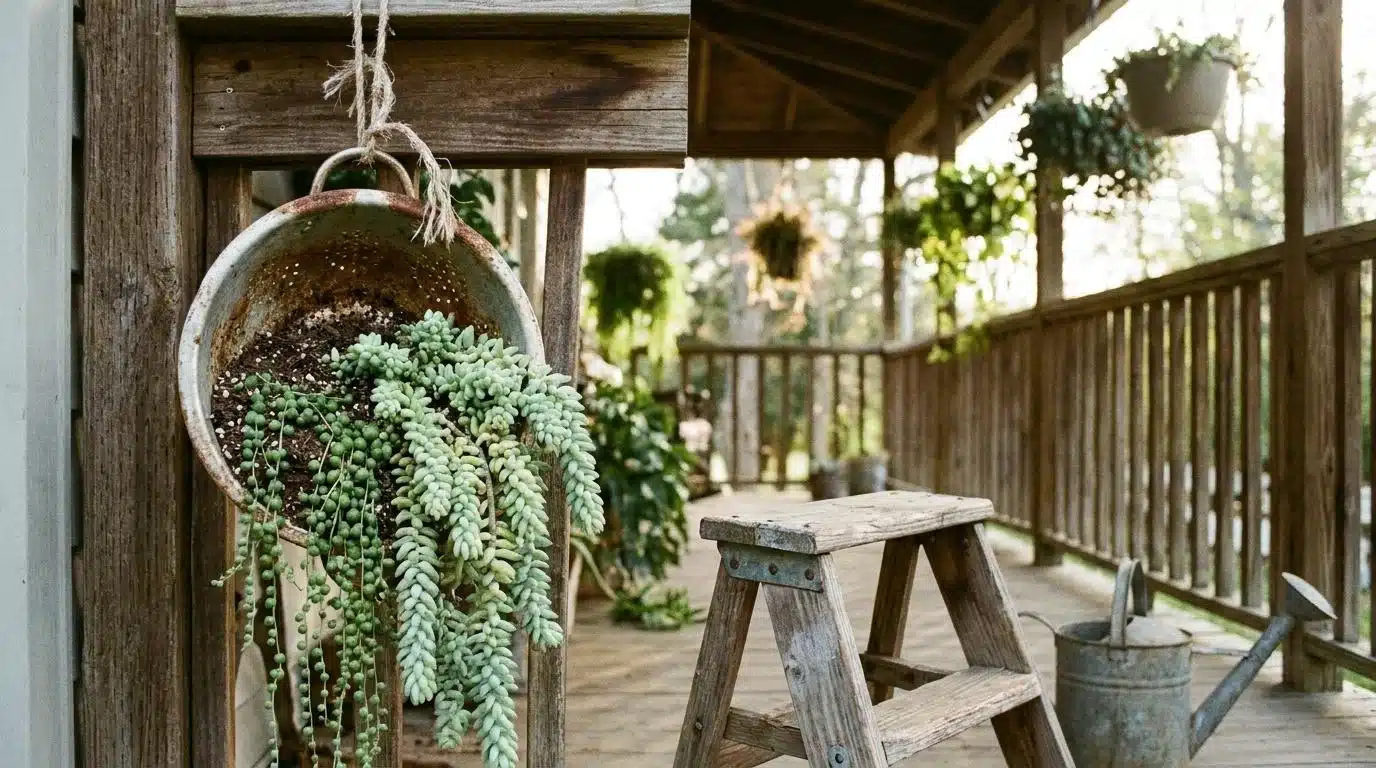
An old kitchen colander already has drainage holes, making it a great planter. Add soil, succulents, and a rope or chain to hang it.
Trailing succulents look especially good in this type of planter. Hang it on walls or somewhere with good light, but protect it from too much rain.
8. Upcycled Egg Carton Starter Display
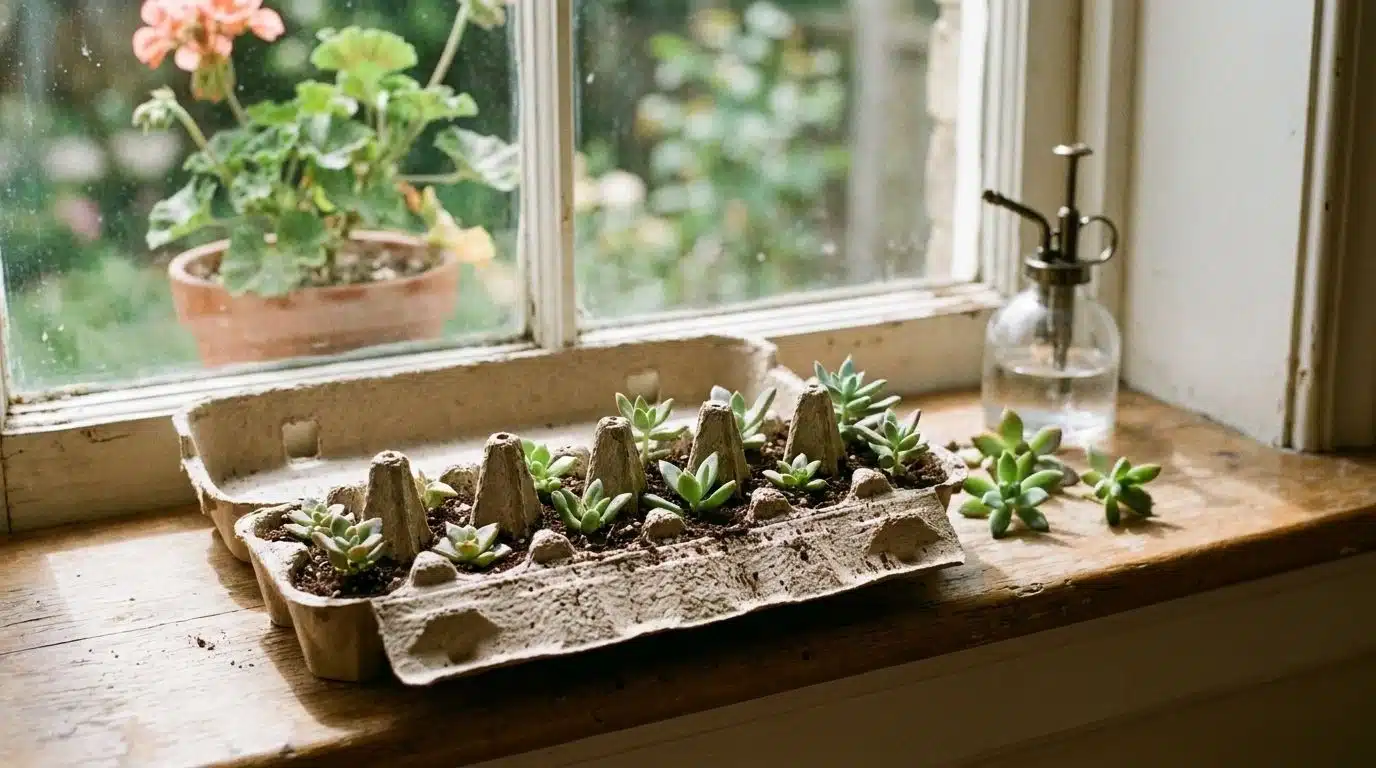
Use an old egg carton to grow small succulent cuttings. Put one cutting in each section and watch them grow.
This is a simple project for beginners. Cardboard cartons work best indoors because they can break down when wet. Move the plants into larger pots once they have grown stronger.
9. Vintage Bicycle Basket Planter
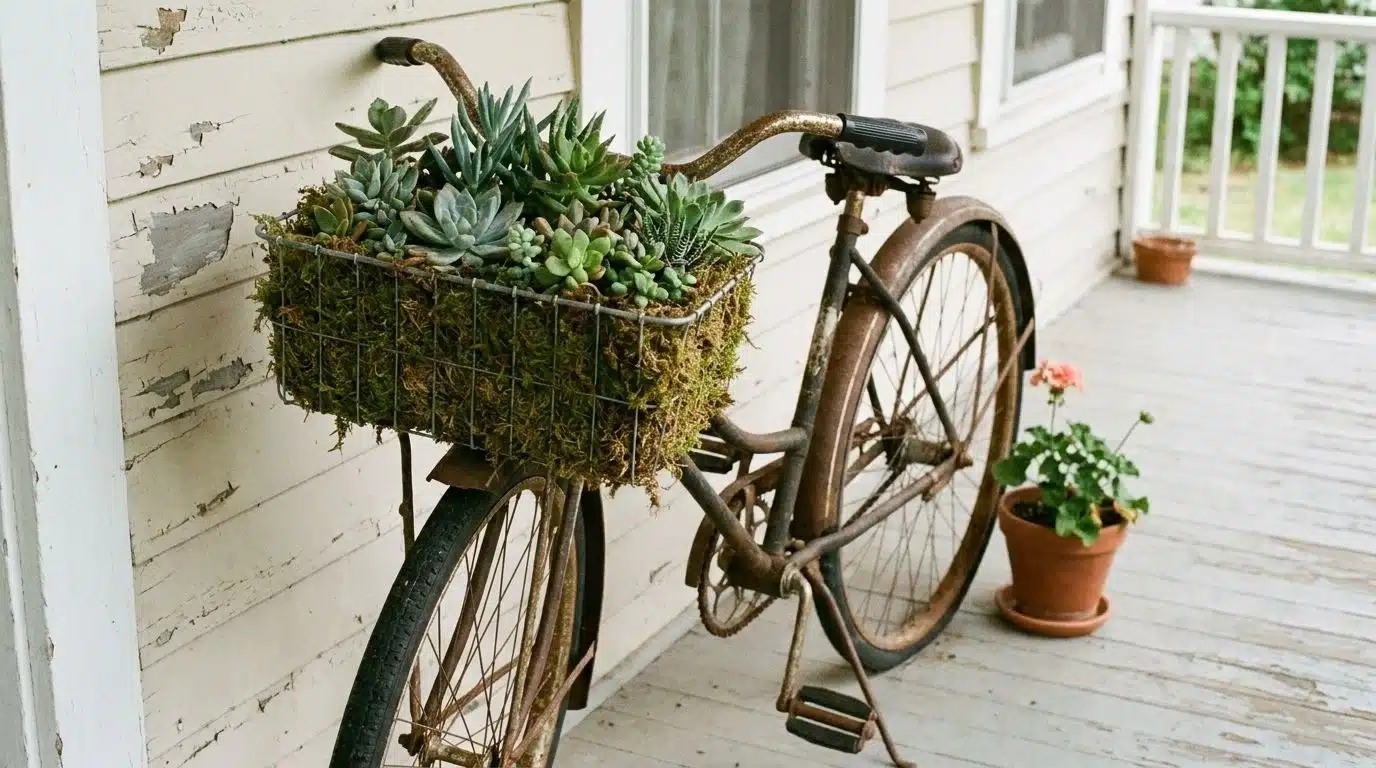
An old bicycle basket can become a charming outdoor planter. Add moss inside to hold the soil, then fill it with different succulents.
This idea works well near porches or garden entrances. Use a strong basket that can hold the weight of soil and plants. Mixing tall and trailing succulents creates a fuller look.
Quick Care Once Your Planter Is Filled
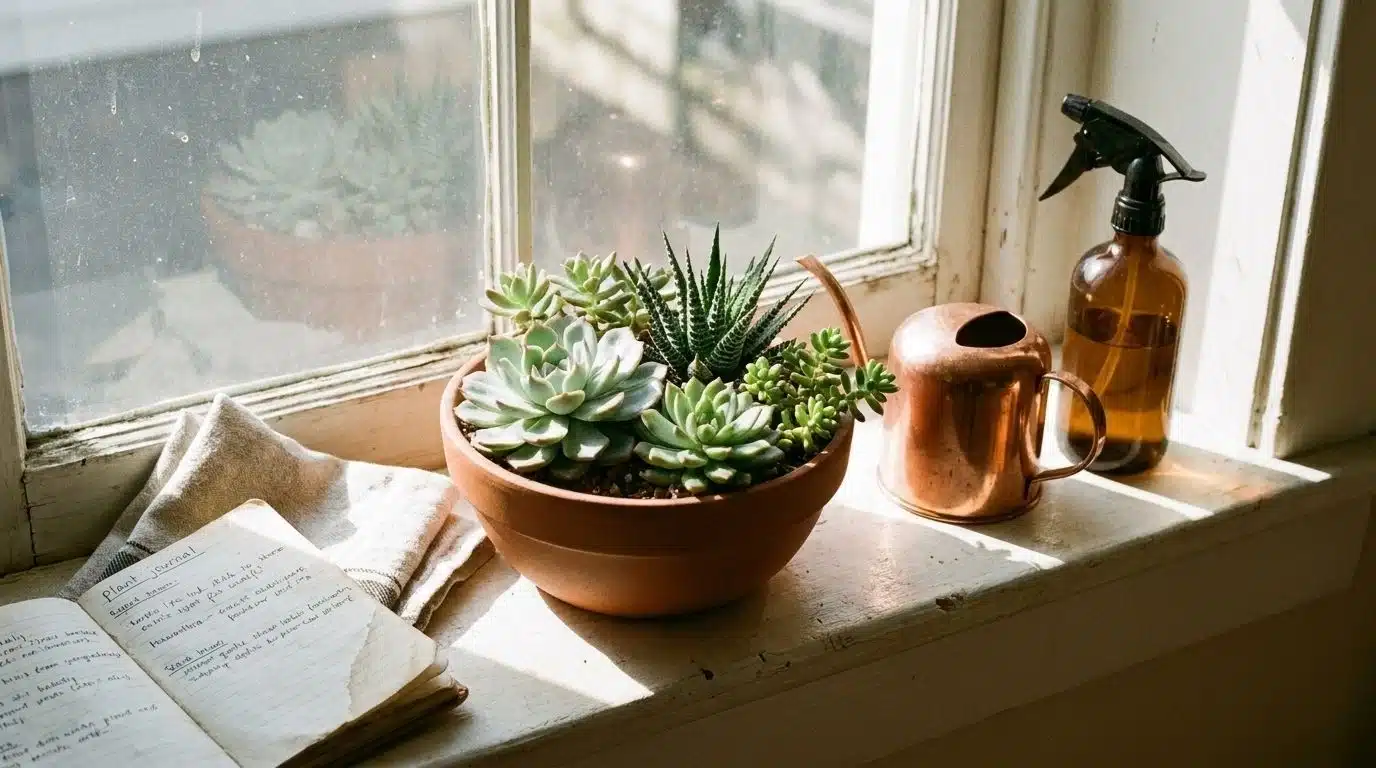
Succulents are easy plants to care for, but they still need the right amount of water and light. Use this simple table to keep your planter healthy.
| Care Area | What To Do |
|---|---|
| Watering | Water lightly and let the soil dry fully before watering again. Too much water can damage the roots. |
| Sunlight | Keep your planter in a bright spot with about three to four hours of sunlight each day. |
| Outdoor Placement | Morning sunlight with some afternoon shade works well for most succulents. Keep them away from heavy rain. |
| Checking Soil | Touch the soil before watering. If it still feels wet, wait a few more days. |
| Plant Growth | If a succulent becomes tall and thin, move it closer to sunlight. More light can help it grow better. |
With basic care, your succulent planter can stay healthy for years. These plants do not need much attention, but the right watering and light make a big difference.
Common Mistakes That Can Ruin a DIY Succulent Planter
Succulents are simple plants, but a few common mistakes can cause problems. Avoid these issues to help your planter grow well.
-
Skipping drainage: Without drainage, water stays trapped around the roots. This can make the plant rot. Use a container with a hole or add rocks at the bottom.
-
Using the wrong soil: Regular garden soil can hold too much water. Use cactus or succulent soil because it dries faster.
-
Putting plants too close together: A crowded planter may look nice at first, but plants need space to grow. Too many plants together can cause problems later.
-
Choosing a container that is too small: Small containers work for tiny cuttings, but larger succulents need more room for their roots.
-
Watering without checking the soil: Do not water just because it has been a few days have passed. Check the soil first. If it is still wet, wait before adding more water.
Avoiding these simple mistakes will help your DIY succulent planter stay healthy and look good for much longer. A little care at the beginning can save you from having to replace plants later.
Your DIY Succulent Planter Starts Here
A handmade succulent planter can turn simple materials into a beautiful piece of living decor.
By following the right planting steps, choosing a suitable container, and using creative ideas, you can make a display that feels personal and truly yours.
Succulents do not need constant care, but they do need proper sunlight, dry soil, and careful watering to stay healthy.
Start with one small container, get comfortable with the process, and add more planters as you grow. The right container is already sitting in your home; it just needs a little soil and a few plants.
Frequently Asked Questions
How Do I Water a Succulent Planter?
Water only when the soil is completely dry. Soak the soil deeply, then let extra water drain out fully. Too much water can quickly damage succulents.
How Much Sunlight Do Succulents Need?
Most succulents need bright, indirect light with a few hours of morning sun. If they grow tall and weak, they may need more light.
How Do I Arrange Succulents in A Planter?
Use the “Thriller, Filler, Spiller” method. Add a tall plant in the center, medium plants around it, and trailing plants near the edges for a balanced look.
What is the Best Soil for Succulents?
Use a cactus or succulent soil mix that drains quickly. Avoid regular garden soil because it holds too much water and can harm the roots.
How Often Should I Repot a Succulent Planter?
Repot succulents when roots become crowded or the plant outgrows its container. A slightly bigger pot with fresh soil gives roots more space to grow.