Neoclassical Interior Design: Rules, Colors, and Costs

Some homes feel put together the moment you walk in. You cannot always name why.
Balanced furniture, soft neutral walls, detailed panel molding, and pieces that all have a place. That combination is rarely an accident.
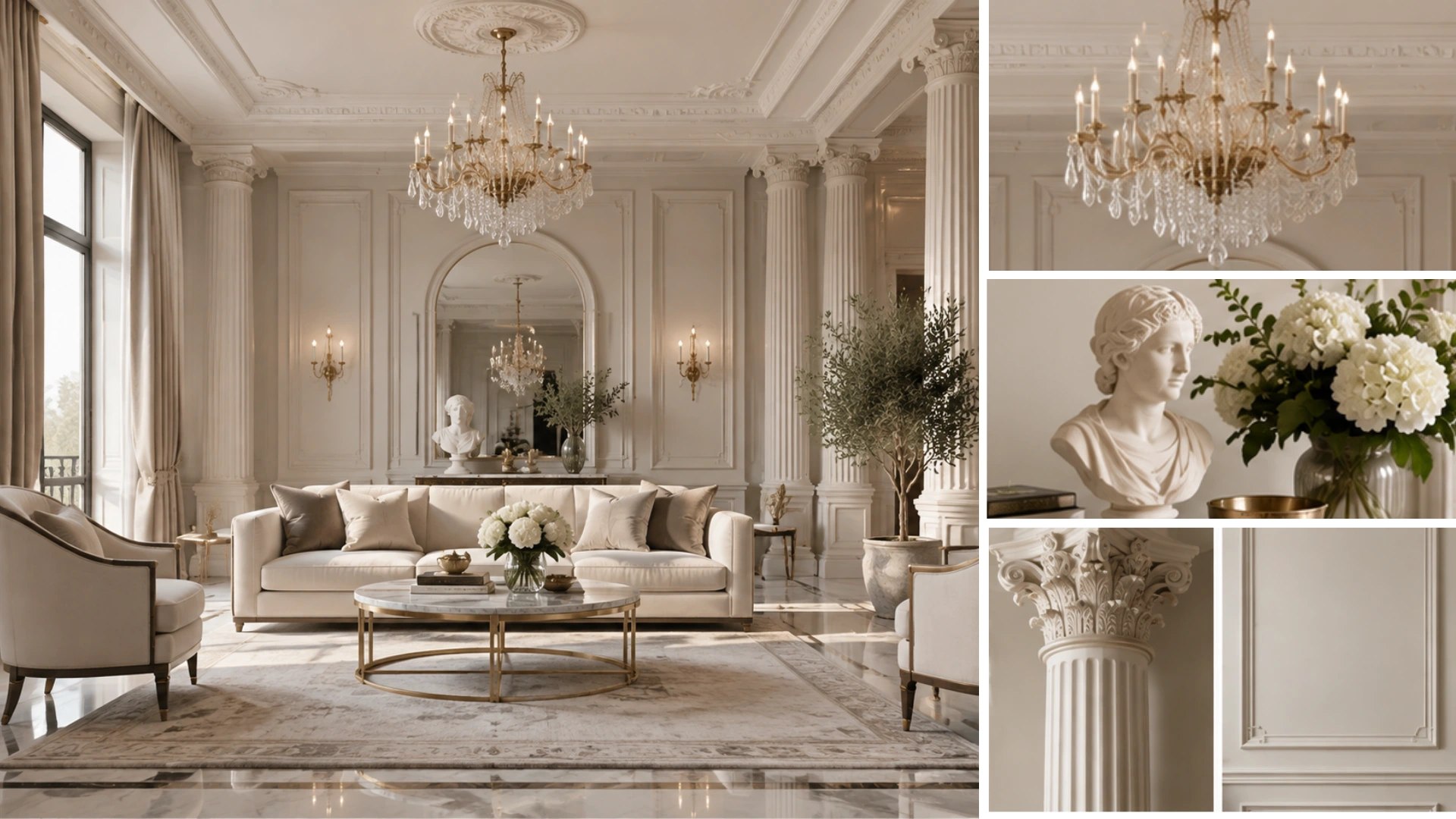
That polished look often comes from neoclassical interior design. This style blends the order of classical architecture with everyday comfort.
Neoclassical interior design does not copy the heavy, formal interiors of the past. It focuses on clean details, lasting materials, and a calm, ordered feel.
What Is Neoclassical Interior Design?
Neoclassical interior design blends the look of ancient Greek and Roman architecture with modern comfort.
It focuses on balance, symmetry, and refined details. Materials matter more than heavy decoration. The style began in Europe in the 18th century. It pushed back against the heavy ornamentation of Baroque and Rococo interiors.
Designers at the time drew on classical architecture for inspiration. They used clean lines, columns, and molding to create ordered rooms.
Today, homeowners adapt neoclassical interiors for daily life. They pair traditional architectural details with modern furniture, softer colors, and practical layouts.
Key Elements That Define Neoclassical Interior Design
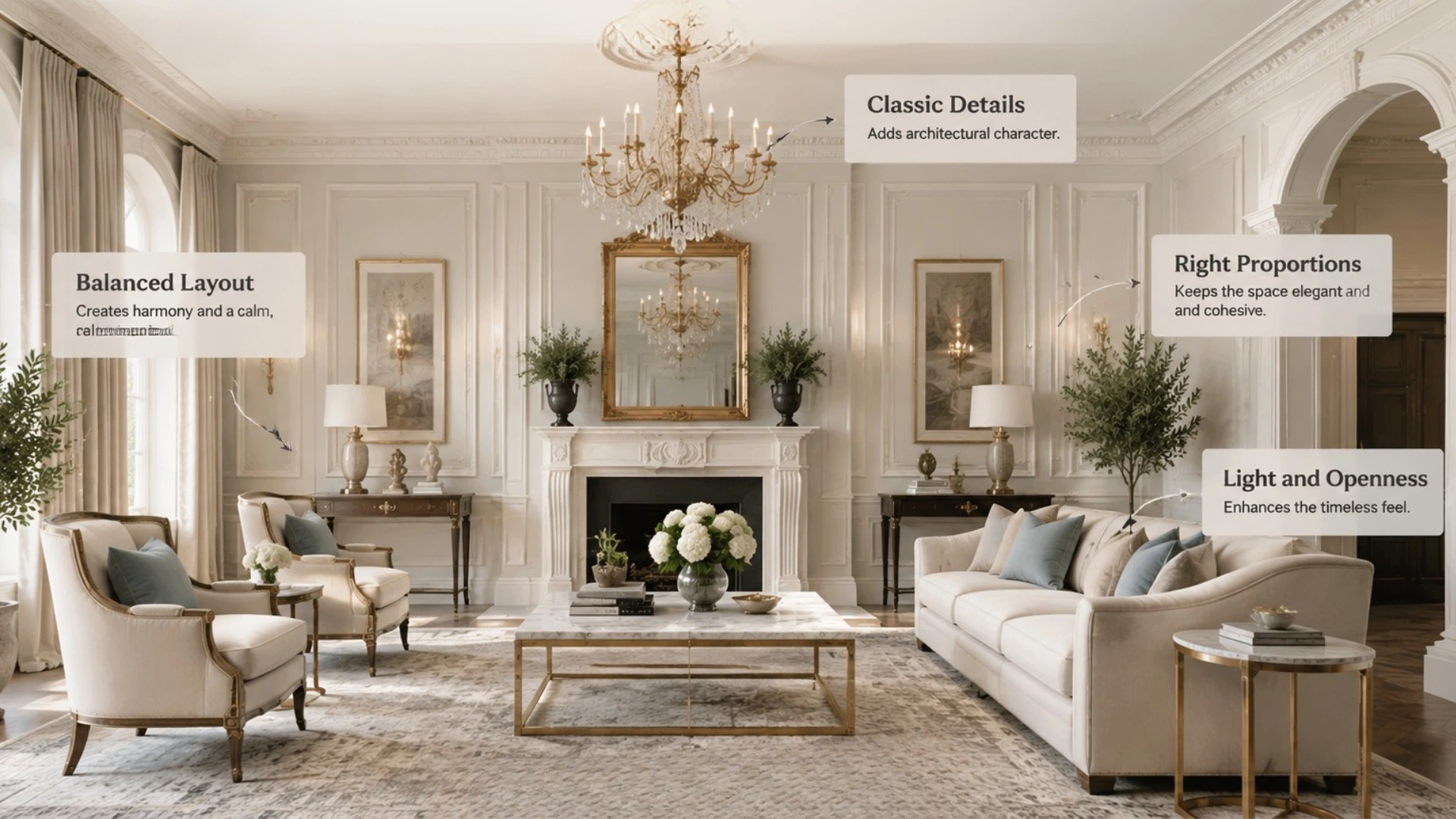
Architecture sets the order first. Furniture and decor reinforce it through symmetry, scale, and classical detail.
1. Symmetry and Visual Balance
Symmetry is one of the strongest foundations of neoclassical interiors. Furniture is often arranged around a clear focal point, like a fireplace or artwork.
Matching chairs, paired lamps, and evenly placed accessories create a calm look. Perfect matching is not required. Visual balance matters more than identical items.
2. Wall Molding and Architectural Details
Frame-style panel molding, crown molding, cornices, pilasters, arches, and fluted detailing build the layered look of neoclassical interiors.
In modern homes, these details should match the room’s scale. A large cornice can overpower a room with standard ceilings. Slimmer profiles add polish without crowding the space.
3. Proportion and Scale
Most guides skip this part, and it is where neoclassical rooms most often go wrong.
Large, projecting molding profiles suit rooms with 10-foot or higher ceilings. In a typical 8- to 9-foot American ceiling, narrower profiles look more appropriate.
Pro Tip: Scale your architectural details to your actual space. That discipline is part of the style, not a limitation.
4. Light, Space, and Order
Neoclassical rooms feel open and organized. Clear furniture paths, large mirrors, uncluttered surfaces, and good natural light all support that feel.
This style is not for rooms packed with objects. A few well-chosen pieces carry more weight than a room full of classical-looking items.
Best Colors for Neoclassical Interior Design
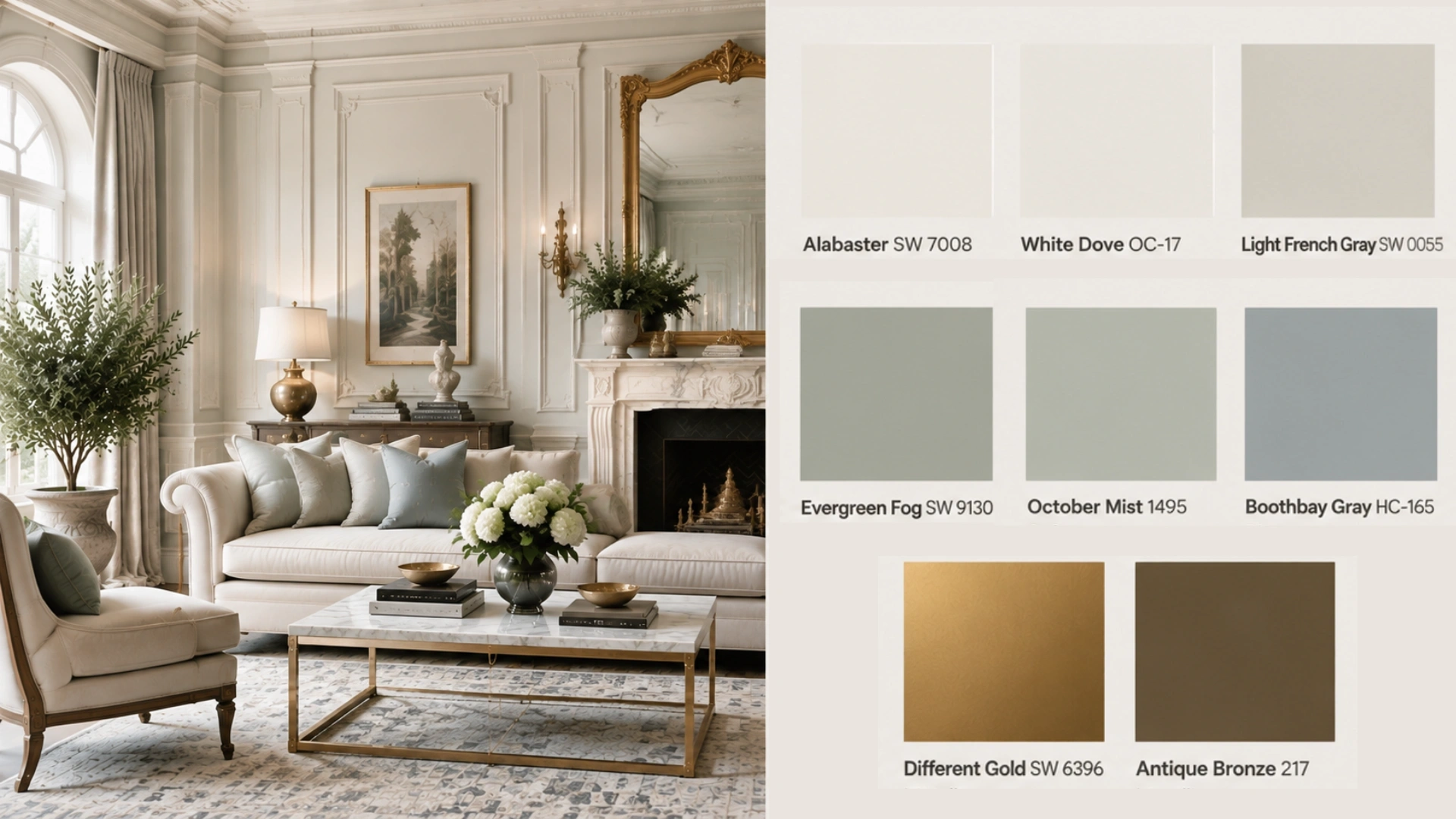
The best palettes stay muted. They let moldings, furniture shapes, and materials carry the visual weight. Here are reliable starting points, drawn from current U.S. paint lines with approximate hex values for reference:
|
Color Role |
Direction |
Paint Option |
|---|---|---|
|
Warm white |
Soft, slightly creamy base |
|
|
Classic off-white |
Walls, trim, or molding |
|
|
Balanced light gray |
More tailored rooms |
|
|
Muted sage green |
Bedrooms, restrained accent walls |
|
|
Soft sage |
Softer green-gray option |
|
|
Blue-gray |
Living rooms, studies, cabinetry |
|
|
Metallic accent |
Brass, bronze, or muted gold |
For a balanced palette, pick one light neutral as the main color. Add one or two muted shades through upholstery, curtains, rugs, or artwork.
Pro Tip: Test a physical paint sample on your wall in different light before you commit to a full room.
Furniture, Materials, and Fabrics for Neoclassical Interior Design
Furniture and materials give neoclassical rooms a sense of permanence. Think structured shapes, medium or dark wood, marble, brass, and restrained upholstery.
1. Choose Furniture With Clean Classical Lines
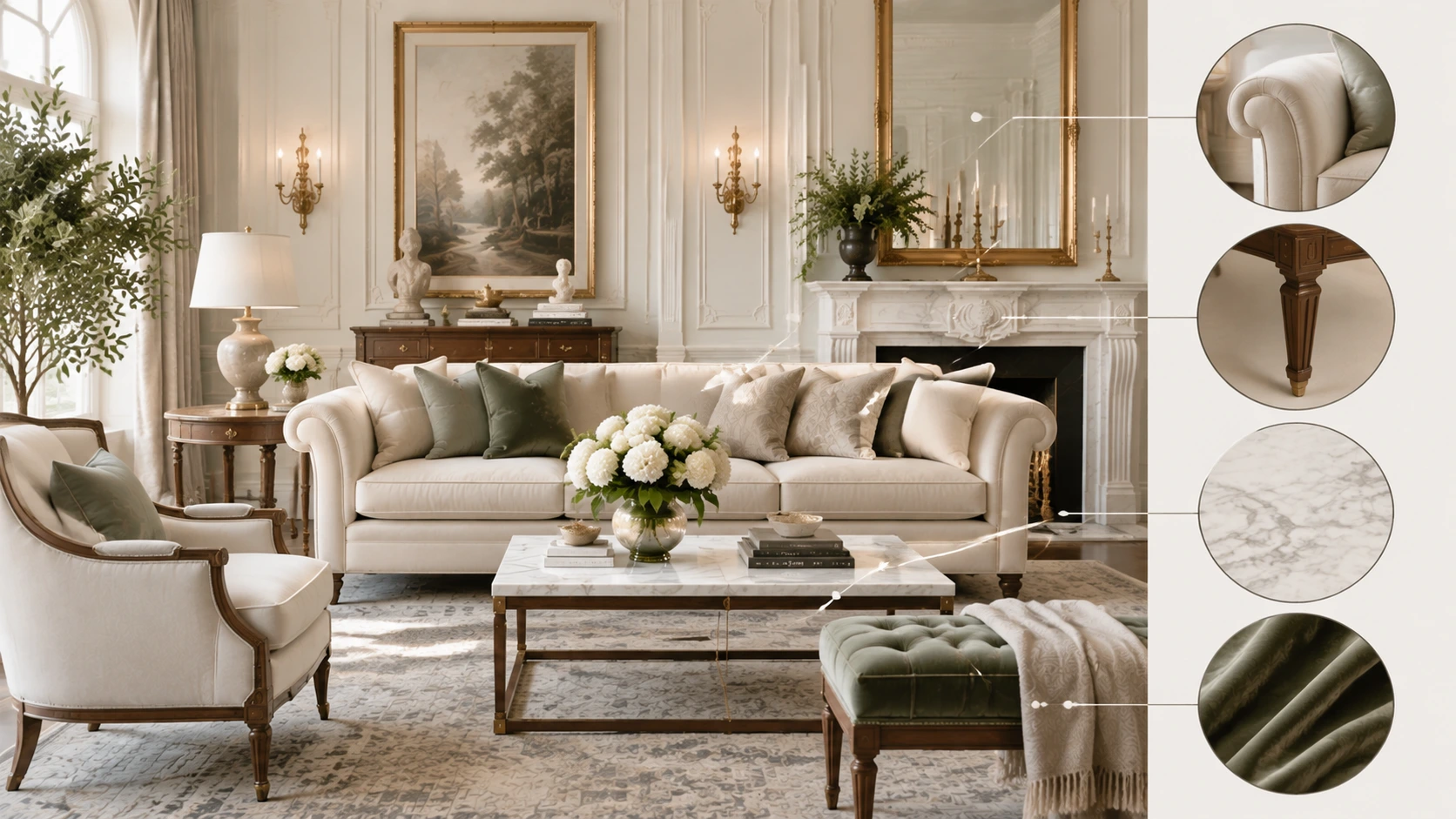
Neoclassical furniture often looks polished without heavy carving or decoration. Look for structured sofas, upholstered armchairs, pedestal tables, consoles, and tapered or fluted legs.
Walnut, mahogany, and oak finishes work well. A curved piece, like a rounded armchair, can soften an otherwise orderly layout.
The key is restraint. Not every piece needs to look antique. Mixing a few classic pieces with simpler modern ones keeps a room livable.
2. Use Materials That Add Depth
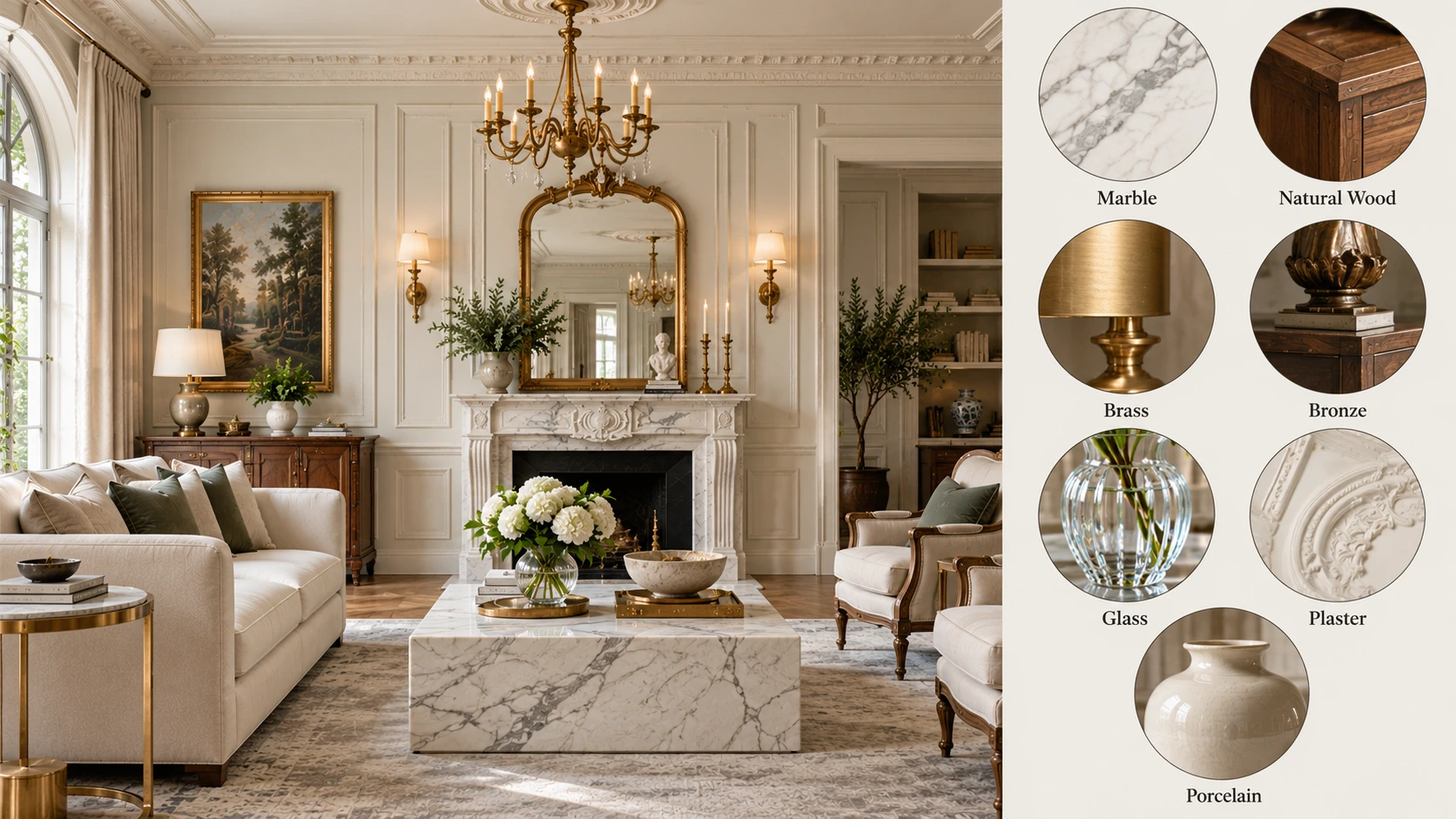
Natural materials read better than synthetic ones. Materials should feel solid and refined. Preferred choices include:
-
Marble or marble-look stone
-
Limestone
-
Natural wood
-
Brass
-
Bronze
-
Glass
-
Plaster
-
Porcelain or ceramic finishes
On a tighter budget, stone-look porcelain or engineered stone works as a reasonable stand-in for natural marble. This works especially well for floors and countertops.
3. Layer Soft, Refined Fabrics
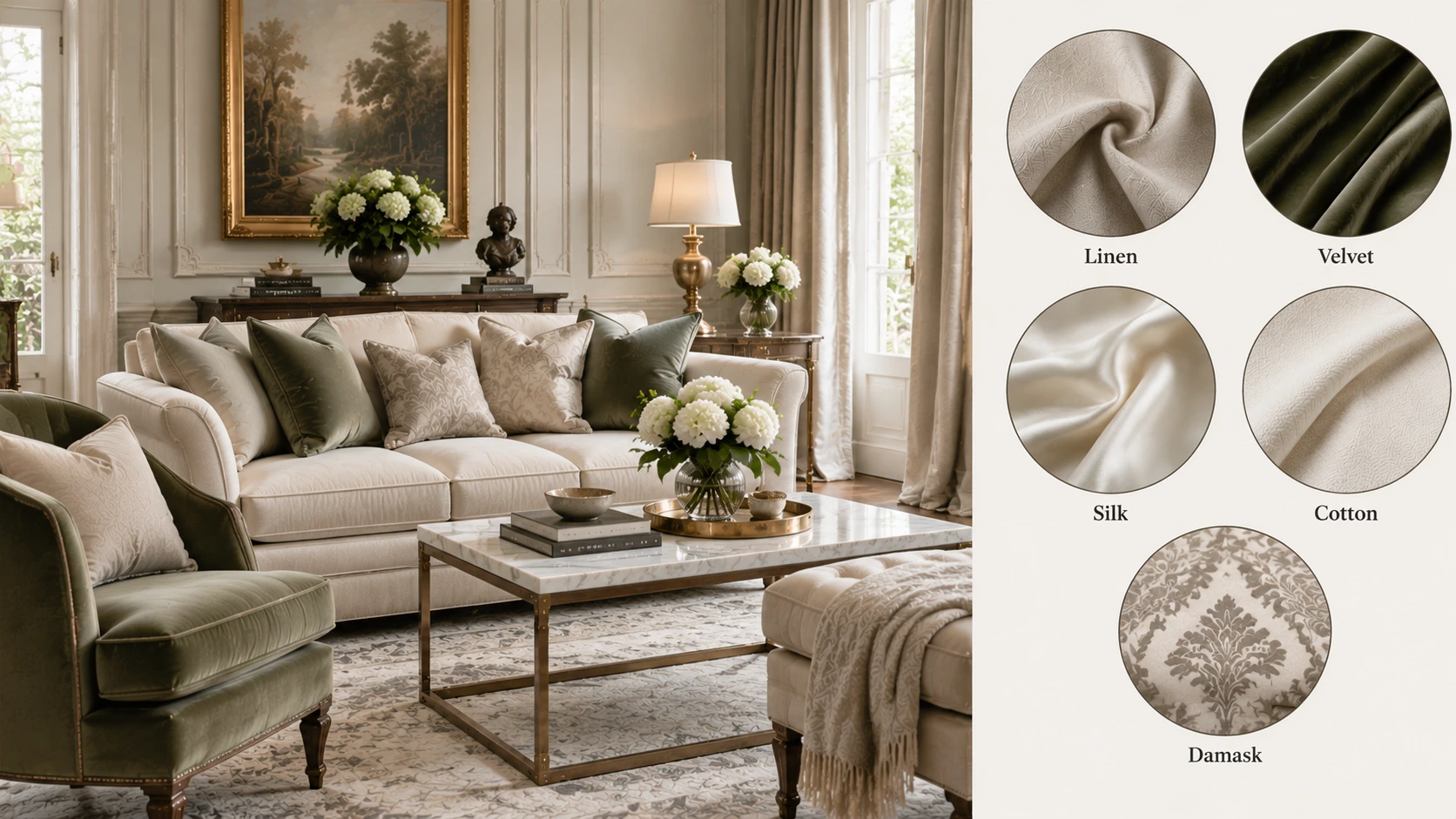
Fabrics keep neoclassical rooms from feeling cold or overly formal. Linen, velvet, cotton, and silk can add softness and texture.
-
Linen for upholstery and drapery
-
Velvet for armchairs, accent pillows, or window treatments
-
Silk or silk-look fabric for cushions and formal window panels
-
Fine cotton for bedding and everyday upholstery
-
Subtle damask or a restrained classical motif where pattern is used
Pro Tip: Avoid heavy pattern mixing. One fabric with a classical motif, a discreet stripe, or a subdued damask works well. Several competing patterns fight with the architectural detailing.
4. Lighting and Decorative Pieces
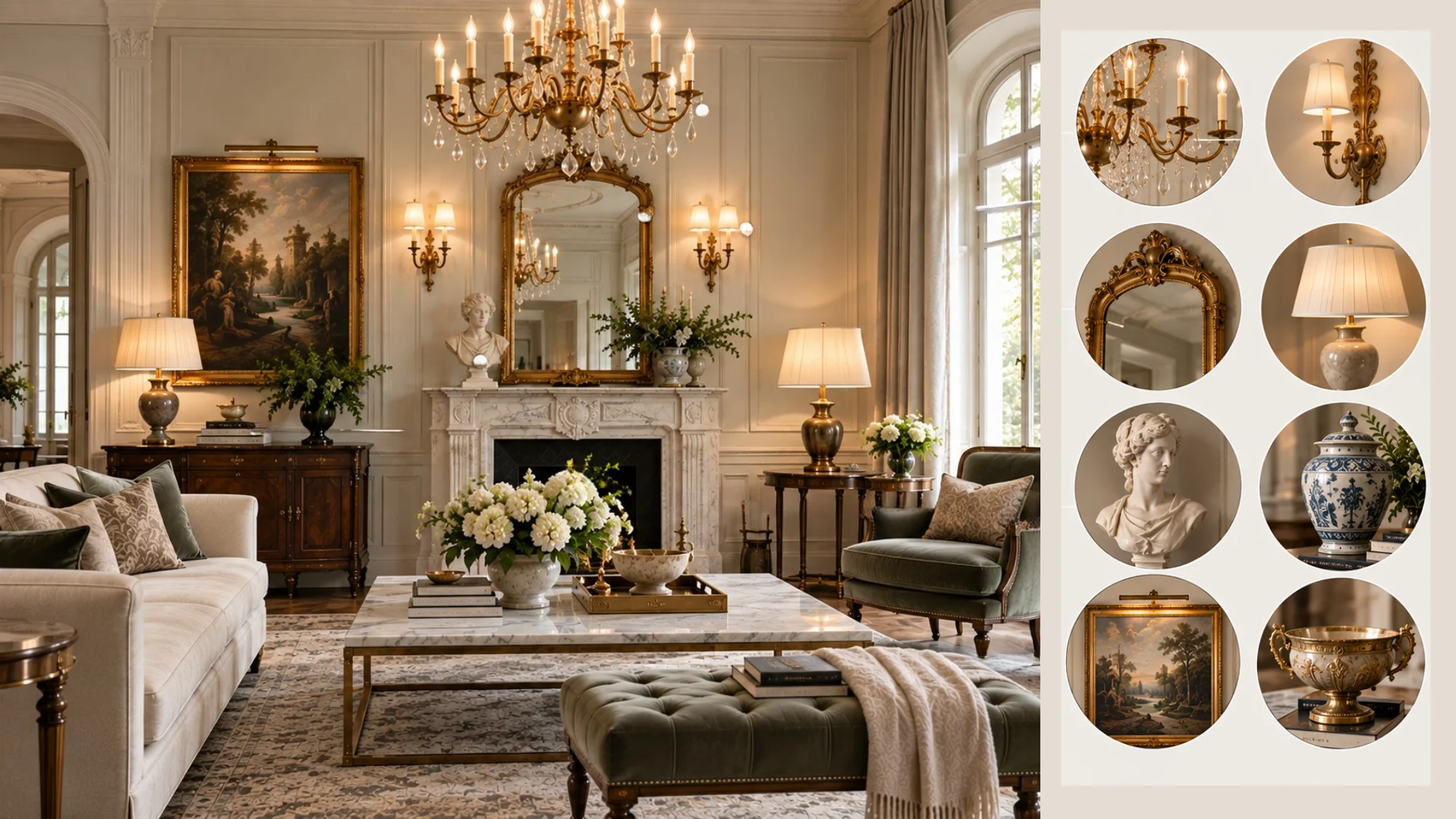
Chandeliers, wall sconces, and table lamps with classical silhouettes are the expected choices here. Gilded mirrors, sculptural ceramics, urns, and classical artwork all fit this style.
The same editing rule applies. One or two strong classical pieces work better than a room crowded with imitation antiques. Choose fewer, better pieces, and let the architecture lead.
How to Use Neoclassical Interior Design in Every Room
A neoclassical home keeps the same symmetry and proportion in every room. Furniture, lighting, materials, and ornament shift to fit each room’s function.
Here is how the same principles play out room by room.
1. Neoclassical Living Room
The living room is usually the easiest place to establish the style. Start with one clear focal point, such as a fireplace, large artwork, or a framed mirror, then arrange seating around it.
A structured sofa paired with two armchairs creates balance without requiring every piece to match. Add wall panel molding, a large area rug, and a marble, wood, or glass coffee table to bring the room together.
For lighting, a chandelier or sculptural ceiling fixture can become the main decorative feature. Keep smaller accessories limited so the room still feels open and composed.
2. Neoclassical Bedroom
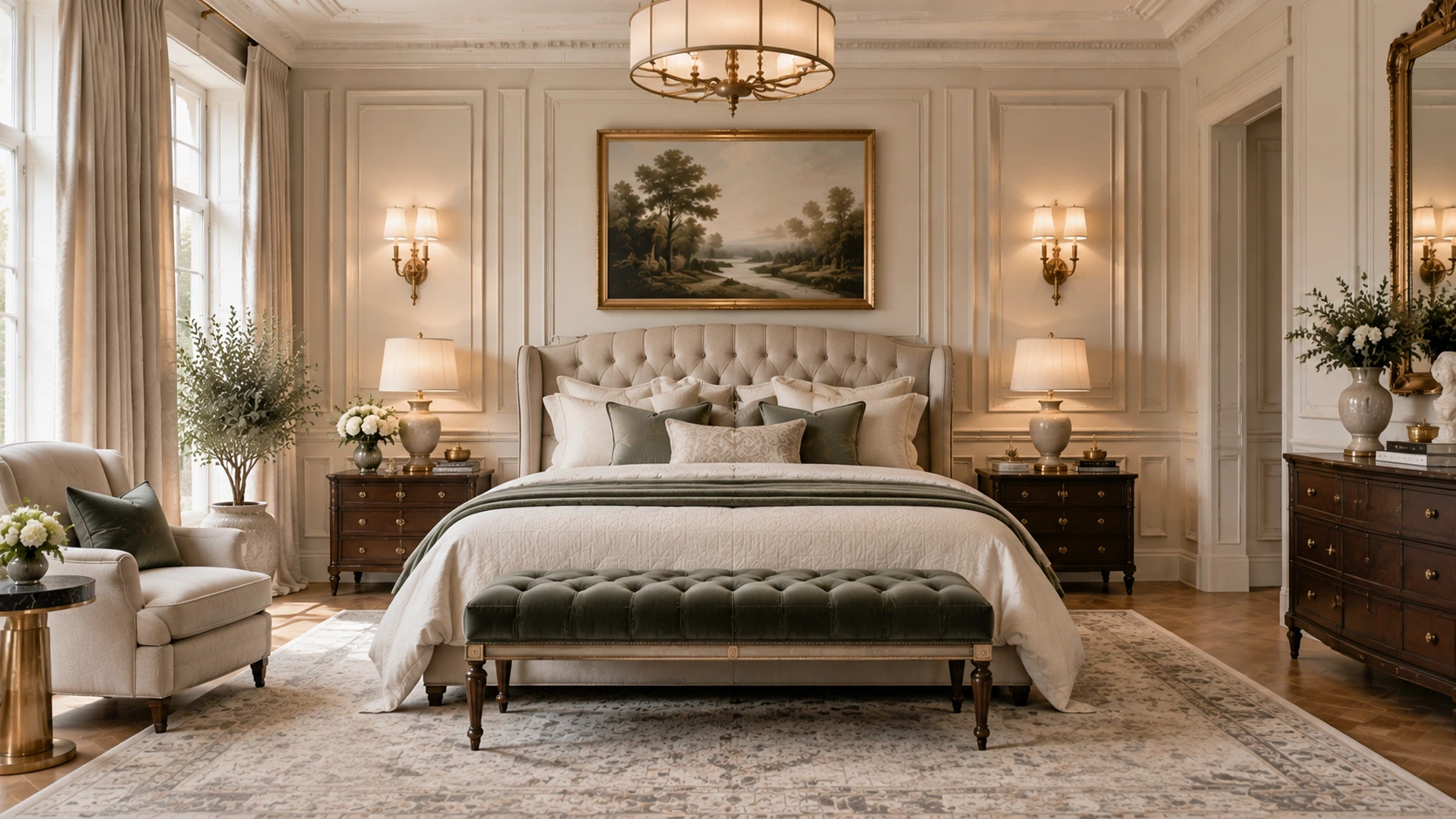
Bedrooms should feel softer and less formal than living or dining spaces. Center the bed on the main wall, with matching or visually balanced nightstands on either side.
An upholstered headboard, simple wall molding, linen curtains, and soft bedding work well together. Velvet can be introduced through a bench, cushions, or an occasional chair rather than covering several surfaces.
Paired sconces or table lamps reinforce symmetry while keeping the room practical for everyday use.
3. Neoclassical Dining Room
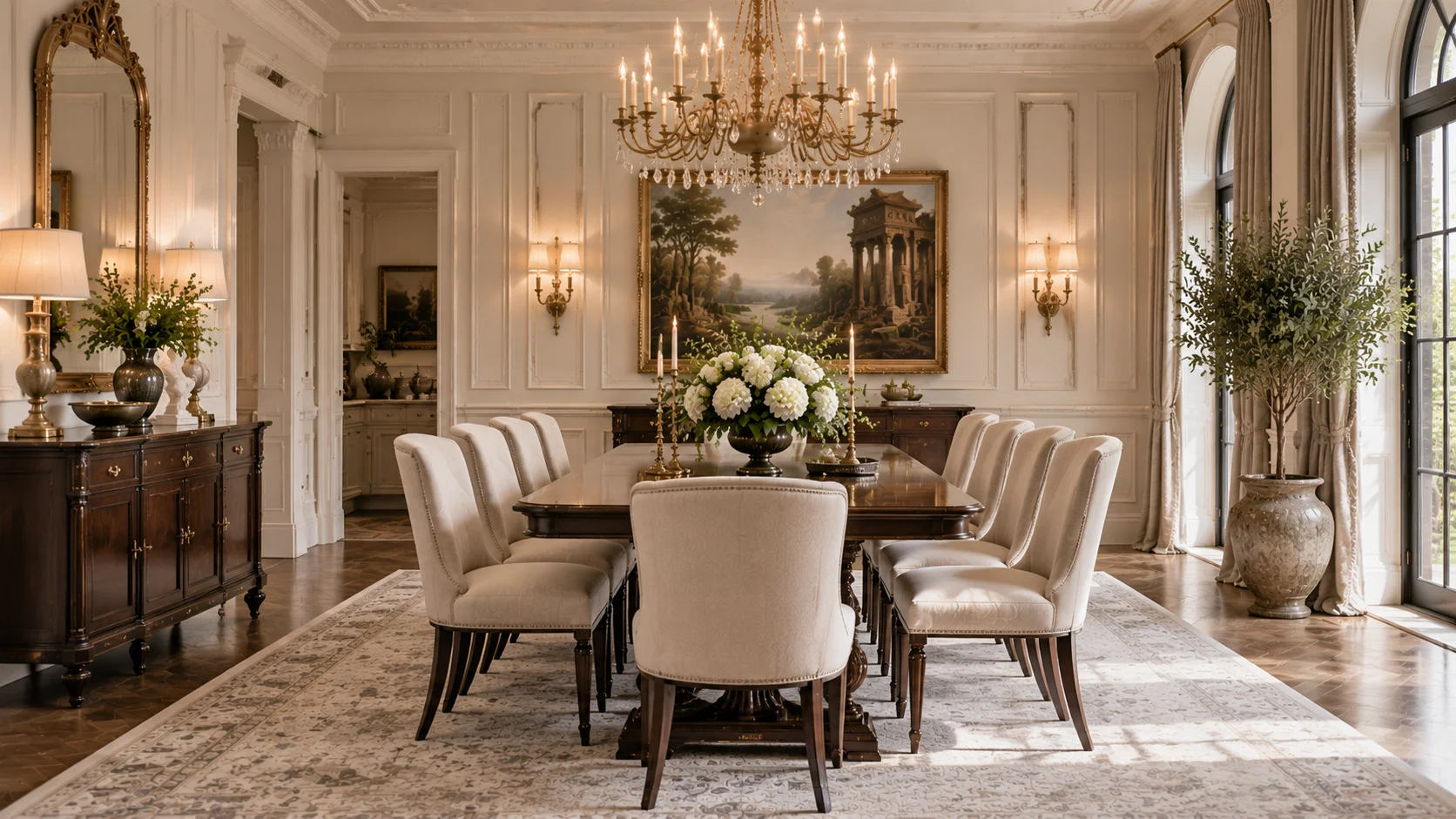
A dining room naturally suits the structured character of this style. Position the dining table centrally and align the chandelier above it to create a strong visual anchor.
Add upholstered chairs, a sideboard or console, and restrained wall molding. One large artwork or mirror often works better than several smaller decorative pieces.
If the room already has detailed architecture, keep the furniture relatively simple so the elements don’t compete.
4. Neoclassical Kitchen
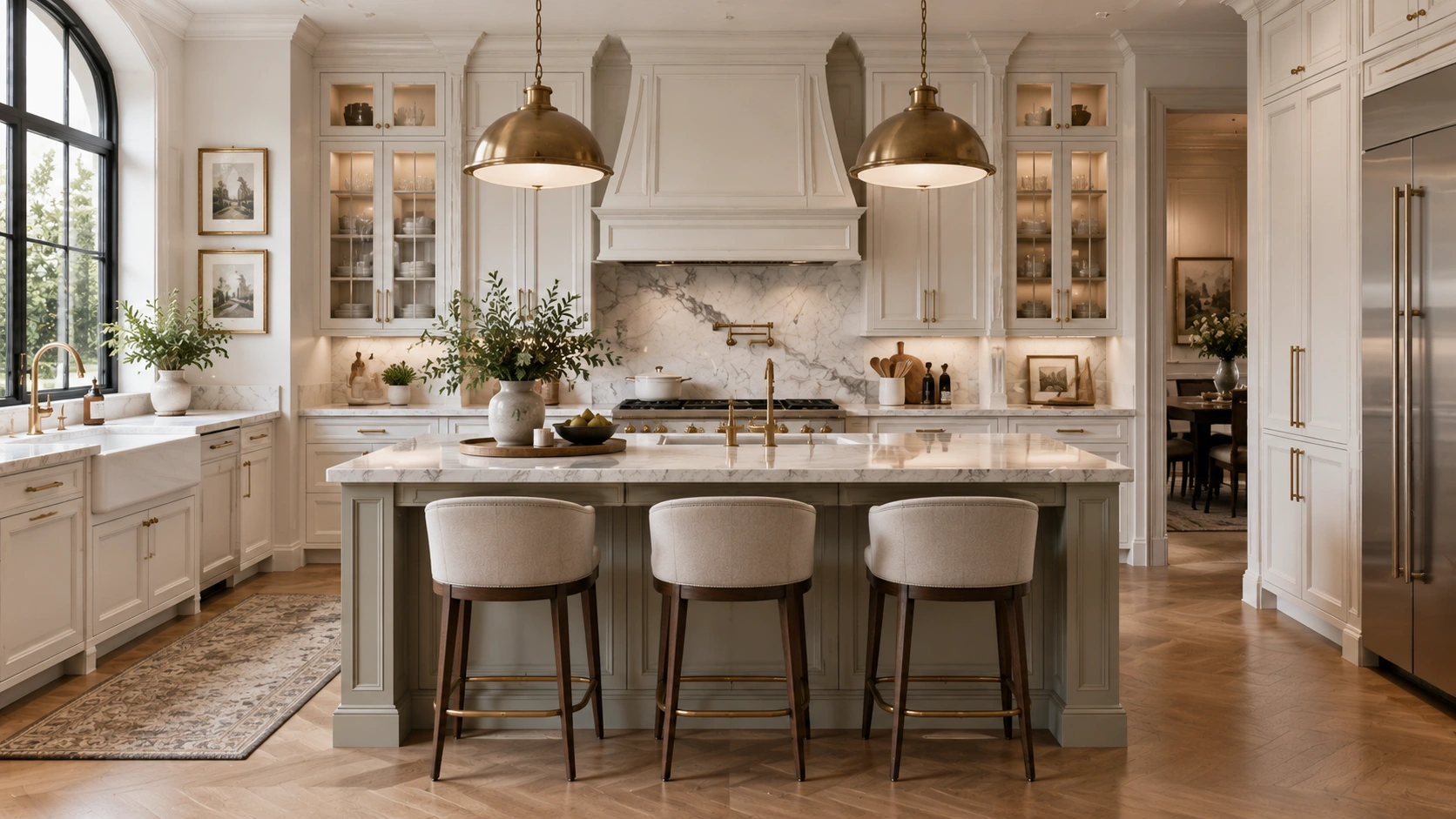
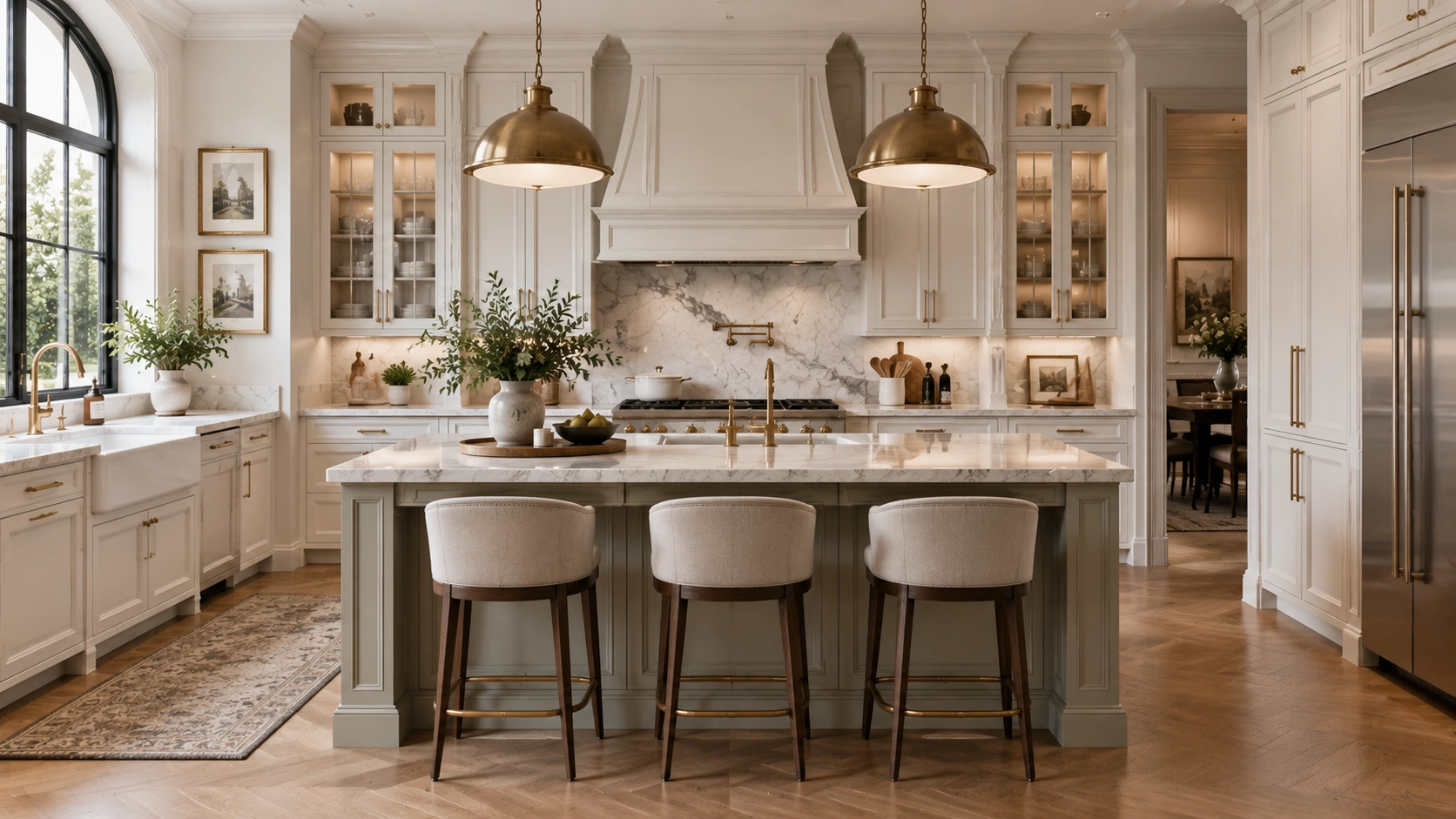
A neoclassical kitchen does not need ornate carved cabinets or decorative columns. Clean traditional cabinetry with subtle molding usually creates a more balanced result.
Pair it with marble, quartz, or marble-look countertops, simple backsplash materials, and brass, bronze, or polished nickel hardware.
Symmetrical pendant lights above an island can reinforce the style, while modern appliances keep the room functional. Keep decorative detailing strongest on one or two features, not every cabinet and surface.
5. Neoclassical Bathroom
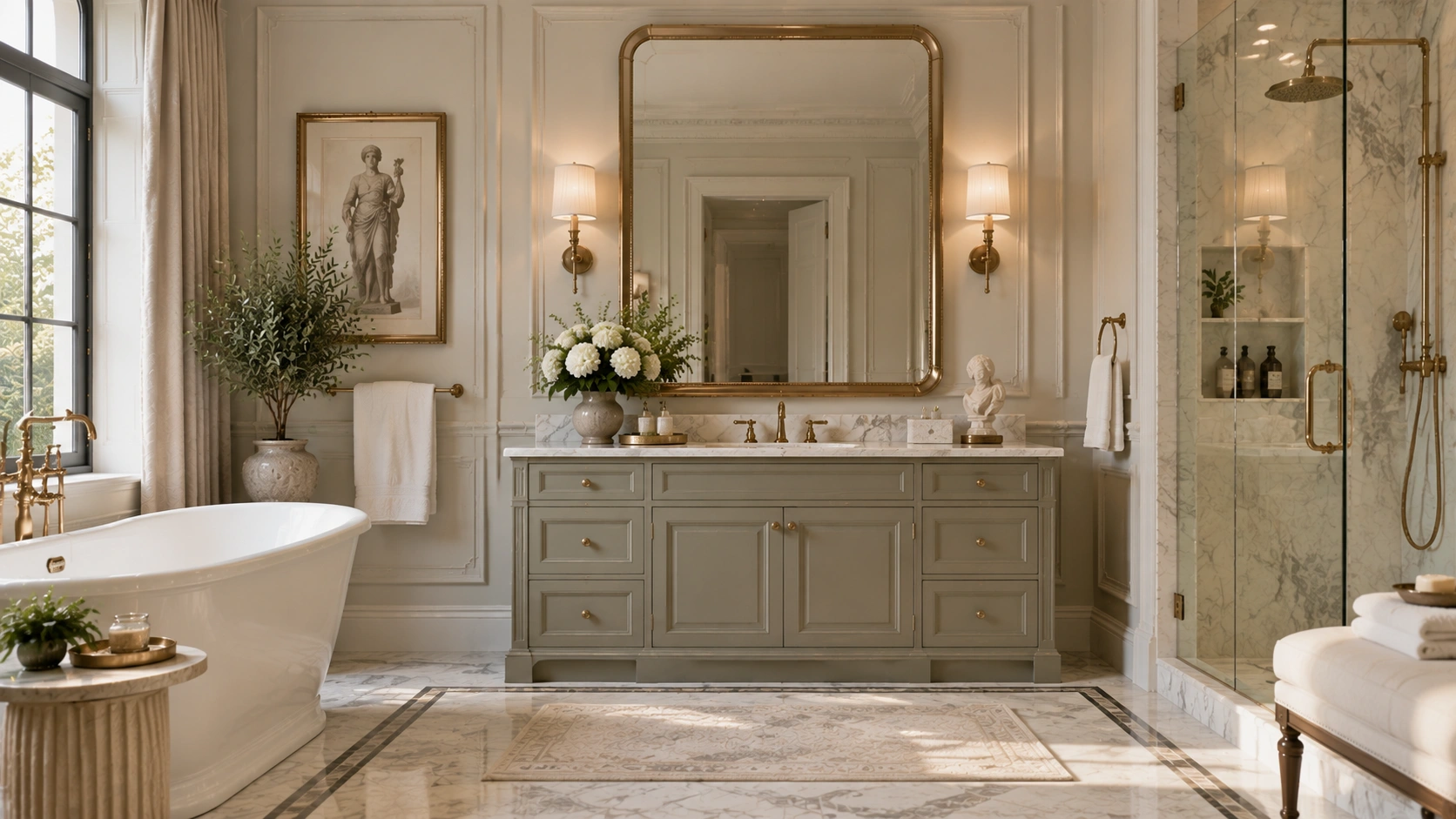
Bathrooms can carry the look through materials and proportion rather than heavy decoration.
Consider a framed vanity, marble or stone-look surfaces, balanced wall sconces, and a large mirror with a simple brass, bronze, or painted frame.
Paneled vanity fronts or subtle wall molding can add architectural interest, while modern plumbing fixtures prevent the room from looking overly traditional.
How to Make Neoclassical Interior Design Work in a Modern Home
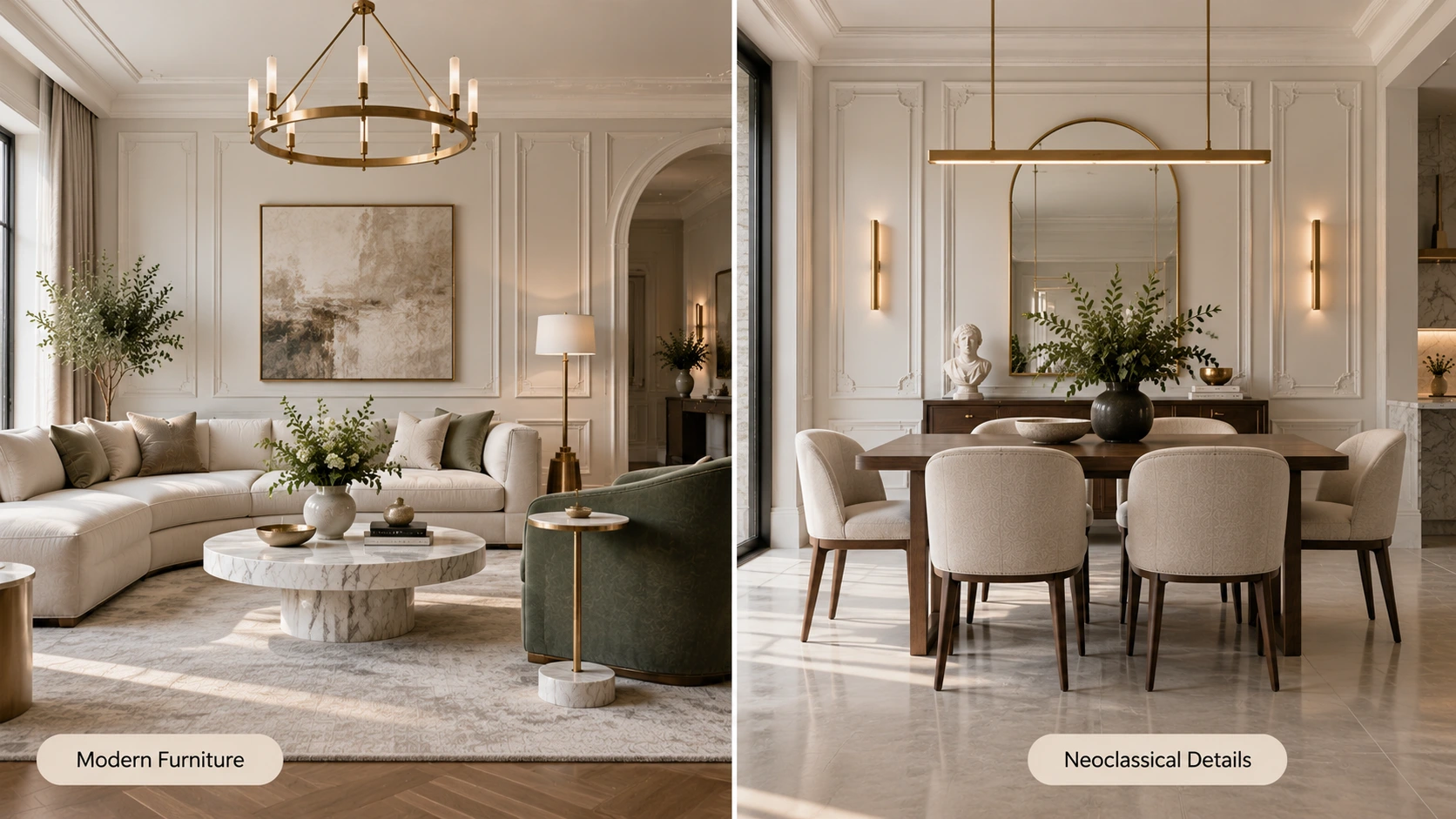
Modern homes can use neoclassical interior design without grand ceilings or palace-like features.
The key is smart proportions and simple details. Mix comfortable furniture with a blend of old and new pieces.
Creating Neoclassical Style in Small Spaces
Small rooms can still capture this style if you edit details with care. Use:
-
Light neutral wall colors to open up the space
-
Mirrors to reflect light and add depth
-
Furniture with slim profiles
-
Fewer decorative pieces
-
Multi-functional pieces where possible
Instead of adding several classical elements, focus on one or two. A wall molding detail, a statement mirror, or a strong light fixture works well.
Mixing Modern Furniture With Neoclassical Details
A modern neoclassical room does not need every piece to look antique. Mixing modern furniture with classical details creates a fresher, more livable style.
Keep the connection through shared colors, materials, or shapes, like curved furniture with brass accents.
Neoclassical Interior Design vs. Classic, Traditional, and Modern Classic Styles
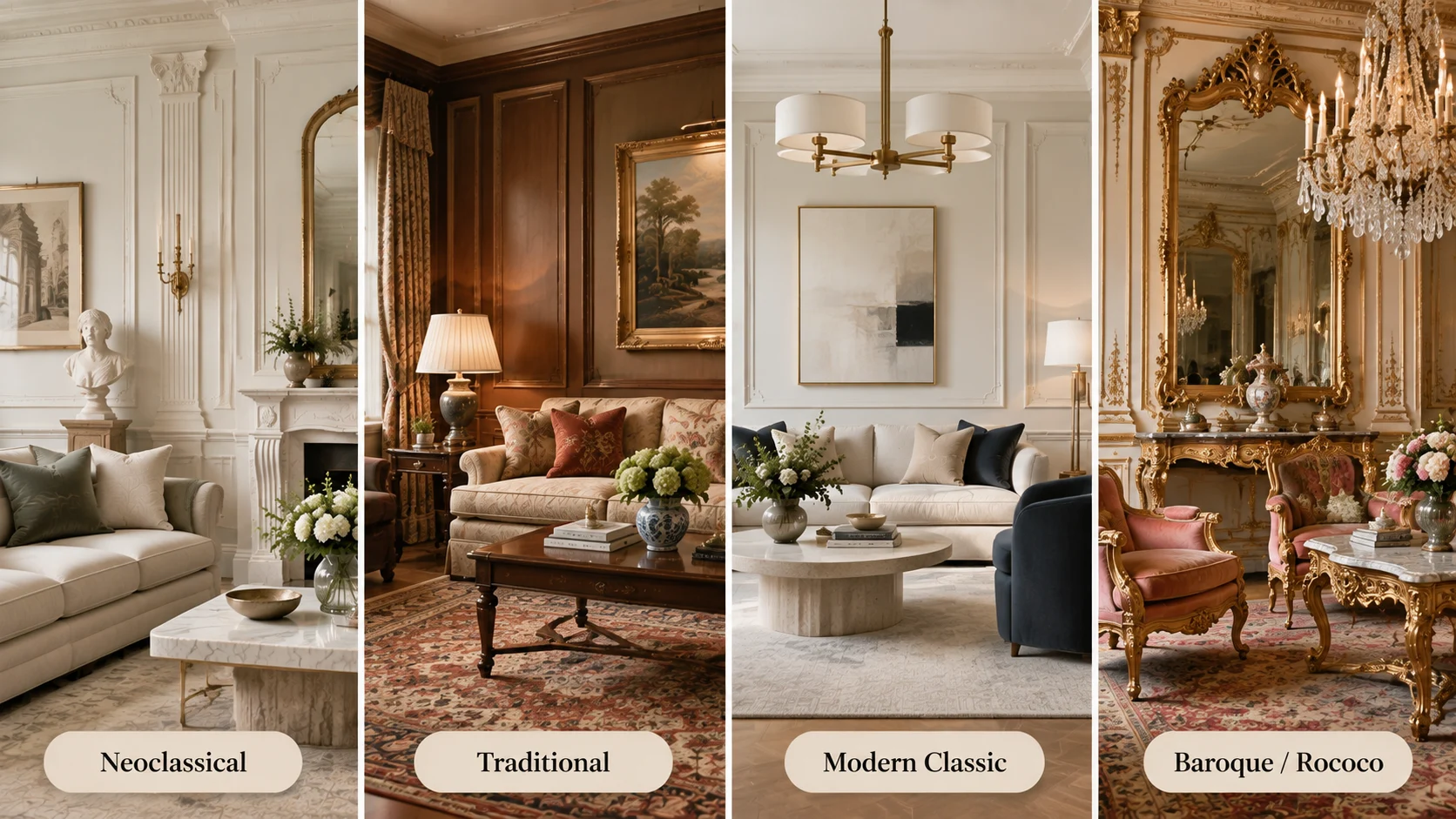
Neoclassical design overlaps with traditional and modern-classic interiors. Its stronger classical references and disciplined symmetry give it a distinct identity.
If you like this look but are not sure which label fits, this comparison may help:
|
Feature |
Neoclassical |
Traditional |
Modern Classic |
Baroque / Rococo |
|---|---|---|---|---|
|
Overall lines |
Structured and geometric |
Softer and varied |
Clean with classical influence |
Curved and elaborate |
|
Symmetry |
Strong |
Moderate to strong |
Moderate |
Elaborate rather than restrained |
|
Ornament |
Controlled |
Layered |
Minimal to moderate |
Heavy |
|
Palette |
Pale and muted |
Warm and rich |
Neutral with contrast |
Richer and more dramatic |
|
Furniture |
Classical but disciplined |
Familiar traditional forms |
Streamlined classics |
Highly decorative |
|
Overall feeling |
Refined and ordered |
Warm and established |
Polished and contemporary |
Grand and theatrical |
Neoclassical design shares roots with modern classic interiors. It leans on more direct historical references, like specific moldings and motifs.
Its Greek and Roman roots give it a more formal character than modern classic design usually has. It also stays cleaner than Baroque interior design.
How Much Does Neoclassical Interior Design Cost?
The cost of neoclassical interior design varies widely. You can add molding, furniture, stone, and lighting over time, or all at once in a full renovation.
It helps to price the features you actually want instead of setting one blanket budget.
|
Upgrade |
Typical U.S. Cost |
|---|---|
|
Crown molding installation |
$5–$23 per linear foot |
|
Wainscoting |
$7–$40 per sq. ft. |
|
Interior designer |
$50–$500 per hour |
|
Full interior design services |
About $2,057–$15,208, averaging near $8,523 |
Where to Spend
Invest in features that shape the whole room. Well-proportioned molding, quality seating, good lighting, and a strong material like marble or wood matter most.
Where to Save
Use MDF or polyurethane molding, marble-look porcelain, vintage mirrors, and reproduction furniture where it fits. A few convincing details can create the look without pricey finishes everywhere.
Neoclassical Interior Design Dos and Don’ts
The style loses its credibility when every surface is ornate, symmetry turns rigid, furniture overwhelms the room, or historical motifs are layered without attention to proportion and the discipline of restraint.
-
Too much gold at once: 2 or 3 metallic moments read as intentional; gold across every surface tips into excess.
-
Oversized moldings: A 7-inch cornice in a 9-foot room feels oppressive; scale your profiles to the actual space.
-
Buying everything as a matching pair: symmetry is about visual balance, not identical products on either side of a room.
-
Confusing neoclassical with Baroque: excessive carving, scrollwork, and heavy tufting belong to Baroque, not this style.
-
Using only white and beige throughout: Without tonal depth or texture, a pale palette reads flat and unfinished.
-
Ignoring modern function: Comfortable seating, storage, and practical lighting don’t conflict with the style.
-
Too many classical motifs: columns, urns, Greek key, gilded chandeliers, and busts in one room become a costume, not a design.
Creating a Neoclassical Home That Feels Timeless
Neoclassical interior design is not about filling a room with columns, gold accents, or pricey decor. Its beauty comes from balance, thoughtful proportions, and quality materials.
Add simple wall molding, a classic mirror, refined furniture, or a soft neutral palette. Small choices can bring this style into a modern home.
The best neoclassical spaces mix classical order with everyday comfort. That combination feels polished, welcoming, and personal for years to come.
Frequently Asked Questions
Is Neoclassical Design still popular?
Yes. Neoclassical design remains popular because its symmetry, refined details, and neutral foundation work well in both traditional and modern homes.
What flooring works best with Neoclassical Interior design?
Natural stone, marble, and hardwood are popular choices. Large-format porcelain tiles and quality wood-look flooring can also create a similar refined appearance.
Does Neoclassical furniture need carved details?
No. Carved details are optional. Clean silhouettes, balanced proportions, tapered legs, and subtle fluting can create the same classical influence.
Can dark furniture work in a Neoclassical Interior?
Yes. Dark furniture adds contrast and works well when paired with lighter walls, soft fabrics, and balanced architectural details.
How can you make a Neoclassical Interior feel personal?
Use artwork, books, vintage pieces, and meaningful decor to add personality while keeping the style’s balanced, uncluttered look.