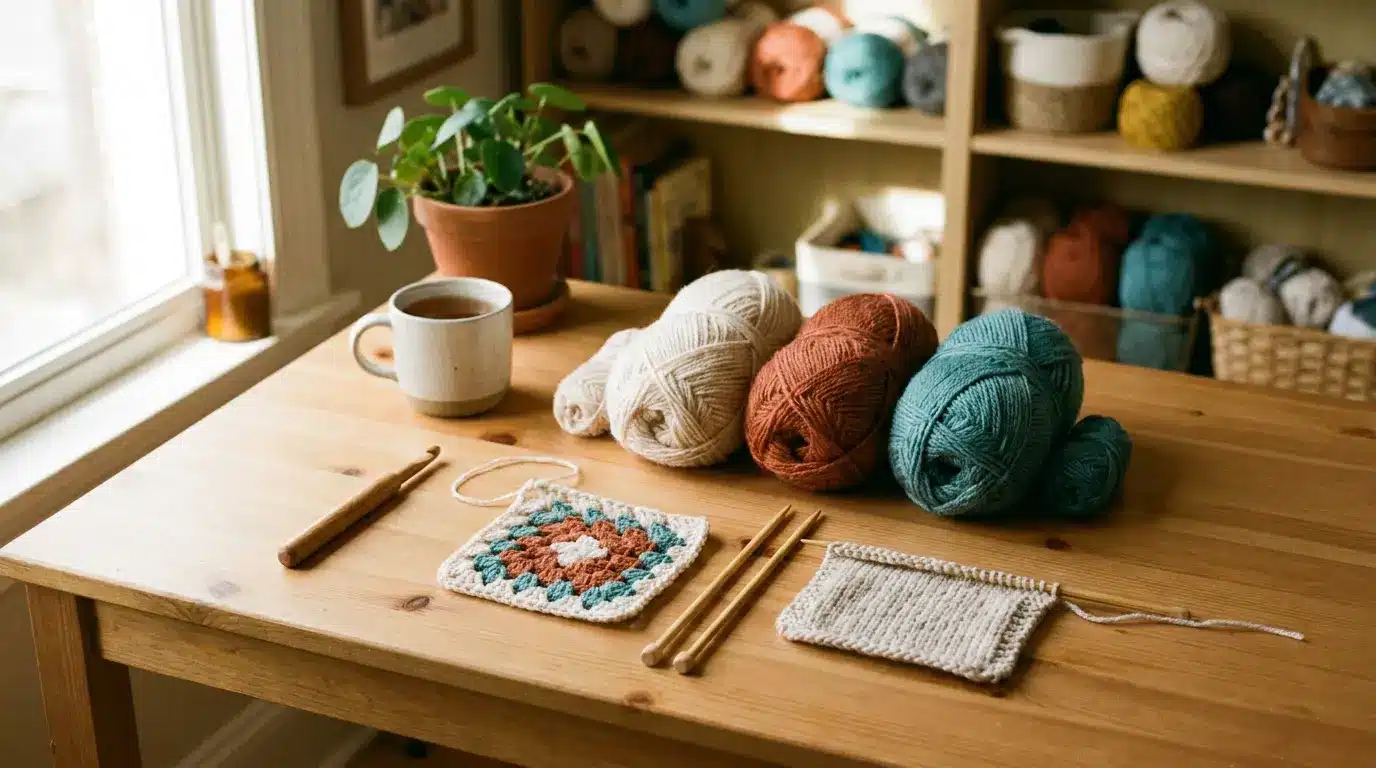
Knitting vs. Crocheting: Which One Is Easier for Beginners?

Crochet or knitting? The question trips up almost every new yarn crafter. Both use similar tools and materials, but they feel very different in your hands once you start.
Crochet gives you faster results and forgives mistakes. Knitting rewards patience with fabric that drapes and stretches beautifully.
This post breaks down whether knitting or crocheting is easier from every angle. You will know which tool to pick up and feel confident finishing your first project.
Knitting or Crocheting? The Key Differences
Both crafts use yarn to make fabric, but that is where most of the similarities stop. The tools, the learning speed, and the types of projects each craft handles well are all different.
| Factor | Knitting | Crocheting |
|---|---|---|
| Tools | Two needles | One hook |
| Beginner learning curve | Slower to feel natural at first | Usually faster to pick up |
| Fixing mistakes | Harder; dropped stitches can pull whole rows loose | Easier; just pull back the yarn |
| Fabric feel | Softer, stretchier, smoother | Thicker, textured, sturdier |
| Best for | Sweaters, socks, scarves | Blankets, toys, bags, home decor |
| Beginner speed | Often slower at first | Often faster to start |
| Yarn use | Usually uses less yarn | Often uses more yarn |
Use this table as a quick reference before reading further. It shows where each craft has a real advantage for someone just starting out.
Knitting vs. Crocheting: Which Is Easier for Beginners?
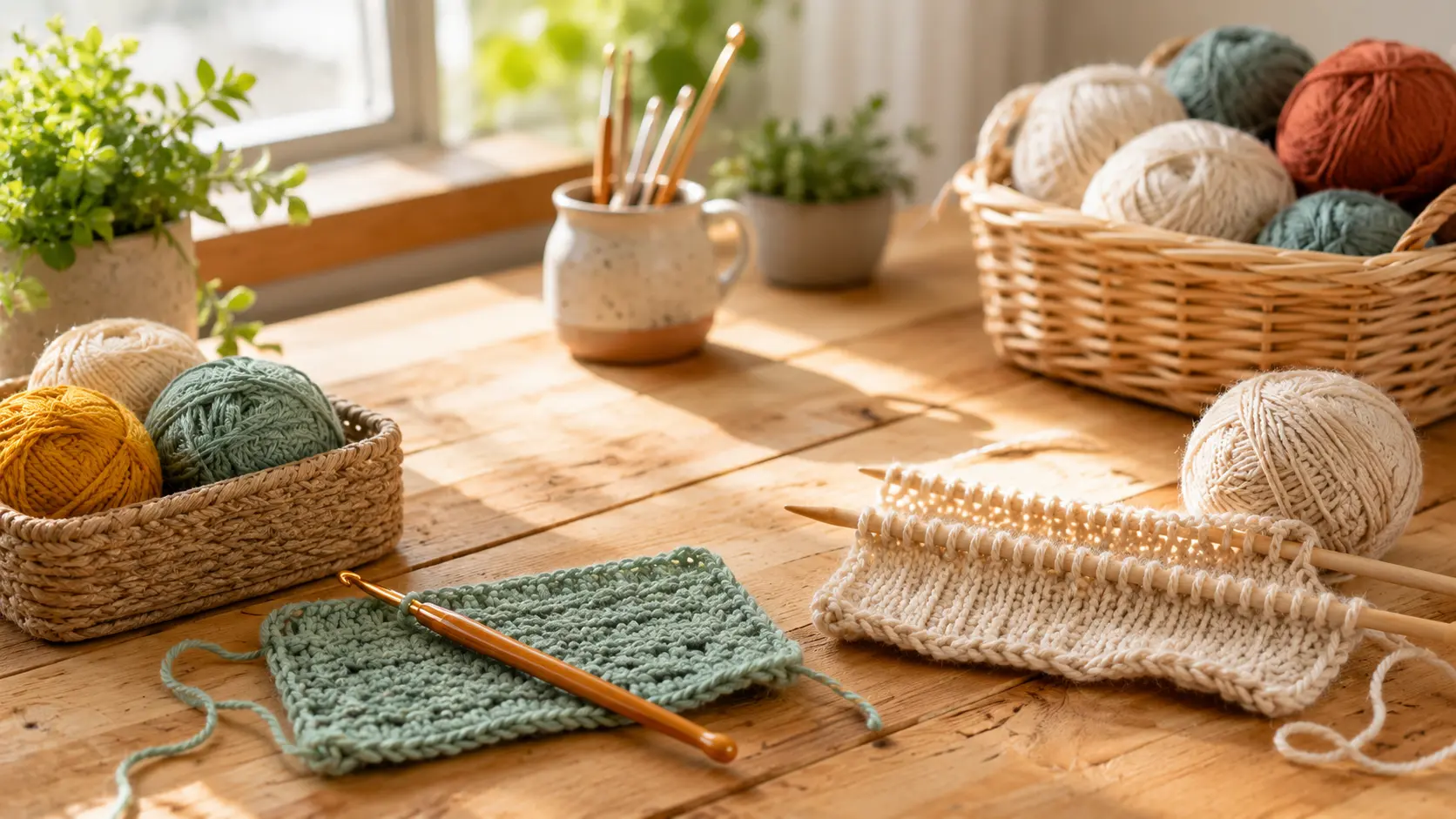
Crochet is the faster starting point for most beginners: one hook, one loop, and mistakes you can simply tug loose and try again.
Knitting takes a little more patience to click, but it pays that patience back in soft, stretchy fabric built for sweaters and socks.
Below, we break down the key differences, the best projects for each craft, starter kits, and how to decide which one to learn first.
Why Crochet Feels Easier for Beginners
Crochet uses one hook instead of two needles. That single tool change makes a big difference early on.
- One Hook, One Live Stitch: With crochet, only one stitch stays active at a time. You cannot accidentally drop a whole row. You can also set the work down mid-row without losing your place. Most beginners can finish a small project within their first week of practice.
- Mistakes Are Easy to Fix: Made a wrong stitch? Pull the yarn back and try again. Crochet lets you undo mistakes without the panic of watching stitches fall off a needle. That low-stakes feeling keeps new crafters going instead of giving up.
- Faster Early Progress: Crochet stitches are larger and easier to see. You can spot a problem quickly and correct it on the spot. For beginners who want to see results fast, this visual feedback matters a lot.
Why Knitting Takes Longer
Knitting is not harder in the long run, but the first few sessions feel less forgiving than crochet.
- Two Needles and Multiple Live Stitches: In knitting, every stitch stays live on the needle. Dropping one stitch can pull several rows loose below it. Managing two needles while keeping even tension takes practice to feel natural. Most beginners need a few sessions before their hands settle into a rhythm.
- The Payoff Comes Later: Once that rhythm clicks, knitting produces fabric that is noticeably softer and stretchier than crochet. That quality shows up in garments that need drape and stretch, like fitted sweaters and socks. Many knitters describe the repetitive motion as calming once the early frustration passes.
- Fewer Stitches to Learn at the Start: One small advantage knitting has over crochet is fewer starter stitches. Beginners learn just two: the knit stitch and the purl stitch. Crochet has more basic stitches to master before patterns start making sense.
Crochet Knitting Starter Kits: What You Actually Need
Neither craft needs a big upfront investment. A basic kit for either one costs well under $30 at most craft stores. A dedicated leisure room at home keeps your supplies within reach. That small setup change helps you stay consistent with any new hobby.
Crochet Starter Kit
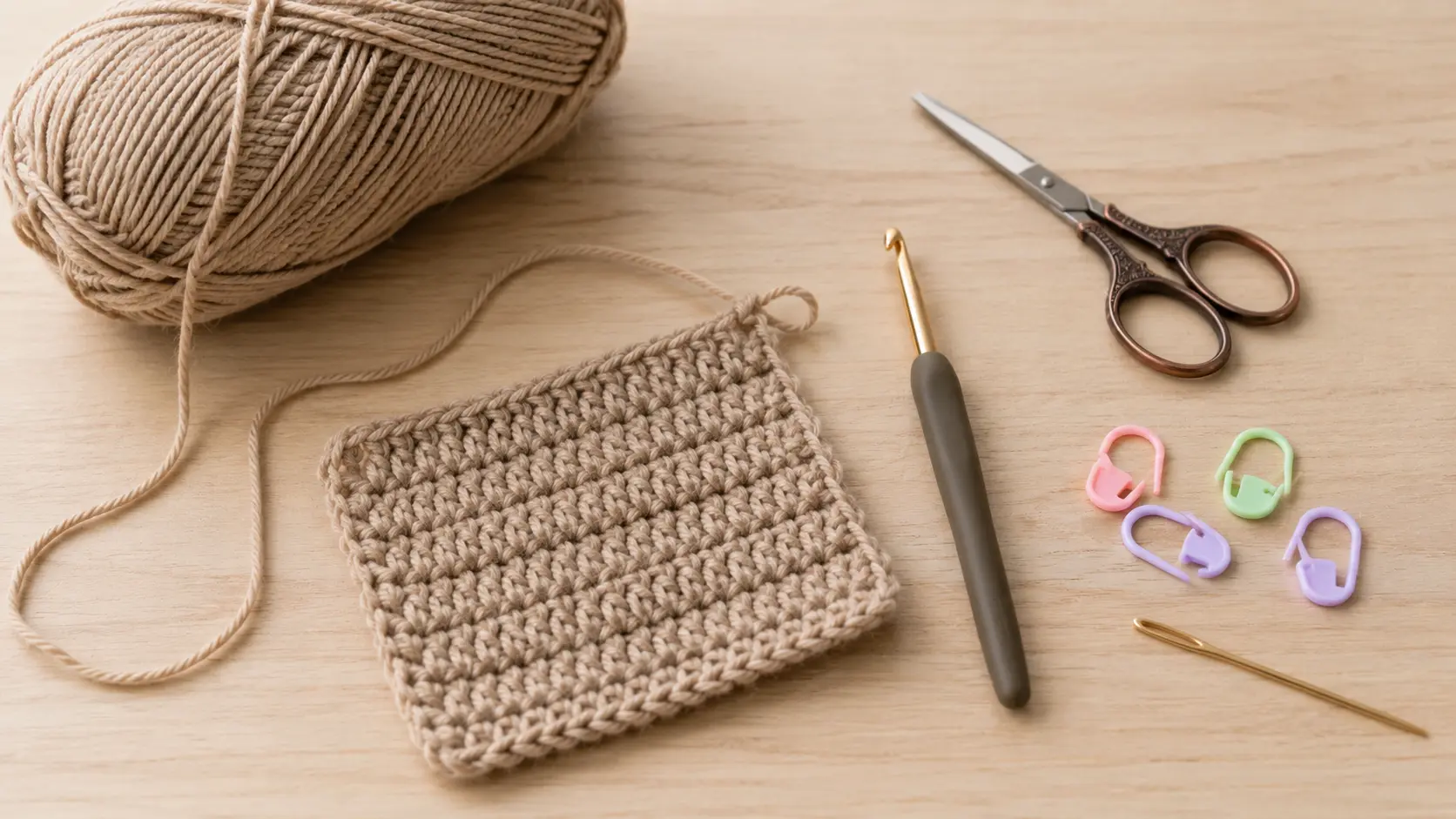
- Hook: A 5mm to 6mm hook works for most beginner patterns
- Yarn: Medium-weight yarn in a light color so you can see stitches clearly
- Scissors: For trimming yarn ends
- Stitch markers: Helpful for flagging pattern repeats
- Yarn needle: For weaving in ends once you finish
That short list is part of why crochet stays budget-friendly over time. You rarely need to add much beyond a hook and yarn, even for more advanced projects.
Knitting Starter Kit
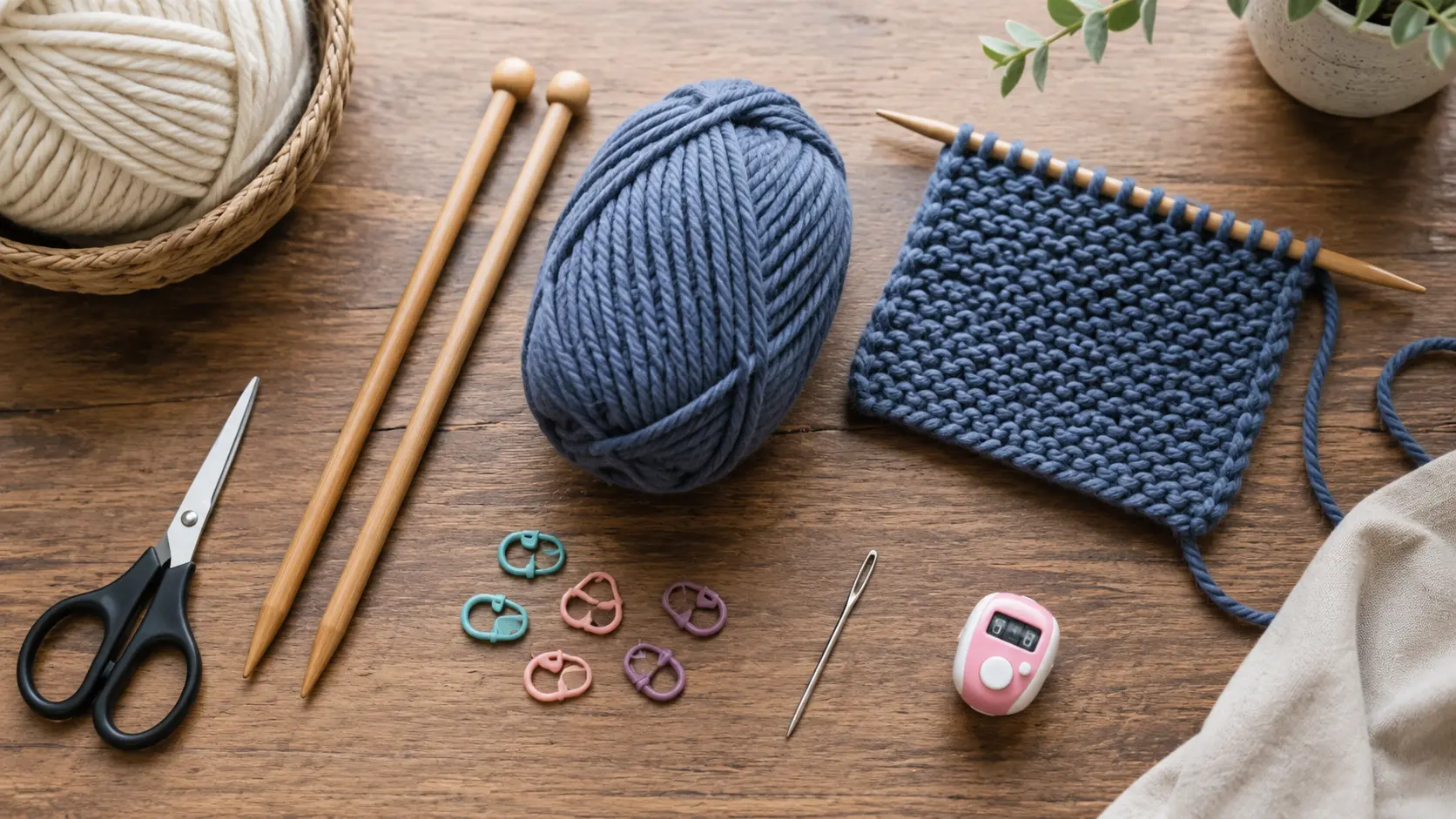
- Needles: Straight or circular in the 8mm to 10mm range for easy grip
- Yarn: Medium-weight yarn in a light color
- Scissors: For trimming ends
- Stitch markers: For tracking pattern repeats
- Darning needle: For weaving in finished ends
- Row counter: Optional but helpful for longer projects like scarves
Knitting tends to build its tool list as your projects get more ambitious. Specialized needles, holders, and double-pointed sets add up over time. Most of those extras can wait until after your first few projects.
Best First Projects for Each Craft
The right first project should be small, forgiving, and quick enough to finish before motivation fades. Picking the wrong first project is one of the most common reasons beginners quit early.
Best First Crochet Projects
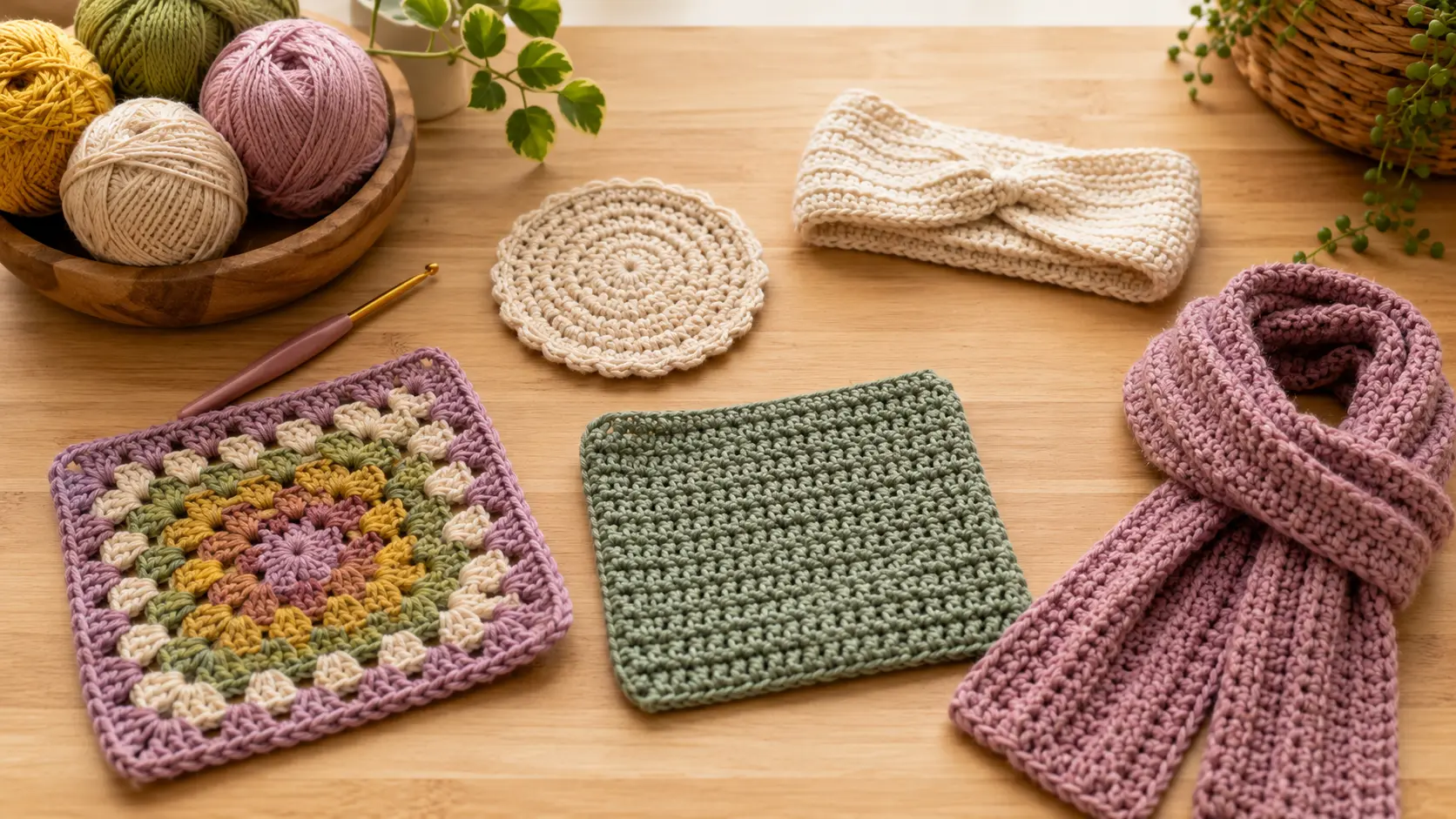
Good first crochet projects include:
- Dishcloth: teaches basic stitch repetition without any shaping or finishing techniques to worry about
- Granny square: a classic building block for blankets and bags
- Simple scarf: straightforward stitches with a quick, usable result
- Headband: small and fast, great for practicing tension
- Basic coaster: a tiny project that finishes in one sitting
These use straightforward stitches, work up quickly, and give you a finished item to actually use, which keeps beginners motivated to keep going.
Best First Knitting Projects
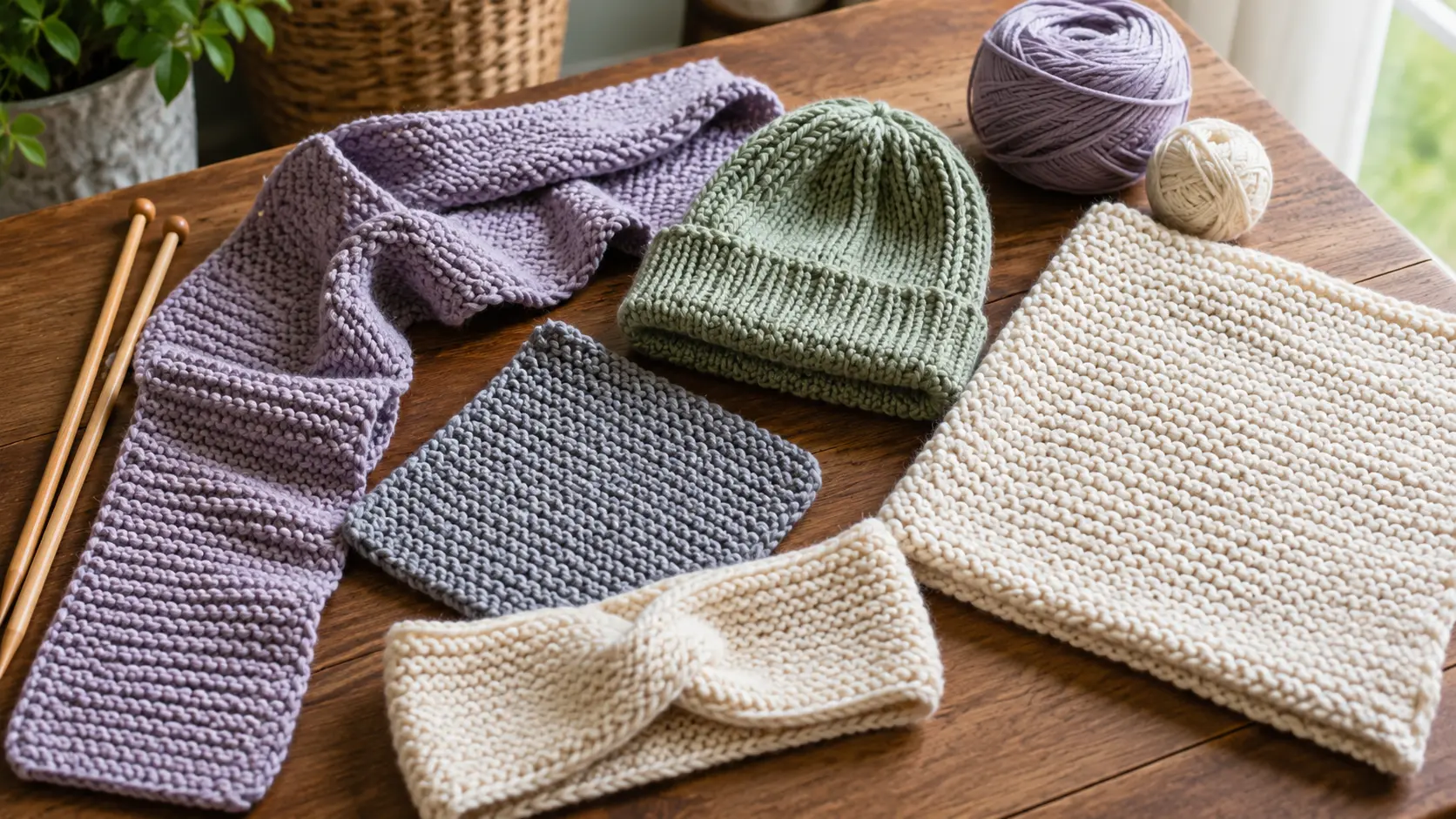
Good first knitting projects include:
- Dishcloth: simple and low-stakes, perfect for practicing tension
- Garter-stitch scarf: uses one stitch type repeated over and over, so you can focus on rhythm before mixing in new stitches
- Simple headband: small enough to finish quickly while building core skills
- Basic beanie: introduces shaping without much complexity
- Beginner blanket square: builds consistency across a larger surface
These starting points build core skills without overwhelming a new knitter.
Which Craft Is Right for You?
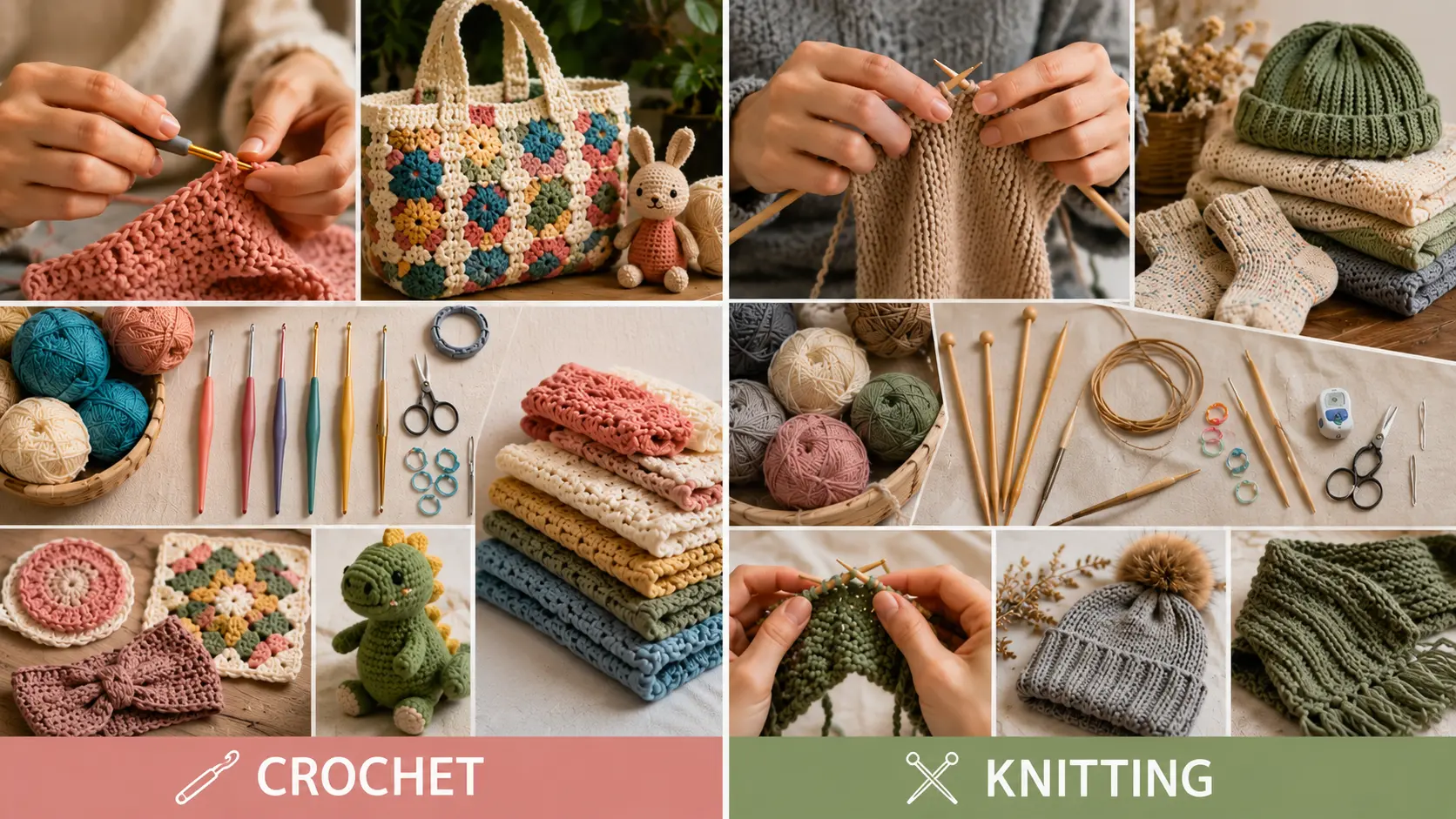
This decision comes down to your goals and how much early friction you are willing to put up with. Here is a clear way to think about it.
Choose Crochet First If
- You want fast results and can see progress in your first week
- You hate frogging (undoing) rows and want easy mistake fixing
- You are drawn to toys, bags, blankets, or home decor
- You want to manage just one tool, not two
- You plan to set the work down often and pick it up later
Choose Knitting First If
- Your main goal is soft sweaters, cardigans, or socks
- You prefer smooth, classic fabric with drape and stretch
- You like counting and tracking rows as you go
- You are patient with a slower start before things click
- You enjoy seeing all your live stitches lined up clearly on the needle
Learn Both If:
You enjoy yarn crafts in general and want more options. Many crafters pick up both over time. They use crochet for quick, sturdy pieces and knitting for softer, wearable ones. Plenty of popular DIY crafts start exactly this way: one skill leads naturally to another once you catch the bug.
Can You Use Knitting and Crochet Together?
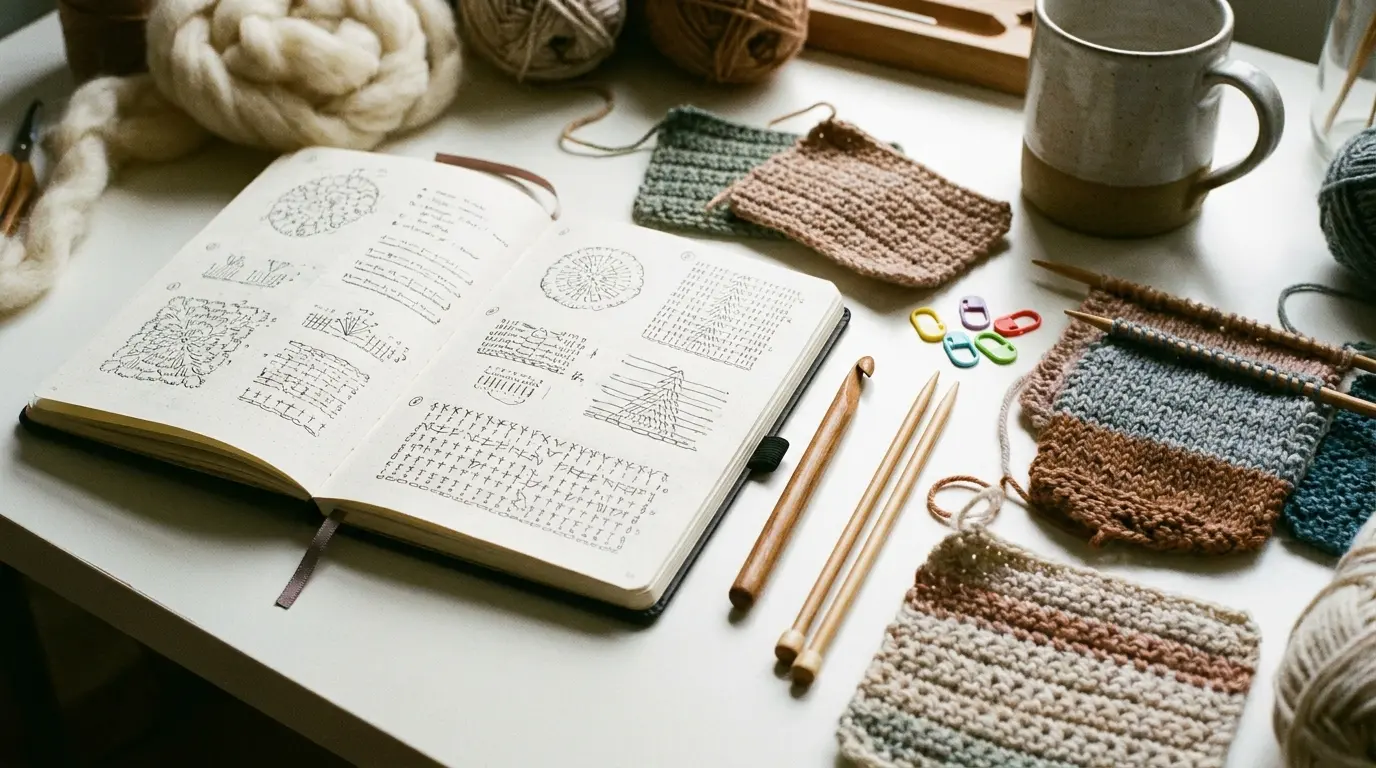
Yes, and plenty of crafters do. The two crafts work well together on the same project.
A common approach: knit the main body of a garment, then use crochet for edging, borders, or buttonholes. Crochet edges also stabilize the sides of a knit blanket and add decorative trim to a knit hat.
This mixed approach lets you use each craft for what it does best. Knitting handles smooth, structured sections. Crochet adds detail work and quick finishing touches that would be fiddlier with two needles. It is also a good way to practice both skills without committing a full project to just one technique.
Common Myths About Crochet and Knitting
A few misconceptions about both crafts tend to stick around and confuse new starters. Here is the truth behind the most common ones.
- Crochet is always easier: It is easier to start, but advanced crochet can be just as challenging as advanced knitting.
- Knitting is only for clothes: Knitting can also produce blankets, toys, home decor, and accessories.
- Crochet cannot make wearable clothes: Crochet absolutely makes clothing. The fabric tends to be thicker and more textured than knit fabric, but it works.
- You must pick only one: Plenty of crafters learn both and switch depending on the project.
- You need expensive tools: A hook or a pair of needles, yarn, and scissors are all you need to start.
- Knitting is strictly feminine: People of all genders have knitted throughout history. The association with femininity came from women traditionally making clothing at home, not from the craft itself.
The Best Way to Learn Each Craft as a Beginner
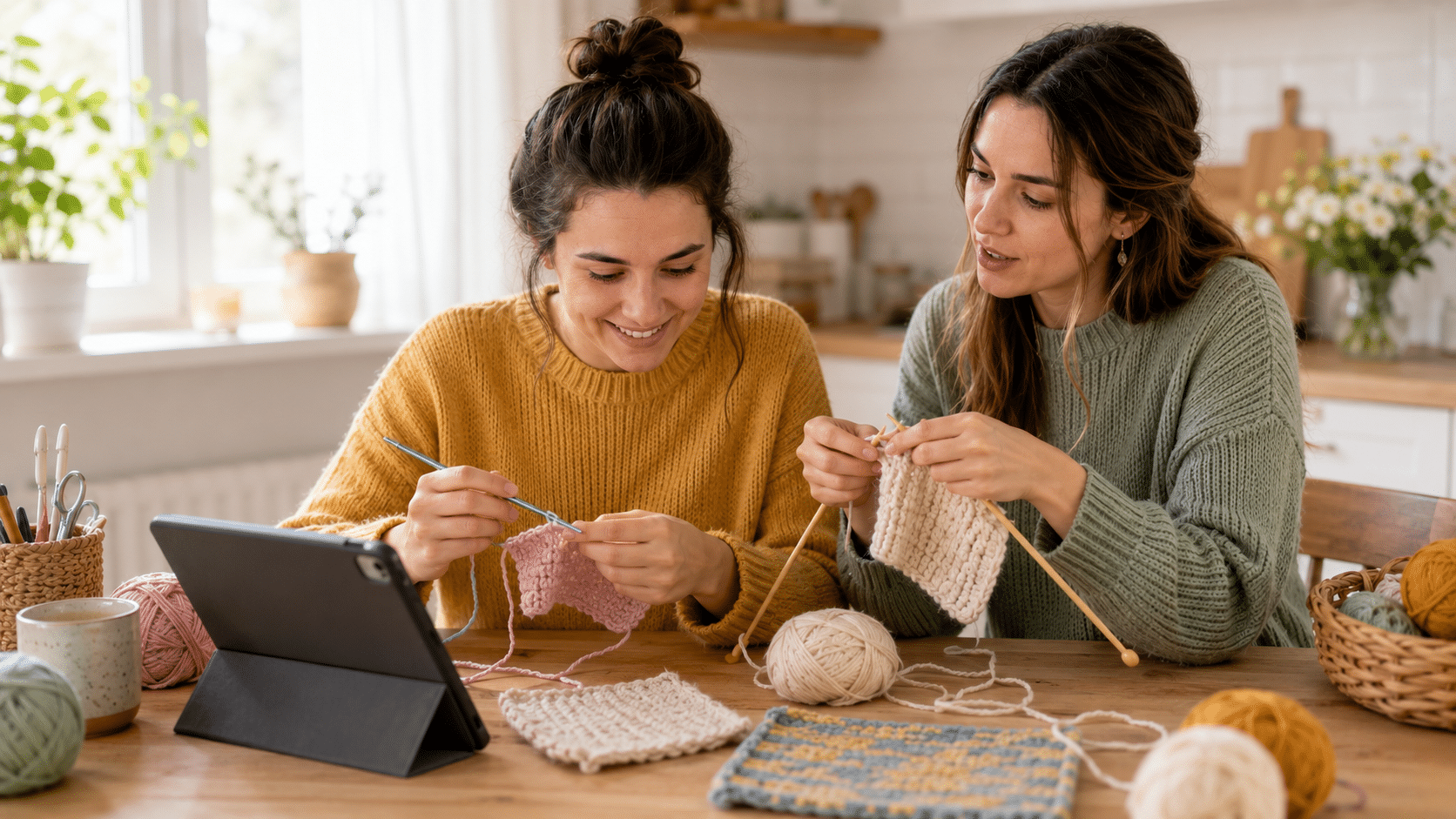

How you learn matters almost as much as what you learn. Each craft tends to click faster with a slightly different approach.
Learning Crochet
One hook, one hand, and a screen close by is all crochet asks of a beginner. Video tutorials work well for crochet. You can clearly see the hook moving through each stitch and pause to catch every step. Short, stitch-specific videos work better than long pattern walkthroughs when you are just starting out.
Learning Knitting
Knitting benefits from a mix of video and hands-on practice. Having someone nearby to check your tension and needle grip speeds things up. Local yarn shops and community classes help beginners get past the early fumbling stage faster than video alone.
Whichever craft you pick, start with the same basic stitch repeated on a simple project. That repetition builds muscle memory faster than jumping straight into a pattern.
Frequently Asked Questions
Why is Gen Z so obsessed with crochet?
Gen Z loves crochet because it feels creative, handmade, and personal. It also matches thrift fashion, TikTok trends, and the desire for unique clothing.
Does Billie Eilish crochet?
There is no clear public proof that Billie Eilish crochets. However, fans often create Billie Eilish-inspired crochet dolls, patterns, and handmade designs.
What is the best-selling crochet item?
Popular crochet items include amigurumi toys, baby blankets, hats, bags, and home decor. Small, cute, and giftable crochet products often sell best.
What is the knitter’s curse?
The knitter’s curse is a superstition that knitting a sweater for a romantic partner may cause the relationship to end before or soon after it is finished.
Why is knitting considered feminine?
Knitting became linked with femininity because women traditionally made clothing at home. However, people of all genders have knitted throughout history.
So, Is Knitting or Crocheting Easier?
Crochet wins on ease of entry: fewer tools, faster early progress, and simpler mistake fixing.
Knitting wins if your goal is soft, stretchy clothing that fits and drapes well. The honest answer is that both crafts feel awkward at first and get noticeably easier with practice.
Pick the one that matches what you want to make first, give it a few weeks, and you might find yourself picking up the other before long.