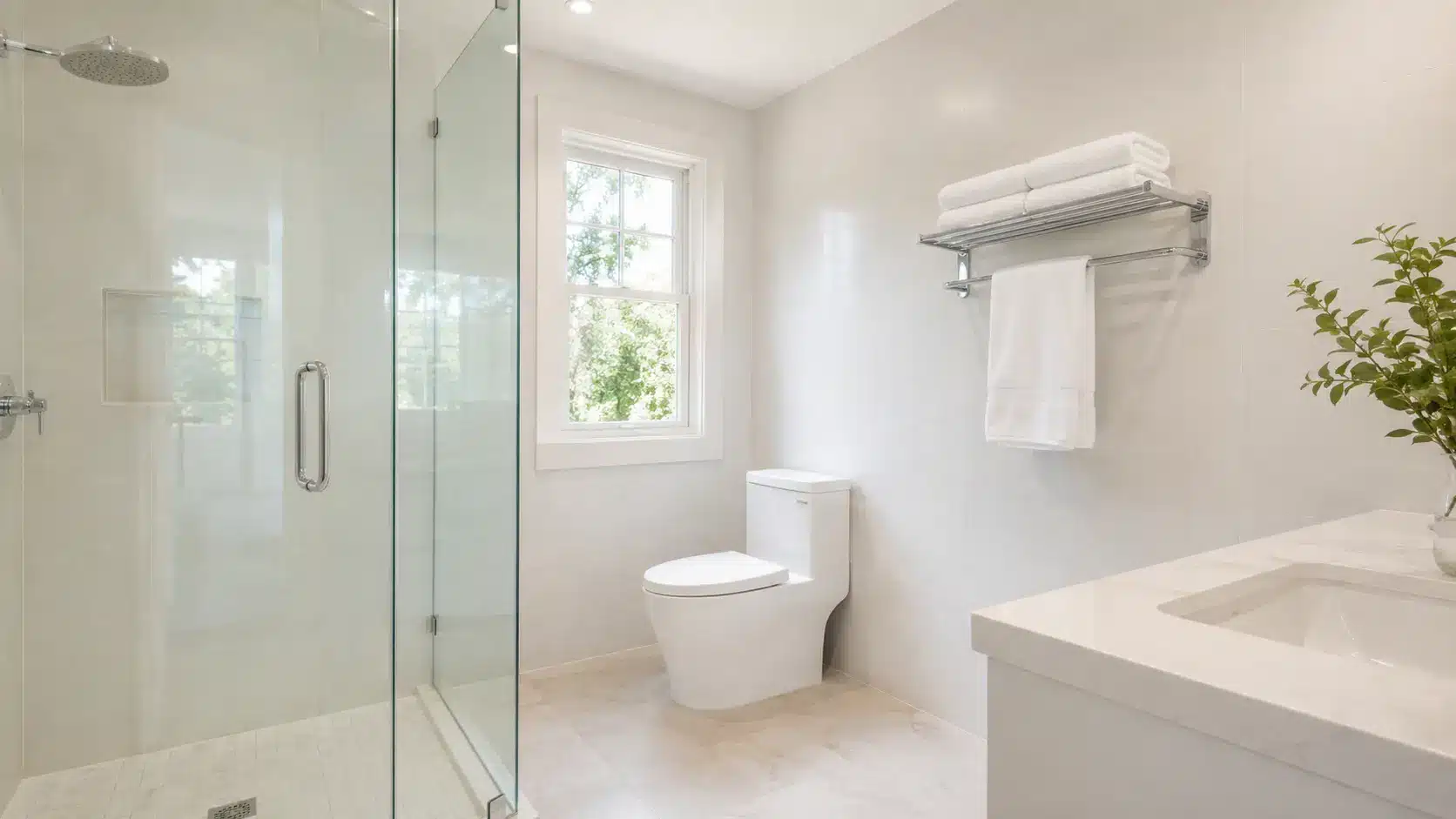
How to Deep Clean a Bathroom without Missing a Spot

Your bathroom gets used every single day. A quick wipe keeps it looking clean.
But soap scum, mold, and bacteria collect in grout lines, behind fixtures, and inside vents long before you notice them.
Knowing how to deep clean a bathroom the right way makes all the difference. This guide walks you through every step, from the supplies you need to the exact order to follow.
You will also get a quick-reference checklist, stain removal tips, and a cleaning schedule that fits any household.
What Is Deep Cleaning and Why Does It Matter?
Deep cleaning means scrubbing every surface, including the spots a normal wipe-down skips, like grout lines, vents, and the space behind fixtures. Regular cleaning and deep cleaning are not the same thing.
Regular cleaning covers the basics. You wipe the sink, scrub the toilet bowl, and mop the floor. It keeps things looking tidy but does not remove the buildup hiding in corners, grout lines, and behind fixtures.
Deep cleaning goes further. It targets every surface, including the ones you usually skip. Mold and bacteria collect fastest in those missed spots, since damp bathrooms give them the conditions to grow. A regular clean takes 15 to 20 minutes. A full deep clean can take 45 minutes to 2 hours.
What Do You Need to Deep Clean a Bathroom?
You need a few basic tools and surface-safe cleaners, gathered in one place before you start. Stopping mid-clean to search for a brush wastes time and breaks your focus.
The right tools make each step faster and more thorough. This utility closet guide covers practical storage ideas for mops, sprays, and brushes.
Cleaning Tools:
- Stiff scrub brush for tiles and grout
- Grout brush or old toothbrush
- 3 to 4 microfiber cloths
- Sponge
- Mop and bucket
- Rubber gloves
- Step stool for reaching vents
Cleaning Products:
Choose products that match the surfaces in your bathroom. Using the wrong cleaner on the wrong surface causes more damage than the dirt itself.
- Disinfectant spray
- Toilet bowl cleaner
- Tile and grout cleaner
- Glass cleaner or streak-free spray
- All-purpose bathroom spray
How to Deep Clean a Bathroom Step by Step
Following the right order keeps you from re-dirtying surfaces you already cleaned. Always work from top to bottom, ceiling first and floor last.
This order keeps dust from resettling on surfaces you already wiped down.
Step 1: Clear the Space, Then Dust from Top to Bottom
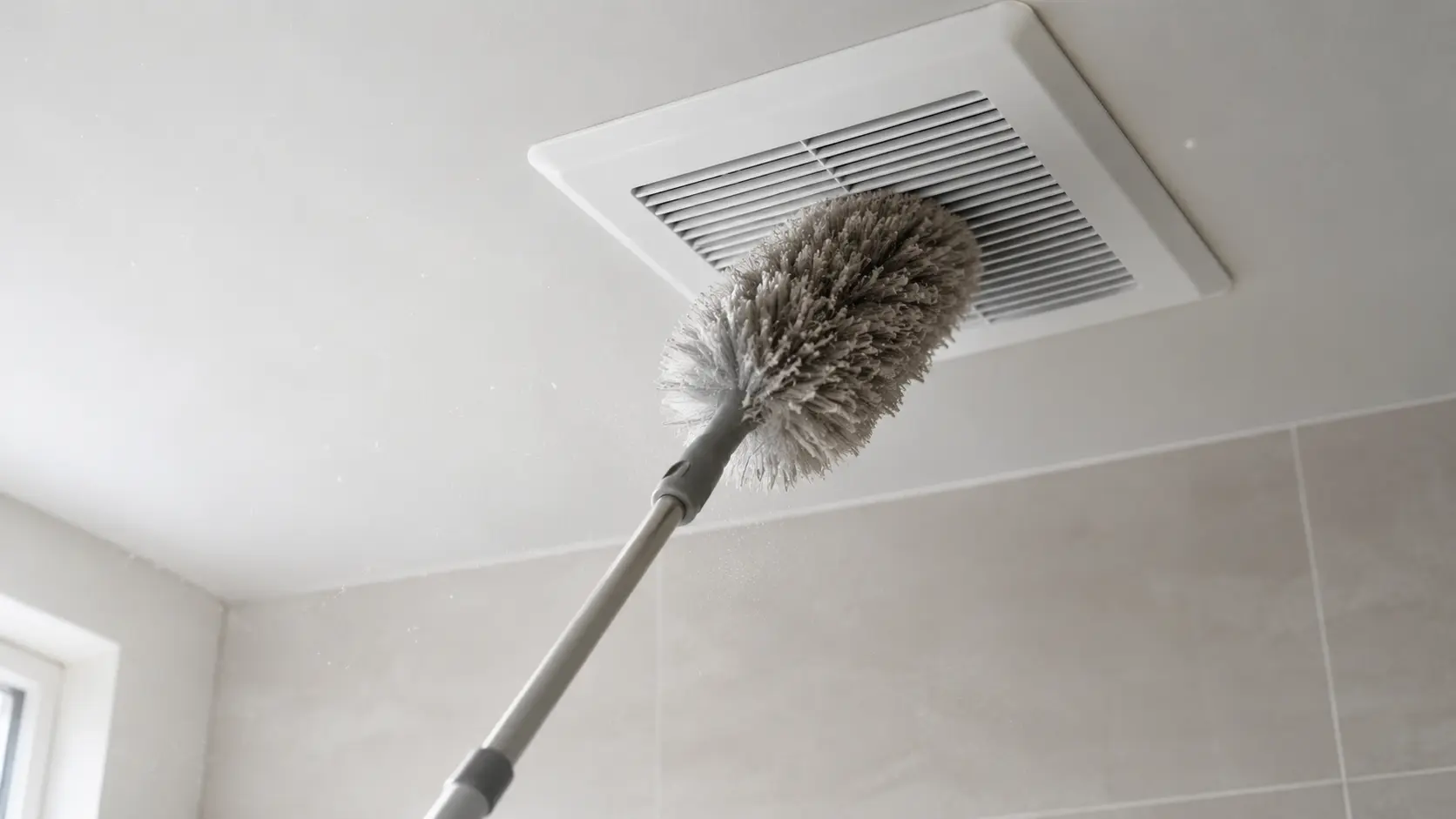
Clear counters, shelves, and the shower of daily items first, so every surface is easy to reach.
Start at the ceiling and work your way down. Use a dry microfiber cloth or long-handled duster to clean ceiling corners, exhaust fan vents, light fixtures, and upper wall tiles.
Dust falls as you work, so starting high means you only clean the floor once.
Pro tip: Use a step stool to reach ceiling vents safely. Unscrew the vent cover and rinse it under warm water if it has heavy dust buildup.
Step 2: Clean the Shower, Tub, and Tiles
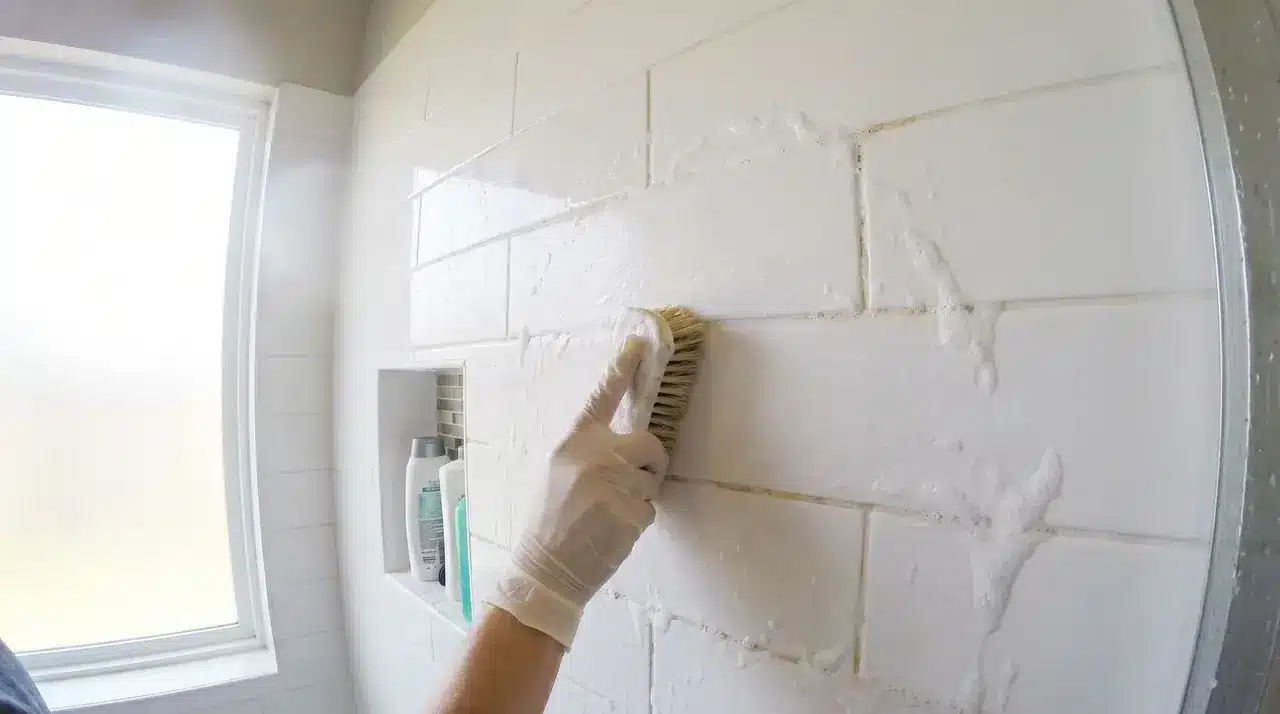
Spray tile cleaner or a vinegar solution on shower walls, the tub, and tile surfaces. Let it sit for 5 to 10 minutes to loosen soap scum and hard water buildup.
Then scrub tiles with a stiff brush in circular motions. Use a grout brush along all grout lines, and pay close attention to the corners and the shower floor drain.
Applying a grout sealer after cleaning helps protect the lines from future staining
Showerhead buildup deserves its own step. Fill a sandwich bag with white vinegar and tie it around the showerhead so the nozzle sits underwater. Let it soak overnight, then run the water in the morning to clear mineral deposits.
University of Arizona microbiologist Charles Gerba has linked neglected showerheads to bacteria that can irritate the lungs, which makes this step worth the extra time.
If a remodel is ahead, look at walk-in shower tile ideas that use fewer seams. Fewer seams mean less grout to scrub each month.
Step 3: Scrub the Toilet Thoroughly
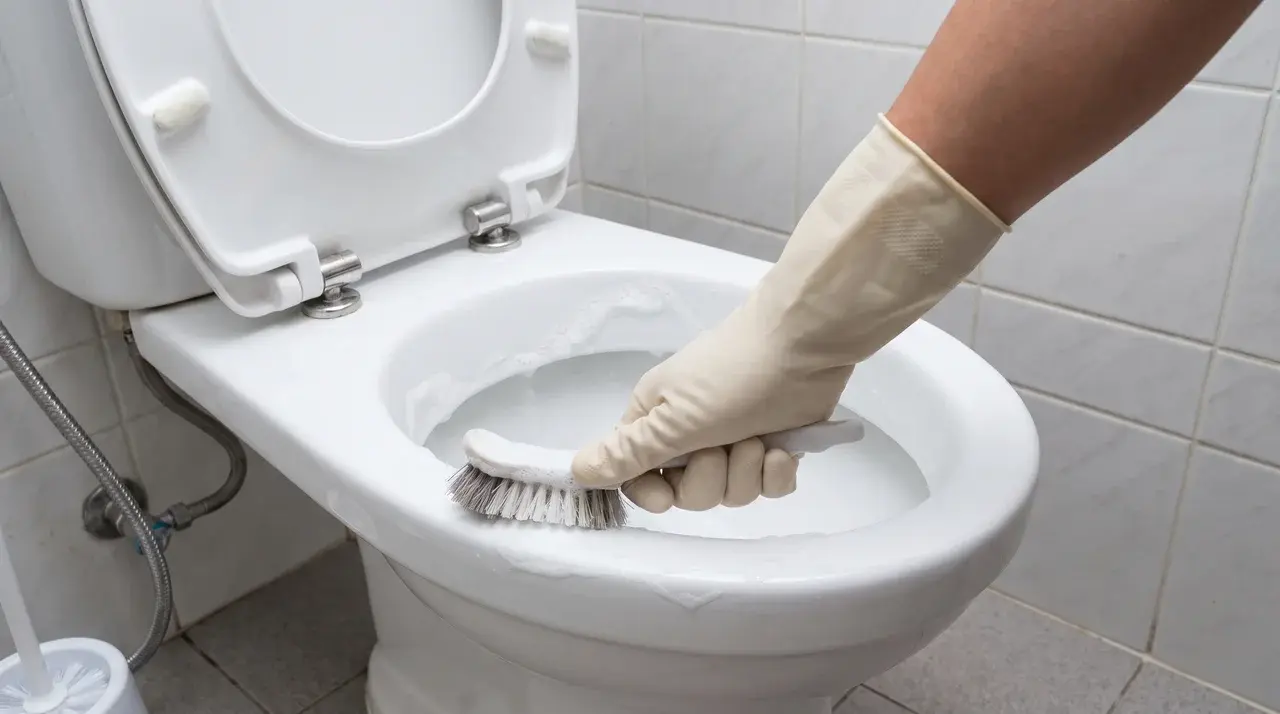
The toilet needs more than a quick bowl scrub. Apply toilet bowl cleaner inside the bowl and let it sit while you clean the outside.
Wipe the tank, lid, and seat with disinfectant spray and a microfiber cloth. Clean the base of the toilet, including the area around the floor bolts. Wipe the flush handle.
Then scrub the inside of the bowl with a toilet brush, focusing under the rim. Let the disinfectant sit for at least 30 seconds before wiping.
Step 4: Clean the Sink, Faucet, and Countertops
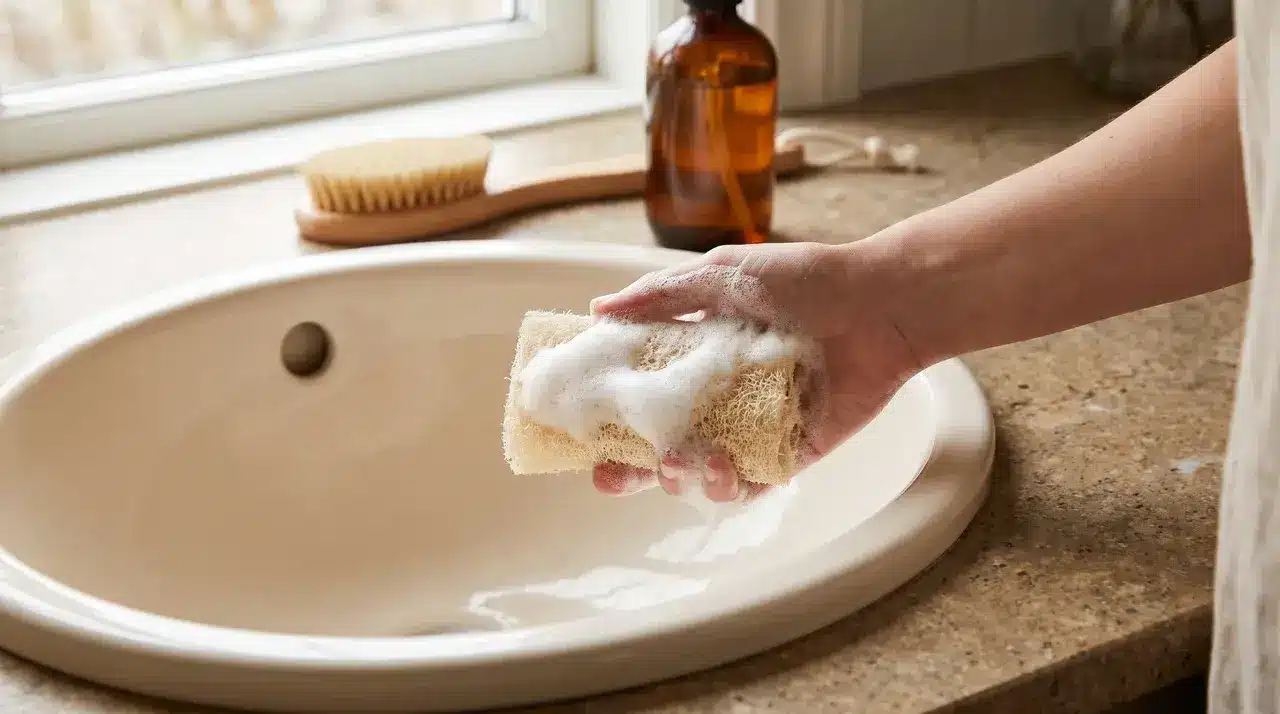
Spray bathroom cleaner on the sink basin and countertops. Let it sit briefly, then scrub with a sponge or cloth.
Focus on the drain, the area around it, and the faucet base. Also clean the handles and the aerator at the faucet tip.
For chrome or stainless fixtures, dry them after rinsing to prevent water spots. An old toothbrush helps get into tight spots around the faucet base where toothpaste and soap film collect.
Step 5: Clean Mirrors and Glass Surfaces
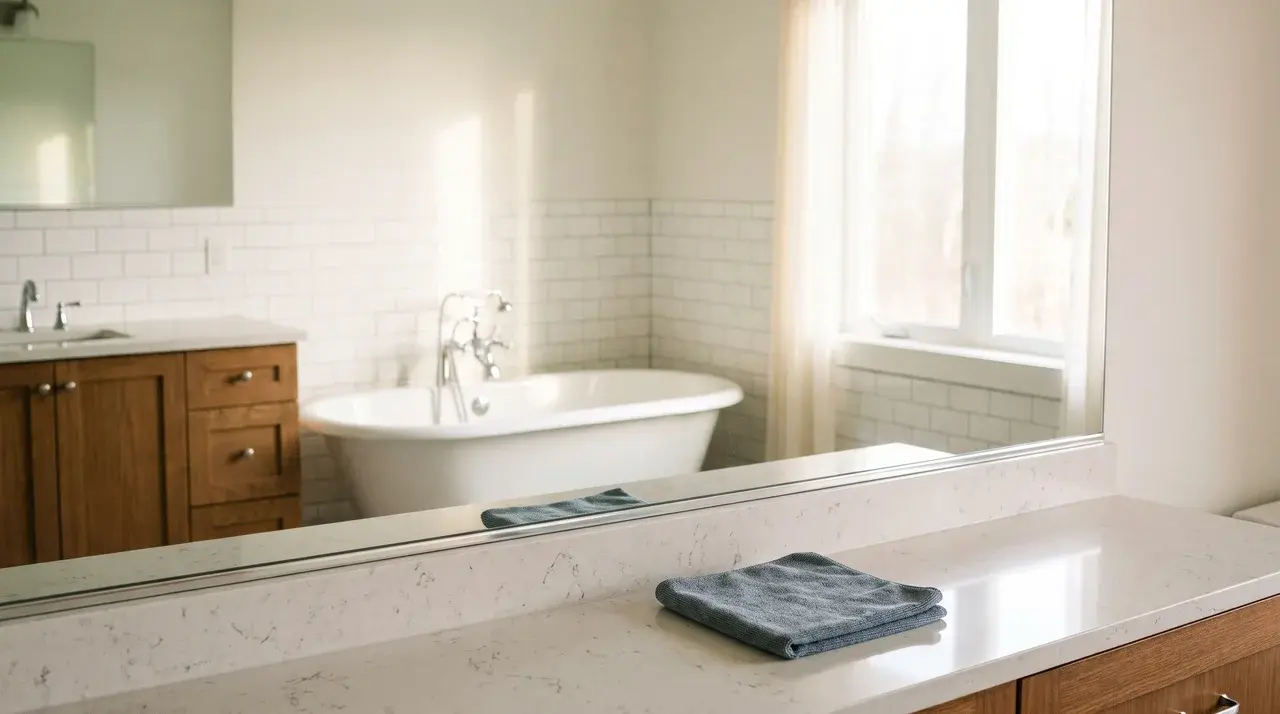
Spray glass cleaner directly onto the mirror. Wipe in a Z-pattern or circular motion using a dry microfiber cloth. Avoid paper towels. They leave lint and streaks on glass.
Work from top to bottom and buff out any remaining streaks with a dry section of the cloth.
A 50/50 mix of white vinegar and water works well in a spray bottle. It cleans just as well as a commercial glass cleaner.
Step 6: Wipe Down Cabinets, Doors, and High-Touch Areas
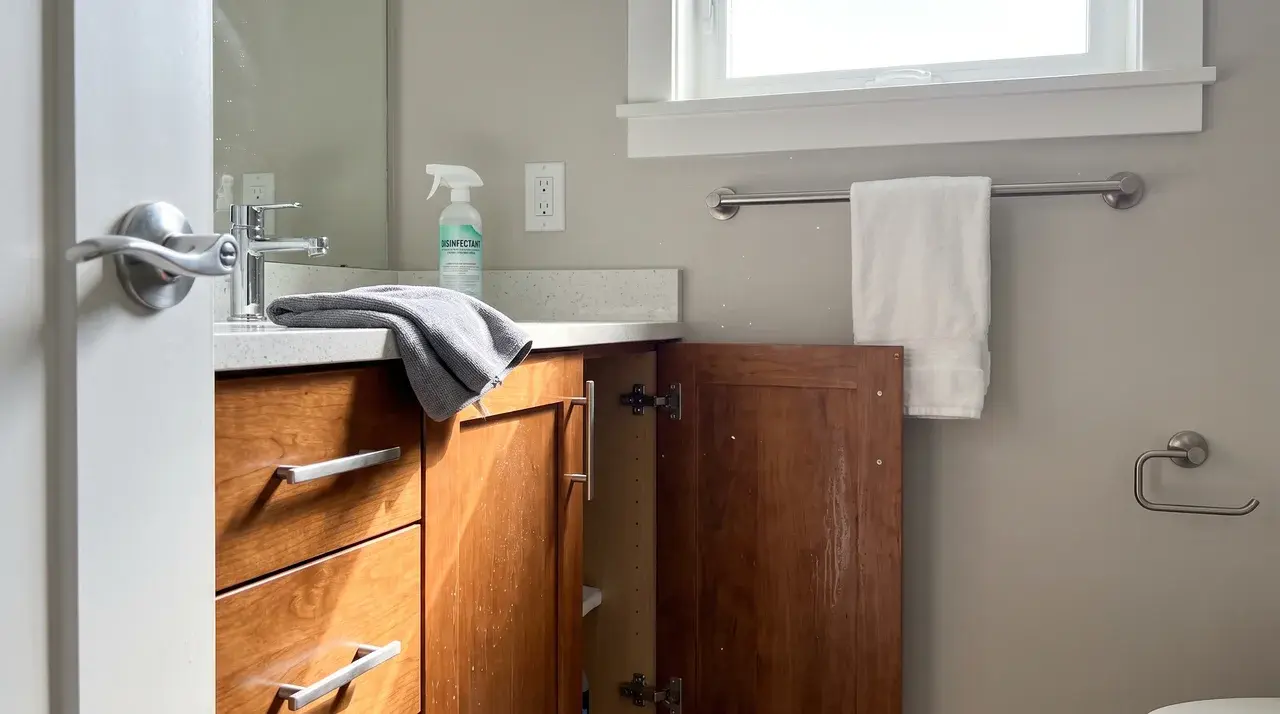
These surfaces collect bacteria fast because they get touched every day but are rarely cleaned. Spray disinfectant on cabinet doors, handles, and the bathroom door handle. Also treat light switches, towel bars, toilet paper holders, and wall hooks.
Let it sit, then wipe clean. For cabinet interiors, remove everything, wipe the shelves, and throw away expired products. This prevents mold inside storage spaces and keeps things easier to find.
Step 7: Scrub Floors and Baseboards
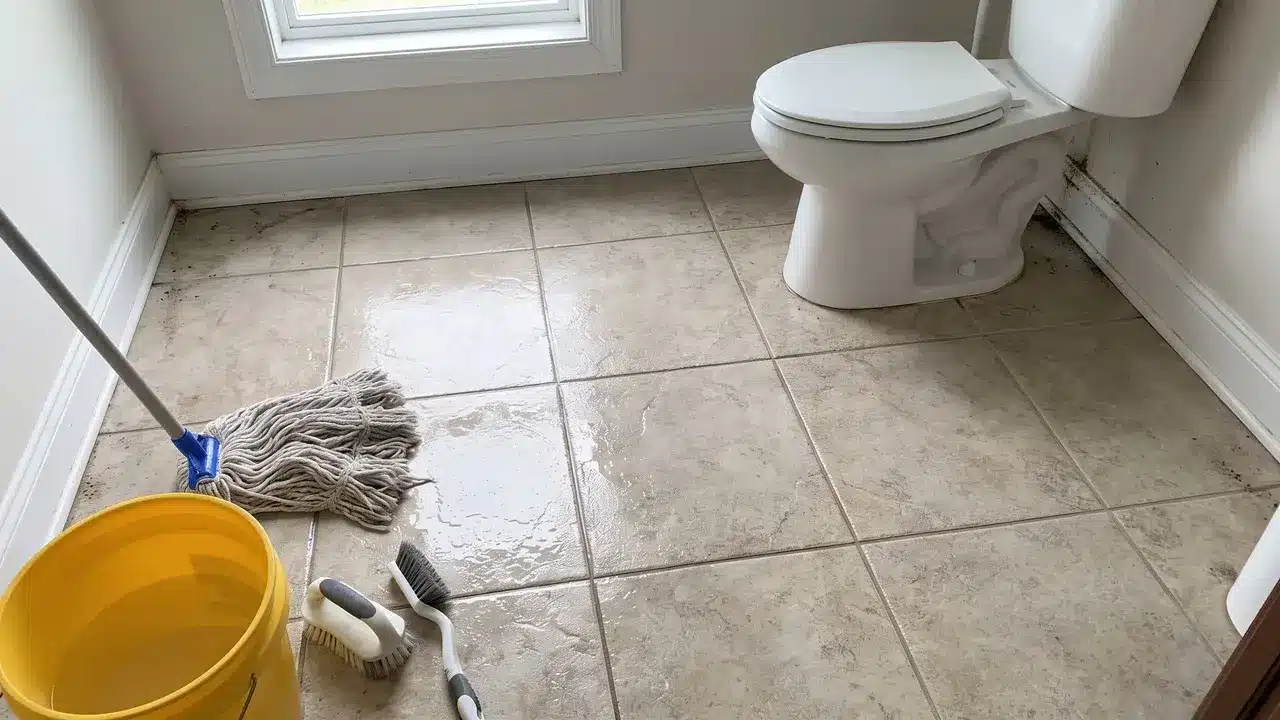
Start by vacuuming or dry-sweeping to remove hair, dust, and loose debris. Then scrub the grout lines between floor tiles with a grout brush.
Apply floor cleaner and mop the entire floor, paying extra attention to corners and the area directly behind the toilet. Wipe the baseboards with a damp cloth.
They collect dust and hair and are easy to miss during regular cleaning. Let the floor dry fully before placing anything back.
Step 8: Final Disinfection and Finishing Touches
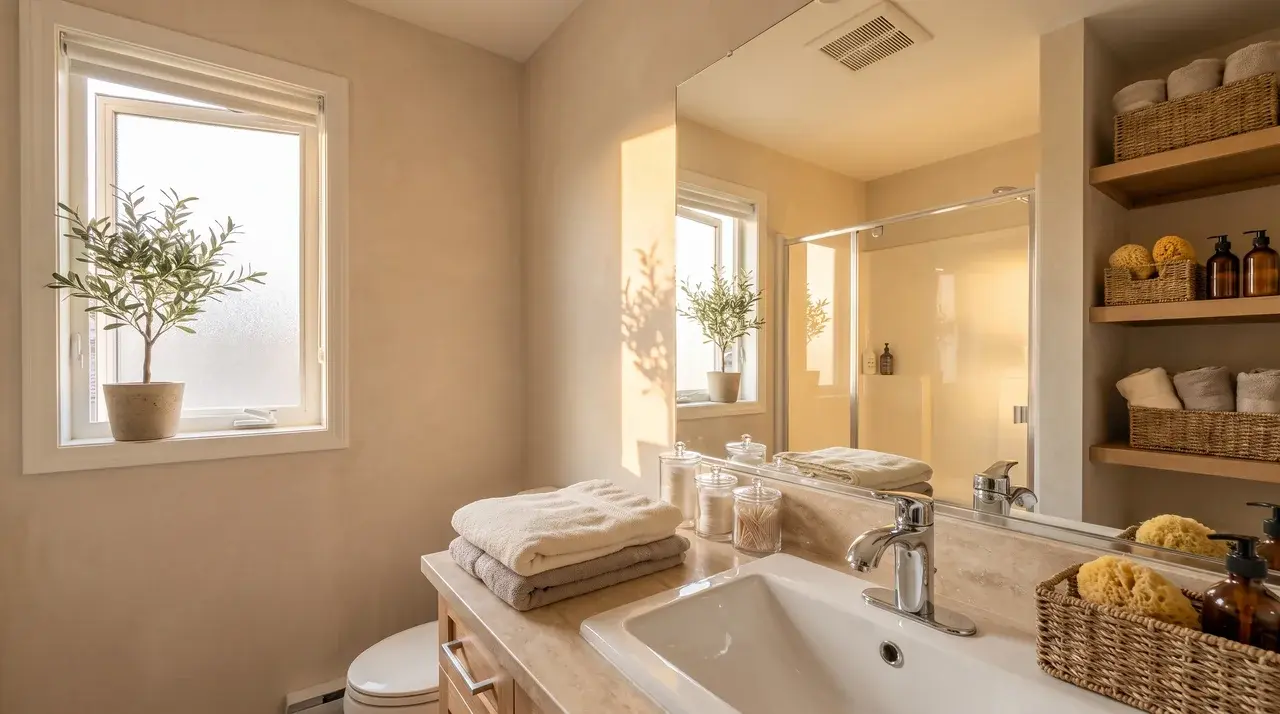
Empty and disinfect the trash bin. Wipe the inside with disinfectant spray and replace the trash bag. Air out the bathroom by opening a window or running the exhaust fan.
Fold or replace hand towels and restock toilet paper, soap, and other supplies. Once the bathroom is clean and dry, this is a good time for small updates. Refresh what is on the walls or shelves.
Small updates make a big difference in how the space feels. The bathroom wall decor ideas are a good starting point. They help the room look as good as it smells.
Quick-Reference Bathroom Deep Clean Checklist
Use this list to stay on track once you know the full method above.
- Clear the space, then dust ceiling, vents, and fixtures
- Clean shower, tub, tile, grout, and showerhead
- Scrub the toilet inside and out
- Clean sink, faucet, and countertops
- Wipe mirrors and glass
- Disinfect cabinets, doors, and high-touch spots
- Scrub floors and baseboards
- Empty trash, restock supplies, and air out the room
How to Remove Tough Bathroom Stains
Some stains do not respond to regular scrubbing. The right method depends on what you are dealing with. Using the wrong product can damage your surfaces.
| Stain Type | Recommended Solution | How to Apply |
|---|---|---|
| Soap scum on tiles or glass | Equal parts white vinegar and dish soap | Spray, wait 10 to 15 minutes, scrub, rinse |
| Hard water stains on faucets | Undiluted white vinegar | Press a soaked cloth on the area for 30 minutes, scrub |
| Stubborn mineral deposits | CLR (Calcium, Lime, and Rust Remover) | Follow label directions, rinse well after |
| Mold or mildew on grout | 1 part hydrogen peroxide, 2 parts water | Spray, wait 10 minutes, scrub with a grout brush |
| Heavy soap scum or mineral buildup | Bar Keepers Friend | Avoid marble or natural stone |
How Often Should You Deep Clean Your Bathroom?
Deep clean your bathroom once a month for average use, then adjust from there. Bathroom use, household size, humidity, and pets all change how fast buildup returns.
A weekly clean covers the basics. Wipe the sink, scrub the toilet bowl, and mop the floor.
A full deep clean once a month is the right standard for average bathroom use. This covers grout, vents, fixtures, and all the spots skipped during weekly cleaning.
Every three to four months, go further. Clean behind the toilet, wash shower curtain liners, soak faucet aerators, and check for early mold or grout damage.
Watch for a few warning signs between cleans. Dark grout, visible faucet buildup, or lingering odor after cleaning all signal a full deep clean is due.
Mistakes to Avoid When Deep Cleaning a Bathroom
Even with the right products, a few simple mistakes undo a lot of hard work. These are the most common problems people run into and exactly how to fix them.
- Skipping grout and hidden areas: Grout, vents, and baseboards hold the most bacteria. Include them in every deep clean.
- Not letting disinfectants sit: Wiping immediately means germs are not fully killed. Let products sit for at least 30 seconds to 2 minutes.
- Using the wrong cleaners: Bleach damages colored grout. Vinegar etches natural stone. Abrasives scratch chrome. Always check the surface material first.
- Using one cloth for everything: This spreads bacteria from one surface to another. Use separate cloths for the toilet, sink, and floor.
- Skipping ventilation: Cleaning product fumes build up fast in small spaces. Open a window or run the exhaust fan before you start.
Final Thoughts
Knowing how to deep clean a bathroom helps remove dirt, reduce germs, and protect surfaces. Start at the ceiling, clean each area in order, and finish with the floor. A simple checklist, basic products, and regular stain treatment make the job easier.
Deep clean your bathroom once a month to keep it fresh, sanitary, and easy to maintain. After cleaning, add a few simple staging touches to create a polished and inviting space.
Frequently Asked Questions
How Long Does it Take to Deep Clean a Bathroom?
A full deep clean takes between 45 minutes and 2 hours, depending on the size of the bathroom and how long it has been since the last thorough clean.
What is the Best Cleaner for Bathroom Grout?
A paste made from baking soda and water works well for light buildup. For stubborn mold, use a 1-to-2 ratio of hydrogen peroxide to water and let it sit before scrubbing.
Can I Deep Clean a Bathroom without Harsh Chemicals?
Yes. White vinegar, baking soda, hydrogen peroxide, and dish soap handle most bathroom cleaning tasks. Avoid vinegar on natural stone surfaces like marble.
Do You Need to Clear the Bathroom Before Deep Cleaning?
Yes. Clear counters, cabinets, and the shower first so every surface is reachable and nothing needs to be moved twice.
How Do You Deep Clean a Bathroom That Has Not Been Cleaned in a While?
Let cleaner sit longer on heavy grime, work in smaller sections, and expect the job to take longer than usual.