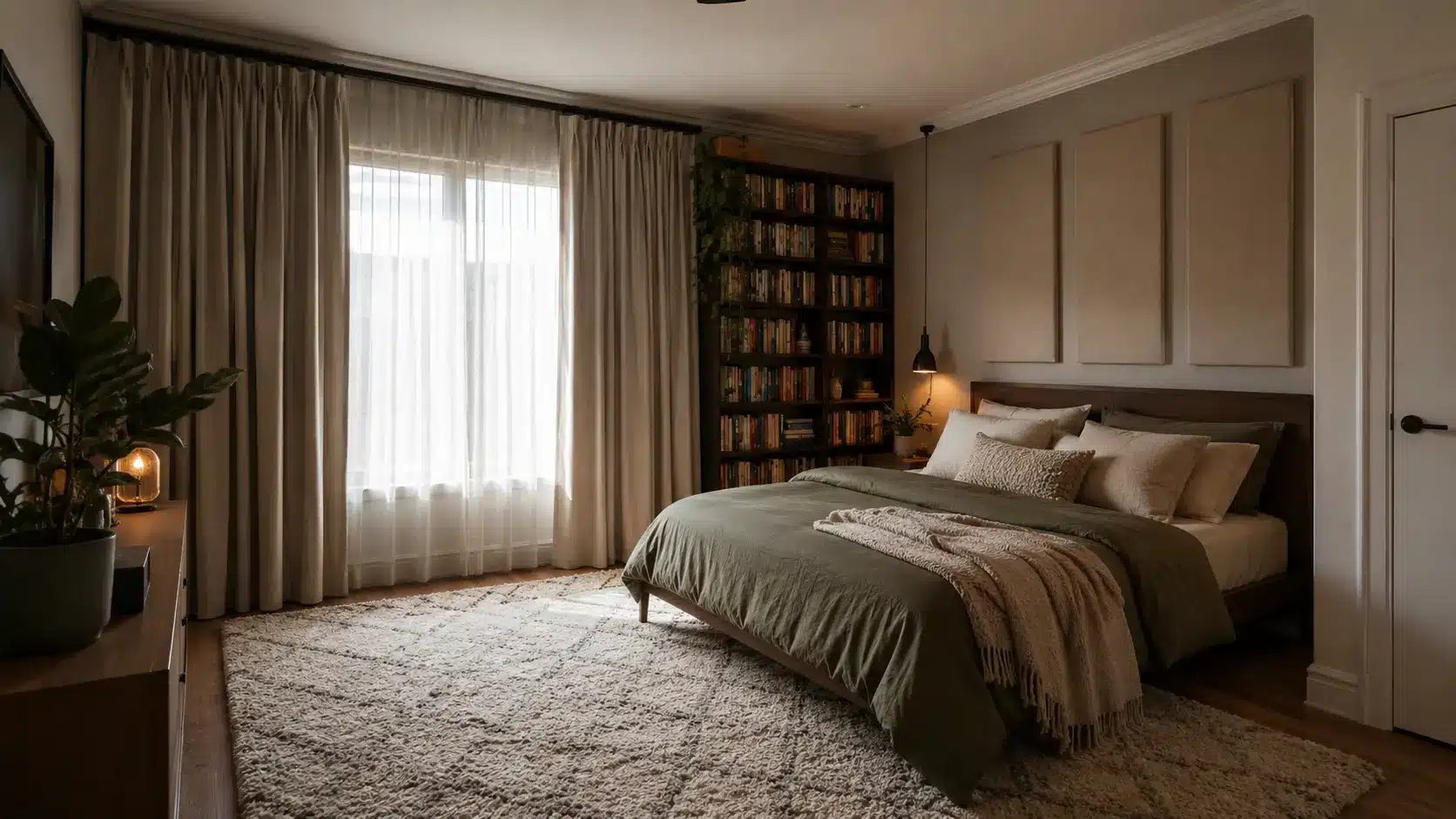
How to Soundproof a Room: Practical Ways to Reduce Noise

Noise doesn’t knock. It walks right in through the gap under the door, the thin drywall, the window that never quite sealed.
To soundproof a room, seal those gaps first. Add mass to shared walls with rugs and heavy furniture. Layer in soft materials that soak up echo. No contractor is needed.
Footsteps from upstairs, a neighbor’s TV through the wall, and traffic past the window don’t travel the same way. The fix has to match the source. Get that part wrong, and even the best materials won’t quiet the room.
Identify the Type of Noise Before Soundproofing
Sound rarely enters through just one surface. Before buying any materials or making any changes, identify the actual entry point. The most common paths are doors, windows, walls, floors, ceilings, vents, and small gaps around pipes or outlets.
Airborne Noise
What it is: Sound that travels through the air before hitting a surface
Common sources: Voices, music, television, barking dogs, and outside traffic
How it enters: Through gaps, thin walls, and poorly sealed doors
Impact Noise
What it is: Sound caused by physical contact with a surface
Common sources: Footsteps, dragged furniture, dropped objects, and nearby appliances
Why it is harder to treat: It travels through the building structure itself, not just through air
Echo and Indoor Noise
What it is: Sound bouncing off hard surfaces inside the room, not noise coming from outside
Common causes: Bare walls, uncovered floors, and high ceilings
How to treat it: Soft absorptive materials, not mass or sealing
How to Soundproof a Room Without Major Construction
Not every situation allows for structural changes. These methods work well for renters and anyone working with a limited budget.
1. Seal Gaps and Cracks
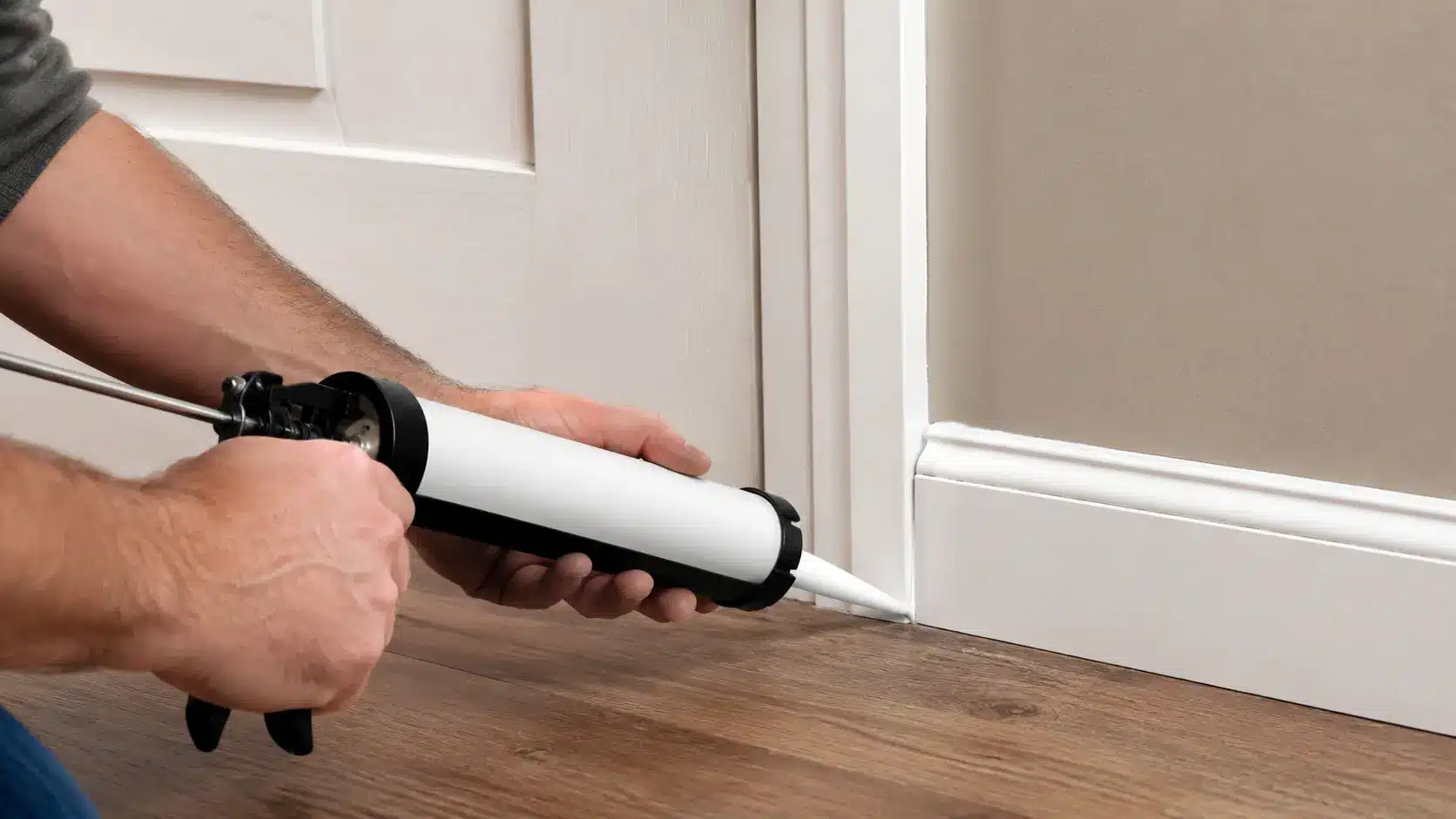
Acoustic caulk or weatherstripping applied around door frames, baseboards, and wall openings blocks the path for airborne noise.
This is the single most cost-effective step in any soundproofing project. Fill every visible gap before moving on to larger solutions.
2. Add a Door Sweep
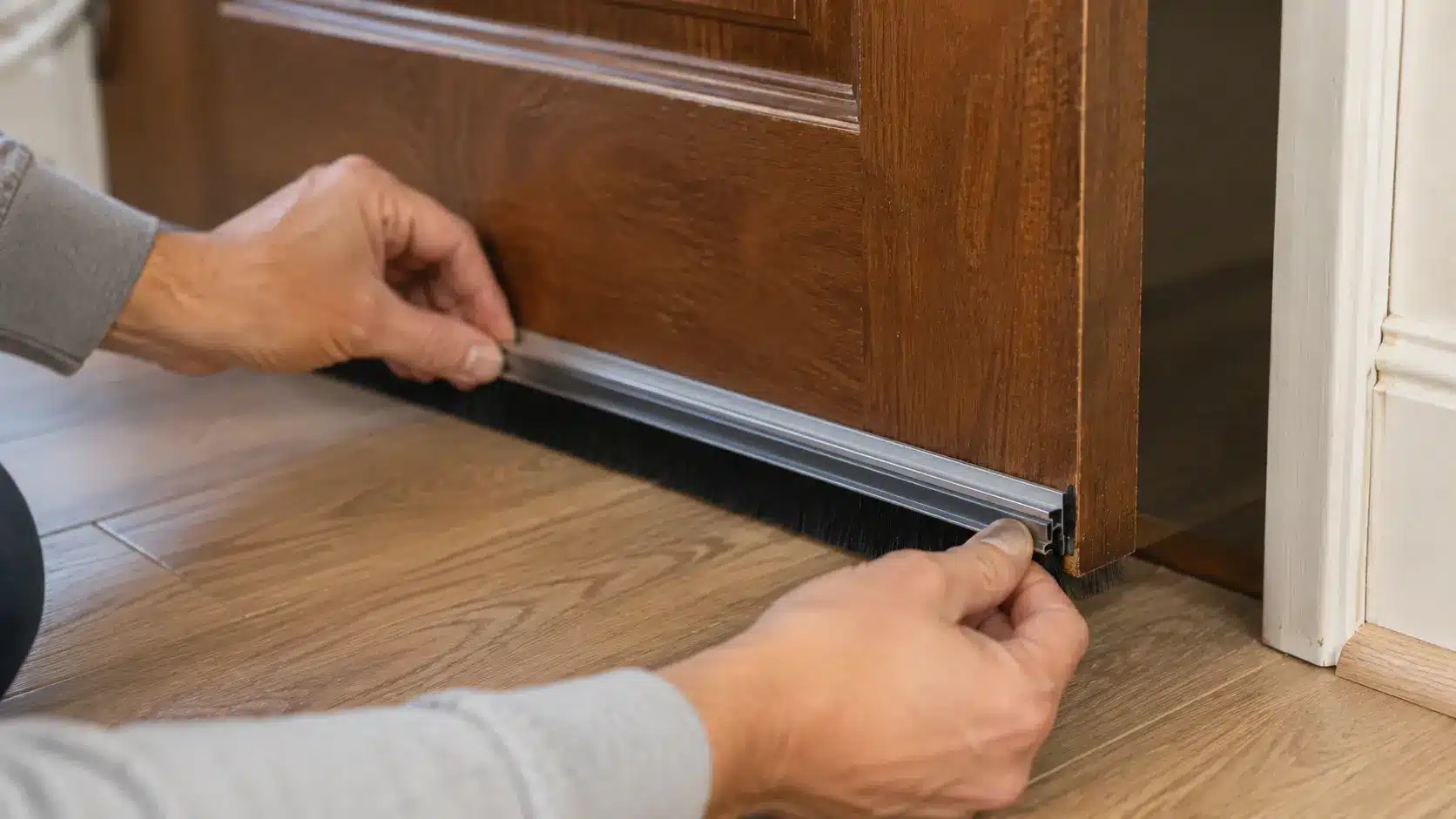
A door sweep attaches to the bottom of the door and seals the gap against the floor.
Hallway noise, voices, and general household sound drop a lot once this gap is closed. Choose a self-adhesive or screw-mounted version based on how permanent you want the fix to be.
3. Hang Heavy Curtains
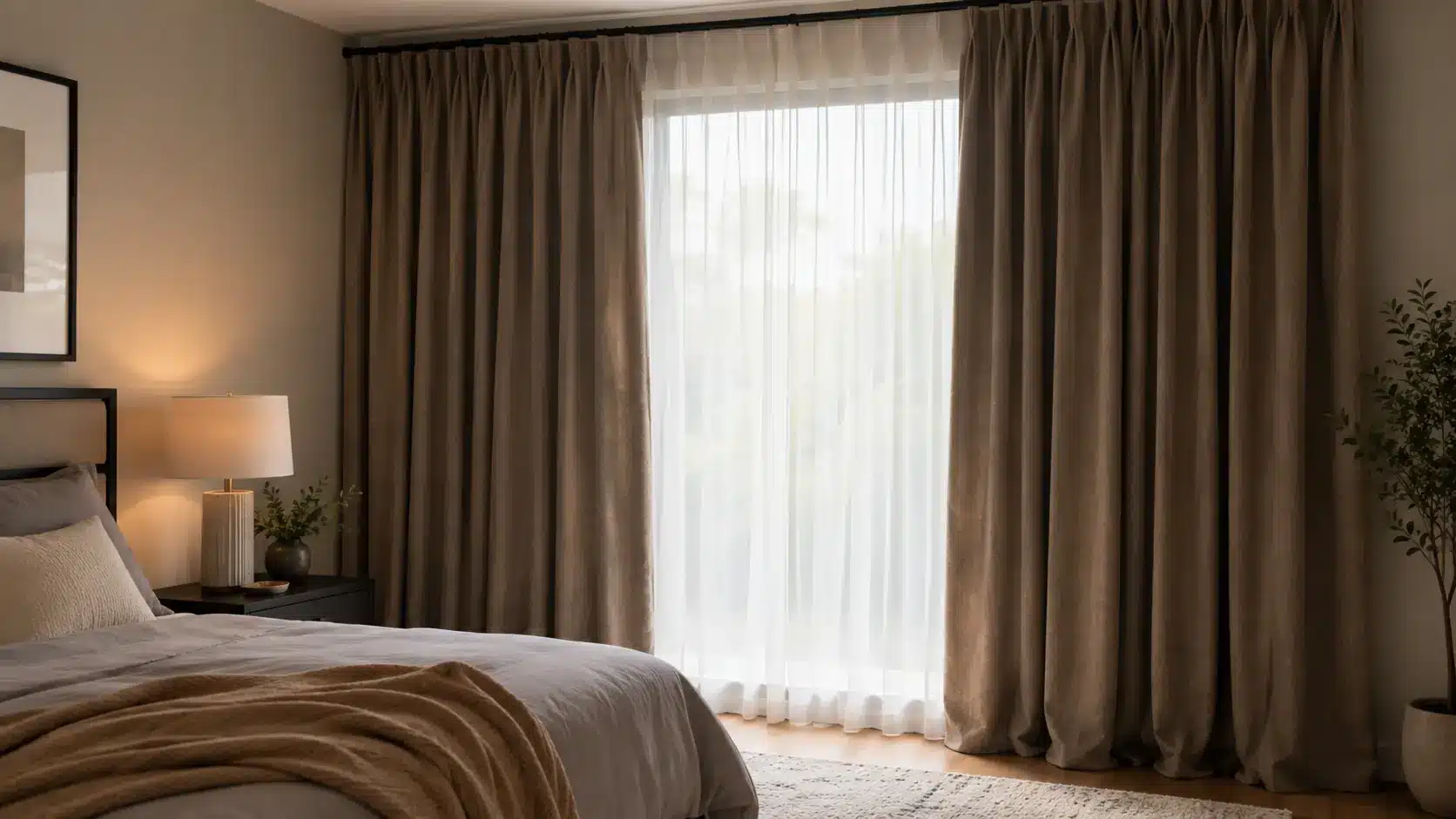
Thick, floor-length curtains reduce both echo inside the room and some airborne noise from windows.
Hang them as close to the ceiling as possible. Let them rest on the floor to close gaps at the top and bottom. Use them on both windows and hard wall surfaces for added absorption.
4. Add Rugs and Floor Underlay
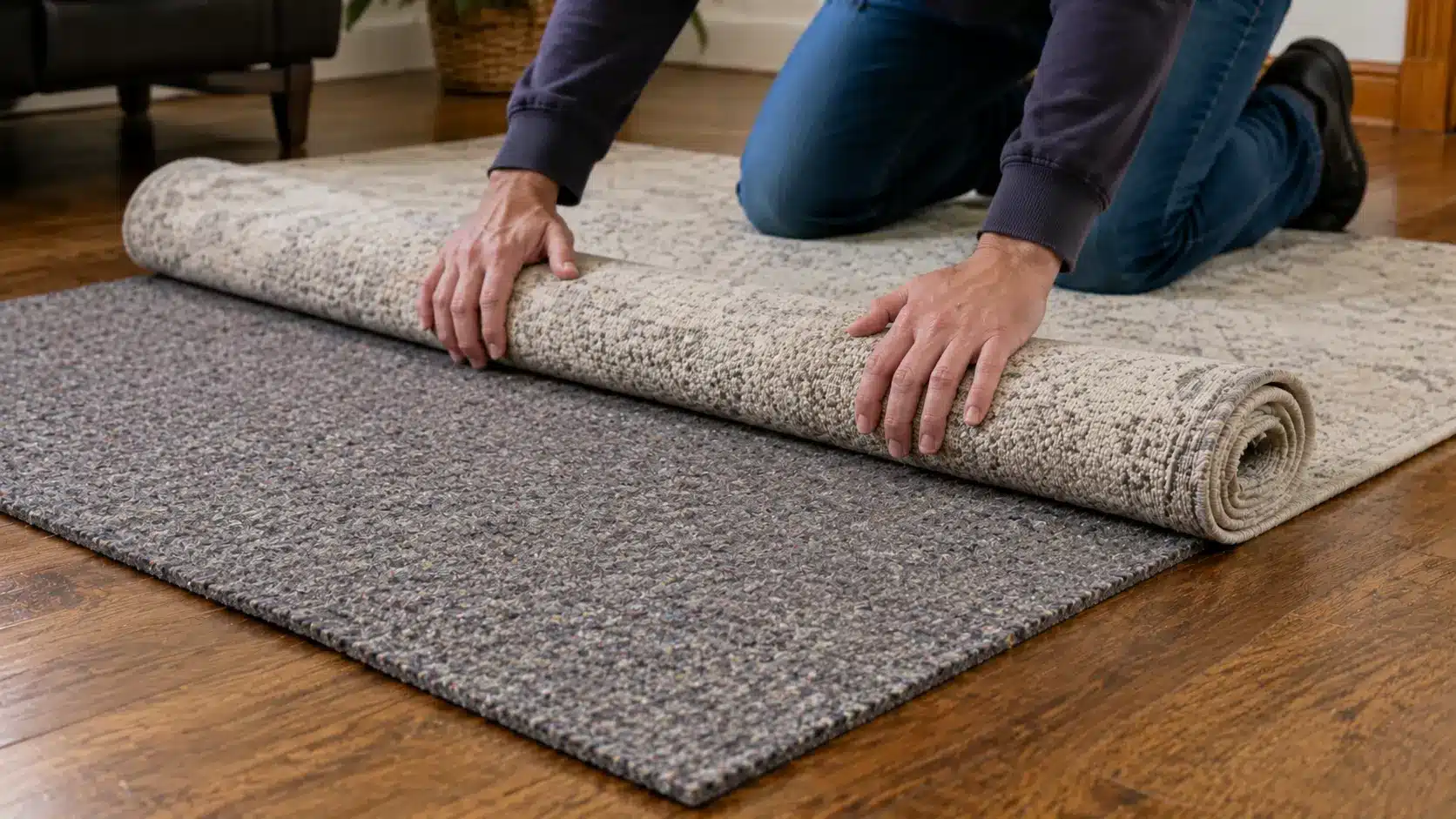
Hard floors reflect sound and carry impact noise easily. A thick rug over a dense carpet pad reduces both echo and the transfer of footstep noise to rooms below.
Rubber underlay beneath the rug adds extra mass and dampening. A jute rug over a rubber pad is one simple way of layering different textures in a room. The noise fix doubles as a style upgrade
5. Rearrange the Furniture
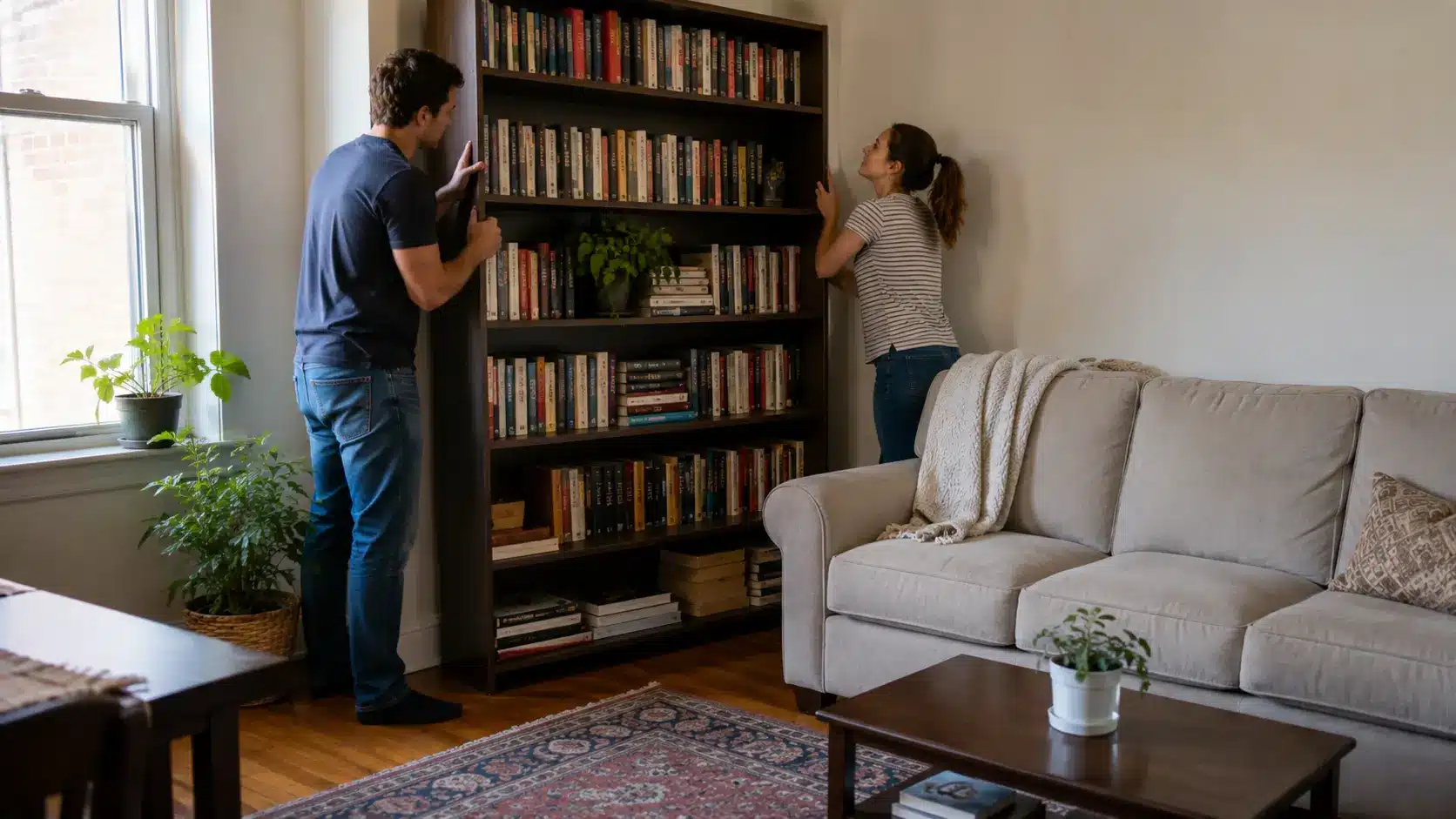
Bookcases filled with books, wardrobes, and large upholstered sofas placed against shared walls add mass and absorb sound.
This is a zero-cost change that can make a meaningful difference in how much noise passes through a shared wall.
6. Use Soft Furnishings

Fabric chairs, cushions, blankets, wall hangings, and curtains soften the hard surfaces that bounce sound around a room.
A room with a mix of soft and hard surfaces sounds quieter. Bare walls and uncovered floors let echo bounce more.
Match the Solution to the Type of Noise
Not every soundproofing method works for every noise problem. The right fix depends on where the noise is coming from and how it travels into your space. Treating the wrong surface wastes money and delivers little results. Use this table to match your fix to your source.
| Noise Type | Best Soundproofing Solution |
|---|---|
| Traffic noise | Soundproof curtains, window inserts, MLV |
| Loud neighbors | Bookshelves, MLV, double drywall |
| Footsteps | Carpet, underlayment, ceiling insulation |
| TV or music | Acoustic panels, door seals, Green Glue |
| Echo in the room | Rugs, curtains, upholstered furniture, acoustic panels |
Keep in mind that most noise problems involve more than one source. Combining two or three solutions from the same row will always outperform any single fix on its own.
What Every Room in Your Home Actually Needs
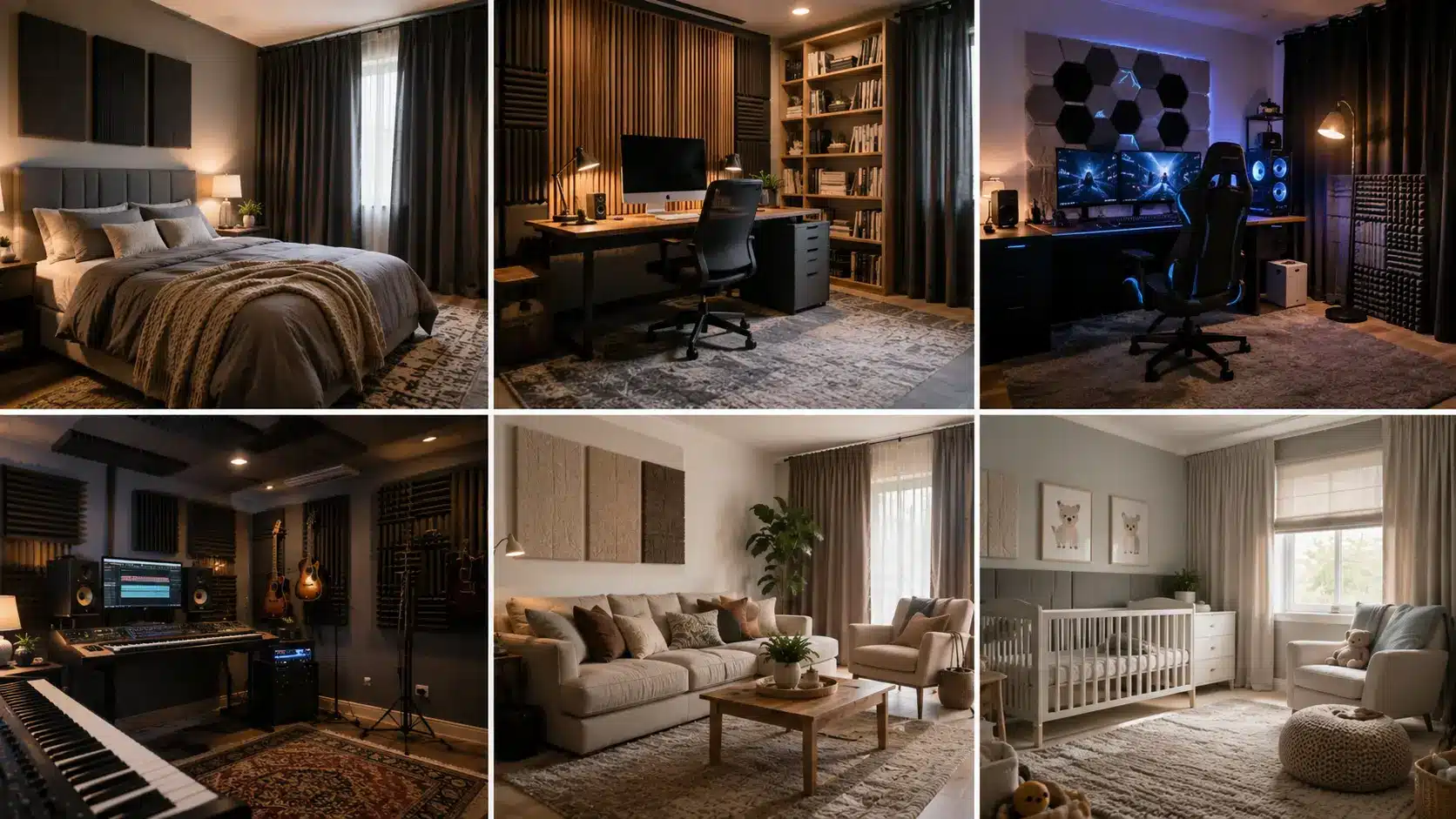
Every room has a different noise problem. The fix that works in a bedroom won’t always work in a home office or nursery. Here’s what to prioritize in each space.
1.Bedroom
The bedroom needs to block outside noise and contain inside sound. Start with a door sweep and weatherstripping, then add blackout soundproof curtains and a thick rug.
If noise from above is the issue, a ceiling treatment helps most. MLV or an extra drywall layer makes the biggest difference.
2. Home Office
A home office needs low background noise for focus and calls. Seal gaps around the door first, then add acoustic panels to reduce echo.
A solid-core door and a rug go a long way. For video calls, acoustic foam behind you cuts reverb significantly.
3. Gaming Room
Gaming rooms need to contain sound as much as block it. Acoustic foam on walls reduces echo for better audio.
Weatherstripping on the door keeps sound from leaking into the rest of the house. Adding a rug and heavy curtains rounds out the setup without a major renovation.
4. Music Studio
A music studio needs the most serious treatment. Start with decoupled walls if possible or add a second drywall layer with Green Glue. MLV under flooring handles impact.
Acoustic panels control reflection inside. Treat every gap, door seal, and window.
5. Apartment Living Room
Renters need non-destructive options. Focus on rugs, furniture placement, acoustic blankets, and temporary panels.
A bookshelf against a shared wall adds mass without touching anything permanent. Peel-and-stick weatherstripping and a door sweep handle gaps without damaging anything.
6. Nursery
A nursery needs to block noise coming in more than going out. Thick curtains, a solid rug, and a white noise machine are the fastest wins.
Sealing the door gap keeps hallway sounds from waking a sleeping baby. Soft furnishings like glider chairs and upholstered ottomans also help absorb sound inside the room.
These same soft pieces are also core to nursery design beyond noise control.
Soundproofing Materials: Cost, Effort, and What Each One Does
The right material depends on three things: your noise type, your budget, and how much work you want to do.
Some materials reduce echo inside the room, others block noise from entering, and a few do both. A higher Sound Transmission Class (STC) rating means a material blocks more noise. Knowing the difference before you buy saves you from wasting money on the wrong fix.
| Material | Best For | Estimated Cost | Difficulty |
|---|---|---|---|
| Door sweeps and weatherstripping | Air gaps | $30–$80 | Very Easy |
| Acoustic foam | Echo reduction | $30–$150 | Easy |
| Rugs with underlay | Floor noise | $50–$200 | Easy |
| Soundproof curtains | Windows | $60–$250 | Easy |
| Acoustic blankets | Temporary use | $80–$300 | Easy |
| Mass Loaded Vinyl | Blocking noise | $200–$800 | Moderate |
| Green Glue with drywall | Wall upgrades | $300–$800 | Moderate |
| Full professional soundproofing | Whole room | $1,000–$5,000+ | Professional |
For most homeowners, starting at the top of this list and working down is the smartest approach. The cheapest fixes cover gaps and absorb surface noise, which alone can make a room noticeably quieter.
If those don’t solve the problem, that’s when it makes sense to move into heavier materials like MLV or drywall upgrades.
Soundproof a Room on a Shoestring Budget
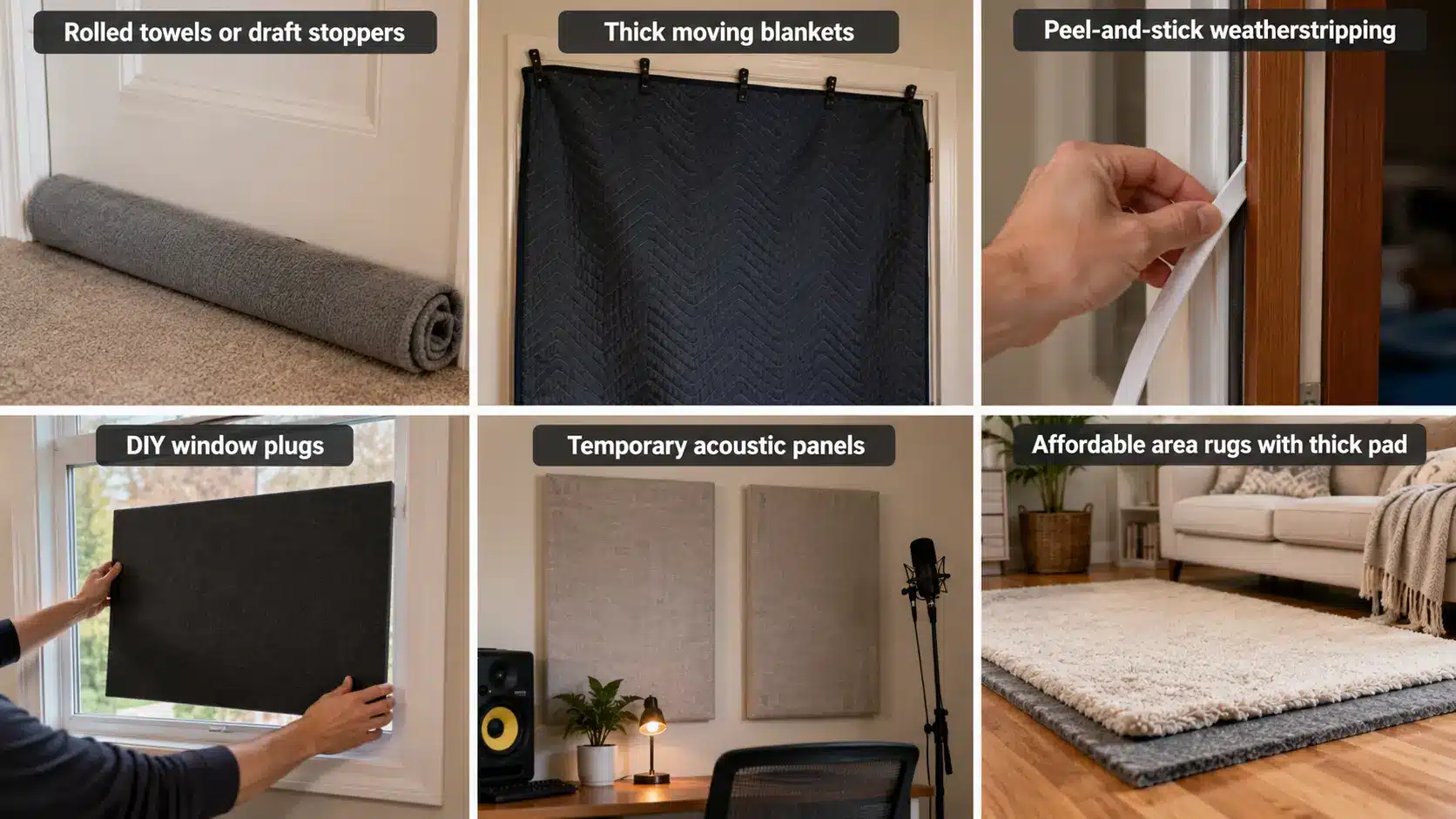
People often assume soundproofing requires a contractor or a big budget. It doesn’t. These quick, low-cost fixes use materials you can grab today and install in under an hour:
- Rolled towels or draft stoppers placed at the base of doors block low-level sound and drafts at the same time
- Thick moving blankets hung over doors or windows act as a temporary sound barrier
- Peel-and-stick weatherstripping is one of the cheapest and easiest gap fixes available
- DIY window plugs made from foam board and acoustic material can be cut to fit and removed when needed
- Temporary acoustic panels using rockwool or fiberglass wrapped in fabric are a fraction of the cost of commercial panels
- Affordable area rugs layered with a thick pad reduce both echo and floor noise without any installation
Difference Between Soundproofing and Sound Absorbing
These two terms get used interchangeably, but they do completely different jobs. Mixing them up is one of the most common reasons people spend money on the wrong materials. That’s often why the room still sounds bad afterward.
Soundproofing blocks noise from entering or leaving a space. Sound absorbing reduces echo and reverberation inside a room. You often need both, but for very different reasons.
| Soundproofing | Sound Absorbing | |
|---|---|---|
| What it does | Blocks noise from passing through walls, floors, and ceilings | Reduces echo and reverberation inside the room |
| Best materials | Mass Loaded Vinyl, Green Glue, solid-core doors, drywall | Acoustic foam, rugs, curtains, upholstered furniture |
| Fixes | Noise coming in from outside or neighboring rooms | Sound bouncing around inside the room |
| Difficulty | Moderate to high | Easy to moderate |
| Cost | Higher | Lower |
| Best for | Blocking traffic, neighbors, footsteps | Reducing echo in studios, offices, home theaters |
Think of soundproofing as building a wall against noise and sound absorbing as softening what’s already inside.
A recording studio needs both. A bedroom dealing with street noise needs soundproofing first. A home office with bad echo needs absorption. Knowing which problem you actually have is what determines which solution is worth spending money on.
Is Soundproofing Worth It?
For most people, yes. The return depends on your noise problem and how you use the space.
- When DIY is enough: If your main issue is echo, thin door gaps, or moderate outside noise, basic fixes like rugs, curtains, weatherstripping, and acoustic panels will make a real difference without major cost.
- When structural upgrades make sense: If you share walls with noisy neighbors, live near a highway, or need a dedicated studio or office space, investing in MLV, Green Glue drywall, or solid-core doors pays off over time.
- Renters vs homeowners: Renters should focus on non-permanent solutions like acoustic blankets, rugs, furniture placement, and removable panels. Homeowners have more options and can invest in structural changes that add long-term value.
- Expected noise reduction: Basic DIY improvements typically reduce noise by 5 to 10 decibels. Mid-range upgrades can reduce it by 15 to 25 decibels. Full professional treatment can achieve 30 to 50 decibels of reduction depending on the construction.
Frequently Asked Questions
Can a room be 100% soundproof?
No. Full soundproofing needs specialized construction. Sealing gaps, adding insulation, and using sound-blocking materials still cuts noise a lot.
What cheap material absorbs sound?
Affordable options include acoustic foam, moving blankets, thick curtains, carpets, rugs, and weatherstripping. These materials help reduce echo and block some noise.
How much does it cost to soundproof a 12×12 room?
Basic DIY soundproofing usually costs $200 to $800, while professional soundproofing can range from $1,500 to $5,000 or more, depending on the materials and level of noise reduction.
Can plants help soundproof a room?
Plants can slightly reduce echoes by scattering sound waves, but they are not an effective replacement for proper soundproofing materials like insulation or acoustic panels.
Can you soundproof a room that is already built?
Yes. Existing rooms can be soundproofed by sealing cracks, adding weatherstripping, installing acoustic panels, using heavy curtains, laying rugs, or adding an extra layer of drywall with soundproofing insulation.
A Quieter Room Is Closer Than You Think
Soundproofing a room does not have to be complicated or expensive. Start with the easiest wins: seal gaps, add a door sweep, lay down a rug, and hang thick curtains.
From there, layer in more mass with MLV, bookshelves, or a second drywall layer. Add this if the noise problem calls for it. The most effective approach always combines sealing gaps, adding mass, and absorbing sound inside the room.
Pick the methods that match your budget and noise source, and you will notice the difference faster than you expect.