A Homeowner’s Guide to Choosing the Right Security System in Calgary

Choosing among security systems Calgary homeowners rely on comes down to three variables. Decide how the property is monitored, whether footage is stored locally or in the cloud, and how the hardware tolerates a prairie winter. Professional monitoring with cellular signalling survives internet outages. Cameras rated for -30 °C keep recording in January. Alarm permits are mandatory, and false dispatches carry municipal fines.
Introduction
A broken basement window at two in the morning tells you nothing if the sensor battery died at -28 °C three weeks earlier. Cold is the variable most buyers underestimate. Equipment specified for a temperate climate behaves differently on the prairies, where sensor chemistry slows, adhesive mounts release from cold glass, and outdoor cameras throttle their frame rates to protect the sensor.
Reputable installers work from that reality first, matching hardware ratings to the coldest week of the year rather than the warmest. Supreme Security, an established provider of home security Calgary property owners use for monitored alarm and camera installations, builds around cellular signalling and cold-rated components for that reason.
In practice, the questions that matter are narrow. What triggers a response, who receives the signal, and how long does the system run once power fails.
How Monitoring Type Shapes Everything Else
Every other decision follows from one question: what happens in the ninety seconds after a sensor trips. Self-monitored setups push a notification to a phone and stop there. Professionally monitored setups route the signal to a staffed central station, which verifies the event and contacts police or fire dispatch on the homeowner’s behalf.
Signalling Paths and Their Failure Points
The transmission path matters more than the panel. Broadband signalling travels over the household internet connection, which fails during outages and can be cut at the demarcation point outside the house. Cellular signalling uses an independent radio and keeps reporting when the router goes dark. Dual path configurations run both, with cellular as automatic backup.
Verification is the second variable. Alarm receiving centres certified to ULC S561 operate with redundant power and staffing standards that a phone notification cannot replicate.
Where Residential and Commercial Requirements Diverge
Homeowners often assume the residential tier is a scaled-down version of what businesses install. The overlap is narrower than expected. Commercial security systems Calgary properties depend on typically add supervised zones, opening and closing reports, and audit trails that record who disarmed the panel and when.
Those features carry cost and complexity a household rarely needs. The features worth borrowing from the commercial tier:
- Cellular or dual path signalling as the default rather than an upgrade
- Supervised sensors that report their own battery status before failure
- Individually coded user PINs instead of one shared household code
- Backup power sized for at least twenty-four hours of standby
The result is a household setup that reports its own faults instead of failing quietly.
Camera Coverage, Storage and Placement Decisions
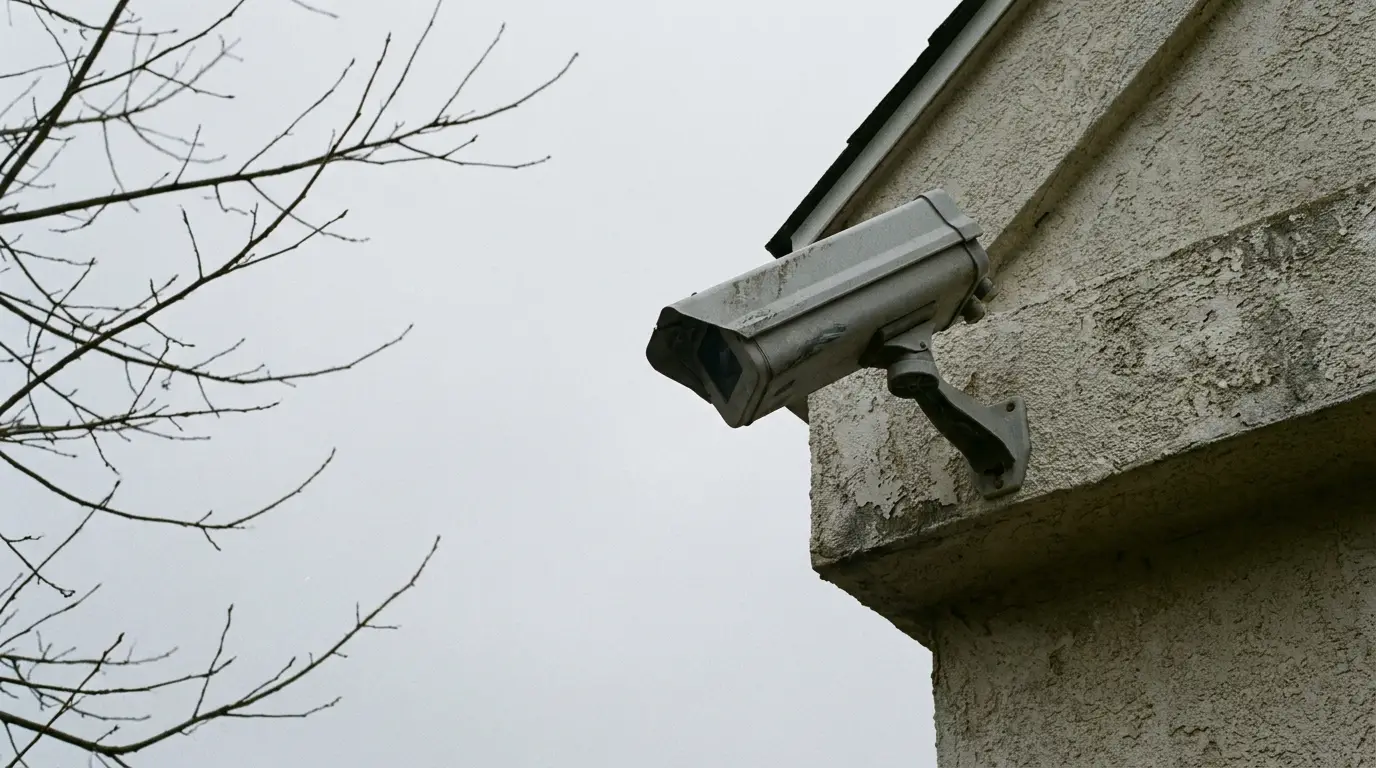
Cameras answer a different question than alarms. Alarms interrupt an event, while footage establishes what happened, who was present, and whether the recording holds up as evidence.
Resolution Against Field of View
Higher resolution buys usable detail, not wider coverage. A 4K sensor spread across a 120-degree lens delivers roughly the same pixels per metre at the property line as a 1080p camera on a 90-degree lens. Identification requires about 250 pixels per metre of subject width, which is why a single wide camera over a driveway rarely produces a usable face.
Placement corrects more problems than specification does. Mount at two and a half to three metres, angle below the horizon to avoid sky glare, and point across an approach path rather than straight down it.
Where Footage Lives
Retention strategy decides what survives a break-in. Local recorders keep footage on site and cost nothing monthly, though a thief who takes the recorder takes the evidence. Cloud retention removes that risk and adds ongoing fees.
A short comparison of the two storage models:
| Factor | Local recorder | Cloud retention |
| Ongoing cost | None after purchase | Monthly per camera |
| Theft exposure | Recorder can be removed | Footage held off site |
| Retrieval speed | Immediate on the network | Depends on upload bandwidth |
| Typical retention | Two to four weeks | Seven to thirty days by plan |
| Outage behaviour | Continues recording | Buffers or stops |
Hybrid configurations record locally and mirror critical events off site, which is the arrangement most security camera systems Calgary installers now specify as standard.
Coverage Priorities
Coverage follows entry probability rather than perimeter length:
- Front door and package drop zone
- Rear or side door screened from street view
- Driveway and detached garage approach
- Basement windows below grade
Four cameras placed against those priorities outperform eight distributed evenly.
Cold Weather Performance and Calgary’s Permit Requirements
Two constraints separate a system that works here from one that works on paper. One is chemical, the other regulatory, and neither appears on a product page.
What Cold Does to Hardware
Lithium primary cells hold charge well below freezing, while the lithium ion packs in many wireless sensors lose a substantial share of usable capacity as temperatures fall toward -20 °C and below. A sensor reporting healthy in October can fail during the first hard cold snap.
Passive infrared detectors read temperature difference. When a poorly insulated wall or an uninsulated garage sits close to outdoor temperature, the contrast between a body and its background collapses, and detection range shortens.
Practical countermeasures:
- Specify outdoor cameras rated to -30 °C or colder, not -10 °C
- Use lithium primary cells in exterior door and window contacts
- Mount sensors on interior partition walls rather than exterior walls
- Choose mechanical mounts over adhesive on any cold surface
- Replace exterior batteries in autumn rather than on a failure schedule
Pro Tip: Test the full sensor set on the coldest morning of the year, not at installation. Faults that appear at -25 °C stay hidden in September.
Permits and False Alarm Liability
The city requires an alarm permit for monitored residential and commercial premises under its alarm bylaw, and repeated false dispatches draw escalating fees. Verification requirements mean police response can be withheld from unpermitted addresses.
Business security systems Calgary operators install carry the same obligation, with higher exposure because staff turnover produces most false trips. Registering the permit at commissioning, then training every user on the disarm sequence, removes the common cause.
Cold-rated hardware and a current permit cost less than a single winter of failed detection.
Key Takeaways for Home Alarm and Camera Selection
Three decisions carry the weight. Signalling path determines whether an alert leaves the property during an outage, camera placement determines whether footage identifies anyone, and temperature ratings determine whether either function works in February. Permit registration closes the loop by keeping police response available. Specify against the coldest week and the most likely entry point, and the rest of the configuration follows from those two constraints.