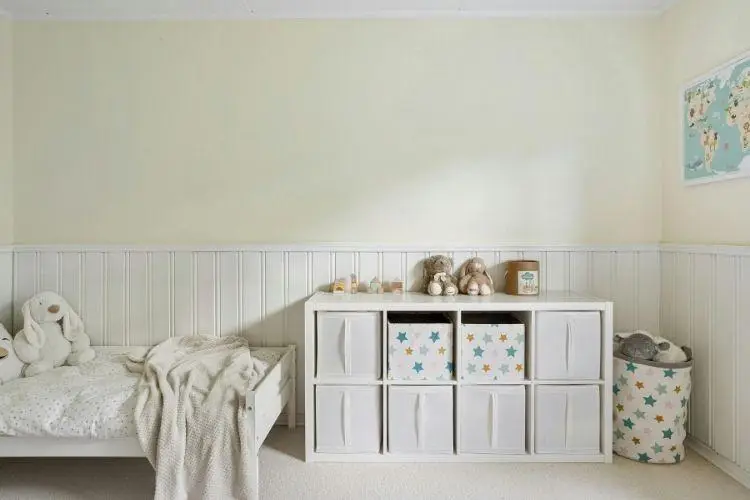
How to Create a Playroom That Feels Calm, Creative, and Easy to Use

A good playroom should show signs of life: a half-built block tower, pencils beside a sketchbook, or a blanket waiting to become a fort. The challenge is giving all that activity enough structure that the room still feels comfortable and usable.
Calm and creativity aren’t opposites. Children need room to experiment, but too much visual noise or rigid organization can make play less inviting. The best playrooms establish a clear framework, then leave enough freedom for children to change the story.
Begin With the Play That Already Happens
Before buying storage or choosing paint, watch how the room is used. Does your child build on the floor, draw at a table, act out stories, or retreat with books? Design around those habits rather than an idealized picture of play.
The American Academy of Pediatrics describes play as an important route to social, emotional, language, cognitive, and self-regulation skills. Its clinical report makes the point plainly: “Play is not frivolous.” A playroom, therefore, works best when it supports several forms of play without prescribing every action.
Begin with two or three broad needs, such as open floor space, a surface for making, and a softer reading corner. Let those uses overlap. A table can hold puzzles one day and cardboard buildings the next.
Use the Floor to Give the Room a Center
Children spend much of their playtime close to the ground. A defined floor area creates a visual center without adding another bulky piece of furniture. In a shared family room, it can also establish a play zone without a physical divider.
Choose a rug large enough for children to sit, move, and spread out the activity it is meant to hold. Practicality matters. Paint, crumbs, and muddy feet aren’t design failures. They are part of the room’s working life.
A washable surface can make the floor feel less precious, while a pattern can disguise smaller traces between cleanups. The children’s collection from double includes rugs developed for bedrooms and play spaces, linking visual character with the practical demands of family life.
Show Fewer Toys at One Time
A calm playroom isn’t necessarily a minimalist one. It simply edits what is visible.
In a study of 36 toddlers, researchers compared play sessions with four toys and 16 toys. With fewer toys available, the children played with individual toys for longer and used them in a greater variety of ways. The study was small and limited to toddlers, so it isn’t a universal formula. It does, however, offer a good reason to try toy rotation.
Keep a modest selection within reach and store the rest elsewhere. Rotate items when interest fades rather than following a complicated schedule. Blocks, figures, fabric, vehicles, and art materials often justify their place because they can support many different games.
Fewer visible categories also make cleanup easier. A child facing six clear homes for toys has a better chance of helping than one looking at a wall of mixed pieces.
Create Flexible Activity Zones
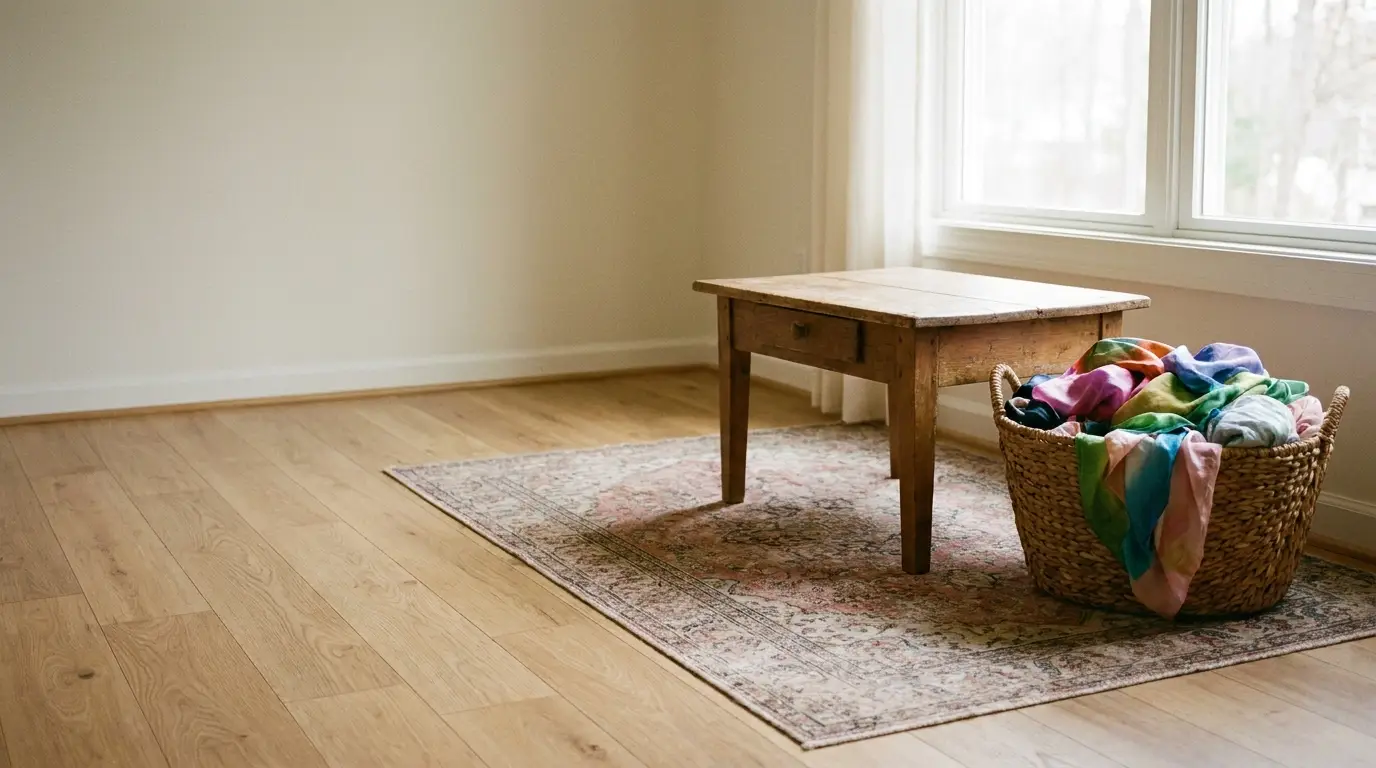
Zones help children read a room, but each one should remain open to interpretation. Research in early childhood settings has found that tightly defined spaces can encourage predictable play while limiting children’s ability to introduce their own ideas.
Use furniture placement, a rug, a lamp, or a change in wall display to suggest activity without over-directing it. A “making table” offers more possibilities than a table reserved only for painting. A basket of scarves could become costumes, fort roofs, picnic blankets, or puppet-show curtains.
Keep one patch of floor deliberately empty. Unclaimed space gives large ideas somewhere to begin.
Make Storage Understandable From a Child’s Height
Storage works when the person using it can understand it. Low shelves, light baskets, and shallow drawers are easier for children to manage than deep toy boxes where small pieces disappear.
Group objects according to how children use them. Keep paper beside pencils and tape. Store building materials near the clearest section of the floor. Put figures and animals together when they regularly appear in the same stories. The goal is to reduce the steps between an idea and the materials needed to try it.
Picture labels suit younger children. Older children can help name categories and decide where things belong. Their choices may be more practical than an adult’s system because they reflect how toys are combined during real play.
Closed storage is useful for supplies requiring supervision, toys awaiting rotation, and visually busy collections. Mixing open and concealed storage prevents the room from becoming a display of every possession.
Plan for Active and Quiet Energy
A playroom should accommodate movement as well as concentration. Place active play where there is a clear route through the room, away from sharp corners and unstable furniture.
The U.S. Consumer Product Safety Commission advises anchoring top-heavy furniture and removing tempting objects from high surfaces because children may climb to reach them. Secure bookcases, cabinets, and storage units according to the manufacturer’s instructions.
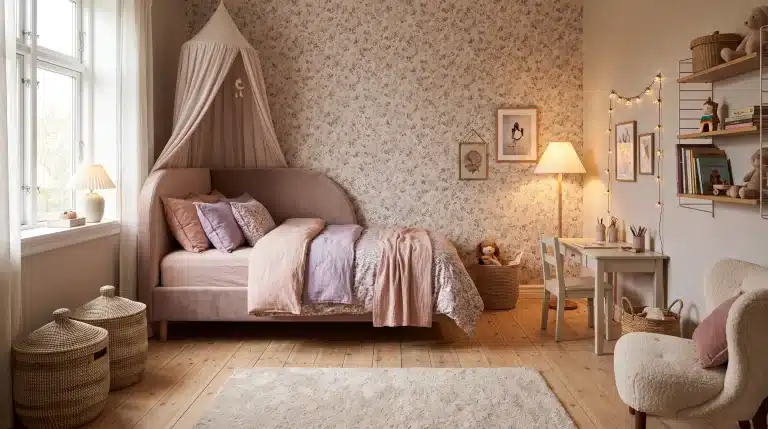
For quieter play, create a small corner with a chair, floor cushion, or low canopy that preserves adult sightlines. Keep books within reach, preferably with some covers facing outward. The change in scale helps this area feel distinct without isolating it.
Use Lighting to Support Different Activities
One ceiling fixture rarely serves every part of a playroom. Drawing and building need clear, even light. Reading benefits from a light source close to the page. Pretend play may feel more inviting under softer ambient light.
Research on early childhood interiors recommends considering color, form, and light together, with lighting shaped around the activities taking place. At home, that might mean positioning the worktable near a window, adding a shaded task lamp, and controlling glare with a blind or curtain.
Choose stable fittings, keep cords out of reach, and avoid placing delicate lamps in active routes. Layered lighting keeps the room useful on dark mornings and late afternoons.
Let the Room Change Gradually
Children’s interests change faster than most decorating budgets. Build the room around durable foundations, then let smaller details carry the current fascination.
Use artwork, removable displays, cushions, and storage labels for easy updates. Make space to exhibit children’s work, then refresh it regularly so the display still feels noticed rather than becoming a visual background.
Every few months, remove broken items, reunite loose pieces with their sets, and notice what is no longer used. A functional playroom evolves through subtraction as often as addition.
Conclusion
A calm playroom isn’t one where nothing is out of place. It is a room where children can find what they need, begin without constant adult help, and restore a reasonable level of order when play ends.
Start with real habits. Keep the layout legible, the storage accessible, and the zones flexible. Most importantly, leave something unresolved: an empty stretch of floor, a basket of materials without instructions, or a table ready for the next idea. Creativity needs support, but it also needs room to surprise you.
References
Dauch, C., Imwalle, M., Ocasio, B., & Metz, A. E. (2018). The influence of the number of toys in the environment on toddlers’ play. Infant Behavior and Development, 50, 78–87.
Read, M. A. (2023). Color, form, and light: Recommendations for design of ECE classrooms based on group structure and activity type. Creative Education, 14, 1826–1846.
Sandseter, E. B. H., Storli, R., & Sando, O. J. (2022). The relationship between indoor environments and children’s play: Confined spaces and materials. Education 3–13, 50(5), 551–563.
U.S. Consumer Product Safety Commission. (n.d.). Anchor It!
Yogman, M., Garner, A., Hutchinson, J., Hirsh-Pasek, K., Golinkoff, R. M., Committee on Psychosocial Aspects of Child and Family Health, & Council on Communications and Media. (2018). The power of play: A pediatric role in enhancing development in young children. Pediatrics, 142(3), e20182058.