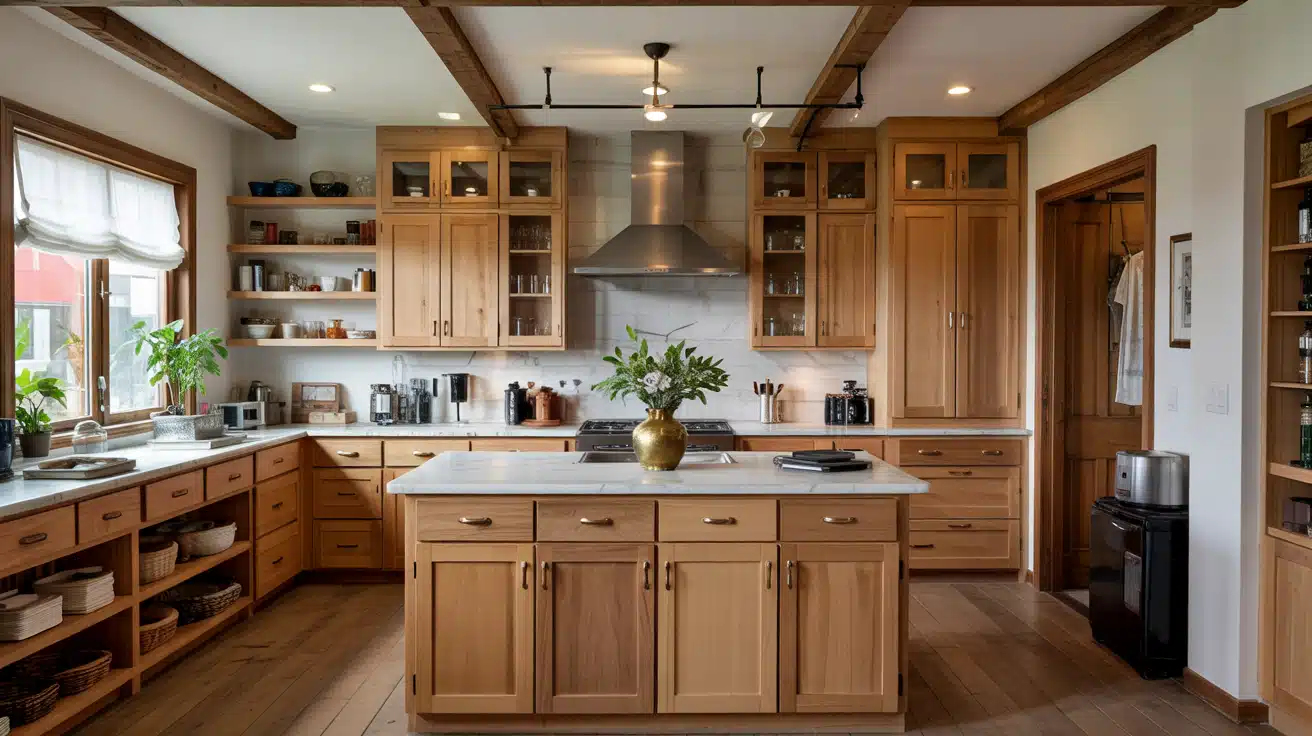
Cabinet Wood Types And Costs: A Detailed Breakdown Guide

Most people walk into a kitchen showroom and completely freeze.
The wood samples all look beautiful. But the price tags? That’s where things get confusing fast.
The truth is, not all cabinet wood types and costs are the same. Some woods hold up for decades without much care. Others look great at first but wear down sooner than expected.
And the difference between a smart choice and a costly regret? It usually comes down to knowing what you’re actually paying for.
Before you spend a single dollar, here’s what every homeowner should understand about picking the right wood for their kitchen.
Why Wood Type Matters for Kitchen Cabinets?
The wood you choose for your kitchen cabinets affects both function and style in your home.
Hardwoods like oak and maple resist daily wear better than softer options. They handle moisture from cooking and cleaning without warping easily.
Different wood grains create distinct looks. Cherry offers rich, warm tones, while ash provides light, modern appeal.
Durability varies significantly between wood types, with some lasting decades longer than others. Cost also differs greatly, as premium woods like walnut cost more than budget-friendly pine.
The wood’s natural properties determine how well it takes stain and paint.
Your choice affects maintenance needs: some require regular care, while others stay beautiful with minimal upkeep. Smart wood selection ensures your cabinets match your lifestyle and budget.
Common Cabinet Wood Types and Costs
Each wood species offers unique characteristics, costs, and benefits for kitchen cabinets. Here are 15 popular wood types with their key features and pricing to help guide your selection.
1. Oak

Strong hardwood with prominent grain patterns. White oak resists moisture better than red oak. Traditional choice for cabinets.
Takes stain well and provides excellent durability. Features include open grain that creates distinctive texture and character.
Cost: $3-8 per square foot
2. Maple

Dense hardwood with tight, even grain. Hard maple offers superior strength while soft maple provides easier workability.
A smooth surface is ideal for painted finishes. Light color ranges from creamy white to pale yellow with minimal visible grain.
Cost: $4-10 per square foot
3. Cherry

Premium hardwood that darkens naturally over time from light pink to rich reddish-brown. Fine, smooth grain with occasional small knots.
Highly valued for formal cabinetry. Relatively soft compared to oak and maple, requiring careful handling.
Cost: $6-12 per square foot
4. Walnut

Luxury hardwood featuring rich chocolate-brown heartwood with lighter sapwood. Straight grain with occasional waves creates incredible visual appeal.
Black walnut offers the finest quality. Prized for high-end furniture and cabinets due to natural beauty and workability.
Cost: $8-15 per square foot
5. Hickory

Extremely hard wood known for exceptional strength and durability. Bold grain patterns with significant color variation from light sapwood to dark heartwood.
Creates rustic, country-style appearance. Resists dents and damage better than most cabinet woods.
Cost: $5-9 per square foot
6. Ash

Light-colored hardwood with straight, prominent grain similar to oak. Strong and flexible with good shock resistance. Ranges from white to light brown.
Takes stain and paint well. Popular for modern kitchen designs seeking a clean, linear appearance.
Cost: $4-8 per square foot
7. Birch

Fine-grained hardwood with smooth, even texture. Yellow birch offers warm golden tones while paper birch remains lighter.
Similar appearance to maple at a lower cost. Good paint base with moderate durability for budget-conscious projects.
Cost: $3-7 per square foot
8. Pine

Softwood with visible knots and resin channels. Knotty pine creates rustic charm while clear pine offers a smoother appearance.
Prone to dents and scratches. Requires careful handling but provides an affordable option for casual kitchen styles.
Cost: $2-5 per square foot
9. Alder

Medium-density hardwood with minimal grain patterns and smooth texture. Light reddish-brown color takes stain evenly.
Often used to mimic more expensive woods like cherry. Excellent choice for painted cabinets due to uniform surface.
Cost: $4-8 per square foot
10. Poplar

Light hardwood with occasional green or purple mineral streaks. Straight grain with fine texture. Excellent paint base as grain remains hidden under the finish.
A less expensive alternative to premium hardwoods, while offering good structural integrity.
Cost: $3-6 per square foot
11. Mahogany

Tropical hardwood with rich reddish-brown color and straight grain. African mahogany provides a similar appearance at a lower cost than genuine mahogany.
Creates a formal, traditional look. Requires protection from moisture due to tropical wood characteristics.
Cost: $8-14 per square foot
12. Bamboo

Fast-growing grass is processed into wood-like material. Light color with distinctive linear grain patterns from compressed bamboo strips.
Harder than many traditional hardwoods. Eco-friendly choice, but can chip at edges, requiring careful edge treatment.
Cost: $4-9 per square foot
13. Cedar

Aromatic softwood with natural insect and moisture resistance. Red cedar offers rich color while white cedar remains lighter.
Contains natural oils that provide protection. Requires sealing for kitchen use due to softness and potential oil bleeding.
Cost: $5-10 per square foot
14. Beech

European hardwood with fine, even grain and light pinkish-brown color. Similar hardness and workability to maple. Smooth texture accepts paint and stain well.
Less common in North American markets but offers excellent performance characteristics.
Cost: $4-8 per square foot
15. Teak

Premium tropical hardwood with natural oils providing superior moisture and insect resistance. Golden-brown color with straight grain and smooth texture.
Extremely durable and stable. Considered the ultimate luxury wood for high-end applications requiring maximum longevity.
Cost: $10-20 per square foot
These wood options provide choices for every budget and style preference. Consider durability, appearance, and cost when selecting the best wood type for your kitchen cabinets.
Cabinet Wood Types and Costs Comparison
Understanding wood costs by budget range helps you find the right balance between quality and price. This comparison breaks down popular cabinet woods into three price categories for easier decision-making.
| Budget Range | Wood Type | Cost per Sq Ft | Key Features |
|---|---|---|---|
| Low-Range ($2-6) |
Pine | $2-5 | Most affordable, softwood, dents easily, rustic charm |
| Birch | $3-7 | Better durability, fine grain, resembles maple | |
| Poplar | $3-6 | Excellent for paint, light hardwood, smooth finish | |
| Mid-Range ($4-10) |
Oak | $3-8 | Classic appeal, strong hardwood, prominent grain |
| Maple | $4-10 | Tight grain, modern designs, superior strength | |
| Hickory | $5-9 | Exceptional durability, resists dents, bold grain | |
| Ash | $4-8 | Light color, straight grain, contemporary appeal | |
| High-Range ($8-20) |
Cherry | $6-12 | Darkens over time, premium hardwood, formal appeal |
| Walnut | $8-15 | Luxury chocolate-brown, stunning visual impact | |
| Mahogany | $8-14 | Rich reddish-brown, formal, traditional look | |
| Teak | $10-20 | Ultimate luxury, natural oils, maximum longevity |
This budget breakdown shows clear options for every price range. Choose based on your budget limits while considering long-term durability and style preferences for your kitchen.
What Are the Factors Affecting Cabinet Costs?
Cabinet costs depend on several factors that directly affect your total budget. Knowing these helps you plan better and avoid unnecessary expenses.
- Wood Species and Quality: Premium woods like walnut cost more, while pine and poplar are budget-friendly options.
- Cabinet Construction: Solid wood is the most durable and expensive, while plywood and particleboard reduce costs.
- Kitchen Size and Layout: Larger kitchens and custom layouts require more materials and labor.
- Hardware and Finishes: Soft-close hinges, premium handles, and specialty finishes increase pricing.
- Installation Complexity: Custom fitting, cabinet removal, and electrical work add to labor costs.
- Location and Market Rates: Material and labor costs are usually higher in urban areas.
Cost-Saving Tips Without Compromising Quality
Smart planning and strategic choices can significantly reduce your cabinet costs while maintaining durability and appearance.
These proven methods help you save money without sacrificing the quality you want.
- Choose Mid-Range Woods: Oak, maple, and hickory offer durability at 30–50% lower cost than walnut or cherry.
- Mix Materials: Use solid wood doors with plywood boxes to cut costs by 20–30%.
- Pick Standard Designs: Standard sizes and simple styles can lower costs by 15–25%.
- Buy During Sales: Off-season and clearance deals may save 10–20% on materials and hardware.
- Go Semi-Custom: Semi-custom cabinets cost 25–40% less than fully custom options.
- DIY Simple Tasks: Removing old cabinets or installing hardware yourself can save $50–100 per linear foot.
These cost-saving strategies can reduce your total cabinet expense by 15-40% while preserving quality and style. Apply multiple tips together for maximum savings on your kitchen project.
Conclusion
Choosing the right cabinet wood balances cost, durability, and style. Whether opting for affordable birch or luxury walnut, knowing each wood’s characteristics helps avoid costly errors.
Hardwoods like maple and oak offer long-term benefits with their excellent resistance to wear. Using strategic construction techniques and hardware can lower total costs by 15-40%.
Timing purchases during sales and combining solid wood doors with plywood frames helps maintain quality while keeping expenses in check.
Since kitchen cabinets are a key investment that will impact daily life for years, consider your cooking habits, maintenance needs, and style preferences before making a decision.
Frequently Asked Questions
What Is the 1 3 Rule for Cabinets?
The 1/3 rule in cabinet design is an interior design guideline stating that a cabinet pull or handle should be approximately one-third the width of a drawer or one-third the height of a cabinet door.
Is Plywood or MDF Better for Cabinets?
For interior and exterior strength, plywood is the best. However, this does not rule out MDF. MDF is the best for painted door panels.
What Kitchen Cabinet Is Outdated?
Avoid outdated cabinet shades like navy, cherry wood, mustard yellow, and country red. These colors once felt warm or luxurious but now make kitchens look dated or overly themed.