
How to Set Up a Functional Laundry Room (Without Wasting Space)

Most homeowners spend time in the laundry room every week, yet it is often one of the least planned spaces in the house. A poorly organized laundry area can turn a routine chore into a frustrating process filled with clutter, unnecessary steps, and wasted time.
The good news is that creating a functional laundry room does not require a major renovation. Whether you have a dedicated room, a shared utility space, or a compact laundry closet, thoughtful planning can dramatically improve efficiency and organization.
A well-designed laundry room supports the way you actually do laundry. It minimizes unnecessary movement, keeps supplies within reach, and creates designated areas for sorting, washing, drying, and folding. Even small improvements can make a noticeable difference in your weekly routine.
This guide covers practical laundry room setup ideas, space-saving storage solutions, layout recommendations, and common mistakes to avoid.
Key Takeaways
- Design your laundry room around your actual laundry routine.
- Create dedicated zones for sorting, washing, and finishing.
- Use vertical storage to maximize available space.
- Include a folding area whenever possible.
- Improve lighting and ventilation for safety and usability.
- Avoid common layout mistakes that reduce efficiency.
- Smart upgrades can make laundry day easier without increasing square footage.
Start With Your Laundry Routine
Before purchasing shelving or storage containers, take a close look at how laundry moves through your home.
Ask yourself:
- Where do dirty clothes accumulate?
- How are they sorted?
- Where do you fold clean laundry?
- Do you regularly iron or air-dry clothing?
- Where do clothes go after they leave the laundry room?
Your answers will reveal where delays, clutter, and inefficiencies occur.
For example, one homeowner struggled with baskets of clean laundry constantly piling up in bedrooms. The issue was not a lack of storage. The problem was the absence of a folding surface near the washer and dryer. Adding a simple countertop above front-load machines eliminated the need to carry laundry throughout the house before folding it.
The most effective laundry rooms are designed around habits rather than trends.
Plan Your Laundry Room Around Three Functional Zones
A well-organized laundry room typically includes three primary work zones:
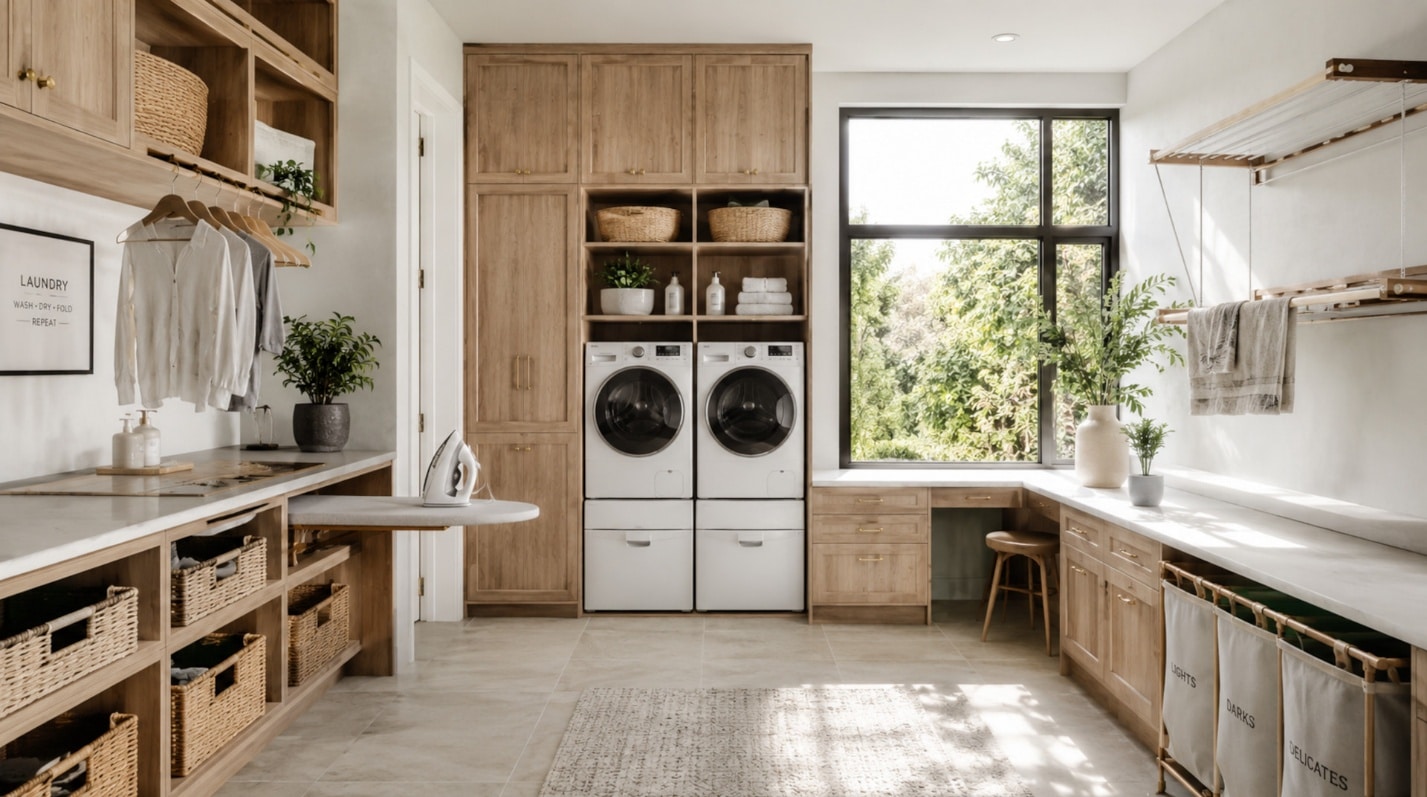
1. Sorting Zone
This is where dirty laundry enters the room.
Useful additions include:
- Multi-compartment hampers
- Pull-out sorting bins
- Wall-mounted laundry bags
- Labeled baskets for family members
The goal is to separate clothing before wash day and prevent piles from accumulating on the floor.
2. Washing and Drying Zone
The washer and dryer are the center of the room.
To improve efficiency:
- Install a countertop above front-load machines.
- Leave adequate clearance around appliances.
- Keep detergents and stain removers within reach.
- Ensure proper venting and drainage.
If space is limited, stacked washer-dryer units can free up valuable floor area for storage or folding space.
Regular maintenance is just as important as proper installation. If you notice unusual noises, excessive vibration, leaking, or longer drying times, addressing the issue early can help prevent more expensive repairs. For problems that require professional diagnosis, Appliance EMT can help restore your washer or dryer before minor issues become major breakdowns.
3. Finishing Zone
The finishing zone is where clean laundry is folded, hung, or prepared for storage.
Helpful features include:
- Countertops or fold-down tables
- Hanging rods
- Wall hooks
- Ironing stations
- Storage for hangers and garment care products
Even a small finishing area can significantly reduce household clutter.
Laundry Room Dimensions and Space Planning
Understanding basic space requirements can help you avoid layout problems.
| Feature | Recommended Space |
|---|---|
| Walkway clearance | 30–36 inches |
| Folding counter depth | 24–30 inches |
| Front-load washer access | 36–42 inches |
| Hanging rod height | 66–72 inches |
| Upper shelf reach zone | Below 72 inches |
These measurements help ensure the room remains comfortable and functional during daily use.
Maximize Storage Without Creating Clutter
Storage should support your workflow rather than overwhelm it.
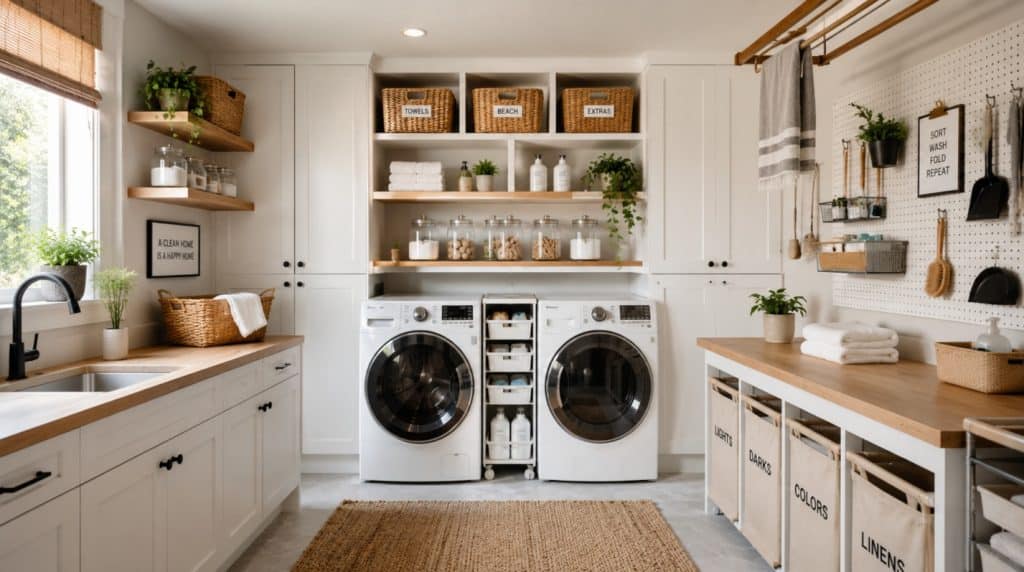
Use Vertical Space
Walls often provide the greatest storage opportunity in a laundry room.
Consider:
- Open shelving
- Upper cabinets
- Floating shelves
- Wall-mounted drying racks
- Pegboard organization systems
Take Advantage of Narrow Gaps
Small spaces between appliances and walls can be surprisingly useful.
Solutions include:
- Slim rolling carts
- Pull-out organizers
- Vertical broom storage
- Corner shelving systems
The most successful laundry rooms focus on accessible storage rather than simply adding more storage.
Common Laundry Room Mistakes to Avoid
Many laundry room frustrations can be traced back to a few common design mistakes.
Skipping a Folding Area
Without a dedicated folding surface, clean laundry often ends up on beds, sofas, or dining tables.
Blocking Appliance Access
Washer and dryer maintenance requires access to hoses, vents, and electrical connections.
Installing Shelves Too High
Frequently used supplies should be easy to reach without a step stool.
Ignoring Ventilation
Poor airflow can lead to moisture buildup, odors, and mold growth.
Relying on Decorative Storage Alone
Storage solutions should prioritize convenience and accessibility over appearance.
Smart Laundry Room Upgrades Worth Considering
Modern technology can improve convenience without requiring major renovations.
Popular upgrades include:
- Leak detection sensors
- Motion-sensor lighting
- Smart plugs
- Energy monitoring devices
- Automatic shut-off valves
- Wi-Fi-enabled washers and dryers
These additions can improve safety, reduce energy consumption, and provide greater peace of mind.
Lighting and Ventilation Matter More Than Most People Think
Good lighting makes it easier to identify stains, read care labels, and sort clothing accurately.
If possible, combine overhead lighting with task lighting above folding and work surfaces.
Proper ventilation is equally important.
Make sure:
- Dryer vents exhaust outdoors
- Vent ducts remain clean and unobstructed
- Humidity is controlled
- Air circulation is adequate
Good ventilation benefits more than just your laundry room. Improving airflow throughout the home can help manage moisture, reduce stale air, and create a more comfortable living environment. Homeowners interested in broader ventilation strategies may find useful ideas in this guide on how to turn your home into a natural ventilation system.
Environmental conditions can also affect how a laundry room performs. In humid climates, moisture control becomes especially important to prevent mold growth behind appliances and along walls.
Frequently Asked Questions
What is the most important feature in a functional laundry room?
The most important feature is a layout that supports your laundry routine. A well-designed laundry room should make it easy to sort, wash, dry, fold, and store clothing without unnecessary movement or clutter. Even simple additions like a folding counter or designated sorting area can significantly improve efficiency.
How can I make a small laundry room more functional?
Focus on maximizing vertical space and choosing multi-purpose features. Wall-mounted shelves, stacked washer-dryer units, fold-down drying racks, and slim rolling carts can help increase storage without taking up valuable floor space.
How much storage should a laundry room have?
The ideal amount of storage depends on your household’s needs. At a minimum, there should be space for detergent, cleaning supplies, laundry baskets, and garment-care items. Using cabinets, shelves, and storage bins can help keep frequently used items organized and accessible.
Is it better to have open shelves or closed cabinets in a laundry room?
Both options have advantages. Open shelves make supplies easy to access and can create a more open feel, while closed cabinets help conceal clutter and protect items from dust. Many homeowners find that combining both provides the best balance of functionality and appearance.
What type of lighting works best in a laundry room?
Bright, even lighting is ideal. A combination of overhead lighting and task lighting above folding or work surfaces can improve visibility when sorting clothes, treating stains, or reading garment care labels.
Why is ventilation important in a laundry room?
Proper ventilation helps control humidity, prevent mold growth, reduce odors, and improve indoor air quality. It also supports dryer performance by allowing moist air to exit the home efficiently.
Are smart upgrades worth adding to a laundry room?
Smart features such as leak detectors, automatic shut-off valves, motion-sensor lighting, and energy-monitoring devices can improve safety, convenience, and efficiency. Many of these upgrades are relatively affordable and easy to install.
How often should laundry appliances be maintained?
Clean the dryer lint filter after every load and inspect dryer vents regularly for buildup. Washers should be cleaned according to the manufacturer’s recommendations, and any unusual noises, leaks, or performance issues should be addressed promptly to help prevent larger repairs.
Building a Laundry Room That Works for You
A functional laundry room does not need to be large or expensive. The most effective spaces are designed around everyday habits and organized to support a simple workflow.
By creating dedicated sorting, washing, and finishing zones, maximizing vertical storage, improving lighting and ventilation, and avoiding common design mistakes, you can transform even a small laundry area into a more efficient and enjoyable space.
When every element serves a purpose, laundry becomes easier to manage, clutter stays under control, and the room works for you instead of against you.