How to Choose the Right Glazing for Roof Windows to Prevent Winter Heat Loss

Windows and roof lights lose heat on account of conduction through solid materials, convection through air movement, and radiation when warmth goes out through glass. Roof windows are affected by all three at the same time, and if you make a bad choice regarding the glazing, your heating will be on all night long throughout the winter. The Department of Energy in the US reports that heat is lost and gained through windows at the rate of 25% to 30% of building heating and cooling energy usage. Roof-mounted glazing, which is exposed to the coldest air above, tends to be at the top of that level.
Read the Whole-Product U-Value, Not Just the Glass Rating
Manufacturers like to advertise “center-of-glass” U-values because they are the lowest. One glazing unit can look impressive in an R&D lab while the unit it’s installed in, including the spacers, the frame, and an inch of the glazing edge, loses heat exponentially. What you want is the whole-unit U-value, an average that takes in the whole assembly.
For a cold-altitude roof window, the whole-unit U-value should be less than 1.2. Triple-glazing with gas fills frequently comes in the region of 0.7 – 0.9. Double-glazing with basic air fills might be over 1.8. Not too bad, you’d think, until you’re standing under it in January and feel your scalp freezing.
When you’re shopping, make your supplier provide the certified whole-product number, not just the glass. If they can’t, reconsider.
How Low-E Coatings and Gas Fills Work Together
Low-emissivity glass contains an almost invisible metal oxide layer that essentially provides radiant heat reflection back to the interior of your space. The coat acts to bounce the infrared energy, or the heat you and your radiator give off, back into the room instead of letting it escape through the window. It is invisible, does not meaningfully restrict daylight, and has a significant impact on the thermal performance of the window unit.
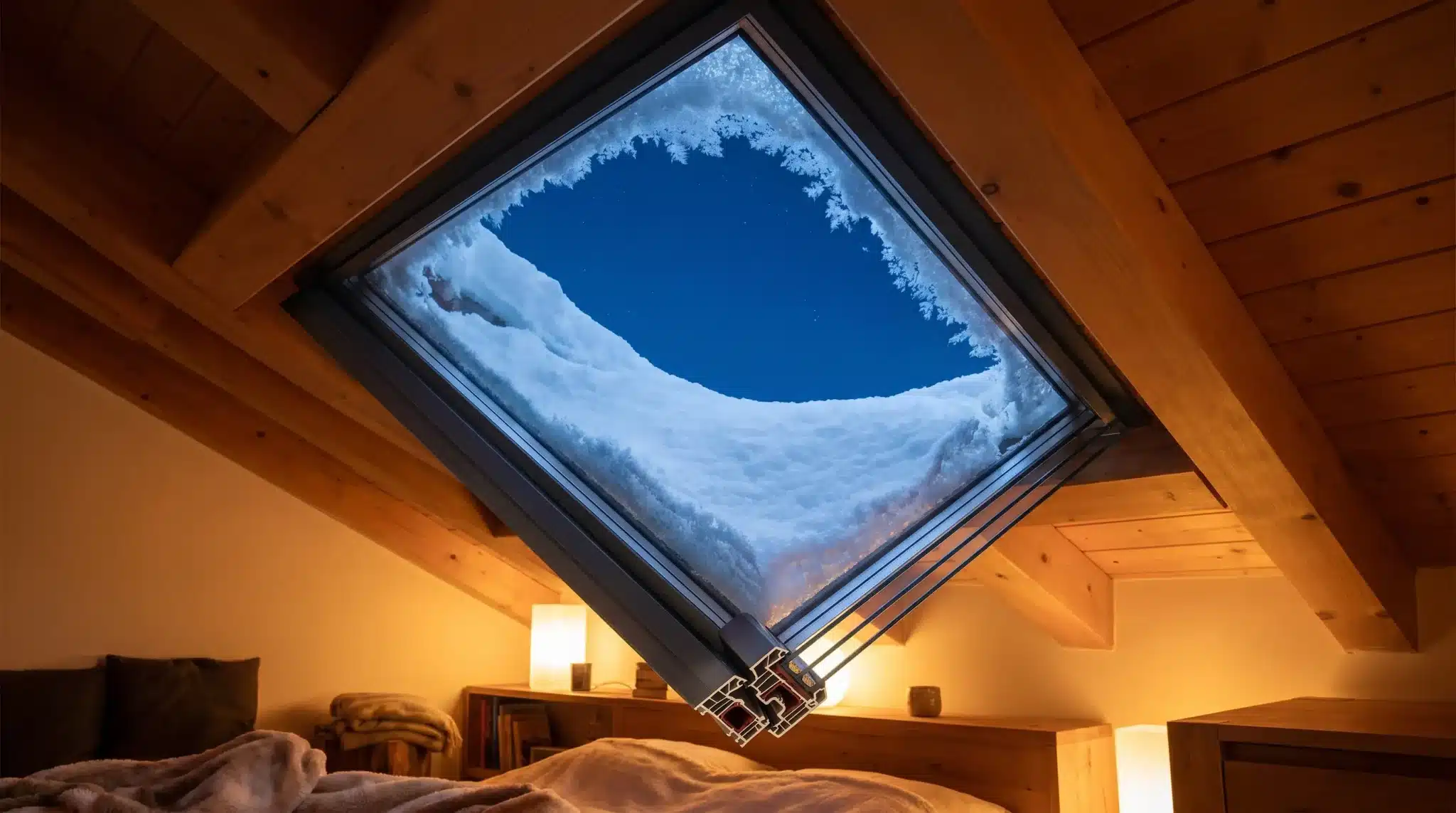
Gas filling performs a different role. Instead of air in the cavity between panes, argon or krypton is used. These gasses are denser and have a lower conductivity, achieved in part because they also move more slowly. Krypton is marginally more thermally efficient than argon, especially in narrower cavities, but essentially, it just costs more to use. Investing in certified, high-performance systems like Sunsquare skylights ensures the glazing, warm-edge spacer bars, and thermally broken frames are engineered to work together, the coating preventing radiation, the gas stopping convection.
Also, check the Visible Light Transmittance of the glass. An overly heavy coating can reduce the amount of daylight entering your room. For a roof window, where daylighting is often the primary reason you’re installing it, you want to balance thermal performance with a VLT of over 60%.
Triple Glazing: The Weight Problem Nobody Mentions
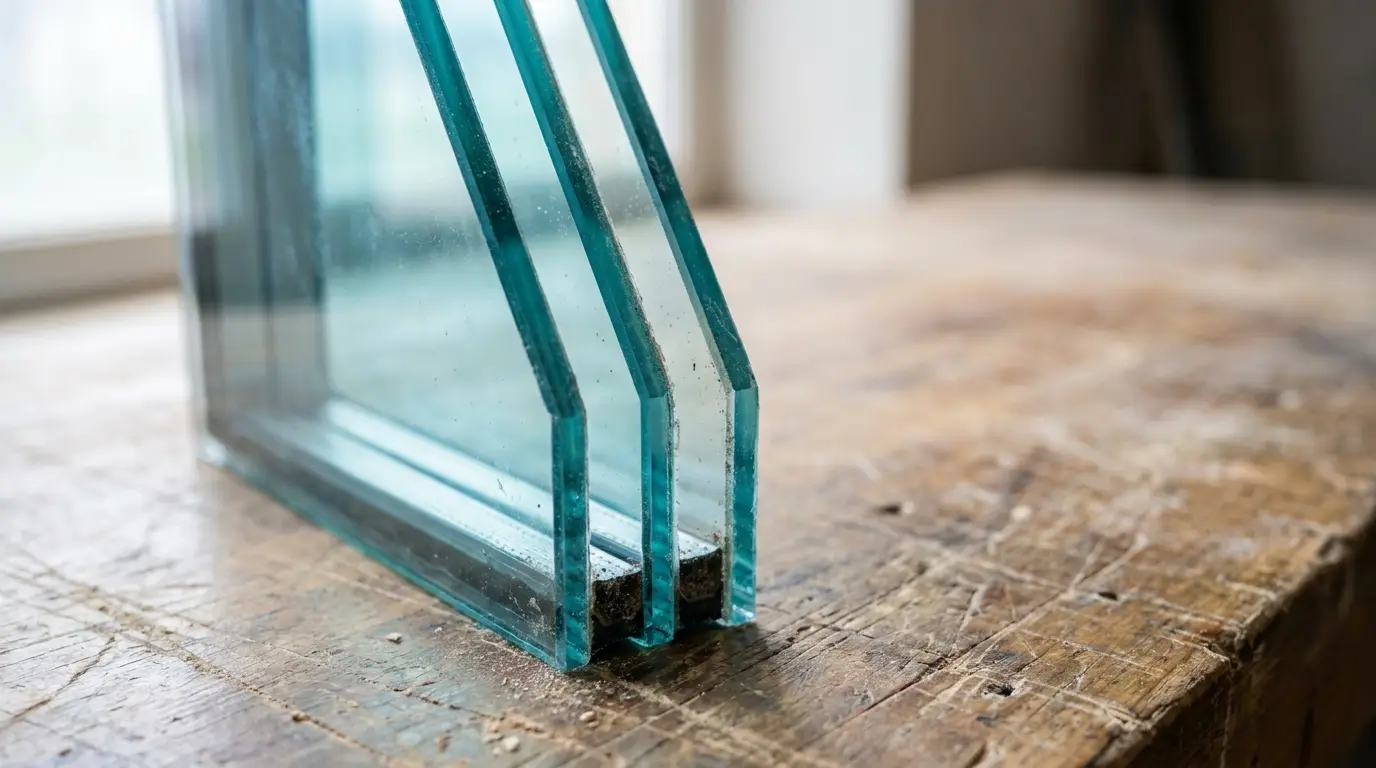
Adding a third pane and a second gas-filled cavity, which is roughly what a triple glaze window does, can cut the U-value by 30% to 40% compared to the equivalent double glaze. On paper, that seems worth having. In reality, the benefits are less dramatic, as much of the roof window’s frame won’t be covered in glazing anyway.
Triple glazing is not magic, remember. And if you can get a double-glazed roof window that returns a U-value of 1.0W/m2k, which is roughly where the best ones are at, would a U-value of 0.7W/m2k provided by a triple-glazed unit really make that much difference in practice?
Perhaps, but still, if it were really such a no-brainer as the window companies frequently suggest, you would think that double-glazing would already be as rare on a roof as it now is on a wall.
The biggest drawback with triple glazing, in this case, is not what it does to the energy efficiency of the window, but what it does to the weight of the unit.
Frames and Thermal Breaks: Where Budgets Go Wrong
Choosing high-performance glass then fitting it in an uninsulated aluminum frame is one of the most common and costly mistakes in roof window specification. Aluminum conducts heat efficiently, that’s a liability in a frame. Without a thermal break, the metal becomes a direct pathway for heat to escape from the warm interior to the cold exterior, bypassing the glazing entirely.
Thermally broken frames solve this by inserting a low-conductivity polyamide strip through the frame profile, breaking the conductive path. Warm-edge spacer bars do the same job at the glass edge, replacing old aluminum spacers with materials like foam-filled steel or polymer composites to eliminate the cold strip around the perimeter of the pane. That cold strip is where condensation typically forms first, and persistent condensation signals ongoing heat loss.
The Safety Case for Laminated Inner Panes
Overhead installation of roof glazing means that falling glass poses a direct danger to those below. If the inner pane fails for any reason, below-freezing winter temperatures, a leaking crack from installation stress, impact by building maintenance equipment, or thermal stress from all-over sun on a part-curtained window, fragments falling into the room below can be a severe hazard if occupants are present.
It also blocks most UV radiation, which matters if the room beneath gets direct sun through the roof light and contains furniture, flooring, or artwork that fades.
Specify laminated inner glass for any roof window, regardless of the glazing tier. It’s not an upgrade, it’s a baseline requirement for overhead installation.
Getting the glazing right means reading past the headline numbers and checking how every component in the assembly performs together. That’s where the real winter performance comes from.