4 Reasons Walk-In Showers Keep Replacing Bathtubs

Walk into any newly listed home and there’s a decent chance the tub is gone. Not always, but often enough that it’s starting to feel like the norm. A few years ago this was mostly an empty-nester move. Now it’s everyone, including thirty-somethings who say they “just don’t bathe.”
Which, fair enough.
The shift didn’t happen overnight. It’s tied into a larger bathroom trend shift toward wellness-focused, low-maintenance spaces. And the demand for conversions has gotten big enough that the best tub to shower companies now finish a full swap in about a day, which is wild compared to how renovations used to go.
Anyway. Here’s why people keep doing it.
1. Safety, and Not Just for Grandparents
Stepping over a tub wall is awkward. Doing it wet, on a slippery surface, with soap on your feet, is genuinely risky. The CDC bathroom injury data puts roughly 235,000 ER visits each year in the bathroom category, with about 81% caused by falls. That’s not a small number.
A curbless or low-threshold shower removes the most dangerous step. Add a built-in bench and a handheld fixture and the safety upgrade is significant. People often think of this as a senior thing, but really, a pregnant person, a tall person with bad knees, anyone recovering from surgery, they all benefit. It’s just less obviously marketed that way.
2. The Space Looks Bigger
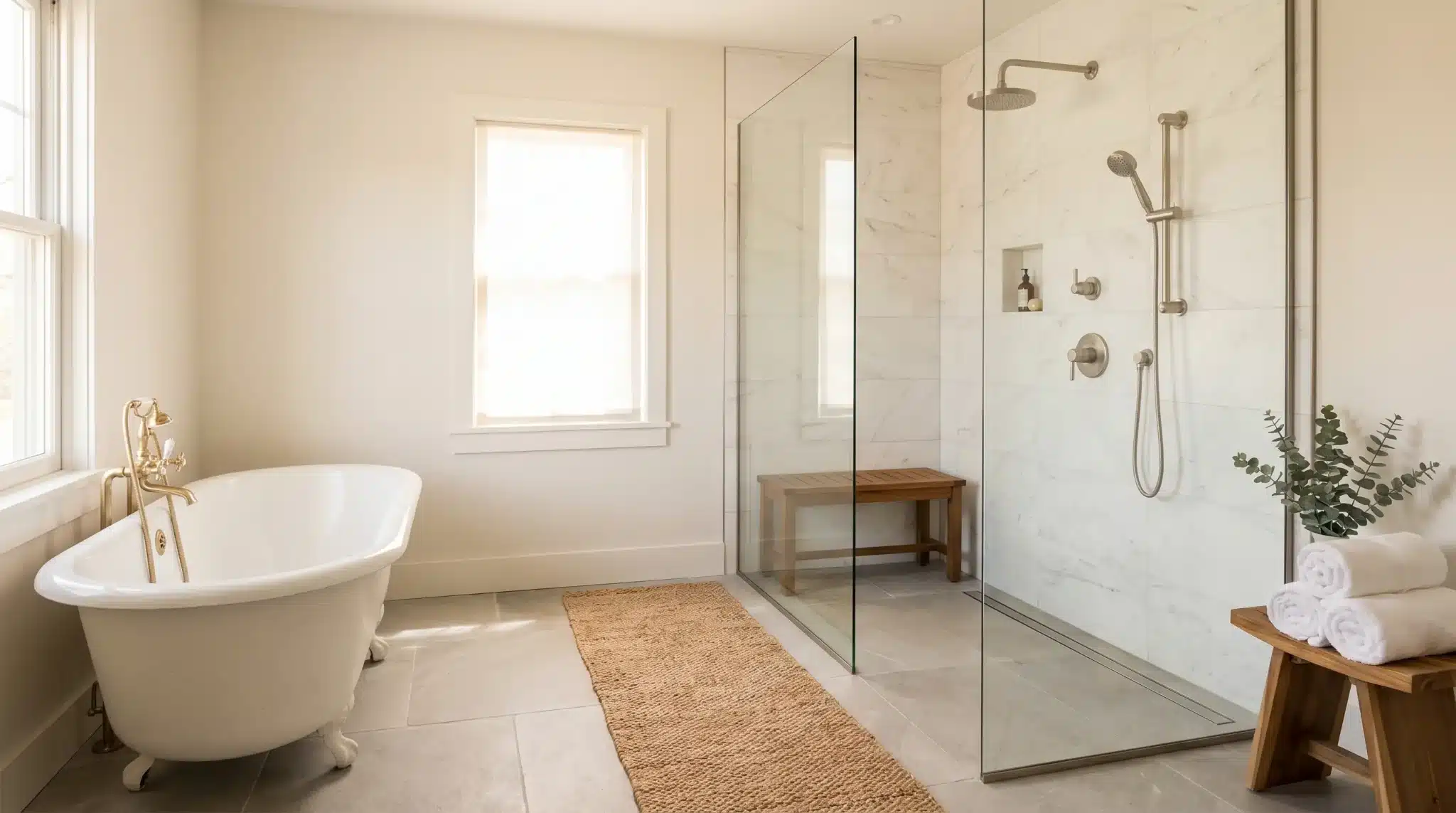
This one’s less intuitive. Removing a bulky tub and replacing it with a glass-enclosed shower can make a small bathroom feel almost twice the size visually. The eye reads the space as continuous instead of broken up by a fat porcelain rectangle.
In theory you lose the tub-as-storage option (kids’ bath toys, etc.). In practice most homeowners who do this say they don’t miss it.
3. Maintenance Is Just… Easier
Grout lines collect mildew. Tubs collect soap scum in that ring around the bottom. Newer shower wall systems, often nonporous acrylic or solid surface panels, wipe down with mild soap. No scrubbing. No bleach pen at midnight before guests arrive.
That alone sells the conversion for a lot of people. Honestly.
4. It Can Support Aging in Place Without Looking Like It
This is where design has caught up. A decade ago, “accessible” bathroom features looked clinical. Now you can have a curbless shower with linear drains, teak benches, and brushed nickel grab bars that pass as towel rails. The aging-in-place remodels NAHB has been highlighting lately lean hard into this. Function, hidden inside something that still photographs well.
Side note, some people argue you should always keep one tub in the house for resale, especially if you have small children. There’s truth to that. Buyers with toddlers do look for tubs. But in a multi-bath home, converting the primary while keeping a tub in the guest bath seems to be the compromise most folks land on.
Is the trend going to reverse? Maybe. Trends do that. For now though, it doesn’t seem to be slowing down.