Bauhaus Interior Design: What It Is and How It Works

Bauhaus interior design focuses on simplicity, functionality, and clean, minimalist living spaces. Instead of filling rooms with unnecessary decoration, the style prioritizes practical furniture, open layouts, and timeless materials that improve everyday living.
Originating in Germany in the early twentieth century, Bauhaus continues to influence modern interiors through its balance of form and purpose.
This article explores the key features of Bauhaus interior design and simple ways to bring the style into different areas of the home.
What Is Bauhaus Interior Design?
Bauhaus interior design is a modern style focused on function, simplicity, and practical living. Founded in Germany in 1919 by architect Walter Gropius, the Bauhaus movement combined art, architecture, and craftsmanship to create spaces that were both useful and visually balanced.
The style is known for clean lines, geometric shapes, open layouts, and functional furniture made from materials like steel, glass, wood, and concrete.
Instead of excessive decoration, Bauhaus interiors prioritize purpose, quality, and timeless design, which is why the style continues to influence modern homes today.
The History Behind Bauhaus Design
The Bauhaus school ran for just fourteen years, from 1919 to 1933. In that short time, it produced ideas that still run through architecture, furniture, and interior design today.
- 1919: Walter Gropius founded the school in Weimar, Germany. He wanted to break the divide between fine art and practical craft. Students learned both theory and hands-on making under the same roof.
- 1925: The school moved to Dessau after political pressure in Weimar. Gropius designed the new Dessau building himself. It used large glass curtain walls, a flat roof, and zero historical ornament. The building was the lesson.
- 1928: Gropius stepped down. Hannes Meyer took over and pushed the school toward social housing and collective design. His argument: good design should serve working people first.
- 1930: Ludwig Mies van der Rohe became the third and final director. He tightened the school’s focus on architecture and formal precision. He is the one behind “less is more.”
- 1933: The Nazi regime shut the school down. Many of its teachers and students left Germany. Gropius and Marcel Breuer both joined Harvard. Mies van der Rohe went to the Illinois Institute of Technology in Chicago. László Moholy-Nagy opened the New Bauhaus in Chicago in 1937.
The diaspora is why the ideas spread so fast. By the 1940s and 1950s, Bauhaus thinking was shaping American architecture schools, European housing projects, and eventually the mass-market furniture that fills homes today.
Core Bauhaus Design Principles
The Bauhaus approach can be traced back to six ideas that worked together rather than in isolation. Form follows function means shape is determined by purpose, not appearance.
Honest use of materials means steel looks like steel, wood looks like wood, and nothing pretends to be something it is not. Geometric simplicity favors circles, squares, and right angles over curves and ornament.
Negative space is used deliberately, so empty space around an object is not wasted but part of the composition. The unity of art and craft holds that a well-made chair has the same value as a painting.
And design for everyone reflects Gropius’s belief that quality design should be accessible, not reserved for the wealthy, which is why industrial production was central to the school’s output.
Key Characteristics of Bauhaus Interior Design
Once you know the principles, the characteristics follow naturally. A Bauhaus room does not look random. Every visible choice connects back to those same ideas.
- Clean, straight lines: Flat surfaces, square edges, plain rectangular doorframes. No carved molding, no scalloped edges, no ornamental trim anywhere.
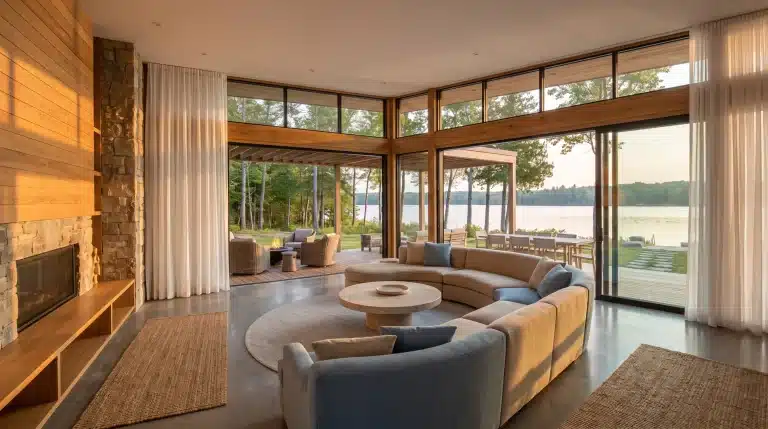
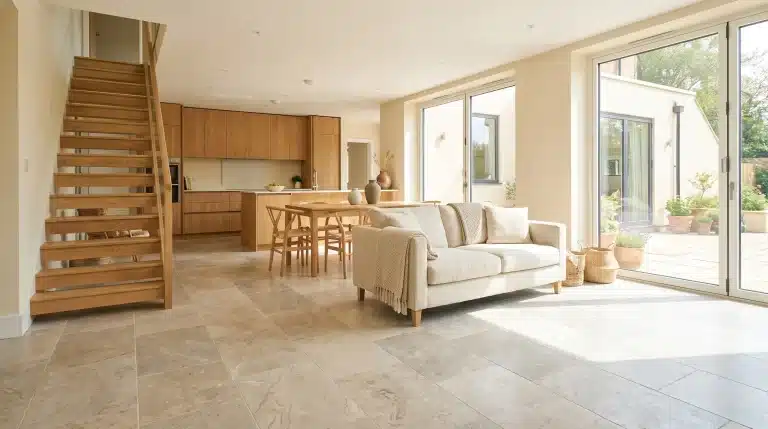
- Open floor plans: Walls exist to support structures, not to unnecessarily divide space. Open layouts let light move through the room and give people room to live without feeling boxed in.
- Asymmetrical arrangements: Unlike classical styles that rely on matched pairs and centered symmetry, Bauhaus rooms often feature one bold object placed intentionally. A single chair in a corner. One print on a wide white wall.
- High ceilings and clear surfaces: Tables, shelves, and countertops are kept free of clutter. Only objects with a function sit on them.
- Minimal decoration: One or two carefully chosen objects. A single vase, a geometric clock, a framed print. The room carries the weight. The objects do not need to.
- Negative space as an active element: Empty space around furniture and objects is treated as part of the design, not as a gap waiting to be filled.
The Bauhaus Color Palette
Color in a Bauhaus interior is not decorative. It is deliberate. Wassily Kandinsky and Paul Klee both taught at the school, and their color theory influenced how Bauhaus designers used color in interiors.
Kandinsky linked colors to geometric forms: yellow to triangles, red to squares, blue to circles. That thinking still shows up in how Bauhaus rooms use primary color as a focal point rather than wallpaper.
| Color Category | Colors | How They Are Used |
|---|---|---|
| Neutral base | White, off-white, light grey, black | Wall color, flooring, and large furniture surfaces |
| Structural accent | Warm beige, natural wood tone | Flooring, shelving, and wooden furniture frames |
| Primary accent | Red, yellow, blue | One item per room: a chair, a lamp, a rug, a cushion |
| Material tone | Chrome silver, concrete grey | Metal fittings, light fixtures, and exposed concrete surfaces |
The rule is simple: start with a neutral base and add one primary color accent. Not two. Not three used equally. One deliberate choice becomes the visual anchor for the room.
How to Apply Bauhaus Interior Design Room by Room
The easiest way to start is with an honest audit. Walk through any room and ask: Does this need to be here? Remove anything that cannot answer that question. What is left is your starting point.
1. Living Room
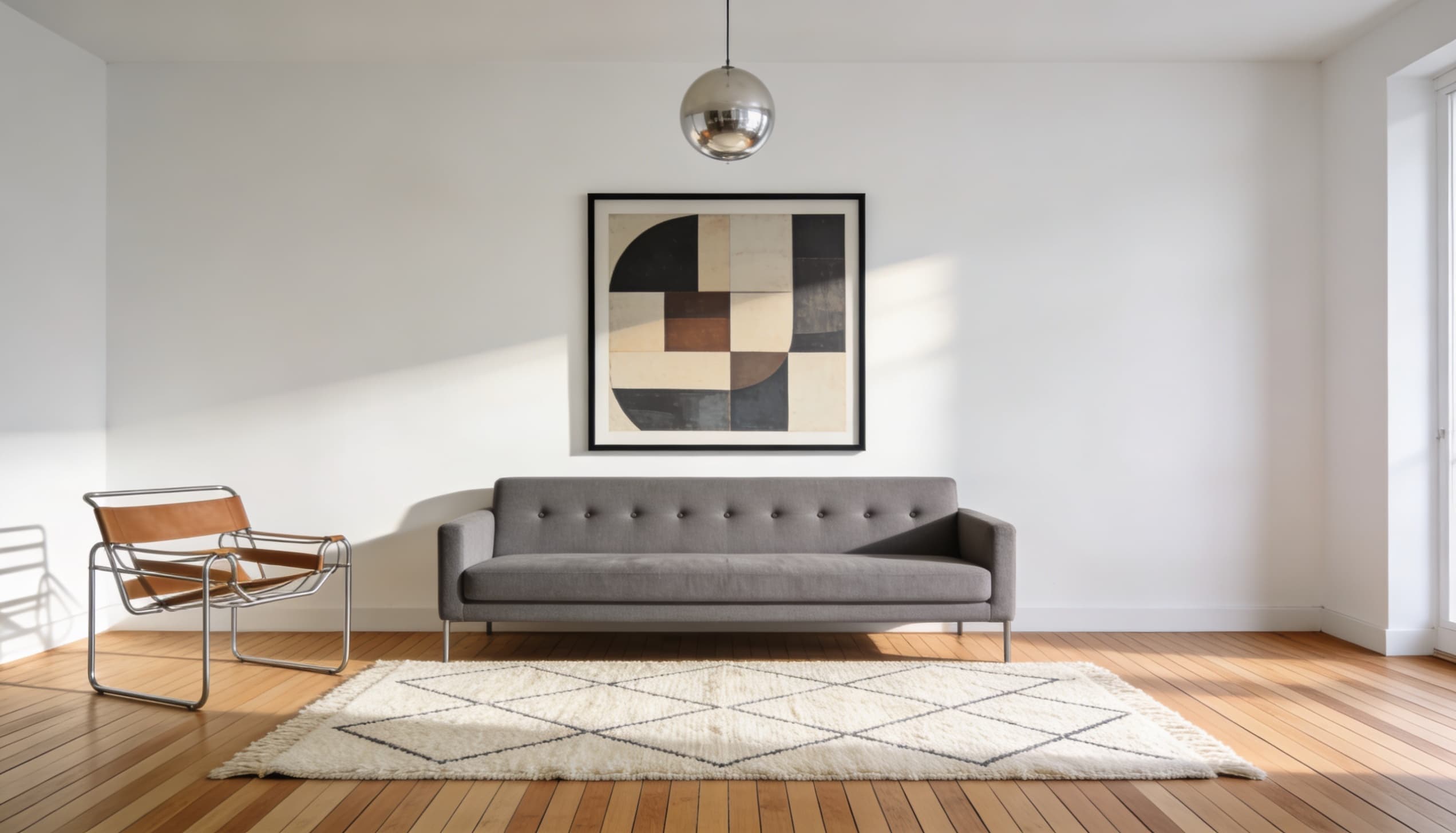
Start with white or light grey walls and keep them bare except for one large piece of geometric or abstract art in a thin black frame.
Choose a sofa in a neutral tone with clean lines, no tufting, and no curved arms. Add one Bauhaus-adjacent piece: a tubular steel side table, a Wassily-style chair, or a Cesca-style dining chair used as an accent.
Anchor the floor with a geometric wool rug in a primary color on a neutral ground. Add one pendant light with a simple globe or hemisphere form in opal glass or chrome. Keep surfaces completely clear.
2. Bedroom
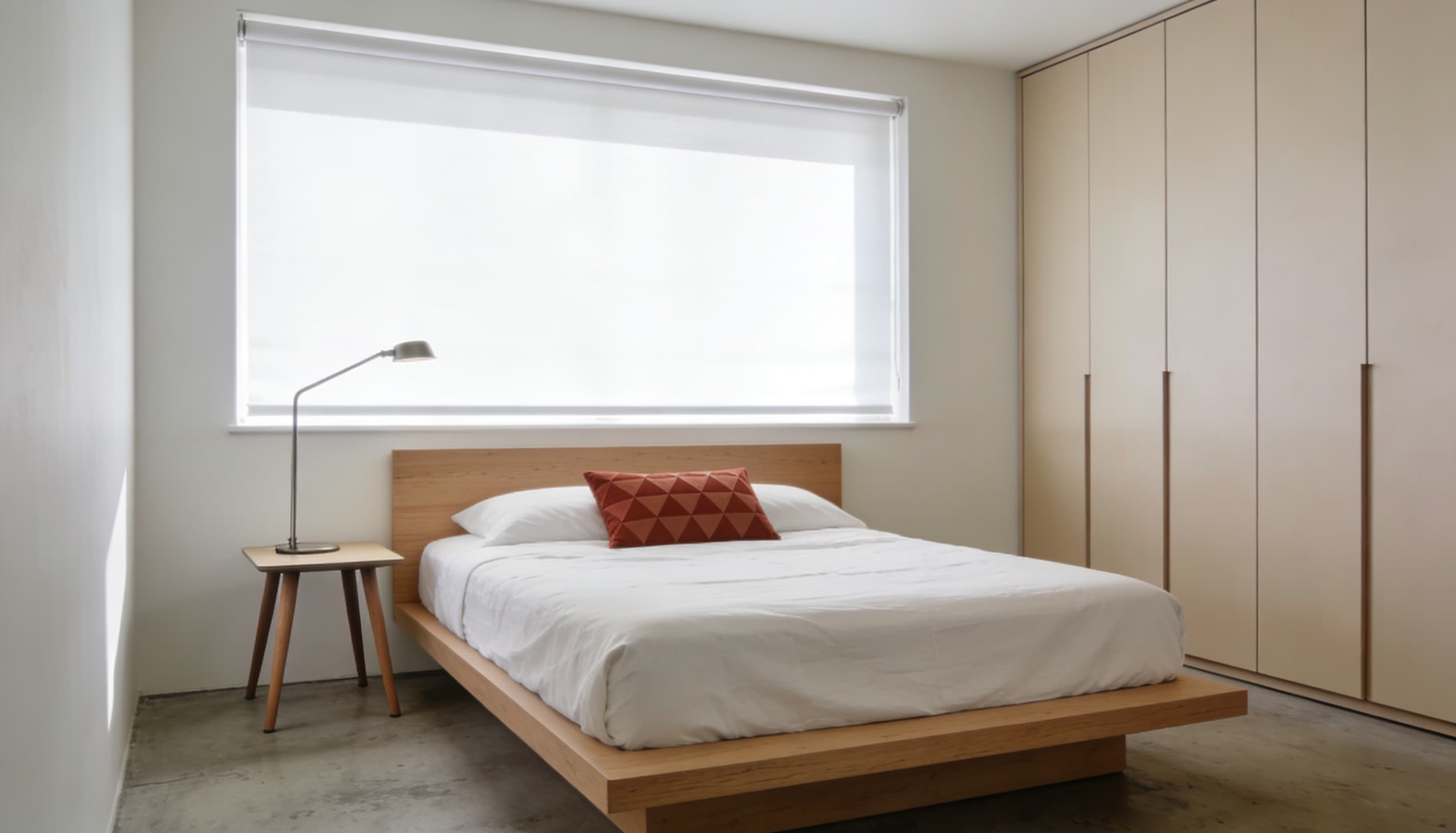
Use a platform bed with a flat, plain headboard. No carved details, no fabric tufting, nothing added for decoration. Side tables should have visible legs and simple flat surfaces.
Replace heavy curtains with plain white or grey roller blinds. For lighting, an articulated steel arm lamp on the bedside table is a classic Bauhaus choice.
Keep bedding in neutral tones of cotton or linen, and add one geometric-print cushion as the only color accent. Built-in wardrobes with flat front doors and bar handles keep storage invisible and surfaces clear.
3. Kitchen
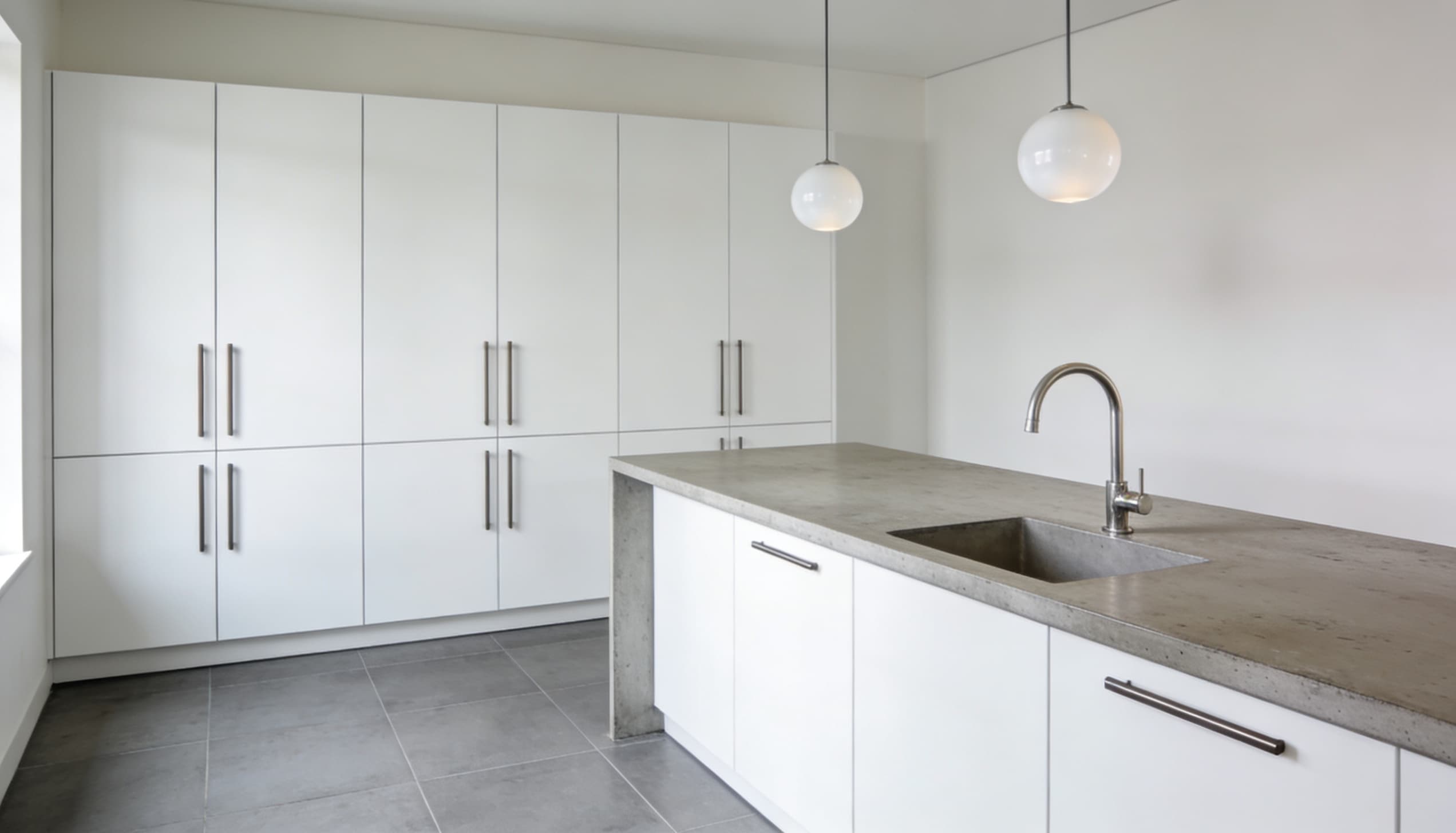
Flat-front cabinet doors are the single most effective change you can make in a kitchen that wants to read as Bauhaus. Pair them with bar handles or push-to-open mechanisms.
Use concrete, stone, or plain white surfaces for countertops. Keep appliances stainless steel where visible and integrated where possible.
Lighting should be recessed on a clean ceiling grid or simple pendant lights over an island. Keep the countertop entirely clear except for objects that get used every day.
4. Bathroom
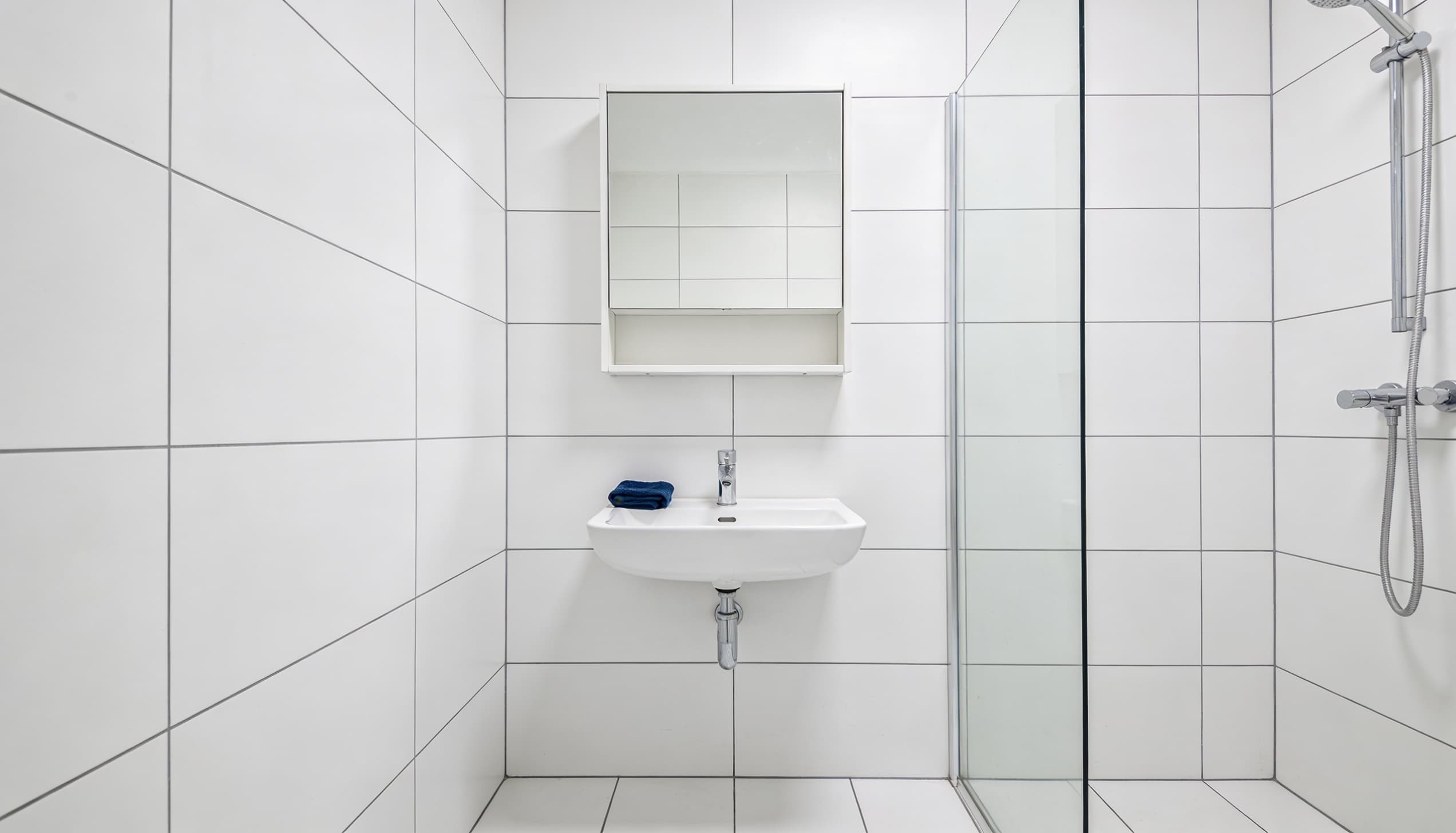
Think concrete, white tile, or plain stone for surfaces. Wall-mounted sinks, frameless glass shower enclosures, and chrome fittings all fit the style.
Add recessed shelving or a flat-front mirror cabinet to keep the vanity clear. Avoid decorative mosaic patterns and ornate tile arrangements.
One primary color accent, such as a towel or a small ceramic object, is enough to keep the space from reading as completely sterile.
5. Home Office
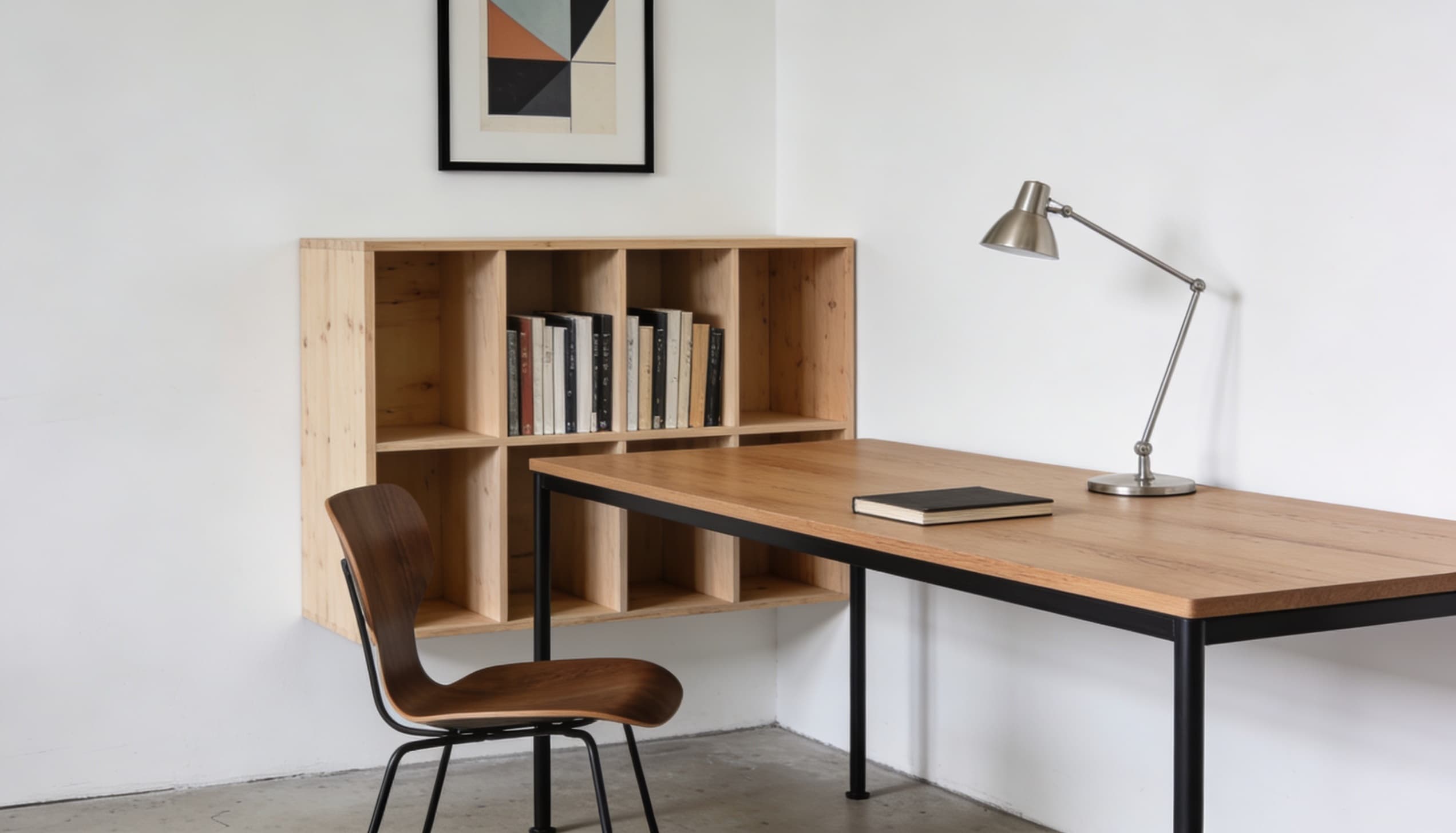
A flat-surface desk with steel legs, kept completely clear except for what gets used that day. An adjustable arm lamp provides a task light without taking up surface space. Prioritize natural light over artificial light wherever possible.
Open modular shelving in unfinished wood or white keeps books and work materials organized without adding visual noise. One abstract print on the wall, framed simply.
Bauhaus vs. Other Interior Design Styles
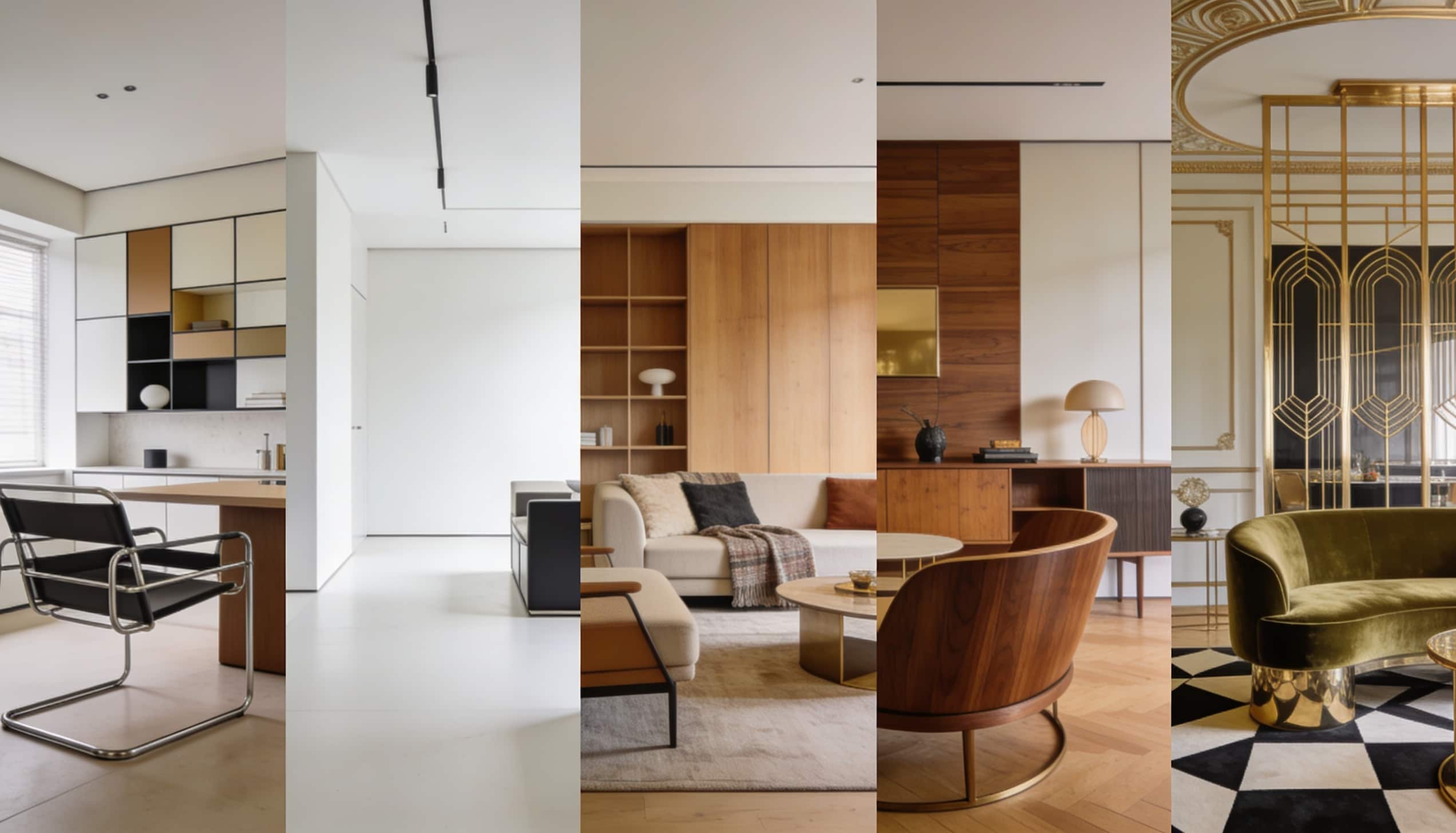
Bauhaus shares surface-level similarities with several modern styles, but the underlying values are often quite different. Knowing where the lines fall helps you make deliberate choices rather than accidental ones.
| Style | Key Difference from Bauhaus |
|---|---|
| Minimalism | Minimalism chases visual emptiness. Bauhaus chases purpose. A Bauhaus room feels used and considered. A minimalist room can feel like no one actually lives in it. |
| Scandinavian | Scandinavian design explicitly aims to add warmth and coziness (hygge). Bauhaus is more disciplined and does not treat comfort as a design value on its own. |
| Mid-Century Modern | Grew directly from Bauhaus but softened it: more organic curves, more color variety. The two mix well because the core values overlap. |
| Art Deco | Near opposites. Art Deco celebrates gold, pattern, and glamour. Bauhaus removes all of that. They do not blend. |
| Industrial | Industrial looks back at factories and layers materials for atmosphere. Bauhaus was forward-looking and never used material for mood alone. |
Is the Bauhaus Aesthetic Still Relevant Today?
The Bauhaus aesthetic is arguably more relevant now than it has been at any point since the school closed.
The principles on which it is built function over decoration, honest materials, and accessible quality, directly push back against the fast furniture cycle and disposable decor culture that dominates most of today’s home market.
You can see Bauhaus thinking in Apple’s product design, in IKEA’s founding philosophy of well-made objects for everyone, in modern office architecture, and in the open-plan residential layouts that have become the standard in new construction.
The style did not survive this long because it looked fashionable. It survived because the questions it asked were practical ones, and the answers it gave still hold up.
Conclusion
Bauhaus interior design is not a trend you buy into and replace when something newer arrives. It is a way of making decisions about a room. Ask what each object is doing there.
Choose materials that show what they are. Use color as a deliberate choice, not a habit. Let space breathe. The style has lasted this long not because it looks impressive in photographs but because it genuinely makes spaces easier to live in.
If you are ready to bring Bauhaus design principles into your home, start with one room, ask the hard questions, and remove everything that cannot answer them.