Different Interior Design Styles Explained

Interior design styles are frameworks that define how a room looks, feels, and functions.
Each style has a clear set of rules around color, furniture, texture, and layout. These rules help you make consistent, confident choices for your home.
A style is not just about decoration. It reflects how you live, what you value, and how you want to feel in your space. There are many different interior design styles, each with its own clear identity.
This blog covers some of them. You will learn what each style looks like, what defines it, and which one best suits your home.
34 Different Interior Design Styles
The list below covers distinct styles of interior design. Each entry gives you the key features, color palette, and the type of home and person it suits best.
1. Modern Interior Design
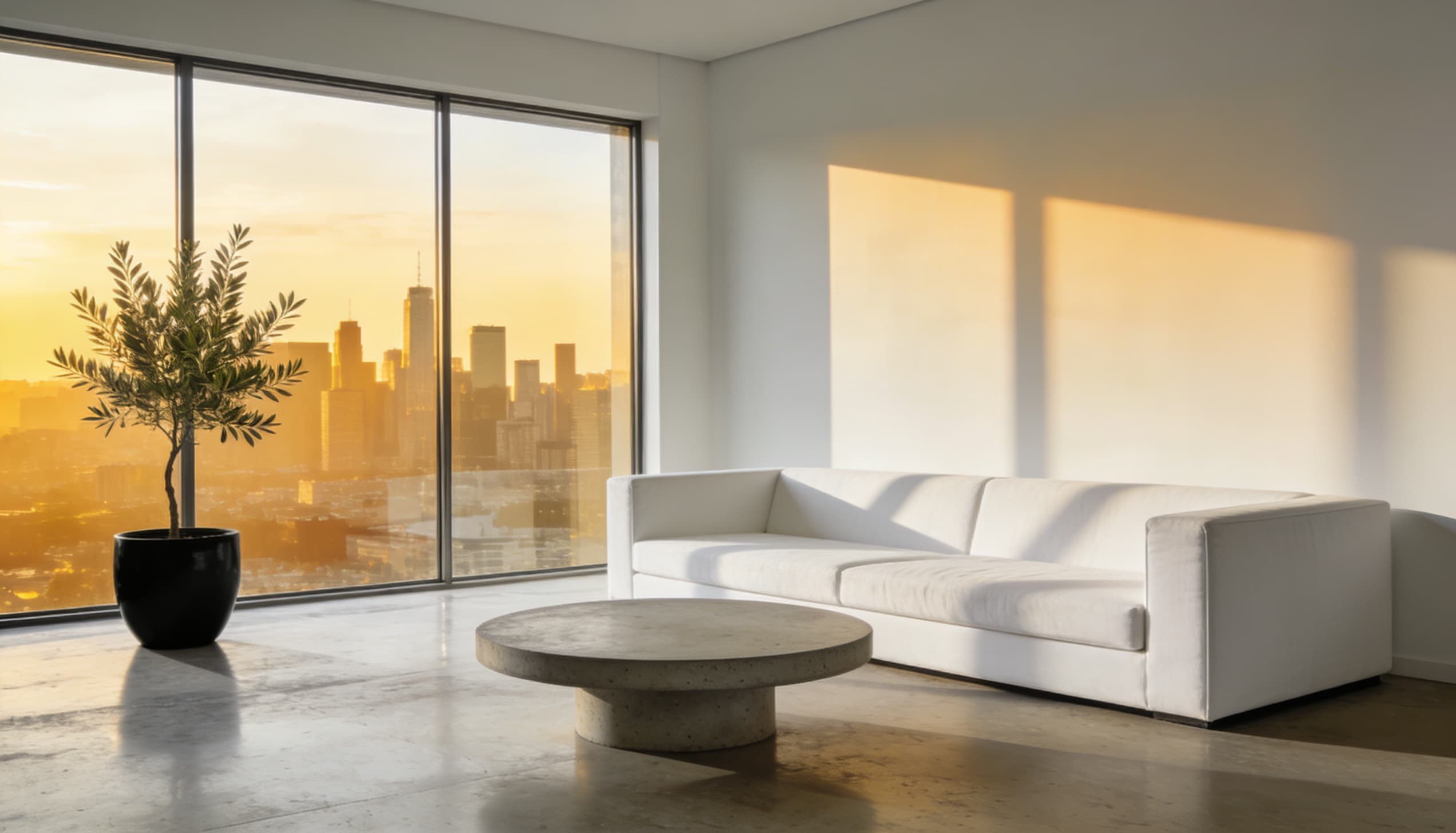
Modern interior design does not mean “new.” It refers to a design period spanning the 1920s to the 1970s, shaped by the Modernist movement in Europe and America.
This style puts function above everything else. Surfaces stay flat and free of carving or decoration.
Furniture sits low on thin, exposed legs. Open floor plans and large windows let natural light do the work that decoration would otherwise try to do.
Key Features:
- Straight, flat furniture with no carved detail
- Open floor plans with minimal interior walls
- Materials: steel, glass, exposed concrete, and natural wood
- Low-profile furniture with thin, tapered, or exposed legs
- Minimal or no window treatments
Color Palette: Neutral whites, blacks, and warm grays. Bold accents in burnt orange, olive green, or mustard yellow appear in cushions or art.
Best For: Newer build homes, urban apartments, open-plan spaces, and people who prefer order and simplicity over decoration.
2. Contemporary Interior Design
Contemporary design describes what is popular right now. Unlike modern, it has no fixed time period and shifts as trends change.
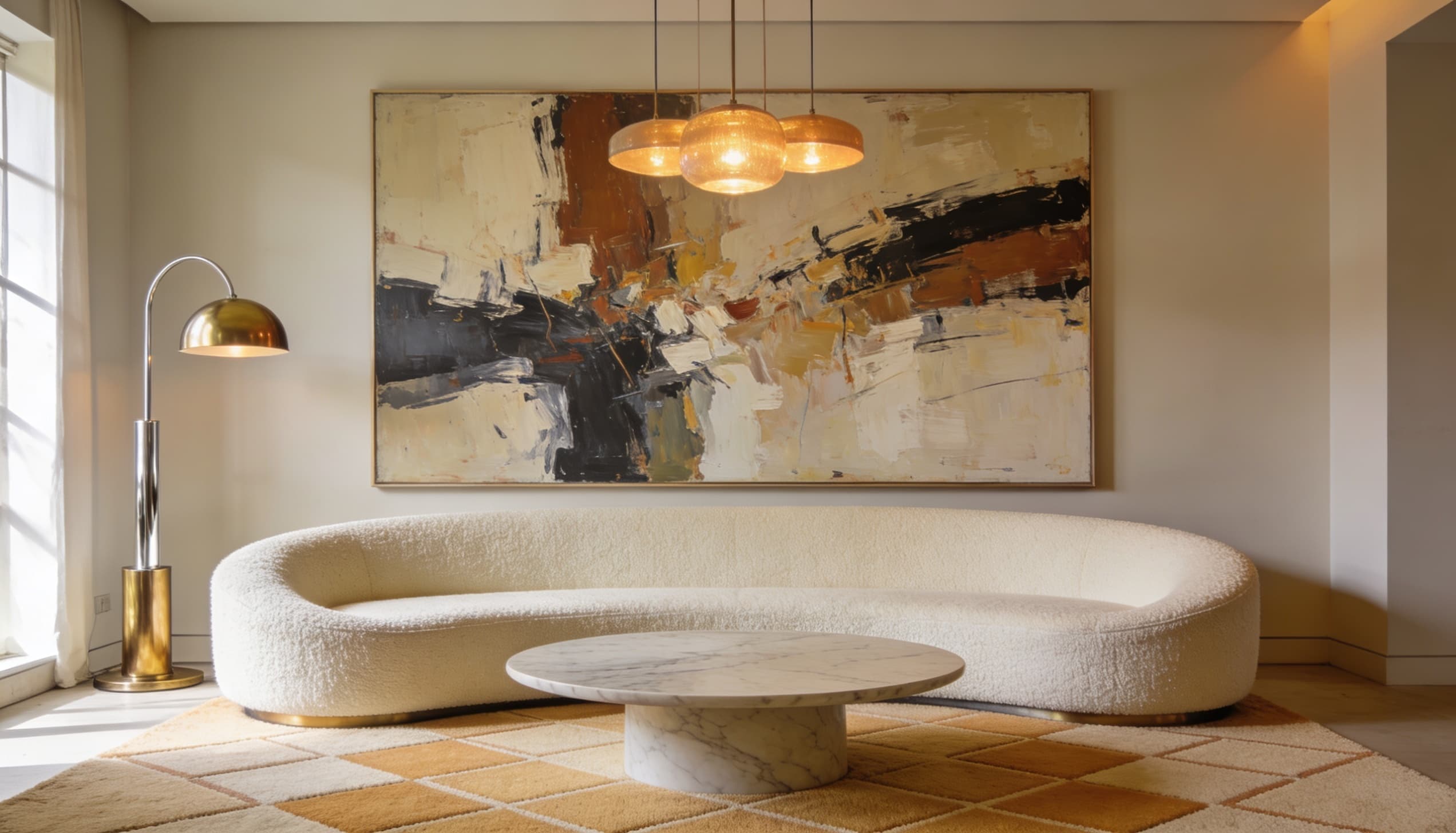
Today’s contemporary spaces lean into curved furniture, large-scale art, and mixed textures. Boucle upholstery, warm neutrals, and statement lighting define the current look. It is warmer and more tactile than pure modern design, and easier to refresh as your taste grows.
Key Features:
- Curved sofas, armchairs, and coffee tables
- Large statement artwork as a focal design element
- Mixed textures: velvet, linen, boucle, and chrome in one room
- Neutral palette anchored by bold accent pieces
Color Palette: Warm whites, soft grays, and creamy beiges. Color comes from art, cushions, and a single statement furniture piece.
Best For: Trend-aware decorators who like to refresh their space regularly. Works in almost any home layout or size.
3. Traditional Interior Design
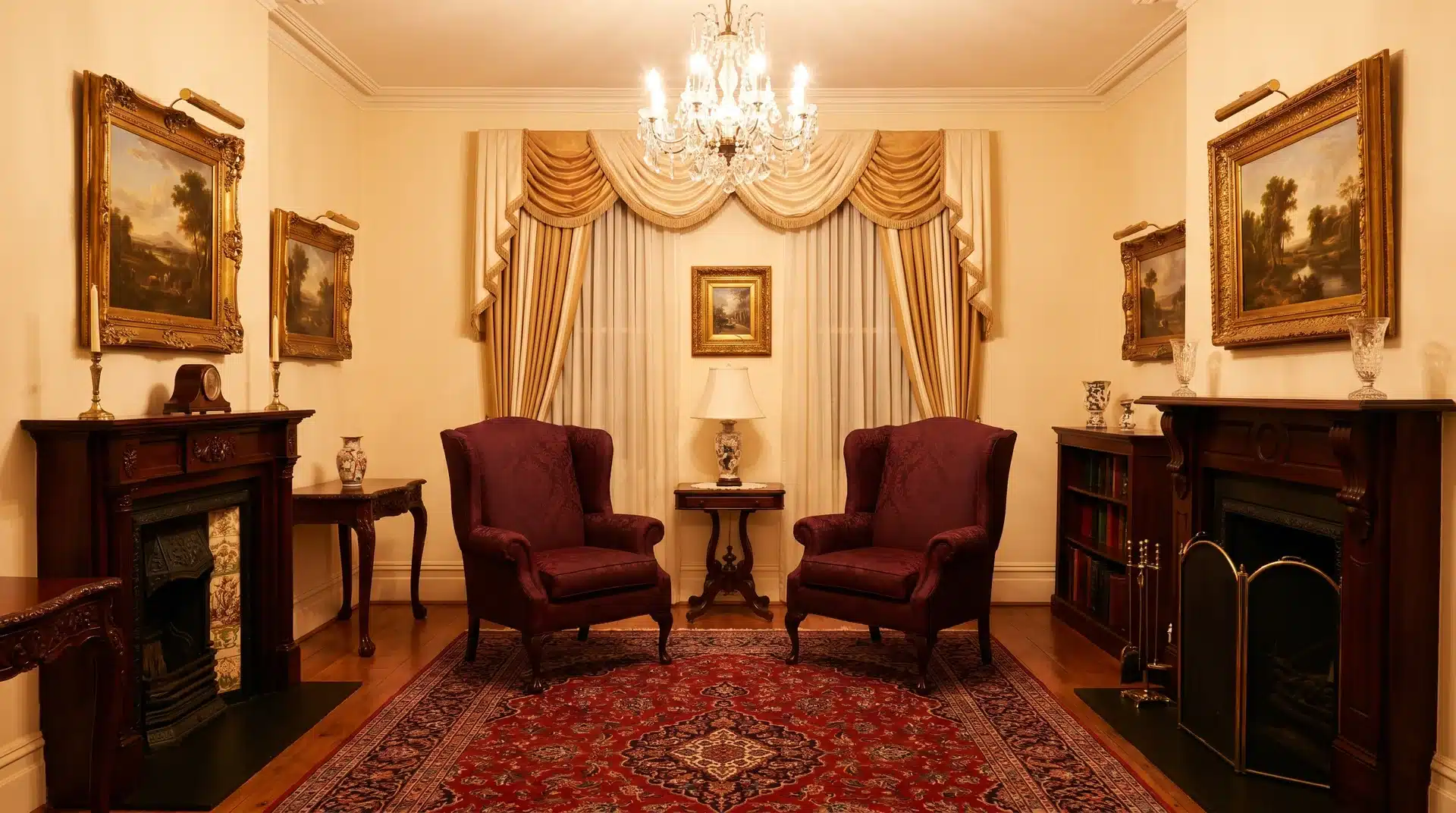
Traditional interior design draws from 18th and 19th-century European rooms. It is formal, polished, and built entirely around symmetry.
Every detail in a traditional room is intentional and paired. Dark, carved-wood furniture fills each space. Rich upholstery fabrics like damask and brocade cover chairs and sofas. Layered window treatments hang in multiple panels. The look is finished, composed, and deliberately formal.
Key Features:
- Symmetrical furniture arrangements with matching pairs
- Dark, carved wood furniture throughout the room
- Layered curtains with valances and sheer panels underneath
- Patterned upholstery: damask, floral, and striped fabrics
Color Palette: Burgundy, hunter green, navy, and gold over cream or ivory walls.
Best For: Older homes with crown molding, built-in shelving, and formal rooms. Suits those who value a timeless and polished interior.
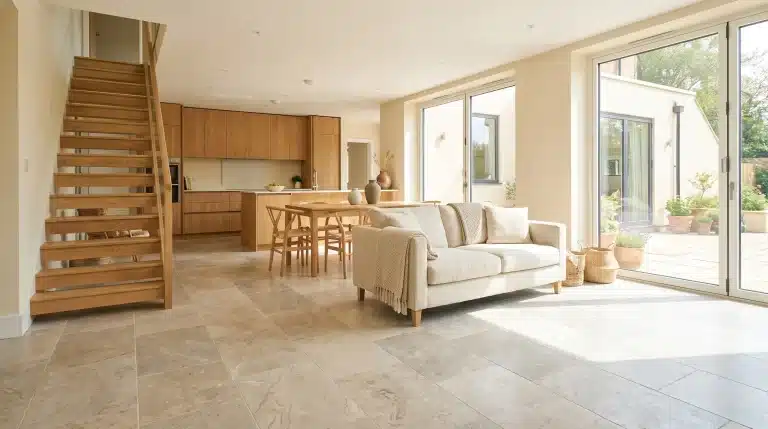
4. Transitional Interior Design
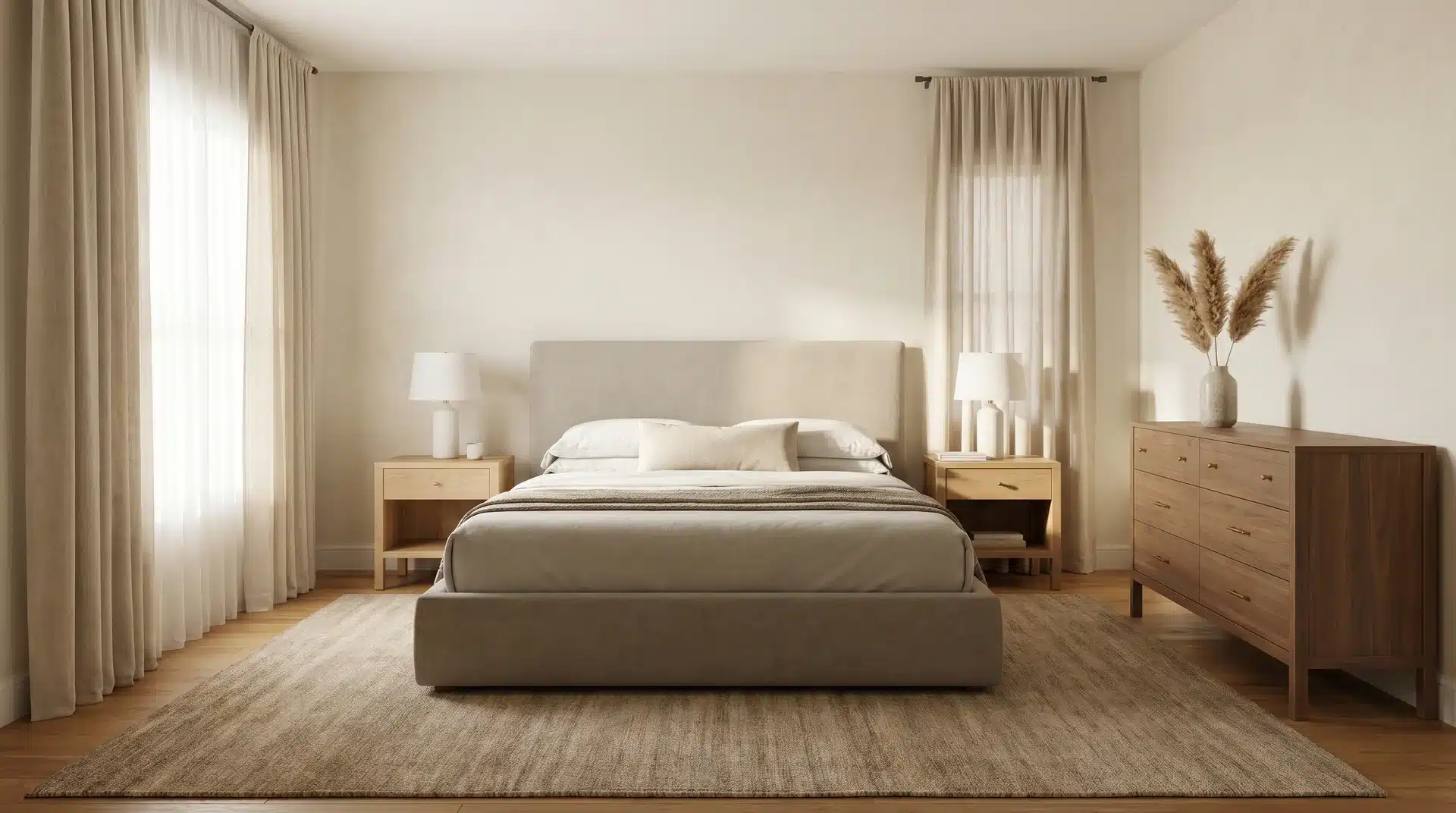
Transitional design combines traditional warmth with modern simplicity. It is the most widely used residential style across the United States.
It retains the comfort of traditional interiors while removing the heavy formality. Furniture has soft curves but no ornamental carving. Fabrics are solid or near-solid in linen, leather, and cotton. Old and new pieces share the same room without competing.
Key Features:
- Soft, curved furniture with no carved detail anywhere
- Mix of vintage and contemporary pieces in one space
- Solid fabric upholstery without bold or complex patterns
- Neutral palette with warm wood tones throughout
Color Palette: Beige, greige, warm white, and soft charcoal. Wood tones provide warmth throughout the room.
Best For: Households with mixed style preferences, families wanting a livable and timeless space, and those who like change without extremes.
5. Minimalist Interior Design
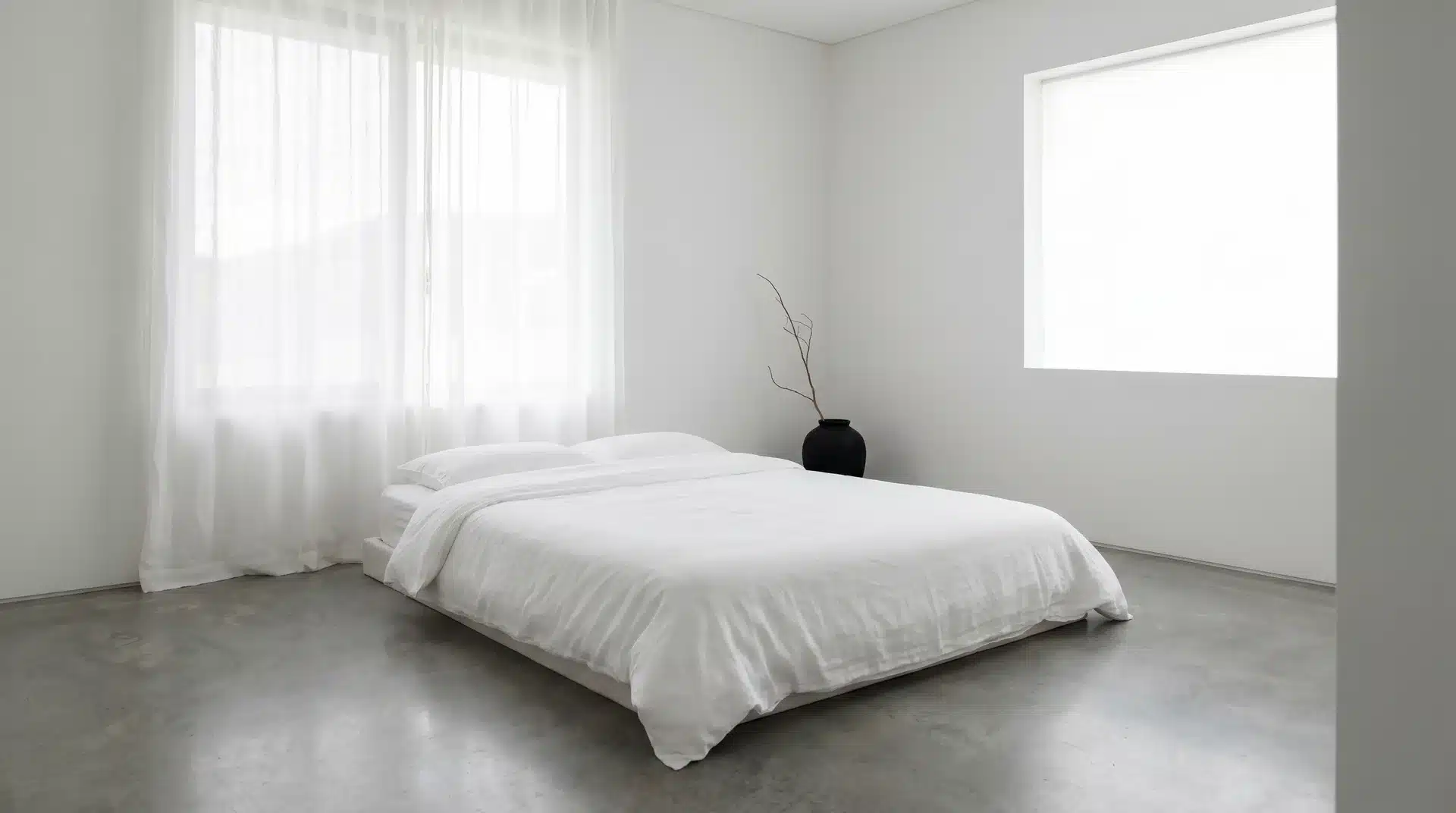
Minimalist design is built on one principle: every item in the room must earn its place. Fewer objects, more space.
This is not simply a look. It is a deliberate choice about how you live. Surfaces stay clear. Storage is hidden inside furniture. No decorative extras sit on shelves. The room itself becomes the thing you notice when you walk in.
Key Features:
- Very few decorative objects on any surface
- Furniture with built-in or completely hidden storage
- White or very light walls with solid color only
- No patterns used anywhere in the room
Color Palette: Pure white, off-white, light gray, and soft beige. One or two muted accents at most.
Best For: Small-space dwellers, people who feel overwhelmed by clutter, and those who find calm in open and ordered spaces.
6. Maximalist Interior Design
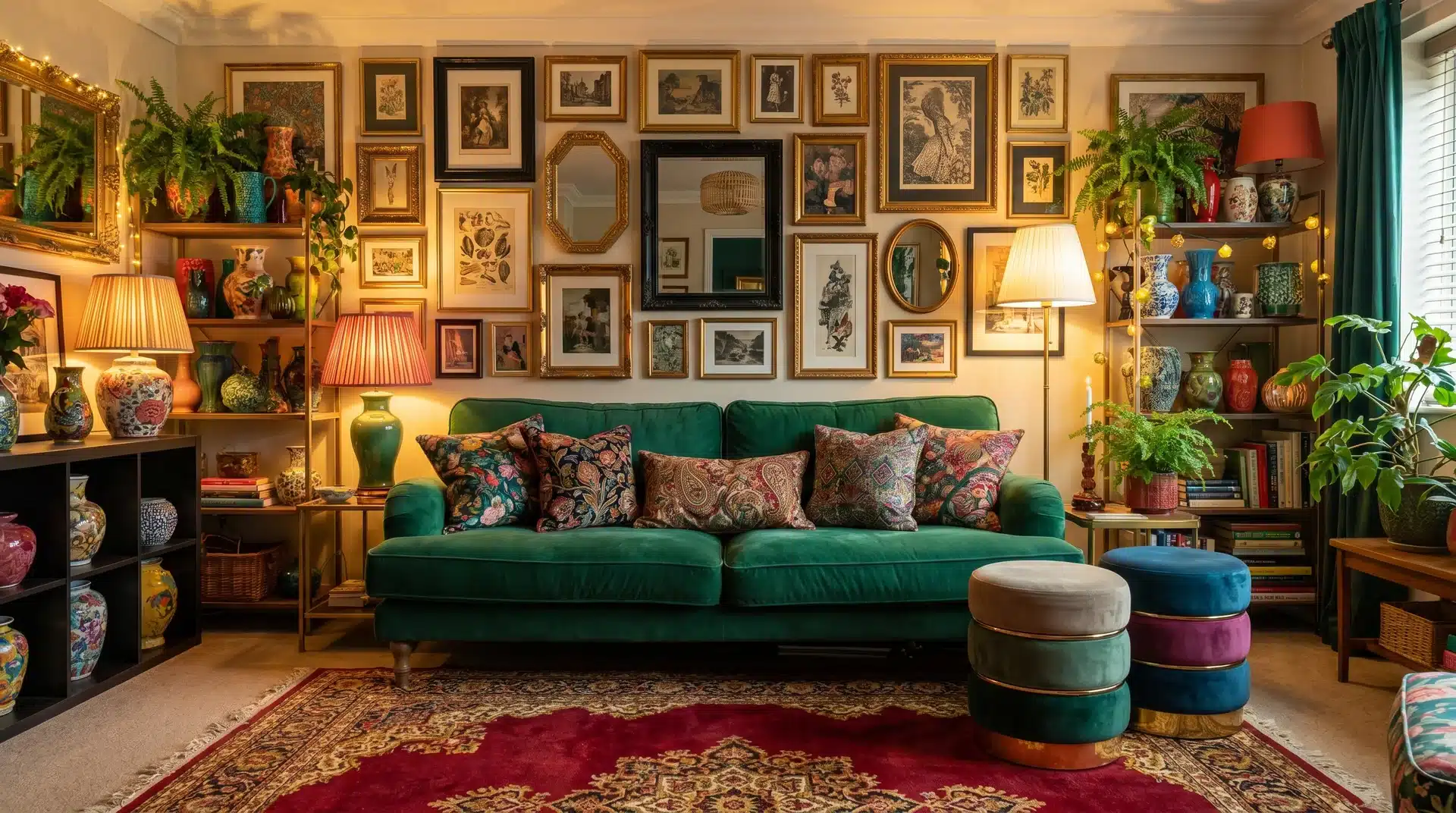
Maximalist design is the intentional opposite of minimalism. It celebrates abundance, layering, and personal self-expression in every corner.
The keyword is intentional. This is not clutter. It is a fully committed statement. Every wall has art, color, or wallpaper. Patterns mix openly. Collections sit in plain sight. Done well, a maximalist room feels collected, alive, and deeply personal.
Key Features:
- Gallery walls or bold pattern wallpaper on every wall
- Mixed patterns: florals with geometrics, stripes with abstract prints
- Displayed collections throughout the room
- Layered rugs, cushions, and throws on every seating surface
Color Palette: No restrictions. Jewel tones, rich darks, and bright accents all mix through one unifying color thread that runs across the room.
Best For: Collectors, world travelers, creative personalities, and anyone who finds open, sparse spaces cold or empty.
7. Industrial Interior Design
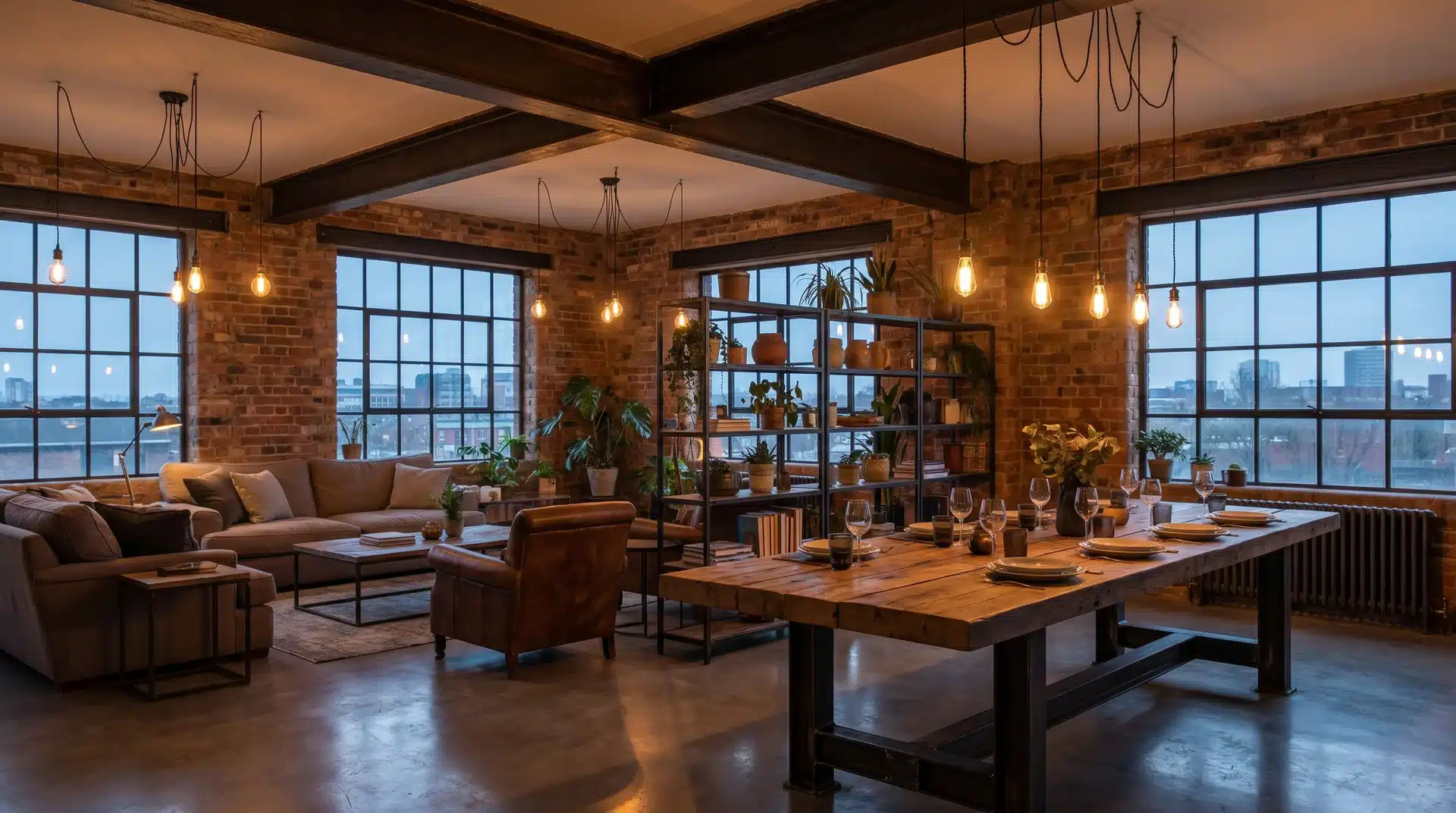
Industrial design grew out of cities where disused factories and warehouses became residential lofts. It celebrates raw, unfinished surfaces rather than hiding them.
Exposed brick stays exposed. Concrete floors remain bare. Metal piping runs along open ceilings. Edison bulbs hang from cord fixtures. The look is deliberately rough. Its beauty comes from structure, not surface decoration.
Key Features:
- Exposed brick walls and unfinished concrete floors or ceilings
- Open metal shelving with visible wall brackets
- Edison bulb pendant and cord-style lighting
- Reclaimed wood furniture paired with black or gunmetal metal frames
Color Palette: Charcoal, black, dark gray, and rust brown with warm wood tones to soften the rawness.
Best For: Urban loft apartments, open-plan homes, and people who prefer a moody, raw, and no-frills atmosphere.
8. Rustic Interior Design
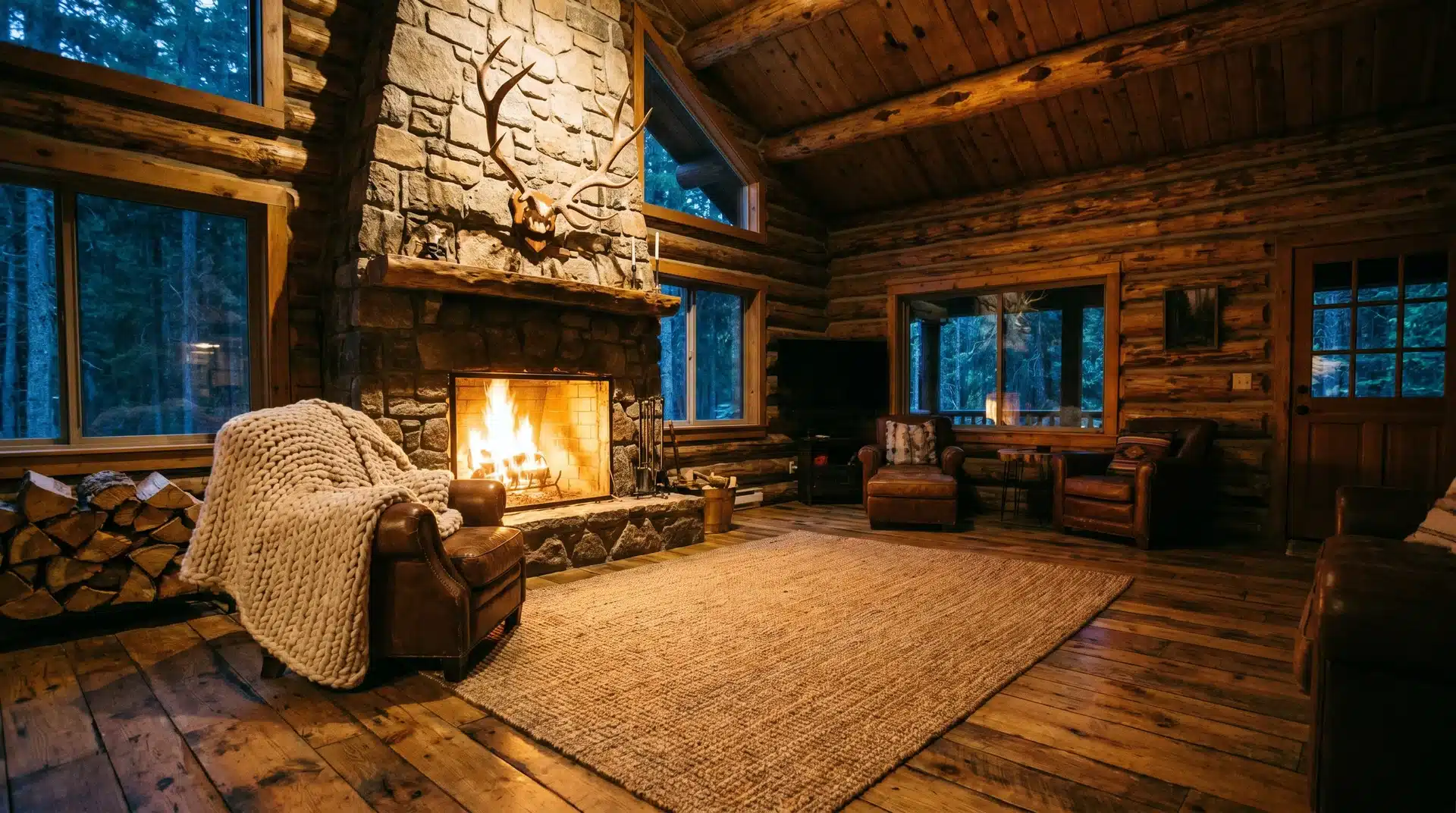
Rustic design is built around natural materials in their most aged, rough, and imperfect state. It feels like the indoors and outdoors have merged.
Heavy wood beams cross ceilings. Fireplaces anchor rooms in stone. Textures are coarse throughout: wool, leather, and burlap. Nothing in a rustic home reads as factory-made or perfectly finished. The beauty is in every visible imperfection and aged surface.
Key Features:
- Rough-hewn wood furniture and open ceiling beams
- A stone or brick fireplace as the room’s primary focal point
- Wrought iron hardware, hinges, and light fixtures
- Natural decor: branches, dried botanicals, pinecones, and stone
Color Palette: Terracotta, bark brown, forest green, rust, stone gray, and warm cream.
Best For: Country homes, mountain cabins, and woodland properties. Best for those who love the outdoors and want it reflected indoors.
9. Farmhouse Interior Design
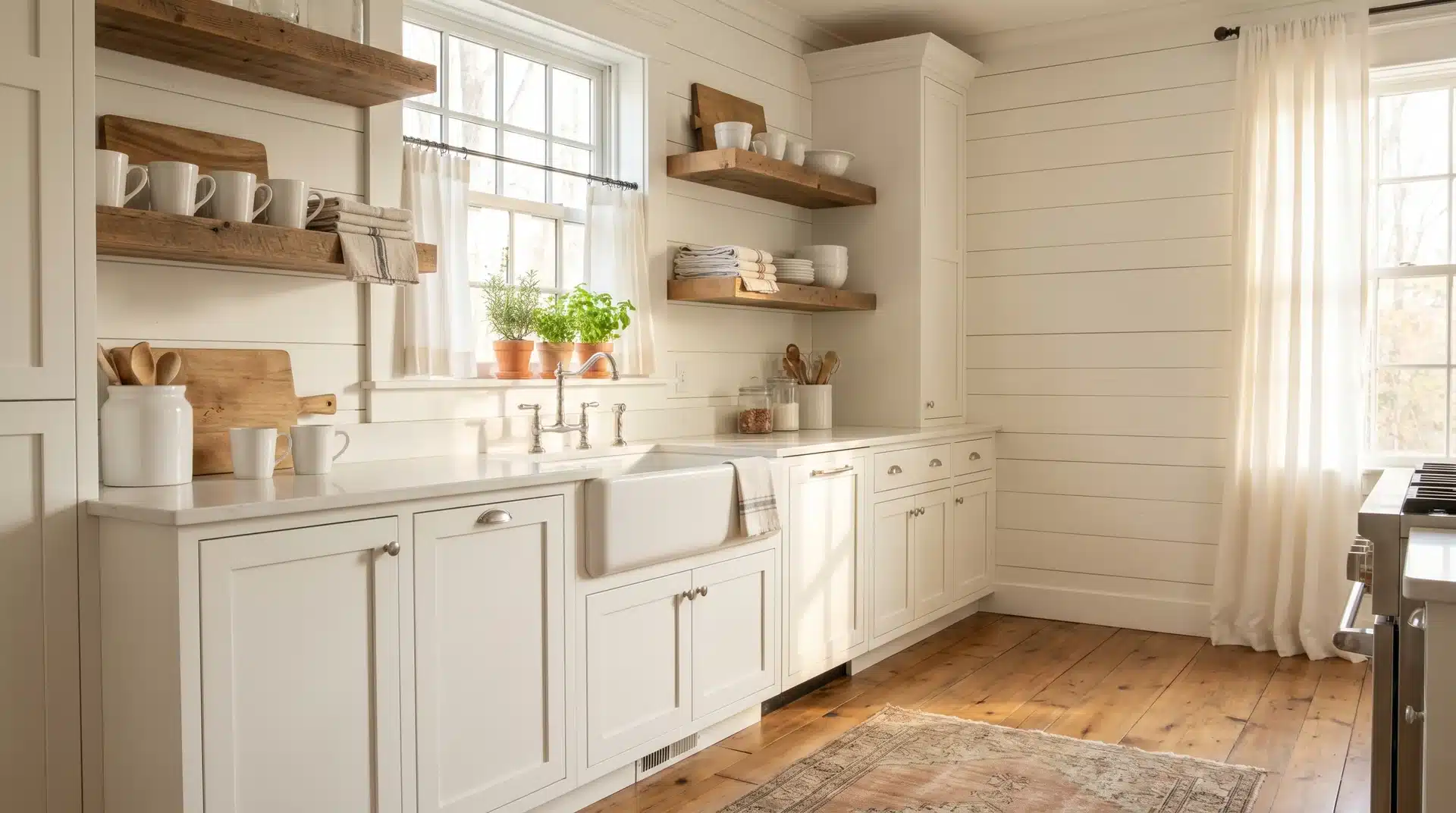
Farmhouse design blends rural simplicity with the warmth of a family home. It is practical, unpretentious, and built for everyday life.
The style gained wide recognition through the television show Fixer Upper. Shiplap walls, apron-front sinks, and open wood shelving define the farmhouse kitchen. Furniture carries a painted or gently distressed finish. Galvanized metal and ceramic accents add texture without formality.
Key Features:
- Shiplap wood paneling on accent or full walls
- Apron-front farmhouse sink as a kitchen focal point
- Distressed or chalk-painted wood furniture throughout
- Galvanized metal bins, mason jars, and ceramic vases as decor
Color Palette: White, cream, and soft gray with warm natural wood accents.
Best For: Suburban and rural families, those who want a cozy, unpretentious home, and anyone who loves a relaxed, kitchen-centered lifestyle.
10. Bohemian Interior Design
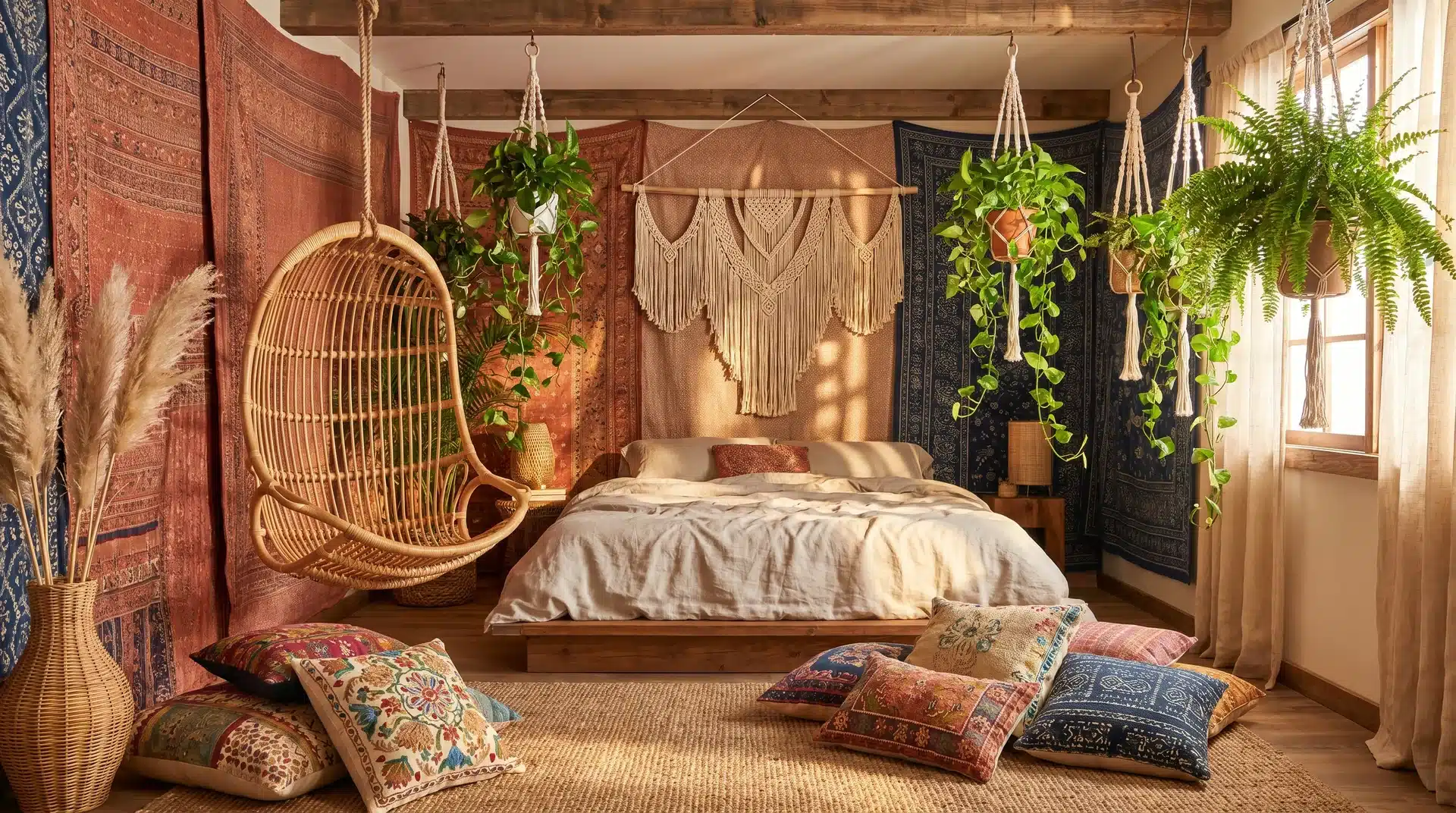
Bohemian design is globally inspired, free-spirited, and deeply personal. No two bohemian rooms look the same.
This style has no strict rulebook. It pulls from cultures, decades, and artisan markets across the world. Rugs layer over rugs. Plants hang from ceiling hooks. Tapestries cover walls. Vintage and handmade objects sit alongside woven baskets and collected artifacts.
Key Features:
- Layered rugs and global textiles from different cultures
- Rattan, wicker, and woven furniture throughout
- Abundant plants: hanging, floor-level, and tabletop varieties
- Macrame wall hangings and handmade woven art
Color Palette: Warm terracotta, saffron, magenta, and emerald green against tan, cream, and rust neutrals.
Best For: Creatives, world travelers, and renters who need flexible decorating options without permanent changes.
11. Scandinavian Interior Design
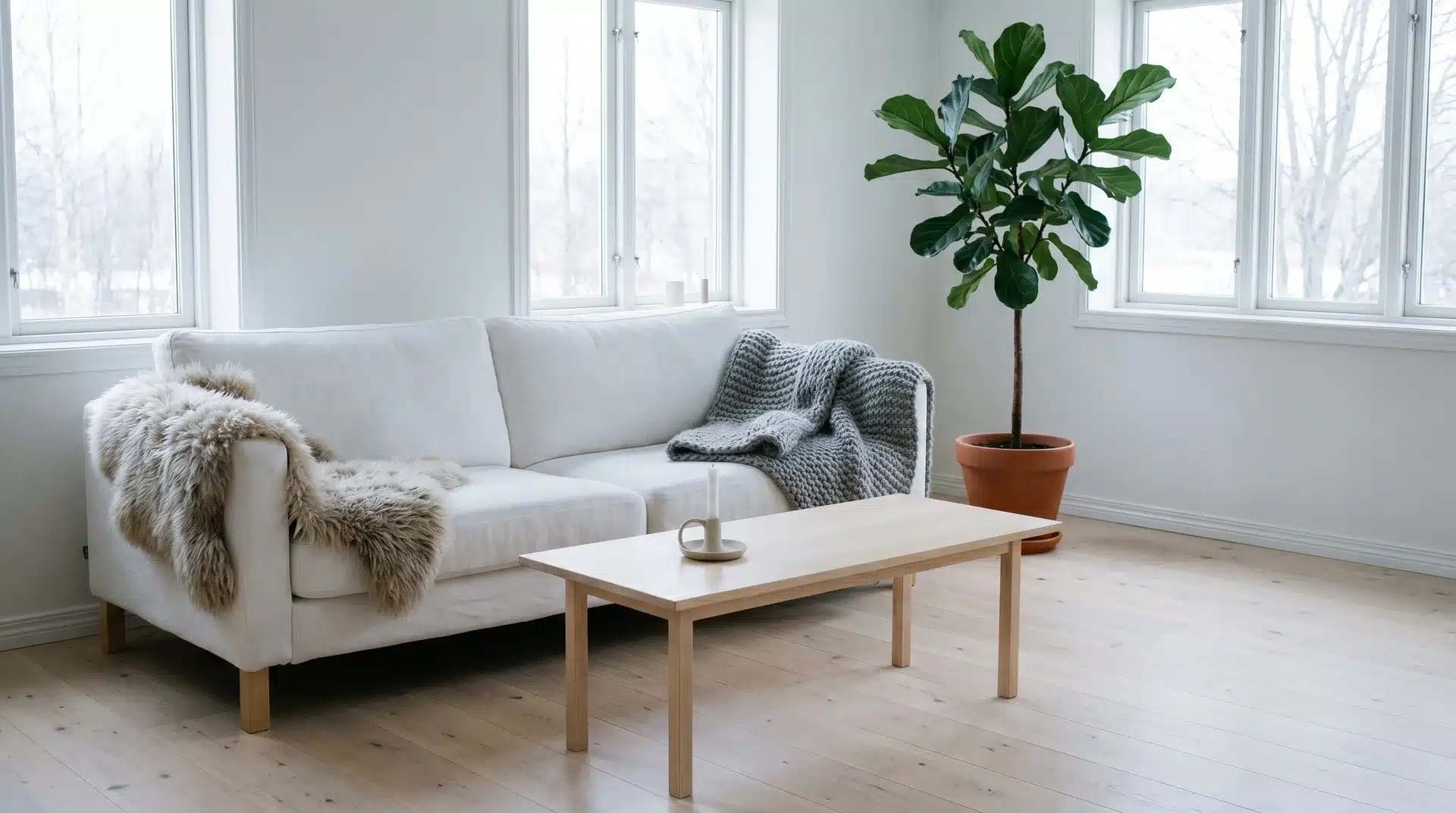
Scandinavian design comes from the Nordic countries: Sweden, Norway, Denmark, and Finland. It is rooted in the concept of hygge.
Hygge is a Scandinavian word for comfort, coziness, and contentment. Nordic interiors reflect this with light wood tones, simple furniture shapes, and layered, cozy textiles. It is clean without being cold. It is simple without being bare.
Key Features:
- Light birch or pine wood furniture with simple, functional shapes
- White walls with maximum natural light from windows
- Multi-functional furniture suited to smaller living spaces
- Cozy textiles: sheepskin throws, wool rugs, and knit cushions
Color Palette: White, soft gray, and pale wood tones. Muted dusty accents in sage, blush, or slate blue.
Best For: Small apartments, cold climates, and those who want a clean and functional interior that still feels genuinely warm.
12. Mid-Century Modern Interior Design
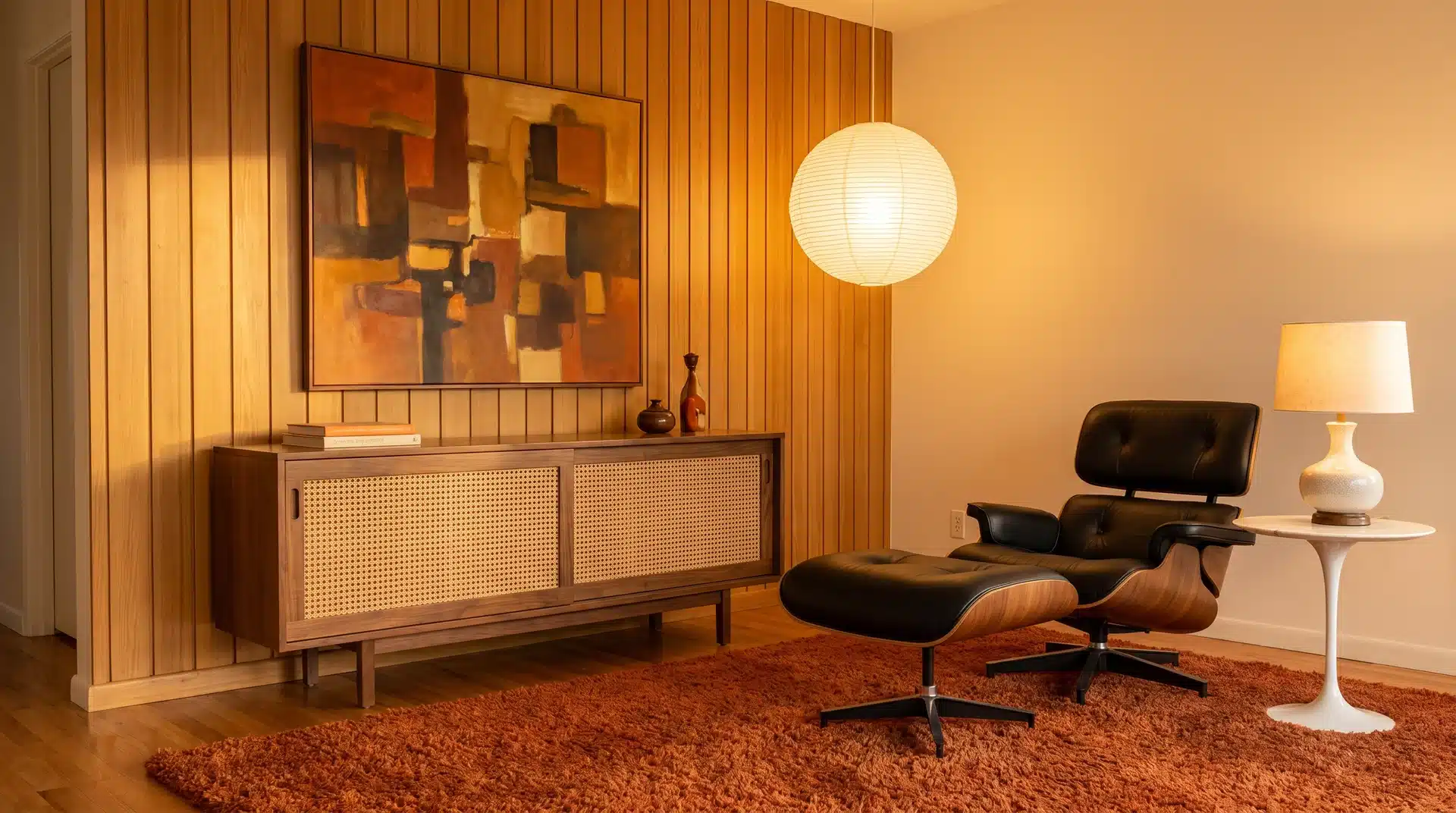
Mid-century modern refers to design from the 1940s through the 1960s. It is one of the most recognized and enduring modern interior design styles in the world today.
Furniture from this period features tapered wooden legs and organic curved shapes. Iconic pieces include the Eames lounge chair, the Saarinen tulip table, and the Noguchi coffee table. Large picture windows connect rooms to the outdoors. Bold accent colors sit against warm neutral walls.
Key Features:
- Furniture with tapered legs and organic, curved forms
- Large picture windows that frame outdoor views
- Iconic mid-century designer furniture as statement pieces
- Bold accent colors placed against a warm neutral base
Color Palette: Tan, cream, and olive as a base with mustard yellow, burnt orange, teal, and avocado green as accents.
Best For: Ranch-style homes, split-level houses, and design enthusiasts who treat furniture as a form of art.
13. Art Deco Interior Design
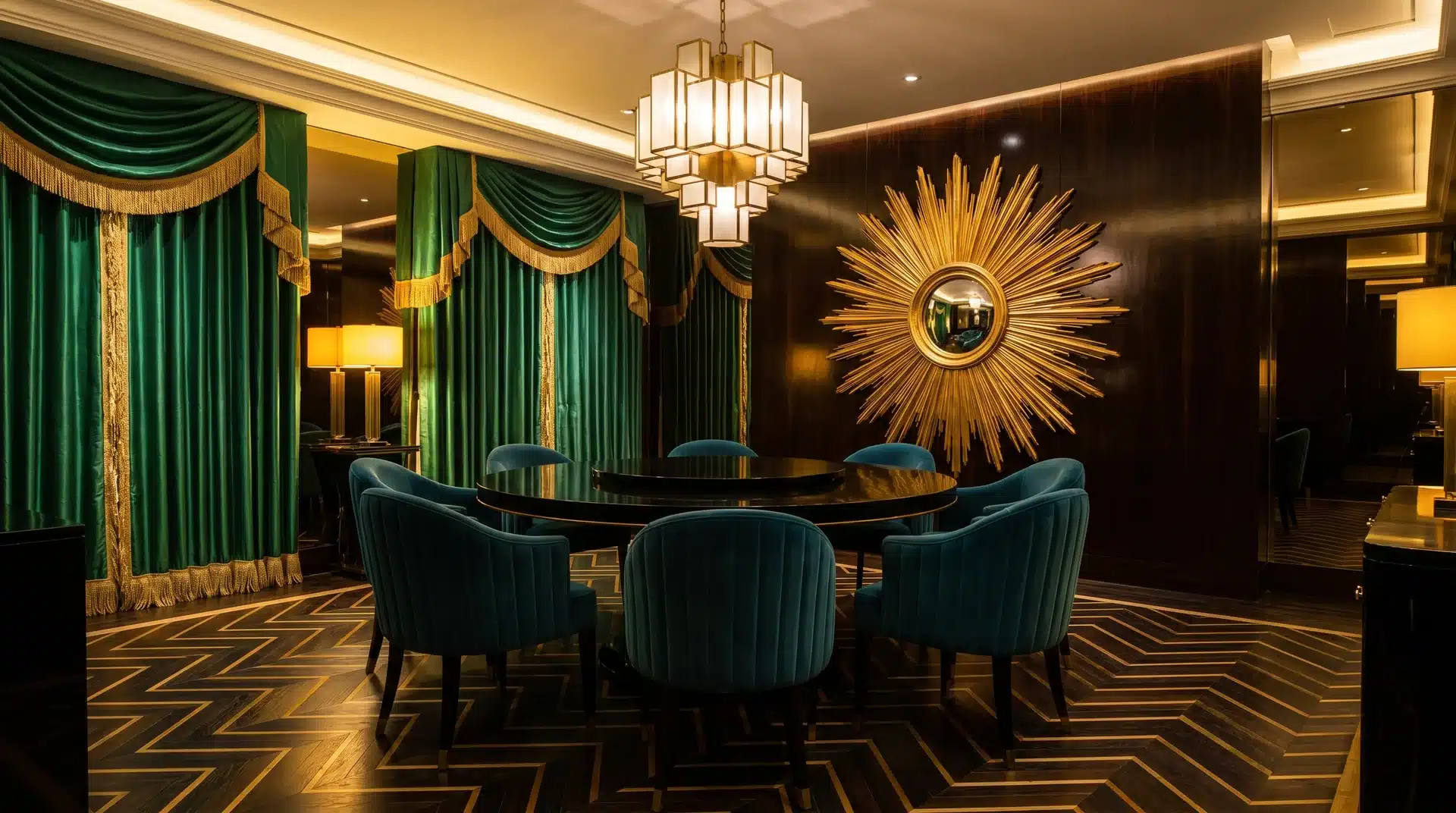
Art Deco peaked in the 1920s and 1930s. It takes its name from the 1925 Exposition Internationale des Arts Décoratifs et Industriels Modernes held in Paris.
This style is built on sharp angles and luxury materials. Chevron and sunburst patterns appear on floors, furniture, and walls. Gold and brass are the dominant metals. Lacquered surfaces catch and reflect light.
Key Features:
- Strong geometric patterns: chevron, zigzag, and sunburst motifs
- Lacquered furniture with mirrored or glass panel surfaces
- Velvet and silk upholstery in deep, saturated colors
- Gold and brass hardware are used consistently throughout
Color Palette: Black, deep navy, or forest green always paired with gold or burnished brass.
Best For: City apartments, 1920s and 1930s period buildings, and people who love high-contrast, high-drama glamour.
14. Hollywood Regency Interior Design
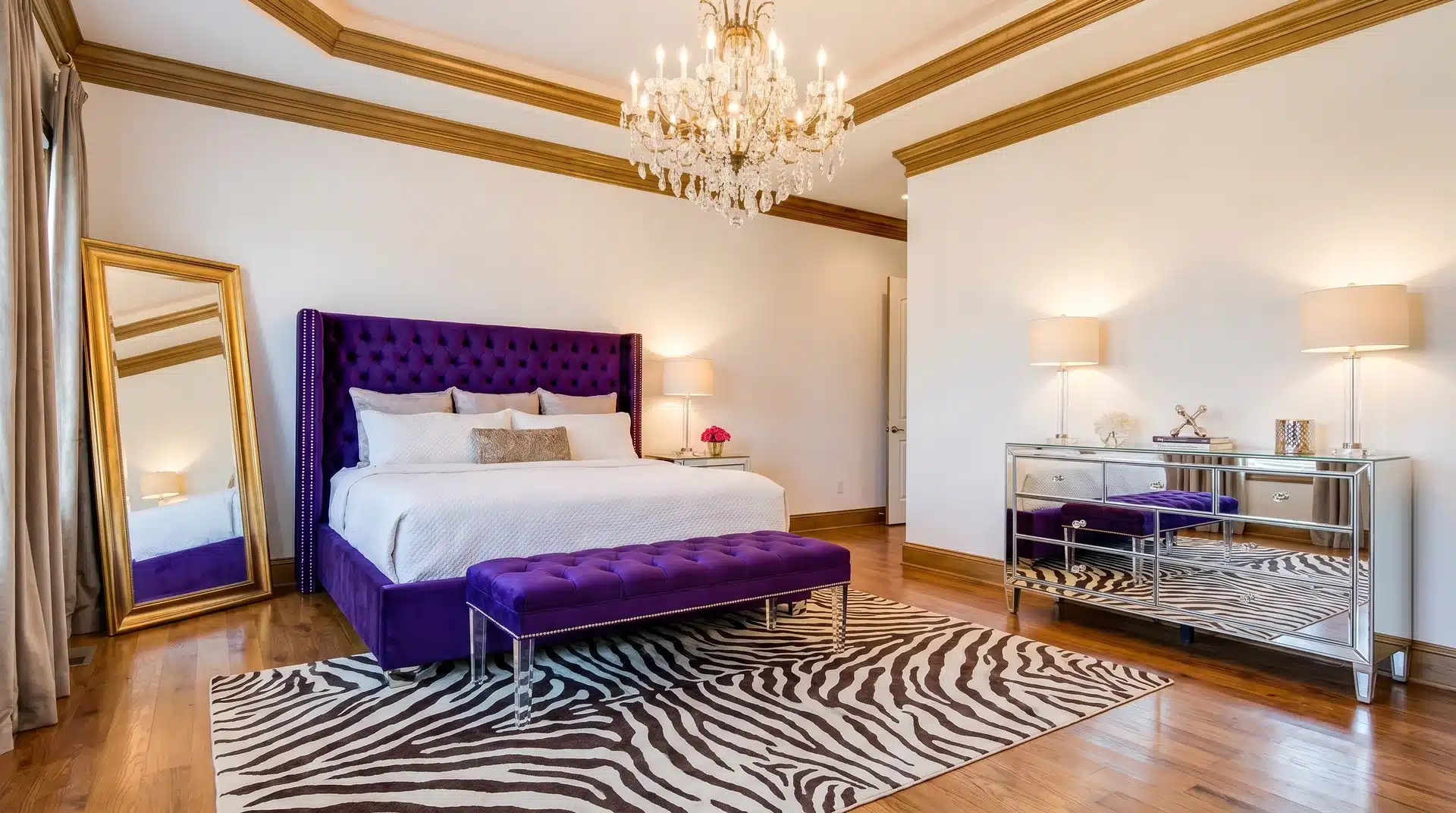
Hollywood Regency draws from the glamorous celebrity homes of Hollywood from the 1930s to the 1960s. It is theatrical, bold, and unapologetically opulent.
This style mixes old-world grandeur with showbiz drama. Mirrored furniture, jewel-tone velvet seating, animal print rugs, and crystal chandeliers appear in the same room. It is maximalism dressed in formal luxury, and it is not shy about any of it.
Key Features:
- High-gloss lacquered furniture in bold statement colors
- Mirrored surfaces on nightstands, dressers, and console tables
- Tufted and curved velvet sofas and chairs in jewel tones
- Bold animal print rugs and accent cushions throughout
Color Palette: Black and white as the foundation with hot pink, emerald green, cobalt blue, or gold as statement accents.
Best For: Living rooms and primary bedrooms. Works best for bold personalities who want a space with dramatic presence.
15. Mediterranean Interior Design
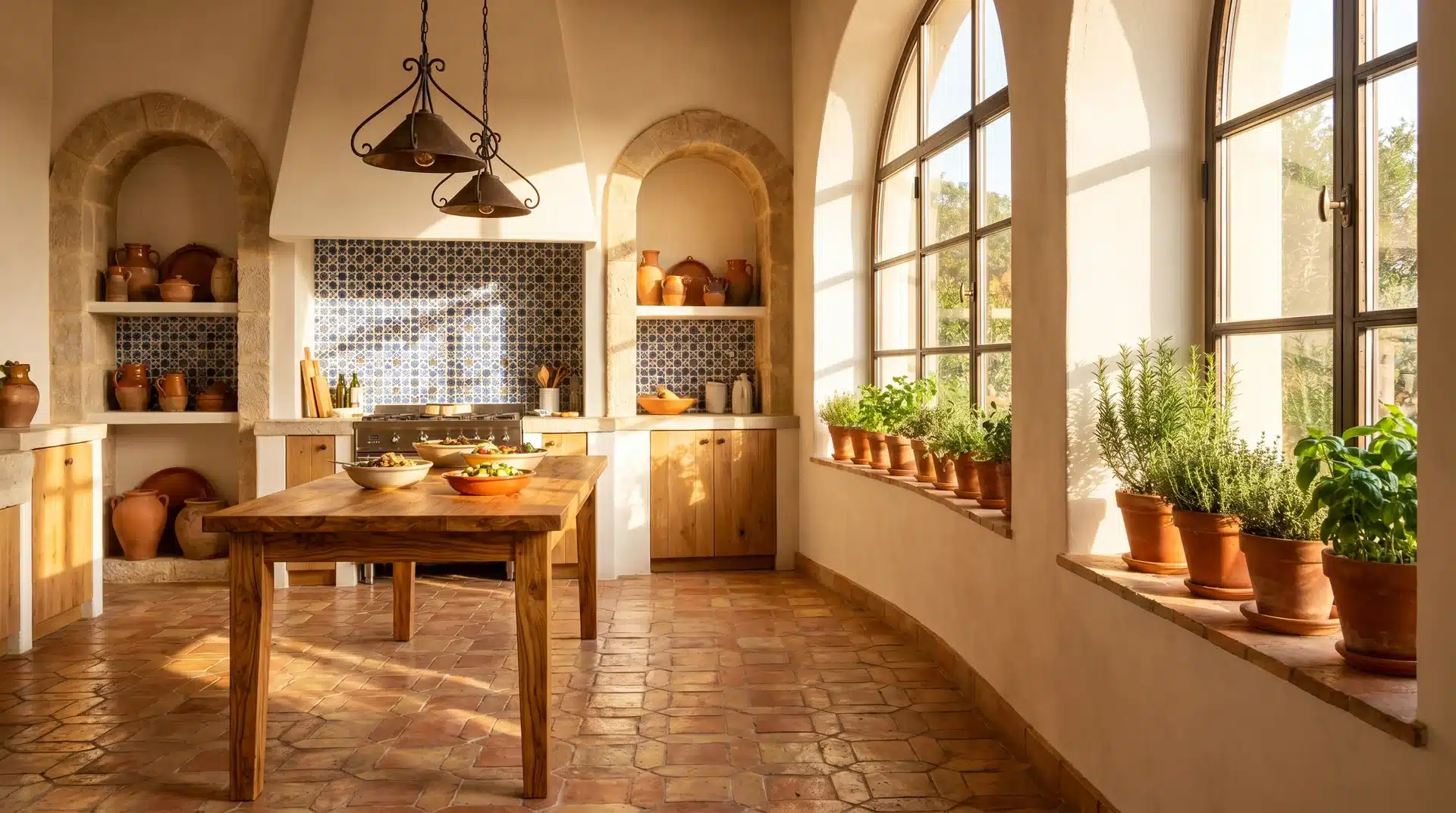
Mediterranean design is inspired by the sun-drenched countries of southern Europe: Greece, Italy, Spain, and Morocco. It is warm, handcrafted, and full of character at every turn.
Terracotta tiles cover floors. Mosaic patterns appear on kitchen backsplashes and bathroom walls. Arched doorways and windows define the architecture. Wrought iron fixtures add structure throughout.
Key Features:
- Terracotta tile floors and warm stone or plaster walls
- Arched doorways and windows throughout the home
- Mosaic tile accents in kitchens and bathrooms
- Wrought iron furniture, railings, and light fixtures
Color Palette: Terracotta, ochre, cobalt blue, and sage green over warm sandy cream.
Best For: Warm-climate homes, travel enthusiasts, and people drawn to handcrafted and artisanal decor traditions.
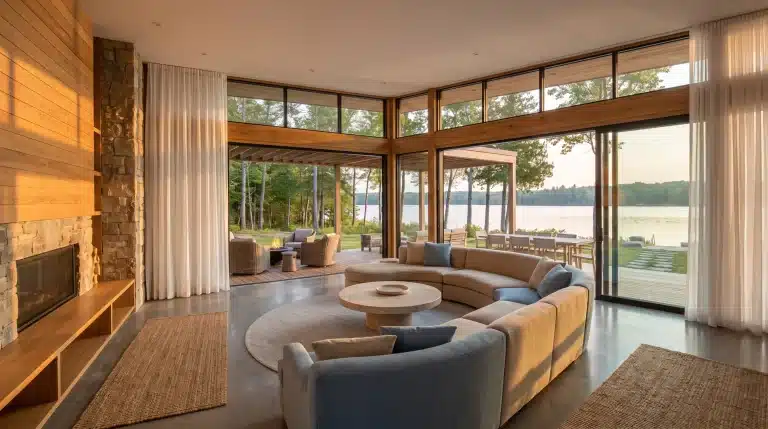
16. Coastal Interior Design
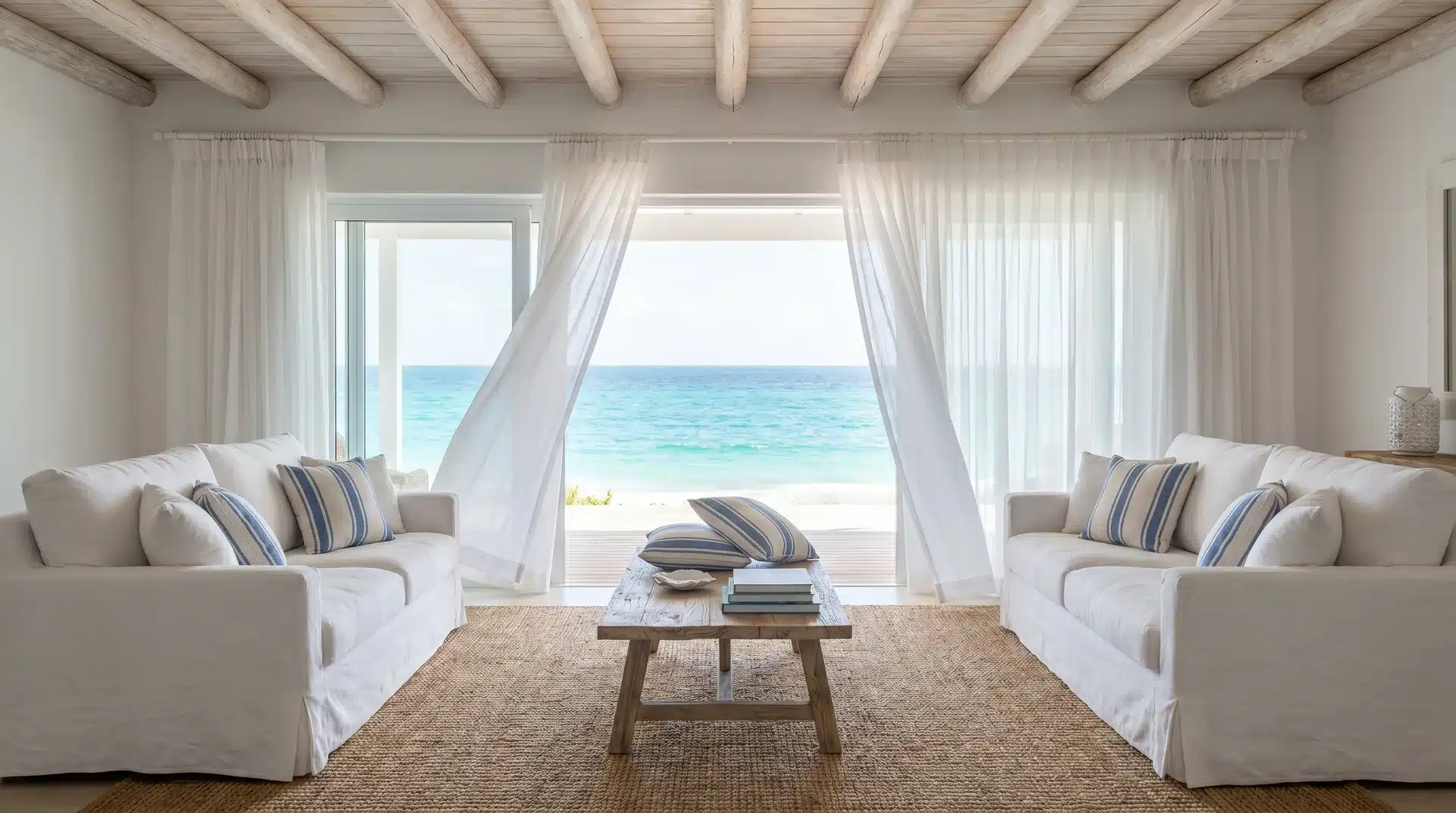
Coastal design captures the relaxed and light-filled feel of life near the water. It is softer and far less literal than nautical style.
Where nautical design uses anchors and rope motifs, coastal design focuses on texture, light, and breathable materials. Natural fiber rugs, linen curtains, and light wood furniture form the base. Color references the ocean without recreating a themed beach room.
Key Features:
- White or bleached light wood furniture throughout
- Natural fiber rugs: jute, sisal, and seagrass underfoot
- Linen and cotton fabrics in ocean-inspired tones
- Subtle sea-inspired decor used with genuine restraint
Color Palette: Crisp white, sandy beige, soft blue, and seafoam green, with navy used sparingly as an anchor.
Best For: Beach houses, lake homes, and people who want a calm, light, and airy interior regardless of their actual location.
17. Tropical Interior Design
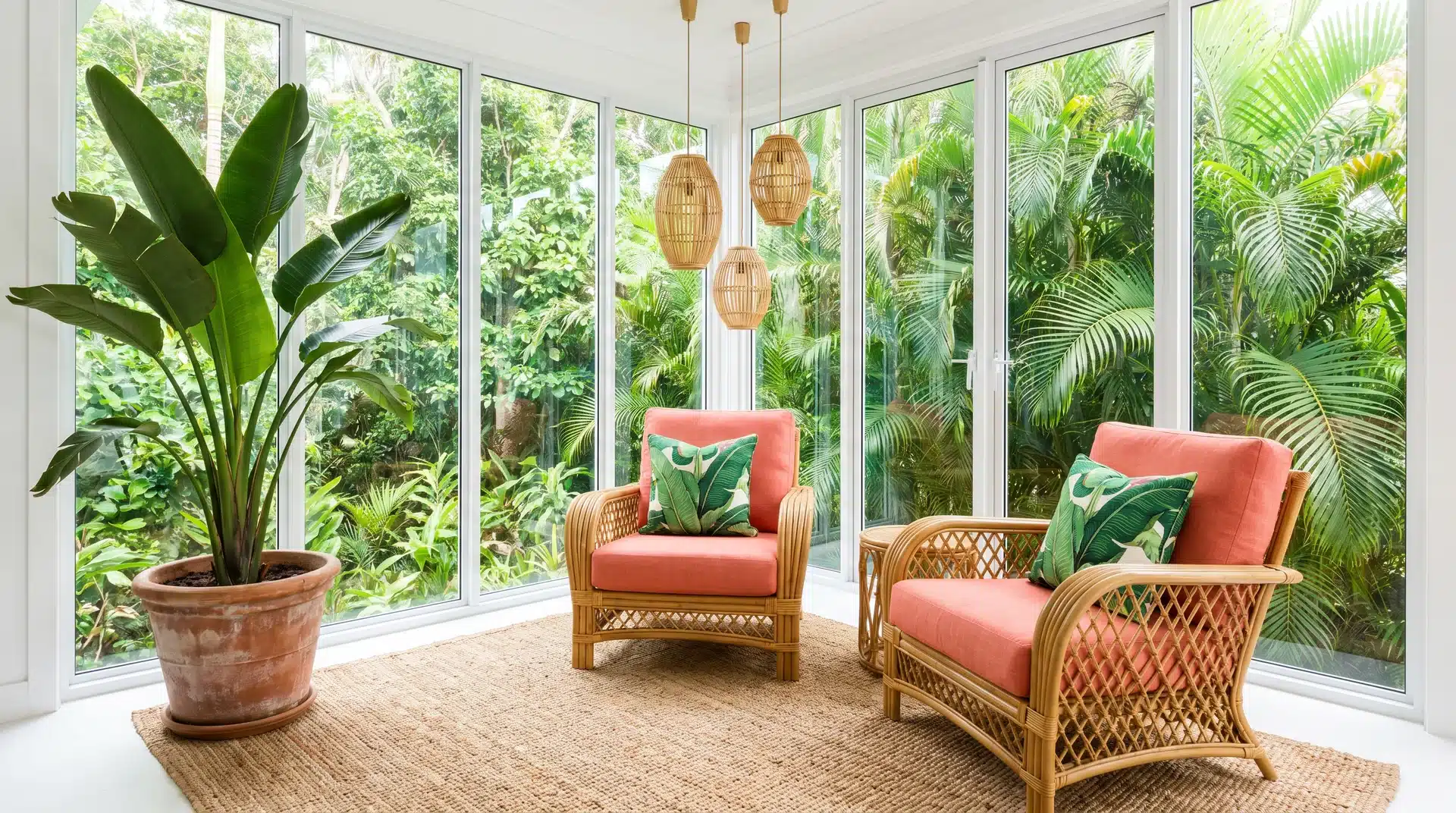
Tropical design takes its cues from Southeast Asia, the Caribbean, and South America. It is bolder and more plant-driven than the coastal style.
Large-leafed botanical prints appear on wallpaper and fabric. Rattan, bamboo, and teak the used for furniture. Indoor plants are not optional here. They are structural elements of the room. The line between inside and outside blurs by design, and color appears without apology.
Key Features:
- Bold leaf and botanical prints on wallpaper and soft furnishings
- Rattan, bamboo, and teak furniture throughout the space
- Large indoor plants used as structural design elements
- Open layouts that connect interior spaces to outdoor areas
Color Palette: Neutral white or cream base with vivid green, coral, turquoise, and golden yellow accents.
Best For: Warm climates, sun-facing rooms, resort-style homes, and people who love plants and natural materials.
18. Japandi Interior Design
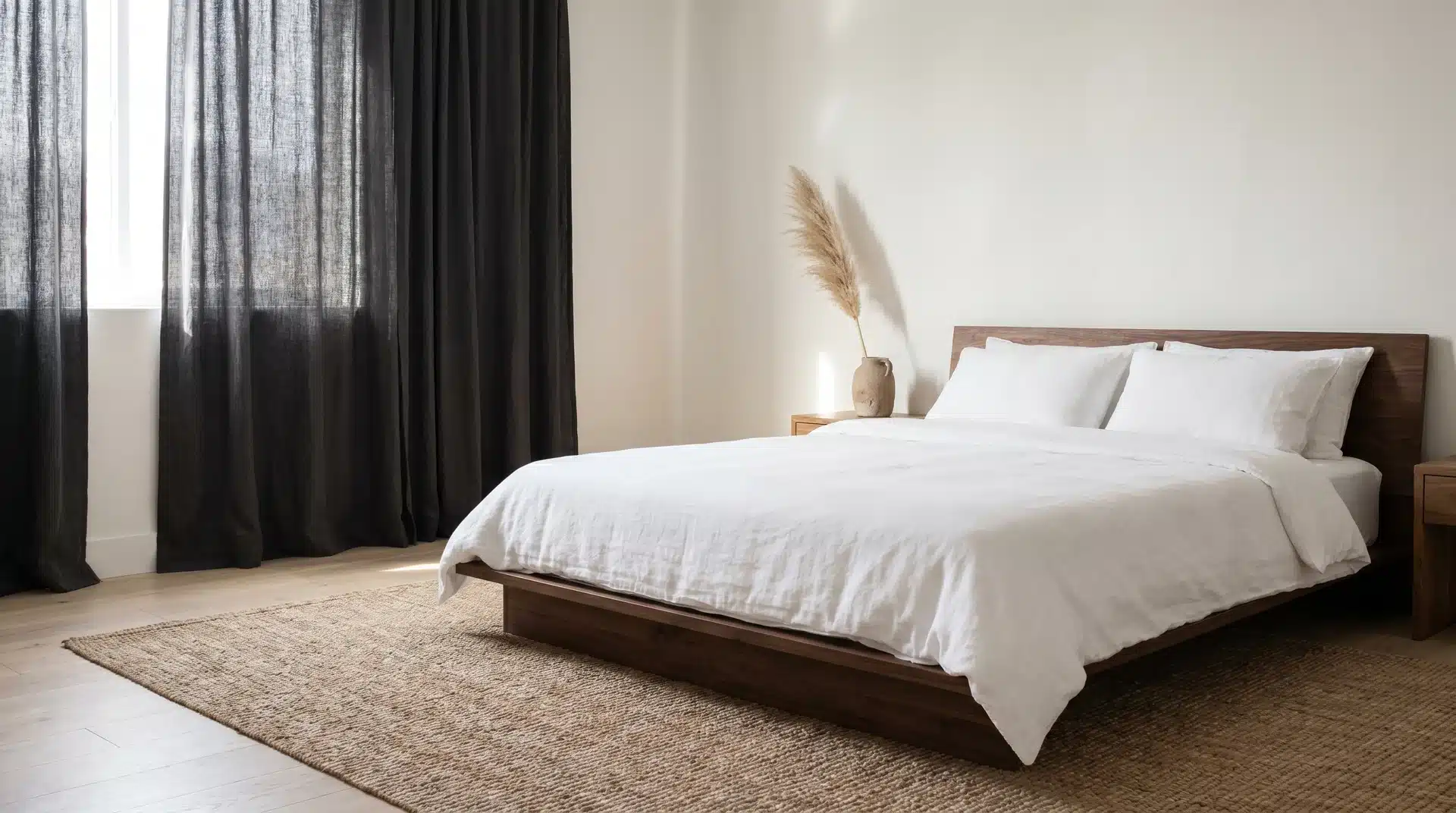
Japandi blends Japanese and Scandinavian design into one unified style. It has become one of the most searched modern interior design styles over the last five years.
Japan contributes wabi-sabi, the beauty found in imperfection. Scandinavia contributes functional simplicity. Together, they produce a style that is clean and warm at the same time. Low-profile furniture sits in dark or natural wood. Handmade ceramics and carefully chosen objects serve as the only decor.
Key Features:
- Clean lines combined with warm, natural materials throughout
- Low-profile furniture in dark walnut or pale natural wood tones
- Handmade ceramics and intentional single-object decor
- No clutter of any kind, every item earns its place
Color Palette: Warm beige, charcoal, sage, and muted blush with dark walnut wood furniture.
Best For: Small apartments, studio spaces, and people who want minimalism with texture, warmth, and genuine purpose.
19. Wabi-Sabi Interior Design
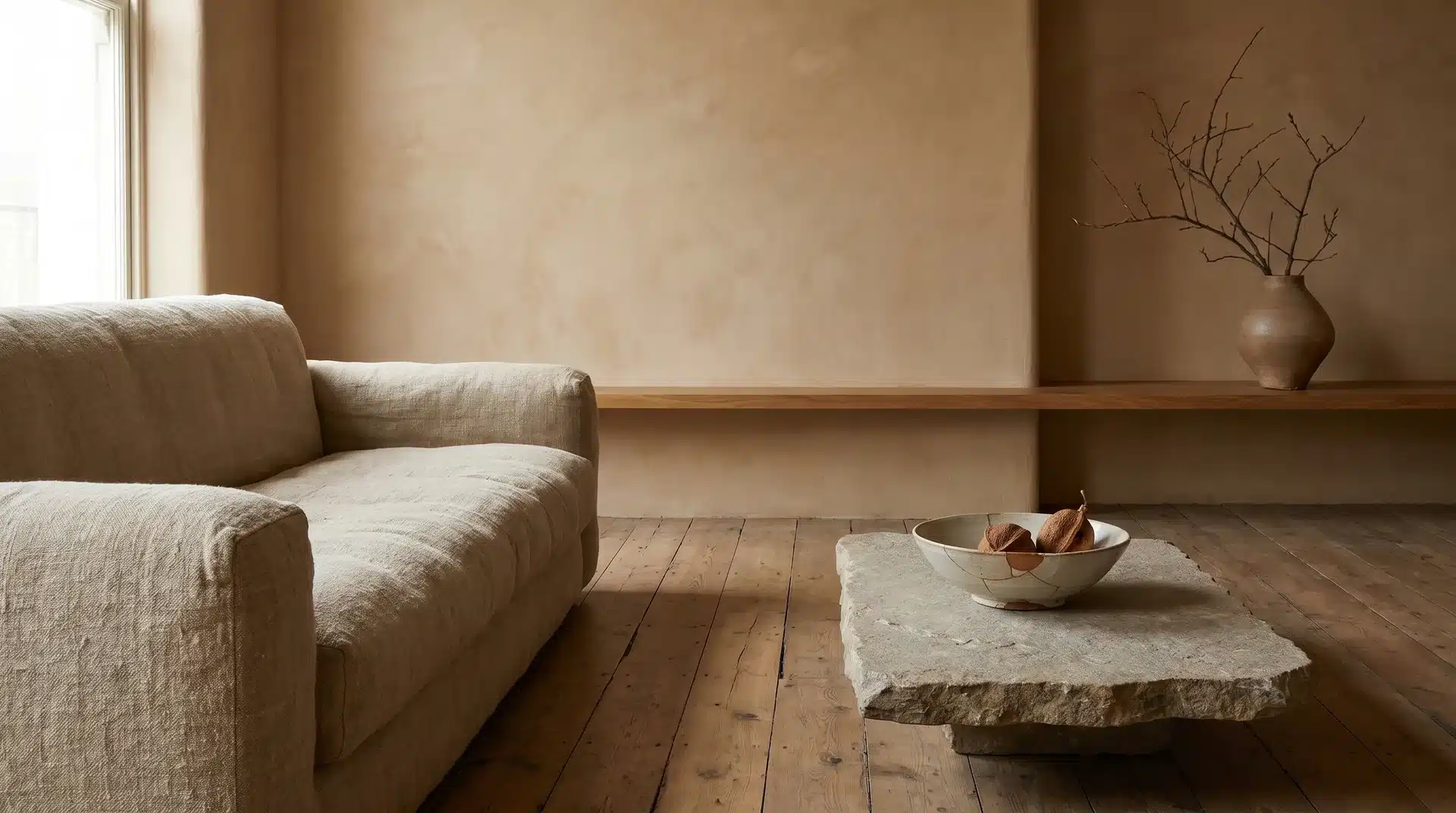
Wabi-sabi is a Japanese philosophy, and it is also a design style. It finds beauty in what is imperfect, aged, and impermanent.
This is not about buying new things. It is about recognizing value in the old, the worn, and the hand-shaped. A bowl with a visible crack. A linen cloth softened from years of use. A table worn smooth at its edges.
Key Features:
- Handmade ceramics with visible cracks or uneven, raw edges
- Natural materials in aged or raw form: clay, stone, unfinished wood
- Aged and worn furniture is kept rather than replaced or repaired
- Very sparse styling with long open pauses of empty wall and floor space
Color Palette: Pale clay, stone gray, warm sand, and muted off-white.
Best For: Meditation spaces, bedrooms, reading corners, and people who want a deeply grounded and peaceful interior.
20. Zen Interior Design
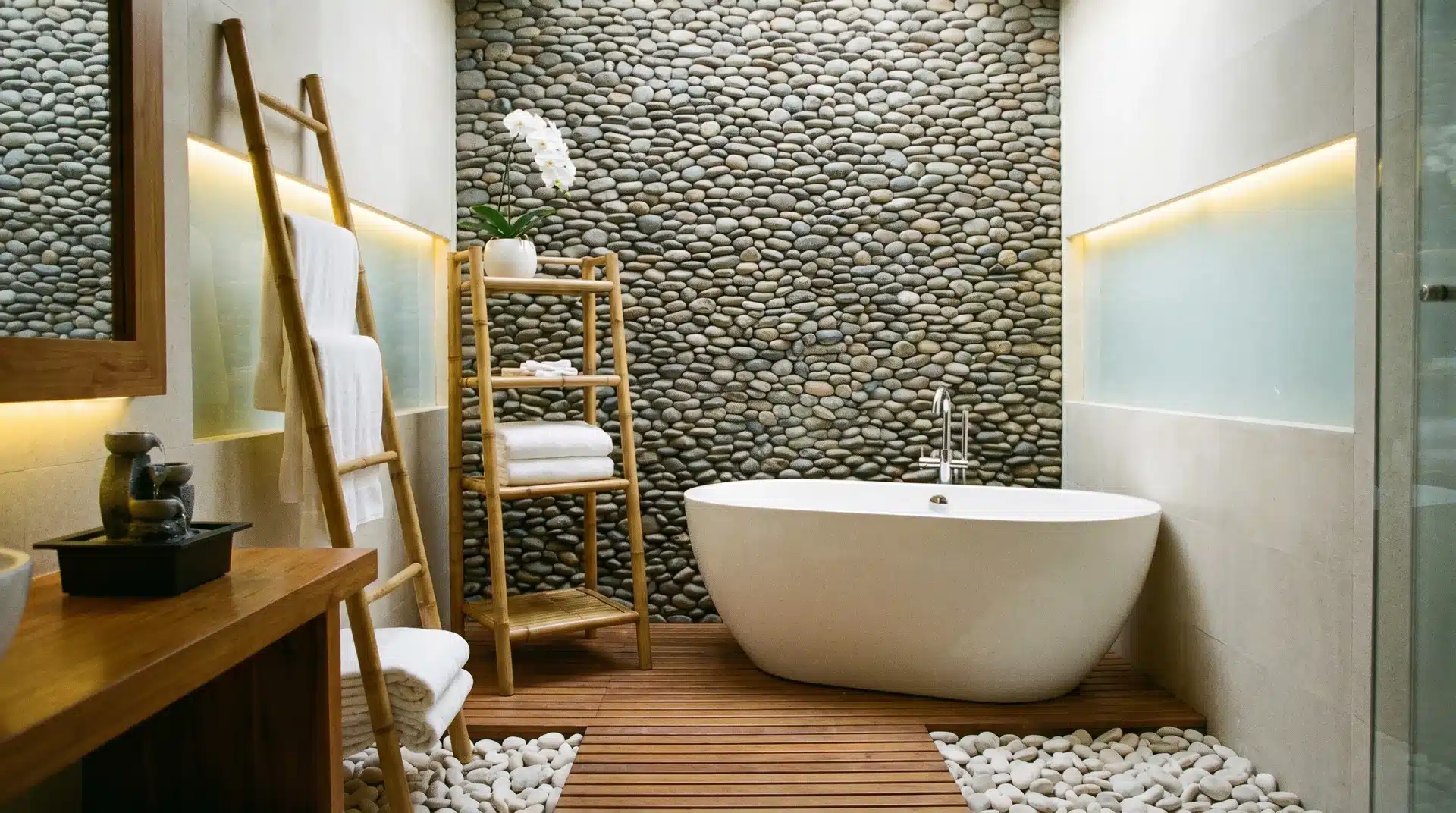
Zen design draws its principles from Buddhist philosophy. The goal is a space that supports mental clarity, calm, and mindful living.
Unlike wabi-sabi, Zen design is more structured and deliberate in its choices. Every element is placed with care. Furniture is minimal. Water features add ambient sound. Plants serve as living focal points. Light is soft and indirect. A Zen room does not ask for your attention. It quietly settles you.
Key Features:
- Very few furnishings, each placed and chosen with full intention
- Indoor water features or small table-top fountains
- Bamboo, stone, and rattan are the primary materials
- Soft, warm, and indirect lighting throughout the entire space
Color Palette: Pure white, soft gray, warm beige, and muted sage. No bright or bold accent colors anywhere.
Best For: Bedrooms, bathrooms, and home wellness spaces for people managing stress or seeking daily calm.
21. French Country Interior Design
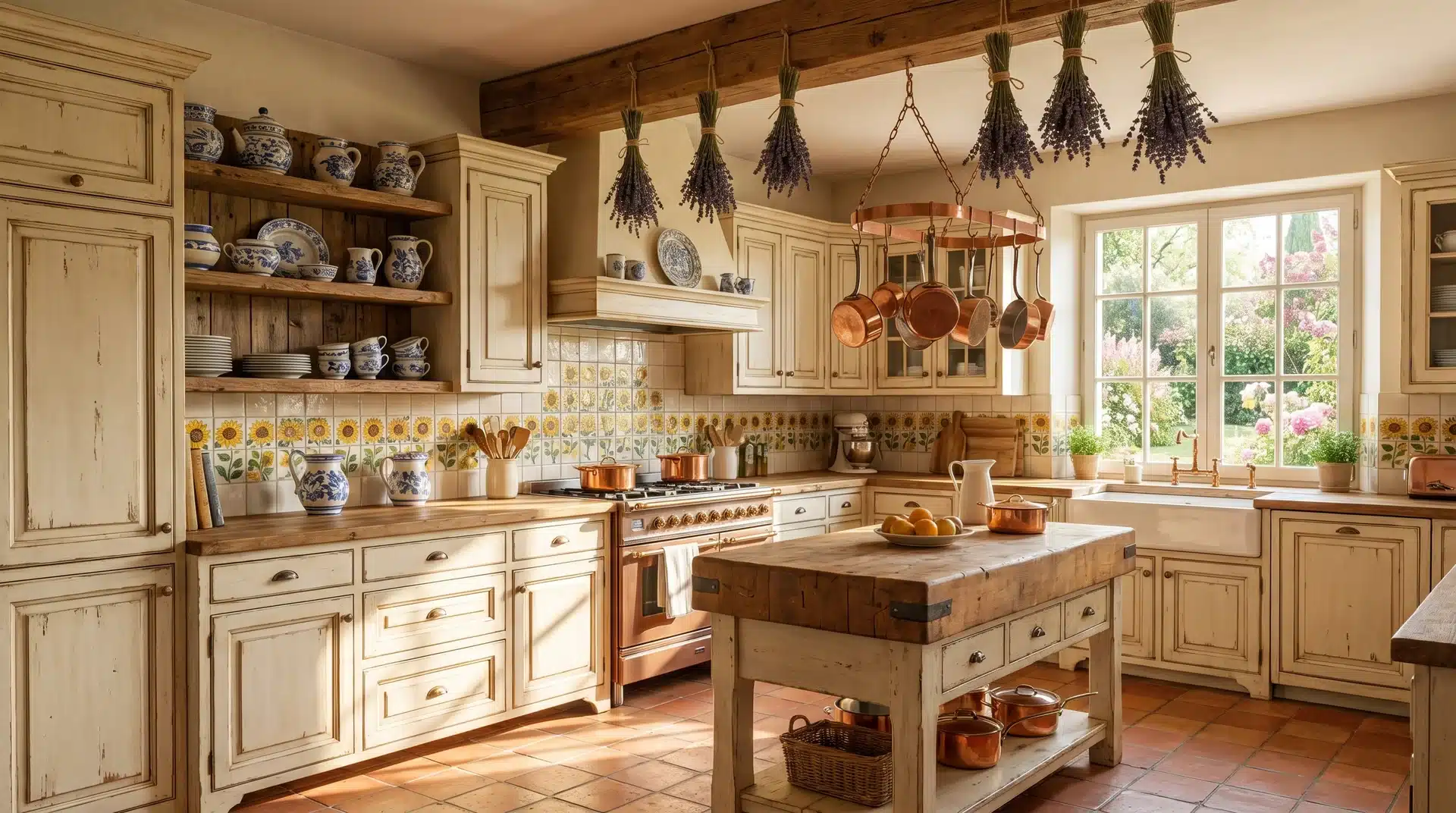
French Country design draws from the Provence region of southern France. It is warm, romantic, and relaxed. It is not formal like Parisian interiors.
Think weekend markets, lavender fields, and sun-baked farmhouses. Furniture is painted in soft white or cream with gentle distressing. Toile and floral fabrics appear on chairs and window panels. Open kitchen shelving holds mismatched pottery.
Key Features:
- Distressed painted wood furniture in white or cream tones
- Toile, floral, and plaid fabrics on upholstery and curtains
- Open kitchen shelving with displayed pottery and glassware
- Stone or terracotta tile floors throughout the home
Color Palette: Lavender, dusty rose, soft blue, and sage over warm cream and linen white.
Best For: Romantic personalities, homes with exposed beams or stone walls, and fans of vintage market and antique furniture finds.
22. Shabby Chic Interior Design
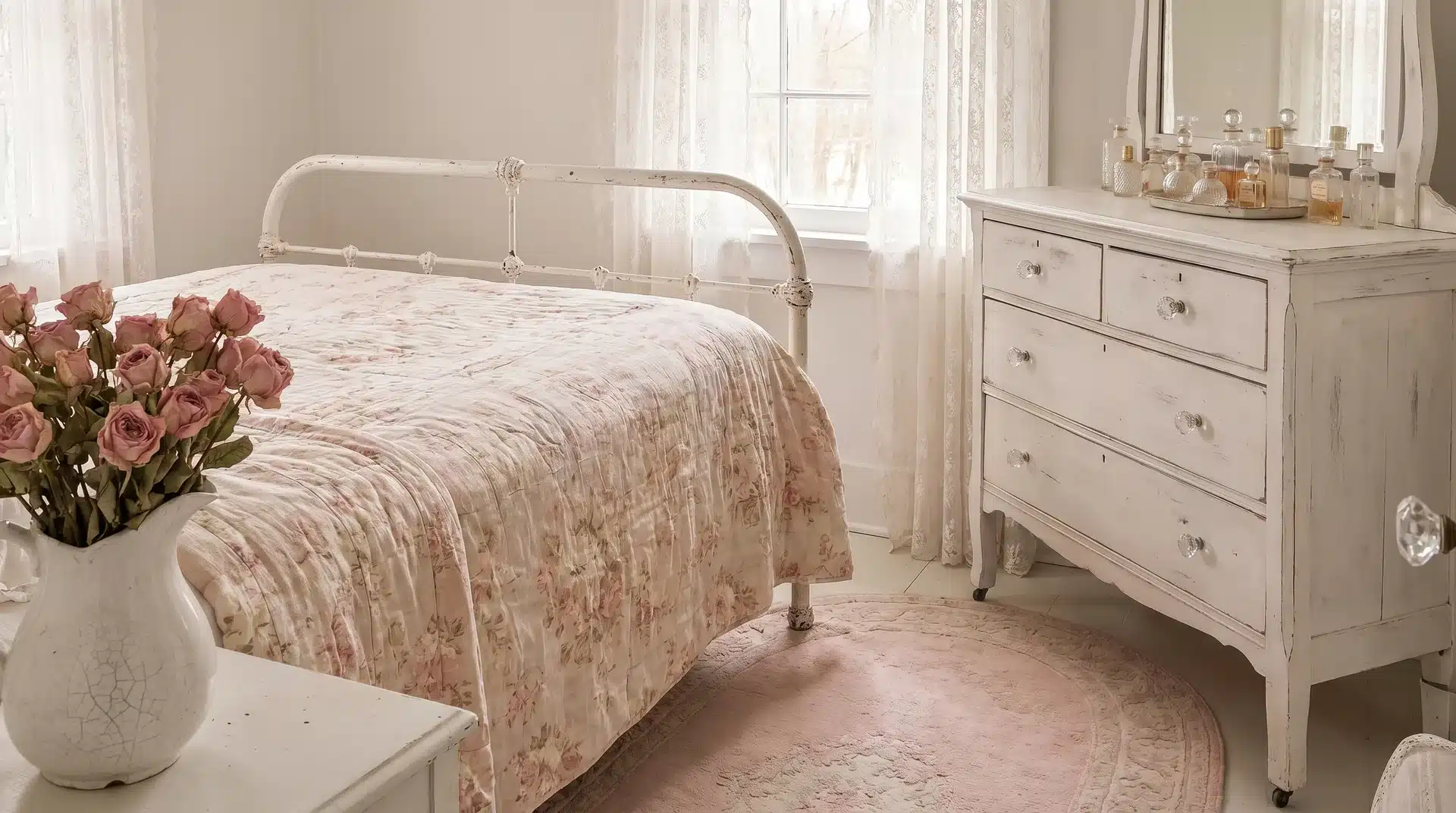
Shabby chic was created by designer Rachel Ashwell in the 1980s. It mixes distressed painted furniture with soft, feminine detail.
The shabbiness is deliberate. White or cream-painted furniture shows its age through visible chipping and wear. Floral fabrics cover sofas, chairs, and cushions. Lace and voile soften windows throughout.
Key Features:
- Chipped and distressed white or cream painted furniture
- Floral print upholstery, curtains, and cushions throughout
- Lace and voile window panels for light, soft light diffusion
- Vintage and flea market furniture are the key focal pieces
Color Palette: All-white base with soft pastels: blush pink, lilac, and pale aqua.
Best For: Bedrooms, sitting rooms, cottage homes, and budget decorators who love second-hand and thrifted furniture finds.
23. Victorian Interior Design
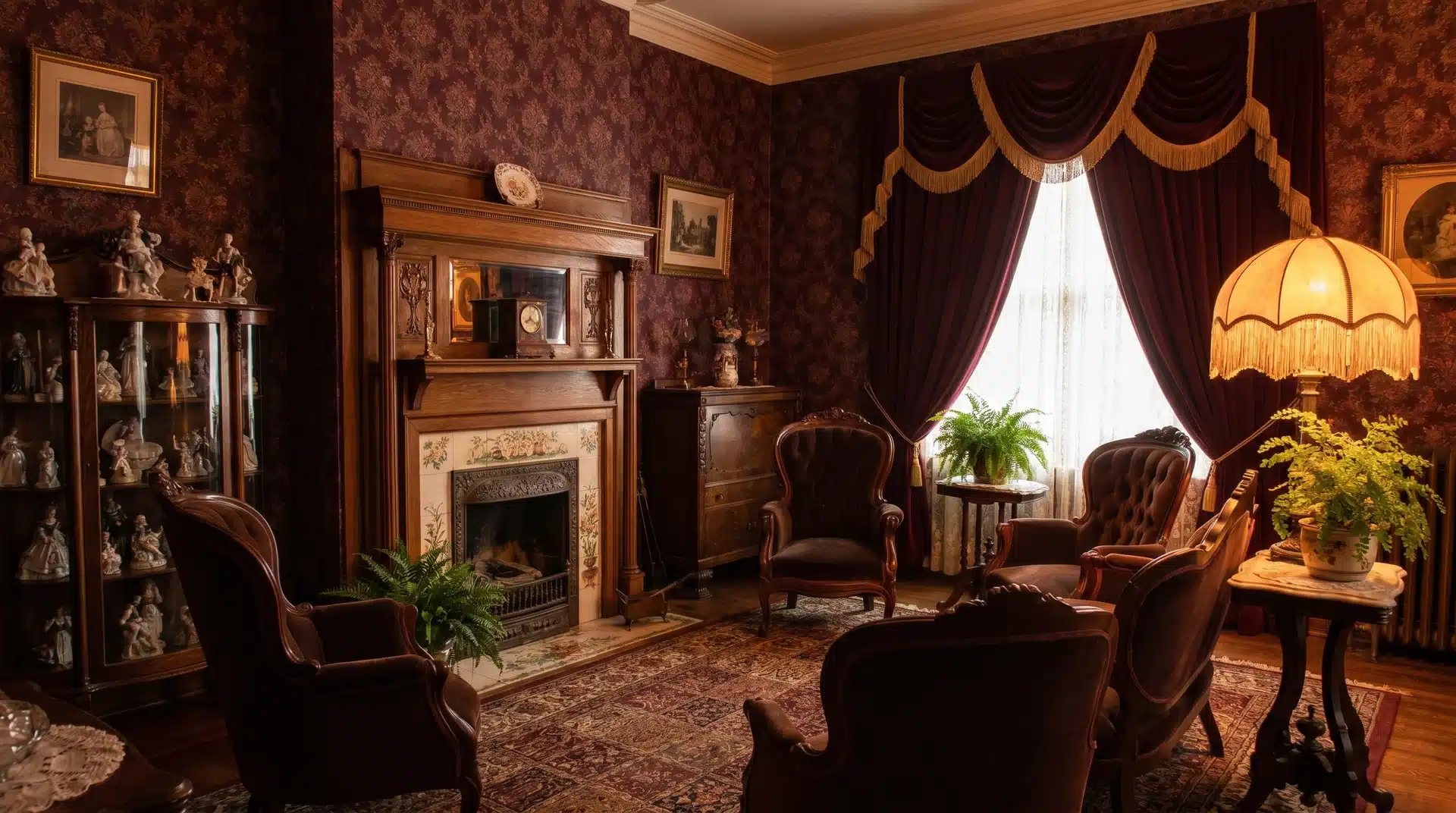
Victorian interior design spans the reign of Queen Victoria from 1837 to 1901. It is one of the most ornamented and layered of all the different interior design styles known today.
Nothing in a Victorian home is left bare or undecorated. Walls carry bold wallpaper in floral or damask patterns. Heavy velvet window treatments hang in multiple layers with tassels and fringe. Dark, carved-wood furniture fills each room. Fireplaces have ornate tiled surrounds and decorative mantels.
Key Features:
- Dark, heavily carved wood furniture throughout every room
- Bold floral or damask wallpaper covering full walls
- Heavy velvet drapes with tassels, fringe, and multiple layers
- Ornate fireplace surrounds with decorative tiled mantels
Color Palette: Burgundy, forest green, royal blue, and plum with cream, gold, and black as contrast.
Best For: Victorian-era homes, antique collectors, and those who love richly layered, historical, and dramatic interiors.
24. Gothic Interior Design
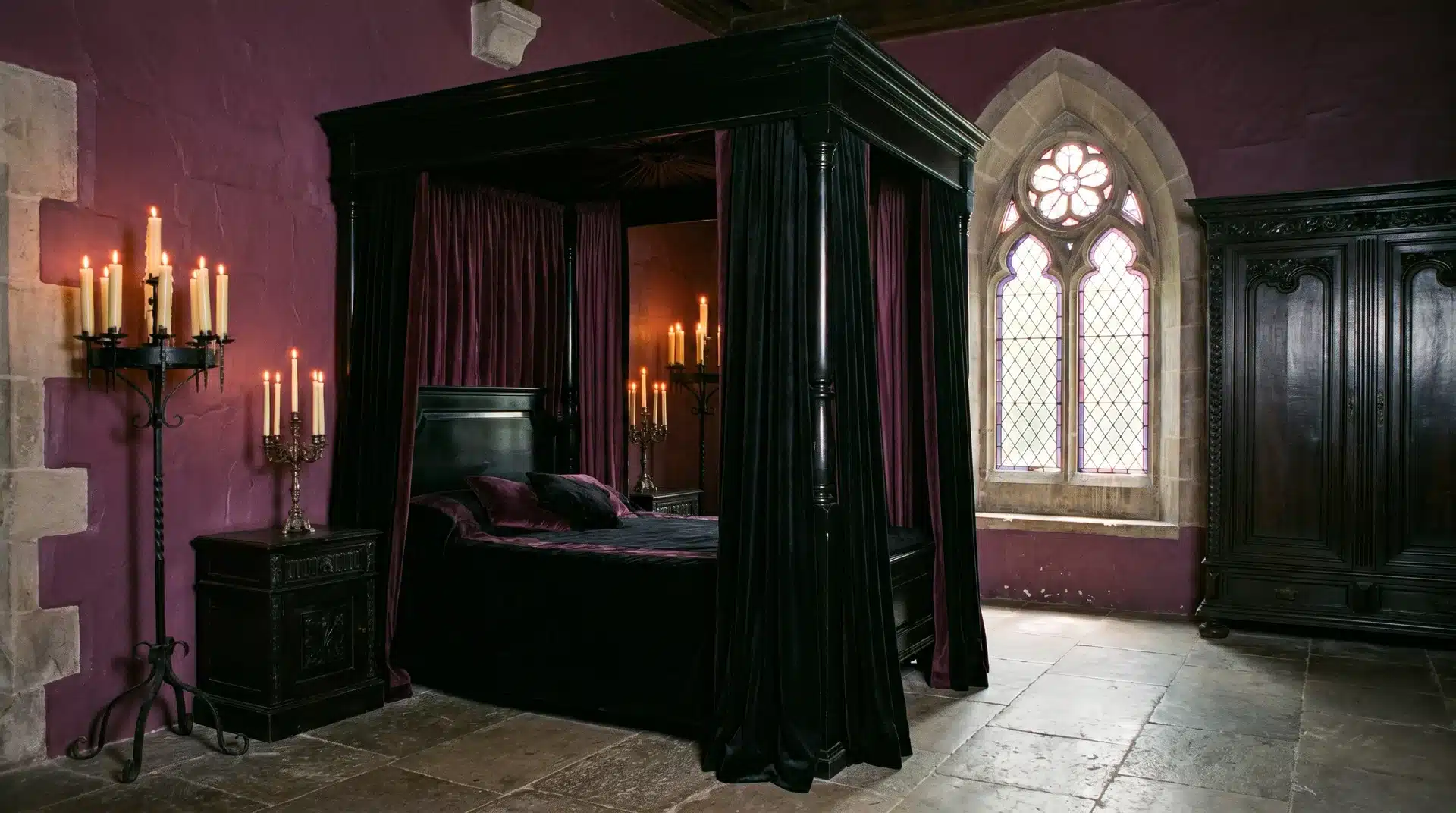
Gothic design draws from medieval European architecture and art. It is dark, atmospheric, and richly textured throughout.
Arched windows and doorways pull directly from Gothic cathedrals. Furniture is heavy and very dark. Candelabras and ornate chandeliers provide moody, low lighting. Rich fabrics like velvet, brocade, and dark silk appear on every surface.
Key Features:
- Arched architectural details in doorways and windows throughout
- Dark furniture in black, ebony, or very dark walnut finishes
- Candelabras and ornate pendant or chandelier lighting
- Rich velvet, brocade, and silk fabrics in very deep tones
Color Palette: Black, deep purple, oxblood red, and dark teal with gold or bronze as the contrast.
Best For: Bedrooms, private libraries, and study spaces. Best for those who love a moody and theatrical atmosphere at home.
25. Art Nouveau Interior Design
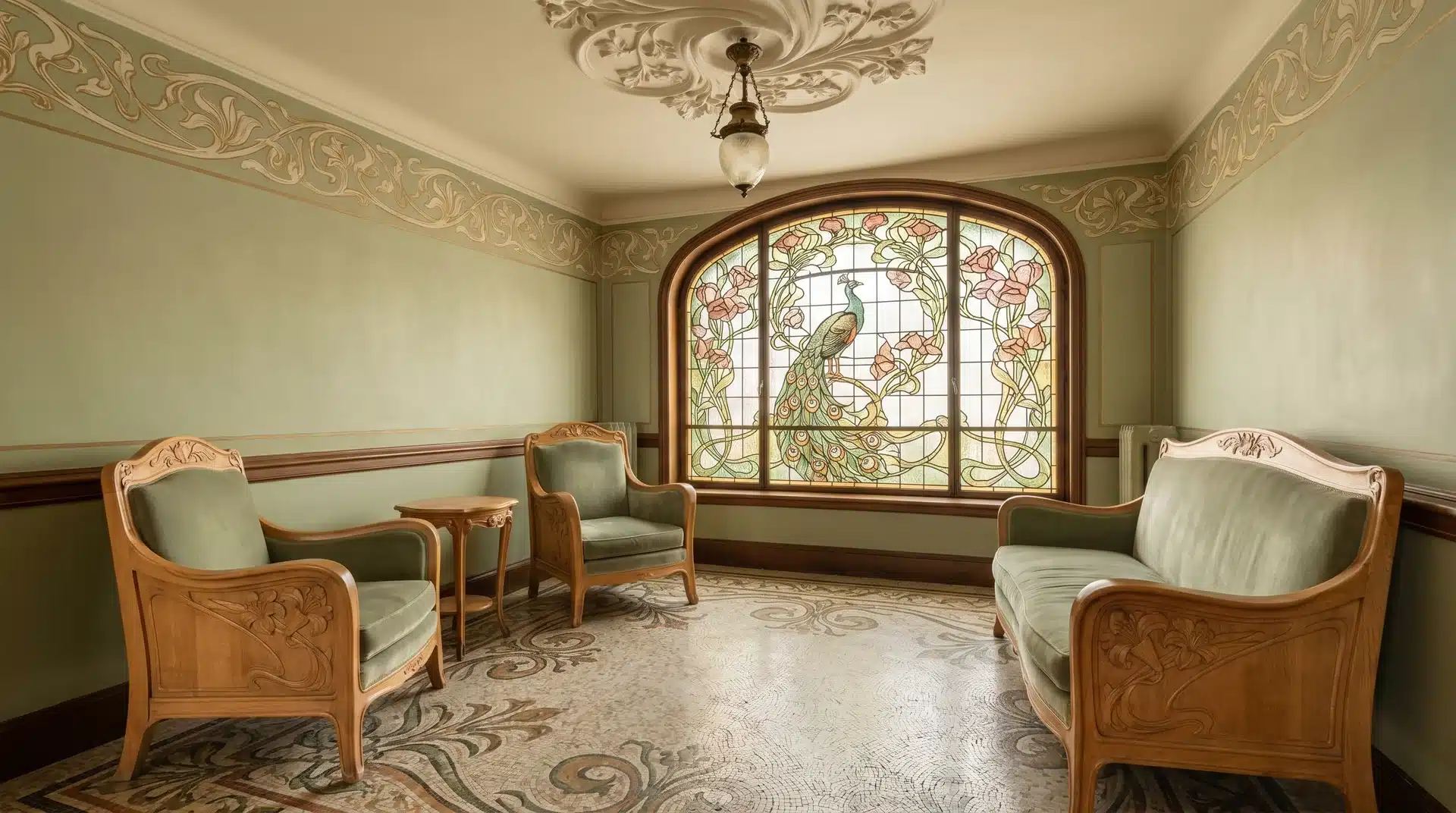
Art Nouveau was active from 1890 to 1910. It grew as a direct rejection of rigid historical styles in favor of organic, flowing form inspired by the natural world.
Every design decision here is driven by nature. Furniture legs curve as plant stems. Ironwork flows like climbing vines. Stained glass fills windows with lilies, peacocks, and floral forms. Tiles carry stylized botanical patterns.
Key Features:
- Curved, plant-like lines in furniture legs and architectural molding
- Stained glass windows with floral and nature-based imagery
- Flowing whiplash curves in carved wood and wrought iron
- Botanical motif tiles in kitchens, bathrooms, and hallways
Color Palette: Muted green, soft dusty gold, ivory, and rose with occasional iridescent or mother-of-pearl finishes.
Best For: Period homes with original architectural details, art lovers, and collectors of handcrafted and artisanal objects.
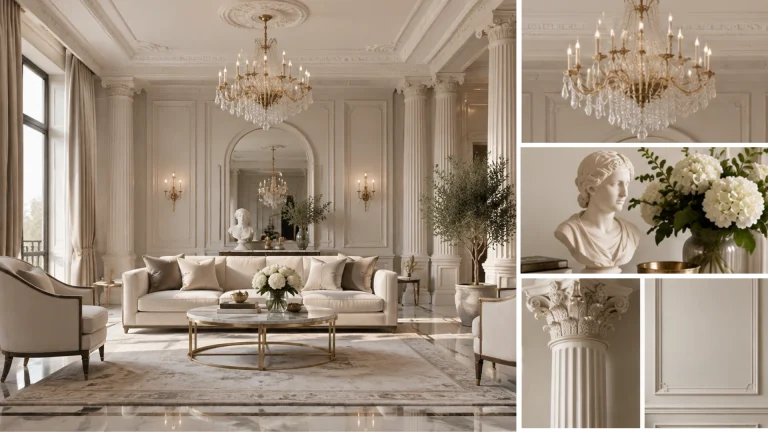
26. Baroque Interior Design
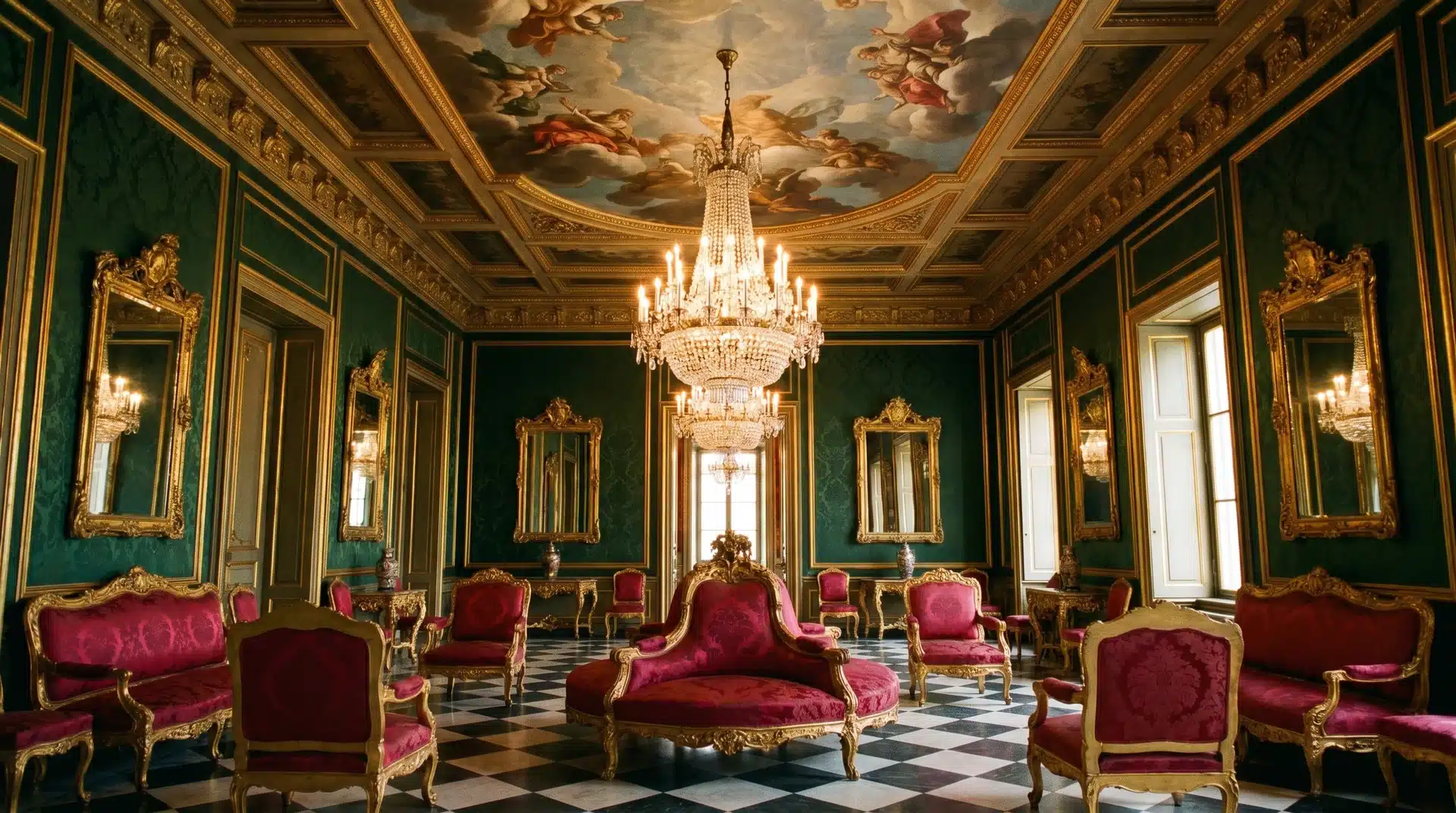
Baroque design originated in 17th-century Italy and spread rapidly across European royal courts. It is one of the most extravagant styles in the entire history of interior design.
Scale drives every decision in a Baroque room. Furniture is large, gilded, and heavily carved. Ceiling murals stretch across grand proportions. Crystal chandeliers hang at dramatic heights. Rich silk and damask drape every window and wall surface.
Key Features:
- Large, gilded furniture with heavy ornamental carving throughout
- Ceiling murals and painted frescoes on upper walls and vaulted ceilings
- Crystal chandeliers are the central and most dramatic lighting statement
- Rich silk, brocade, and damask in deep, saturated colors
Color Palette: Burgundy, navy blue, deep emerald, and royal purple always set against gold.
Best For: Large homes with high ceilings and grand proportions. Also suits modern-baroque fusion lovers who want luxury with some restraint.
27. Eclectic Interior Design
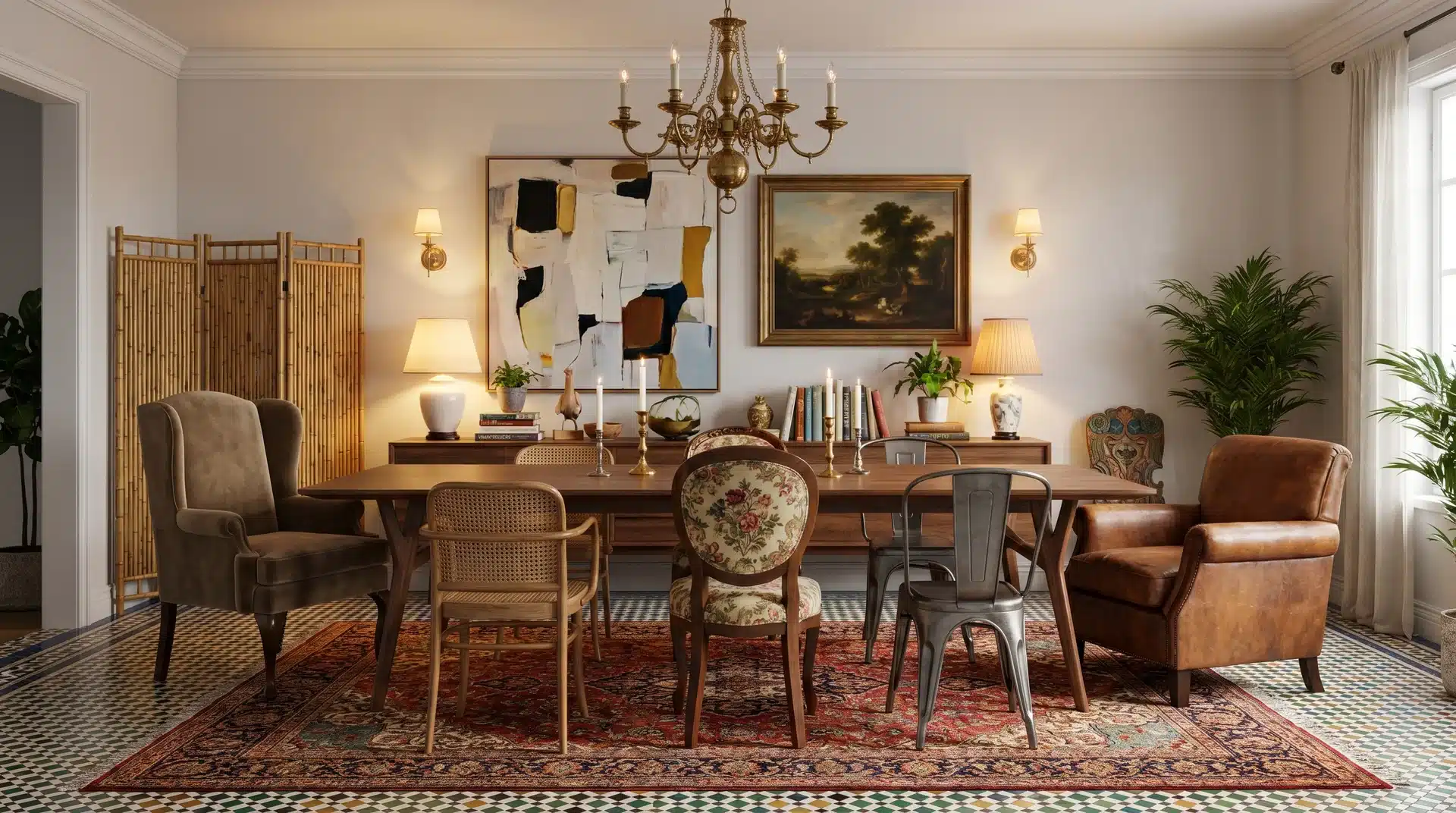
Eclectic design intentionally mixes elements from different styles, time periods, and cultures. The keyword is intentional. Random mixing looks like chaos. Purposeful mixing looks like confidence.
The skill here is finding a single unifying thread that runs through the room. That thread might be a color, a material, a scale, or a texture. Once it connects the pieces, mismatched items start to feel cohesive. A Victorian armchair next to a modern floor lamp works when a shared color ties them together.
Key Features:
- Items from different design eras are placed side by side deliberately
- Bold use of color and pattern as the primary unifying thread
- No single dominant style controls the entire room
- Personal collections and sentimental objects are displayed as focal points
Color Palette: Varies widely. Always anchored by one unifying color or material that links every piece in the room.
Best For: Curious minds, world travelers, and people who love many different styles and see no reason to choose just one.
28. Southwestern Interior Design
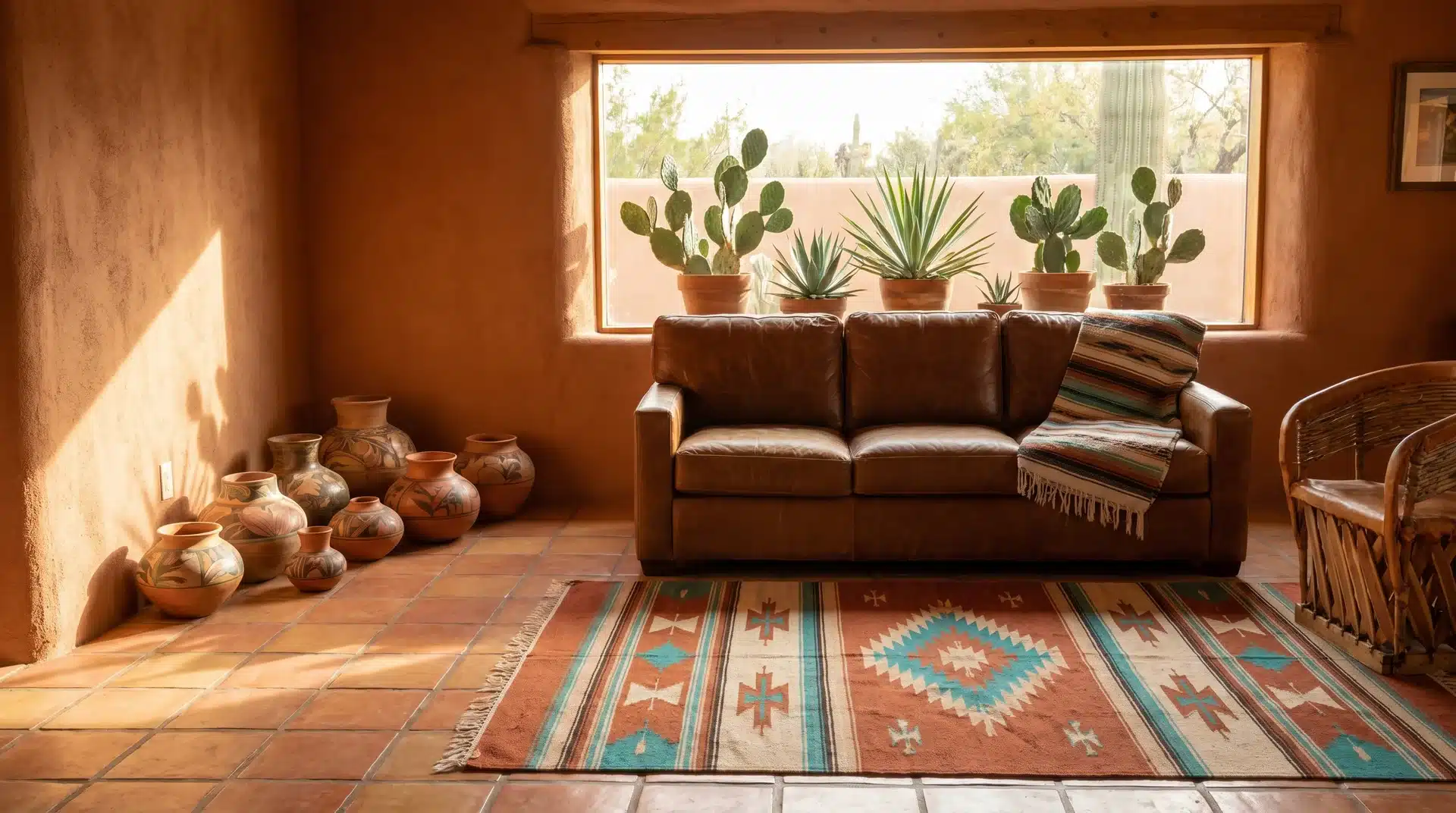
Southwestern design is inspired by the desert landscapes and Indigenous cultures of the American Southwest. It is one of the most distinctly regional interior design styles in America.
Adobe-style walls and warm earth tones set the base. Navajo and Aztec geometric patterns appear on rugs and throws. Terracotta pottery and hand-painted tiles serve as decor. Leather and suede replace heavier upholstery fabrics. Cactus and desert plants bring the outdoor environment inside.
Key Features:
- Geometric Navajo and Aztec patterns on rugs and textiles
- Terracotta pottery and hand-painted decorative tiles
- Leather and suede upholstery throughout the seating
- Desert plants: cactus, agave, and succulents as living decor
Color Palette: Terracotta, rust, turquoise, warm sand, and chili red over cream and natural tan.
Best For: Homes in Arizona, New Mexico, Texas, and desert climates. Also suits those who love earthy and culturally rich decor traditions.
29. Asian Fusion Interior Design
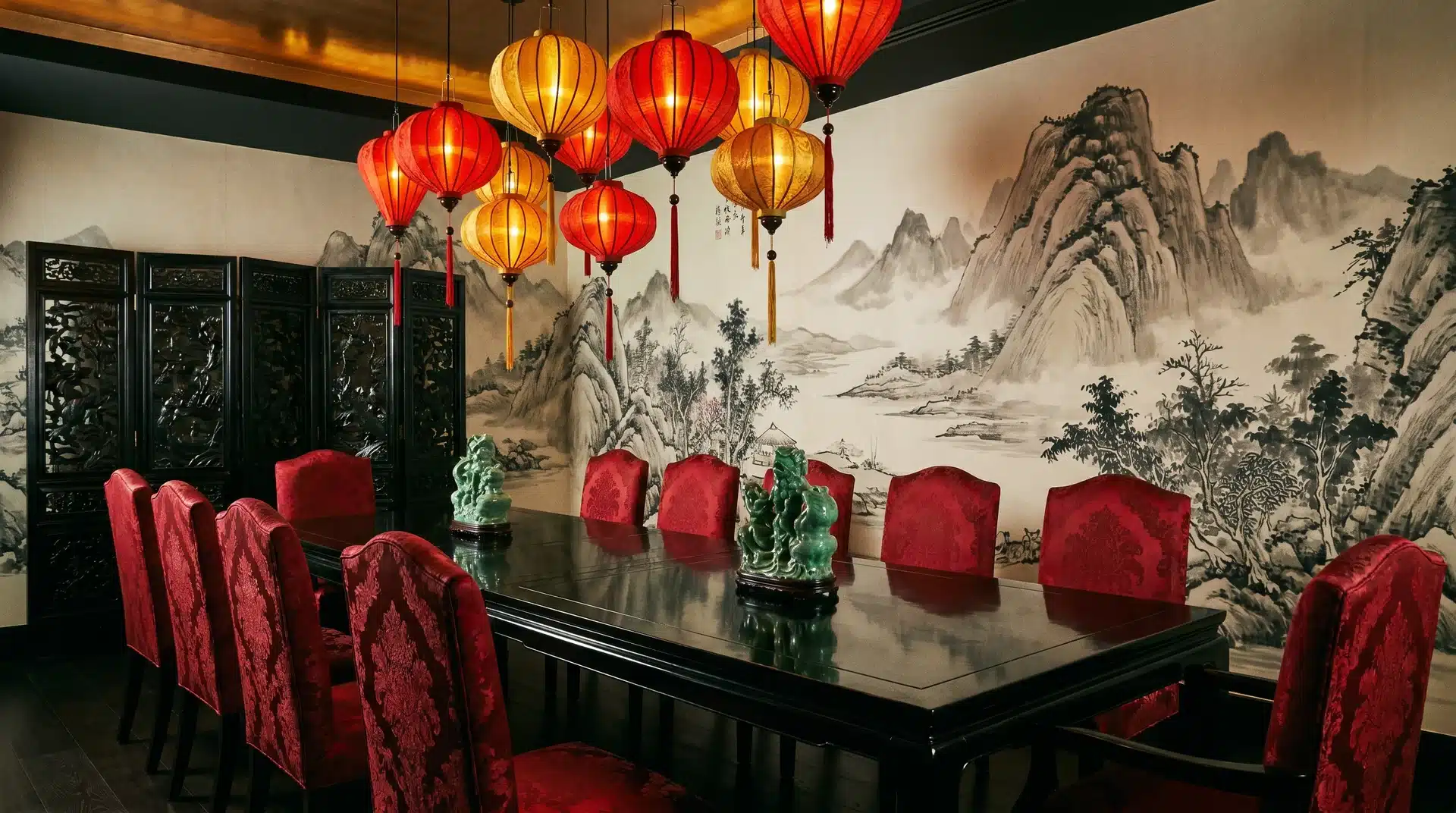
Asian Fusion design blends decorative traditions from multiple Asian cultures: Chinese, Japanese, Vietnamese, Thai, and Indian. The result is rich, layered, and deeply decorative throughout.
Lacquered furniture in red, black, or gold anchors the room. Silk brocade with cultural motifs covers cushions and window panels.
Bamboo, dark exotic wood, and handcrafted paper lanterns add depth. Folding decorative screens divide spaces without closing them. This style celebrates artisanship at every visible level.
Key Features:
- Lacquered furniture in red, gold, or black finishes
- Silk and brocade fabrics with floral or geometric cultural motifs
- Bamboo, rattan, and dark exotic hardwood are used throughout
- Decorative folding screens are used as both dividers and art
Color Palette: Deep red, black, gold, and jade green with ivory or soft cream as a grounding base.
Best For: Dining rooms, living areas, and people with a deep appreciation for Asian craft history and artisanship traditions.
30. Cottagecore Interior Design
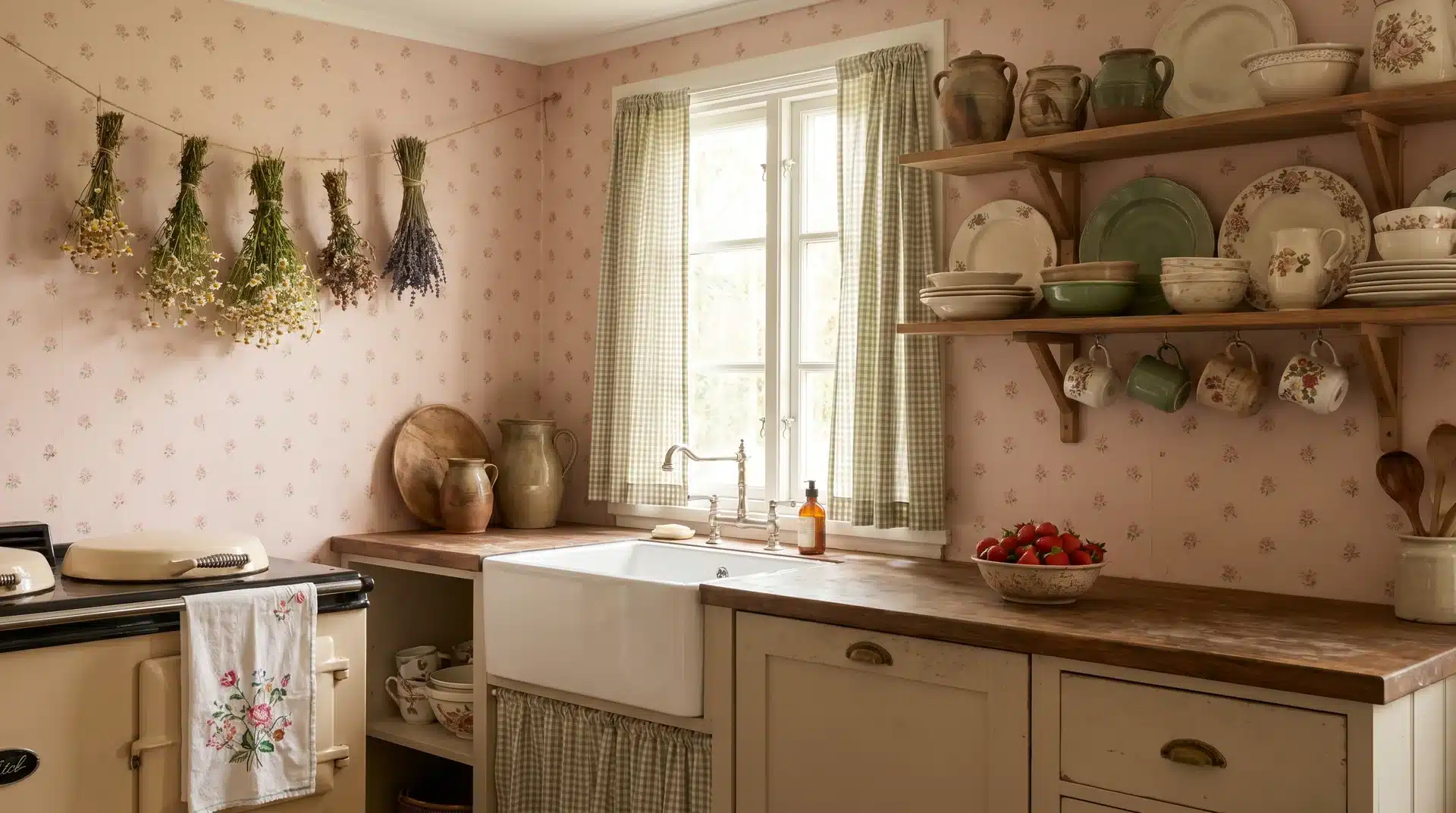
Cottagecore is a modern design trend inspired by a romanticized vision of rural cottage life. It gained wide attention around 2020 through social media communities, particularly among younger decorators.
Floral wallpaper covers accent walls. Dried flowers hang from ceiling beams. Open shelves hold mismatched vintage china and hand-thrown pottery. Gingham, crochet, and embroidery appear on cushions and throws.
Key Features:
- Floral wallpaper and printed fabrics in soft, vintage-inspired tones
- Dried flower bundles and pressed botanicals as wall and shelf decor
- Mismatched vintage china displayed on open wood shelving
- Gingham, crochet, and embroidered textile details throughout
Color Palette: Soft sage, dusty rose, butter yellow, and powder blue over warm cream and antique white.
Best For: Nature lovers, bakers, and gardeners. Works very well for renters wanting warmth and character without major renovation.
31. Dark Academia Interior Design
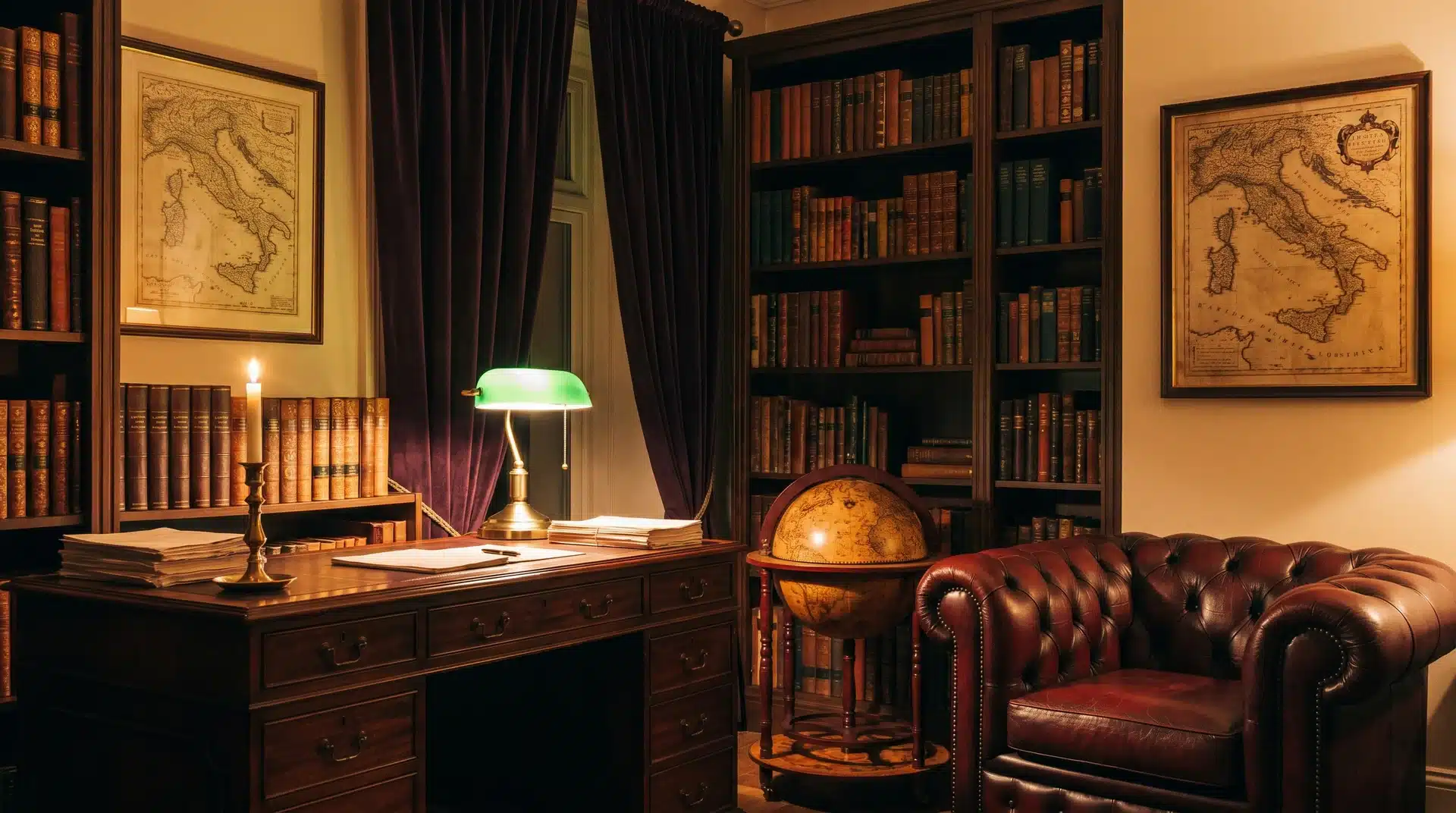
Dark Academia is a moody, scholarly design style inspired by old European universities and grand private libraries. It grew in popularity through online communities during the early 2020s.
Floor-to-ceiling dark wood bookshelves define the space. Antique globes, vintage maps, and old scientific instruments sit on desks and shelves. Oxblood velvet armchairs face heavy curtain-draped windows.
Warm amber light from brass fixtures fills the room. The atmosphere is that of a private study belonging to a serious and passionate mind.
Key Features:
- Wall-to-wall dark wood bookshelves are the primary defining feature
- Antique instruments, vintage maps, and old books as display objects
- Deep green or oxblood velvet armchairs as seating
- Brass desk lamps and warm candlelight-style lighting throughout
Color Palette: Oxblood, forest green, dark walnut brown, and ink black with aged parchment and antique gold as contrast.
Best For: Writers, book lovers, and scholars. Works best in home offices, reading rooms, and private library spaces.
32. Grandmillennial Interior Design
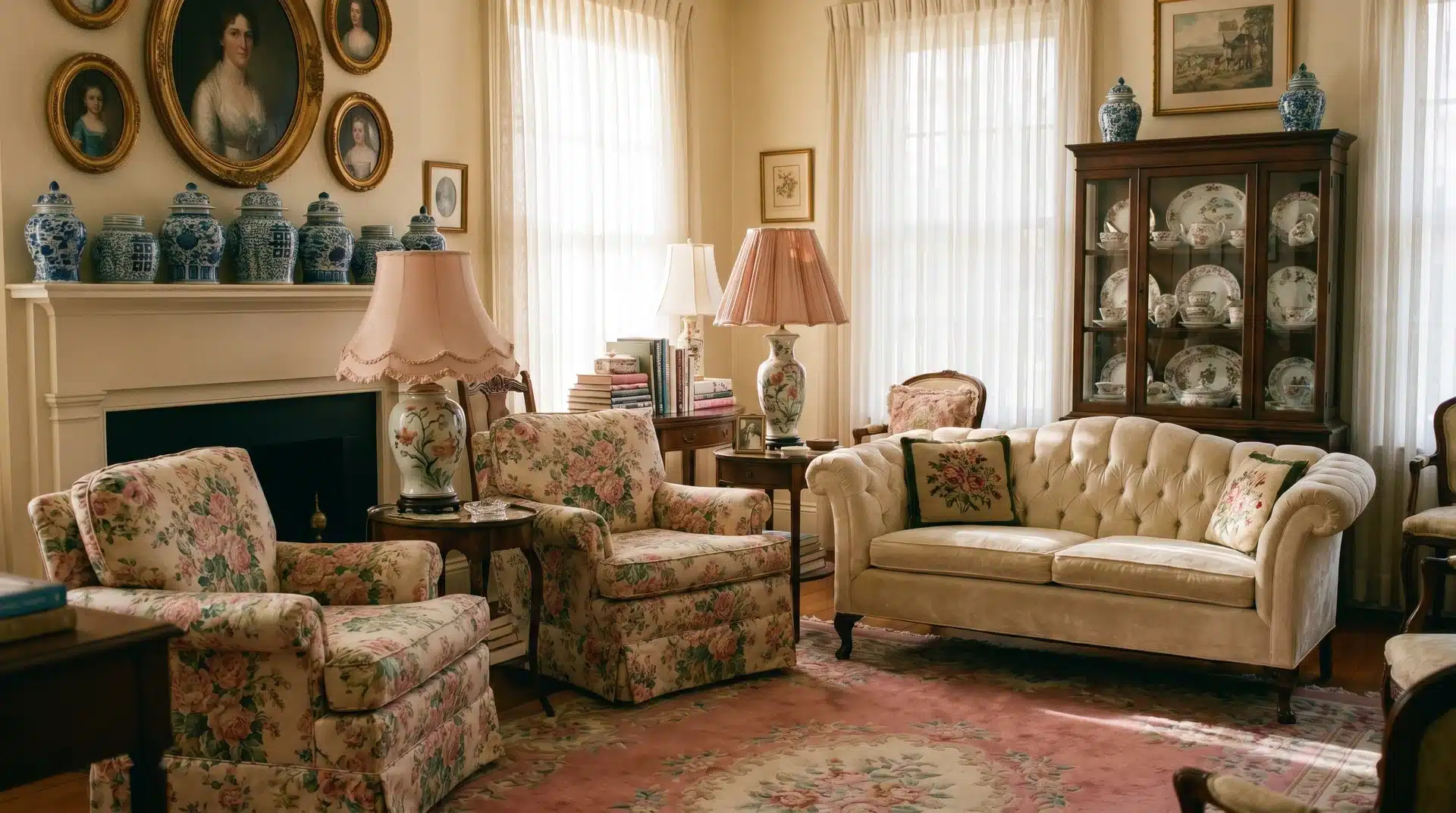
Grandmillennial design revives traditional, grandmother-era decor that younger generations once dismissed. Today, it’s a conscious, affectionate choice for many decorators. Chintz floral upholstery, ruffled lampshades, blue-and-white porcelain, and needlepoint cushions are back in fashion.
This style emerged partly as a reaction to overly minimalist spaces, celebrating the warmth, color, and layered personality of the homes people grew up in. Now, it’s chosen deliberately rather than inherited by default.
Key Features:
- Chintz floral upholstery on sofas and armchairs
- Ruffled and pleated lampshades on table lamps
- Blue and white decorative porcelain as a recurring visual theme
- Needlepoint cushions, embroidered linens, and portrait gallery walls
Color Palette: Soft blue and white, warm rose, and butter yellow over cream or antique white.
Best For: Young people who grew up in traditional homes, inherited furniture collectors, and those who find minimalist spaces cold and impersonal.
33. Biophilic Interior Design
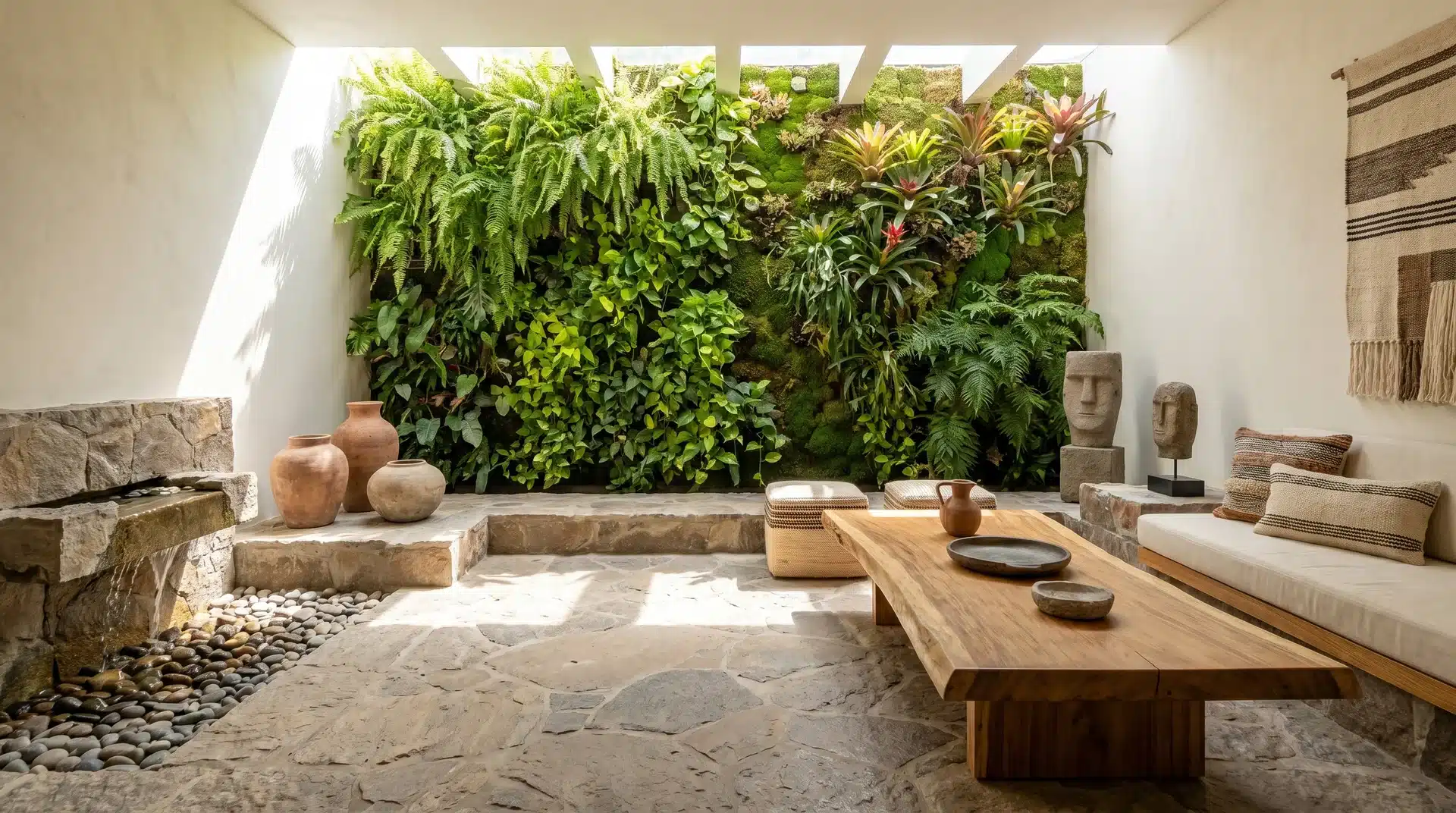
Biophilic design is built on the idea that human beings have an instinctive need to connect with nature. It goes far beyond placing a potted plant on a shelf or windowsill.
Living plant walls replace standard wallpaper. Indoor water features bring the sound of running water inside. Stone, bark, clay, and moss appear in their most raw forms throughout the space. Large windows and skylights maximize daylight from every possible angle.
Key Features:
- Living plant walls and ceiling garden installations
- Indoor water features: table fountains or wall-mounted water walls
- Unprocessed natural materials: raw stone, bark, dried moss, and clay
- Large windows and skylights for consistent natural light throughout the day
Color Palette: All shades of green from sage to deep forest, paired with earthy brown, warm stone tones, and sky blue.
Best For: Urban dwellers who miss natural surroundings, home offices, and wellness-conscious individuals.
34. Brutalist Interior Design
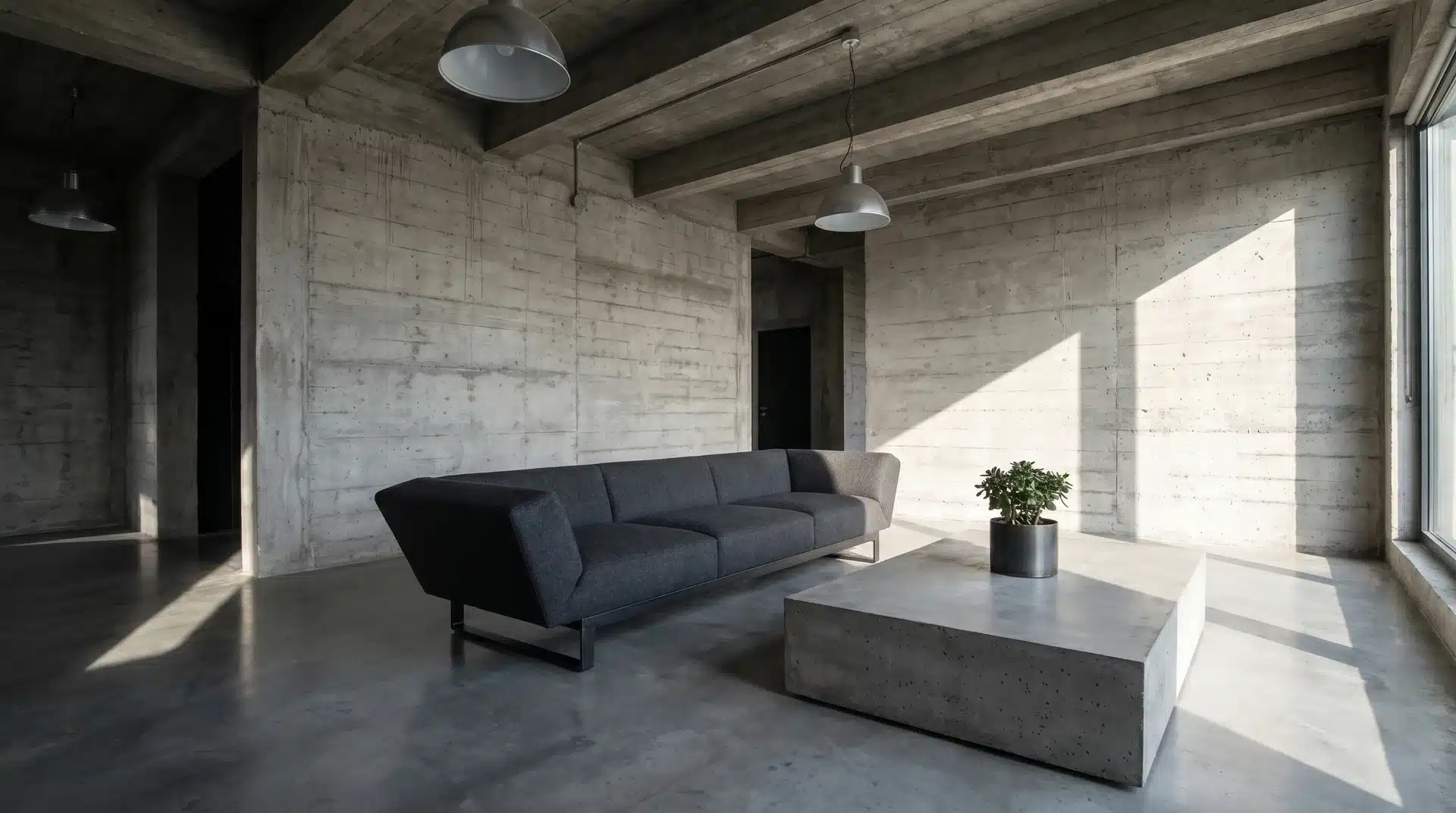
Brutalism began as an architectural movement in the 1950s and 1960s. Its name comes from the French phrase béton brut, meaning raw concrete. As a residential style, brutalism is rare and deliberate.
Concrete walls, ceilings, and floors stay unfinished. Furniture is heavy and angular. Decoration is nearly absent. The beauty here is confrontational. It asks you to sit with rawness and find something powerful in it.
Key Features:
- Raw, unfinished concrete walls, ceilings, and floors
- Heavy, angular furniture in stone, concrete, or dark metal
- Almost no surface decoration of any kind anywhere
- Bold, oversized proportions and very high ceilings throughout
Color Palette: Raw concrete gray, matte black, and chalky white with occasional warm wood tones to soften the space.
Best For: Loft apartments with original concrete structure, architecture enthusiasts, and design purists who find beauty in structural honesty.
How to Choose the Right Interior Design Style for Your Home?
Choosing the right interior design style starts with one question: how do you want to feel in your home?
If you want calm and mental clarity, look at minimalist, Zen, Scandinavian, or Japandi styles. If you want warmth and comfort, farmhouse, French Country, or transitional design will serve you better.
Think about your home’s existing architecture, too. Older properties with high ceilings, crown molding, and period features point toward traditional, Victorian, or Art Deco styles.
Newer, open-plan homes work well with modern or contemporary design. Your lifestyle plays a role as well. Families with young children need durable materials and washable fabrics.
Collectors need space and visibility. Budget-conscious decorators do well with bohemian, shabby chic, or cottagecore styles. In these styles, second-hand and vintage finds are part of the design.
Start by deciding how you want the space to feel. The right style will follow from there.
Conclusion
This blog covers different interior design styles. Each one has a distinct look, feel, and personality. Knowing the difference changes how you shop, how you decorate, and how your home feels to live in.
You do not need to pick a style and follow it rigidly. Use it as a starting point. Let it guide your wider choices while leaving room for pieces you love.
Want to go further? Check out our post on mixing furniture styles without losing cohesion. Leave a comment below and tell us which style you are drawn to most.