How to Bring Nature Indoors with Biophilic Design?

Your home should feel like somewhere you want to spend time. But many rooms feel cold, flat, and cut off from the natural world.
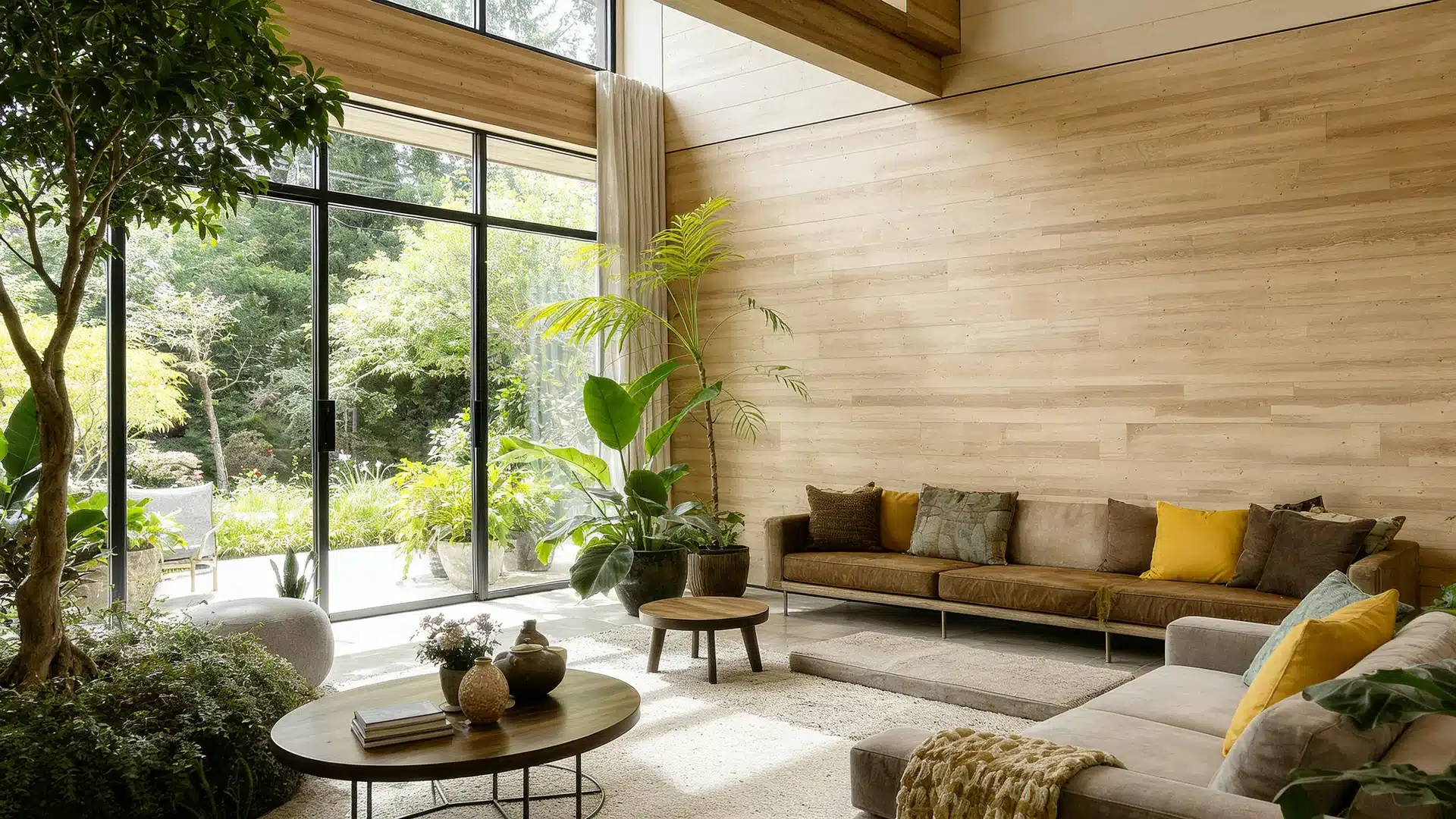
Biophilic interior design fixes that. It is a design approach that brings nature into your living space through plants, wood, stone, natural light, and water.
Contact with natural elements has been linked to lower stress and better focus. And you do not need a big budget to make it work.
This post covers what biophilic design is, where it came from, its key features, and ideas you can apply in your own home right now.
What Is Biophilic Interior Design?
Biophilic interior design is a style that connects indoor living spaces to the natural world through real plants, natural materials, organic shapes, water, and light.
The word biophilic comes from the Greek words bios (life) and philia (love), meaning a love of living things. This design approach is not just about aesthetics; it focuses on how spaces make people feel, promoting well-being, reducing stress, and enhancing comfort.
Incorporating natural elements, textures, and patterns creates a calming, restorative environment that encourages a deeper connection to nature and improves mood, focus, and overall health.
Where Did Biophilic Design Come From?
The roots of biophilic design trace back to American biologist Edward O. Wilson published his book Biophilia. Wilson argued that humans have a deep, biological need to connect with nature and other living things. People had always known they felt better near trees, rivers, and open skies. Wilson gave that feeling a name and a scientific framework.
Architects and interior designers began applying those ideas to the spaces they built and decorated. Here is how the idea developed over time:
- 1984: Edward O. Wilson publishes Biophilia, establishing the human need for nature as a biological principle.
- 1990s: Architects begin using nature-based principles in sustainable building design.
- 2000s: The WELL Building Standard is introduced, embedding biophilic elements into building health certification systems.
- 2010s: Interior designers bring biophilic principles into everyday home spaces, not just large commercial buildings.
- 2020 onward: The rise of remote work pushed homeowners to rethink their indoor environments. Interest in biophilic home design grew sharply across the United States.
Today, biophilic interior design is one of the most widely searched home design styles in the country.
Key Features of Biophilic Interior Design
Biophilic design is more than a single color palette or a shelf full of plants. It is built on a set of clear principles that, when layered together, make a space feel genuinely connected to the natural world.
- Direct nature connection: Using living elements like real plants, water features, and natural light inside your rooms.
- Natural materials: Wood, stone, rattan, jute, bamboo, and linen in place of plastic and synthetic alternatives.
- Organic shapes and patterns: Curved edges, leaf motifs, and flowing forms that echo the shapes found in nature.
- Natural light: Windows, skylights, and reflected light take priority over artificial lighting.
- Nature-inspired color palette: Greens, earthy browns, terracottas, sandy beiges, and sky blues drawn directly from the outdoors.
- Sensory engagement: Natural textures, water sounds, and earthy scents that engage touch, hearing, and smell, not just sight.
- Visual connection to the outdoors: Clear views of gardens, trees, or open sky through windows or glass doors.
11 Biophilic Interior Design Ideas You Can Try at Home
You do not need to overhaul your entire home for biophilic design to work. Each of these 11 ideas stands on its own and can be added to your space one at a time, at your own pace.
1. Add Houseplants to Every Room
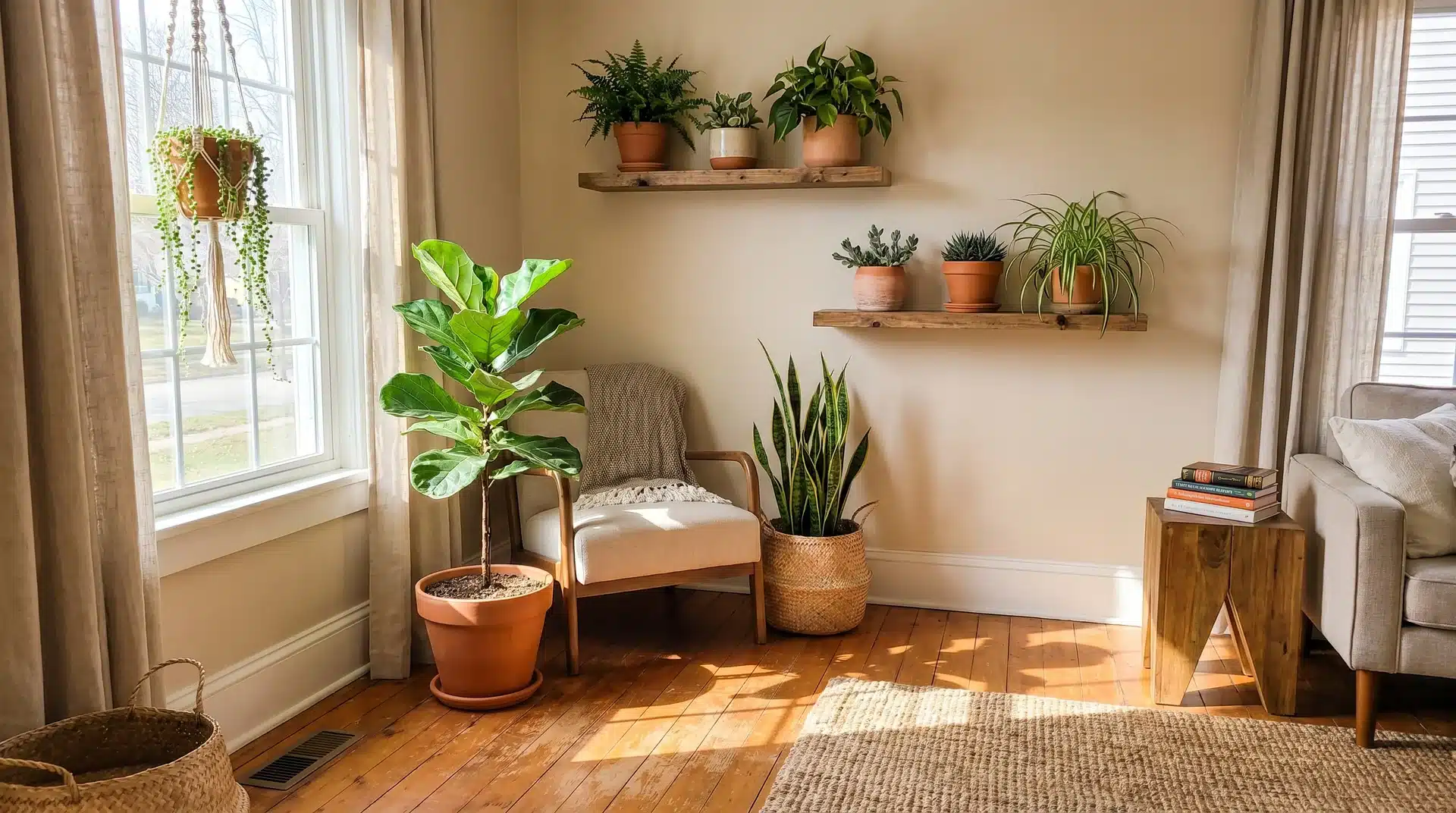
Plants are the most direct and affordable way to start biophilic interior design in any space. A large floor plant, such as a fiddle leaf fig or snake plant, creates a strong visual anchor in a living room or bedroom.
Smaller plants like pothos, spider plants, or peace lilies work well on shelves and windowsills. Group plants in clusters of two or three for a natural, layered look rather than placing a single pot alone in a corner.
2. Use Natural Materials in Your Furniture and Decor
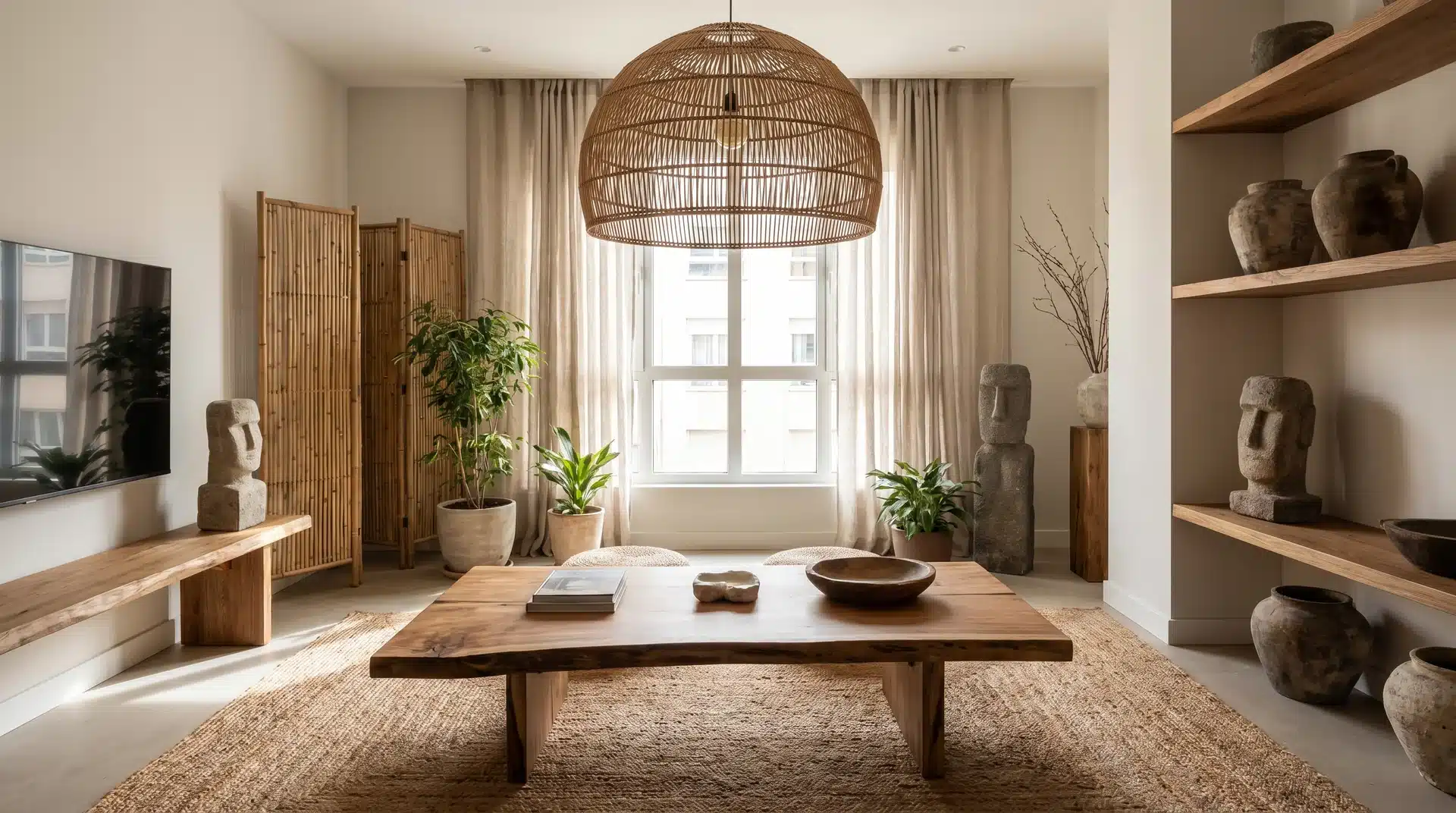
Swapping synthetic surfaces for natural ones changes how a room feels to the eye and the hand.
A wooden coffee table, a jute area rug, a rattan side chair, or a bamboo pendant light all bring warmth and texture that plastic or laminate finishes simply cannot match. You do not need to replace every piece at once. Start with one or two key items and build from there.
3. Let in as Much Natural Light as Possible
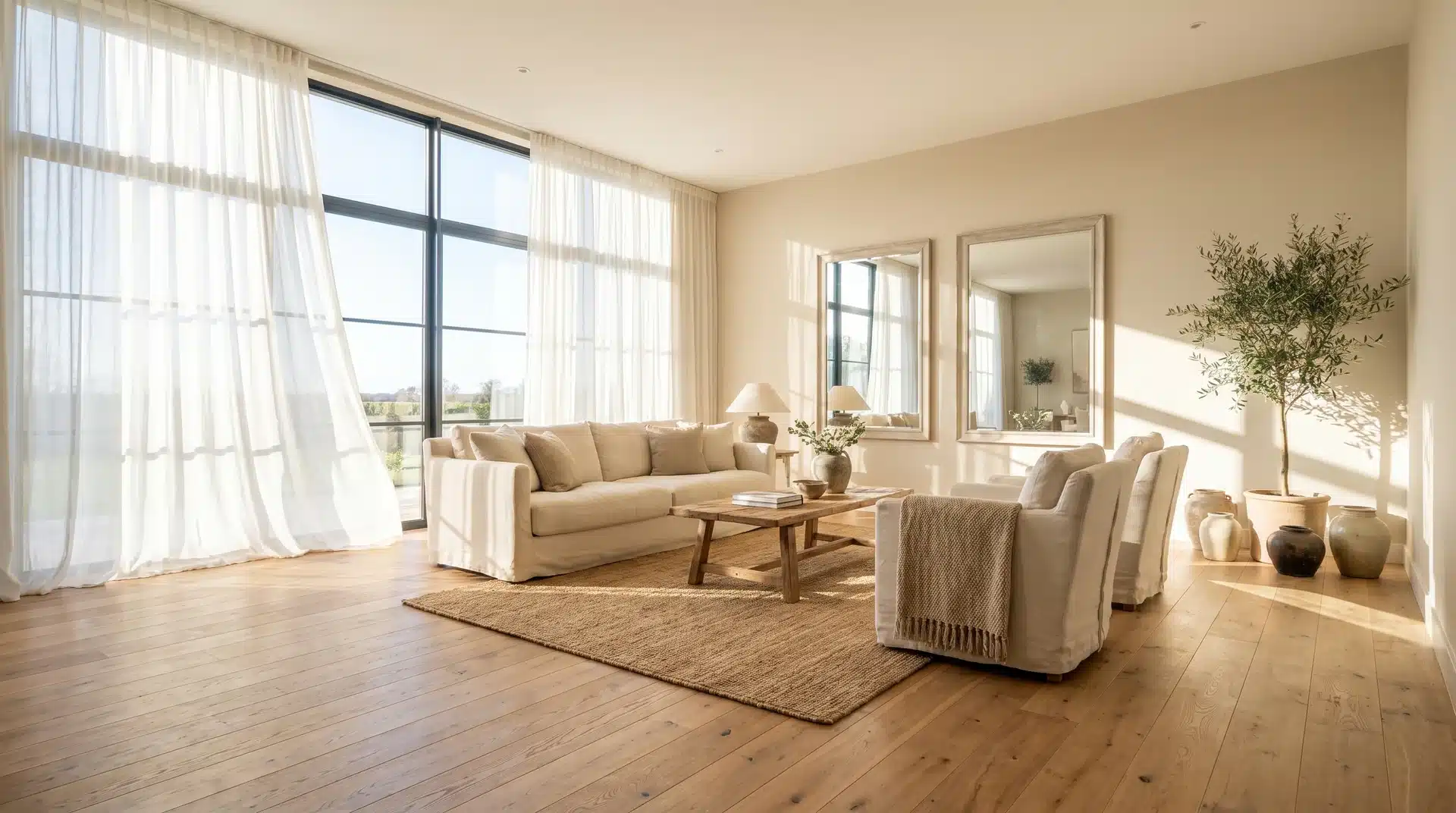
Natural light is one of the most powerful and cost-free tools in nature-inspired interiors. Pull furniture away from windows so light can reach deeper into the room. Replace heavy curtains with sheer linen panels. Place a mirror on the wall opposite your main window to reflect daylight into darker corners.
Natural light also supports healthy sleep cycles, which is one reason biophilic bedrooms tend to feel more restful than rooms lit only by artificial sources.
4. Create a Living Wall or Vertical Garden
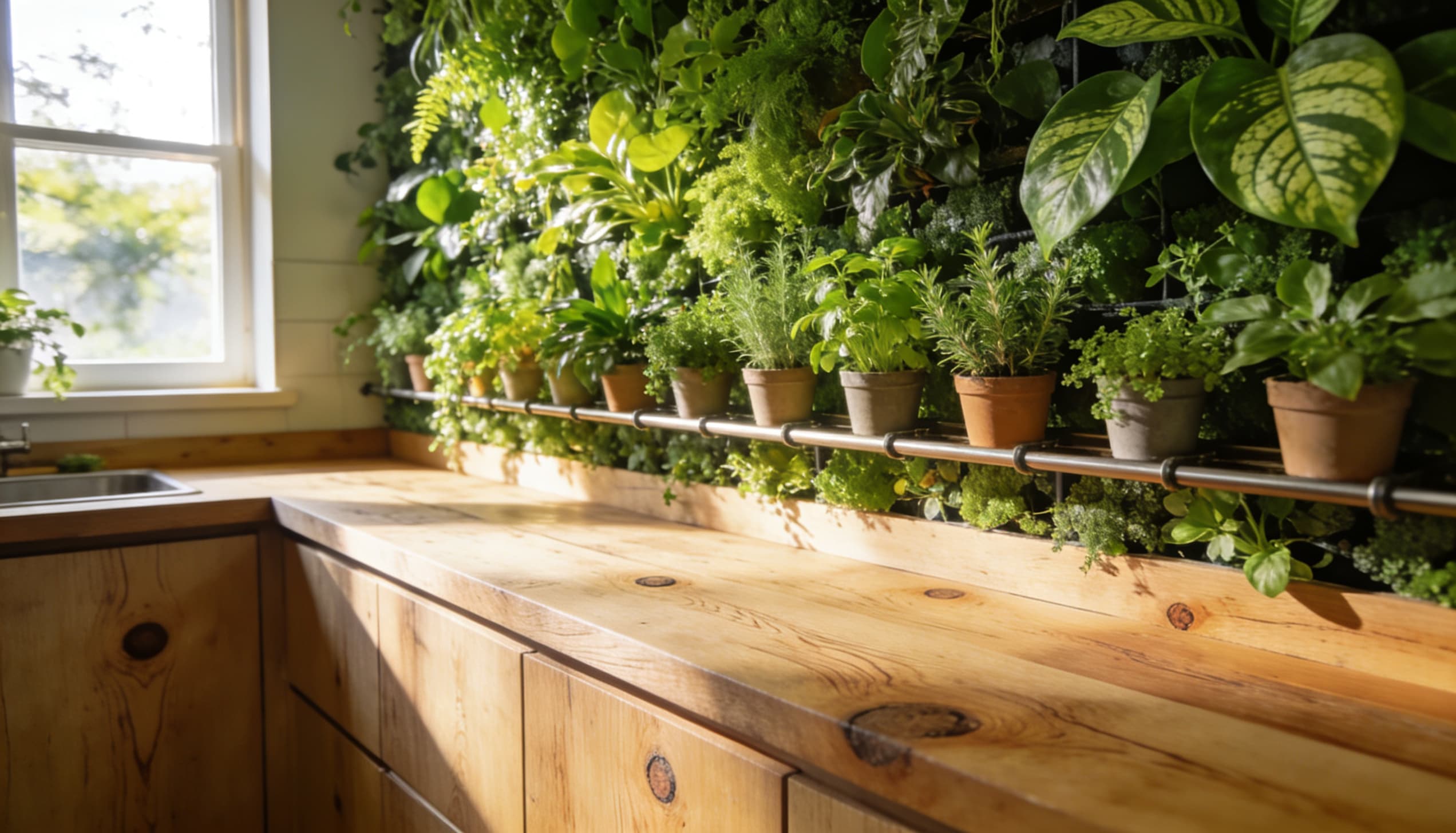
A living wall is a panel of plants mounted directly onto a wall, turning a flat surface into a lush green feature inside your home. It works especially well in kitchens, hallways, and home offices where floor space is tight.
If a full living wall feels like too large a project, start with a wall-mounted planter rail holding three or four small herb pots. This budget-friendly option delivers strong visual results at a fraction of the cost.
5. Build a Nature-Inspired Color Palette
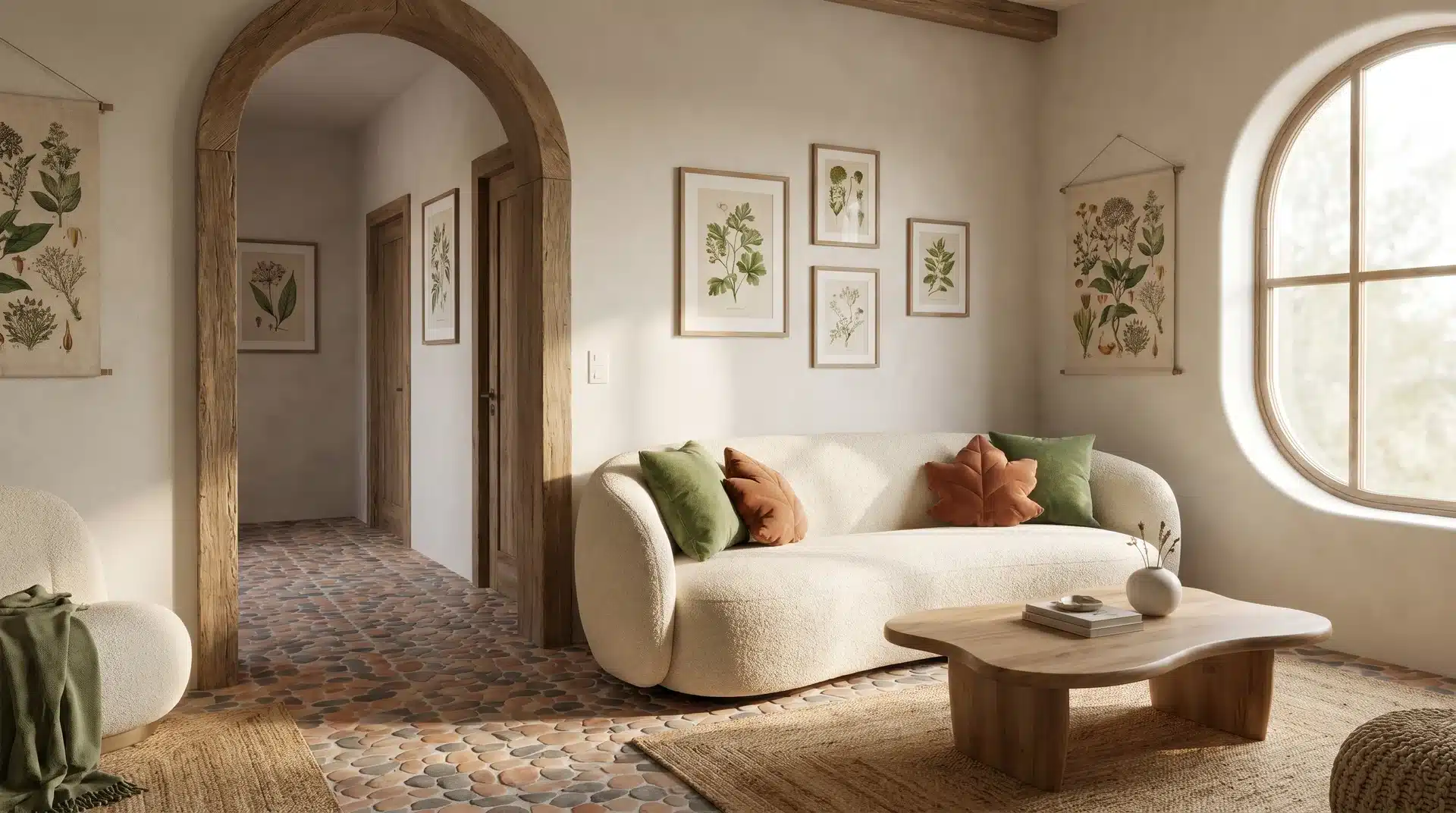
Color sets the emotional tone of a room before anything else does. Biophilic home decor draws from the outdoors: forest green, warm terracotta, sandy beige, bark brown, and soft sky blue.
You do not need to repaint every wall right away. Start with one accent wall in a deep green or warm clay tone. Swap out cushion covers, throws, and artwork to shift the palette without a costly renovation.
6. Layer Natural Textures Throughout Your Space
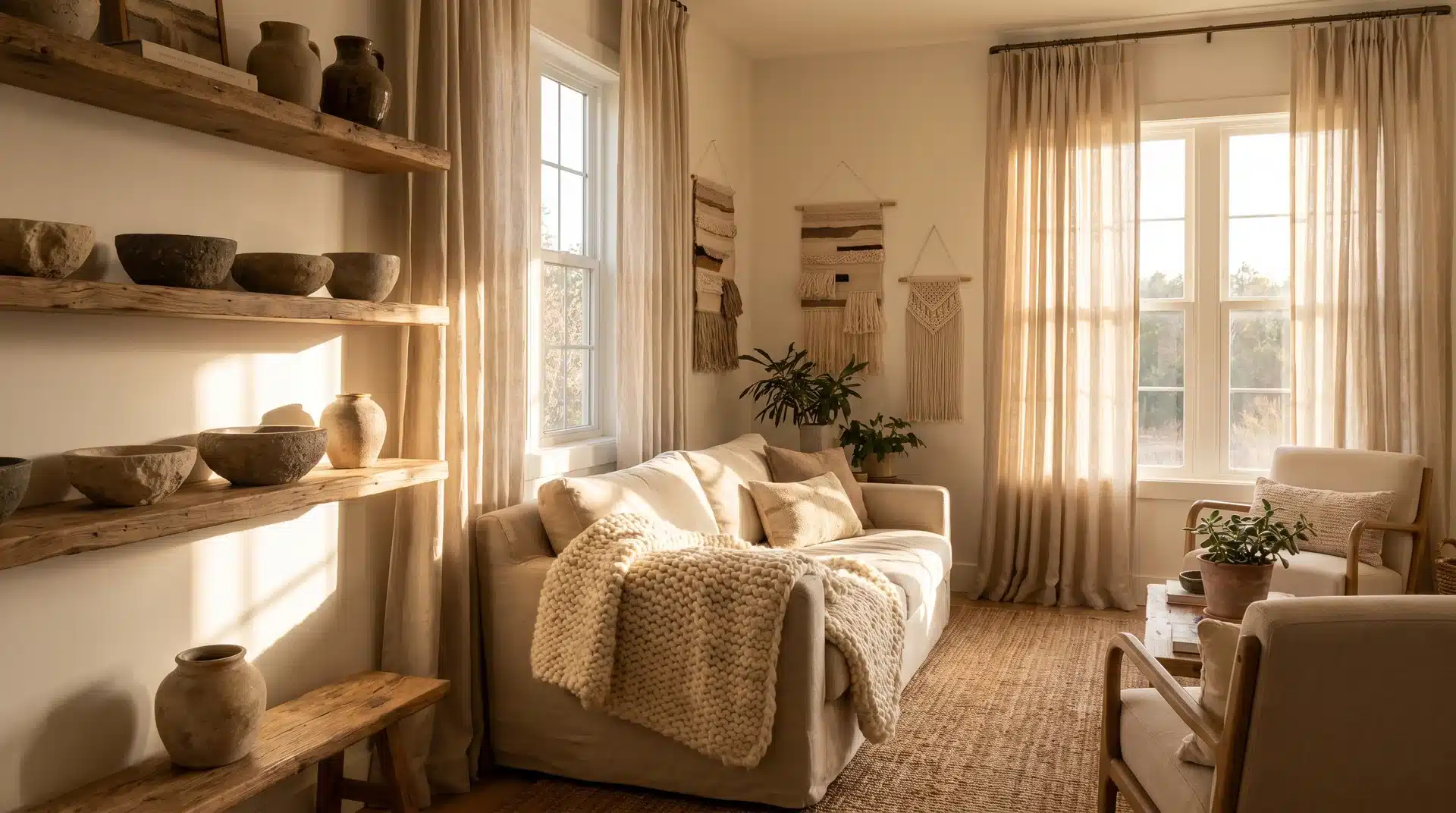
Texture creates a sensory connection to nature even when no plants are visible in the room. Linen curtains, a wool throw blanket, a woven jute basket, a smooth stone bowl, or a rough wooden cutting board each add a layer of natural texture that synthetic materials cannot replicate.
Layering different textures in one room creates depth and makes a space feel warm and grounded rather than flat and sterile.
7. Add a Water Feature
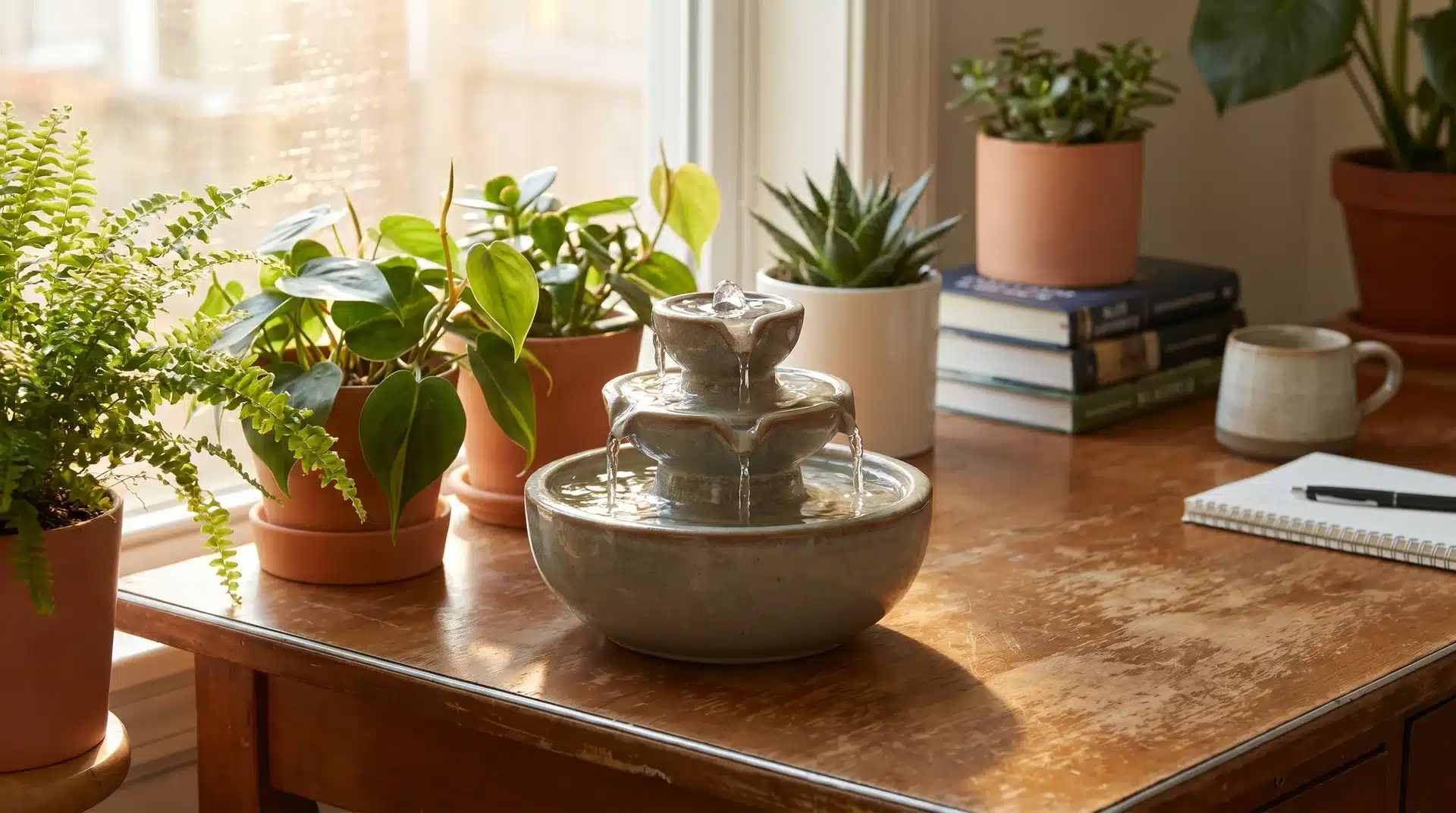
Moving water has a calming effect on the body and mind. A small tabletop fountain on a work desk or bedside table adds the gentle sound of flowing water without taking up much space. An aquarium, a glass bowl filled with river stones and water, or a small indoor wall fountain are all practical options for different budgets. For balconies or garden-adjacent spaces, a small outdoor fountain extends the biophilic feel beyond your interior walls.
8. Use Organic Shapes and Botanical Patterns
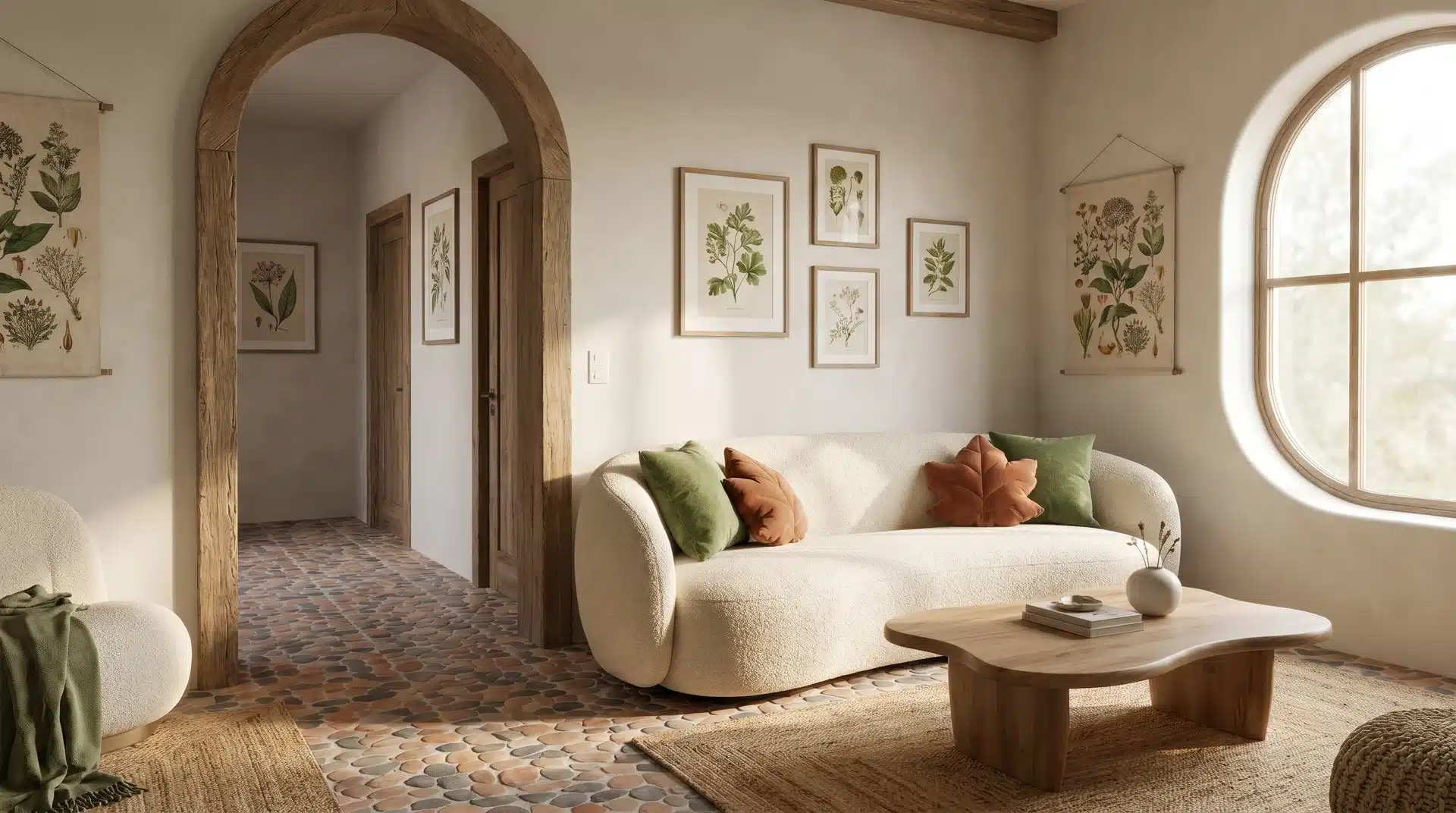
Nature rarely works in straight lines or sharp right angles, and your room does not have to either. Incorporating organic, curved shapes into your furniture and decor brings a more natural visual rhythm to any space.
Look for sofas and chairs with curved backs, arched mirrors, round coffee tables, and light fixtures with soft, flowing silhouettes. Botanical print artwork, leaf-shaped cushions, and pebble-pattern tiles add this quality without requiring any new furniture.
9. Bring in Wood at Every Scale
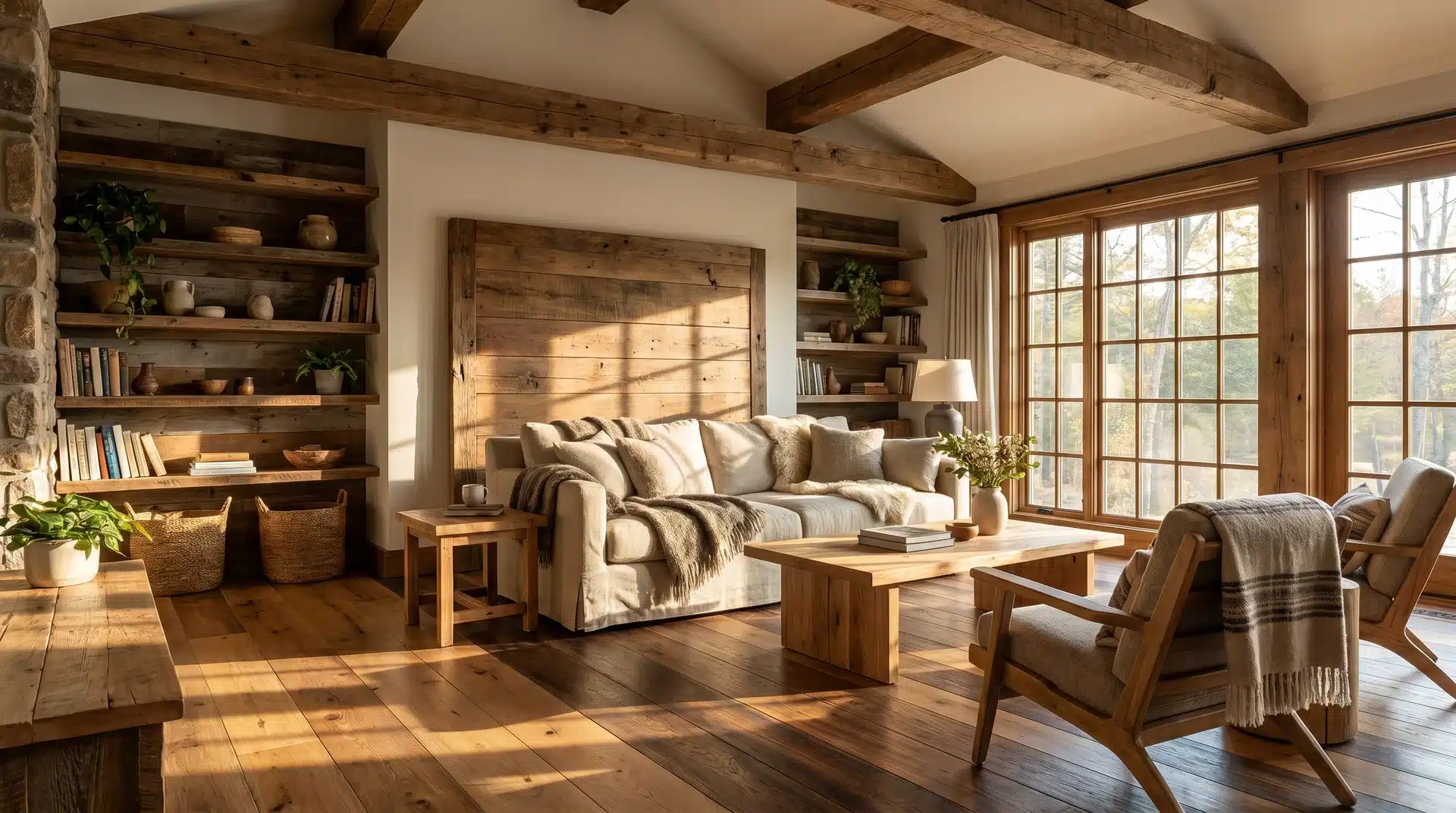
Wood is the most flexible natural material for any interior, at any budget level. A reclaimed wood floating shelf, a hardwood floor, a wooden headboard, or exposed ceiling beams each bring a different scale of warmth to a space.
Mixing different wood tones works better than trying to match every piece exactly, because real natural environments are varied, not uniform. For a lower-cost option, peel-and-stick wood-grain panels add the look of real wood to a wall or surface without full timber installation.
10. Place Stones and Earth Elements in Your Decor
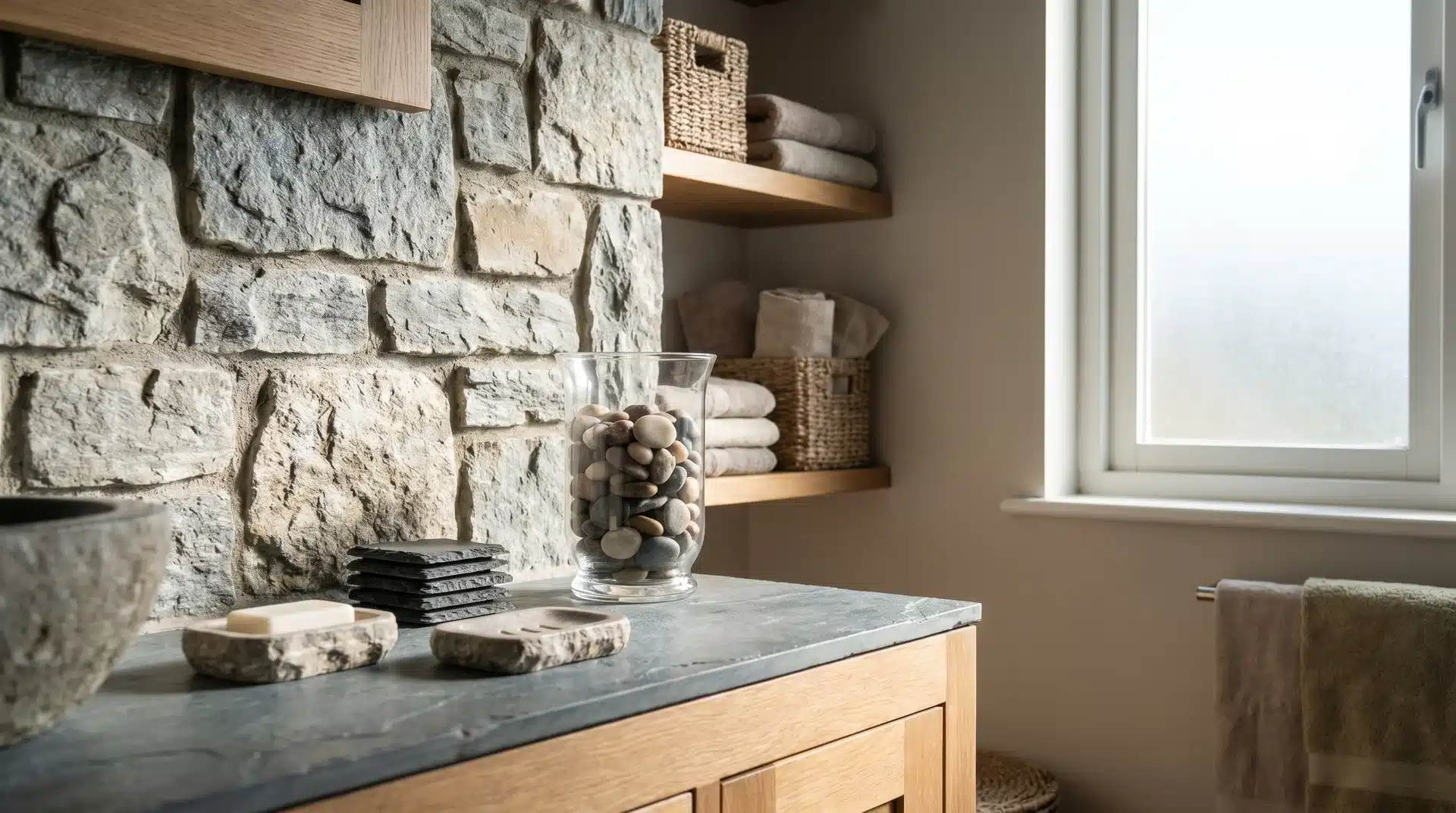
Stones and earth elements add a grounding quality to a room that few other materials can provide. River stones in a glass vase, a slate coaster set, a stone soap dish in the bathroom, or a raw crystal placed on a bookshelf all bring this quality into everyday objects.
For a bigger visual impact, consider a stone tile feature wall near a fireplace or a stone vessel sink in a bathroom update. These materials age well and require very little maintenance.
11. Frame Outdoor Views from Inside Your Home
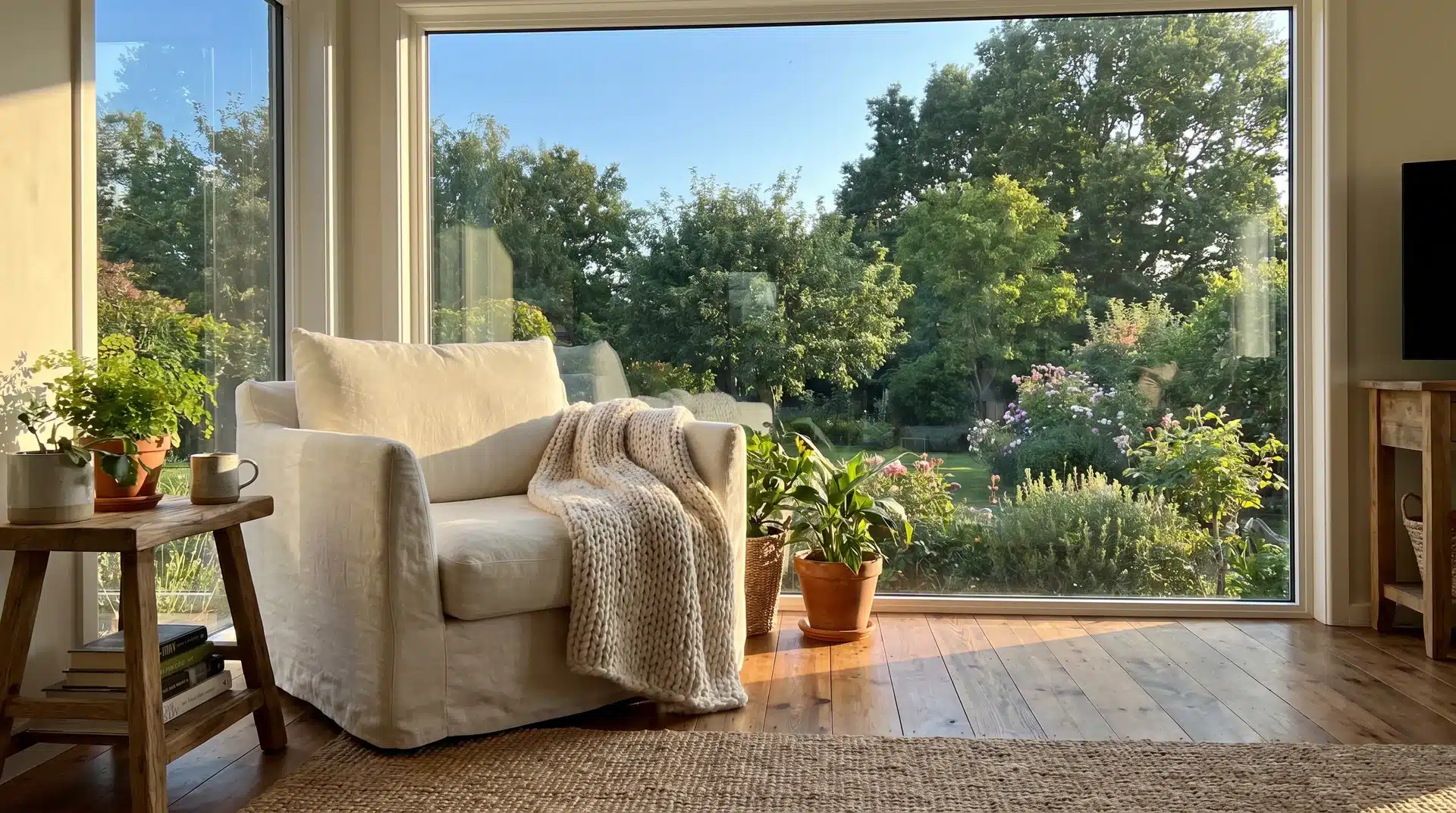
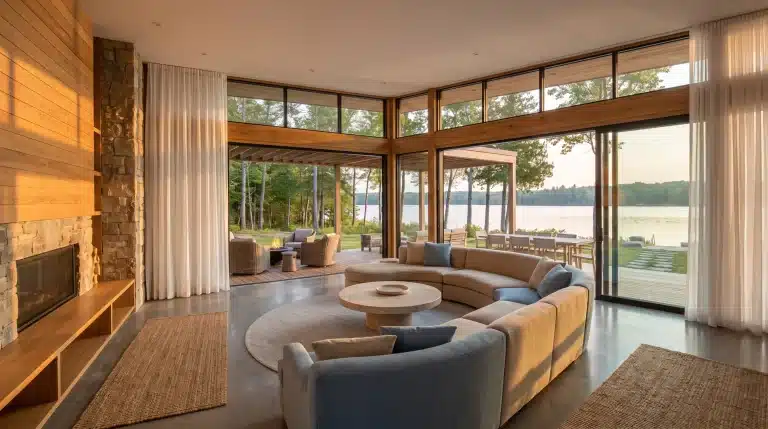
Visual access to the outdoors is one of the strongest principles in biophilic design. A clear view of a garden, a tree, or an open sky from a seating or working position has a meaningful positive effect on mood and concentration. Position your desk or reading chair so it faces a window.
Remove any furniture or heavy drapes that block your best outdoor view during daylight hours. If your home has no outdoor view at all, a large-scale nature-photography mural on one wall is a good alternative.
How to Start Biophilic Design at Home on a Budget
You do not need a large budget to get started with biophilic interior design. The most effective first steps are also the most affordable ones. Buy one plant and place it where you spend the most time each day.
Open your blinds fully and move anything that is blocking your windows. Swap one synthetic item on your shelves for a wooden, stone, or woven alternative.
These small changes cost very little but shift the feeling of a room right away. From there, add one natural element each month.
Over time, those small choices add up to a home that reflects real biophilic design principles without any single large expense.
Final Thoughts
Biophilic interior design is not a trend that will fade next season. It is built on something very real: the fact that people feel better when they are close to nature.
You now know what this design style is, where it came from, what defines it, and ways to bring it into your own home. You do not need a large budget or a design background to start.
Pick one idea from this post and try it this week. Then share your results in the comments below. We would love to see how nature is already changing your space.