Quiet Luxury: How Natural Stone Is Shaping Modern Interior Aesthetics

Interior design has gradually moved away from glossy finishes and highly decorative spaces. Designers now choose materials that feel refined, tactile, and enduring. Stone, wood, and textured surfaces shape not only the visual style but also the atmosphere of a space. A limestone wall softens natural light. A marble countertop changes slightly over time and creates a sense of calm that synthetic materials often lack.
Similar principles are reflected in contemporary architectural projects using Golovinski stone, where material quality and spatial cohesion play a central role. These interiors usually feel more composed and intentional. Durability also matters in contemporary design. Designers increasingly value materials that age naturally and stay functional for decades.
Why Natural Stone Fits the Quiet Luxury Philosophy
In minimalist interiors, stone often becomes a defining architectural element within the space. A single slab with visible mineral movement can shape the atmosphere of a room more naturally than decorative objects.
Each slab carries its own variation in color, veining, and mineral composition. These details give the material an individual character, even in minimalist interiors. Manufactured surfaces often repeat the same pattern. Natural stone keeps a level of irregularity that feels authentic rather than overly ornamental.
Natural materials appear in many contemporary interiors because they balance simplicity with texture. Designers use it in both residential and commercial projects. Neutral interiors can easily feel flat without natural variation. Mineral surfaces add depth through tonal changes and light reflection. A travertine floor or a softly veined marble wall creates visual movement without overpowering the space.
Another reason designers continue to work with stone is longevity. Many modern materials lose their visual appeal soon after installation. Natural stone usually develops more depth and character over time. Small imperfections, mineral marks, and surface variation are no longer treated as defects. They contribute to the character of a space and help interiors feel more timeless and considered.
There is also a broader shift in how interiors are approached. Designers now focus more on how spaces feel and function over time. Many interiors no longer follow short-lived visual trends. Materials are chosen for their texture and their interaction with natural light. The design process also takes daily use into account. In this context, natural stone becomes more than a decorative material. It turns into part of the architectural language of the space.
Where Natural Stone Is Used in Modern Interior Design
Kitchens as Design Anchors
In open-plan homes, kitchens often define the visual structure of the interior. Large stone islands and continuous worktops help organize the space without decorative accents. Granite, marble, and quartzite add natural variation to the kitchen. These materials create visual depth while preserving a refined and balanced atmosphere.
Practicality is another reason this material remains common in kitchen design. Large stone surfaces reduce visual fragmentation in open-plan interiors. They help kitchens feel more connected to the architecture of the home. Stone does not compete with surrounding materials. Instead, it brings different elements of the interior into a more cohesive composition.
Bathrooms as Wellness Spaces
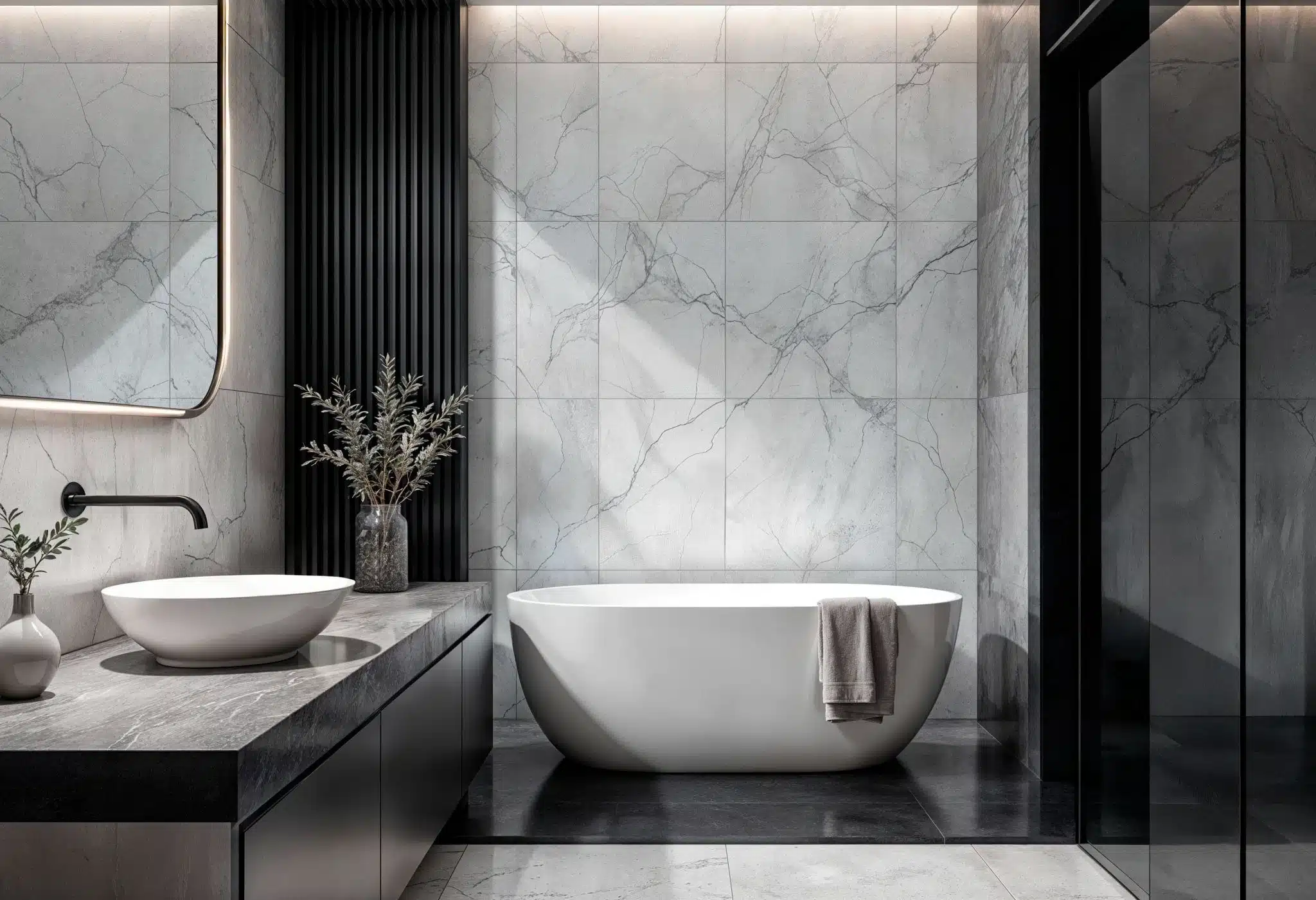
Bathrooms have gradually become refined and visually restrained in their design language. Natural stone helps create this atmosphere. It connects floors, walls, and built-in surfaces into one visual flow. When transitions between materials are reduced, the room feels cleaner and more balanced.
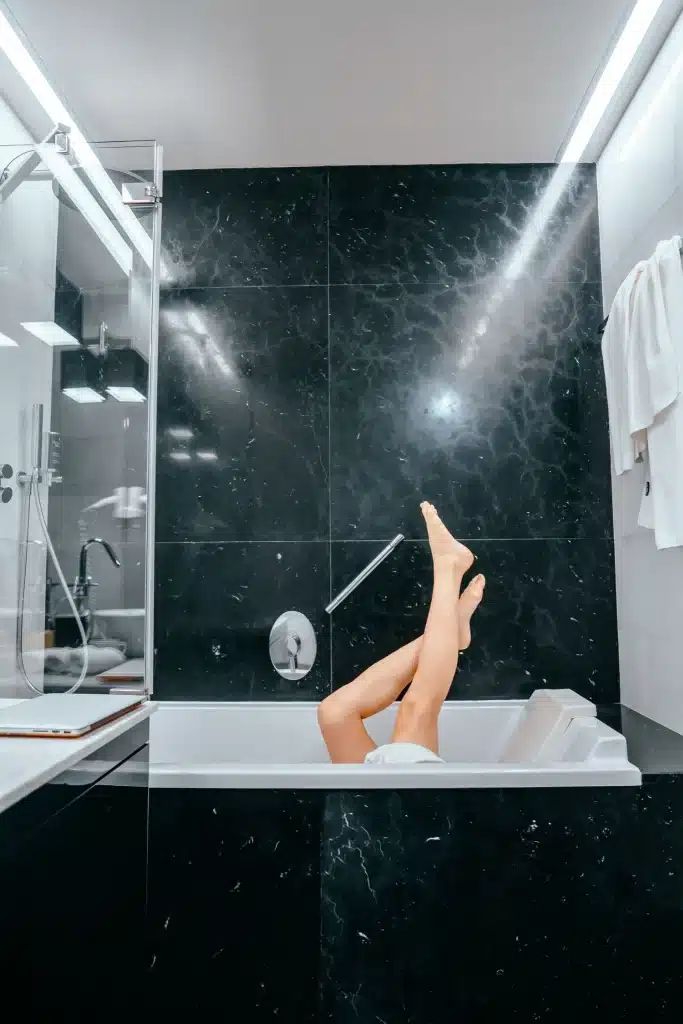
Limestone, soapstone, and pale marble often shape spaces that feel balanced without excess. Steam and water interact gently with textured stone surfaces. Glossy ceramic finishes rarely create the same effect. As a result, the space feels closer to a private wellness retreat than a purely functional room.
Architectural Details
The material now appears in architectural elements, not only in decorative details. Designers integrate it into staircases, wall panels, shelving, and window sills. These continuous stone surfaces become part of the structure itself and strengthen the visual cohesion of the space.
This changes the role of the material inside the interior. Stone no longer works only as a decorative finish. It starts shaping the structure and visual rhythm of the interior. Even a stone threshold or a full-height wall panel can make the space feel more cohesive and grounded.
Statement Surfaces
Some interiors use stone more selectively and draw attention to a single surface. Designers often avoid applying the material throughout the entire space. A dark marble island or a textured stone wall can introduce contrast without disrupting the calm atmosphere of the interior.
These focal points work best when the surrounding palette remains simple. Soft plaster walls, oak flooring, and natural fabrics create a calm background for mineral surfaces. The material adds contrast while preserving the overall harmony of the interior.
Working with Natural Stone: What Matters in Real Projects
Working with natural stone often changes the design process itself. Stone slabs come in fixed dimensions, and each natural pattern remains unique. Because of this, architects often adapt layouts around the material itself. They no longer treat stone as a finishing layer added at the final stage.
The material often shapes the project from the early design stages. It influences proportions, layouts, and architectural details. Architects then build the space around the stone rather than add it later as a surface finish.
A granite slab in kitchen design can visually connect preparation and dining areas, creating a cohesive flow across the space. These surfaces also handle daily use without losing their visual appeal. Similar material strategies are often extended into bathroom interiors, where designers apply stone across walls and floors to maintain visual continuity. Built-in elements continue the same visual language and create a more cohesive space.
Final Thoughts: Designing with Intention
Well-balanced interiors are rarely defined by decoration alone. More often, these interiors rely on materials that feel natural and durable. They also need to feel comfortable after years of daily use. Natural stone keeps an important place in contemporary interiors. It brings texture and depth without excessive ornamentation.
Designing with intention means thinking about how a space will age. It also means thinking about how each material will feel over time. Stone surfaces rarely stay identical to their first day of use. This gradual change is part of their appeal. Instead of chasing novelty, many interiors now focus on permanence and material integrity. Architectural clarity becomes part of the same idea.