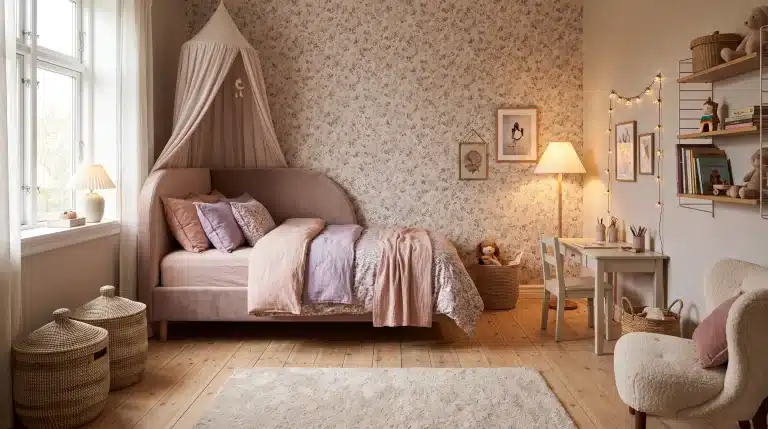
How to Choose Kid-Friendly Rugs That Still Look Chic

Accidental spills in family living rooms are the norm, and replacing a rug spoiled by sticky soda or food can cost up to $12 per square foot. Yet a house full of children does not have to mean a house full of beige plastic mats.
You can maintain a high-end aesthetic while parenting toddlers by focusing on fiber science and strategic patterns. The secret to a chic, kid-friendly home is choosing rugs that disguise the chaos of daily life without sacrificing the soft, architectural feel of a designer space.
Lead with performance, not just appearance. While a white shag rug looks stunning in a showroom, it is a liability in a home with finger paints and juice boxes. Modern textiles have reached a point where durability and luxury are no longer mutually exclusive.
The Science of Performance Fibers
High-performance synthetic fibers have evolved far beyond the scratchy carpets of the past, offering both softness and extreme resilience. Polypropylene and solution-dyed nylon are the industry gold standards because they are essentially non-porous. Liquid stays on the surface of the fiber rather than soaking into the core, giving you those precious extra seconds to grab a cloth before a stain sets.
If you prefer natural materials, wool is the undisputed champion for families who want a high-end feel. Wool fibers contain a natural coating called lanolin, which acts as a built-in repellent for light spills and dust. It is also incredibly elastic, meaning it won’t permanently flatten under the weight of a heavy mahogany coffee table or the constant pounding of tiny feet.
Master the Art of Pattern and Texture
The most stylish way to hide a mess is through visual complexity. A solid color rug acts like a spotlight for every crumb and hair, whereas a rug with a hand-knotted aesthetic and busy organic patterns makes those minor imperfections disappear into the design. We are seeing a major shift toward earth-inspired neutrals like clay, sand, and stone, which provide a sophisticated backdrop while being naturally forgiving.
Think about the rug’s architecture when you are shopping. A low pile height of roughly 0.25 to 0.5 inches is the sweet spot for a busy household. It provides enough cushion for a baby to crawl comfortably but stays thin enough that a robot vacuum can climb the edge without getting stuck.
To keep your home looking intentional and structured, consider these three design elements:
- Distressed finishes use intentional fading to ensure that high-traffic walkways blend seamlessly with the rest of the rug
- Multi-tonal weaves use three or more yarn colors to create a depth that masks pet dander and lint
- Flatweave styles offer a sleek profile that fits under low-clearing doors and prevents tripping hazards for toddlers
Pile density matters just as much as height. If you can easily pull the fibers apart and see the backing, the rug will likely fail the durability test within 18 months. A dense rug keeps debris on the surface where it can be easily removed, ensuring that your low-pile polypropylene investment looks as good in year five as it did on delivery day.
Long Term Maintenance and Professional Care
Even the most advanced stain-resistant technology requires a consistent maintenance rhythm to prevent grit from acting like sandpaper on the fibers. While daily vacuuming handles the surface debris, microscopic dust particles settle deep into the backing over time. This buildup can eventually compromise the rug’s structural integrity, leading to shedding or a “crunchy” texture that no amount of DIY scrubbing can fix.
In busy households where children and pets are constantly tracking in allergens, knowing how often to schedule professional cleaning is the difference between a rug lasting three years and one lasting fifteen, and you can learn more here from the professionals. Deep extraction methods remove the embedded particulates that standard upright vacuums leave behind. This is especially vital if you live in dry or dusty regions where the environmental load on your home’s air quality is higher than average.
Professional care also rejuvenates the natural oils in wool rugs, keeping them soft and vibrant. You might find that a high-quality rug actually becomes more comfortable over time when the fibers are properly conditioned and kept free of abrasive soil. It is a small investment that protects the larger investment of your home’s interior design.
Structural Integrity Through Proper Padding
Never skip the rug pad if you want your stylish rug to stay chic and you’re following smart interior design ideas. A high-quality felt or rubber pad does more than just prevent the rug from sliding across the hardwood. It acts as a shock absorber, protecting the fibers from being crushed between the heel of a shoe and the floor.
For parents, a thick pad provides an extra layer of safety for those inevitable tumbles and falls. It also serves as a sound dampener, a lifesaver in open-concept homes with high ceilings where every toy drop echoes. A dense 1/4 inch pad is usually sufficient to add that “hotel luxury” feel to even a mid-range rug.
Focus on low-VOC materials to ensure your indoor air quality stays high while your floors look great. By combining performance fibers, smart patterns, and professional upkeep, you create a space that feels like a sanctuary for adults without being off-limits for the kids.
Protecting Your Interior Investment
The transition from a sterile, child-proofed house to a curated home begins with your flooring choices. When you stop viewing rugs as temporary items and start viewing them as architectural foundations, your buying habits change. You begin to look for the sustainable materials and organic textures that define the 2026 design landscape.
Check out our latest guides on modern domestic life and all that it entails, from interior design to parenthood and beyond.