11 Window Hardware Upgrades That Change a Room

25 to 30 percent of a home’s heating and cooling energy escapes through its windows. Much of that loss starts at the hardware, in the seals and balances that wear out long before the glass does. In a single afternoon, the replacement of these minor components can revitalize a space and eliminate drafts. These eleven improvements are worthwhile.
1. Casement Cranks
The operator crank is the piece your hand touches every day, so a worn or sticky one makes the window a chore to open. The key to appropriate replacement is matching the spline size to your operator, which is where a parts specialist like Reflect Window helps. To install, unscrew the old handle, align the new one on the splined shaft, and tighten the set screw.
2. Sash Lifts
These lower-rail handles make raising a heavy sash much easier, and they add a small but influential visual detail at eye level. Consider ornate cast iron metal. For something more ornate, consider a plain cup pull for farmhouse-like aesthetics. When installing sash lifts, you should always mark your placement to ensure accuracy, and then drill shallow holes so the wood doesn’t split.
3. Tilt Latches
Tilt latches let a double-hung sash pivot inwards, so you can easily clean the outside-facing glass from the indoors. Usually they come in white or bronze tones, and typically you match them to the existing frame colour. To install, slide the worn latches out of the slots in the sash top, and then snap in the replacement.
4. Sash Balancers
Balancers counterweight the sash so that it holds its position, preventing it from sliding shut on its own. When you have a window that won’t stay raised, it suggests an issue with these balancers. You should match the replacement to your sash weight and frame depth.
5. Friction Hinges
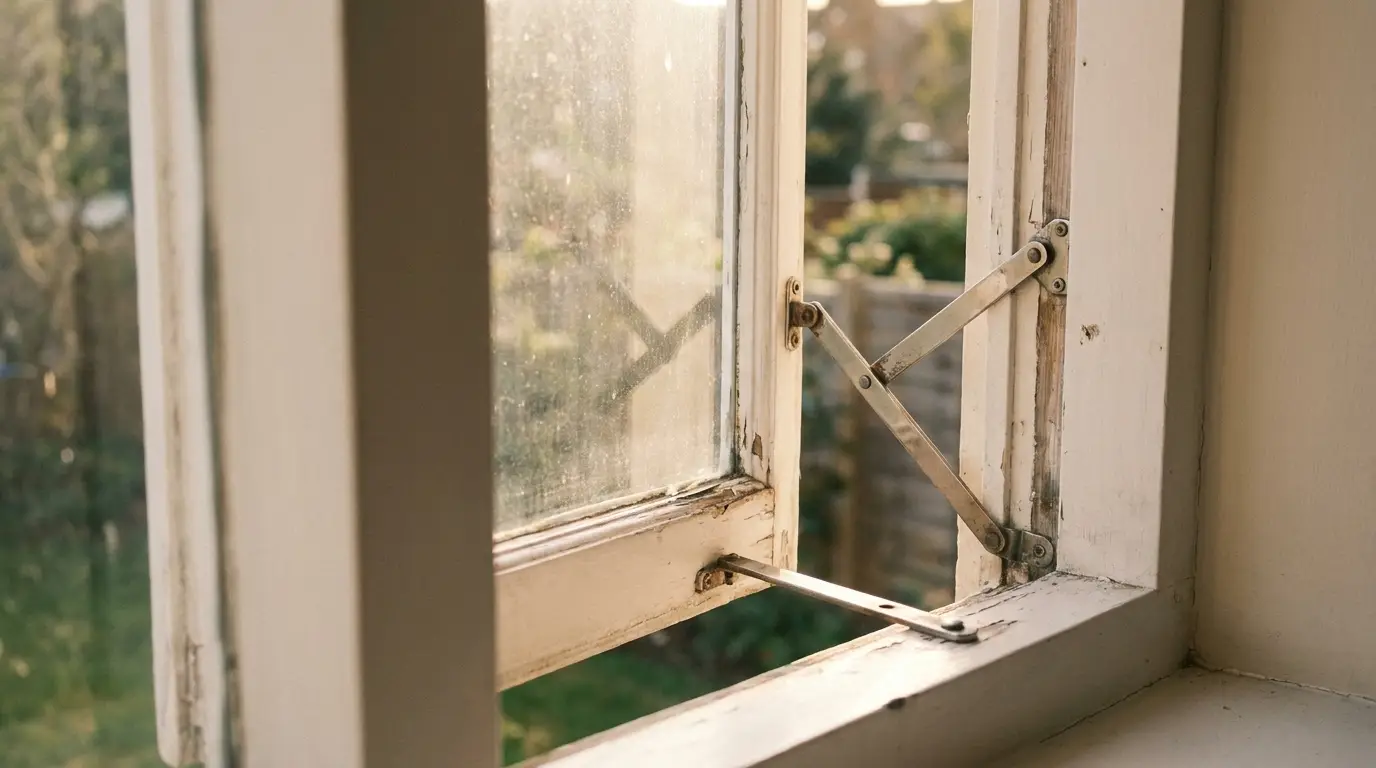
Friction hinges hold a casement open at any angle and keep it from slamming shut in a gust. But stiff or rusted hinges can make even a premium-quality window feel cheap. To fix problematic hinges, remove the screws along the arm, fit a hinge of equal length, stack it, and then refasten and test the window swing.
6. Limit Stops
A limit stop caps how far the window opens, which is crucial. In upper-floor apartments, curious kids are drawn to windows. Most limit stops clip into the existing window track or screw into the jamb. They come in different finishes, but since they are always out of sight, the fit and travel distance are the more important factors.
Multipoint locks are common on tilt-turn windows and patio doors. They move several locking bolts with one motion of the handle, ensuring maximum security. And given these are premium additions, their levers often look quite attractive, with brushed nickel and white brass being common materials.
8. Weatherstripping
Weatherstripping seals prevent drafts, ensuring your house is sealed off from the outside air. Poor weatherstripping can cause your house to leak heat in the winter, and for the summer heat to leak inside and fight your air conditioning system during the summer.
9. Screen Clips
Screen clips and turn buttons keep the window screen seated and stop them from flapping in the wind. It’s a useful upgrade that costs almost nothing to install. And all it takes is a single screw to install each.
10. Patio Door Rollers
Long rollers can make a sliding door stick and drag as you move it along the track. By installing new rollers, you restore the smooth gliding motion that windows had when you first installed them.
11. Window Pulls
Small finger pulls give awning and hopper windows a decorative accent and offer a functional way to close and open them. If you’re looking for farmhouse warmth, you could try hammered iron; others, I’ll say, curved brass. To install, position the pull on the bottom rail, clearly mark the holes, and then screw it down tightly.
Make a Weekend of It
If you’ve had a window for a few years, chances are it needs some maintenance and care. You can take a weekend to examine the windows and figure out which of the problems on this list need addressing. Often, all it takes is a trip to the hardware store to buy some inexpensive parts, followed by an afternoon of fairly easy DIY.
With that said, not every window problem is simple, so sometimes it makes sense to work with professionals rather than going the DIY route. If you’re interested in learning more about maintenance and other similar topics, see our blog posts for more.