What to Look for When Replacing an Outdated Garage Door

Most homeowners replace a garage door once, maybe twice, over the life of owning a home. It is not a purchase you make often, which means most people do not know what to look for until they are already in the middle of deciding.
The good news is that replacing an outdated garage door is one of the most straightforward home upgrades you can make. You do not need to gut a room or hire multiple contractors. One project, one trade, and the results show up immediately every time you pull into your driveway.
The less good news is that there are real differences between doors, and making the wrong call on material, insulation, or style can cost you down the road. This guide walks through what actually matters so you can shop with a clear head.
Signs Your Garage Door Is Due for Replacement
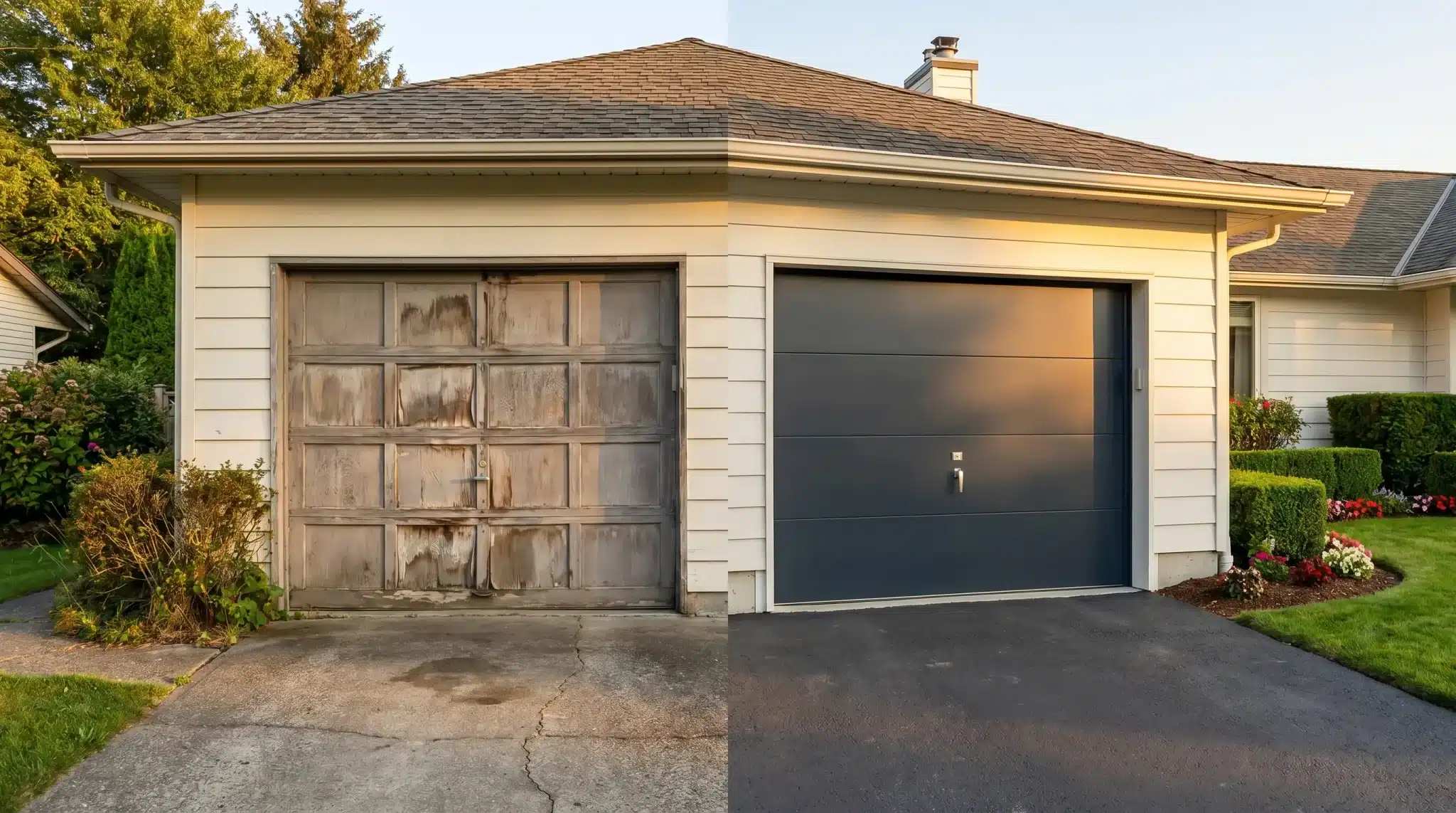
Repairs make sense when a door is structurally sound but has a single failing component. Replacement makes sense when the door itself is the problem. Here are the clearest signals it is time to replace rather than repair:
- The door is visibly warped, cracked, or has multiple dented panels that affect its operation
- It has needed repeated repairs in the past two to three years
- The door is over 20 years old and lacks modern safety features like auto-reverse sensors
- It is uninsulated and your garage is attached to your home
- The door is loud, slow, or moves unevenly despite recent maintenance
- The style no longer matches the rest of your home’s exterior
If two or more of these apply, replacement is almost always the better financial decision compared to continuing to repair an aging door.
Choosing the Right Material
Material affects how the door looks, how it holds up over time, what it costs, and how much maintenance it needs. The four main options are steel, wood, aluminum, and fiberglass. Each has a different profile.
Steel
Steel is the most common choice for residential doors and for good reason. It is durable, holds insulation well, resists warping, and comes in a wide range of styles and finishes. Gauge matters; thicker steel (lower gauge number) dents less easily. A 24-gauge door handles everyday use better than a standard 27-gauge. If you want a low-maintenance door that performs well in most climates, steel is the practical baseline.
Wood
Wood doors have the highest visual impact and suit craftsman, farmhouse, and traditional home styles well. The trade-off is maintenance. Wood requires periodic sealing or painting to prevent moisture damage, warping, and cracking. In dry climates with wide temperature swings, that maintenance cycle comes around faster. Wood is also heavier, which puts more load on your springs and opener over time.
Aluminum
Aluminum is lighter than steel, does not rust, and works well in humid or coastal areas. It dents more easily than steel and does not insulate as well. Contemporary and modern style homes often use aluminum doors with glass panel inserts for a clean, minimalist look.
Fiberglass
Fiberglass resists dents and corrosion and can be molded to mimic wood grain. It is less common but a reasonable option for coastal environments where salt air would damage other materials. In cold climates, fiberglass can become brittle over time.
Insulation: More Important Than Most People Realize
If your garage is attached to your home, insulation is not optional; it is one of the most practical upgrades you can make to the door. Your garage door is the largest moving opening in your home. Without insulation, it acts as a direct channel for outdoor temperatures to move into your garage and from there into adjoining rooms.
The U.S. Department of Energy notes that proper insulation in attached garages reduces heat transfer and lowers the workload on your heating and cooling systems. Homeowners who switch from uninsulated to insulated doors in attached garages typically see 10 to 20% reductions in annual heating costs.
Insulation is measured by R-value. A higher R-value means better thermal resistance. For a garage attached to your home, look for a door with an R-value of at least 10 to 12. If you use the garage as a workshop, gym, or additional living space, go higher: R-16 or above.
Polyurethane foam insulation, which is injected between the door’s steel layers, provides better coverage and a higher R-value per inch than polystyrene panels. It also adds structural rigidity, which reduces denting and operating noise.
Insulation also makes the door quieter. If your bedroom or living room shares a wall with the garage, the difference between an insulated and uninsulated door is noticeable on the first morning after installation.
Matching the Door to Your Home’s Style
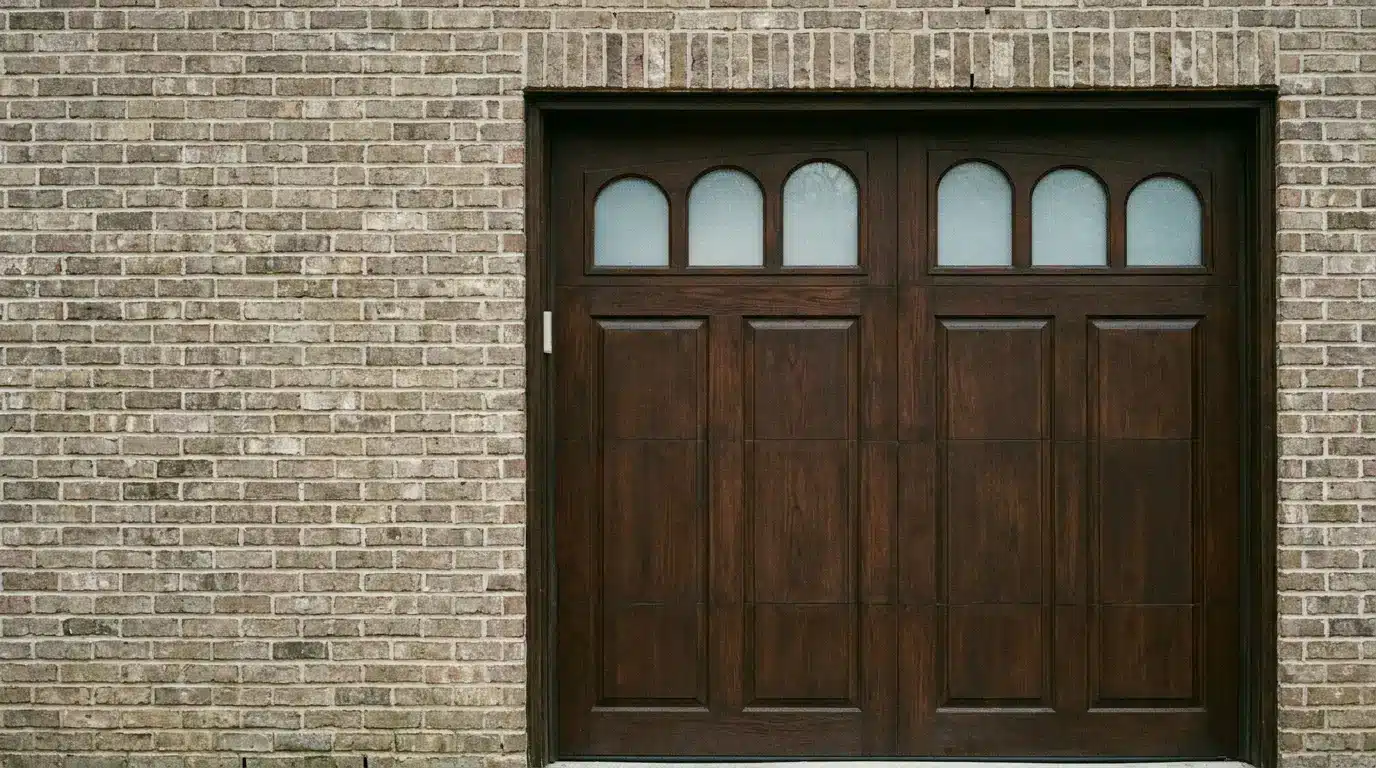
On most homes, the garage door covers a third or more of the front facade. Getting the style right matters as much as the material. A door that clashes with your home’s exterior pulls the whole look down; one that fits well ties everything together.
Panel layout is one of the first decisions. Raised panels are traditional and work with most home styles. Flush panels read as modern. Carriage-house designs with decorative hardware suit craftsman, farmhouse, and bungalow homes. Long horizontal panels are common on contemporary builds.
Window inserts add natural light to the garage and visual interest to the door’s face. Placement matters: windows across the top row of panels are most common and do not compromise privacy inside the garage. Frosted or tinted glass gives you light without visibility.
Color is where many homeowners get cautious, but bold choices often work well. Black and dark charcoal doors have remained consistently popular across home styles because they read as intentional rather than default. Match your door color to your shutters, trim, or front door for a pulled-together exterior.
The Return on Investment Case for a New Garage Door
Replacing a garage door is one of the best-performing home improvement projects by return on investment. According to Zonda’s 2025 Cost vs. Value Report, garage door replacement ranked first out of all remodeling projects nationally, with an average ROI of 268%. That means the resale value added exceeds the cost of the project more than two and a half times over.
This is not a new trend. Garage door replacement has ranked in the top five of that report for over a decade. The reason is straightforward: the door is visible from the street, it signals whether a home is well-maintained, and the project cost is low compared to other major upgrades like kitchen or bathroom remodels.
Even if you are not planning to sell, the day-to-day benefit is real. A door that operates quietly, opens reliably, and looks good from the street changes how you feel about coming home.
Smart Opener Features Worth Considering
Most new doors are sold alongside opener upgrades, and the opener market has improved significantly in the past five years. Features that were optional extras are now standard on many models.
- Wi-Fi connectivity: lets you open, close, and monitor your door from your phone, receive alerts if the door is left open, and check status when you are away from home
- Battery backup: keeps the door operating during power outages, which matters most in areas with winter storms or frequent outages
- Auto-close timer: closes the door automatically after a set period if you forget
- Camera integration: some openers include a built-in camera for the garage interior
- Home assistant compatibility: connects to Alexa, Google Home, or Apple HomeKit if you use a smart home ecosystem
You do not need all of these features. But Wi-Fi connectivity and battery backup are worth adding to almost any installation. The cost difference is small and the convenience is immediate.
What to Ask Before You Commit to an Installer
The door itself is only part of the equation. The quality of the installation determines how well it performs and how long it lasts. Before you book, ask:
- Are your technicians certified? Look for IDEA (International Door Association) certification, which requires training and testing on installation standards
- Does the quote include hardware, tracks, springs, and weatherstripping, or just the door panel?
- What warranty covers the door and what warranty covers the labor?
- Will they remove and dispose of the old door?
- Can they show you local reviews or references?
Grand Junction homeowners often turn to Kooler Garage Doors when replacing an outdated door, partly because their lead installer holds a Master Certified Technician credential from IDEA, the only one on Colorado’s Western Slope. That level of certification is worth asking about with any installer you consider, wherever you live.
If you are in the Grand Junction area and want to see what a garage door replacement Grand Junction project looks like from quote to installation, Kooler Garage Doors offers free consultations and has over 380 five-star reviews from local homeowners.
A Quick Checklist Before You Buy
Run through these before you commit:
- Measure your opening carefully: width, height, and headroom above the opening (you need at least 10 inches for standard track hardware)
- Decide on material based on your climate, maintenance tolerance, and home style
- Choose an R-value appropriate for how the garage is used and whether it is attached
- Pick a style and color that fits your home’s existing exterior palette
- Confirm the installer is certified and the quote is itemized
- Ask about opener upgrades at the same time, since bundling installation is more cost-effective than adding a smart opener later
A garage door replacement is one of the few home upgrades that pays you back financially, improves daily function, and changes how your home looks from the street, all at once. Take the time to get the details right and you will not have to think about it again for the next 15 to 20 years.