What Is a Duplex? Types, Costs, and How It Works

Quick Answer: A duplex is one building split into two separate homes. Each home has its own entrance, kitchen, and bathroom. The two homes usually share one wall or one floor, and they sit on a single lot under one roof.
A duplex trips people up right away.
Some assume it’s a fancy apartment. Others assume it’s two small houses stuck together. Both guesses miss the mark.
A duplex is one building holding two separate homes. Each home gets its own door, kitchen, and bathroom. Once you understand how the ownership and layout work, you’ll notice them on almost every block.
This post covers what a duplex is, the different types, and how to tell if one fits your plans.
What Is a Duplex?
A duplex is one building on one piece of land. Inside are two separate homes.
Each home has its own kitchen, bathroom, and front door. The two homes usually share one wall, or they share a floor and a ceiling. Nothing else gets shared.
People often confuse a duplex with other housing types. A duplex differs from a large apartment building, and it differs from two houses built on separate lots. It’s one structure split into two private homes.
Types of Duplex Ownership
Ownership shapes a lot about how a duplex gets bought, sold, and lived in. Here’s what shows up most often.
1. Single-Owner Duplex
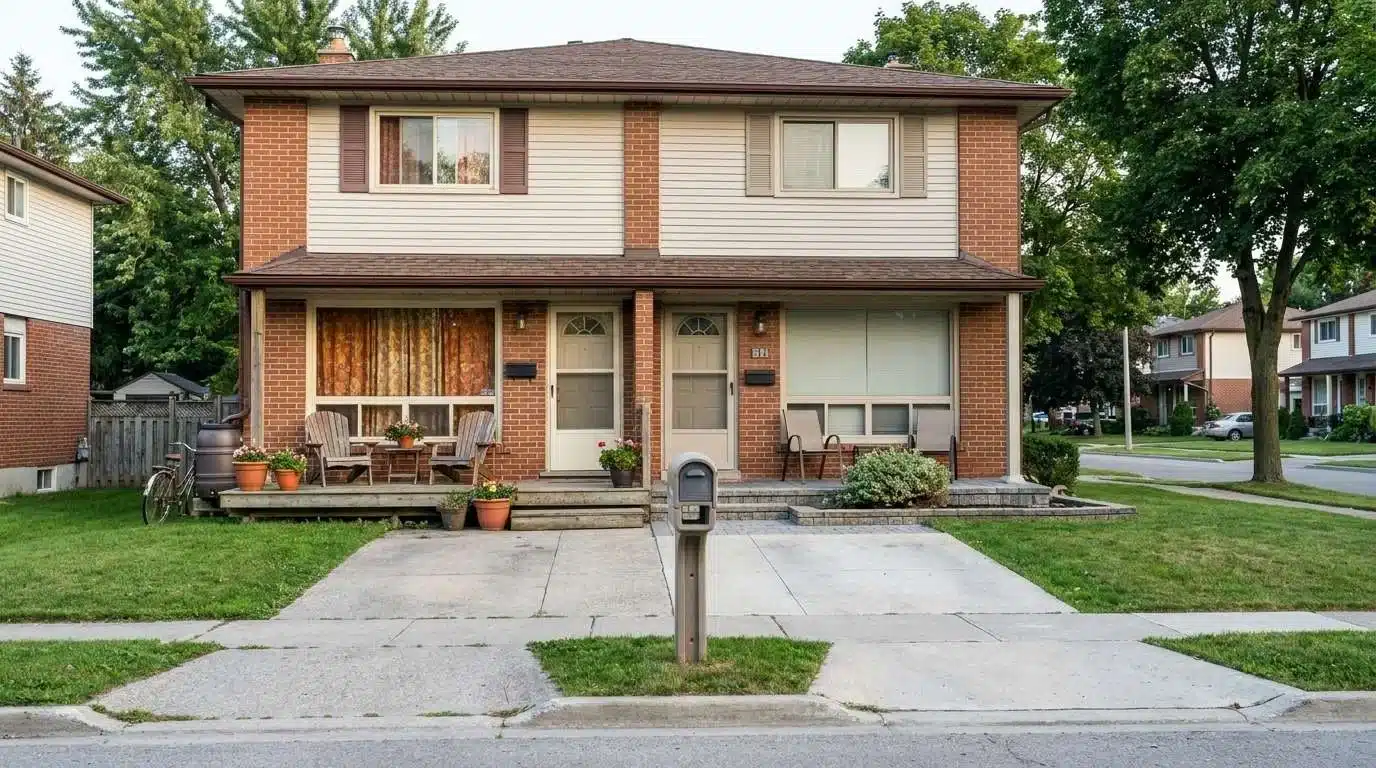
This setup shows up the most. One person holds the paperwork for the whole building.
They might live in one home and rent out the other. Or they might not live there at all and rent out both sides.
Either way, that one owner pays the full mortgage, the taxes, and any repair bills.
2. Condo-Style (Twin-Condo) Duplex

Here, each home has its own deed, the paper that proves who owns what.
Two different people can each own their own side of the building. But some parts, like the roof or the yard, stay shared between both owners.
Those shared parts usually follow a set of rules both owners agree to, similar to how a condo building works.
You won’t see this setup often, but it does show up in certain cities.
3. Twin Home (Semi-Detached)
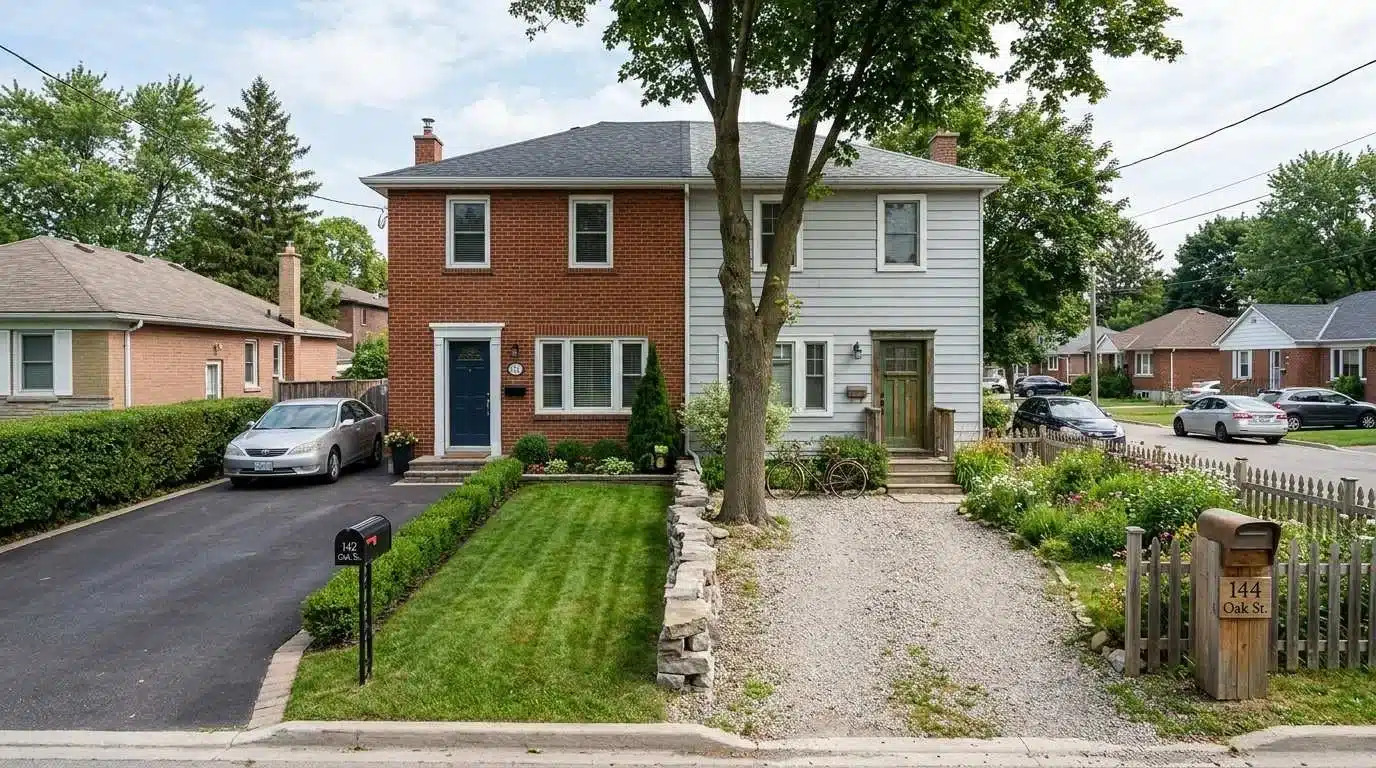
A twin home looks a lot like a duplex if you’re just driving past it.
Two houses share one wall down the middle. The real difference is the land. Each home sits on its own separate lot with its own owner, not one shared property like a true duplex.
People get this confused often. In most places, the law treats a twin home differently than a duplex. This matters most when it comes to selling or financing.
What Does a Duplex Typically Cost to Buy or Rent?
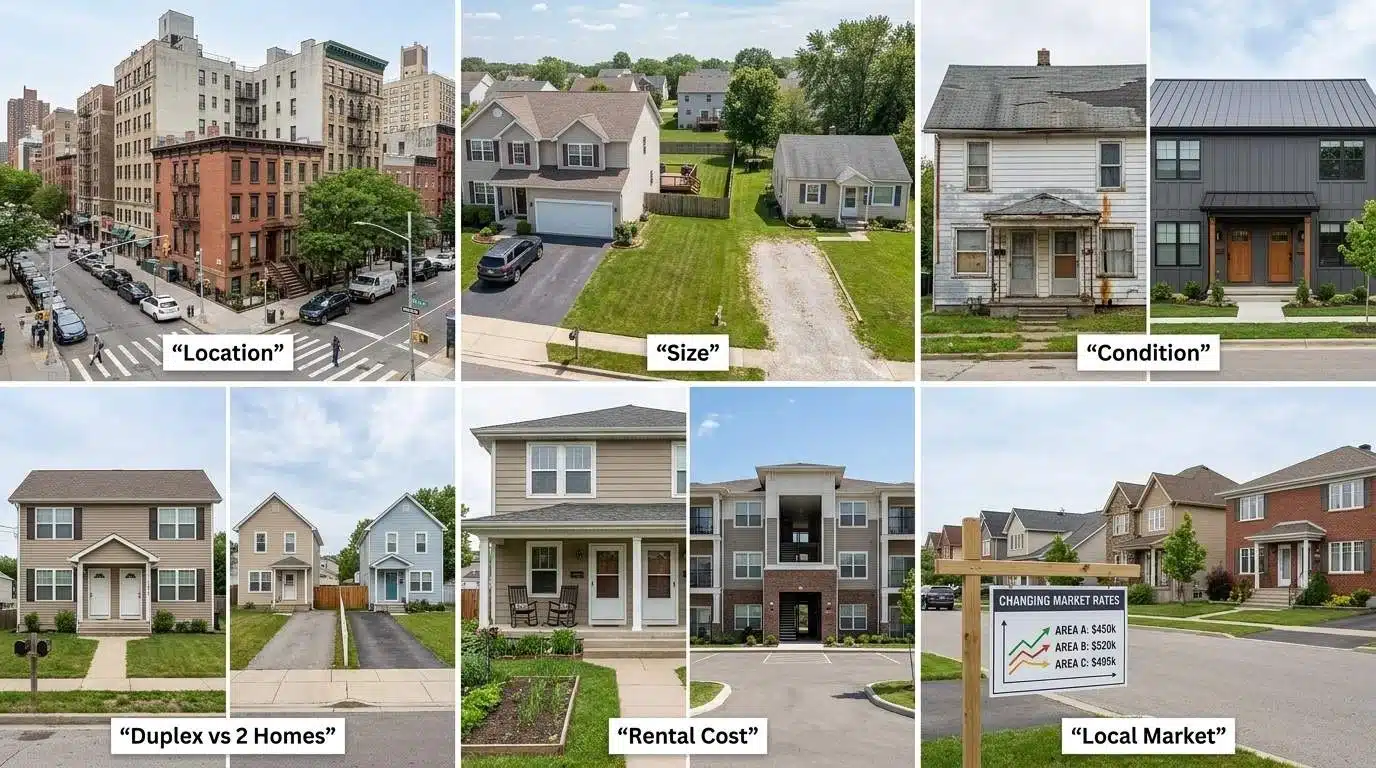
The cost of a duplex can change a lot based on location, size, condition, and local housing demand. A property in a busy city will usually cost much more than a similar duplex in a small town. Before buying or renting, look at the factors that affect the price in your area.
- Location: A duplex in a popular city usually costs more than one in a rural area.
- Size of the Property: Larger duplexes with more bedrooms, bathrooms, parking, or outdoor space generally cost more.
- Age and Condition: A newer duplex, or one with updated features, often sells for more. Older buildings that need roof work or plumbing updates usually cost less.
- Buying vs. Two Separate Homes: Buying a duplex can sometimes cost less than purchasing two separate houses in the same neighborhood. This is one reason many real estate investors consider duplex properties.
- Rental Prices: Renting a duplex unit often costs more than an apartment. It’s usually cheaper than a full single-family rental. Tenants often get extra space, a private entrance, and more privacy.
- Local Market Rates: Duplex prices and rents vary widely by area. Checking nearby listings gives a more accurate idea than a national average.
Before deciding, compare local duplex listings, rental prices, and property costs against your budget and needs.
How to Finance a Duplex
Most buyers use the same loan types for a duplex as they would for a single-family home. VA, FHA, and conventional loans all work, but each has its own rules.
VA loans work well for eligible veterans. They allow zero down payment on a duplex, as long as you live in one unit as your primary residence.
FHA loans allow a down payment as low as 3.5%. You must move into one unit within 60 days of closing and live there as your primary residence. You can rent out the other unit right away.
Conventional loans give more flexibility. You don’t have to live in the property at all. But if you’re buying it purely as a rental, expect a down payment between 15% and 25%.
Lenders often count a portion of the rent from the non-owner-occupied unit as income. That can help you qualify for a bigger loan than a single-family home would allow.
Zoning, Permits, and Insurance for a Duplex
Local zoning rules decide whether a lot can legally hold a duplex. Many cities use an R-2 zone for this. It allows two-family homes but limits how many units fit on one lot.
If you want to turn a single-family house into a duplex, you’ll need permits. Cities usually require a separate entrance, updated wiring, and a separate utility meter for each unit.
Insurance works differently for a duplex too. A standard homeowners policy often isn’t enough once you start collecting rent. Most duplex owners need a landlord policy, or a homeowners policy with a rental endorsement added.
One policy usually covers the whole building. That’s because a duplex is one structure with one shared roof.
The Three Ways a Duplex Can Be Built
Ownership is only half the story. The shape of the building matters too. It changes how private the homes feel and how easy it is to get around.
1. Side-by-Side Duplexes
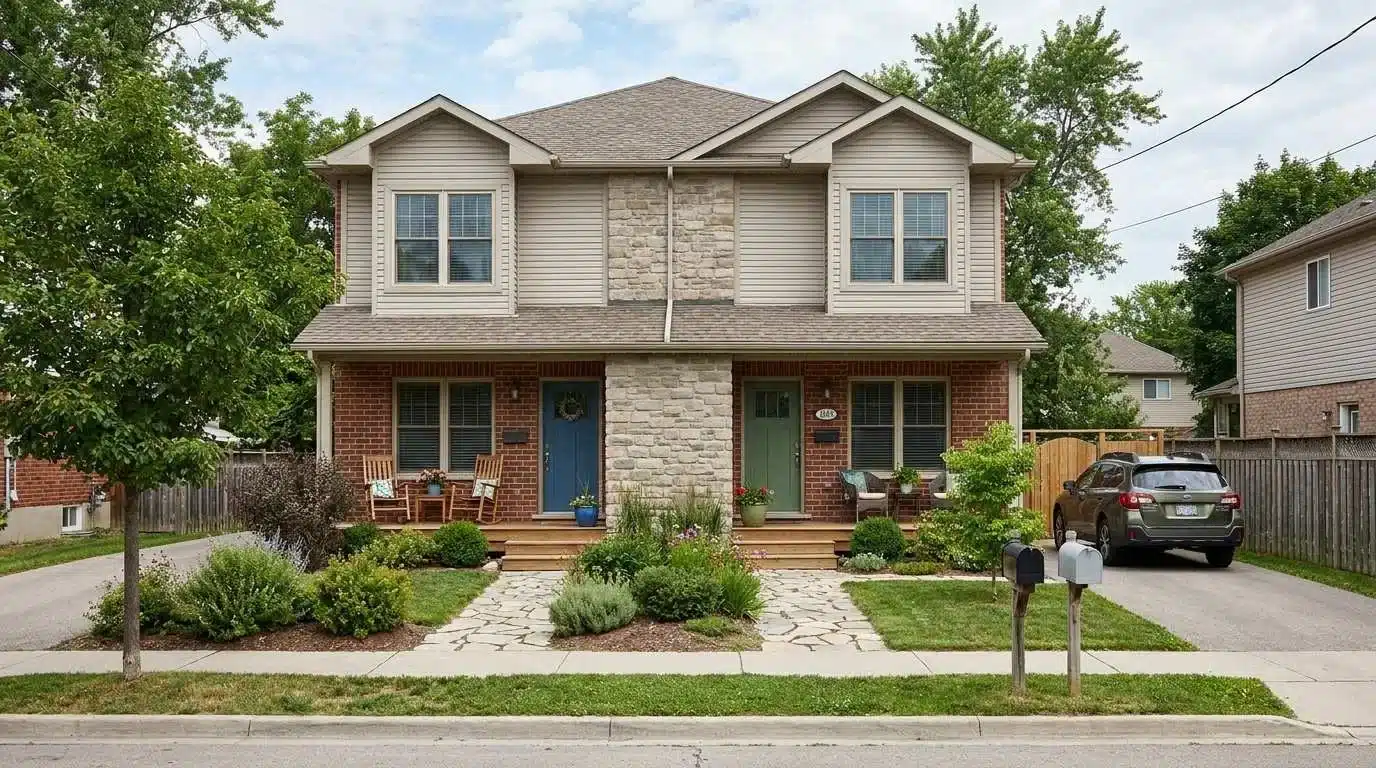
Two homes sit right next to each other, sharing one wall down the middle. Each side usually gets its own entrance facing the street.
Out of all three layouts, this one feels closest to a regular house. Nobody walks above your head or below your feet.
2. Stacked (Over-Under) Duplexes

One home sits on top of the other here. Instead of sharing a wall, the two homes share a floor and a ceiling. You’ll spot this setup often in older neighborhoods and crowded cities, where there’s more room to build upward than outward.
Because of the shared floor, noise travels more easily between the two homes. That’s more than in a side-by-side setup.
3. Front-to-Back Duplexes

This one shows up the least. One home sits toward the front of the property, and the other sits toward the back.
You’ll mostly find this layout on odd-shaped lots, like corner properties or long, skinny ones. The other two layouts don’t fit as well there.
Duplex vs. Townhouse, Condo, and Single-Family Home
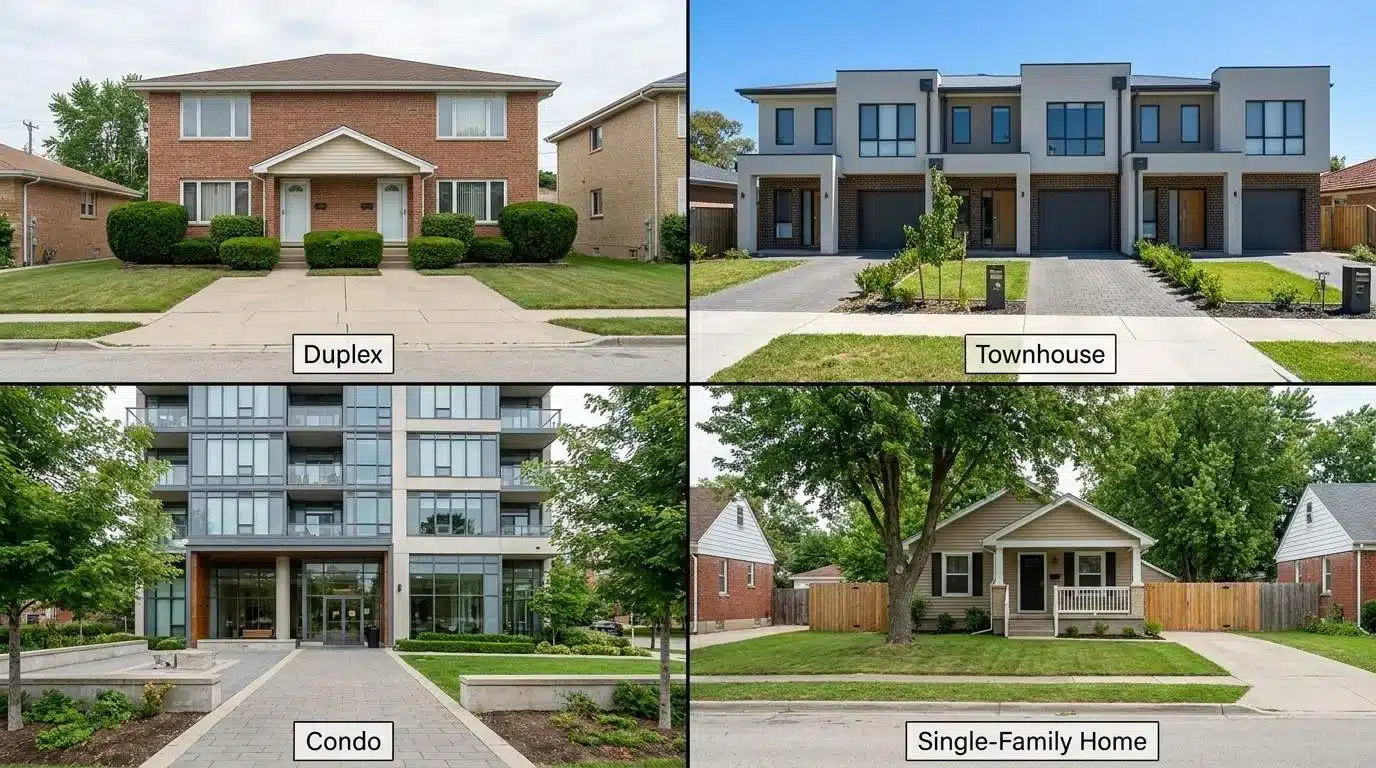
Each of these housing types splits up ownership and upkeep a little differently. Here’s how they stack up side by side.
| Housing Type | How Many Homes | Who Owns What | Who Handles Repairs |
|---|---|---|---|
| Duplex | 2 homes, 1 lot | One owner, or two owners (one per side) | Owner of each side, or one owner for the whole building |
| Townhouse | 3 or more homes in a row | Each home has its own owner and its own lot | Each owner handles their own home |
| Condo | Many units in one building | You own the inside; a group owns the outside | Shared group covers outside; you cover inside |
| Single-Family Home | 1 home, 1 lot | One owner, no shared walls | Owner handles everything, alone |
A duplex lands right in the middle of this table. You get more privacy than a condo. You also get less weight on your shoulders than a single-family home. Plus, you get a simpler setup than a row of townhouses.
Who a Duplex Actually Makes Sense For
Some buyers get more out of owning a duplex than others do. A few groups tend to benefit the most:
- First-time buyers, since rent from the other side can make monthly payments feel lighter
- Investors, who get two rent checks but only one roof and one yard to maintain
- Big families, who want grandparents, parents, and kids living close by without sharing the same four walls
- Anyone chasing rental income who isn’t ready to manage a full apartment building
If none of these describe you, a duplex can still work out fine. Just be honest with yourself about whether you actually want the extra responsibility that comes along with it.
Pros and Cons of a Duplex
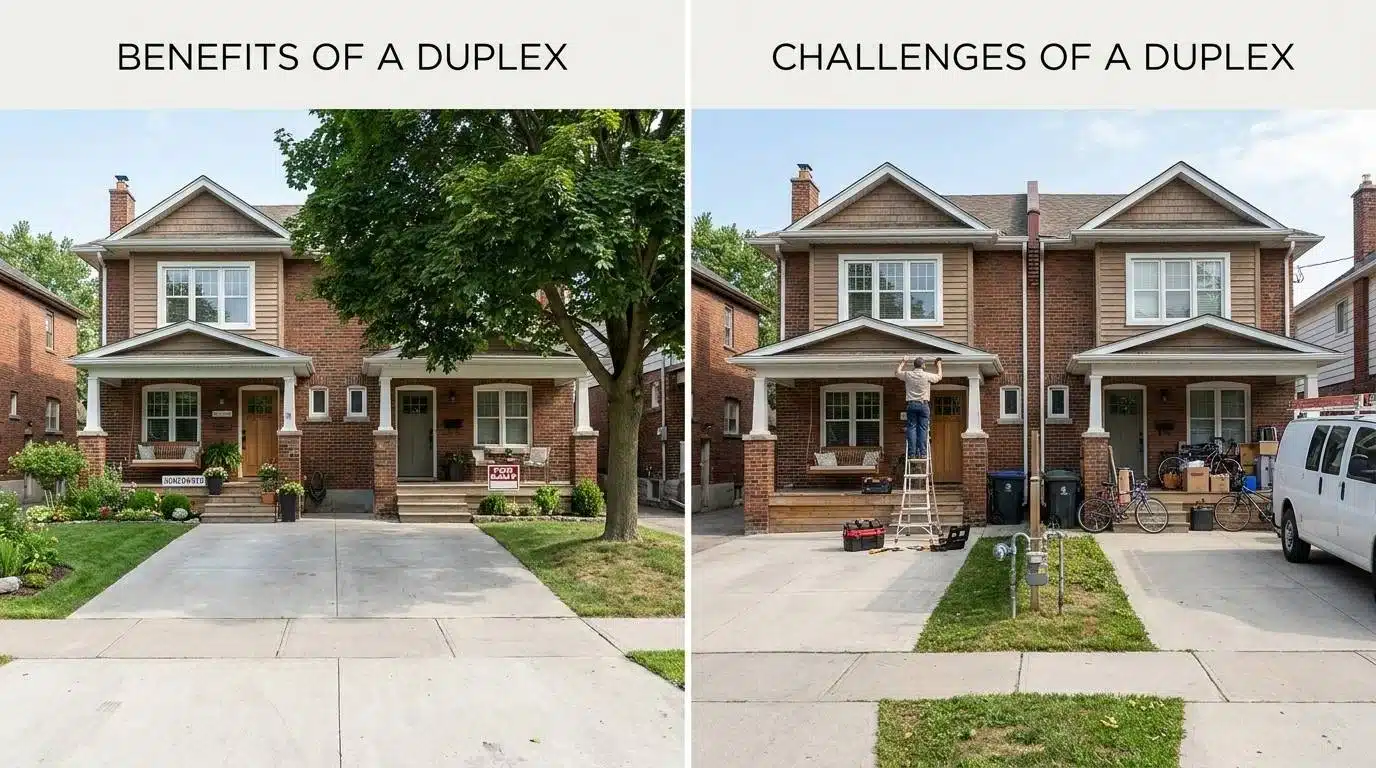
Like most housing choices, a duplex asks you to give up a few things in exchange for others.
Benefits of Owning or Living in a Duplex
If you own the whole building, rent from the other unit can help lower your monthly costs.
A duplex usually gives you more space than an apartment. You also get more privacy, since you don’t share hallways or stairways with many people.
You may also get a yard, outdoor space, and more room to enjoy than most apartments offer.
Challenges of Owning or Living in a Duplex
Owning a duplex also means becoming a landlord. You may need to handle repairs, collect rent, and solve problems for your tenant.
Sharing a wall or floor with another household can also mean more noise. Taking care of a two-unit property requires extra time and effort.
Frequently Asked Questions
Is a duplex the same as an apartment?
No, and the difference comes down to size and ownership. A duplex only has two homes total, usually owned by one person or a small handful of owners.
Can you turn a house into a duplex?
In plenty of places, yes, though local rules decide what’s allowed. You’ll need permits and updated wiring so each home bills separately.
Do duplex owners live in one unit?
Often, yes. This kind of setup gets called owner-occupied. The owner lives on one side and rents the other side out to someone else.
Is buying a duplex better than buying a single-family home?
That depends on what you’re chasing. A duplex can bring in rent and often costs less per home than buying two separate houses would.
Is a duplex a good investment?
It can be, since rental income helps cover your mortgage, and you qualify for residential, not commercial, financing. Returns still depend on location and rental demand.
Can i get an FHA loan for a duplex?
Yes, with as little as 3.5% down. You must live in one unit as your primary residence within 60 days of closing.
Do i need special insurance for a duplex?
Yes, once you rent out a unit. A standard homeowners policy usually isn’t enough, so most owners add a landlord policy or a rental endorsement.
Is a Duplex Right for You?
A duplex is two complete homes sharing one roof and one lot, sometimes with one owner and sometimes with two. That’s the whole idea, once you strip away the confusion.
Knowing the types, the costs, and the financing options helps you decide. A duplex might fit your budget and your goals more than you expect. It might lower your mortgage payment, keep family close, or bring in steady rental income each month.
If you’re ready to look further, compare local duplex listings and financing options in your area. Talk to a lender about how much rental income can count toward your loan.